
The turn onto Metsker Lane tells you immediately that you are leaving something behind. The commercial stretch of Noblesville falls away, replaced by farmland and the kind of open sky that reminds you Indiana is, at its heart, agricultural country. Then the trees appear — not saplings planted for effect, but centenarian maples and pines with trunks thick as barrels and canopies that arch overhead like cathedral vaulting. The driveway curves past white farmhouse siding and suddenly you see it: The Barn, standing proud with its black-trimmed windows and clean modern lines, somehow both vintage and contemporary at once. Behind it, The Gardens unfold across manicured lawn, framed by those ancient trees and punctuated with seasonal blooms that change with Indiana’s dramatic seasons. This is not a venue that pretends to be something it isn’t. Mustard Seed Gardens has been farmland since 1835, and that legacy — the honesty of working land, the rootedness of something nearly two centuries old — permeates every corner of the property. Poppy has designed Mustard Seed Gardens wedding flowers for 5 celebrations here, and each time we unload our van under those towering trees, we feel the weight of history and the lightness of possibility in equal measure.
About Mustard Seed Gardens
Mustard Seed Gardens occupies 3 to 5 acres of Hamilton County farmland that has been in continuous use since 1835, when the property was first established as a working farm. The venue remains family-owned and operated, which manifests in details that larger corporate properties often miss: the owners know the land, they know how the afternoon light falls across the lawn in October, they remember which corners flood after heavy rain. This is not a place that hired a designer to manufacture rustic charm. The charm is structural, earned through nearly two centuries of use and careful stewardship.
The Barn, the property’s centerpiece, exemplifies the venue’s approach to blending historical integrity with modern function. The original hardwood floors — wide-plank oak boards worn smooth by generations of use — remain intact and beautifully maintained. Above, vaulted ceilings soar to peak heights that allow for dramatic vertical arrangements and suspended installations. The black-trimmed window wall is a contemporary addition that floods the space with natural light while maintaining the barn’s architectural honesty. Climate control (a non-negotiable for Indiana’s sweltering summers and bitter winters) has been integrated invisibly, preserving the aesthetic while ensuring year-round comfort for 200 seated guests. An in-house PA system, dimmable lighting on independent zones, and a dedicated groom’s room with kitchenette and flat-screen TV round out the practical amenities.
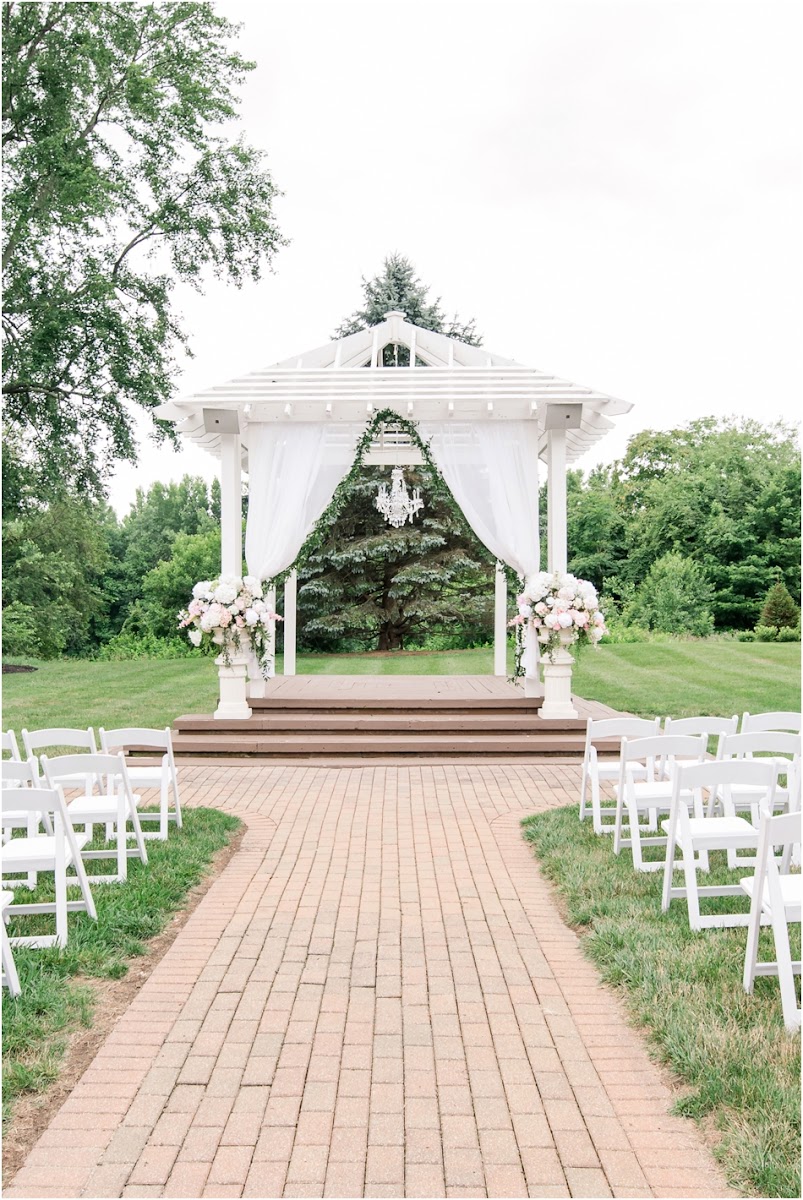
The Gardens themselves are the property’s soul. The 100-year-old maple and pine trees create a natural nave for outdoor ceremonies, their massive trunks serving as living columns and their leafy canopy filtering sunlight into dappled patterns on the lawn below. The existing garden beds are planted with seasonal blooms that shift throughout the year — tulips and daffodils in spring, Black-eyed Susans and coneflowers in summer, asters and ornamental grasses in fall. For couples planning Mustard Seed Gardens weddings, these existing plantings become part of the floral conversation. A June bride working with the property’s peak peony and rose blooms will make different choices than an October bride surrounded by goldenrod and autumn foliage.
The Patio and Fireplace area, tucked beneath a canopy of mature trees, offers an intimate cocktail hour space with market lighting strung overhead. The working fireplace anchors the space visually and provides warmth during shoulder-season events. An outdoor bar with ample surrounding space allows guests to mingle comfortably while bartenders work efficiently — a logistical detail that matters enormously for flow during cocktail hour.
The Farmhouse and Bridal Suite provides a comfortable, functional space for wedding parties to prepare. With room for 30 people, multiple areas for hair and makeup, an eat-in kitchen with a vintage fridge, and a dedicated bridal suite for final preparations, it eliminates the cramped getting-ready spaces that plague many venue properties. For florists, the kitchen offers counter space and water access for any last-minute bouquet adjustments, and the light-filled rooms photograph beautifully for detail shots of bouquets and floral installations.
The Gable, currently under construction and slated to open soon, will add 150 seated capacity in a modern, weather-protected space suitable for ceremonies, cocktail hours, or receptions. Its addition will give couples even more flexibility in designing their day’s flow, particularly for seasons when outdoor events carry weather risk.
Logistically, Mustard Seed Gardens sits in Noblesville, about 30 minutes north of downtown Indianapolis, making it accessible for metro-area guests while feeling genuinely rural. The venue works exclusively with seven approved caterers, which streamlines coordination but requires advance planning. Alcohol service is handled in-house with customizable packages. For florists, load-in is straightforward with ample parking near The Barn for unloading, though vehicles must be moved to gravel or grass lots before guest arrival. The event lead is present throughout the day, which we’ve found invaluable for accessing ladders, coordinating timing, and troubleshooting any venue-related needs. One critical detail: Mustard Seed Gardens prohibits nails, tacks, glue, or staples on any surface, with only gaffers tape permitted for installations. This is non-negotiable and requires careful planning for any hanging or wall-mounted florals.
Event Spaces & Floral Opportunities
The Barn
Capacity: 200 seated
Setting: The Barn is where the property’s dual nature — historic farmstead meets contemporary event space — comes into sharpest focus. Step through the main entrance and your feet land on original hardwood oak planks, each board eight inches wide and worn to a soft patina. Above, the vaulted ceiling rises to dramatic heights, exposed beams crisscrossing overhead with market lighting strung between them. The black-trimmed window wall along one side brings the outdoors in, framing views of The Gardens and those towering maples while flooding the space with natural light. The color palette is neutral — warm wood tones, white walls, black accents — which makes it a floral designer’s dream canvas. Mood lighting on dimmers allows for transformation from bright afternoon reception to intimate candlelit dinner. The groom’s room, accessed through a side door, keeps the wedding party close without cluttering the main space.
Floral approach: The vaulted ceilings are the barn’s greatest floral asset, and ignoring them is a missed opportunity. We recommend at minimum a suspended installation above the head table or dance floor — a 12-to-15-foot garland of smilax, Italian ruscus, and seeded eucalyptus with clusters of Quicksand roses, Amnesia roses, and white ranunculus woven through at intervals creates a floating garden effect that photographs spectacularly from below. Because gaffers tape is the only approved mounting material, any hanging installations require creative rigging — we typically use fishing line secured to existing beams, with arrangements built on foam-free cage structures that can be suspended without damaging surfaces. For centerpieces, the large open floor plan and neutral backdrop allow for either dramatic tall arrangements or lush low designs. Consider 30-inch gold compotes overflowing with Cafe au Lait dahlias, white O’Hara roses, blush astilbe, and trailing amaranthus for height, or low wooden boxes filled with garden roses (Keira, Patience, Juliet), stock, veronica, and textured eucalyptus for a more intimate feel. The window wall’s black trim provides a striking frame for a sweetheart table installation — we’ve had success with an asymmetrical arrangement cascading from one side of the table using quicksand and taupe roses, playa blanca roses, white lisianthus, and loads of Italian ruscus and silver dollar eucalyptus. The outdoor bar, if positioned near the barn entrance during cocktail hour transitions, benefits from a statement arrangement in an aged bronze urn. One technical note: the dimmable lighting means your florals will be seen under varying light conditions throughout the event. Colors that read as soft blush in afternoon sunlight may appear nearly white under evening uplighting. We always recommend bringing color swatches to a site visit at the same time of day as your event to see how light affects your palette.
The Gardens
Capacity: 200 seated for ceremony or reception
Setting: To call The Gardens simply “outdoor space” is like calling the Grand Canyon a hole in the ground — technically accurate but wildly insufficient. This is where Mustard Seed Gardens earns its name. The ceremony lawn stretches across level ground, manicured but not precious, bordered by mature garden beds planted with perennials that shift with the seasons. The real drama comes from the tree line: those 100-year-old maples and pines that create a natural boundary and canopy. Stand at the head of the aisle looking toward where guests will sit, and you see their trunks rising like columns in an open-air cathedral, their branches meeting overhead in a living ceiling. The dappled shade they cast makes afternoon ceremonies comfortable even in July. The lawn can accommodate 200 guests for a ceremony with room for an aisle and side seating, or be transformed for an outdoor reception with round tables under market lighting strung between the trees. Handicap-accessible pathways ensure all guests can navigate the space.
Floral approach: The cardinal rule for ceremony florals in The Gardens is this: the trees are your architecture, not your competition. An enormous floral arch trying to rival those century-old maples will look absurd and out of scale. Instead, work with the natural structure. We favor a simple wooden ceremony arch (8 feet tall, 6 feet wide) stained in weathered oak, dressed asymmetrically with a garland that starts heavy on one side and tapers off, using locally-sourced branches, willow, smilax, plumosa fern, with clusters of white and ivory blooms (O’Hara roses, ranunculus, lisianthus) tucked in at organic intervals. For the aisle, consider urn arrangements every third row rather than every row — oversaturating this space diminishes rather than enhances. Use galvanized or stone urns filled with loose, just-gathered-from-the-garden style arrangements: butterfly ranunculus, spirea, stock, Queen Anne’s lace, local wildflowers if in season, with plenty of movement and texture. For June weddings when the garden beds are full of blooming perennials, coordinate your ceremony palette with what’s already growing — we’ve pulled colors from the property’s own coneflowers, black-eyed Susans, and daylilies to create cohesion. Ground installations at the base of the largest trees add an unexpected touch: low arrangements in wooden boxes or woven baskets filled with hydrangeas, roses, and trailing ivy create little vignettes that guests discover as they arrive. If you’re flipping from ceremony to reception in the same space, keep ceremony florals repurposable — urns can move to the bar or entry, and the arch can be repositioned as a photo backdrop near the patio.
The Farmhouse and Bridal Suite
Capacity: 30 people
Setting: The Farmhouse is where the morning of the wedding happens — the quiet hours before guests arrive when a bride steps into her dress, when the wedding party shares mimosas in the eat-in kitchen, when bouquets are distributed and final lipstick applied. This is a proper getting-ready space, not an afterthought. The bridal suite offers privacy and natural light, critical for photographers capturing preparation moments. The beauty room has ample counter space and mirrors for hair and makeup teams to work efficiently. The functional kitchen with its vintage fridge provides not just aesthetic charm but practical utility — a place to keep bouquets chilled, to set up coffee and breakfast, to gather around a table for the last few moments before everything becomes ceremony and reception and timeline.
Floral approach: The floral opportunity here is less about installations and more about styling. This is where detail photography happens, and how you present bouquets matters. We deliver bridal party flowers to the Farmhouse at least two hours before the ceremony, arranging them on the eat-in kitchen table with ribbons cascading over the edge, stems visible in water tubes, perhaps with a few loose blooms scattered on the vintage tablecloth. That vintage fridge the venue mentions? Style the interior top shelf with a simple bud vase holding a few stems from the bridal bouquet — the shot of a bride reaching for her flowers with that retro fridge in the background is gold. In the bridal suite, place the bridal bouquet near the window where natural light will show off the blooms during getting-ready photos. If the bride is wearing a floral crown or hair piece, display it on a vintage stand or hanging from a drawer pull. The beauty room’s counters can hold a small arrangement in a low bowl — something that reads as indulgent but won’t be in the way during actual hair and makeup application. Keep the arrangements here personal and intimate in scale: a small compote of roses and ranunculus, a trio of bud vases with single stems. The Farmhouse is about the quiet before the celebration; your florals should feel like they’re waiting to join the party, not competing with it.
Patio and Fireplace
Setting: Tucked beneath a canopy of mature trees with market lighting strung overhead, the Patio and Fireplace area serves as the property’s natural cocktail hour anchor. The working fireplace provides both a visual focal point and, during cooler months, actual warmth that keeps guests comfortable outdoors when they might otherwise retreat inside. The outdoor bar sits along one edge with room for multiple bartenders to work simultaneously — critical during the cocktail hour rush when everyone wants a drink at once. The trees provide dappled shade, and the market lighting creates that golden-hour glow even before the sun actually sets. There’s ample room for highboys and lounge furniture groupings, encouraging guests to spread out and mingle rather than clustering awkwardly near the bar.
Floral approach: The fireplace mantel is prime real estate and should be treated accordingly. We build a long, low arrangement specifically designed to be viewed from below — guests will approach the fireplace at ground level while the mantel sits at roughly six feet. The arrangement should have depth and texture: start with a base of eucalyptus and Italian ruscus, layer in café au lait dahlias, quicksand roses, white hydrangea, and blush ranunculus, then add trailing elements like amaranthus and jasmine vine that cascade over the front edge of the mantel. Secure everything with waterproof tape and anchor points on the back side so nothing topples when the fireplace is in use. The bar deserves a statement piece — a large arrangement in a bronze or copper urn that draws guests toward the bartenders and creates a visual anchor for the space. This is where you can introduce bolder colors or more dramatic scale: consider a 36-inch tall arrangement with branches (curly willow, dogwood, or local foraged options), large blooms (hydrangea, peonies if in season, dinner-plate dahlias), and plenty of cascading greenery. For cocktail tables, small arrangements in varied vessels (brass bud vases, ceramic pots, cut-glass compotes) create visual interest without cluttering the surface. Each table gets a different vessel but the same floral palette, which reads as cohesive but not cookie-cutter. One logistical note: outdoor electrical access is available in the gray box behind the fireplace, useful if you need power for any lighting elements integrated with florals, though we generally avoid battery-operated anything in favor of natural arrangements.
The Gable (Coming Soon)
Capacity: 200 for ceremony or cocktail hour, 150 seated reception
Setting: The Gable represents Mustard Seed Gardens’ evolution, a modern addition designed to provide weather-protected versatility while maintaining the property’s aesthetic integrity. Details are still emerging as construction progresses, but the venue describes it as modern with clean lines and protection from the elements — essentially a bridge between the rustic charm of The Barn and the al fresco experience of The Gardens. It will accommodate 200 guests for ceremonies or cocktail hour configurations, or 150 for seated receptions, giving couples additional options for how they structure their day’s flow.
Floral approach: Without seeing the completed space, specific recommendations are preliminary, but we can anticipate certain needs based on the described function. For ceremonies in The Gable, you’ll likely want a ceremony backdrop that provides visual interest against what will presumably be clean, neutral walls — consider a large-scale asymmetrical arrangement on a pedestal rather than a traditional arch, using the space’s modern architecture as part of the design rather than fighting against it. For cocktail hour configurations, vertical space becomes your friend: tall arrangements on pedestals or columns create visual anchors without consuming precious floor space. If used for seated receptions, the 150-guest capacity suggests a more intimate scale than The Barn’s 200, which allows for slightly more elaborate per-table arrangements without budget explosion — perhaps elevated centerpieces on 24-inch gold or clear risers with lush arrangements that create impact through height and cascading elements. The weather-protected designation means you can use more delicate blooms here without outdoor exposure concerns — garden roses that might struggle in July heat, or clematis and sweet peas that wilt in direct sun, become viable options. As The Gable opens and Poppy designs our first events there, we’ll develop more specific guidance, but the fundamental principle holds: let the architecture inform the florals, don’t impose a style that fights the space.
Wedding Flower Ideas for Mustard Seed Gardens
Hoosier Heritage
This concept honors Indiana’s agricultural roots and prairie landscape with a palette drawn directly from the state’s native wildflowers and heritage garden varieties. Golden yellows (sunflowers, solidago, coreopsis), rustic oranges (butterfly weed, marigolds, zinnias), and deep purples (ironweed, asters, liatris) form the color foundation, grounded by wheat, prairie grasses, and textured foliage like dusty miller and lamb’s ear. The arrangements feel like they were just gathered from the fields surrounding the venue — because, in the case of some seasonal elements, they were. We source local when possible, supplementing with garden varieties that read as Midwestern: zinnias in every color, dahlias with their harvest-time abundance, scabiosa for texture, and Queen Anne’s lace for that roadside-wildflower authenticity. Vessels are galvanized metal, weathered wood boxes, and ceramic crocks — functional farm pieces, not fussy florals. This palette absolutely sings in The Gardens during late summer and autumn ceremonies, where it becomes an extension of the existing landscape. In The Barn, it brings the outside in, creating visual continuity between ceremony and reception spaces. For centerpieces, build low mounded arrangements in wooden boxes that allow guests to see across the table, with wheat and grasses adding height and movement without obstructing sightlines. The fireplace mantel gets a long harvest-style garland incorporating actual corn husks (dried and preserved), wheat sheaves, and clusters of sunflowers and dahlias. This is not subtle or restrained — it’s abundantly, unabashetically Midwestern.
Modern Farmhouse Romance
This concept walks the line between rustic and refined, channeling the same aesthetic tension that makes The Barn itself so successful. The palette is soft and sophisticated: ivory (O’Hara roses, white ranunculus, ivory lisianthus), blush (Keira roses, butterfly ranunculus, astilbe), champagne (Quicksand roses, café au lait dahlias), and taupe (Amnesia roses, cappuccino roses), with plenty of silver-green foliage (seeded eucalyptus, dusty miller, lamb’s ear) to keep it from reading as too precious. The key is in the vessels and styling: everything sits in clean-lined containers — white ceramic compotes, matte black metal stands, clear glass cylinders — rather than rustic wood or galvanized metal. Arrangements are structured but not stiff, with a loose, just-arranged quality that maintains the romance while nodding to modern design sensibility. In The Barn, this palette allows the architecture to shine without competing: centerpieces on matte black pedestals elevate the blooms to eye level without blocking views, and the neutral-leaning color palette photographs beautifully against both the warm wood floors and the black window trim. The suspended installation above the head table uses the same soft palette but introduces more movement with trailing jasmine vine and amaranthus. For The Gardens ceremony, keep the arch minimal — a simple asymmetrical garland on one side using the soft palette flowers and loads of eucalyptus, allowing the natural tree backdrop to provide the drama. This style works across seasons because the palette doesn’t rely on specific blooms — you can substitute similar tones with whatever’s best at market. A February wedding might use white anemones and hellebores; a June wedding features garden roses and peonies; October brings in dahlias and Japanese anemones. The through-line is the soft, romantic color story and the clean-lined presentation.
Garden Gathering
This concept leans fully into the venue’s name and the property’s garden-estate history, creating arrangements that look like they were gathered from an English cutting garden on a misty morning. The palette is rich and varied: pinks from pale blush to deep fuchsia (Mayra’s rose, hot pink ranunculus, astilbe, sweet peas), purples and lavenders (stock, lisianthus, clematis, veronica), whites and creams for balance (white lisianthus, ivory spray roses, tweedia), with lots of textural foliage (jasmine vine, smilax, Italian ruscus, maidenhair fern). The arrangements themselves are loose and organic with an emphasis on variety — not three stems of one thing repeated, but a true garden-style mix with different blooms playing off each other. Vessels lean traditional: aged stone urns, ceramic compotes in soft colors, vintage-style glass vases. In The Gardens, this style feels like a natural extension of the existing plantings, especially during May and June when the property’s own perennials are blooming. The ceremony can feature substantial urn arrangements flanking the aisle with that just-cut-from-the-garden abundance spilling out. In The Barn, create centerpieces with major height variation on each table — some low and lush, some tall on stands, creating a garden-path effect as guests move through the space. The suspended installation incorporates not just greenery and blooms but also flowering vines (clematis if seasonally available) that create the sense of sitting under an arbor. For the Patio during cocktail hour, cluster arrangements in varied heights on the highboys using different vessel styles but the same palette, like someone raided the garden shed and used every container available. The result should feel abundant, slightly wild, and utterly romantic — a garden party at its finest.
Seasonal Considerations
Indiana’s continental climate creates four genuinely distinct seasons, each bringing different opportunities and challenges for wedding flowers at Mustard Seed Gardens. The property’s mix of indoor and outdoor spaces provides flexibility, but understanding seasonal realities helps couples make informed choices about timing and palette.
Spring (April-May): Spring arrives tentatively in Indiana, with warm days followed by sudden cold snaps well into April. Early spring weddings (April) face unpredictability — one year might bring 70-degree sunshine, the next could deliver freezing rain. By May, the risk diminishes and the reward increases dramatically: the property’s garden beds fill with tulips, daffodils, and early perennials, and the maple trees leaf out in brilliant spring green. Bloom availability peaks for tulips, ranunculus, anemones, hyacinth, and hellebores. Local peonies might appear late May if the season is warm. For outdoor ceremonies in The Gardens, May is glorious but be prepared with a contingency plan for The Barn if weather turns. Spring’s softer light is forgiving for photography, and the landscape’s fresh green provides a naturally romantic backdrop that requires minimal floral enhancement. Budget-conscious couples can lean heavily on tulips and ranunculus, which are plentiful and reasonably priced this season. One practical note: spring mud is real. If your ceremony is on the lawn, consider a runner for the aisle or accept that heels will sink.
Summer (June-August): Summer is peak wedding season in Indiana, and for good reason: long daylight hours, warm temperatures, and the landscape in full lush bloom. June is arguably the perfect month, offering ideal weather (usually 70s-80s, low humidity), peak peony season, and garden roses at their best. July and August bring heat and humidity that can be punishing — afternoon ceremonies in The Gardens during August can feel like standing in a sauna. The Barn’s climate control becomes a major asset. Bloom availability is excellent across the board: hydrangeas, dahlias, zinnias, sunflowers, garden roses, lisianthus, and local wildflowers. The challenge is keeping flowers hydrated and fresh in high heat. We deliver ceremony florals as close to start time as possible and ensure everything is properly water-sourced. For outdoor installations, avoid delicate blooms (sweet peas, garden roses with thin petals) in favor of hardier options (hydrangeas, roses with substance, tropical foliage). The property’s mature trees provide crucial shade during cocktail hour, making the Patio comfortable even on warm days. Summer’s strong light can wash out pale colors in photographs — if you’re set on soft palettes, work with your photographer on timing to capture florals during golden hour rather than harsh midday sun. Indiana thunderstorms are a real possibility July-August; have a rain plan and trust it.
Fall (September-October): Fall is Indiana at its finest, and Mustard Seed Gardens during October rivals any New England venue for autumn beauty. The maple trees turn spectacular shades of red, orange, and gold, providing a backdrop that requires almost no floral enhancement. September offers summer-like warmth without the humidity, while October brings crisp air and sweater weather — ideal for outdoor ceremonies where guests won’t bake or freeze. Bloom availability remains strong through October: dahlias hit their peak, Japanese anemones add delicate movement, chocolate cosmos bring an unexpected depth, and fall foliage (bittersweet, oak leaves, maple branches) can be incorporated directly into arrangements. The property’s existing landscape shifts into autumn tones — goldenrod, asters, and ornamental grasses in the garden beds — which should inform your palette. A bride fighting against the season with an all-white spring palette will look disconnected from her surroundings; one who embraces burgundy, rust, marigold, and plum will look like she belongs exactly where she is. For The Barn receptions, consider incorporating actual seasonal elements: small pumpkins or gourds clustered with floral centerpieces, wheat sheaves flanking the entrance, fall branches in large floor arrangements. The market lighting throughout the property creates that perfect golden-hour glow as sun sets earlier. October books far in advance; if you want a fall wedding here, inquire a year out minimum.
Winter (November-February): Winter weddings at Mustard Seed Gardens are almost exclusively Barn-focused unless you have unusually warm weather or hardy guests willing to bundle for an outdoor ceremony. The reality of Indiana winter is that it’s cold — properly cold, with snow, ice, and temperatures regularly below freezing January through February. The Barn’s climate control and cozy aesthetic shine during winter months. The fireplace on the Patio becomes functional rather than decorative, and if weather cooperates, a winter cocktail hour with the fire roaring and guests in wool coats with hot cider is memorably atmospheric. Bloom availability shifts toward hothouse flowers and evergreens: amaryllis, tulips (imported), ranunculus (imported), hellebores, anemones, with evergreen foliage (pine, cedar, fir, eucalyptus) providing texture. This is the season to embrace deeper, richer colors — burgundy, emerald, navy, plum — and to incorporate non-floral seasonal elements like pine cones, frosted branches, and candles. Lots of candles. The Barn’s vaulted ceilings and mood lighting allow for dramatic suspended installations using evergreen garlands, which read as elegant rather than Christmas-specific if styled correctly. Budget-wise, winter can be challenging because many popular blooms are out of season and must be imported, increasing cost. However, evergreens and seasonal foliage are abundant and affordable, allowing for lush installations that don’t break the budget. One major advantage: winter wedding dates are easier to secure, and venues sometimes offer discounted rates for off-season bookings. If you’re considering a winter wedding here, embrace the season rather than fighting it — you’ll be happier and your florals will feel authentic to the moment.
Poppy’s Expert Take
Respect the venue’s tape policy religiously. Mustard Seed Gardens allows only gaffers tape — no nails, tacks, glue, or staples anywhere on the property. This isn’t a suggestion; violations can result in significant damage fees. Any hanging installations in The Barn require creative rigging using the existing beam structure, fishing line, and foam-free mechanics that won’t damage surfaces. We’ve developed specific techniques for suspended garlands here that comply with venue requirements while still achieving drama. If you’re working with another florist, confirm they understand and will adhere to this policy. The venue’s event lead will inspect installations, and you don’t want to be dismantling arrangements at the last minute because they don’t meet requirements.
The tree canopy in The Gardens affects photography timing. Those 100-year-old maples and pines create gorgeous dappled shade during the day, but they also block substantial light. If you’re planning a late-afternoon ceremony (say, 5:00 or later in summer), be aware that the area under the trees will already be in shade even though the property’s open areas remain sunny. This creates exposure challenges for photographers trying to capture both shaded ceremony space and bright backgrounds in the same frame. Work with your photographer on the ceremony timeline, and consider this when choosing your floral palette — darker colors will photograph even darker in shade, while lighter tones