
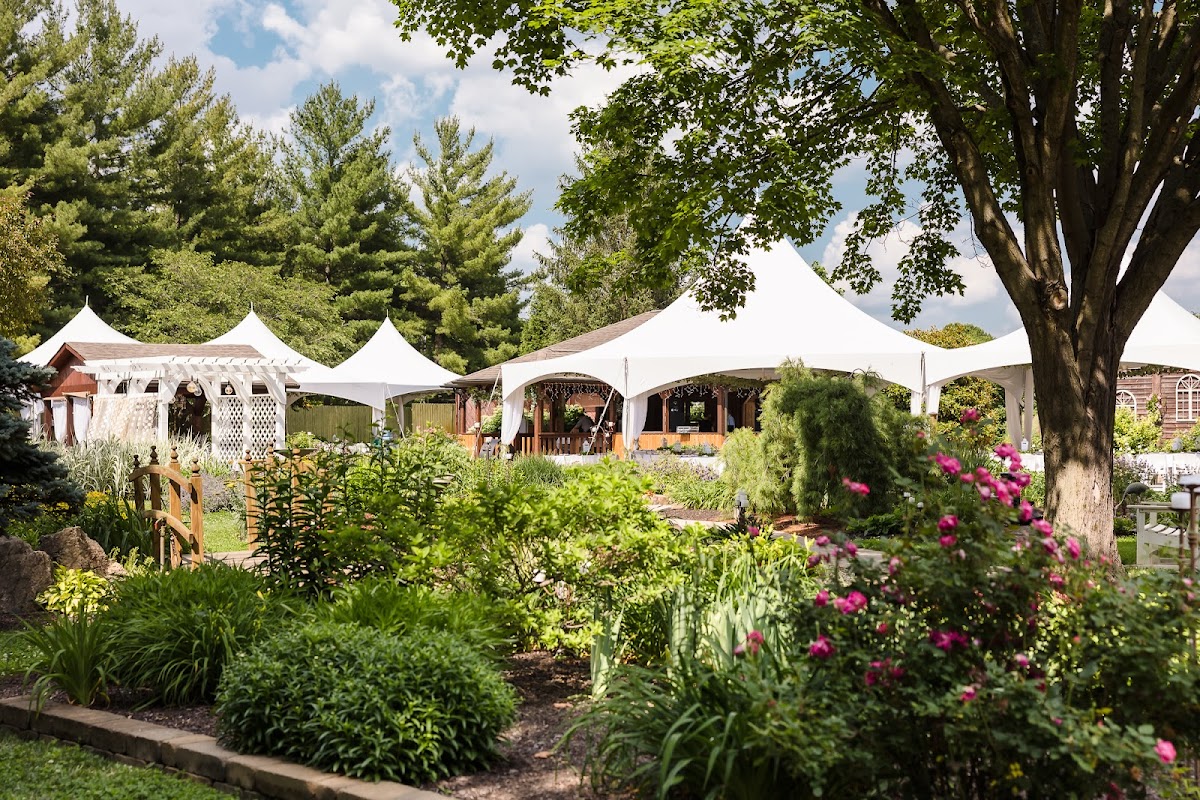
You turn off County Road 91 and the suburban landscape — shopping centers, school zones, well-maintained subdivisions — gives way to something else entirely. The road narrows. Trees press in from both sides, dappling the pavement with leaf-shadow. And then the entrance: a simple sign, easily missed, and beyond it five acres that feel like a secret someone decided to share. Avon Gardens does not announce itself with grand gates or sweeping driveways. Instead, it unfolds gradually as you walk the paver pathways — first the sound of water, the soft rush of waterfalls cascading into koi ponds, then the scent of whatever is blooming that week (peonies in June, dahlias in September, chrysanthemums by October), and finally the full scope of the place: ceremony lawns bordered by white flower gardens, a pavilion strung with chandeliers, cedar pergolas wrapped in Edison lights, and everywhere, everywhere, flowers. This is not a venue that needs florals trucked in to feel complete. The gardens are already doing the work. The question for an Avon wedding florist is not how to create beauty from scratch, but how to weave intentional floral design into a landscape that is already, on any given Saturday in summer, breathtaking. Poppy has received 19 inquiries for Avon Gardens weddings, and each time we walk the property with a couple, the conversation shifts from “what do we need?” to “what do we want to emphasize?”
About Avon Gardens
Avon Gardens sits on County Road 91 in Avon, Indiana, a family-oriented suburb approximately 20 minutes west of downtown Indianapolis via I-465. The property is a working display garden — five acres of perennial beds, specimen trees, water features, and hardscaped pathways that the owners maintain year-round not as a backdrop for events, but as a passion project that happens to also host weddings. This distinction matters. The gardens are not static. The blooms change with the weeks, the light shifts with the seasons, and the property evolves in the way that living landscapes do. In late spring, you might find beds of tulips and allium giving way to early roses and bleeding heart. By midsummer, the perennial borders are thick with coneflower, black-eyed Susan, bee balm, and phlox. September brings the dahlias — dinner-plate varieties in coral, burgundy, and blush — and by October, the ornamental grasses have gone golden and the maples are blazing.
The venue’s layout encourages movement. Guests arrive and gather on the shaded deck, which overlooks a wooded ravine and a series of ponds connected by waterfalls. From there, paver walkways lead across the property to the ceremony site — either the secluded lawn bordered by white gardens or the alternative spot beneath a towering maple tree. The reception area is a collection of interconnected outdoor spaces: a covered pavilion with paddle fans and chandeliers, open-air tented sections, a patio, and cedar pergolas over the bar and catering stations. More than 100 candles are scattered throughout the gardens at dusk, and the Edison lights on the pergolas create a warm, amber glow that makes everything — the faces of your guests, the petals on the tables, the glasses of wine catching the light — look softer, lovelier, more forgiving.
One of the most unusual and budget-friendly aspects of Avon Gardens is the venue’s generous approach to decor. The owners provide a cedar bridal arbor that they custom-decorate with silk flower arrangements to match your wedding colors, complete with curtains and crystals. They also offer free centerpiece rentals — couples can use what the venue has on hand, bring their own, or a combination of both, and the staff will set everything out at no additional cost. There are no required vendor lists, no food or beverage minimums, and no fees for bringing in outside caterers or florists. The trade-off is that vendor access is limited: couples and their teams cannot arrive until 3:00 PM on the wedding day, and the venue handles the majority of setup. For Poppy’s delivery and design team, this means careful coordination and efficient staging. We typically consolidate all floral elements into a single load-in, focusing on pieces that can be placed quickly and with minimal adjustment once on-site.
Logistically, Avon is accessible and car-dependent. The venue is less than seven miles from I-465, making it an easy drive from Indianapolis, Carmel, Fishers, or the airport. Parking is included in the site fee, and the venue staff directs cars and even transports elderly guests up from the lot via golf cart — a thoughtful touch that speaks to the hospitality ethos here. For florists, the property’s mature gardens mean that delivery trucks and setup crews need to navigate narrow pathways and be mindful of plantings. We load everything onto carts and hand-carry arrangements to their final positions. It is not difficult, but it does require a team that understands how to work within the constraints of a living garden.
Event Spaces & Floral Opportunities
Secluded Lawn Ceremony Site
Capacity: Flexible, typically 100-150 depending on layout
Setting: This ceremony site is exactly what it sounds like: a quiet, open lawn bordered on all sides by white flower gardens. The gardens themselves do much of the aesthetic heavy lifting — think clouds of white hydrangea, drifts of shasta daisies, clumps of white phlox and astilbe, all blooming at different moments throughout the season. The ceremony site is anchored by a cedar arbor that the venue decorates with silk flowers to match your wedding colors, and couples can opt to add curtains and crystals for additional texture. Paver walkways lead guests from the deck down to the lawn, and the tree canopy overhead filters the afternoon light into something soft and dappled. It is a deeply romantic spot, and one that photographs beautifully from every angle.
Floral approach: The venue-provided arbor means that couples can skip the often-significant expense of a ceremony backdrop or floral arch. If you want to enhance the arbor, consider adding fresh floral clusters at the corners or weaving greenery garlands (Italian ruscus, seeded eucalyptus, or smilax) through the structure to blend the silk arrangements with live botanicals. Focus your floral budget on the elements that the venue does not provide: bridal and bridesmaid bouquets, boutonnieres, corsages, and aisle markers. For the aisle, a simple petal scatter (we love a mix of white and blush rose petals for a soft, romantic look) is classic and effective. If you want more presence, consider lining the aisle with low arrangements in galvanized tin buckets or vintage white ceramic pitchers — garden roses (Patience, Vitality), white lisianthus, white stock, and trailing jasmine vine — that echo the white gardens surrounding you. Avoid tall aisle markers that block guest sightlines or compete with the natural beauty of the setting.
Large Maple Tree Ceremony Site
Capacity: Flexible, typically 50-100 depending on layout
Setting: The alternative ceremony site is set beneath a massive sugar maple tree, its canopy spreading wide and providing natural shade even on the hottest summer afternoons. The roots are thick and gnarled, the trunk is broad enough that two people cannot link arms around it, and in October, the leaves turn the most astonishing shade of burnt orange and gold. This is a more intimate ceremony option, ideal for smaller guest counts or couples who want a woodland aesthetic. The ground is level and grassy, and the venue offers the same petal-scattered aisle treatment as the secluded lawn.
Floral approach: The tree itself is the architectural element here, and it would be a mistake to try to compete with it. Instead, let the maple be the backdrop and frame the ceremony space with understated floral accents. A low, meadow-style arrangement at the base of the tree — wildflowers like Queen Anne’s lace, yarrow, cosmos, and wild asters mixed with grasses and unstructured greenery — feels organic and appropriate. If you want to mark the aisle, consider potted ferns or hostas in aged terracotta pots instead of cut flower arrangements; they have presence without formality. For couples marrying in autumn, embrace the fallen leaves — they are nature’s confetti, and they photograph like a dream. You do not need to add much. A simple, loose bridal bouquet of garden roses (Keira, Juliet), astilbe, scabiosa, and Japanese anemone in soft creams and mauves will complement the woodland setting without overpowering it.
Garden Pavilion
Capacity: 100 seated
Setting: The Garden Pavilion is the venue’s insurance policy — a covered structure with paddle fans, overhead lighting, and chandeliers that serves as the rain backup for outdoor ceremonies. But even in perfect weather, it is a beautiful space in its own right. The wood frame has aged to a warm honey tone, and the chandeliers (simple but elegant) provide a focal point that draws the eye upward. The pavilion is open on all sides, so you still feel connected to the gardens, but guests are protected from sudden downpours or intense midday sun. The structure can also be used for cocktail hour or as part of the larger reception footprint.
Floral approach: The chandeliers are begging for floral garlands. We love wrapping them with smilax or Italian ruscus as a base, then adding in clusters of blooms at intervals — cafe au lait dahlias, quicksand roses, white lisianthus, and blushing bride protea for texture. The effect is lush and romantic without being heavy. If the pavilion is being used for a ceremony, consider a low arrangement on a wooden pedestal or vintage farm table at the “altar” end — something with presence but not height, so it does not block the officiant. Garden roses (Patience, Mayra’s Rose), white hydrangea, white delphinium, and jasmine vine in a footed bronze urn would be stunning and appropriate. For cocktail hour, the pavilion’s perimeter can be dressed with potted arrangements — fiddle leaf figs or large ferns in woven baskets — that create a sense of enclosure without walls. The key is to enhance the structure’s existing charm, not to transform it into something it is not.
Reception Area
Capacity: 250 seated across multiple interconnected spaces
Setting: The reception area at Avon Gardens is less a single room and more a series of outdoor rooms, each with its own character. The covered pavilion anchors the space with seating for about 100 under its roof. Adjacent to that is a patio area, and beyond that, tented sections that can be configured based on guest count and weather. Cedar pergolas with Edison lights mark the bar and catering stations, and paver walkways connect everything. The entire area is surrounded by the venue’s colorful flower gardens — beds of zinnias, sunflowers, black-eyed Susans, rudbeckia, and whatever else is in bloom. As dusk falls, more than 100 candles are lit throughout the gardens, and the Edison bulbs overhead cast a warm, golden glow. It is the kind of setting that makes everyone look good and feel at ease.
Floral approach: Because the venue offers free centerpiece rentals and allows couples to bring their own, you have enormous flexibility here. For a cohesive, elevated look, we recommend a mix of heights and vessels. Alternate between low, compote-style arrangements (mounded garden roses, spray roses, ranunculus, and jasmine vine in aged brass or ceramic vessels) and taller, more dramatic centerpieces on clear glass or brushed gold risers that lift the blooms above conversation level. The colorful garden beds surrounding the reception area will inform your palette — if the zinnias are blazing coral and magenta in August, lean into warm tones with dahlias (Jowey Gipsy, Labyrinth), peach roses (Vuvuzela, Free Spirit), and marigolds. If you are marrying in October when the gardens have shifted to golds and burgundies, consider a richer palette with chocolate cosmos, burgundy dahlias, rust-colored chrysanthemums, and bronze astilbe. The cedar pergolas over the bar area are ideal for hanging installations — a garland of seeded eucalyptus and olive branches with clusters of blooms woven through creates a focal point that guests will notice and photograph. Do not forget the catering pergola; a similar treatment there creates continuity and makes the food station feel like part of the overall design.
Shaded Deck
Capacity: Flexible, typically used for cocktails or receiving line
Setting: The shaded deck is where guests often gather first — it overlooks the wooded ravine, the koi ponds, and the waterfalls, and the sound of running water creates an instant sense of calm. The deck is covered, so even in full sun or light rain, it remains comfortable. It is an ideal spot for pre-ceremony mingling, for a receiving line post-ceremony, or for appetizers during cocktail hour. The natural backdrop is so striking that the space requires very little additional decor.
Floral approach: This is not a space that needs elaborate floral installations. Instead, think in terms of subtle accents that enhance what is already there. A series of potted arrangements along the deck railing — fiddle leaf figs, ferns, or large hydrangea plants in whitewashed or terracotta pots — adds softness without blocking the view. If you want cut florals, consider a single statement arrangement on a console table or bar cart near the entrance: a loose, organic design in a footed urn with garden roses, hydrangea, delphinium, and cascading jasmine vine. The goal is to create a welcoming transition point, not to compete with the water features and wooded ravine beyond.
Bridal Party Structure
Capacity: Not applicable — this is a getting-ready space
Setting: Avon Gardens provides a climate-controlled indoor structure where the bridal party can change, touch up makeup, and prepare for the ceremony. It is outfitted with chandeliers, mirrors, and ample space for hanging garments and storing personal items. This is a functional space first and foremost, but because it is also where many couples take getting-ready photos, it is worth adding a few intentional floral touches.
Floral approach: A small, elegant arrangement on a side table or dresser — something with presence but not scale — adds beauty to the space and gives the photographer something to work with. We love a low, lush design in soft, romantic tones: blush roses (Quicksand, Sahara), white ranunculus, astilbe, and trailing jasmine in a vintage brass or ceramic vessel. This arrangement can later be moved to the reception (perhaps to the gift table or place card display) so it does double duty. Another option is to provide each bridesmaid with a small bud vase and a single stem (a garden rose or a peony) to keep in the getting-ready space — it is a personal, thoughtful touch that photographs beautifully and makes everyone feel special.
Wedding Flower Ideas for Avon Gardens
Garden Romance
This concept leans into the cottage garden aesthetic of Avon Gardens itself, using a soft, romantic palette of blush, cream, peach, and the palest lavender. The foundation is garden roses — Patience, Keira, Juliet, and Quicksand — with layers of texture from ranunculus, astilbe, sweet pea, lisianthus, and jasmine vine. Foliage includes dusty miller, seeded eucalyptus, and Italian ruscus for movement. Arrangements sit in vintage-inspired vessels: aged brass compotes, ceramic pitchers, and footed urns in cream and taupe. This palette works beautifully in the white flower gardens surrounding the secluded lawn ceremony site and complements the natural blooms without competing. For the reception, alternate between low, lush compote arrangements and taller designs on clear risers, and add a garland of smilax and roses along the bar pergola. The effect is timeless, elegant, and deeply romantic — the kind of florals that look effortless but are meticulously constructed.
Wild Meadow
For couples who want something less formal and more organic, Wild Meadow embraces unstructured, just-picked-from-the-field florals in a palette inspired by prairie wildflowers. Think golden yellows, soft whites, dusty purples, and hints of coral. Flowers include black-eyed Susans, yarrow, Queen Anne’s lace, cosmos, wild asters, zinnias, and sunflowers (the smaller, multi-headed varieties like Strawberry Blonde or Ms. Mars, not the giant dinner-plate types). Grasses — bunny tail, foxtail, dried wheat — add texture and movement. Arrangements sit in mismatched vessels: galvanized tin buckets, vintage glass bottles, ceramic crocks, and wooden boxes. This concept works especially well for the Large Maple Tree ceremony site, where the woodland setting calls for something that feels gathered rather than designed. For the reception, scatter bud vases down the center of long farm tables, or group clusters of small arrangements on rounds. Add hanging bunches of dried grasses and wildflowers from the pergolas for a whimsical, festival-like touch. It is casual, joyful, and perfectly suited to a garden wedding.
Jewel Tone Elegance
If the venue’s colorful flower gardens inspire you to go bold, Jewel Tone Elegance delivers richness and drama. The palette is deep and saturated: burgundy, plum, burnt orange, and wine, with accents of gold and blush to keep it from feeling too dark. Flowers include burgundy dahlias (Jowey Gipsy, Black Satin), plum-toned garden roses (Twilight, Ebb Tide), dark calla lilies, chocolate cosmos, and coral charm peonies (in season) or coral roses (out of season). Foliage includes dusty olive branches, eucalyptus, and privet berries for texture. Arrangements sit in moody vessels: matte black ceramic compotes, aged brass urns, and dark wooden boxes. This palette is especially stunning in the Garden Pavilion, where the chandeliers can be wrapped in garlands of olive and eucalyptus with clusters of burgundy dahlias and roses woven through. For centerpieces, mix low arrangements with tall tapered candles in brass holders to create layers of depth and light. The Edison lights overhead will make the rich colors glow, and the overall effect is opulent without being heavy.
Seasonal Considerations
Avon Gardens sits in the humid continental climate zone typical of central Indiana, with four distinct seasons that each bring their own opportunities and challenges for wedding florals.
Spring (April - May): Spring in Indiana is unpredictable — gorgeous one day, stormy the next, with temperatures ranging from the 50s to the 70s. The venue’s gardens come alive with early bloomers: tulips, daffodils, hyacinths, bleeding heart, and flowering dogwood. For wedding florals, this is prime season for peonies (late May), ranunculus, anemones, sweet pea, and lilac. Spring weddings at Avon Gardens benefit from the fresh green of new foliage and the energy of a landscape waking up, but be prepared for rain. The Garden Pavilion is your friend. Locally, Indiana flower farms begin harvesting cool-season annuals like snapdragons and stock, which have excellent vase life and add height to arrangements. Spring is also when tulips from Michigan and the Pacific Northwest are most affordable and available in extraordinary color ranges.
Fall (September - October): Fall is the glory season at Avon Gardens. The weather is mild (60s to 70s), the humidity drops, and the gardens shift to autumnal tones: dahlias in every color imaginable, ornamental grasses gone golden, asters, chrysanthemums, and the first touches of fall foliage. The sugar maple at the alternative ceremony site becomes a focal point as its leaves turn brilliant orange and gold. For wedding florals, fall is dahlia season — cafe au lait, Jowey Gipsy, Labyrinth, and dozens more. Pair them with garden roses, astilbe, scabiosa, chocolate cosmos, and seeded eucalyptus for a palette that feels both elegant and seasonally appropriate. This is also when locally grown chrysanthemums, asters, and celosia are abundant and affordable. October weddings get the added bonus of the venue’s fall decor (pumpkins, gourds, and cornstalks often appear along pathways) which can inform your floral palette. Fall is our favorite season to design for Avon Gardens weddings — the light, the temperatures, and the available blooms all align perfectly.
Winter (November - March): Winter weddings at Avon Gardens are rare but possible. The gardens are dormant, the perennial beds are cut back, and the trees are bare. Temperatures range from the 20s to the 40s, and snow is possible, though not guaranteed. The venue’s structures — the pavilion, the pergolas, the deck — become more prominent in the landscape, and the focus shifts to candlelight, evergreen garlands, and the bones of the hardscape. For florals, winter is the season for imported blooms: amaryllis, anemones, ranunculus, tulips, and evergreen boughs (pine, fir, cedar, eucalyptus). We often incorporate dried elements — pampas grass, lunaria, preserved oak leaves — to add texture without relying on expensive out-of-season flowers. Winter weddings here work best as intimate celebrations with a cozy, candlelit aesthetic. The lack of natural blooms in the gardens means your florals will have more visual impact, but it also means you will need more of them to create the same sense of abundance that the summer and fall gardens provide naturally.
Poppy’s Expert Take
The venue provides more than you think. Avon Gardens includes so much in their rental fee — the decorated cedar arbor, free centerpiece options, setup assistance — that many couples do not realize how much money they can save by working with what is already there. Before you commit to a large floral budget, walk the property during the season you will be marrying and see what is already in bloom. The gardens themselves are the decor. Your florals should enhance, not replicate, what is already beautiful.
Coordinate with the venue’s silk arbor decorations. The cedar arbor comes with silk flowers that the venue will customize to your wedding colors, plus optional curtains and crystals. Ask to see photos of past arbor setups, and consider how your fresh florals (bouquets, boutonnieres, aisle markers) will complement the silk arrangements. If the arbor is already decorated in blush and ivory silk flowers, lean into that palette for your personal flowers rather than fighting it. This creates cohesion and allows the arbor to serve as a fully realized ceremony backdrop.
Leverage the Edison lights and pergolas for hanging installations. The cedar pergolas over the bar and catering areas are structural gold for floral designers. A garland installation across the bar pergola — something lush and trailing with greenery and blooms — creates a focal point that guests will notice and photograph all night. Because the pergolas are already lit with Edison bulbs, the floral garland catches that warm light and glows. This is one of the highest-impact floral treatments you can invest in at Avon Gardens, and it transforms the bar area from functional to beautiful.
Do not overdo the ceremony aisle. The paver walkways that lead guests to the ceremony site are beautiful on their own, and the white flower gardens that border the secluded lawn provide natural visual interest. A simple petal scatter along the aisle is often enough. If you want more, consider lining the aisle with low arrangements in buckets or pitchers rather than tall shepherd’s hooks or stands, which can feel formal and out of place in a garden setting. Remember: your guests are walking through a curated landscape. Let the garden be part of the design.
Plan for limited setup time. Couples and vendors cannot arrive until 3:00 PM on the wedding day, and the venue staff handles most of the setup. This means your florist needs to deliver everything in one efficient load-in, with arrangements that are largely finished and require minimal on-site styling. At Poppy, we stage everything at our studio the night before, load the truck in order of placement, and work with a detailed site map so we can move quickly once on property. Communicate with your florist early about the venue’s access restrictions so they can plan accordingly.
Consider the seasons when budgeting. The venue’s gardens are most spectacular from late May through October, which means your floral budget can stretch further during those months because the landscape is doing so much of the work. If you are marrying in winter or early spring when the gardens are dormant, you will need to invest more in florals to create the same visual impact. This is not a reason to avoid off-season weddings — just a reality to plan for.
Use the koi ponds and water features as photo backdrops, not floral installation sites. The ponds, waterfalls, and wooded ravine are some of the most photographed features at Avon Gardens, and they are stunning on their own. You do not need to add floating florals or line the pond edges with arrangements. Instead, let your photographer use these features as natural backdrops for portraits. Save your floral budget for areas where guests will spend the most time: the ceremony site, the reception tables, and the bar area.
What Poppy Couples Spend on Flowers Here
Because Avon Gardens provides significant decor and setup assistance, couples often find that their floral budget can focus on personal flowers and strategic enhancements rather than transforming the entire venue. Based on Poppy’s experience with Indianapolis-area weddings and the typical scope of work for a garden venue with existing natural beauty, here is how floral budgets tend to break down.
$2,000 - $3,500 | The Essentials
At this level, you are covering the personal flowers and a few key accents. This includes a bridal bouquet (garden roses, ranunculus, and textured greenery), bridesmaid bouquets (typically smaller, simpler versions of the bridal bouquet), boutonnieres for the groom and groomsmen, corsages for mothers and grandmothers, and a simple petal scatter for the ceremony aisle. You might also add one statement arrangement for the gift table or guestbook, and perhaps a small arrangement for the bridal suite. This budget works well if the venue’s gardens are in full bloom and you are comfortable letting the natural landscape do most of the heavy lifting for reception decor. Consider using the venue’s free centerpiece rentals and adding a few of your own potted plants or bud vases to personalize the tables without the expense of full floral centerpieces.
$3,500 - $6,000 | The Full Picture
This range allows you to add reception florals and a few elevated installations. In addition to all the personal flowers from the Essentials tier, you can now include centerpieces for all guest tables — perhaps alternating between low compote arrangements and taller designs on risers to create visual variety. You might also add a floral garland installation on one of the cedar pergolas (the bar area is ideal), a pair of large arrangements flanking the entrance to the pavilion, and an enhanced ceremony aisle treatment with arrangements in buckets or pitchers lining the walkway. At this level, you can also incorporate more premium blooms (peonies in season, larger dahlias, garden roses in greater quantities) and more complex vessels (aged brass, ceramic, footed urns). This budget creates a cohesive, designed look throughout the venue while still respecting and complementing the natural gardens.
$6,000+ | The Full Experience
At this tier, you are investing in florals as a major design element across every space. This includes all personal flowers, full reception centerpieces with a mix of heights and vessels, floral garlands on multiple pergolas (both bar and catering), suspended installations or chandelier garlands in the Garden Pavilion, large-scale arrangements at key transition points (deck entrance, ceremony site, pavilion entrance), and potentially additional accents like floral-lined paver walkways, potted plants along the deck railing, or a dramatic installation at the base of the Large Maple Tree ceremony site. You have access to premium blooms in