
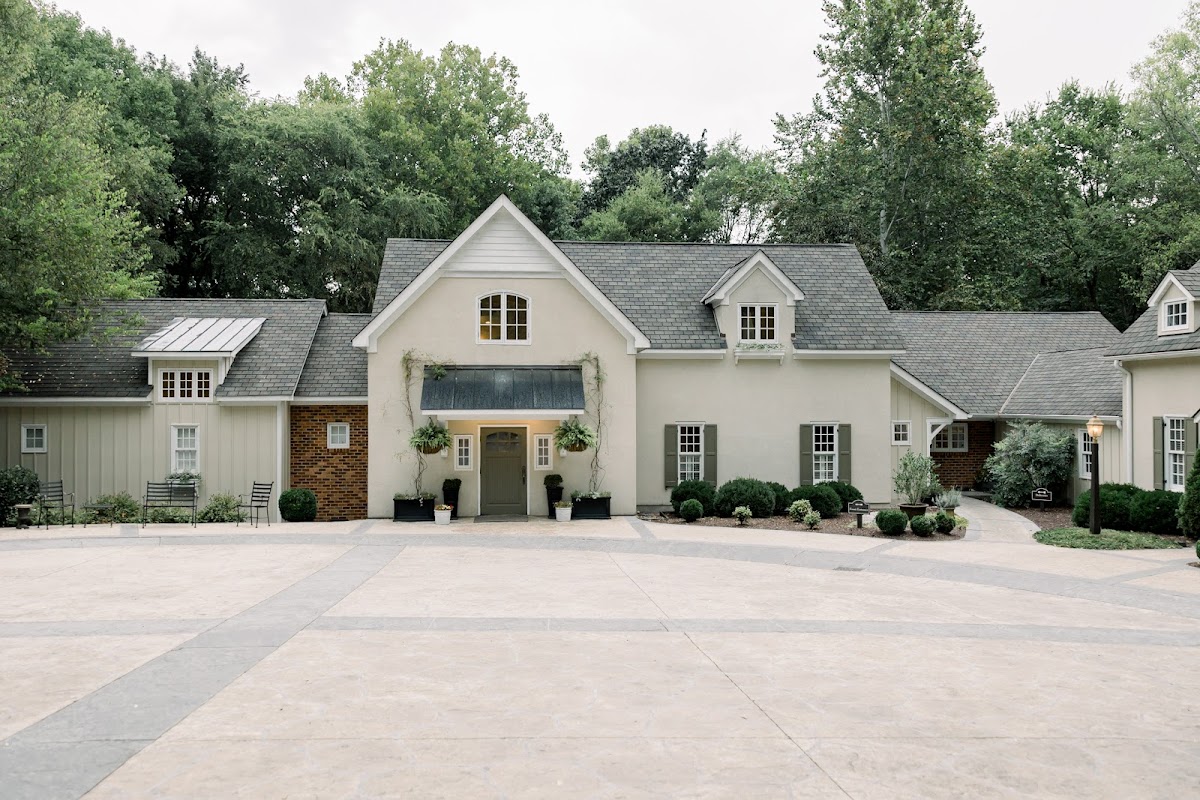
Designing for The Mill at Fine Creek requires a balance between the raw, heavy texture of 18th-century stone and the refined, modern interiors of the banquet hall. This is not a venue for rigid, overly manicured arrangements; the environment demands an organic, garden-centric approach that feels as though it was gathered from the surrounding Powhatan countryside. We know this venue intimately and focus our designs on highlighting the historic masonry rather than obscuring it.
The primary opportunity here lies in the contrast of materials. The grey-toned stone ruins and the lush green ivy provide a neutral but high-impact palette. Floral budgets at The Mill are most effective when they prioritize “growing” installations at the ceremony sites and vertical interest in the reception hall to bridge the gap between the floor and the high ceilings.
The Spaces
The Ruins
This is the venue’s most iconic space, featuring the original stone facades of the 1730s mill. The ivy is permanent, providing a built-in greenery base.
- What works: Asymmetrical floor installations or “meadows” that appear to grow out of the pebbled pathways. These frame the couple within the ruins without blocking the historic stone window frames.
- Skip: Traditional four-post chuppahs or heavy metal arches. They often look flimsy or out of place against the massive stone walls.
- Watch out: The ground is a mix of pebbles and stone. All floral structures must be weighted internally and leveled to prevent tipping on the uneven surface.
- Budget hero move: Two large, lush floor “nests” at the altar. These can be moved to the base of the sweetheart table or the entrance of the banquet hall after the ceremony.
The Creek Ceremony Site
A serene, shaded location along the banks of Fine Creek. The vibe is quiet, natural, and deeply rooted in the Virginia landscape.
- What works: Airy, textural arrangements that incorporate grasses or “leggy” blooms like cosmos and ranunculus. This mirrors the wild nature of the riverbank.
- Skip: Large, blocky arrangements. They feel too formal for the water’s edge and can block the view of the creek for seated guests.
- Watch out: Moisture and wind. If the creek is high or the day is breezy, ensure mechanics are water-resistant and heavily anchored.
- Budget hero move: Small, high-impact aisle markers attached to the inner chairs. These add color to the long walk down to the water without requiring a massive investment.
Main Banquet Hall
A large, modern space with floor-to-ceiling windows and a prominent balcony. It is a clean slate that needs floral warmth to feel intimate.
- What works: Greenery on the balcony railing. This is the most effective way to fill the 6,500-square-foot room visually. It brings the “garden” feel of the ruins inside.
- Skip: Short, squat centerpieces. In a room with this much volume and ceiling height, small arrangements can look lost.
- Watch out: The natural light. Because of the massive windows, floral colors will look true-to-tone during the day but may shift under the warm evening house lights.
- Budget hero move: Alternate between tall, airy branch centerpieces and low, lush compotes. This creates visual depth across the room without the cost of 15+ tall installations.
What Works at The Mill at Fine Creek
Organic, “Found” Palettes. Lean into muted tones—dusty blues, sage greens, and ochres—that complement the natural stone and the nearby creek.
Textural Masonry Framing. Use flowers to frame the “windows” of the ruins. Asymmetrical placements look more modern and high-end in this historic environment.
Balcony Greenery. Utilizing the overlook in the banquet hall is the fastest way to make the reception feel expensive and cohesive with the outdoor spaces.
Self-Supporting Mechanics. Since you cannot nail into the ruins or the creek bed, all designs must be freestanding. This requires a designer who understands heavy weighting and stable bases.
Seasonal Alignment. The Mill is at its best when it mirrors the season. Think flowering branches in spring, lush greens in summer, and dried textures or berries in late autumn.
Budget Guide
| Tier | Investment | Floral Strategy |
|---|---|---|
| Essentials | $1,750 - $3,000 | Personal flowers plus high-impact bud vases or small compotes for the reception. A focused focal point for the Ruins. |
| Sweet Spot | $3,500 - $5,500 | Includes ceremony floor meadows that repurpose to the sweetheart table, plus a mix of tall and low centerpieces. |
| Full Experience | $6,000 - $8,500 | Full balcony greenery installation, lush ceremony ruins decor, and premium, textural centerpieces for all tables. |
| Statement | $9,500+ | Large-scale installations at the Ruins entrance, a full greenery canopy or balcony “overgrowth,” and premium blooms throughout. |
The character of The Mill at Fine Creek is defined by its 300-year-old stone, so your budget should prioritize designs that feel “emergent” and organic rather than overly manicured.
Tips
Plan for the flip. If you are using the hall as a rain backup for the ceremony, ensure your floral designs are modular and can be moved quickly by the team.
Repurpose the Ruins flowers. Those stone-based ceremony arrangements are perfect for the fireplace or the base of the banquet hall balcony.
Check the brewery schedule. Since Fine Creek Brewing is on-site, consider a cohesive “rehearsal to wedding” floral plan if you are using both spaces.
Account for the wind at the Creek. The natural amphitheater can catch a breeze; light floral pillars will need significant internal weight.
Respect the masonry. The venue is part of a historic district; ensure your florist uses non-invasive mechanics that don’t require any attachment to the 1730s stone.