
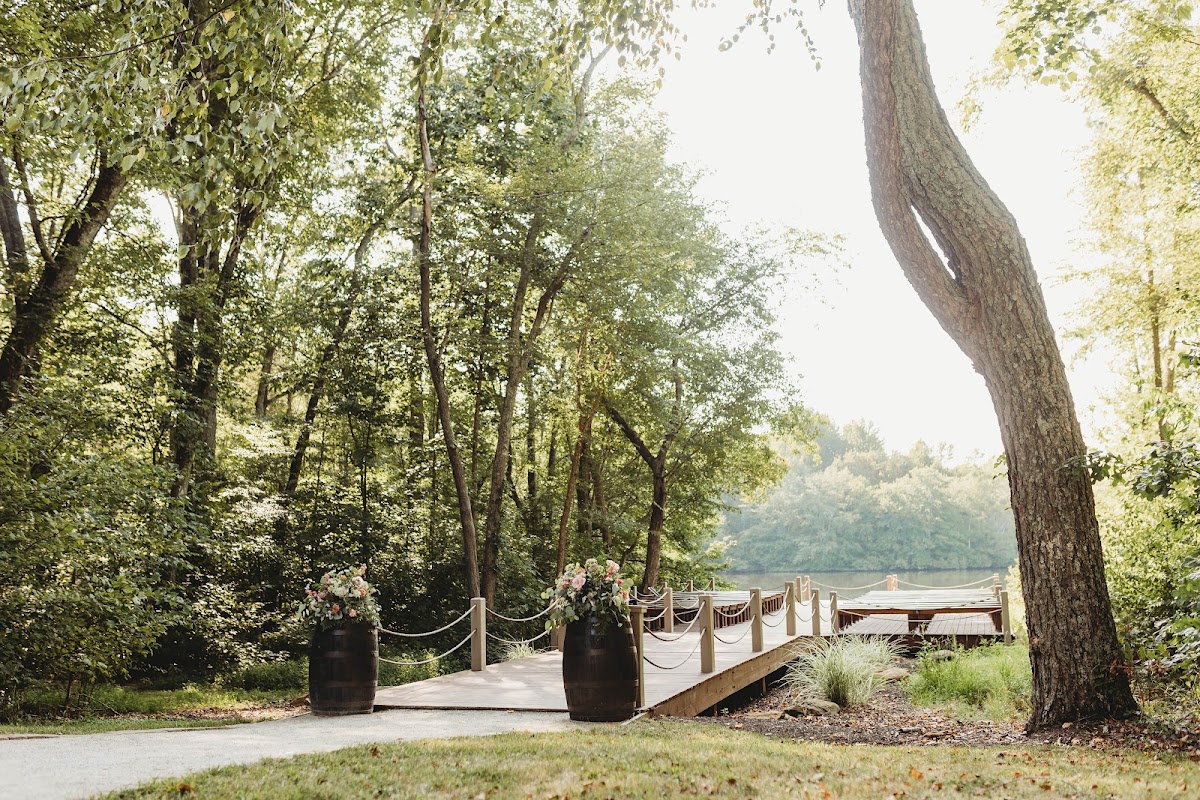
Lakeside Estate demands a design strategy that respects the horizon line while embracing the transparency of its glass-walled reception structure. The floral opportunity here lies in the transition from the organic, wind-swept textures of the water’s edge to the structured, light-filled elegance of the tent. Successful designs at this venue don’t compete with the landscape; they frame it using architectural greens and intentional color blocking.
The Spaces
Dockside Ceremony Site
The dock is a minimalist’s dream but a logistical challenge for tall structures. Because this site is fully exposed to the lake, wind is a primary factor in design stability. We recommend focusing on “growing” installations that appear to emerge from the dock planks or the grassy point rather than top-heavy pedestals.
- What works: Ground-level floral nests or semi-circle “meadow” installations that wrap around the couple. These provide a lush foreground for photography without blocking the sunset or the water.
- Skip: Tall, thin pedestals or lightweight arches. The wind off the lake can be unpredictable, and top-heavy designs are a liability here.
- Watch out: The dock has a weight limit and a specific footprint. Ensure any “growing” installations are built on heavy, low-profile bases that won’t shift.
- Budget hero move: A single, high-impact ground-based installation at the aisle entrance. Once the ceremony concludes, these pieces can be easily moved to the base of the sweetheart table or the entrance of the glass tent.
Glass Enclosed Tent
This is the venue’s crown jewel. The glass walls mean the surrounding forest is a permanent guest at your reception. Because the tent is climate-controlled, we have more flexibility with delicate blooms that might struggle in the Virginia humidity. The high ceiling and existing rigging points are begging for verticality.
- What works: Elevated hanging installations. Utilizing the tent’s internal structure to suspend greenery or floral clouds draws the eye upward and fills the volume of the space without crowding the tables.
- Skip: Small, low-detail centerpieces. In a space with this much height and natural light, tiny arrangements can look like clutter rather than decor.
- Watch out: The glass reflects everything. Ensure the “back” of every arrangement is as finished as the front, as guests will see the reflections from multiple angles.
- Budget hero move: Focus your budget on a few “statement” tables with tall, airy arrangements (think blooming branches or tall delphinium) and keep the remaining tables simple with bud vases or candlelight.
The Patio
The stone patio and wooden deck serve as the bridge between the ceremony and reception. This area is often used for cocktail hour and features a fire pit and bench seating. The floral goal here is movement and guest flow.
- What works: Flanking arrangements at the transition points—where the patio meets the deck or the tent entrance. These define the space and signal to guests where to move next.
- Skip: Large, bulky centerpieces on cocktail rounds. Keep these surfaces clear for drinks and hors d’oeuvres.
- Watch out: Propane fire pits generate heat that can wilt nearby flowers quickly. Keep arrangements at a safe distance.
What Works at Lakeside Estate
High-contrast palettes against the greenery. Because the glass tent puts the woods on center stage, a palette of whites, creams, and soft greens can sometimes get lost. Consider “punchier” tones—deep burgundies, terracotta, or even a crisp “French Blue”—to ensure the flowers stand out against the dominant green backdrop.
Architectural foliage in the timber frame. The custom wood construction of the estate house is a beautiful, heavy texture. We like to soften these lines with trailing Smilax or Italian Ruscus. Climbing vines look particularly “at home” against the timber beams, making the structure feel like it’s part of the landscape.
Ground-focused ceremony designs. To keep the lake view unobstructed, we advocate for the “floral nest” approach. By keeping the bulk of the flowers below waist height, you create a beautiful frame for the couple that doesn’t hide the very reason you chose a waterfront venue.
Repurposing with intention. The proximity of the ceremony site to the reception tent makes repurposing highly feasible. Aisle meadows can become a lush border for the dance floor, and the ceremony backdrop can be moved behind the sweetheart table to provide a focal point within the glass walls.
Monobotanical moments. In a venue with so much natural visual information (water, woods, timber, glass), monobotanical arrangements—using large groupings of a single flower type like Hydrangea or Tulips—can provide a clean, modern counterpoint that feels sophisticated rather than busy.
Budget Guide
| Tier | Estimate | Floral Strategy |
|---|---|---|
| Essentials | $1,750 - $2,500 | Focuses on high-quality personal flowers (bouquets/boutonnieres) and a significant ceremony focal point that can be moved to the reception. |
| Sweet Spot | $3,500 - $5,000 | Includes full personal flowers, a lush ground-level ceremony installation, and a mix of bud vases and medium centerpieces for the tent. |
| Full Experience | $6,000 - $8,500 | Adds a statement hanging installation in the glass tent, plus enhanced aisle decor and premium blooms like garden roses and ranunculus. |
| Statement | $9,000+ | Full-scale floral “growth” throughout the venue, including timber-frame installations, overhead floral clouds, and a completely transformed ceremony point. |
Lakeside Estate is a venue that rewards those who lean into its specific architectural duality—rustic wood meets transparent modernism.
Tips
Think about the “blue hour” when choosing flower colors. As the sun sets over the lake, the light shifts significantly; cool-toned flowers (lavenders, blues) will recede, while warm tones (peaches, yellows) will continue to glow.
Coordinate your setup time with the all-inclusive timeline. Since the venue often provides catering and coordination, ensure your florist has a clear 2-3 hour window in the tent before guest arrival to handle rigging and placement.
Prioritize “finished” designs for the glass tent. Because guests can walk around the exterior of the tent, the backs of your arrangements are often just as visible as the fronts.
Use the timber beams for height without the cost of rentals. The existing architecture provides natural “anchors” for greenery, allowing you to create a high-impact look without needing to rent expensive arches or stands.
Account for the Virginia humidity on the dock. Even with a breeze, the lakeside sun can be brutal; choose hardy greens like Eucalyptus or Salal and sturdier blooms like Lisianthus for the ceremony site.---