
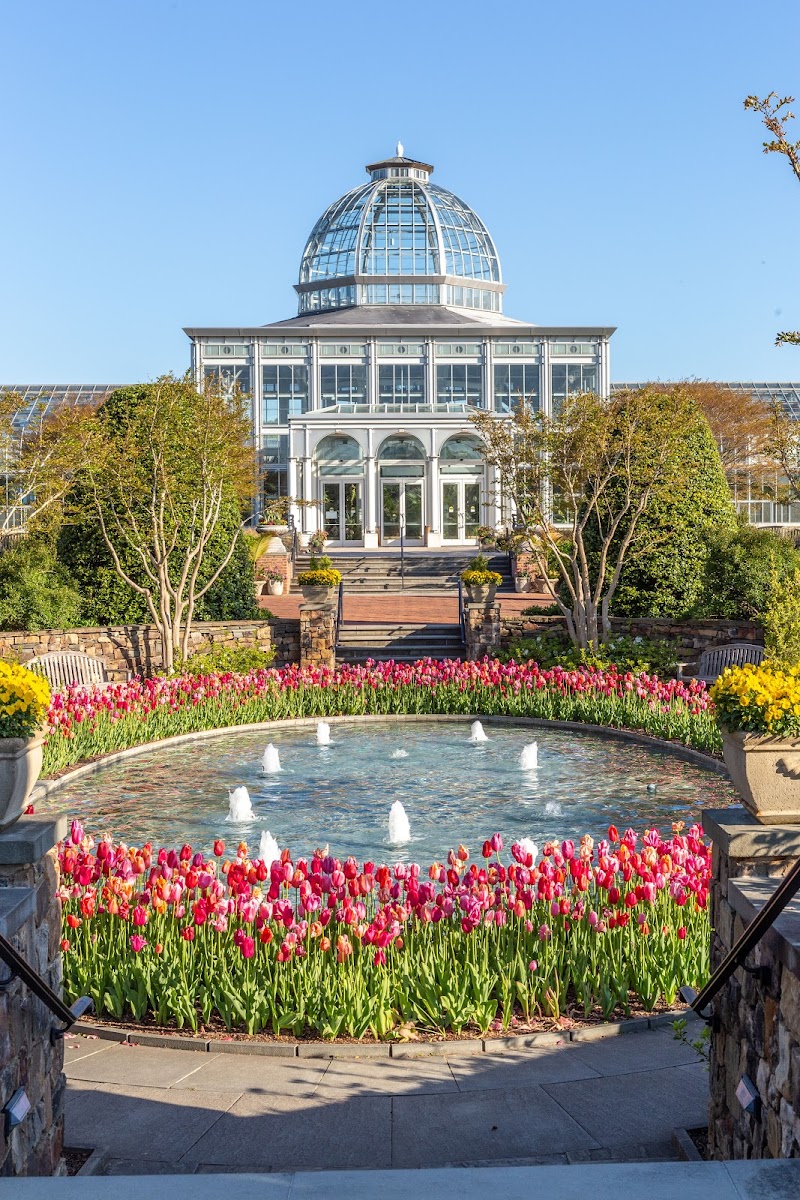
Floral design at Lewis Ginter Botanical Garden is an exercise in restraint and architectural harmony. With 82 acres of curated landscapes and the iconic glass conservatory, the challenge isn’t adding beauty, but ensuring your arrangements don’t get lost in the botanical noise. We know this venue intimately and understand that the most successful designs here are those that anchor the vastness of the gardens or lean into the Victorian-inspired architecture of the glasshouse.
The Spaces
The Conservatory
This is the crown jewel of the property. The soaring glass ceilings and metal framework provide a dramatic, light-filled environment that feels both indoor and outdoor.
- What works: Tall, architectural arrangements that draw the eye upward toward the dome. Use the metal framework for verticality. Tropical foliage or hardy orchids perform well in the high-humidity environment.
- Skip: Delicate, thin-petaled flowers like sweet peas or certain poppies that may wilt quickly in the humid, sun-drenched atmosphere.
- Watch out: The space is already lush; avoid low, bushy arrangements that get lost among the permanent tropical plantings.
- Budget hero move: Large-scale ground-level “growing” installations at the base of the framework to create a seamless transition from the garden to the architecture.
The Rose Garden
A classic, romantic choice for larger ceremonies. The space is defined by its semi-circular layout and thousands of blooming roses.
- What works: Clean, structured altar pieces that provide a focal point. Since the background is busy with color and texture, a monochromatic palette (all white or all cream) often looks most sophisticated.
- Skip: Multi-colored, “wild” wildflower looks that compete with the existing rose varieties.
- Watch out: The sun can be intense here; ensure all aisle markers are in heavy, stable containers or weighted to withstand the afternoon breeze.
- Budget hero move: Focus your entire budget on two massive “statement” pillars at the altar rather than many small clusters throughout the space.
Bloemendaal House
This historic 1895 home offers a more intimate, residential feel. It is perfect for those who want a garden setting with the comfort of a historic interior.
- What works: Classic, garden-style arrangements with a “picked from the grounds” aesthetic. Think footed bowls with movement and trailing vines.
- Skip: Ultra-modern, minimalist designs that feel at odds with the Victorian history of the house.
- Watch out: Space is tighter here than in the gardens; keep table arrangements low to encourage conversation in the cozy dining areas.
The Garden District
The primary spot for large-scale outdoor receptions and ceremonies. It is a blank canvas compared to the more specific “rooms” of the garden.
- What works: Large, impactful installations. This is the place for high-impact floral arches or heavy-weighted aisle meadows.
- Skip: Small, dainty centerpieces. They will look like an afterthought against the scale of the lawn.
What Works at Lewis Ginter Botanical Garden
- Ground-anchored installations. Because the sky is so open and the gardens so vast, arrangements that appear to “grow” from the ground help anchor the wedding party and provide a sense of place.
- Architectural verticality. In the Conservatory, use the height. Hanging installations or tall, slender pedestals prevent the decor from being dwarfed by the glass dome.
- Humidity-resistant varieties. The Conservatory and outdoor gardens in Richmond summers demand hardy blooms. Anthuriums, protea, lisianthus, and thick-leafed greenery are your best friends.
- Monochromatic or high-contrast palettes. To stand out against 82 acres of green, choose a palette that either leans into pure whites and creams or offers a sharp contrast, like deep burgundies or vibrant corals.
- Strategic repurposing. Move your ceremony pillars from the Rose Garden to the Conservatory entrance or the Bloemendaal House terrace to maximize your investment.
Budget Guide
| Tier | Investment | Floral Experience |
|---|---|---|
| Essentials | $1,750 - $3,500 | Focus on personal flowers and a few high-impact statements for the ceremony altar. |
| Sweet Spot | $3,500 - $6,500 | Full personal flowers, a significant ceremony installation, and elevated centerpieces for the reception. |
| Full Experience | $6,500 - $10,000 | Includes aisle meadows, large-scale reception installations, and lush designs for the Bloemendaal House terrace. |
| Statement | $10,000+ | Full-scale Conservatory transformations, overhead installations, and custom floral architecture. |
Lewis Ginter is a venue where the landscape does 70% of the work, allowing your budget to go toward high-quality, high-impact focal points rather than basic greenery filler.
Tips
- Mind the humidity. If your reception is in the Conservatory, your flowers are effectively in a greenhouse; choose varieties that won’t turn brown by the cake cutting.
- Load-in logistics. The garden is sprawling; ensure your floral team has a clear plan for transporting large installations across the gravel and stone pathways.
- Seasonality is king. Coordinate your color palette with what is actually blooming in the garden—azaleas in spring, roses in summer, and maples in fall.
- Weighted mechanics. Outdoor areas are prone to wind; all floral structures must be professionally weighted to prevent tipping on the open lawns.
- Repurposing is difficult. Due to the distance between event spaces (like the Rose Garden to the Kelly Education Center), don’t assume every piece can be moved easily without extra labor.