
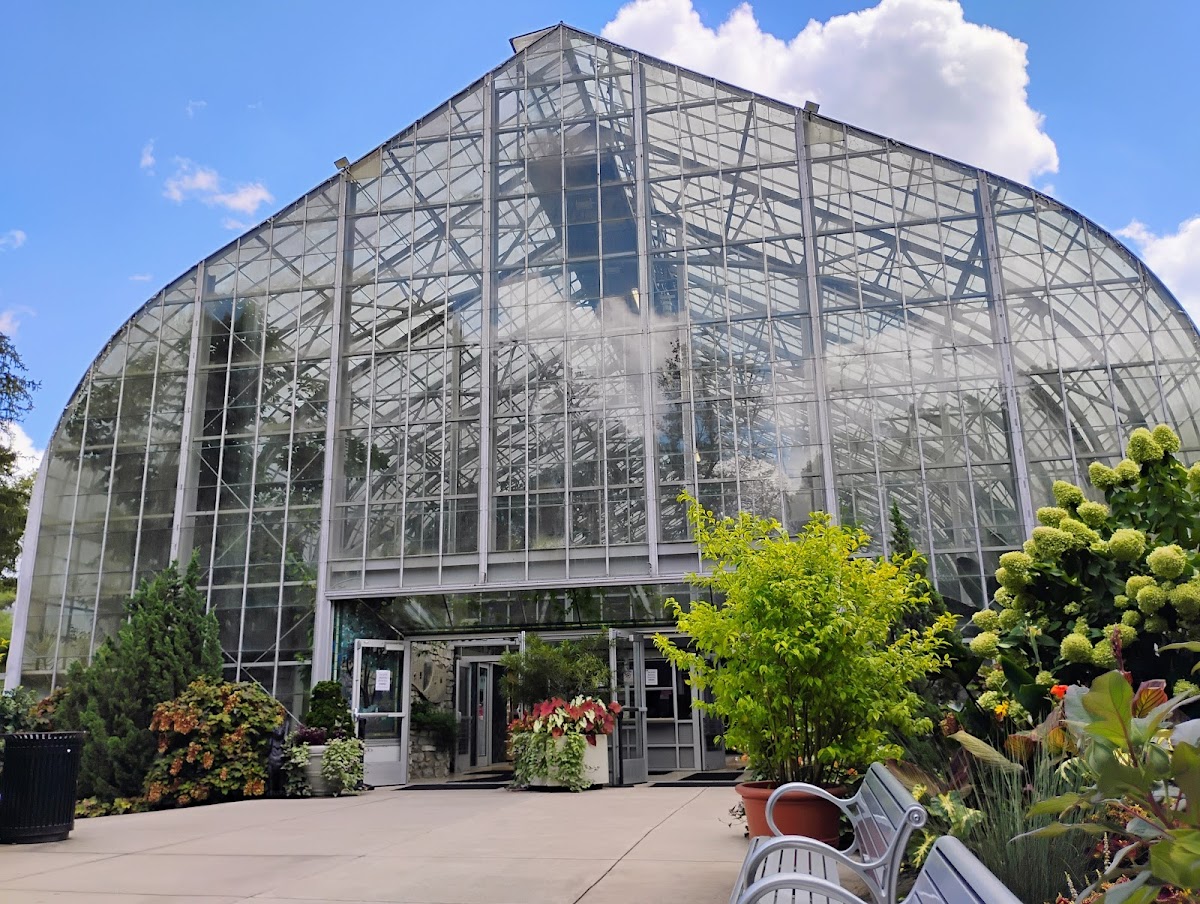
You drive up Gilbert Avenue through the morning neighborhoods of Cincinnati, turn onto Eden Park Drive, and suddenly the city drops away. The road winds upward through one of Ohio’s oldest municipal parks, past the Cincinnati Art Museum and tennis courts, until you crest the hill and there it is: a perfect Art Deco glass palace glinting in the sunlight, looking like something F. Scott Fitzgerald might have dreamed up between chapters. Krohn Conservatory announces itself not with fanfare but with geometry — clean lines, elegant curves, aluminum framing that catches the light at angles that change throughout the day. Then you step inside. The temperature shifts. The air goes thick and humid. And you are no longer in Cincinnati, Ohio, on a Tuesday afternoon. You are somewhere entirely else. The Rainforest Room opens before you with a hidden river winding past moss-covered rocks, a waterfall tumbling in the background, and a canopy of palms stretching toward that extraordinary glass ceiling thirty feet above. The scent is green and alive. The light is diffused through tens of thousands of panes of glass into something soft and magical. This is not a venue that needs explanation. It simply transports you. Poppy has designed Krohn Conservatory wedding flowers for 1 celebration here, and the lesson was immediate: less is more when nature has already shown up fully dressed.
About Krohn Conservatory
Krohn Conservatory opened in 1933 at the height of the Art Deco era, a gift to the city from Cincinnati Parks and designed by the architectural firm of A.M. Kinney and Associates. The structure is quintessentially Art Deco — geometric aluminum framing, clean modernist lines, and a soaring glass ceiling composed of over 20,000 panes that bathe the interior in natural light year-round. It is one of the largest public greenhouses in the United States, encompassing over 16,000 square feet of botanical displays across eight distinct themed rooms. This is a working conservatory with a serious horticultural mission. The staff are not party planners; they are botanists, horticulturists, and plant curators who maintain collections of international significance. That distinction matters when planning Krohn Conservatory wedding flowers, because you are working within a living museum where every plant has been chosen, placed, and tended with intention.
The conservatory sits on the crest of a hill in Eden Park, Cincinnati’s crown jewel of public green space, established in 1869 and spanning over 186 acres of woodland, gardens, and scenic overlooks. The park is anchored by cultural institutions — the Cincinnati Art Museum and the Cincinnati Playhouse in the Park are within a five-minute walk — and the neighborhood surrounding it, Mount Adams, is one of Cincinnati’s most picturesque: narrow brick streets, historic row houses, and restaurant patios with sweeping views of the Ohio River valley. For guests traveling from out of town, the location feels both accessible and special. Downtown Cincinnati is less than ten minutes away by car, but Eden Park’s hilltop setting and forested surroundings create the sense of an escape.
The venue is managed by Premier Park Events, which handles all event logistics and vendor coordination. Couples must select catering from an approved vendor list, with confirmed caterers including Village Pantry Catering, Chef’s Choice Catering, and The Delish Dish. The conservatory’s kitchen is for prep only, so all cooking happens off-site. Alcohol must be served by a licensed bartender, with a 12% service charge applied to all host bars. The venue requires all decorations to be approved in advance, and there are sensible restrictions: no rice, birdseed, or confetti (for the obvious reason that the plant collections cannot be compromised), and music must end by 11:30 PM. Amplified music is permitted both indoors and outdoors, which is a notable flexibility for a public park venue. Couples are responsible for cleanup either the night of the event or before 10 AM the following day.
For Poppy’s delivery and setup teams, Krohn presents specific logistical considerations. Load-in is straightforward via the main entrance, with parking available in the adjacent lot, but the conservatory’s interior paths are narrow and winding. Large installations must be carried in sections, and we always coordinate closely with the venue staff to understand which plants are untouchable and where we can safely position arrangements without disrupting the existing displays or blocking guest flow. The glass ceiling and controlled climate mean that flowers behave differently here than at outdoor venues — cooler temperatures and diffused light extend the vase life of blooms, but humidity in the Rainforest Room can cause delicate petals to wilt faster than expected.
Event Spaces & Floral Opportunities
Main Conservatory Interior
Capacity: 150 seated
Setting: The main conservatory is the jewel of Krohn, a glass-enclosed wonderland divided into eight distinct botanical zones, each with its own microclimate, plant collection, and aesthetic character. The Rainforest Room serves as the Grand Foyer and is the most dramatic space — a soaring glass cathedral filled with towering palms, ferns, and tropical plants, with a hidden river winding through the room and a waterfall cascading in the background. The Desert Room presents a stark contrast: a collection of towering saguaros, prickly pears, barrel cacti, and agaves arranged in a landscape that feels transplanted from Arizona. The Orchid House is a rotating showcase of phalaenopsis, dendrobiums, and cattleyas in bloom. The Palm House features majestic specimens that stretch toward the glass ceiling. The Fern House is a study in texture and shadow, with delicate fronds creating a lacy canopy. The Bonsai Gallery displays miniature trees that are decades old, each one a work of living art. And then, seasonally, there is the Butterfly Room — during the spring and summer butterfly show, this space is flooded with hundreds of Ecuadorian butterflies that flit among hibiscus, pentas, and lantana blooms. Each room is a world unto itself, and couples can choose to host their ceremony in one space and move guests to another for cocktails or photos.
Floral approach: The cardinal rule at Krohn is restraint and intention. This venue does not need you to bring in nature — nature is already here in abundance. The role of Krohn Conservatory wedding flowers is to provide intentional focal points that draw the eye and create ceremony structure without competing with the conservatory’s existing beauty. For ceremonies in the Rainforest Room, we favor a simple, elegant ceremony arch positioned in front of the waterfall, constructed from local smilax and Italian ruscus with clusters of white phalaenopsis orchids and trailing jasmine vine. The arch should feel organic and unstructured, as if it grew there overnight. Aisle markers can be minimal — perhaps clusters of white garden roses and monstera leaves in low terracotta vessels placed every third row. For the Desert Room, the aesthetic shifts entirely. Here, the goal is to complement the arid landscape without introducing anything that feels out of place. We use arrangements of protea (King, Queen, and Pink Ice varieties), leucadendron, pincushion flowers, and air plants in aged terracotta pots and weathered wooden boxes. Succulents can be incorporated, but sparingly — the room already has them in abundance. In the Orchid House, we lean into the existing collection by creating bridal bouquets and centerpieces that echo the orchids on display: cascading white phalaenopsis, spotted paphiopedilums, and vibrant purple dendrobiums paired with tropical foliage like ti leaves and anthurium foliage. The Palm House and Fern House require the lightest touch — these rooms are so lush that florals should serve as punctuation marks rather than main paragraphs. Consider a single large-scale urn arrangement at the entrance to each room, overflowing with textural foliage and one or two statement blooms like amaryllis or calla lilies. The Bonsai Gallery’s minimalist aesthetic calls for ikebana-inspired arrangements — clean lines, negative space, and a focus on form over abundance. If your wedding falls during the butterfly show, the Butterfly Room needs almost nothing. The butterflies themselves are the decoration, and guests will be transfixed.
Outdoor Tent Space
Capacity: Variable, depending on tent size and configuration
Setting: The outdoor tent space is set up on the grounds adjacent to the conservatory, typically a white pole tent with clear or solid sidewalls depending on season and weather. The tent overlooks the conservatory’s exterior and has easy access to the interior botanical rooms for guest flow and photo opportunities. The space is a blank canvas — white tent fabric, basic lighting, and tables and chairs in your choice of configuration. Unlike the conservatory interior with its abundant natural features, the tent relies entirely on décor, lighting, and florals to create atmosphere. This is both a challenge and an opportunity. The tent is typically used for receptions, with ceremonies and cocktail hours happening inside the conservatory.
Floral approach: The outdoor tent is where Krohn Conservatory wedding flowers can be more abundant and expressive, because you are not working within the constraints of a curated botanical collection. This is your space to define. We recommend creating a strong visual connection between the tent and the conservatory interior by echoing plant materials from the different rooms. If your ceremony was in the Rainforest Room, bring monstera leaves, palm fronds, and tropical blooms like birds of paradise and ginger into the tent centerpieces. If the Desert Room was your backdrop, carry through succulents, protea, and desert-toned ceramics. For a cohesive look that references multiple conservatory rooms, consider centerpieces that vary by table: some tables feature lush tropical arrangements with orchids and palm fronds in brass vessels, others display desert-inspired compositions with protea and succulents in terracotta, and still others showcase romantic garden roses and ferns in ceramic compotes. This approach creates visual interest and gives guests the feeling that they are moving through different botanical zones even within the reception space. Hanging installations work beautifully in tents — consider a suspended garland of smilax, fern fronds, and white orchids running the length of the head table, or a series of floral chandeliers constructed from chicken wire frames filled with hydrangea, roses, and trailing ivy. The tent’s white fabric provides a neutral backdrop that allows bold floral colors to pop. If you are planning an evening reception, uplighting and string lights will be essential to create warmth and ambiance, and floral arrangements should be substantial enough to hold their own once the sun sets.
Wedding Flower Ideas for Krohn Conservatory
Deco Greenhouse
This concept honors the conservatory’s 1933 Art Deco origins with a palette of white, cream, ivory, and soft champagne accented by metallic gold and geometric structure. White phalaenopsis orchids form the foundation — cascading sprays in bridal bouquets, single stems in bud vases down the aisle, and large installations at the ceremony focal point. Pair them with white garden roses (Patience, Polo), ivory lisianthus, champagne-colored quicksand roses, and white calla lilies for a sophisticated, monochromatic look. Foliage is architectural: monstera leaves with their iconic splits, large paddle-shaped anthurium leaves, and glossy ti leaves in deep green or burgundy. Vessels are critical to this concept — use geometric brass planters, gold-rimmed glass cylinders, and Art Deco-inspired compotes with clean lines and angular handles. For the ceremony, consider a circular arch constructed from gold-painted metal tubing and draped with smilax, white orchids, and trailing jasmine. This palette works beautifully in the Rainforest Room or Palm House, where the lush green backdrop makes the white and gold florals feel even more luminous. It also photographs exquisitely under the conservatory’s glass ceiling, where natural light plays off the metallic accents.
Tropical Maximalism
For couples who want to embrace the conservatory’s exotic plant collections with unabashed enthusiasm, this concept goes bold, bright, and lush. The palette is saturated: hot pink, coral, tangerine, fuchsia, and lime green. Flowers include birds of paradise with their dramatic orange and blue petals, hot pink ginger, fuchsia dendrobium orchids, coral charm peonies (in season), orange ranunculus, and bright pink garden roses (Pink Piano, Hot Princess). Foliage is equally exuberant: elephant ear leaves, variegated ginger foliage, red ti leaves, and curly willow branches for height and movement. Arrangements are large-scale and abundant, overflowing from woven baskets, banana leaf-wrapped vessels, and carved wooden bowls. For the ceremony, create a lush tropical installation that incorporates live potted palms, monstera plants, and ferns surrounding a simple bamboo arch draped with smilax and punctuated with clusters of hot pink and orange blooms. This concept is ideal for the Butterfly Room during the seasonal show, where the live butterflies will actually be attracted to the bright blooms, creating magical photo opportunities. It also works in the Rainforest Room, where the bright colors pop against the deep green foliage and the sound of the waterfall adds to the tropical atmosphere.
Desert Minimalism
This concept takes inspiration from the Desert Room’s arid landscape and the Bonsai Gallery’s restrained aesthetic, creating a modern, minimalist look that feels organic and sculptural. The palette is earthy and muted: terracotta, rust, sand, sage green, dusty peach, and cream. Flowers include protea (King, Queen, Pink Ice, Pincushion), leucadendron, kangaroo paw, scabiosa pods, air plants, and succulents (echeveria, aeonium, sedum). Accent with a few soft blooms like quicksand roses, café au lait dahlias (in season), and peach ranunculus to prevent the look from feeling too stark. Foliage is textural and architectural: olive branches, seeded eucalyptus, dusty miller, and preserved grasses. Vessels are natural and unpolished: terracotta pots in varying sizes, unglazed ceramic bowls, weathered wooden boxes, and handmade pottery with organic, irregular shapes. Arrangements are asymmetrical and sculptural, with negative space as important as the materials themselves. For the ceremony, consider a simple installation of large potted succulents and cacti (rented or borrowed from the conservatory’s collection if permitted) flanking a minimal arch constructed from driftwood or weathered branches with a few sprays of protea and trailing air plants. This concept works beautifully in the Desert Room, where it feels like a natural extension of the landscape, and it also translates well to the outdoor tent, where the earthy tones complement the natural setting of Eden Park.
Seasonal Considerations
Cincinnati sits in USDA Hardiness Zone 6b, with humid continental climate patterns that create four distinct seasons, each offering different opportunities and challenges for Krohn Conservatory wedding flowers.
Spring (March - May): Spring in Cincinnati is a study in optimism and occasional betrayal. March can bring snowstorms or 70-degree days with equal likelihood. By April, the city begins to bloom in earnest — dogwoods, redbuds, and flowering cherries paint Eden Park in shades of white and pink, and tulips and daffodils carpet the hillsides. May is arguably the most beautiful month, with mild temperatures (60s-70s°F), lower humidity than summer, and the full explosion of spring blooms. Inside the conservatory, the Orchid House is in peak display, and the annual Butterfly Show typically runs from mid-March through mid-June, which is a major draw for couples who want that magical element for their ceremony. For Krohn Conservatory wedding flowers, spring offers the best selection of locally grown blooms: tulips, daffodils, hyacinths, peonies (late May), ranunculus, anemones, and sweet peas. The weather can be unpredictable, so if you are using the outdoor tent, have a backup plan and communicate with your florist about heat-sensitive blooms. Spring weddings at Krohn are popular, so book early.
Summer (June - August): Summer in Cincinnati is hot and humid, with temperatures regularly in the 80s and 90s°F and humidity that makes everything feel ten degrees warmer. The Butterfly Show typically runs through June, after which the conservatory returns to its standard botanical displays. For outdoor elements like the tent reception, summer heat is a real consideration. We avoid delicate blooms that wilt quickly (hydrangeas can be tricky unless kept hydrated, and sweet peas are a no-go), and instead focus on heat-tolerant varieties: roses (which are at their peak in June), lilies, sunflowers, zinnias, dahlias (late summer), lisianthus, and tropical flowers like ginger and heliconia. The conservatory’s interior is climate-controlled, so ceremony florals are protected, but anything in the tent needs to be hardy. Summer also brings thunderstorms, often in late afternoon, so if you are planning an outdoor ceremony or cocktail hour in the tent, have a rain plan. The upside of summer weddings is long daylight hours — sunset is not until after 9 PM in June — which means beautiful natural light for photos in Eden Park.
Fall (September - November): Fall is wedding season in Cincinnati, and for good reason. September and October offer mild temperatures (60s-70s°F), lower humidity, and the spectacular foliage display as Eden Park’s trees turn gold, crimson, and orange. November can be unpredictable — some years it is mild and sunny, others it is gray and rainy with early snow possible. Inside the conservatory, the Palm House and Rainforest Room feel particularly lush as the outdoor landscape begins to fade. For florals, fall is a dream season: dahlias are at their peak (café au lait, Jowey Winnie, Rip City), garden roses are in their second bloom, and locally grown sunflowers, zinnias, and asters are abundant. Fall foliage — oak leaves, maple branches, and dried grasses — can be incorporated into arrangements for texture and seasonal color. The earthy tones of fall pair beautifully with the Desert Room’s landscape and with the warm wood and brass vessels we use in our Deco Greenhouse concept. Fall weddings book up quickly, especially September and October weekends, so secure your date early and lock in your Cincinnati wedding florist well in advance.
Winter (December - February): Winter weddings at Krohn Conservatory are rare but magical. While Cincinnati winters can be cold (average temperatures in the 30s°F, with occasional snow and ice), the conservatory’s glass walls and climate-controlled interior create a warm, glowing sanctuary. The contrast between the cold, bare landscape outside and the lush greenery inside is striking and gives winter weddings at Krohn a unique, almost fairytale quality. The conservatory typically has a holiday lights display in December, which adds festive ambiance. For florals, winter requires more imported materials — amaryllis, white roses, hellebores, anemones, ranunculus, and evergreen foliage like noble fir, cedar, and pine. We also incorporate winter berries (hypericum, privet, ilex), pinecones, and frosted branches for seasonal texture. The Rainforest Room’s waterfall and tropical plants provide a stunning contrast to winter-themed florals, creating a “winter garden” aesthetic. The outdoor tent is less practical in winter unless heated, so most winter weddings keep everything inside the conservatory. Logistically, winter weather can impact vendor access and delivery schedules, so build in extra time and have contingency plans for icy conditions.
Poppy’s Expert Take
The conservatory is your florist, not your blank canvas. The single biggest mistake couples make at Krohn is over-designing. This venue already has more plant material than most florists could install in a week. Your role is not to fill space but to create intentional focal points. A ceremony arch, bridal bouquet, boutonnieres, and maybe a few aisle markers are often all you need inside the conservatory. Save your floral budget for the outdoor tent reception, where the blank slate allows for more elaborate installations.
Coordinate with the conservatory staff on plant placement. Krohn’s horticultural team has spent years curating the plant collections, and they are protective of their displays — as they should be. Before finalizing your floral design, walk through the venue with your florist and a conservatory staff member to identify which plants cannot be moved or obstructed and where you can safely position arrangements. Some couples assume they can move potted plants to create better ceremony backdrops; this is not permitted without explicit approval. Build your design around what is already there, not what you wish were there.
Time your wedding to the Butterfly Show if you want true magic. The seasonal butterfly show, typically mid-March through mid-June, is a game-changer for ceremonies in the Butterfly Room. Hundreds of live butterflies flitting among the flowers and occasionally landing on guests creates moments you cannot stage or replicate. If this appeals to you, book your wedding during the show dates and plan your ceremony in the Butterfly Room. Be aware that the butterflies are attracted to bright colors, so if you are wearing a vibrant floral crown or carrying a bouquet with hot pink or orange blooms, you may become a butterfly landing pad — which makes for extraordinary photos.
Load-in logistics require advance choreography. The conservatory’s interior pathways are narrow, winding, and lined with plant displays that cannot be bumped or disturbed. Large ceremony arches or tall arrangements must be carried in sections and assembled on-site. If you are planning an elaborate installation, communicate early with your florist about access points, timing, and whether additional hands will be needed for load-in. Poppy always schedules a site visit before Krohn weddings to map out the exact route from the parking lot to the ceremony and reception spaces and to confirm what can fit through doorways and around corners.
Humidity in the Rainforest Room affects certain blooms. The Rainforest Room is kept at higher humidity than the rest of the conservatory to support the tropical plants, which is wonderful for monstera leaves and ferns but challenging for delicate blooms like sweet peas, tulips, and hydrangeas. If your ceremony is in the Rainforest Room and you are set on using these flowers, communicate with your florist about delivery timing — arrangements should be installed as close to the ceremony as possible to minimize wilting. Hardier blooms like roses, orchids, and calla lilies hold up beautifully in the humidity.
The glass ceiling is a photographer’s dream and a lighting designer’s challenge. The conservatory’s glass ceiling provides gorgeous natural light throughout the day, which is a gift for photographers. However, it also means that uplighting and dramatic lighting installations have less impact than they would in a darker venue. If you are planning an evening reception in the outdoor tent, invest in quality lighting — string lights, uplighting on tent poles, and pin-spotting on centerpieces — to create warmth and ambiance once the sun sets. Inside the conservatory, the architectural lighting is sufficient, and the plants themselves create natural depth and shadow.
The Desert Room is criminally underused and incredibly photogenic. Most couples gravitate toward the Rainforest Room for ceremonies because it feels lush and romantic, but the Desert Room is a hidden gem. The collection of towering cacti and sculptural succulents creates a dramatic, unexpected backdrop that photographs beautifully and feels entirely different from the typical botanical garden wedding. If you are drawn to modern, minimalist aesthetics or desert-inspired palettes, ask about using the Desert Room for your ceremony or for a cocktail hour station. It is a conversation starter and a memorable departure from the expected.
What Poppy Couples Spend on Flowers Here
Poppy has designed flowers for 1 wedding at Krohn Conservatory, with an average spend of $3,406. This budget reflects the reality that Krohn’s abundant existing plant life reduces the need for extensive floral installations, allowing couples to focus their budget on high-impact personal florals and key reception pieces. Here is how different budget levels translate at this venue.
$2,000 - $3,500 | The Curated Essentials At this level, you are working with the conservatory’s natural beauty and adding only what is necessary to define ceremony structure and personalize the celebration. This typically includes: a simple ceremony arch or backdrop (smilax and Italian ruscus structure with a few clusters of white orchids or garden roses), minimal aisle markers (perhaps blooms in glass cylinder vases placed every third row, or rose petals scattered down the aisle), bridal bouquet, three to four bridesmaids’ bouquets, boutonnieres for the wedding party and immediate family, and low centerpieces for ten to fifteen guest tables in the outdoor tent (garden roses, seasonal filler, and foliage in simple glass or ceramic vessels). This budget level works beautifully at Krohn because the conservatory does so much of the aesthetic work for you. The focus is on personal florals that you will hold, wear, and be photographed with, plus enough reception florals to make the tent feel finished.
$3,500 - $5,500 | The Full Picture This mid-tier budget allows for more elaborate ceremony installations and fuller reception florals. You might include: a larger ceremony structure (perhaps a circular arch or asymmetrical installation with multiple flower varieties, textural foliage, and trailing vines), more substantial aisle markers (low arrangements in decorative vessels every other row, or a garland runner down the aisle with petals scattered on top), upgraded bridal bouquet with premium blooms like peonies or specialty garden roses, larger bridesmaids’ bouquets, corsages and boutonnieres for extended family, cocktail arrangements for high-top tables or bar displays, varied centerpieces for all guest tables in the outdoor tent (mixing heights and styles — some low and lush, others tall and dramatic on risers), and a possible welcome arrangement at the conservatory entrance or guest book table. At this level, you have the flexibility to bring more of your personal style into the tent space while still respecting the conservatory’s existing beauty. This is also the budget range where you can incorporate more expensive or out-of-season blooms like peonies (spring) or specialty dahlias (fall).
$5,500+ | The Immersive Experience At the top tier, you are creating a fully cohesive floral experience that flows from the conservatory interior to the outdoor tent with intentional design at every touchpoint. This budget includes: a show-stopping ceremony installation (perhaps a lush arch draped in vines, abundant blooms, and textured foliage, or a ground installation with potted plants, tall arrangements, and layered height), dramatic aisle design (garland runners, multiple arrangement clusters, or petals and foliage creating a pathway), premium personal florals for the entire wedding party, statement cocktail arrangements and bar florals, diverse reception centerpieces with a mix of styles and heights for all tables, hanging installations in the outdoor tent (floral chandeliers, garland runners suspended above the head table, or a greenery ceiling treatment), additional accent florals throughout (welcome sign florals, place card table arrangement, cake flowers, lounge area florals, and possibly a dramatic installation at the tent entrance). This tier also allows for luxury blooms that are expensive or hard to source — garden roses by the dozen, out-of-season peonies, specialty orchids, or dramatic tropicals like anthuriums and king protea. At this level, Poppy works closely with you to create a signature look that feels entirely custom and cohesive across every element of your celebration. The conservatory’s natural beauty becomes the backdrop for a layered floral experience that feels abundant, intentional, and entirely yours.