
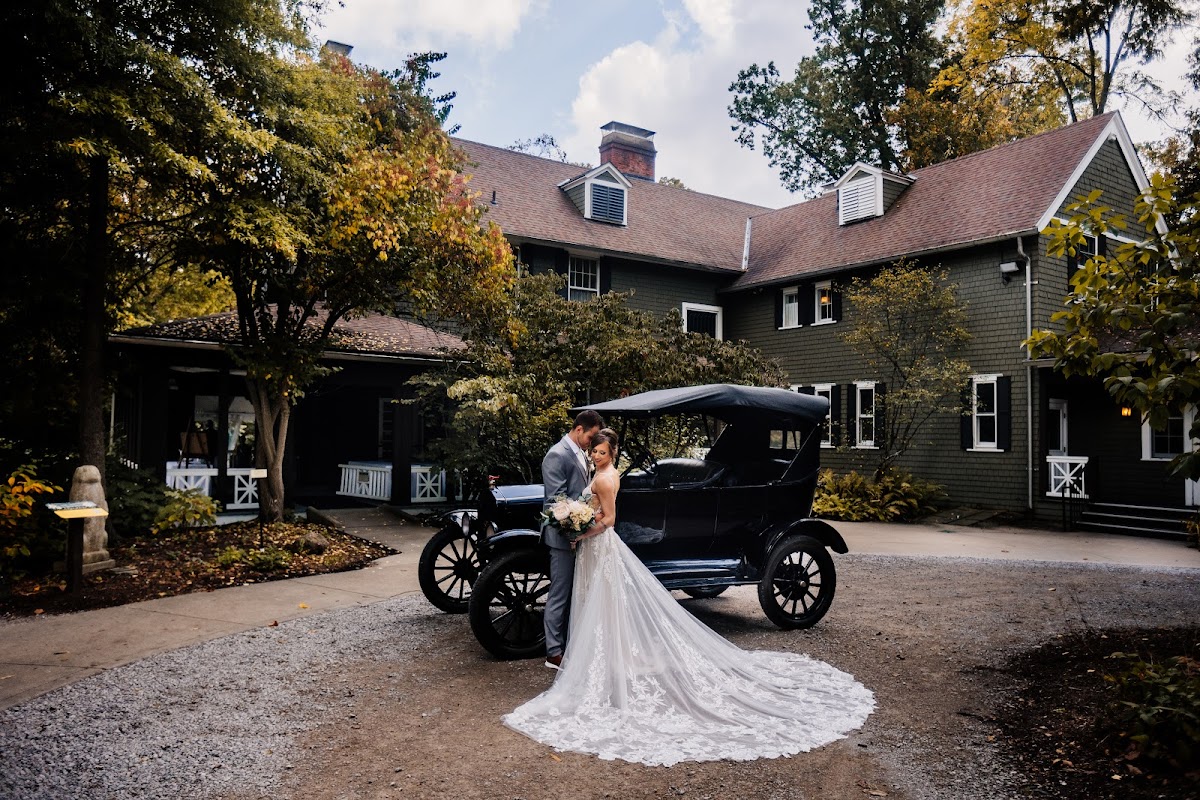
You leave I-275 behind at exit 59, turn onto Tealtown Road, and the transition is immediate. Strip malls give way to forest canopy. The road narrows, curves, and suddenly you are threading through 1,000 acres of woodland — mature hardwoods, native wildflower meadows, and the kind of quiet that feels like a physical presence. Then the trees part and the signs appear: Groesbeck Estate to the left, Krippendorf Lodge to the right. Two historic properties, both tucked into this vast nature preserve like secrets worth discovering. The first is a 1920s English manor with Gertrude Jekyll gardens and stone walls warmed by a century of Ohio sun. The second is a shingle-style lodge from 1900, all wood paneling and wraparound porches, perched above woodland gardens that seem to go on forever. Neither is trying to be something it’s not. They are not grand ballrooms or manicured country clubs. They are working historic buildings within an actual nature center — the kind of venues where your ceremony happens fifteen feet from a pond filled with native frogs, and your cocktail hour unfolds on a terrace where the forest is not a backdrop but a participant. Poppy has designed proposals for 21 couples considering these venues, and each time we visit, we are reminded why they choose it: this is not just a pretty place to get married. This is a place that matters, ecologically and historically, and that gravitas changes how you think about flowers.
About Groesbeck Estate and Krippendorf Lodge at Cincinnati Nature Center
The Cincinnati Nature Center was established in 1965 as a nonprofit environmental education organization, and today its 1,000 acres encompass forests, prairies, wetlands, and seventeen miles of hiking trails winding through Little Miami River valley ecosystems. Within this preserve sit two historic estates that function as event venues: Groesbeck Estate and Krippendorf Lodge. They are not sister properties in the typical sense — they sit about a mile apart, serve different guest counts, and offer distinct architectural experiences — but both operate under the Nature Center’s stewardship, which means every wedding here supports land conservation, environmental education, and native habitat restoration. That is not marketing copy. That is literally where your rental fees go.
Groesbeck Estate is the more formal of the two. Built in the 1920s as a private English manor house, it was added to the National Register of Historic Places and underwent a thoughtful renovation in 2017. The architecture is textbook English country estate: stone façade, leaded glass windows, and interiors featuring original metalwork by Arts and Crafts artisan Marie Zimmerman — hand-forged sconces, door pulls, and fireplace screens that alone are worth the visit. The grounds were designed by Gertrude Jekyll, the legendary British landscape architect who pioneered the herbaceous border style, and while a century has passed, the bones of her planting schemes remain visible in the tiered gardens and stone pathways. The estate’s indoor spaces accommodate up to 50 guests and are available November through April, making this the go-to choice for intimate winter weddings, rehearsal dinners, or micro-weddings that want historic gravitas without a massive guest list. Outside, the Tritsch Terrace and Haile Pillar Garden expand capacity to 120 for seasonal celebrations from May through October.
Krippendorf Lodge, by contrast, is the rustic sibling. Built in 1900 as a private country retreat, this shingle-style lodge is all wood paneling, exposed beams, and the kind of creaky-floorboard charm that makes you want to pour whiskey and tell stories by the fire. The indoor spaces can be configured to seat up to 75 guests year-round, with wood-paneled rooms that can be opened together or separated depending on your event flow. But the real star here is the stone terrace — a sprawling outdoor space with a custom-designed awning, built-in bistro lighting, and room for 220 seated guests. The terrace is available May through October, and it connects seamlessly to the lodge’s wraparound porch, which wraps three sides of the building and offers endless opportunities for cocktail hour setups with woodland garden views stretching in every direction.
Logistically, both venues sit about 15 miles east of downtown Cincinnati in Milford, Ohio, an easy drive from the city but far enough removed to feel like a true retreat. For Poppy’s design and delivery teams, access is straightforward via I-275 to Tealtown Road, with ample on-site parking and dedicated load-in areas at both properties. The Nature Center’s events staff is organized, responsive, and accustomed to working with outside vendors — Groesbeck Estate allows couples to select from a preferred caterer list, while Krippendorf Lodge works exclusively with Elegant Fare for catering. Florists are not restricted to a preferred list at either venue, which gives us creative freedom and allows us to source locally and seasonally without vendor politics getting in the way.
One detail worth noting: both venues operate on a seasonal schedule. Outdoor spaces (Tritsch Terrace, Haile Pillar Garden, Krippendorf Stone Terrace, and wraparound porch) are available only from May through October. If you are planning a November-through-April wedding, you will be working with the indoor spaces at Groesbeck Estate (capacity 50) or Krippendorf Lodge (capacity 75). This is not a limitation — winter weddings in these historic interiors are achingly beautiful — but it does require advance planning around guest count and spatial flow.
Event Spaces & Floral Opportunities
Haile Pillar Garden
Capacity: 120 seated (theater-style ceremony configuration)
Setting: This is the signature ceremony site at Groesbeck Estate, and it is unlike anything else in the Cincinnati wedding venue landscape. Imagine a perfect circle of stone pillars — eight in total, each about seven feet tall, made from the same golden fieldstone as the estate’s walls — arranged on a grassy lawn with professionally landscaped native gardens radiating outward in concentric rings. The pillars are not decorative. They are structural remnants from an earlier garden feature, now repurposed as an outdoor chapel of sorts, with the center of the circle serving as your altar space and guests seated in theater-style rows facing inward. The gardens surrounding the circle are textbook Gertrude Jekyll: layered perennials, ornamental grasses, and native Ohio wildflowers arranged by height and bloom time to create continuous color from May through October. On a June morning, the air smells like wild bergamot and native roses. By September, ironweed and asters have taken over in shades of violet and gold.
Floral approach: The genius of this space is that it already has extraordinary bones. The stone pillars provide architectural structure, the native gardens provide color and texture, and the circular layout creates natural intimacy without a single flower arrangement. That said, there are opportunities to enhance without overwhelming. The pillars themselves can be garlanded — we favor asymmetrical installations that start at the base and spiral upward, using smilax, Italian ruscus, and trailing jasmine vine as the green foundation, then weaving in clusters of blooms at varying intervals: Café au Lait dahlias, Quicksand roses, and white lisianthus for a soft, romantic look, or deeper tones like burgundy scabiosa, chocolate cosmos, and Amnesia roses for drama. Each pillar does not need identical treatment — in fact, varying the garland density and bloom placement makes the installation feel organic rather than rigid. At the circle’s center, where the couple will stand, consider a low, ground-level arrangement in a wide, shallow bowl — something that anchors the altar space without blocking sightlines. Think mounded garden roses, ranunculus, and hellebores with trailing tendrils of passion vine spilling over the vessel’s edge. For the aisle (which can approach from any direction given the circular layout), we often recommend scattered petals or small potted native wildflowers in galvanized buckets as aisle markers rather than tall arrangements, which would compete with the pillar garlands. The key is restraint. This space does not need you to prove anything. It needs you to listen to what it already is.
Tritsch Terrace
Capacity: 120 seated
Setting: The Tritsch Terrace is Groesbeck Estate’s covered outdoor reception space, available May through October with the option to add a custom all-weather tent for unpredictable Ohio spring and fall weather. The terrace itself is an expansive wooden deck cantilevered over a wooded ravine, offering views deep into the forest canopy where you can watch light filter through oak and maple leaves in real time. The tent, when installed, is a sailcloth-style structure with a peaked roof and open sides that can be enclosed if needed, providing weather protection without sacrificing the outdoor feel. The terrace railings are substantial wood beams, and the deck is large enough to accommodate a full dining setup, dance floor, and bar without feeling cramped.
Floral approach: Tent weddings are a florist’s playground because you start with a blank canvas, and the Tritsch Terrace tent is no exception. The tent poles — typically six to eight depending on configuration — are prime real estate for garlands or clustered installations. We favor full, lush garlands that wrap each pole from floor to about eight feet up, using a mix of greenery (seeded eucalyptus, silver dollar eucalyptus, and Italian ruscus for texture) and blooms (spray roses, lisianthus, stock, and seasonal filler like queen anne’s lace in summer or astilbe in spring). The garlands can be asymmetrical, with blooms concentrated at eye level and the greenery trailing upward, creating movement and visual interest without appearing overly formal. For centerpieces, the woodland backdrop calls for organic, garden-style arrangements in natural vessels — think ceramic compotes, weathered stone urns, or even wooden boxes lined with moss. Use blooms that echo the forest’s color palette: whites, creams, and soft blushes for spring; deeper tones like burgundy, plum, and burnt orange for fall. The terrace railings can be garlanded to connect the tent’s interior to the outdoor environment, creating a seamless transition from cocktail hour to reception. If the tent is not being used and the terrace remains open-air, keep arrangements lower and more compact to avoid wind issues — nobody wants a toppled centerpiece mid-toast — and consider potted arrangements or planted urns that add visual weight and stability.
Groesbeck Estate - Indoor Spaces
Capacity: 50 seated
Setting: The indoor spaces at Groesbeck Estate are available November through April and include several interconnected rooms on the main floor of the manor house. The aesthetic is refined English country: cream-colored walls, dark wood trim, leaded glass windows, and those remarkable hand-forged metal details by Marie Zimmerman — sconces that cast warm, flickering light, a fireplace screen with Arts and Crafts motifs, and door hardware that feels substantial and intentional. The stone fireplace is the room’s anchor, and in winter it is often lit, adding both warmth and ambiance. There are two large flat-screen monitors discreetly installed for slideshow presentations, and the event suite (essentially a private getting-ready room) includes an adjacent full bathroom, which is a godsend for couples and their wedding parties.
Floral approach: Historic interiors like this demand restraint and intentionality. The architecture is the star, and florals should support rather than compete. The fireplace mantel is the most obvious focal point and deserves a statement arrangement — we typically design a long, low garland-style piece that runs the mantel’s full length, starting with a lush green foundation (smilax, Italian ruscus, and seeded eucalyptus) and layering in blooms at varying heights and intervals. For winter weddings, think Patience garden roses, white ranunculus, hellebores, and eucalyptus pods, with touches of burgundy hypericum berries or privet berries for subtle color. For early spring (March-April), incorporate seasonal blooms like parrot tulips, anemones, and early cherry blossom branches. Centerpieces should be elegant and refined — low, lush arrangements in vintage-inspired vessels like silver julep cups, mercury glass compotes, or cream ceramic bowls. Keep them under twelve inches in height to maintain conversation flow across tables, which are typically smaller and more intimately spaced in these rooms. The color palette should complement the room’s warm neutrals: ivory, champagne, blush, and soft taupe with accents of burgundy or deep plum for contrast. The event suite offers an opportunity for a small, personal arrangement — something the bride or wedding party will see while getting ready. A simple stem arrangement in a bud vase or a small posy of garden roses and sweet pea can set a beautiful tone without requiring a significant budget allocation.
Krippendorf Lodge - Indoor Spaces
Capacity: 75 seated
Setting: Krippendorf Lodge’s indoor spaces are a study in rustic elegance. Built in 1900, the lodge retains its original wood paneling — honey-toned, richly grained, and aged to a warm patina that no modern finish can replicate. The rooms can be opened together for a flowing, open-plan reception or separated with pocket doors for more intimate dining and lounge areas. The second floor includes an event suite for the wedding party’s use, with natural light, vintage furnishings, and enough space for getting-ready photos. The lodge feels less formal than Groesbeck Estate — this is a place where you can imagine curling up with a book, not hosting a state dinner — and that relaxed, welcoming vibe is its greatest asset.
Floral approach: Wood paneling loves warm tones and organic textures. Avoid overly formal, structured arrangements here — they will feel out of place. Instead, lean into garden-style designs with a loose, natural hand. Centerpieces can be designed in rustic vessels: wooden crates, galvanized buckets, ceramic crocks, or even vintage copper pots. Use blooms in warm, earthy tones: sunflowers, zinnias, marigolds, and dahlias for summer; chrysanthemums, celosia, and hypericum berries for fall; garden roses, ranunculus, and hellebores for winter and spring. Textural foliage is key — seeded eucalyptus, olive branches, and Italian ruscus add movement and interest without overwhelming the blooms. Because the rooms can be separated or joined, consider how your floral installations will work in both configurations. A garland running along the buffet table or bar area can serve as a unifying element, tying the separate rooms together visually. The staircase leading to the second-floor event suite is another opportunity — a simple garland draped along the banister, with clusters of blooms at the newel posts, creates a beautiful transition between spaces and makes for stunning photos. Keep arrangements off the floor in high-traffic areas, but don’t be afraid to use elevated surfaces — sideboards, mantels, and windowsills — for layered installations that add depth and dimension.
Krippendorf Lodge - Stone Terrace
Capacity: 220 seated
Setting: The stone terrace at Krippendorf Lodge is the venue’s largest event space and its most versatile. Built from the same fieldstone as the lodge itself, the terrace is spacious, level, and covered by a custom-designed awning that provides weather protection without sacrificing the outdoor experience. The awning is a permanent structure — not a tent you rent for the weekend — which means no tent poles obstructing sightlines, no guy wires to trip over, and a clean, architectural look that photographs beautifully. Built-in bistro lighting is strung across the awning, creating a warm, romantic glow at dusk. The terrace opens onto the lodge’s wraparound porch, allowing for seamless indoor-outdoor flow during cocktail hour. The backdrop is pure woodland: mature trees, native plantings, and the kind of dappled light that makes every photo look like a Terrence Malick film.
Floral approach: This terrace can handle scale. With 220 guests, you need floral installations that read from across the space without feeling cluttered up close. The perimeter of the terrace — the stone edge where it meets the woodland garden — is ideal for low, mounded arrangements in varying heights. These can be placed in clusters rather than a continuous line, creating visual rhythm and allowing the natural landscape to peek through. Use substantial vessels like aged terra cotta pots, stone urns, or even galvanized tubs filled with potted arrangements that can later be planted. For centerpieces, the bistro lighting overhead provides ambient illumination, which means you don’t need tall, dramatic arrangements to fill vertical space. Instead, focus on lush, full, low centerpieces that encourage conversation and maximize the sense of intimacy despite the large guest count. The awning’s structure can support hanging installations — consider suspended floral chandeliers made from hoops wrapped in greenery and blooms, or individual hanging elements like glass orbs filled with votives and trailing jasmine vine. The bar area is another key floral moment. A garland draped across the front of the bar, with clusters of blooms flanking the ends, adds polish and defines the space. For the entrance to the terrace, consider a pair of large-scale urns or arrangements flanking the doorway from the lodge, signaling the transition from cocktails to dinner and anchoring the space visually.
Krippendorf Lodge - Wraparound Porch
Capacity: Standing cocktail reception
Setting: The wraparound porch at Krippendorf Lodge encircles three sides of the building and offers one of the most charming cocktail hour settings in the Cincinnati area. The porch is covered, with tongue-and-groove ceilings, vintage light fixtures, and enough space to accommodate high-top cocktail tables, lounge seating, and a bar setup without guests feeling crowded. The views from each side of the porch are different — one overlooks the stone terrace, another faces the woodland gardens, and the third offers a glimpse of the access drive and forest beyond. It is the kind of space where guests naturally spread out, explore, and find their own favorite corner.
Floral approach: Porch railings were invented for garlands. A continuous garland running the length of the railing — or even just sections of the railing on the two most visible sides — creates instant elegance and ties the porch into the broader floral story of the event. Use a lush mix of greenery (smilax, seeded eucalyptus, and Italian ruscus) with blooms woven in at intervals: garden roses, spray roses, lisianthus, and seasonal accents like cosmos in summer or privet berries in fall. The porch columns can be dressed with arrangements at the base — either low, mounded designs in rustic containers or taller arrangements on pedestals if you want more vertical presence. Cocktail tables on the porch should have small, simple arrangements — bud vases with a few stems of garden roses and filler, or small compotes with a tight cluster of blooms. The goal is to add beauty without taking up valuable tabletop real estate where guests need to set down drinks and appetizer plates. If the bar is stationed on the porch, a garland or arrangement at the bar front ties it into the overall design. And don’t overlook the smaller moments: a few potted ferns or native plants placed near the porch steps or in corners can add texture and interest without formal arrangements.
Wedding Flower Ideas for Groesbeck Estate and Krippendorf Lodge
Woodland Reverie
This concept embraces the forest setting with a palette drawn directly from the Ohio woodland floor in peak season. Start with a green foundation that feels foraged: maidenhair fern, leather leaf, seeded eucalyptus, and trailing smilax. Layer in blooms that read as wildflowers even if they’re cultivated — butterfly ranunculus in soft coral and blush, garden roses in champagne and cream (Patience, Quicksand, Ivory Tower), white astilbe for texture, and scabiosa in pale lavender. Accents include fiddlehead ferns in spring, berries (hypericum, privet, or blackberry) in summer and fall, and delicate branches like pussy willow or curly willow for structure. Vessels should feel natural and unrefined: ceramic crocks in soft gray or cream, wooden crates lined with moss, or galvanized buckets with a weathered patina. The effect is loose, organic, and deeply connected to the landscape outside — as if the arrangements were gathered on a morning walk through the preserve. This palette is stunning at Krippendorf Lodge’s stone terrace, where the woodland backdrop becomes part of the design, and in the Haile Pillar Garden, where the native plantings echo the wildflower aesthetic.
Arts and Crafts Romance
Inspired by Groesbeck Estate’s Marie Zimmerman metalwork and Gertrude Jekyll gardens, this concept leans into the Arts and Crafts movement’s reverence for handcrafted beauty and natural materials. The palette is sophisticated and restrained: deep burgundy (Rip City dahlias, Black Baccara roses), plum (Amnesia roses, purple lisianthus), dusty mauve (Quicksand and Cappuccino roses), and cream (O’Hara garden roses, white ranunculus). Foliage includes silver-toned elements like dusty miller and eucalyptus, plus darker, moodier greens like Italian ruscus and olive branches. Vessels are key here: aged brass compotes, hammered copper urns, wrought iron candelabras with floral cuffs, and dark ceramic bowls that echo the estate’s metal fixtures. Arrangements should feel abundant but not fussy — think loose, natural shapes with blooms at varying stages of opening, from tight buds to fully blown garden roses. This palette is particularly stunning in Groesbeck Estate’s indoor spaces, where the dark wood trim and fireplace provide a dramatic backdrop, and on the Tritsch Terrace at dusk, when the warm light plays against the deeper tones and creates an almost painterly effect.
Summer Meadow
For couples marrying in the heart of summer, this concept captures the exuberance of an Ohio wildflower meadow in July. The palette is warm, joyful, and saturated with color: sunflowers, zinnias in coral and hot pink, celosia in yellow and orange, marigolds, black-eyed Susans, and pops of purple lisianthus and scabiosa for contrast. Foliage includes wheat, oats, grasses, and wildflower foliage like goldenrod and Queen Anne’s lace (yes, the actual roadside weed — it is stunning in arrangements and costs nearly nothing). Vessels are rustic and unpretentious: mason jars, galvanized buckets, wooden crates, and vintage milk bottles clustered together. The vibe is farmers market meets garden party — casual, warm, and deeply approachable. This concept works beautifully on Krippendorf Lodge’s stone terrace, where the bistro lighting and rustic architecture support the relaxed aesthetic, and on the wraparound porch for cocktail hour, where the meadow-inspired arrangements feel right at home against the woodland views. Centerpieces can vary in height and vessel style, creating a collected, eclectic look that feels personal rather than formulaic.
Seasonal Considerations
Cincinnati’s climate is textbook Midwest: four distinct seasons, humid summers, cold winters, and transitional spring and fall periods that can swing wildly from week to week. Understanding these seasonal realities is essential for planning both the logistics and the floral palette of your Groesbeck Estate or Krippendorf Lodge wedding.
Spring (March-May): Spring in southern Ohio is glorious and unpredictable in equal measure. March can bring late snow or surprise 70-degree days. April is famously rainy (the saying “April showers” exists for a reason), and May is generally temperate and beautiful but can still surprise you with a cold snap. Outdoor spaces at both venues open in May, which is when the native gardens at Haile Pillar Garden and the woodland plantings around Krippendorf Lodge are coming alive with color. Spring bloom availability is exceptional: tulips (especially French and parrot varieties), ranunculus, anemones, hellebores, early garden roses, sweet pea, hyacinth, cherry blossom branches, and flowering dogwood. The palette can be soft and romantic (blush, cream, lavender) or bold and saturated (coral, fuchsia, deep purple). Logistically, have a rain plan. The all-weather tent on Tritsch Terrace is worth the investment if your date falls in April or early May, and the covered wraparound porch at Krippendorf Lodge is a gift for cocktail hours when the weather is uncertain. For florals, spring blooms are generally affordable and abundant, making this an excellent season for maximizing budget without sacrificing visual impact.
Fall (September-November): Fall is peak wedding season in Cincinnati, and for good reason. September and October offer mild temperatures, low humidity, and the spectacular color show of Ohio’s deciduous forests turning gold, orange, and crimson. The woodland setting at both venues becomes a natural floral installation in its own right — the trees do half the decorating for you. November can be cooler and more variable, with the possibility of frost and even early snow, so if your date is late in the season, the indoor spaces at Groesbeck Estate or Krippendorf Lodge become more appealing. Fall bloom availability is excellent: dahlias (including the massive Café au Lait variety), chrysanthemums, marigolds, celosia, hypericum berries, roses, ranunculus, and stunning seasonal foliage like oak leaves, sugar maple branches, and burgundy-toned viburnum. The fall color palette can lean warm (rust, burnt orange, goldenrod) or moody