
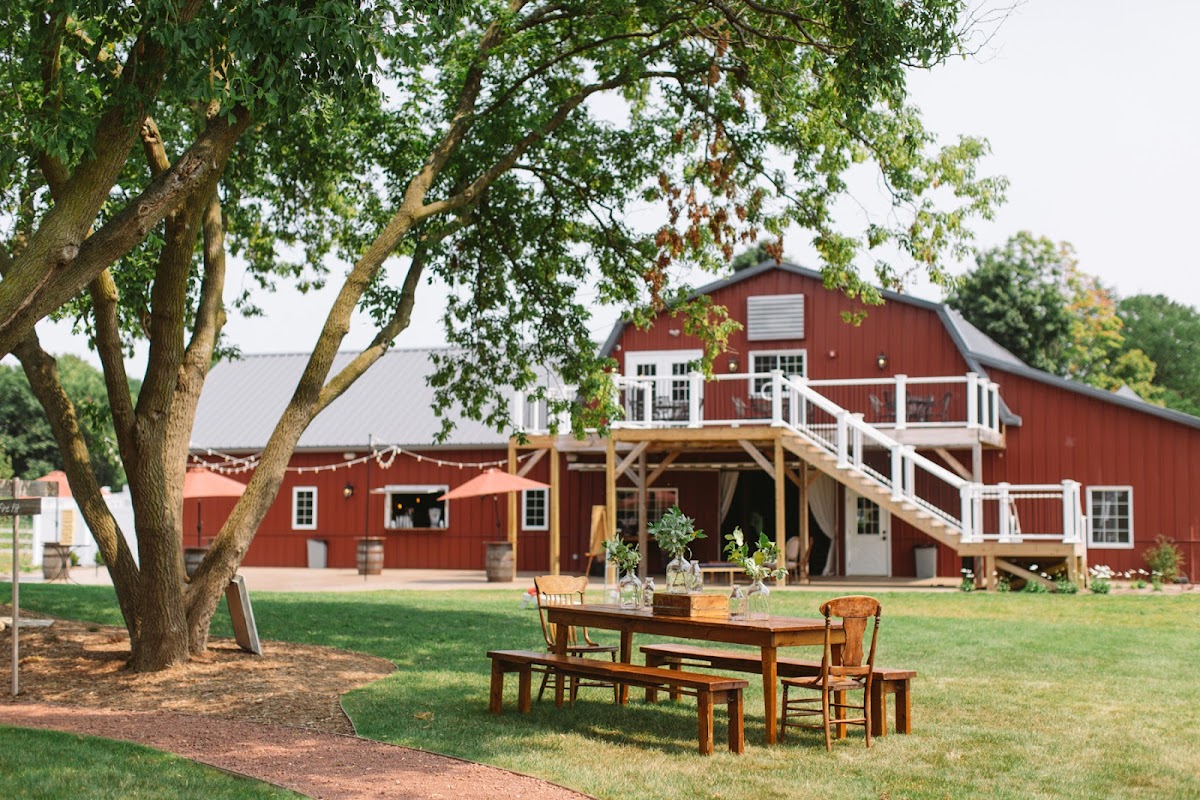
You turn off Highway 83 somewhere between Milwaukee and Madison, into the kind of Wisconsin countryside that still exists if you know where to look. The Bark River meanders through fields that roll gently toward the horizon. The land here is working land — farmland and meadows that shift color with the seasons, bordered by stands of oak and maple. And then, rising from twelve acres of this pastoral landscape, you see it: a barn, but not just any barn. The structure at Rustic Manor 1848 is the kind of building that makes you stop the car for a moment, because someone clearly cared enough to get every detail right. The rough-cut wood exterior, weathered to a warm honey-gray. The soaring roofline. The way the property unfolds across meadows and wooded trails, with that ivy-covered farmhouse tucked to one side like something out of a storybook. This is not a venue trying to approximate rustic charm. This is the real thing, thoughtfully preserved and expanded into something that can hold 275 guests in climate-controlled comfort while still feeling like you’ve stepped into the Wisconsin countryside circa 1848. Poppy has received inquiries from 23 couples planning Rustic Manor 1848 weddings, and every one of them mentions the same thing: the place just feels right.
About Rustic Manor 1848
Rustic Manor 1848 occupies nearly twelve acres in Hartland, Wisconsin, right in the heart of the Lake Country region that stretches between Milwaukee and Madison. The property is bordered by the Bark River and surrounded by working farmland, wooded trails, and open meadows — the kind of landscape that changes dramatically with the seasons but never stops being beautiful. The name references the original farmhouse on the property, which dates to 1848 and still stands today, its exterior wall covered in ivy that fills in by June and lasts through October, creating one of the most photographed backdrops in Wisconsin wedding photography. The barn itself is a more recent addition, but you would never know it from the craftsmanship. Over 8,000 square feet of interior space is cloaked in authentic rough-cut wood with exposed beams that soar overhead, all of it climate-controlled with zone heating and air conditioning — a crucial detail for Wisconsin, where summer weddings can be sweltering and October celebrations require real heat.
The architecture walks the line between rustic authenticity and modern functionality. The rough-cut wood interior provides warmth and texture without feeling overly staged or themed. The exposed beams are structural, not decorative. The 30-foot handcrafted bar (some sources say 32 feet, but who’s measuring when it’s that impressive) is a genuine work of carpentry, complete with a flip-out window that connects the indoor bar service to the outdoor patio, allowing guests to order cocktails from either side. The whiskey barrel cocktail tables on the patio are not rented — they belong to the property. The wooden pergola at one of the outdoor ceremony sites was built on-site. These details matter because they create a sense of place that feels authentic rather than fabricated, which in turn allows floral design to enhance rather than compensate.
Logistically, Rustic Manor 1848 sits about 30 minutes west of Milwaukee and roughly an hour east of Madison on Highway 83, making it accessible to the entire southeastern Wisconsin region while still feeling like a countryside escape. The town of Delafield, with its charming downtown and additional lodging options, is less than three miles away. For Poppy’s design and delivery teams, the venue is straightforward to access with ample load-in space near the barn entrance and a private vendor staging room on-site for setup and storage — a luxury that many rustic venues overlook. The venue provides parking for up to 275 guests on the property, and the events team is organized and communicative about vendor timelines.
Rustic Manor 1848 operates with a preferred caterer list, though select outside caterers can be approved. The venue provides full bar service with their own liquor license, and bartenders are included. There are two spacious bridal preparation suites with salon-style setups, which means natural light for getting-ready photos and enough room for a full wedding party on each side. The property even includes an on-site honeymoon suite with a king bed, located just one flight of stairs from the main venue — a thoughtful touch for couples who want to stay on the property without driving anywhere at the end of the night.
Event Spaces & Floral Opportunities
Main Hall
Capacity: 275 seated
Setting: The Main Hall is where Rustic Manor 1848 makes its strongest impression. Over 8,000 square feet of interior space unfolds beneath exposed beams and rough-cut wood walls that have been finished to a warm, honeyed patina. The climate control is zone-based, which means the space stays comfortable year-round without the industrial hum of portable HVAC units. The 30-foot handcrafted bar anchors one end of the room, its flip-out window connecting to the outdoor patio and creating a visual and functional link between indoor and outdoor spaces. The wood tones throughout are warm neutrals — caramel, amber, wheat — which means the space complements nearly any floral palette without clashing. ADA-accessible restrooms are located within the barn, a logistical detail that matters more than couples often realize until they start thinking about elderly grandparents or guests with mobility considerations.
Floral approach: The Main Hall’s rough-cut wood interior is a florist’s dream because it provides texture and warmth without competing visually. Tall centerpieces work beautifully here — think 30-inch bronze compote vessels filled with Café au Lait dahlias, Quicksand roses, chocolate cosmos, and trailing jasmine vine, elevated high enough that guests can see across the table while still creating drama. Alternatively, low lush arrangements in weathered wooden boxes or galvanized metal troughs can run the length of long farm tables, overflowing with garden roses (Patience, Juliet, Keira), ranunculus, scabiosa, and textured greenery like dusty miller and eucalyptus. The 30-foot bar is a prime opportunity for a statement installation — we love a cascading garland that runs the full length, densely packed with smilax, Italian ruscus, olive branches, and clusters of blooms woven through at intervals. If the bar is a focal point during cocktail hour, consider elevated arrangements on either end, displayed in aged brass urns or wooden crates, visible from across the room. The exposed beams overhead can support suspended installations if properly rigged (always coordinate with the venue first), such as floral chandeliers or greenery installations that float above the dance floor. The warm wood backdrop enhances both romantic garden-style florals and more structured, elegant designs, so let the couple’s aesthetic drive the direction.
Hayloft
Capacity: Varies based on configuration
Setting: The Hayloft is an elevated space overlooking the Main Hall, accessible via stairs and offering a bird’s-eye view of the reception below. The soaring beams here are even more dramatic than on the main level, and the space can be configured for multiple purposes: a ceremony site with guests seated in rows facing a backdrop of beams and natural light, an additional lounge area with furniture and cocktail tables, or even a band or DJ platform for reception entertainment. The architectural bones are stunning — exposed wood, dramatic height, and a sense of openness that feels expansive despite the space being part of the larger barn structure.
Floral approach: The Hayloft’s soaring beams are an invitation for hanging floral installations. Suspended greenery garlands — think 15 to 20 feet of smilax, Italian ruscus, and olive branches interspersed with clusters of blooms — can be hung from the beams to create a floating installation that draws the eye upward and emphasizes the height of the space. If the Hayloft is being used for a ceremony, a large-scale backdrop installation works beautifully against the rustic wood: a wooden arbor or natural branch structure adorned with a full installation of blooms and greenery, asymmetrical and organic in style, with Café au Lait dahlias, Quicksand roses, white lisianthus, scabiosa, and trailing amaranthus creating texture and movement. If the space is configured as a lounge area, consider floral arrangements on side tables and mantels (if applicable), using vessels that echo the rustic setting — aged brass, weathered wood, or stone. The view down to the Main Hall from the Hayloft means that florals in this space are visible from below, so consider how the installations will read from multiple angles. This is also an excellent location for a suspended floral chandelier — circular or rectangular in form, densely covered with greenery and blooms, creating a focal point that can be seen from both the Hayloft and the Main Hall below.
Outdoor Ceremony Sites
Capacity: 275 seated
Setting: Rustic Manor 1848 offers multiple outdoor ceremony locations across its twelve acres, each with its own character. The pergola site features a wooden structure that frames the ceremony and provides an architectural focal point. The meadow sites offer open-field settings with grasses and wildflowers creating a natural backdrop, surrounded by views of the Bark River and farmland. The wooded areas provide dappled shade and a sense of intimacy, with trees creating a natural canopy overhead. All sites can accommodate the venue’s full capacity of 275 guests, and the choice often comes down to the couple’s vision and the season — meadows are stunning in summer when grasses are at their height, while wooded sites provide welcome shade during peak heat.
Floral approach: The wooden pergola is a prime structure for floral installations and should be treated as the ceremony’s focal point. A full pergola installation might include two substantial arrangements flanking the base (think oversized urns or wooden crates filled with a lush, organic mix of Café au Lait dahlias, blush and peach garden roses, white hydrangea, scabiosa, and trailing amaranthus), with a garland running across the top beam — densely packed with smilax, seeded eucalyptus, Italian ruscus, and blooms woven through at intervals. For a more asymmetrical approach, concentrate the floral installation on one side of the pergola in a cascading, organic style that appears to grow from the structure itself. In meadow settings, the natural landscape does much of the work, so consider a more minimal approach: a simple ceremony arch constructed from natural branches or weathered wood, adorned with a single focal installation on one side, and aisle markers using bundles of wildflowers and grasses tied with twine or placed in small galvanized buckets. In wooded settings, the trees create a natural canopy, so focus florals at ground level: a ceremony backdrop using a low, wide installation on a wooden bench or rustic table, and aisle markers using lanterns interspersed with small arrangements in glass vessels or wooden boxes. For all outdoor sites, consider the natural backdrop — the river, farmland views, wooded trails — and design florals that enhance rather than compete with the landscape. This is not the place for towering, formal arrangements; this is the place for organic, garden-inspired designs that feel rooted in the Wisconsin countryside.
Outdoor Patio & Deck
Capacity: Varies
Setting: The outdoor patio is where indoor and outdoor spaces flow together, thanks to the flip-out window from the 30-foot bar that allows guests to order cocktails from either side. The patio features the venue’s signature whiskey barrel cocktail tables — rustic, authentic, and utterly charming. The deck overlooks the surrounding countryside, providing views of meadows, farmland, and the Bark River. A gas fire pit area anchors one section of the outdoor space, creating a natural gathering spot for guests during cocktail hour or later in the evening when the sun goes down and the Wisconsin air turns cool.
Floral approach: The whiskey barrel cocktail tables are natural bases for small, lush arrangements. Think low, rounded designs in rustic vessels — aged ceramic crocks, galvanized metal buckets, or weathered wooden boxes — filled with garden roses (Juliet, Keira, Patience), spray roses, scabiosa, dusty miller, and eucalyptus, designed to be viewed from all sides and scaled appropriately for a cocktail table (8 to 10 inches in diameter and height). Alternatively, skip the barrel-top florals entirely and instead drape greenery garlands around the base of each barrel, loosely arranged and secured with twine, with small clusters of blooms tucked into the garland at intervals. The flip-out bar window is a focal point during cocktail hour, so consider a small garland or swag along the window frame (exterior side), using smilax, seeded eucalyptus, and a few statement blooms. The fire pit area can be enhanced with potted arrangements or clusters of lanterns interspersed with greenery, creating an intimate, lounge-like atmosphere. If there are deck railings, a loose garland can be draped along the length, secured at intervals, with blooms woven through — though keep it subtle and organic rather than formal and structured. The goal here is to enhance the rustic charm without overloading the space; these are transitional, secondary areas where less is often more.
Bridal Quarters
Setting: Two spacious bridal preparation suites with salon-style setups, each providing dedicated space for one side of the wedding party. The suites are designed with getting-ready photos in mind, offering natural light and enough room for hair, makeup, and the inevitable pre-ceremony chaos that comes with gathering a group of bridesmaids or groomsmen.
Floral approach: A single, beautiful arrangement in each bridal suite is all that’s needed. Place a lush, romantic arrangement on a side table, dresser, or near the salon setup — something that will appear in getting-ready photos without overwhelming the space. Use a vessel that complements the venue’s aesthetic (a brass compote, a ceramic vase, or a wooden box) and fill it with a generous mix of blooms from the wedding palette: garden roses, ranunculus, spray roses, scabiosa, and textured greenery. Scale should be substantial enough to read in photos but not so large that it takes over the room — think 12 to 15 inches in height and width. This is also where personal flowers can be stored before the ceremony: bouquets, boutonnieres, corsages, and any other personal flowers should be delivered to the bridal suites and kept in water until it’s time to distribute them. Consider adding a small bud vase with a single stem for the detail shots photographers love — a Juliet rose, a Café au Lait dahlia, or a statement bloom that represents the overall design.
Honeymoon Suite
Setting: An on-site king bedroom suite located just one flight of stairs from the main venue, designed for the couple to stay on the property after the reception ends.
Floral approach: A small, romantic arrangement for the nightstand or dresser is a lovely touch. Think simple and elegant: a low, rounded arrangement in a ceramic or brass vessel, featuring the couple’s favorite blooms from the wedding — perhaps a cluster of garden roses, a few stems of ranunculus, and some greenery. Alternatively, a single statement stem in a bud vase (a Café au Lait dahlia, a King Protea, or a dramatic orchid) creates a modern, minimalist look. This is a secondary detail, but it’s one the couple will notice and appreciate, especially in those quiet moments after the celebration winds down.
Wedding Flower Ideas for Rustic Manor 1848
Meadow & Vine
This concept draws directly from the property’s pastoral landscape, using a palette inspired by summer meadows and wild grasses. Start with a base of soft, organic blooms: ivory Patience garden roses, blush Keira garden roses, peach Juliet roses, and white lisianthus, all slightly ruffled and garden-grown in appearance. Add texture with scabiosa (both the bloom and the seedpod), chocolate cosmos for depth, and sprigs of astilbe in blush and cream tones. The greenery should feel wild and unstructured: seeded eucalyptus, Italian ruscus, jasmine vine, and actual grasses (if seasonally available) or bunny tail stems for movement. Vessels should be natural and varied: weathered wooden boxes, galvanized metal troughs, aged ceramic crocks, and clear glass cylinders wrapped with twine. For the ceremony pergola, create an asymmetrical installation concentrated on one side, densely packed with blooms and greenery and trailing down one post. For the Main Hall, use long wooden boxes running down the center of farm tables, overflowing with the meadow-inspired mix. This palette works beautifully in the outdoor ceremony sites, where the natural landscape echoes the floral design. It’s romantic without being precious, organic without being unstructured, and deeply rooted in the Wisconsin countryside.
Harvest Table
For autumn weddings, this concept leans into the rich, warm tones of the season. The palette is anchored by deep, saturated hues: burgundy Café au Lait dahlias, burnt orange ranunculus, terracotta-toned roses (Quicksand, Toffee, Cappuccino), burgundy carnations (yes, carnations — the modern varieties are stunning), and rust-colored chrysanthemums. Add texture with burgundy scabiosa, chocolate cosmos, privet berries, and hypericum berries in fall tones. The greenery should be equally rich: eucalyptus in darker green tones, olive branches, and fall foliage if available. Incorporate non-floral elements that nod to the harvest season: small pumpkins, gourds, and sprigs of wheat or dried grasses tucked into arrangements. Vessels should be rustic and substantial: aged bronze compotes, wooden crates, galvanized metal buckets, and dark ceramic containers. For the Main Hall, create tall centerpieces in bronze compotes elevated on wooden risers, surrounded by small pumpkins and candles in amber glass. For the 30-foot bar, design a cascading garland densely packed with eucalyptus, olive branches, and fall foliage, with clusters of dahlias and ranunculus woven through. This palette is warm, moody, and quintessentially autumn, playing beautifully against the rough-cut wood interior and the changing leaves visible through the windows and from the outdoor spaces.
Romantic Barn
This concept elevates the barn’s rustic charm with soft, romantic florals in a palette that feels timeless and elegant. Start with classic blooms in blush, cream, and ivory: Patience garden roses, O’Hara garden roses, Quicksand roses, white ranunculus, white lisianthus, and cream spray roses. Add softness with blush astilbe, white sweet peas (if seasonally available), and blush hellebores. The greenery should be lush and varied: seeded eucalyptus, silver dollar eucalyptus, dusty miller for silver-gray tones, and Italian ruscus. Vessels should feel refined but not overly formal: aged brass compotes, white ceramic urns, mercury glass, and clear glass cylinders. For the Hayloft ceremony, create a large-scale backdrop installation using a wooden arbor adorned with a full, organic installation of the romantic blooms and greenery, asymmetrical and flowing. For the Main Hall reception, design tall arrangements in brass compotes elevated on clear acrylic risers, allowing guests to see across the table while still creating visual impact. Add low, lush arrangements of votives and pillar candles in mercury glass and brass holders to create a soft, candlelit glow. This palette works beautifully year-round and photographs stunningly against the warm wood tones of the barn interior. It’s elegant without being stuffy, romantic without being overly sweet, and allows the venue’s rustic charm to shine through.
Seasonal Considerations
Wisconsin’s seasons are dramatic and demand real attention when planning wedding flowers. Rustic Manor 1848’s twelve acres of grounds shift entirely from one season to the next, and what works beautifully in July may need significant adjustment in October.
Spring (April – May): Spring arrives cautiously in Wisconsin. Early April can still see frost, and May is when the landscape truly wakes up. By late May, the meadows begin to green, the trees leaf out, and the ivy on the farmhouse wall starts its climb toward the full coverage it will achieve by June. Spring blooms available locally or regionally include tulips, daffodils, hyacinths, ranunculus, anemones, and early peonies (if you’re lucky and it’s late May). The landscape is fresh and tender, so floral designs can reflect that newness with soft palettes and delicate blooms. Practically speaking, spring weather is unpredictable — a sunny 70-degree day can turn into a 50-degree evening with wind, so outdoor ceremonies need a contingency plan. The venue’s climate control in the Main Hall is a significant advantage during this season. For florals, focus on blooms that can handle cooler temperatures if you’re using outdoor ceremony sites, and avoid anything too delicate that will wilt in fluctuating conditions.
Summer (June – August): Summer is peak wedding season at Rustic Manor 1848, and for good reason. The ivy-covered farmhouse wall reaches its full, lush glory by mid-June and remains stunning through the end of summer. The meadows are at their height, the trees provide full shade in the wooded ceremony areas, and the long daylight hours mean golden hour lasts forever. Locally available blooms include peonies (early summer), garden roses, dahlias (starting in July), zinnias, sunflowers, lisianthus, scabiosa, and a wide range of greenery. The heat can be intense in July and August, so outdoor ceremonies should be timed for late afternoon or early evening, and florals need to be chosen with heat tolerance in mind — hydrangeas and delicate blooms will struggle, while dahlias, zinnias, and roses hold up better. The venue’s climate-controlled barn is essential for keeping reception florals fresh throughout the event. For outdoor cocktail hour florals, keep arrangements in shade as much as possible and consider using hardier blooms and more greenery. Summer is also tick season in Wisconsin, so advise couples to have bug spray available for guests if the outdoor ceremony site is in a meadow or wooded area.
Fall (September – November): Fall is arguably the most beautiful season at Rustic Manor 1848. September and early October offer warm days and cool evenings, with the surrounding farmland and wooded trails beginning their transformation into autumn color. By mid-October, the foliage is at its peak, and the landscape is ablaze with reds, oranges, and golds. The ivy on the farmhouse wall remains full through October before beginning to fade in November. Locally available blooms include dahlias (at their absolute peak), chrysanthemums, asters, sunflowers, marigolds, zinnias, and celosia. Fall is also when many farms offer specialty items like ornamental grasses, wheat, and fall foliage branches. The palette opportunities are endless — from moody burgundies and burnt oranges to soft blushes and creams that complement rather than compete with the changing leaves. Practically, temperatures drop quickly after sunset, so evening outdoor events need heat lamps or fire pits (the venue has a gas fire pit on the patio, which is perfect for this). Rain becomes more frequent in late October and November, so always have a backup plan for outdoor ceremonies. Floral-wise, fall is forgiving — cooler temperatures mean blooms last longer, and the season’s dramatic natural backdrop allows florals to take a supporting role rather than doing all the heavy lifting.
Winter (December – February): Winter weddings at Rustic Manor 1848 are intimate and atmospheric, though they require couples to embrace the season rather than fight it. Snow is likely, temperatures can drop well below freezing, and outdoor ceremonies are generally not feasible unless you have a very adventurous couple and guests willing to bundle up. The barn’s climate control becomes essential, and the venue’s rustic interior feels especially cozy when it’s cold outside. The Hayloft can be used for a dramatic indoor ceremony with the Main Hall flipping for the reception, or couples can opt for a single-space reception-only celebration. Winter florals available locally are limited, so designs often rely on evergreens (pine, cedar, fir), holly, magnolia branches, eucalyptus, and blooms that are grown in greenhouses or shipped from warmer climates — amaryllis, anemones, ranunculus, hellebores, and roses. The palette can lean into winter whites and greens, or embrace deeper, richer tones like burgundy, forest green, and plum. Non-floral elements become more important in winter designs: pinecones, birch branches, candles, and twinkle lights all add warmth and texture. Practically, delivery and setup can be complicated by snow and ice, so build extra time into the timeline. The couple’s guests will also need clear directions and parking assistance if there’s snow on the ground. Winter weddings at rustic venues have a magic all their own, but they require careful planning and a willingness to lean into the season’s challenges.
Poppy’s Expert Take
The 30-foot bar is your hero moment. That handcrafted bar is the most photographed feature in the Main Hall, and it’s visible from nearly every angle in the room. A full-length garland installation running the entire 30 feet, densely packed with greenery and blooms, makes an enormous impact and signals to guests that this is a fully designed celebration. Budget about $800-$1,200 for a substantial bar garland depending on density and bloom content. If budget is tight, prioritize the bar over other secondary areas — it will appear in more photos than almost any other floral installation in the venue.
Don’t over-design the outdoor spaces. The twelve acres of meadows, wooded trails, and countryside views are the venue’s greatest asset, and florals should enhance rather than compete with the natural landscape. For outdoor ceremony sites, resist the urge to create massive floral installations that block the views or feel out of place in a meadow or wooded setting. An asymmetrical ceremony installation on the pergola or a simple arch adorned with organic, garden-style florals will photograph better and feel more appropriate to the setting than a formal, structured arrangement. Save the drama for the indoor spaces where the architecture can support it.
The Hayloft is an opportunity for suspended installations. The soaring beams in the Hayloft are structurally sound and can support hanging installations if properly rigged (always coordinate with the venue first and use professional rigging). A suspended greenery installation or floral chandelier creates a dramatic focal point that’s visible from both the Hayloft itself and the Main Hall below. This is a statement piece that elevates the entire design and makes use of the venue’s most dramatic architectural feature. Budget $600-$1,000 for a substantial suspended installation depending on size and complexity.
Plan for Wisconsin weather. Wisconsin weather is unpredictable, and outdoor ceremonies need a solid backup plan. Even in summer, temperatures can drop quickly after sunset, and rain can roll in with little warning. If the couple is committed to an outdoor ceremony, have a timeline that allows for last-minute moves indoors (the Hayloft is an excellent indoor ceremony backup), and choose florals that can transition from outdoor to indoor without wilting. Avoid delicate blooms like hydrangeas for outdoor ceremony installations in summer heat, and stick with hardier options like dahlias, roses, and greenery-heavy designs.
Whiskey barrel cocktail tables need scaled-down florals. The whiskey barrels are charming, but they’re also relatively small as cocktail tables go. If you’re placing florals on top of the barrels, keep the arrangements compact — no more than 10 inches in diameter and height — so they don’t overwhelm the table or become a hazard for drinks. Alternatively, consider draping greenery garlands around the base of the barrels instead of placing arrangements on top, which creates visual interest without taking up valuable surface space. Each barrel-top arrangement should run $45-$75 depending on bloom content and vessel.
Coordinate with the ivy wall timeline. The ivy-covered farmhouse wall is one of the venue’s most iconic features, but it’s only at its full, lush peak from June through October. If you’re planning a ceremony or portraits with the ivy wall as a backdrop, confirm the timing with the venue and adjust expectations for early spring or late fall when the ivy is less full. During peak ivy season (July through September), the wall needs minimal floral enhancement — perhaps a simple arrangement