
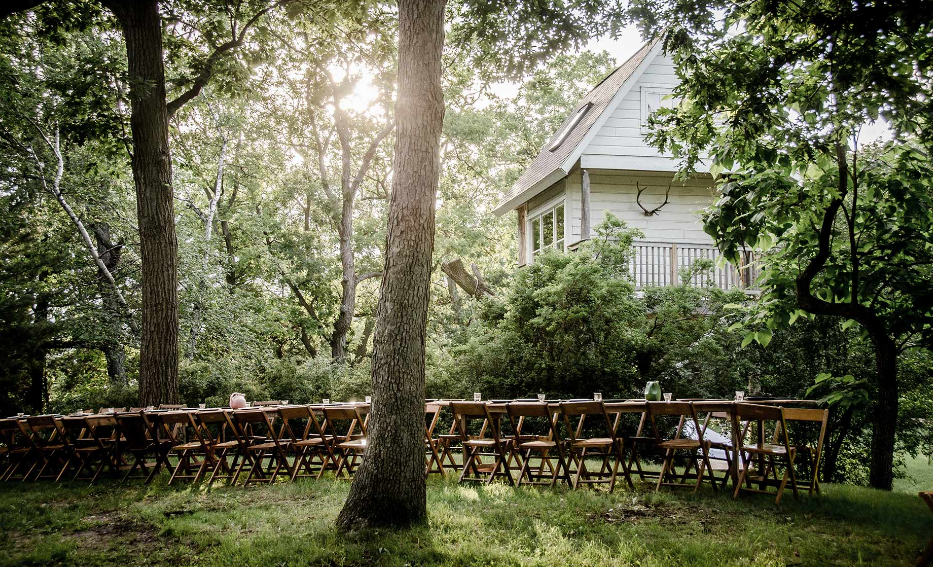
The approach to Camp Wandawega doesn’t announce itself with grand gates or manicured lawns. You turn off Lake View Drive in Elkhorn, Wisconsin, and the pavement gives way to gravel, then to something rougher still. Trees close in overhead — sugar maples, white oaks, towering white pines — and the light filters through in dappled patterns. The road narrows. You pass a hand-painted sign, charmingly weathered, and then the camp reveals itself in stages: first a vintage camper painted turquoise, then the iconic treehouse perched among the branches, then the glint of Lake Wandawega beyond. This is not a venue trying to be something it’s not. Camp Wandawega is unabashedly itself — a lovingly preserved 1920s summer camp spread across 25 private acres, full of quirky vintage details, Prohibition-era cabins, and the kind of nostalgic magic that makes guests feel like they’ve stepped into a different era. Poppy has received 6 inquiries for Camp Wandawega wedding flowers, and every time we research this property, we’re reminded why couples who fall for this place fall hard: it rewards creativity, embraces imperfection, and offers a canvas unlike anything else in the Milwaukee or Chicago wedding markets.
About Camp Wandawega
Camp Wandawega was established in the 1920s as a summer retreat, and nearly a century later, that sense of escape remains its defining characteristic. Located in Elkhorn, Wisconsin, roughly 90 minutes from downtown Chicago and about an hour from Milwaukee, the camp sits on 25 wooded acres bordering Lake Wandawega — a private, spring-fed lake where guests can swim, canoe, fish from the pier, or simply sit on the beach and watch the sun set over the water. The property is a study in nostalgic preservation: vintage cabins with names like “The Hillhouse” and “The Bunk House,” a restored Main Lodge with a stone fireplace and original wood paneling, a chapel tucked into the trees, and that famous treehouse that has been featured in countless design magazines and Instagram feeds.
The architecture is Prohibition-era rustic — think rough-hewn timber, screen porches, and the kind of handmade details you don’t find anymore. The interiors are curated with a collector’s eye: vintage camp blankets, taxidermy, mid-century furniture, old Kodak cameras, and stacks of well-worn board games. It’s the kind of place where every corner is photogenic not because it’s been styled for the camera, but because it has been lived in and loved. The Airstream trailer has been converted into a whiskey lounge. The tennis court is now a flat clearing where couples pitch sailcloth tents for dinner. There’s a bonfire area ringed with log benches, string lights strung between the trees on Picnic Hill, and that glorious Green Cathedral — a ceremony site deep in the woods where the tree canopy forms a natural vaulted ceiling overhead.
Camp Wandawega operates fundamentally differently from most wedding venues. This is not a place with an in-house events team, catering kitchen, or ballroom. The camp is rented exclusively — you get the entire property for a full weekend (Friday through Sunday or two weeknights) — and you bring in your own vendors for everything: catering, bartending, rentals, and yes, florals. The camp itself functions as a landlord, not an event company. You’re responsible for securing an event tent (required, as there is no indoor reception space large enough for 150 guests), coordinating all logistics, and managing setup and breakdown. This DIY model appeals to couples who want complete creative control and are willing to invest the time (or hire a planner) to orchestrate all the moving parts. It also means there are no restrictive vendor lists — Poppy or any florist can work here without needing venue approval.
Logistically, this freedom comes with responsibility. The camp has a strict parking policy: guest cars must be moved to a nearby hotel (typically the Hampton Inn) by 1:30 PM on the wedding day, with shuttle service arranged by the couple. Quiet hours begin at 10:30 PM, meaning amplified music must stop then — plan your timeline accordingly. Liability insurance is required for all vendors. The property can accommodate 55 to 66 overnight guests across all the cabins, cottages, and the Hillhouse, which makes it ideal for intimate destination weddings where your closest people stay on-site for the full weekend. For our delivery teams at Poppy, load-in requires coordination with the couple’s planner or point person, as there is no dedicated venue coordinator on-site. Setup typically happens the day before or early morning of the wedding, and because there are multiple ceremony and reception site options scattered across 25 acres, a site visit or detailed floor plan is essential.
Event Spaces & Floral Opportunities
Green Cathedral
Capacity: Up to 150 guests (ceremony seating)
Setting: The Green Cathedral is exactly what it sounds like — a clearing deep in the woods where the trees arch overhead like the ribbed vaults of a Gothic cathedral. The ground is soft with pine needles and moss. Sunlight filters through the canopy in shafts of gold. There is no structure here, no built altar or rows of permanent seating — just the forest itself, ancient and quiet and impossibly beautiful. Folding chairs are brought in and arranged in rows facing a central point where the couple will stand. The acoustics are remarkable; voices carry in the stillness, and there’s a reverence to the space that needs no amplification.
Floral approach: The first rule of designing Camp Wandawega wedding flowers for the Green Cathedral is restraint. The trees are your architecture. The dappled light is your chandelier. Your role as a florist is not to decorate the forest, but to honor it. We favor a low ground installation at the ceremony site — a organic cluster of moss-covered logs, ferns, and woodland blooms (white astilbe, hellebores, sweet pea, and Patience garden roses) arranged as if they’ve grown there naturally. Aisle markers should be minimal: small posies of wildflowers in vintage bottles tied to the chairs with jute twine, or no aisle markers at all, letting the path through the trees speak for itself. If the couple wants a ceremony arch, we recommend a simple wooden structure adorned with smilax garland, trailing jasmine vine, and loose clusters of white lisianthus and campanula — something that looks gathered from the surrounding woods rather than imported from a greenhouse. The key is asymmetry and movement. Nothing here should look stiff or formal. Camp Wandawega wedding flowers in the Green Cathedral should feel like the forest invited you in and dressed itself for the occasion.
Tennis Court (Tented Reception)
Capacity: Up to 150 seated, depending on tent layout
Setting: The tennis court is a flat, open clearing that serves as the primary reception site. A tent is mandatory here — there is no indoor alternative for a seated dinner of 150 guests — and most couples opt for a sailcloth tent with open sides or clear walls to maintain the connection to the surrounding woods. The blank-slate nature of the space is both liberating and demanding: you can create anything, but you must create everything. Tables, chairs, lighting, bars, dance floor, lounge furniture — it all comes in from rentals. The effect, when done well, is a custom-designed celebration that feels utterly unique.
Floral approach: The tent structure itself becomes your gallery. With magnetic beams or rigging, you can suspend floral installations from the ceiling — think long garlands of smilax and Italian ruscus interspersed with clusters of Café au Lait dahlias, Quicksand roses, and scabiosa, running the length of the tent like living chandeliers. For the tables, we recommend varied heights to create visual interest: some tables with low, lush centerpieces in vintage wooden boxes (garden roses, ranunculus, tweedia, and wild carrot), others with tall taper candles in brass holders surrounded by minimal greenery. The tent poles can be wrapped in garland or left bare, depending on budget. A focal point near the entrance — perhaps a large urn overflowing with seasonal branches, hydrangea, and trailing amaranthus — signals the transition from outdoors to the reception space. Because this space is entirely fabricated, the florals do significant narrative work: they set the tone, define the aesthetic, and soften the rental elements into something cohesive and beautiful.
Lakefront/Beach
Capacity: Flexible, ideal for ceremonies up to 100 or cocktail hour for 150
Setting: The private beach on Lake Wandawega is a crescent of sand and pebbles bordered by weathered wooden docks and tall grasses. The water is calm, reflecting the sky and the pines along the opposite shore. There’s a fishing pier extending into the lake, and guests often arrive early to swim or paddle canoes before the ceremony begins. For a ceremony here, chairs face the water, with the lake and distant tree line as the backdrop. For cocktail hour, guests mingle on the sand and the grassy area above the beach, drinks in hand, toes in the water if they’re so inclined.
Floral approach: Waterfront settings demand a light touch. The lake itself is the star, and any florals should complement rather than compete. For a ceremony, a simple driftwood arbor adorned with wispy grasses, white lisianthus, and trailing greenery works beautifully — organic, slightly windswept, as if assembled from materials found along the shore. Aisle markers could be lanterns filled with sand and small bunches of wildflowers, staked into the ground. For cocktail hour, scattered arrangements in mismatched vintage bottles on high-top tables, and a larger installation near the bar area (a galvanized tub filled with ice and white hydrangea, perhaps) keep things festive without cluttering the natural beauty. The goal is to make it feel like the flowers grew up out of the sand that morning.
Main Lodge
Capacity: 50-60 guests for cocktails or casual gathering
Setting: The Main Lodge is the social heart of Camp Wandawega — a wood-paneled interior with a massive stone fireplace, vintage leather couches, a well-worn pool table, dartboard, and shelves lined with old books and board games. The kitchen is communal-style, and the vibe is cozy and lived-in. This is where guests gather before the ceremony, where the bar might be set up during cocktail hour, or where late-night card games happen after the band has packed up. The light inside is warm and golden, especially when the fireplace is lit.
Floral approach: The Lodge calls for arrangements that feel collected rather than designed. A large, loose arrangement on the fireplace mantel — seasonal branches (curly willow or red twig dogwood), Café au Lait dahlias, chocolate cosmos, and trailing ivy in a vintage brass urn — creates a focal point without feeling fussy. Smaller arrangements in amber glass bottles scattered on side tables and the bar add warmth. For a getting-ready suite setup (the Hillhouse accommodates this, but florals often spill into the Lodge), small bud vases with single stems of garden roses or sweet pea on the windowsills are charming and understated. The key here is to match the Lodge’s unpretentious character. Nothing should look like it was purchased from a hotel lobby florist. Everything should look like it was gathered from a farmstand and arranged by someone who knows what they’re doing.
Chapel
Capacity: 50-75 guests for an intimate ceremony
Setting: The outdoor chapel is a simple wooden structure — more of a frame than a building — set among the trees with open sides and a pitched roof. It’s rustic in the best sense, with weathered wood and lichen growing on the beams. The setting feels private and sacred, a place where small weddings or elopements feel appropriately intimate.
Floral approach: The chapel’s bones are beautiful on their own, so florals should enhance rather than obscure. A garland draped across the front beam of the chapel — smilax, seeded eucalyptus, and clusters of Patience garden roses and lisianthus — softens the structure without overwhelming it. Arrangements on the ground at either side of the altar (low urns with flowing, organic designs using garden roses, astilbe, wild carrot, and ferns) frame the couple without blocking sightlines. If pews or chairs are present, small posies tied to the ends of each row add a sweet, ceremonial touch. The palette here should lean soft and natural — whites, creams, blush, and plenty of green.
Field
Capacity: Flexible, up to 150+ for lawn games or alternative reception setup
Setting: The Field is exactly what it sounds like — a wide, open expanse of grass bordered by trees, perfect for lawn games, outdoor lounge setups, or an alternative reception configuration under open sky. It’s the most flexible space on the property, a blank canvas that can become whatever the couple envisions.
floral approach: In a wide-open field, florals need to be substantial to register at scale. Tall arrangements on shepherd’s hooks lining a pathway, large urns marking the entrance to a lounge area, or a dramatic installation around a central bar or bandstand create focal points in the otherwise undifferentiated space. For a boho-style reception in the Field, consider low picnic-style tables with runners of greenery and wildflowers, interspersed with lanterns and candles. If the Field is being used for lawn games during cocktail hour, florals can be minimal — perhaps just a welcome table with a large seasonal arrangement. The openness of the space allows for creative freedom, but every installation needs to be securely staked or weighted to withstand wind.
Picnic Hill
Capacity: 50-75 guests for casual outdoor dining
Setting: Picnic Hill is a gentle slope with permanent picnic tables and string lights overhead. It’s typically used for Friday night welcome dinners or Sunday brunch, not the main wedding meal, but it’s one of the most photographed spots on the property. The vibe is casual and nostalgic, the kind of place where guests linger over fried chicken and potato salad as fireflies emerge at dusk.
Floral approach: Picnic Hill calls for unfussy, charming florals. Small mason jars or tin cans filled with mixed wildflowers (zinnias, cosmos, sunflowers, Queen Anne’s lace) down the center of each picnic table create a cheerful, summer-camp aesthetic. Garlands of greenery strung along the tables or woven into the existing string lights add a festive touch. This is not a space for formal design — it’s a place where the flowers should feel like they were picked from a roadside stand and arranged with love but not a lot of fuss.
Treehouse
Capacity: 2-6 people (intimate, not a ceremony or reception space)
Setting: The Treehouse is Camp Wandawega’s most iconic feature — a multi-level structure built into the trees, accessible by ladder, with windows overlooking the forest and the lake. It’s used for private moments, first looks, Polaroid stations, acoustic performances, or simply as a photo opportunity. It’s whimsical and magical, the kind of place that makes every guest want to climb up and take a look.
Floral approach: Because the Treehouse is small and accessed by ladder, florals here must be lightweight and secure. A small hanging installation from the interior rafters — a hoop adorned with smilax, jasmine vine, and a few blooms (garden roses, sweet pea) — adds a romantic touch without taking up precious space. A small bud vase on the windowsill with a single statement bloom (a Café au Lait dahlia or a Juliet rose) is charming and Instagram-ready. If the Treehouse is being used for a first look or private vows, a small posy left inside as a surprise is a thoughtful detail. The scale here is tiny — think accent, not installation.
Wedding Flower Ideas for Camp Wandawega
Camp Nostalgia
This palette leans into the vintage summer camp aesthetic with warm, sun-faded tones and wildflower abundance. Think sunflowers (Teddy Bear and Sunrich Orange), zinnias in coral and magenta, cosmos in white and pink, black-eyed Susans, and Queen Anne’s lace. Textural elements include bunny tail grass, wheat stalks, and wild carrot. Arrangements are loose and unstructured, gathered into vintage tin cans, enamel camp mugs, and mismatched Ball jars with twine ties. The vibe is cheerful, approachable, and deeply nostalgic — the kind of flowers you’d find at a 1950s county fair or tucked into a canoe for a lake picnic. This design concept works beautifully for Picnic Hill, the Lakefront, and scattered throughout the cabins as welcome arrangements. It’s also budget-friendly, as many of these blooms are locally grown and available at farmstands throughout Wisconsin’s summer season.
Woodland Reverie
For couples drawn to the forested setting, Woodland Reverie embraces the Green Cathedral’s natural palette: soft whites, blush, sage green, and touches of burgundy. Key flowers include Patience and Keira garden roses, white astilbe, hellebores (in season), white lisianthus, blush ranunculus, and campanula. Foliage plays a starring role: maidenhair fern, sword fern, smilax, seeded eucalyptus, and Italian ruscus create the lush, organic foundation. Accents include moss (sheet moss wrapped around vessel bases or incorporated into ground installations), lichen-covered branches, and mushrooms (faux or real, depending on season). Vessels are earthy and organic — wooden boxes, aged stone urns, and pottery in muted tones. This palette is ideal for the Green Cathedral ceremony, the Chapel, and the Main Lodge. It feels quiet, grounded, and reverential — the floral equivalent of walking through the woods at dawn.
Lakeside Golden Hour
This design concept captures the warm, amber light of sunset over Lake Wandawega. The palette is golden yellow, apricot, coral, and cream, with touches of deep plum for contrast. Flowers include Café au Lait dahlias, peach and coral garden roses (Juliet, Romantic Antike), marigolds, peach ranunculus, craspedia, and yellow yarrow. Foliage includes golden privet, olive branches, and Italian ruscus. Textural accents like feather grass and pampas (used sparingly) add movement. Arrangements are lush and abundant, styled in amber glass vessels, brass compotes, and weathered wooden boxes. This palette works beautifully in the tented reception space, where the golden tones glow under string lights, and at the Lakefront during cocktail hour, where the flowers echo the colors of the setting sun reflecting on the water. It’s warm, romantic, and quintessentially summer.
Seasonal Considerations
Spring (April - May): Spring in southern Wisconsin is unpredictable — one day might bring 70 degrees and sunshine, the next could drop to the 40s with rain. The woods at Camp Wandawega are still waking up in April, with early wildflowers like trillium and bloodroot emerging on the forest floor, but the tree canopy is not yet full. By mid-May, the landscape greens up beautifully, and the mosquitoes are still manageable. Floral availability includes tulips, daffodils, hyacinth, hellebores, ranunculus, and early garden roses. Local Wisconsin growers have limited inventory this early, so expect to source more from national suppliers. The upside: spring blooms are often less expensive than summer varieties, and the cooler temps mean flowers hold up beautifully outdoors. Plan for rain contingencies, especially for outdoor ceremony sites.
Summer (June - August): Summer is peak season at Camp Wandawega, and for good reason. The lake is warm enough for swimming, the woods are lush and green, and the days are long. Temperatures range from the 70s to the 90s, with occasional heat waves that require careful floral conditioning. Humidity is high, which means delicate blooms like sweet pea and lisianthus need to be kept hydrated. This is the season of abundance for Wisconsin flower farms: sunflowers, zinnias, dahlias, cosmos, yarrow, and Black-eyed Susans are all locally available and affordable. The challenge in summer is managing the heat — avoid placing arrangements in direct sun, keep ceremony florals in water until the last possible moment, and warn couples that outdoor centerpieces may wilt by the end of a 95-degree evening. The mosquitoes can be aggressive near the lake at dusk, so encourage guests to bring bug spray. Best months: late June and September for weather stability.
Fall (September - October): Fall is the most visually stunning season at Camp Wandawega. The sugar maples and oaks turn brilliant red, orange, and gold, and the cooler temperatures (60s to low 70s during the day, 40s at night) mean flowers last longer and guests are comfortable. The landscape does so much visual heavy lifting that florals can be more restrained — the trees are your color palette. Seasonal blooms include dahlias (in their prime), asters, chrysanthemums, marigolds, sunflowers, and late-season garden roses. Textures like wheat, millet, and ornamental grasses are abundant from local farms. This is also the season for incorporating seasonal elements like mini pumpkins, gourds, and fall foliage into installations. Watch for early frosts in late October, which can damage outdoor arrangements overnight. September and early October are the sweet spot for fall weddings here.
Winter (November - March): Winter weddings at Camp Wandawega are rare but magical for the right couple. Snow blankets the property, the cabins feel cozy with wood stoves burning, and the lake sometimes freezes solid. Temperatures range from the 20s to the 40s, and indoor heating is limited (most cabins have wood stoves or small space heaters). The Main Lodge becomes the heart of the celebration, with the fireplace roaring and guests bundled in flannel and wool. Floral availability is limited and expensive: expect to rely on imported blooms like roses, tulips, amaryllis, and evergreen branches. Winter designs lean heavily into greenery — noble fir, cedar, pine, and holly — accented with white blooms, berries, and seasonal elements like birch branches and pinecones. The frozen landscape is starkly beautiful, but logistics are challenging: icy roads, limited daylight (sunset by 4:30 PM in December), and the need for heated transport for florals. If a couple is committed to a winter wedding here, embrace the coziness and lean into a hygge-inspired aesthetic.
Poppy’s Expert Take
Start with a site visit or obsessively detailed maps. Camp Wandawega’s 25 acres include multiple ceremony and reception sites scattered through the woods, and if you’re designing Camp Wandawega wedding flowers without visiting first, you need floor plans, photos from multiple angles, and a clear timeline of where guests will be at every moment. The distance from the Main Lodge to the Green Cathedral is a 5-minute walk through the woods — meaningful when you’re carrying armloads of ceremony florals or repurposing arrangements from the ceremony to the reception. Build extra time into your setup schedule for transporting materials across the property.
Design for transport and durability. There are no loading docks or climate-controlled staging areas here. You’ll be hauling arrangements down gravel paths, up cabin steps, across uneven terrain. Use sturdy vessels that won’t tip easily, avoid top-heavy designs, and secure everything. Foam bases, floral wire, and waterproof tape are your friends. For ceremony florals in the woods, anticipate wind, uneven ground, and wildlife (yes, deer will eat your ceremony arch if it’s left overnight). Stake everything.
Embrace local and seasonal. Wisconsin has a thriving community of flower farms, and summer/fall blooms sourced locally will be fresher, less expensive, and more resilient in the humid Wisconsin climate than imported roses shipped from Ecuador. During peak dahlia season (August-September), you can source stunning locally grown varieties for a fraction of the cost of imported garden roses. Work with farms like Humble Hands Harvest, Green City Growers, or River Valley Ranch for seasonal abundance. The couple will appreciate the farm-to-table ethos, and your flowers will last longer.
Coordinate with the tent company religiously. If the reception is on the Tennis Court under a tent, your install schedule hinges on when the tent goes up. Confirm with the rental company at least a week before the wedding when they’ll complete setup, and plan your arrival accordingly. If you’re doing suspended installations, confirm the tent has the right rigging or beams, and bring your own zip ties, fishing line, or floral wire. Don’t assume the tent company will accommodate last-minute requests for additional hang points.
Plan for the 10:30 PM noise curfew. Quiet hours start at 10:30 PM, which means the dance party ends earlier than most weddings. This affects your timeline if you’re repurposing ceremony florals for the reception (you’ll need them moved and set up before dinner) and means late-night floral refreshes aren’t practical. Build your entire floral plan around a timeline that assumes the celebration winds down by 11 PM.
Communicate the DIY logistics to the couple early. Camp Wandawega requires couples to coordinate every vendor and rental themselves, and many first-time clients underestimate the complexity. Be clear about what you will and won’t handle: you’ll design, deliver, and install the florals, but you won’t coordinate with the tent company, rent vases, or move furniture. Encourage the couple to hire a planner if they haven’t already — it will make your life (and theirs) infinitely easier. Confirm in writing who is responsible for post-event breakdown and whether you’re expected to retrieve rental vessels the next day.
Leave space for the venue to shine. The treehouse, the lake, the Green Cathedral — these are the reasons couples book Camp Wandawega. Your florals should complement, not compete with, these iconic features. When in doubt, choose restraint over excess. A single, perfectly placed arrangement can be more impactful than a dozen that clutter the space.
What Poppy Couples Spend on Flowers Here
Camp Wandawega doesn’t yet have booking data in Poppy’s system, but based on comparable DIY venues in the Milwaukee and Chicago markets, and accounting for the unique logistics and multi-space setup this property requires, here’s what we’d expect couples to invest:
$4,000 - $6,500 | The Essentials
This budget covers the core floral moments: a ceremony installation (a simple arch or ground arrangement for the Green Cathedral or Lakefront, plus aisle markers), bridal party flowers (bouquets, boutonnieres), and reception centerpieces for up to 20 tables in a tented reception space. At this level, we’d recommend low, lush centerpieces in a single style (wooden boxes with garden roses, dahlias, and seasonal greenery), a ceremony design that relies on the natural beauty of the woods (minimal florals, maximum impact), and selective accents in high-traffic areas like the Main Lodge bar or the welcome table. This is a beautiful, well-designed wedding with florals that enhance the camp’s natural charm without overwhelming the budget. Expect seasonal, locally sourced blooms and a focused color palette.
$6,500 - $10,000 | The Full Picture
At this tier, you’re adding depth and variety across multiple spaces. This budget allows for a more substantial ceremony installation (a driftwood arbor with lush garland and clustered blooms for the Lakefront, or a dramatic ground installation with moss, ferns, and florals in the Green Cathedral), varied centerpiece styles (some low, some tall, with interesting vessels and textural elements), and meaningful floral presence in secondary spaces like the Main Lodge (fireplace mantel arrangement), Picnic Hill (bud vases for welcome dinner), and cabin welcome arrangements for overnight guests. You might add a suspended installation in the tent, floral accents around the bar, and a statement arrangement near the entry. This level also allows for repurposing ceremony florals to the reception and upgrading blooms to premium varieties (Juliet roses, Café au Lait dahlias, imported ranunculus). The result is a wedding where every space feels considered and cohesive, with Camp Wandawega wedding flowers that enhance the weekend-long celebration.
$10,000+ | The Full Experience
This is the budget for couples who want florals to play a starring role across the entire 25-acre property. We’re talking multiple ceremony and reception installations (perhaps a morning ceremony at the Chapel and an evening reception on the Tennis Court, each with full floral treatment), dramatic suspended installations in the tent (long garlands, floral chandeliers), varied and abundant centerpieces, large-scale urns flanking key entry points, a lushly decorated Treehouse, floral styling for the Airstream bar, bud vases in every cabin, and seasonal arrangements throughout the