
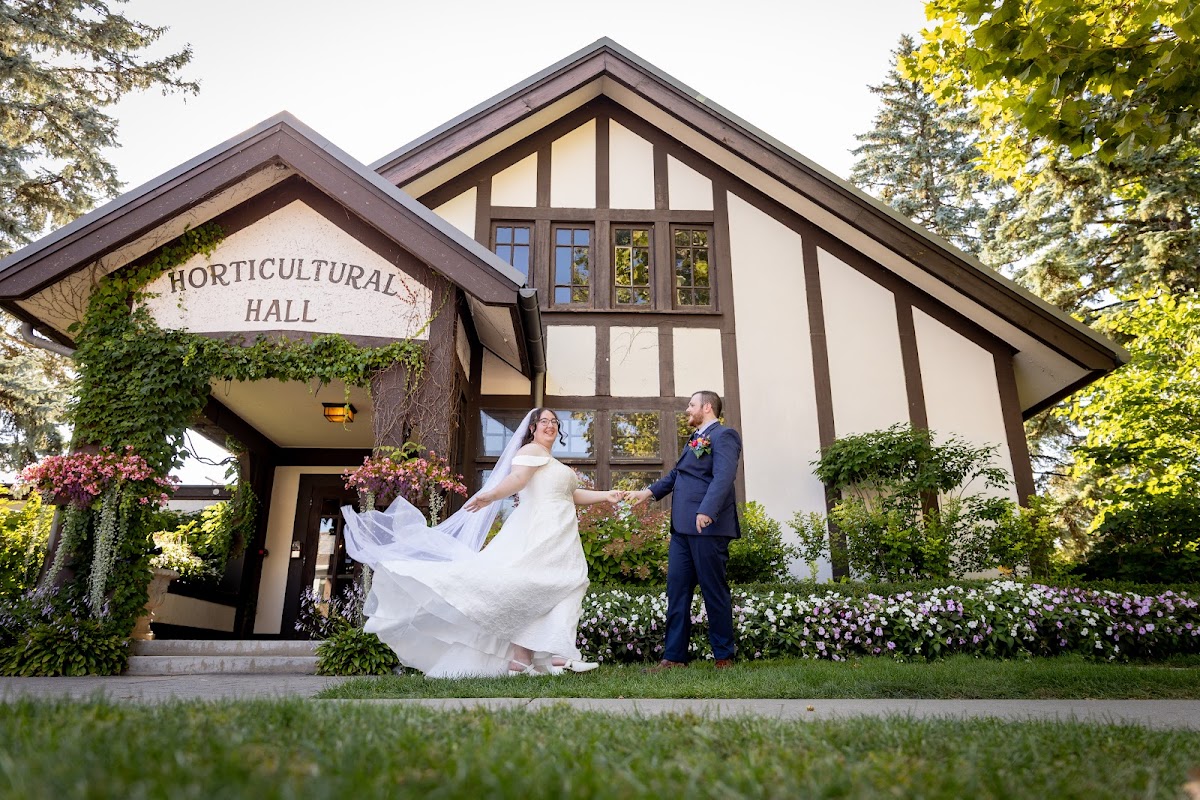
You turn off Geneva Lake’s shoreline drive onto Broad Street, and downtown Lake Geneva unfolds in the way small Wisconsin resort towns do — ice cream shops and sailboat outfitters, couples walking hand-in-hand toward the pier, the particular Friday-afternoon energy of a place where people come to slow down. At 330 Broad Street, set back slightly from the sidewalk, Horticultural Hall announces itself not with fanfare but with quiet confidence: honey-toned brick, Arts and Crafts proportions, and — if you arrive in late spring or summer — the unmistakable scent of roses drifting from the courtyard beyond. You step through the entrance, past the great beamed hall with its parquet floors that seem to glow in the afternoon light, and then the courtyard reveals itself. It is the kind of space that makes people stop talking. Open to the sky but enclosed on three sides by ivy-covered loggias, filled with established perennial beds and climbing vines, it feels like a secret garden in the middle of town. Poppy has received 10 inquiries for Horticultural Hall wedding flowers, and every single one begins the same way: “We fell in love with the courtyard.” We understand completely.
About Horticultural Hall
Horticultural Hall was built in 1911 as a gathering place for the Lake Geneva Garden Club, and that original mission — celebrating plants, beauty, and community — still permeates every corner of the building. The architecture is pure Arts and Crafts movement: honest materials, hand-wrought details, an emphasis on craftsmanship over ornamentation. The great hall features exposed wood beams salvaged from Wisconsin timber, parquet floors laid in intricate herringbone patterns, and tall windows that flood the space with northern light. This is not a venue that has been “restored” in the modern sense of being gutted and rebuilt with faux-historical details. This is an actual historic building that has been lovingly maintained, with the patina of age visible in the worn threshold stones and the hand-forged iron hardware on the doors.
The courtyard — the venue’s crown jewel — is approximately 50 feet square, enclosed on three sides by screened loggias with mature ivy climbing the brick columns. The fourth side opens to the sky. Established perennial beds line the perimeter: peonies, foxglove, delphiniums, climbing roses trained on trellises, hostas in the shadier corners. This is not a decorative garden maintained by a grounds crew for Instagram. This is a working garden, tended by volunteers from the Lake Geneva Garden Club, that changes with the seasons and blooms in waves from April tulips through October chrysanthemums. For a florist, designing Horticultural Hall wedding flowers means working in partnership with what is already there — complementing, enhancing, but never competing with the garden’s own voice.
The venue sits in the heart of downtown Lake Geneva, walkable to dozens of restaurants, boutiques, and the lakefront promenade. Lake Geneva itself is a 5,200-acre glacial lake ringed by historic estates, many built by wealthy Chicagoans in the late 1800s as summer retreats. The town retains that resort-village charm: a working marina, a historic walking path that circles the entire lake (the Shore Path), farm-to-table restaurants, and a summer population that swells with weekenders from Chicago and Milwaukee. For couples, this means a wedding weekend that feels like a destination without requiring passports or plane tickets. For Poppy’s logistics, it means a 90-minute drive from Milwaukee or Chicago, straightforward load-in through the rear service entrance off Dodge Street, and a venue coordinator who knows how to work with outside vendors because Horticultural Hall has no preferred vendor list — a refreshing rarity.
The venue’s DIY-friendly policy is both a gift and a responsibility. You can bring in any caterer (or self-cater using the large commercial kitchen), any florist, any rentals. The rental fee includes tables and chairs, climate control (heat and air conditioning for year-round use), and access to all spaces for the full day. This flexibility means couples can create exactly the celebration they envision, but it also means they need to coordinate multiple vendors themselves. For floral design, this translates to creative freedom: no mandated “approved” arrangements, no restrictions on installation methods (within reason), and no pressure to match a house style.
Event Spaces & Floral Opportunities
Great Hall
Capacity: 160 seated
Setting: The Great Hall is the architectural heart of Horticultural Hall, and stepping into it feels like entering a Wisconsin lake cottage from a century ago — if that cottage had soaring ceilings and perfect proportions. Exposed wood beams crisscross overhead, their rough-hewn texture a reminder that this is reclaimed timber, not decorative molding. The parquet floor — walnut and oak in a herringbone pattern — gleams underfoot, worn smooth by decades of footsteps but still structurally sound and beautiful. Tall windows along the east wall let in soft, even light throughout the day, never harsh, never dim. The color palette is warm neutrals: honey-colored wood, cream-painted walls, the occasional burgundy accent in the vintage light fixtures. The hall is air-conditioned and heated, which means it is functional for year-round weddings — a significant consideration in Wisconsin, where summer heat and winter cold are both very real.
Floral approach: The beamed ceiling is your greatest asset. We favor suspended installations here: a series of small floral chandeliers (circular wreaths of smilax and Italian ruscus with clusters of Cafe au Lait dahlias, Quicksand roses, and trailing jasmine vine) hung at staggered heights above the reception tables. The effect is ethereal without being overly romantic, organic without being rustic. For centerpieces, keep them low to medium height — nothing above 14 inches — so the beams remain the focal point. Compote-style arrangements work beautifully: Patience garden roses, apricot ranunculus, white sweet peas, and seeded eucalyptus in aged brass or bronze vessels that echo the vintage light fixtures. If the ceremony takes place in the Great Hall (some couples choose this option for winter weddings or inclement weather backup), a simple wooden arch or ladder-style structure adorned with greenery garlands and focal blooms creates a beautiful frame without competing with the architecture. Aisle arrangements can be minimal — think clusters of votives in glass hurricanes interspersed with low arrangements in moss-covered vessels every third row. The parquet floor is too beautiful to cover entirely, so resist the urge to use a traditional aisle runner; if you must define the aisle, use loose petals or a single long garland of smilax laid directly on the floor.
Courtyard
Capacity: 100+ ceremony guests (configuration dependent)
Setting: If the Great Hall is Horticultural Hall’s architectural heart, the courtyard is its soul. Rectangular, open to the sky, enclosed on three sides by ivy-covered brick loggias, it feels like a secret garden that has been growing undisturbed for a century — because, essentially, it has. The garden beds are established and mature: climbing roses (New Dawn, Eden, and Zephirine Drouhin) trained on trellises along the walls, peonies that bloom in enormous blowsy heads every May, foxglove spires in early summer, delphiniums in shades of blue and purple, and a rotating cast of annuals planted by Garden Club volunteers each season. The brick paving is original, slightly uneven, softened by moss in the shady corners. The ivy covering the loggia columns is thick and lush, decades old, providing a verdant backdrop year-round. This is not a manicured hotel garden. This is a living, breathing perennial garden with personality, imperfections, and seasonal rhythms.
Floral approach: The cardinal rule in this courtyard is restraint. The garden is already extraordinary; your job as a florist is to frame and highlight what is already there, not to import a different aesthetic. For ceremonies, we recommend a simple arch or arbor positioned against the north wall (which provides the best backdrop and keeps guests facing away from the sun during afternoon ceremonies). A wooden or metal arch, left natural or painted soft white, adorned with a loose, asymmetrical garland of jasmine vine, Italian ruscus, white wisteria (in season), and clusters of white or blush roses (Patience, Quicksand, or O’Hara) creates a focal point that feels like it grew there naturally. Aisle markers should be subtle: small arrangements in galvanized buckets or vintage watering cans, filled with garden-style blooms that echo whatever is currently blooming in the beds — in May, that might be peonies and ranunculus; in July, dahlias and zinnias; in September, hydrangeas and sedum. If the courtyard’s existing blooms are particularly spectacular during your wedding date, consider skipping aisle arrangements entirely and letting the garden speak for itself. For cocktail hour (if hosted in the courtyard), small arrangements on high-top tables in mismatched vintage vessels — nothing too formal, nothing that looks like it was ordered from a catalog — extend the garden’s informal elegance.
Loggia
Capacity: Flexible, typically used for cocktails or as ceremony backup
Setting: The loggias — enclosed three-season breezeways that wrap around three sides of the courtyard — are one of Horticultural Hall’s most distinctive features. Italian in inspiration, with brick columns, screened openings that allow breezes to flow through, and that glorious ivy covering everything, they provide a covered transition space between the Great Hall and the courtyard. The loggias are accessible from both the interior hall and the courtyard, making them ideal for cocktail hour, for pre-ceremony mingling, or as a backup ceremony location when weather threatens. The ivy-covered columns are structural and permanent; the screening is original; the stone floor is terrazzo, cool underfoot in summer. The space feels simultaneously sheltered and open-air, a quality that is particularly appealing during shoulder seasons when full outdoor events are risky but indoor-only feels too closed-in.
Floral approach: The ivy does most of the heavy lifting here, providing lush greenery year-round. For cocktail hour, we favor elevated floral moments on the high-top tables: small arrangements in textured vessels (ceramic, aged bronze, or even concrete) with a mix of focal flowers (garden roses, lisianthus, scabiosa) and plenty of textured foliage (eucalyptus, olive, ferns) that echo the ivy but in different tones and forms. The columns are ideal for garland installations if you want to add formality or drama — a continuous garland of smilax and Italian ruscus wrapped around each column base, rising about three feet, with clusters of blooms at intervals. If using the loggia as a backup ceremony space, a freestanding arch or a fabric backdrop (sheer white or champagne silk) with asymmetrical floral clusters in the top corners creates a defined focal point without requiring elaborate structural installations. Because the space is semi-outdoor, all florals need to be hardy enough to handle humidity and temperature fluctuations — skip anything that wilts quickly (sweet peas, tulips in hot weather) in favor of more resilient blooms (roses, lisianthus, hydrangeas).
Library/Bride’s Room
Capacity: 20 seated for intimate gatherings; functions primarily as getting-ready space
Setting: Tucked off the main hall, the Library is a smaller, more intimate room that retains its original Arts and Crafts details: built-in bookshelves with leaded glass doors, a tiled fireplace surround, wood wainscoting, and tall windows that overlook the street. The room includes private restroom facilities, making it ideal as a bride’s room for getting ready or for small pre-ceremony family gatherings. The scale is residential rather than institutional — it feels like someone’s private study, warm and inviting, with enough space for a small group but not so large that it loses its coziness.
Floral approach: For getting-ready coverage, a single statement arrangement on the fireplace mantel or the library table provides a beautiful background for detail shots and portraits without overwhelming the space. We recommend something personal and textured: a low, sprawling arrangement in a ceramic or wooden vessel with a mix of the bride’s bouquet flowers, plenty of foliage, and maybe one or two unexpected elements (a few stems of flowering herbs like rosemary or lavender, or a trailing strand of passion vine). If loose stems are desired for hair or candid shots, a small bundle of garden roses, ranunculus, and sweet peas wrapped in silk ribbon and placed in a vintage glass bottle works beautifully. If the Library is being used for a small ceremony (which is possible for groups under 20), a garland across the mantel with focal clusters at each end, plus a small arrangement or lantern on each end of the built-in bookshelves, creates a simple but elegant frame without requiring a separate arch or backdrop.
Wedding Flower Ideas for Horticultural Hall
Garden Club Heritage
This design concept honors Horticultural Hall’s roots as a gathering place for gardeners, leaning into cottage garden aesthetics with an abundance of seasonal blooms that feel like they were just cut from the courtyard beds. The palette shifts with the seasons but always includes soft, romantic tones: blush, peach, lavender, soft yellow, cream, with plenty of greenery. In spring, think peonies (Sarah Bernhardt, Coral Charm), sweet peas, ranunculus, tulips (Angelique, Foxtrot), and flowering branches (dogwood, cherry). In summer, garden roses (Juliet, Patience, Keira), lisianthus, foxglove, delphiniums, and dahlias (Cafe au Lait, Mabel). In fall, dahlias (Cafe au Lait, Creme de Cognac), garden roses, zinnias, sedum, and late-season hydrangeas. The arrangements are loose and organic, not tight or structured, in vessels that feel collected over time: vintage watering cans, ceramic pitchers, aged terra cotta pots, galvanized buckets. For the ceremony arch in the courtyard, a one-sided asymmetrical installation that looks like it grew naturally against the brick wall. For the Great Hall, low compote arrangements with flowers spilling over the edges, and perhaps a garland down the center of each long table interspersed with votives. This style works beautifully for couples who love the English countryside aesthetic and want their flowers to feel like an extension of the courtyard garden.
Arts and Crafts Romance
Drawing inspiration from the building’s Arts and Crafts architecture, this concept emphasizes honest materials, handcrafted details, and a slightly more structured (but still organic) approach to design. The palette is warm and earthy: terracotta, rust, deep coral, marigold, cream, with touches of burgundy and olive green. Flowers include garden roses (Juliet, Free Spirit, Toffee), dahlias (Café au Lait, Mabel, Creme de Cognac), ranunculus in peach and burnt orange tones, marigolds, celosia, and plenty of textured foliage (eucalyptus, olive branches, copper beech). Vessels are handcrafted ceramics, hammered copper, or simple wood boxes lined with moss. For the ceremony, a wooden ladder-style arch or a simple reclaimed wood frame adorned with asymmetrical clusters of blooms and trailing vines. For the Great Hall, centerpieces in low wooden boxes or ceramic bowls with a dense, garden-style arrangement that stays below eye level. Suspended installations of circular wreaths made from grapevine or willow branches, adorned with small clusters of dahlias and roses, echo the handcrafted aesthetic. This style works for couples who appreciate the building’s history and want their flowers to honor the craftsmanship of the Arts and Crafts era.
Secret Garden Elegance
For couples who want a slightly more elevated, romantic take on the garden venue, this concept balances lushness with refinement. The palette is softer and more monochromatic: ivory, champagne, blush, pale lavender, with touches of silver and dusty green. Flowers include white and blush garden roses (Patience, O’Hara, Quicksand), white ranunculus, white lisianthus, hellebores (in season), white sweet peas, and pale lavender scabiosa, with foliage in silver and gray-green tones (silver dollar eucalyptus, dusty miller, olive). Vessels are elegant but understated: white ceramic, soft gold compotes, clear glass cylinders, or white-washed wood. For the courtyard ceremony, a full arch (rather than one-sided) covered in a lush garland of smilax and eucalyptus with clusters of ivory and blush blooms throughout. Aisle markers in tall white ceramic urns with overflowing arrangements. For the Great Hall, elevated centerpieces in gold compotes on clear risers, with flowers cascading down, or low glass cylinders clustered in groups of three with floating candles and submerged greenery. Suspended installations of floral chandeliers in soft ivory and blush tones, hanging at varied heights throughout the hall. This style works for couples who love the garden setting but want a more formal, elegant interpretation.
Seasonal Considerations
Lake Geneva sits in southeastern Wisconsin, where the seasons are pronounced and each brings distinct opportunities and challenges for wedding flowers.
Spring (April-May): Spring in Lake Geneva is a study in unpredictability. One weekend you might have 70-degree sunshine, the next a late-season snowstorm (yes, through early May). But when spring arrives in earnest, the courtyard explodes: tulips, daffodils, early peonies, bleeding heart, Virginia bluebells, and the climbing roses begin their first flush. This is the season for tulips (French and parrot varieties hold up better than standard), ranunculus, anemones, sweet peas, and lilac branches. Peonies typically peak in mid-to-late May in this region. Spring weather means you need a solid backup plan for outdoor ceremonies — the loggia works perfectly for this. The advantage of spring weddings at Horticultural Hall is that the courtyard gardens are at their freshest, and the climbing roses on the trellises provide an extraordinary natural backdrop. Expect cooler temperatures to help florals last longer, but also be prepared for wind — stake everything securely.
Summer (June-August): Summer is peak season in Lake Geneva, when weekenders from Chicago and Milwaukee flood the town, lakefront restaurants open their patios, and the courtyard garden is in full bloom. Temperatures range from warm to hot (80s-90s), with occasional humidity that can challenge delicate florals. This is the season for garden roses (at their absolute best), dahlias (July onward), lisianthus, delphiniums, hydrangeas, and zinnias. Locally grown flowers are abundant at farmers’ markets. The long daylight hours (sunset around 8:30pm in late June) mean outdoor cocktail hours and ceremonies stay comfortable well into the evening. For summer Horticultural Hall wedding flowers, choose heat-tolerant blooms and keep anything in the courtyard hydrated — bucket everything in the loggia shade before the ceremony. The established garden beds will be lush with perennials, which means your added florals should complement what is already blooming. If your date coincides with peak rose bloom (typically late June), consider letting the courtyard’s climbing roses be the star and keep your ceremony flowers minimal.
Fall (September-October): Fall is glorious in Lake Geneva. The air turns crisp, the summer crowds thin out, and the surrounding trees put on their autumn show. The courtyard garden transitions to chrysanthemums, late-blooming sedums, ornamental grasses gone to seed, and the climbing roses often have a second, smaller flush of blooms. This is dahlia season at its peak — Cafe au Lait, Creme de Cognac, and all the other coveted varieties are abundant and affordable. Pair them with garden roses, hydrangeas (which often have beautiful antique tones in fall), berries (hypericum, viburnum), and foliage in warm autumn colors (copper beech, oak leaves, ornamental grasses). September dates are usually still warm enough for full outdoor celebrations; by mid-October, you will want backup plans and possibly heaters for evening events. The cooler temperatures mean florals last beautifully and hold up through long ceremonies and receptions. Fall color in the surrounding area peaks late September to mid-October, making this a spectacular time for wedding photos along the lake.
Winter (November-March): Winter weddings at Horticultural Hall move entirely indoors (courtyard is not viable, loggia is unheated), but the Great Hall is cozy and heated, with a romantic, intimate quality that suits cold-weather celebrations. The courtyard gardens are dormant, the ivy turns bronze, and the focus shifts entirely to the interior architecture. This is the season to embrace rich, moody florals: burgundy and wine-toned dahlias (if early winter), amaryllis, anemones, hellebores (December-February), ranunculus, and evergreen branches (pine, cedar, fir). Winter means excellent flower availability from importers and longer-lasting arrangements in the cool indoor air. Consider using seasonal elements like frosted branches, pine cones, and winter berries to create a warm, festive atmosphere. The parquet floors and wood beams of the Great Hall glow beautifully in candlelight, so lean into a candlelit ambiance with lots of votives and tapers mixed with low floral arrangements. If your date is near the holidays, coordinate with the venue about existing décor — sometimes the Garden Club installs seasonal decorations that you can work around or incorporate.
Poppy’s Expert Take
Work with the courtyard garden, not against it. The single biggest mistake we see couples make at Horticultural Hall is trying to impose a floral aesthetic that fights with what is already blooming in the courtyard. If you are getting married in late May when the peonies are at their peak, let the peonies be part of your design story — either incorporate them into your palette or choose colors that complement them. If your date is in July when the delphiniums are towering in shades of blue and purple, work with those blues or go for a contrasting warm palette (coral, peach) rather than trying to pretend they are not there. The courtyard garden has been tended for over a century; it has earned the right to be part of your wedding design.
The Great Hall beams are structurally sound for suspended installations, but get approval first. We have successfully hung floral chandeliers, greenery installations, and fabric from the exposed beams, but the venue coordinator needs to approve your installation plan in advance. Bring photos or sketches of what you are proposing. Use professional rigging hardware (S-hooks, aircraft cable, zip ties designed for floral installations) and always have a ladder tall enough to reach safely. The beams are high — about 18 feet at the peak — so plan accordingly. If you are DIYing your florals, be realistic about whether you have the equipment and expertise to execute overhead installations safely.
The parquet floor is precious — protect it appropriately. The floor is original, over a century old, and still beautiful because it has been cared for properly. Any vessels or installations that sit directly on the floor need to be protected with felt pads, waterproof liners, or trays. Water damage from leaking vessels is not something you want to be responsible for. If you are using aisle markers in the Great Hall, choose lightweight containers that won’t scratch the finish. During setup, use furniture sliders or blankets when moving heavy items. The venue staff will appreciate your care, and it makes future florists welcome.
Leverage the open vendor policy for creative collaborations. Unlike venues with exclusive caterer and florist lists, Horticultural Hall lets you bring in anyone you want. This means you can coordinate your floral design with a specific caterer’s aesthetic, work with a rental company to source unusual vessels or props, or collaborate with a local artisan for handcrafted elements. Use this flexibility to create a cohesive, personalized event. On the practical side, it also means you are responsible for coordinating delivery times and setup logistics between multiple vendors — create a shared timeline and communicate clearly.
Plan for the three-season limitations of the loggia and courtyard. The loggia is not heated, and the courtyard is fully outdoors. This means that from roughly November through March, these spaces are not usable for extended events (a quick ceremony in the courtyard on a mild October day might work; cocktail hour in the loggia in January will not). If your heart is set on a courtyard ceremony but your date is in a shoulder season, have a clear backup plan (the Great Hall or the loggia) and communicate it to guests in advance. Spring and fall weather in Wisconsin can turn on a dime — that beautiful 70-degree forecast can become a 50-degree reality with wind. Always have heaters, blankets, or a pivot plan ready.
Budget for the courtyard’s natural beauty to reduce floral costs. One of Horticultural Hall’s greatest advantages for floral budgets is that the courtyard is already stunning. If you are getting married in peak bloom season (May for peonies and roses, July for perennials, September for dahlias and fall color), you can scale back your ceremony floral budget significantly and let the garden do the work. A simple arch and minimal aisle markers might be all you need. Redirect the savings toward personal flowers, the Great Hall reception arrangements, or a statement installation like suspended chandeliers. The courtyard does not need you to cover it in flowers — it needs you to appreciate what is already there.
Coordinate your color palette with the Arts and Crafts aesthetic. The building’s color story — warm woods, cream walls, burgundy accents — pairs beautifully with certain palettes and clashes with others. Jewel tones (burgundy, plum, emerald, sapphire) look incredible. Warm earth tones (terracotta, rust, marigold, cream) echo the Arts and Crafts movement. Soft pastels (blush, peach, lavender, soft yellow) complement the garden. Be cautious with very cool tones (bright white, icy blue, pure silver) which can feel out of place against the warm wood. If you are using the Great Hall for your reception, bring fabric swatches or paint chips to a site visit and see how they look against the parquet floor and beams in natural light — it will guide your entire floral palette.
What Poppy Couples Spend on Flowers Here
Because Horticultural Hall has not yet hosted a Poppy wedding (though we have received 10 inquiries), we are drawing on our experience with similar historic garden venues in the Midwest and conversations with couples considering this space. Most couples planning Horticultural Hall weddings are working with guest counts between 80 and 160 and appreciate the venue’s character and flexibility.
$2,000 - $3,500 | Garden Essentials
This budget typically covers personal flowers (bridal bouquet, four bridesmaid bouquets, four to six boutonnieres, two corsages) plus scaled-down ceremony and reception florals that let the venue’s natural beauty take center stage. For a courtyard ceremony, that might mean a simple wooden arch with a single garland and focal clusters rather than a full floral arch, plus four to six aisle markers in mismatched vintage vessels. For the Great Hall reception, bud vases or small compote arrangements for guest tables (rather than large statement centerpieces), perhaps a garland down the center of the head table, and one statement arrangement for the entry or escort card table. This approach works particularly well if you are getting married during peak garden bloom season when the courtyard is already spectacular, or if you are willing to incorporate more greenery and fewer premium blooms. Couples in this range often choose one “wow” moment — either the ceremony arch or a suspended installation in the Great Hall — and keep everything else simple.
$3,500 - $6,000 | The Full Garden Story
This mid-range budget allows for more abundant florals throughout all spaces while still being strategic about where to invest. Personal flowers are upgraded (larger bridal bouquet, higher-end blooms like peonies or garden roses), ceremony florals include a lush one-sided arch and eight to ten substantial aisle markers, and the reception features proper centerpieces for all guest tables — a mix of low compotes and perhaps a few slightly taller arrangements for visual variety. Add in a garland installation for the head table, a statement arrangement for the escort card table, and florals for the cocktail hour in the loggia (small arrangements on high-tops). At this budget level, you can also incorporate one larger installation piece: suspended floral chandeliers in the Great Hall, a garland wrapped around several of the loggia columns, or a lush floral installation for the Library/Bride’s Room that serves as a getting-ready backdrop. Couples in this range can be less seasonal-dependent and can incorporate more of their “dream flowers” even if they are imports.
$6,000+ | The Immersive Experience
This budget transforms Horticultural Hall into a fully realized floral environment where every space receives significant attention. Personal flowers are luxurious and abundant (oversized bridal bouquet, premium blooms, extras like flower girl crowns or pocket squares). The courtyard ceremony features a full arch (not just one-sided) covered in lush greenery and blooms, substantial aisle markers every row or every other row, and perhaps petals scattered on the brick paving. The loggia gets full garland treatment on columns and arches for cocktail hour, with elevated arrangements on every high-top. The Great Hall receives multiple suspended installations (floral chandeliers at varied heights throughout the space), elevated centerpieces on all guest tables, a dramatic garland installation for the head table, and statement arrangements at the entrance, escort card table, and bar. The Library/Bride’s Room gets a dedicated floral installation for getting-ready photos. At this level, you are also incorporating specialty elements: perhaps flowering branches in tall vessels flanking the Great Hall entrance, a floral installation on the fireplace mantel, or custom-designed vessels that reflect your personal style. This is the budget for couples who view flowers as a central design element of their celebration and want an immersive, abundantly floral experience from arrival through departure.