
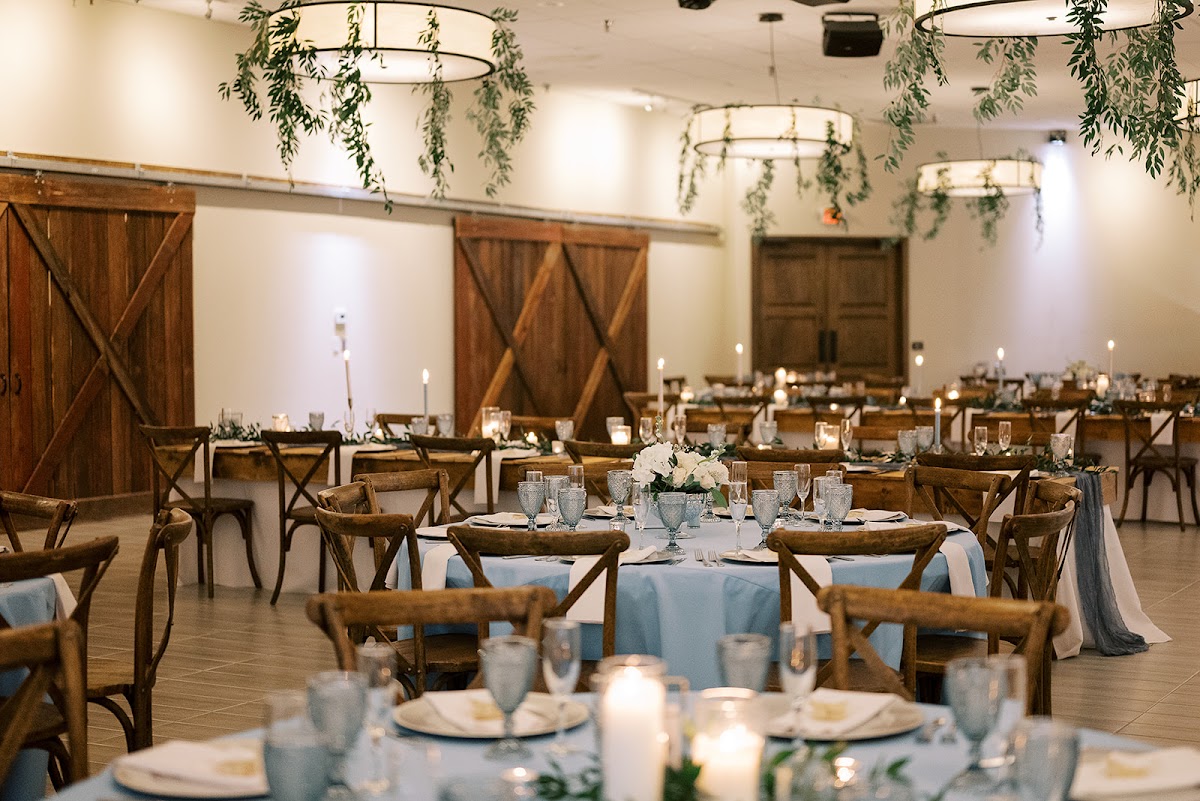
Designing for La Navona requires an understanding of visual weight. This is not a “blank canvas” white-box gallery; it is a venue defined by heavy textures—stone, dark wood, and brick. To make an impact here, floral design must prioritize contrast and structural independence, as the architecture does most of the heavy lifting.
We know this venue well from our work here and have developed a specific strategy for its unique lighting and material palette. The goal is never to fight the rustic-industrial aesthetic, but to soften it with intentional, high-impact botanical moments.
The Spaces
Outdoor Patio
The patio is a controlled outdoor environment that benefits from established greenery and permanent lighting. Because the space already feels “filled” by the fairy lights and surrounding plants, the floral strategy should be surgical.
- What works: Ground-level aisle markers or a freestanding deconstructed arch. These elements provide a focal point for the ceremony without obstructing the view of the patio’s charming architectural details.
- Skip: Elaborate chair markers on every row. The space can feel crowded quickly; focus your budget on the altar area instead.
- Watch out: Light wind exposure. Even though it is a protected patio, Gahanna breezes can be unpredictable. Ensure all structures are weighted properly. Budget hero move: Focus exclusively on two large, lush floor arrangements at the start of the aisle that can be moved to the sweetheart table or cake display after the ceremony.
Reception Area
The main ballroom is characterized by its wood paneling and standard-height ceilings. It is a warm, intimate space, but it lacks the vertical clearance for massive hanging installations.
- What works: Low-profile, textural centerpieces. Because the ceilings are standard height, tall arrangements can sometimes feel claustrophobic. Low, sprawling designs allow guests to see one another and the room’s architectural details.
- Skip: Tall, thin trumpet vases. They often look out of place against the heavy wood paneling and can feel dated in this specific industrial-leaning context.
- Watch out: Rigging. There are no viable attachment points for hanging floral clouds or chandeliers. All designs must be floor-based or table-based. Budget hero move: Use high-contrast white blooms with dark, glossy greenery. The white will “pop” against the dark wood walls in photos, making the arrangements look twice as large as they actually are.
Cocktail Area
This is perhaps the most textured room in the venue, featuring both stone and dark wood. It is often the first indoor impression for guests, so the florals here should be punchy.
- What works: Bud vases in clusters. Since the tables here are often used for food service or standing, small but dense arrangements of high-saturation flowers (like ranunculus or anemones) work best.
- Skip: Oversized arrangements that take up valuable real estate on cocktail rounds.
- Watch out: Artificial lighting. This space has limited natural light, which can make muddy or dark floral colors (like deep burgundies or purples) look like black holes in photography.
What Works at La Navona
High-Contrast Color Palettes. Because of the dark wood and stone, “muddy” palettes or muted pastels can get lost. We recommend crisp whites, vibrant corals, or bold yellows. If you want a moody look, ensure there is enough bright greenery or “face flowers” to provide separation from the walls.
Textural Vessels. Lean into the venue’s materiality. Concrete, matte black metal, or dark wood vessels complement the stone and brick without feeling like an afterthought. Avoid overly ornate gold or silver, which can clash with the industrial-rustic vibe.
Ground-Level Framing. Since you cannot hang flowers from the ceiling, use the floor. Large-scale “nestled” arrangements at the base of the sweetheart table or flanking the entrance doors create a sense of luxury and intentionality.
Sconce Accents. The entrance and interior feature decorative sconces. Adding small, trailing floral accents to these (using damage-free methods) is a cost-effective way to draw the floral theme throughout the entire venue without needing massive installations.
Repurposing Strategy. La Navona’s layout allows for easy movement of floral pieces. Ceremony floor arrangements can easily transition to the reception space. Because the venue is on one level, the “flip” is seamless for a floral team to manage.
Budget Guide
| Tier | Investment | Floral Strategy |
|---|---|---|
| Essentials | $1,750 - $2,500 | Focus on personal flowers (bouquets/boutonnieres) and a high-impact ceremony focal point that repurposes to the sweetheart table. |
| Sweet Spot | $2,500 - $4,500 | Adds a mix of low, lush centerpieces for all guest tables and bud vases for the cocktail area to ensure a cohesive guest experience. |
| Full Experience | $4,500 - $7,000 | Includes a large-scale freestanding ceremony arch, lush ground-level “meadows” for the reception, and enhanced entrance florals. |
| Statement | $7,000+ | Full botanical immersion with floral-heavy mantels, dense table runners, and a transformed entryway to create a complete aesthetic shift. |
La Navona is a venue that rewards those who lean into its cozy, textured character rather than trying to hide it.
Tips
Think about the “Photo Background.” When choosing your ceremony spot, look at the wall behind you. If it’s the stone wall, avoid using too many dark greens; if it’s the wood, avoid deep reds unless they are broken up by lighter filler.
Plan for self-supporting structures. If you envision a “floating” look, it must be achieved with a hidden metal frame or a heavy-based stand, as nothing can be tacked or wired to the venue’s finished surfaces.
Maximize the entrance. The brick facade is a great photo op. A pair of large, flanking floor arrangements here creates a “wow” moment for guests as they arrive and serves as a backdrop for family portraits later.
Light affects color. In the cocktail and reception areas, artificial light tends to be warm. Cool-toned blues and purples may shift in hue; always ask your designer how your specific palette will react to indoor lighting.
Utilize the built-in greenery. The patio already has a botanical feel. Don’t spend your budget trying to “cover” the patio; spend it on the specific spots where you and your guests will be standing.