
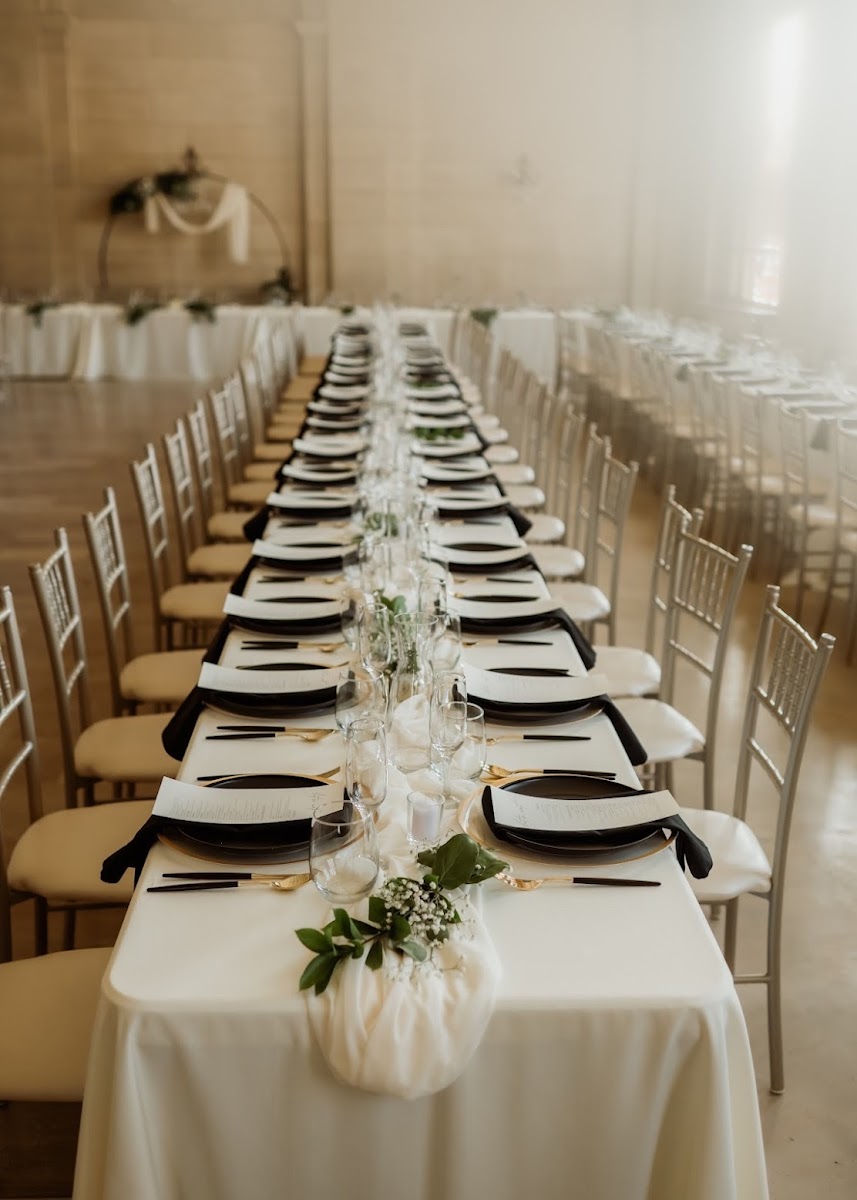
Designing for the Ariel Pearl Center is an exercise in scale and architectural respect. This 1923 bank building, designed by Hubbell & Benes, is not a “blank canvas” venue; it is a structured, neoclassical masterpiece of marble, stone, and ornate plaster. The floral opportunity here lies in softening the hard edges of the bank’s history while leaning into the massive verticality provided by the columns and arched windows.
We know this venue intimately, and the primary challenge is always the stone. Because you cannot pin, nail, or tape anything to the historic surfaces, every floral moment must be engineered to be freestanding and stable. The reward for this technical rigor is a backdrop that makes even modest arrangements look like museum installations.
The Spaces
Grand Hall with Rotunda
The Grand Hall is the heart of the building, characterized by its coffered ceilings and massive crystal chandeliers. This is where the neoclassical bank aesthetic is most pronounced. The sheer volume of the room can swallow small centerpieces, making them look like an afterthought.
- What works: Tall, architectural arrangements that utilize clear glass or thin gold stands to maintain sightlines while reaching toward the ceiling.
- Skip: Short, airy bud vases as a standalone strategy. They disappear against the scale of the stone walls.
- Watch out: The “rotunda” effect creates unique acoustics; avoid massive floral walls that might further dampen or reflect sound in ways that interfere with speeches.
- Budget hero move: Focus your spend on four massive “impact” arrangements placed at the base of the marble columns to define the reception perimeter.
Entrance Hall (Ceremony Space)
The Entrance Hall serves as a grand transition point and a frequent site for ceremonies. The marble floors are beautiful but can be slippery with any petal fall or water. The focus here should be on the aisle and the altar focal point, which usually sits between two prominent columns.
- What works: Floor-based “meadow” installations that appear to grow from the marble. This keeps the focus low and allows the ceiling’s decorative medallions to remain visible.
- Skip: Traditional arches with heavy top-weight. If they aren’t perfectly balanced, the lack of floor-anchor points becomes a safety hazard.
- Watch out: The marble reflects light. If you are using white flowers, ensure they are high-quality; the stone will highlight any bruising or browning.
The Vault
The Vault is the venue’s most unique asset. It is industrial, heavy, and visually dense. It’s often used for photos or intimate cocktail moments.
- What works: Saturated colors—deep burgundies, emerald greens, or dried textures—that hold their own against the dark metal and steel.
- Skip: Pastels or “garden-style” airy designs. They look out of place in such a masculine, heavy environment.
- Watch out: Space is tight. Keep arrangements petite and heavy-based so they aren’t knocked over by guests exploring the vault.
Rooftop Terrace
The rooftop offers a rare outdoor moment in an otherwise very “enclosed” historic building. It features views of the Old Brooklyn neighborhood and the venue’s iconic water tower.
- What works: Weighted, low-profile troughs or heavy ceramic containers.
- Skip: Anything on a pedestal. The wind off Lake Erie can be unpredictable and will topple top-heavy designs.
- Watch out: There is no shade. Flowers will bake in the afternoon sun, so choose hardy varieties like ranunculus, roses, or tropicals if you are hosting a summer event here.
What Works at Ariel Pearl Center
Monochromatic palettes with high texture. The venue is a sea of grey stone, white marble, and warm wood. To make flowers pop, we recommend either a “White Out” look (all white flowers with varying textures like hydrangea, roses, and bleached ruscus) or deep, moody jewel tones that provide a sharp contrast to the neutral stone.
Freestanding floral pillars. Since you cannot attach anything to the Hubbell & Benes columns, freestanding pillars are the best way to frame a ceremony. These can be moved after the ceremony to frame the sweetheart table or the entrance to the Grand Hall.
Symmetry in design. The architecture of a 1923 bank is perfectly symmetrical. Your floral floor plan should reflect this. Asymmetric, “wild” designs can sometimes feel disorganized in such a formal, structured environment. Lean into the balance.
Greenery as a softener. The stone and marble can feel “cold” to some. Using smilax or Italian ruscus to climb (on freestanding structures) around the base of the columns can breathe life into the room without hiding the architecture.
Candlelight integration. The crystal chandeliers provide a beautiful overhead glow, but the stone walls love the flicker of candlelight. Use glass-enclosed hurricanes at the base of your floor arrangements to create depth and warmth against the marble.
Budget Guide
| Tier | Investment | Floral Strategy |
|---|---|---|
| Essentials | $1,750 - $3,000 | Focus exclusively on the personal flowers and a high-impact ceremony focal point that can be repurposed to the reception. |
| Sweet Spot | $3,000 - $6,000 | Includes personals, a full ceremony setup, and a mix of tall and low centerpieces to create visual rhythm in the Grand Hall. |
| Full Experience | $6,000 - $10,000 | Adds floral moments to the Vault, the Rooftop, and the Fireplace Room, ensuring a cohesive design throughout the entire multi-room experience. |
| Statement | $10,000+ | Large-scale installations at the base of every marble column, a lush “meadow” aisle, and premium, high-density floral centerpieces for every table. |
The Ariel Pearl Center is a venue that rewards those who invest in scale over quantity; one massive arrangement here is worth ten small ones.
Tips
Repurpose with a plan. The transition from the Entrance Hall ceremony to the Grand Hall reception is a prime opportunity to move your altar arrangements to the head table or the rotunda entrance.
Avoid the “taped” look. The venue is strict about their historic surfaces; ensure your florist is using heavy-weighted bases and floor protectors to avoid any damage charges to the marble.
Consider the vault light. The Vault is dark. If you want flowers to show up in photos there, you must use light-colored blooms or have your photographer bring additional lighting.
Scale for the windows. The arched windows are a major feature; don’t block them with mid-height arrangements. Go very tall or very low to keep the view of the architecture clear.
Seasonal transitions. In winter, the stone can feel extra chilly—lean into warm ambers and heavy evergreens. In summer, use the natural light from the windows to highlight bright, citrusy tones.---