
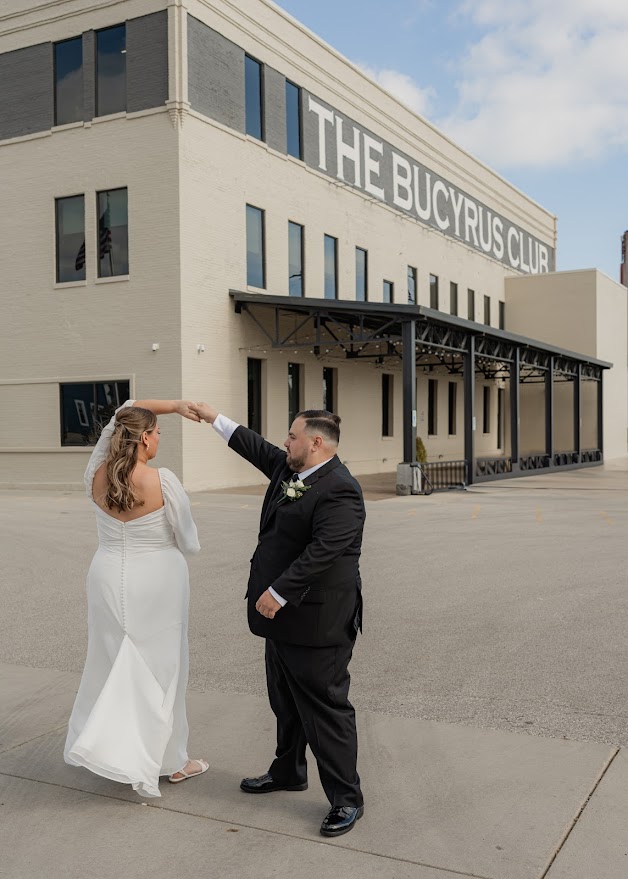
You’re driving down 12th Avenue in South Milwaukee, past local bakeries and corner taverns that have stood for generations, when the Bucyrus Club building announces itself with quiet authority. The Cream City brick — that distinctive warm, pale yellow Milwaukee is known for — catches the afternoon light, and you realize this is not a factory-turned-venue playing dress-up. This is the real thing. Built in 1893 as a manufacturing facility for Bucyrus Erie, the company that built the massive steam shovels used to dig the Panama Canal, the building carries its industrial heritage without apology. Walk through the entrance and the first thing you encounter is not a ballroom draped in tulle, but rather a museum filled with actual historical excavation equipment — towering machines of riveted steel that once moved mountains of earth. It’s an unexpected, almost audacious introduction to a wedding venue, and it sets the tone for everything that follows. The Cream City brick continues inside, exposed and original, warm against dark wood and modern lighting. This is industrial elegance in its truest form, and Poppy has designed Bucyrus Club & Event Center wedding flowers for one celebration here so far, with each arrangement needing to hold its own against brick, steel, and history.
About Bucyrus Club & Event Center
The Bucyrus Club sits in the heart of downtown South Milwaukee, fifteen minutes south of Milwaukee proper and positioned in what locals call the historic mainstreet district. South Milwaukee is not trying to be anything other than what it is — a close-knit community with over a century of manufacturing legacy, tree-lined residential streets, and a downtown that feels lived-in rather than curated. The venue building itself was constructed in 1893 as part of the Bucyrus Erie manufacturing empire, and the architecture reflects the no-nonsense industrial construction of that era: load-bearing Cream City brick walls (the clay for these bricks was mined from the Menomonee River Valley and fired to that signature pale yellow color), high ceilings designed to accommodate machinery, and wide-plank wood floors built to withstand heavy equipment. When the factory closed, the building was thoughtfully converted into an event space, but the bones remain entirely intact.
The Cream City brick is the hero throughout. Unlike painted brick or brick veneer applied for aesthetic purposes, these are structural walls, original to 1893, and they provide a neutral warmth that works with virtually any floral palette. The brick color shifts depending on light — pale honey in afternoon sun, deeper butterscotch under evening uplighting — which is something we consider when designing Bucyrus Club wedding flowers that need to transition from cocktail hour through reception.
What makes Bucyrus Club genuinely distinctive is the museum. The Bucyrus Museum occupies a significant portion of the venue and houses massive pieces of excavation equipment — steam shovels, cranes, and drilling apparatus that were manufactured on-site and used in landmark projects including the Panama Canal, the Holland Tunnel, and various mining operations across North America. These are not replicas or models; these are the actual machines, preserved and displayed with informational plaques. For a cocktail hour, it’s an unforgettable setting — your guests wandering between towering equipment with champagne in hand, the industrial scale providing drama no floral installation could match. As florists, we approach this space with humility. The machinery is the main event; our job is to soften the space, add warmth and color, and provide focal points that guide the flow without competing for attention.
Logistically, the venue is well-equipped for weddings. Skyline Catering provides exclusive food and beverage service (same ownership as the venue), which means streamlined coordination and a culinary team that knows the spaces intimately. There are 200 free on-site parking spaces, which is a genuine luxury in any metro area and eliminates guest stress about rideshares or remote lots. The venue allows day-before access for setup, day-of event access, and day-after breakdown, which gives Poppy’s team the time we need to install more complex floral designs without rushing. The events team is communicative and organized, and they’ve been flexible and accommodating with floral vendors, per feedback we’ve gathered.
One charming detail: every couple who marries at Bucyrus Club receives a permanent wedding name commemoration plaque installed somewhere on the venue walls. Your names and wedding date are engraved and added to the growing collection of couples who’ve celebrated here. It’s a small gesture, but it speaks to the venue’s philosophy — you’re not just renting a space; you’re becoming part of its history.
Event Spaces & Floral Opportunities
1893 Ballroom & Patio
Capacity: 100 seated, up to 200 for ceremony
Setting: The 1893 Ballroom is the original heart of the building, and it wears its age beautifully. The Cream City brick walls are fully exposed, providing that warm, textured backdrop that photographs like a dream. Ceilings are high but not cavernous, and the space feels intimate even at full capacity. Modern lighting has been added — clean pendant fixtures and subtle uplighting — but the architecture remains the star. An attached outdoor patio extends the usable space and can accommodate ceremonies of up to 200 guests, weather permitting. The patio is simple: concrete pavers, minimal landscaping, and open sky. It’s a blank canvas.
Floral approach: The brick loves greenery. This is where we lean into organic, garden-inspired designs with plenty of textural foliage — Italian ruscus, seeded eucalyptus, olive branches, and maidenhair fern. For centerpieces, consider low, lush compote arrangements in aged brass or terracotta vessels that echo the warmth of the brick. Cafe au Lait dahlias, Quicksand roses, blush ranunculus, and cream lisianthus read beautifully against the pale yellow brick without disappearing. If you’re drawn to bolder color, deep burgundy (Black Baccara roses, burgundy dahlias) or navy-and-wine tones create striking contrast. For the outdoor patio ceremony, a simple wooden arch dressed with asymmetrical greenery and clustered blooms provides structure without blocking sightlines back into the historic building. Aisle arrangements can be minimal — small pedestals with greenery and single blooms every few rows — since the patio itself is unfussy. If you’re repurposing ceremony flowers for the reception (a smart budget move), design the arch florals in detachable segments that can be broken down and used as installation pieces above the bar or flanking the ballroom entrance.
Grand Ballroom
Capacity: 250 seated, 300 cocktail-style
Setting: The Grand Ballroom is the largest space at Bucyrus Club, designed to accommodate big celebrations without feeling impersonal. The room has the same Cream City brick foundation, with additional architectural details like dark wood wainscoting and modern chandeliers that provide ambient light. Eight large video screens are distributed throughout the venue (including this ballroom), which means A/V presentations — photo slideshows, toasts, live feeds from the ceremony — are central to many celebrations here. The layout is flexible, with round tables for seated dinners or a more open floor plan for cocktail-style receptions.
Floral approach: Scale matters in this space. With 250 guests and significant square footage, you need floral moments that register from across the room. Tall centerpieces on alternating tables — elevated on clear glass risers or gold stands — create visual rhythm and prevent the space from feeling flat. We favor a mix of heights: half the tables with 30-inch elevated arrangements (loose and organic, spilling over the edges with trailing jasmine vine, amaranthus, and Sahara roses) and half with low, lush compotes that allow easy conversation. For a statement installation, consider a suspended greenery runner above the head table using smilax, Italian ruscus, and scattered blooms. The video screens present both challenge and opportunity. Coordinate with your A/V team early — we can design floral frames around screens or position arrangements so they’re visible in the same sightline as the screen content, creating cohesive visual moments. Avoid placing tall centerpieces directly in front of screens, which frustrates guests trying to watch toasts. For couples working with tighter budgets, focus floral investment on the entrance (a dramatic pair of urns flanking the doorway signals the transition into the main event) and the sweetheart table, letting candlelight and the architectural brick carry the rest of the room.
Founder’s Room
Capacity: 50 seated, 80 standing
Setting: The Founder’s Room sits between the two ballrooms and functions as the social heart of the venue during multi-space weddings. It’s anchored by a large, impressive bar — the kind with room for multiple bartenders working simultaneously and plenty of surface area for drink displays. The room also includes tables and lounge-style seating, making it ideal for cocktail hour or as a continuous gathering spot throughout the reception where guests can escape the dance floor for conversation.
Floral approach: The bar is your floral anchor here. A long, low garland running the length of the bar top (set back from the edge to preserve bartender workspace) makes an immediate impact. Use sturdy, flexible greenery like Italian ruscus and seeded eucalyptus as the base, woven with clusters of spray roses, carnations (yes, carnations — modern varieties like Green Trick or Prado are sculptural and hold up beautifully in high-traffic areas), and hypericum berries. Secure everything with floral adhesive and zip ties; this is not the place for delicate mechanics. Accent the bar with smaller bud vases or votives scattered at intervals, using blooms that can withstand jostling — football mums, miniature calla lilies, succulents in metallic containers. If the Founder’s Room is serving as cocktail hour space before the Grand Ballroom opens, consider one larger freestanding arrangement on a pedestal near the entrance — something eye-catching that draws guests into the room and sets the tonal expectation for the florals they’ll encounter later.
Bucyrus Museum
Capacity: 150 standing
Setting: This is the venue’s true signature space. The Bucyrus Museum houses massive industrial equipment — steam-powered excavators, cranes, drilling apparatus — displayed as functional art. The machinery is painted in vintage industrial colors (forest green, burgundy, cream, black), and informational plaques explain the equipment’s role in historic engineering projects. Ceilings are high, the lighting is dramatic, and the scale is monumental. This is not a space that needs decoration. It is already complete.
Floral approach: Restraint is the strategy here. The machinery provides all the drama you could want; Bucyrus Club & Event Center wedding flowers in the museum should enhance the experience, not compete for attention. We recommend a few well-placed, high-impact installations rather than trying to fill the space. Consider elevated arrangements on tall pedestals (48-inch gold or black metal stands) positioned near, but not obscuring, key pieces of equipment. The florals should feel industrial-adjacent — incorporate unexpected elements like steel grass (a spiky, architectural foliage), bleached ruscus, air plants, or even metallic-painted branches alongside softer blooms. A palette of deep greens, metallics, burgundy, and cream ties into the vintage equipment colors. For cocktail tables scattered throughout the museum, use simple bud vases with single statement blooms — a King protea, a large burgundy dahlia, a single white amaryllis — that guests can appreciate up close without blocking their view of the machinery. If you’re lighting the space dramatically (which you should be; uplighting on the equipment is transformative), coordinate your floral colors with the lighting gels. Amber uplighting makes warm-toned florals glow; cooler blue-toned lighting favors whites, silvers, and deep purples.
Wedding Flower Ideas for Bucyrus Club & Event Center
Cream City Classicism
This palette takes its cue directly from the venue’s Cream City brick, building a romantic, timeless design in shades of ivory, champagne, blush, and warm cream. Think garden roses in Patience, Juliet, and O’Hara; standard ivory roses like Playa Blanca; blush ranunculus; champagne-colored lisianthus; and ivory spray roses. Textural elements include bleached ruscus, dusty miller, and trails of jasmine vine. Arrangements sit in vessels that complement the brick — aged terracotta urns, champagne-toned ceramic compotes, or soft gold stands. This is a palette that feels bridal without being overly sweet, and it photographs beautifully against the brick’s warm undertones. It works particularly well in the 1893 Ballroom, where the intimacy of the space allows the subtle color gradations to shine. For ceremony work on the outdoor patio, an asymmetrical wooden arch covered in this palette — heavy on the ivory and cream with touches of blush — feels organic and elevated.
Industrial Romance
Lean into the venue’s manufacturing heritage with a moody, dramatic palette that bridges industrial edge and romantic softness. Deep burgundy (Black Baccara roses, Burgundy dahlias), charcoal-gray (privet berries, scabiosa pods, dark hellebores when in season), slate blue (tweedia, delphinium), and touches of metallics (silver brunia, painted eucalyptus). Soften with mauve and dusty rose accents — Quicksand roses, Amnesia roses, silver-pink astilbe. Vessels should feel intentional: matte black ceramic, gunmetal gray, hammered copper, or even galvanized metal containers that nod to the industrial equipment in the museum. This palette is stunning in the Bucyrus Museum for cocktail hour, where the deep tones complement the vintage machinery colors, and carries beautifully into the Grand Ballroom for reception. Incorporate geometric shapes — cube vases, angular compotes — to echo the structural lines of the industrial architecture.
Midwest Harvest
Celebrate Wisconsin’s agricultural roots with a harvest-inspired palette in warm golds, burnt orange, deep reds, and chocolate brown. Use sunflowers (Teddy Bear or ProCut Orange for more refined varieties than the standard grocery store bloom), orange ranunculus, burgundy dahlias, chocolate cosmos, cinnamon-hued roses (Terracotta, Coral Reef), and rust-colored chrysanthemums. Add texture with bunny tail grass, wheat stalks, millet, and seeded eucalyptus. This palette works beautifully for fall weddings but can be adapted year-round by adjusting the specific blooms. Vessels should feel rustic but refined — wooden boxes, ceramic crocks in cream or brown, brass bowls. For the outdoor patio ceremony, consider hay bale seating (dressed with blankets or cushions) and an arch made from branches and cornstalks woven with the harvest florals. This is a crowd-pleaser palette that feels warm, welcoming, and grounded in place.
Seasonal Considerations
Wisconsin’s continental climate means four genuinely distinct seasons, and your floral choices should respond accordingly.
Spring (March–May): Spring in South Milwaukee arrives slowly. March can still see snow, and early April is unpredictable. By late April and through May, temperatures stabilize in the 50s–70s, and locally grown spring blooms become available. Tulips are the star of early Wisconsin spring — varieties like French tulips (long stems, saturated colors), parrot tulips (ruffled edges), and fringe tulips provide far more visual interest than standard grocery store tulips. Combine with daffodils, hyacinth, ranunculus, and anemones. Branches are spectacular in spring: flowering cherry, forsythia, quince, and pussy willow add height and drama. If you’re planning an outdoor patio ceremony in spring, have a solid backup plan. April and May can be gorgeous, but they can also be 45 degrees and drizzling. Our recommendation: plan the ceremony outdoors but rent clear-top tents and heaters as insurance, or be prepared to move into the 1893 Ballroom if weather turns.
Summer (June–August): Wisconsin summer is glorious. Warm days (70s–80s), long daylight hours, and peak bloom season for nearly everything. June brings peonies — Sarah Bernhardt, Festiva Maxima, Coral Charm — which are a Wisconsin favorite and absolutely worth building a design around if your wedding falls during the narrow peony window (typically late May through mid-June). July and August offer garden roses, hydrangeas (Annabelle is a Wisconsin staple), dahlias (which start in late July and continue through fall), sunflowers, zinnias, and cosmos. Outdoor patio ceremonies are reliable in summer, though afternoon heat can be intense; consider providing parasols or fans for guests. For florals, summer heat means hearty blooms hold up better — roses, hydrangea, carnations, and alstroemeria are reliable, while delicate blooms like sweet peas or fritillaria may wilt faster.
Fall (September–November): Fall in southeastern Wisconsin is peak wedding season, and for good reason. September and October offer comfortable temperatures (60s–70s), vibrant foliage, and the absolute best dahlia season. Locally grown dahlias from Wisconsin flower farms are extraordinary — Cafe au Lait, Creme de Cognac, Labyrinth, and dozens of dinner-plate varieties in every color imaginable. Combine with chrysanthemums (football mums, cushion mums, and spider mums in burgundy, bronze, and gold), roses, hypericum berries, and fall foliage like oak leaves, viburnum berries, and bittersweet vine. November weddings require flexibility; early November can be mild, but late November may see freezing temperatures and even snow. If you’re planning a late fall outdoor ceremony, have an indoor backup.
Winter (December–February): Wisconsin winter is serious. Snow, ice, and temperatures regularly below freezing mean outdoor ceremonies are off the table, but the venue’s historic brick interiors feel especially cozy and romantic in winter. Lean into evergreens — noble fir, cedar, pine, and Fraser fir branches — combined with winter blooms like white roses, amaryllis, ranunculus, anemones, and hellebores. Incorporate winter berries (ilex, hypericum) and frosted or snow-flocked elements (painted branches, silver brunia). Metallics — gold, silver, copper — add warmth and elegance against the Cream City brick. Winter florals tend to be more budget-friendly since you’re supplementing with greens, and the evergreen scent adds an immersive sensory element to your celebration.
Poppy’s Expert Take
The museum is not a problem to solve; it’s an asset to celebrate. Many couples initially worry that the industrial equipment will clash with romantic wedding florals, but the opposite is true. The machinery provides instant drama and visual interest, which means you can use fewer, more strategic floral installations rather than trying to decorate every surface. Embrace the juxtaposition. A sculptural arrangement next to a vintage steam shovel is far more memorable than another centerpiece on another table.
The Cream City brick shifts color throughout the day. What reads as pale honey yellow in afternoon natural light will look deeper, almost butterscotch, under evening uplighting. When selecting your floral palette, bring color swatches to the venue during a site visit at the same time of day your reception will occur. Test how your colors read against the brick under the actual lighting conditions. Ivories and creams can disappear if the lighting is too warm; deep burgundies may read almost black if uplighting is too cool. Work with your lighting designer and florist together.
Bar florals take a beating. The Founder’s Room bar sees constant guest traffic, enthusiastic drink ordering, and inevitable elbows knocking into arrangements. Design accordingly. Use low-profile installations that sit back from the bar’s working edge, choose sturdy blooms (not delicate orchids or fragile sweet peas), and secure everything with professional floral adhesive or zip ties. If you’re using candles near the bar, they must be enclosed votives or hurricanes — never tapers or open flames.
Repurpose ceremony florals strategically. If you’re having a patio ceremony followed by a Grand Ballroom reception, design your ceremony arch or altar arrangements in modular sections that can be quickly disassembled and repurposed. A ceremony arch can become two large urn arrangements flanking the ballroom entrance. Aisle markers can move to cocktail tables. Coordinate timing with your florist and the venue team — you’ll need 20–30 minutes during cocktail hour to make the transition, which is why the museum cocktail hour is perfect; it gives your floral team time to work without guests noticing.
The video screens are part of the design plan. With eight screens throughout the venue, A/V is clearly central to Bucyrus Club celebrations. Talk to your A/V vendor and florist simultaneously. Decide whether you want floral elements framing screens or whether screens should remain unadorned. Never position tall centerpieces directly blocking screen views. Consider how your floral colors will look on camera if there’s a live ceremony feed displayed during cocktail hour.
Load-in and setup space is generous, but coordinate timing. The venue allows day-before access, which is ideal for large installations. However, Skyline Catering will also be setting up during that window, so communicate with both your florist and the catering team about who needs which spaces when. Poppy typically prefers to install larger pieces (ceremony arch, statement installations) the day before, then return the morning of the wedding for centerpieces and fresh personal flowers.
Parking is a gift — use it to your advantage. With 200 free on-site spots, you can confidently tell guests to drive rather than coordinating rideshare drop-offs. This is particularly valuable for Milwaukee-area guests coming from different suburbs, and it means your out-of-town guests won’t stress about navigating unfamiliar public transit or expensive rideshares.
What Poppy Couples Spend on Flowers Here
$1,500–$2,500 | The Essentials
This tier covers a focused floral presence in key areas: bridal bouquet, three bridesmaid bouquets, four boutonnieres, two corsages, and reception centerpieces for up to 12 guest tables in either the 1893 Ballroom or Grand Ballroom. For ceremony, a small altar arrangement or a pair of low pedestals flanking the ceremony spot (either outdoor patio or indoor). Centerpieces are designed as low compote arrangements (8–10 inches tall) in simple vessels, using seasonal blooms and plenty of greenery to keep costs manageable. This budget works beautifully for couples embracing a specific aesthetic — perhaps all-greenery arrangements with minimal blooms, or a tight color palette using one or two flower types in volume (all white roses and eucalyptus, for example). You won’t have large installation pieces or ceremony arches at this level, but you’ll have a cohesive, polished floral presence where it matters most. Focus investment on the bridal bouquet and centerpieces; let the Cream City brick carry the rest of the visual weight.
$2,500–$4,000 | The Full Picture
This is the range where Bucyrus Club & Event Center wedding flowers can truly respond to the venue’s architecture. You’ll have everything from the Essentials tier, plus: a ceremony installation (either a wooden arch dressed with asymmetrical greenery and clustered blooms for the outdoor patio, or a dramatic reclaimed wood cross or metal frame for indoor ceremonies), aisle markers, cocktail table arrangements for the Bucyrus Museum (small bud vases or compotes for 8–10 cocktail tables), a statement piece for the Founder’s Room bar (long garland or elevated arrangement), and upgraded centerpieces with more bloom density and variety. At this tier you can incorporate a mix of centerpiece heights — alternating low compotes with some elevated arrangements on gold stands — which creates visual rhythm in the Grand Ballroom. You’ll also have budget for specialty blooms: garden roses instead of standard roses, dahlias in peak season, or textural elements like scabiosa pods, privet berries, and interesting foliage. This tier typically covers personal flowers for a larger wedding party (up to six bridesmaids) and additional family corsages or boutonnieres.
$4,000+ | The Full Experience
At this investment level, we’re designing Bucyrus Club wedding flowers as a comprehensive installation across multiple spaces. Everything from previous tiers, elevated: a substantial ceremony arch (8–10 feet, heavily dressed with florals and greenery), lush aisle arrangements, cocktail florals throughout the museum (15+ tables), a dramatic bar installation in the Founder’s Room (perhaps a suspended greenery runner or oversized urn arrangements flanking the bar), upgraded reception centerpieces with premium blooms (peonies in season, garden roses, specialty dahlias), and at least one showstopper installation piece — a suspended greenery runner above the head table in the Grand Ballroom, or large-scale urn arrangements at the ballroom entrance. You’ll have budget for finishing touches: greenery or blooms woven into the cake display, florals for the gift table, bathroom arrangements, even small bud vases for the commemoration plaque photo moment. This tier also allows for more labor-intensive techniques like hand-wired bouquets, intricate garland work, or delicate floral crowns. If you’re planning to use the 1893 Ballroom for ceremony and the Grand Ballroom for reception, this budget supports full florals in both spaces without repurposing.