
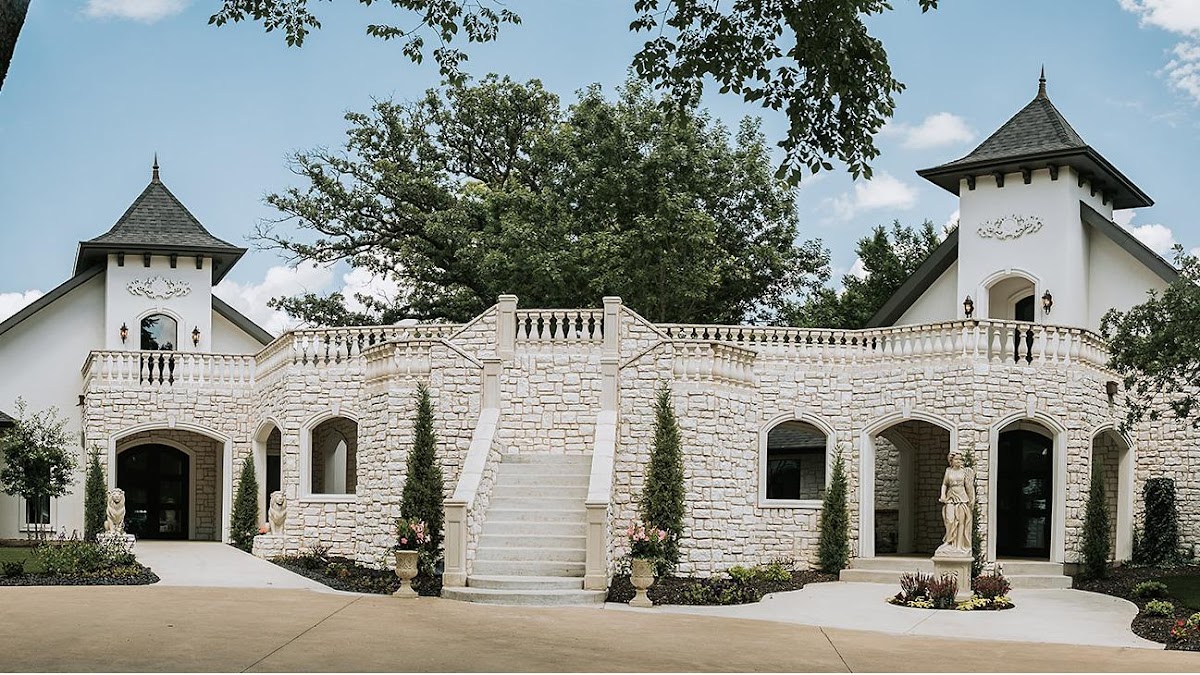
There is a moment, just after you step through the doors of Brighton Abbey’s glass chapel, when everything else falls away. The flat North Texas landscape, the drive up from Dallas, the last-minute logistics running through your head — all of it dissolves as your eyes lift to the soaring ceiling, the floor-to-ceiling windows flooding the space with golden light, and the grand chandelier suspended above the aisle like a crown. You are standing in a glass cathedral surrounded by centuries-old trees, and for the first time, the wedding you have been planning for months becomes absolutely, viscerally real. That is the power of Brighton Abbey, and it is the reason designing Brighton Abbey wedding flowers is one of the most rewarding challenges our team takes on. Poppy has created floral designs for 5 weddings at this venue, and each one has taught us the same fundamental truth: the flowers here should not try to outshine the architecture. They should dance with it.
Brighton Abbey occupies a rare position in the Dallas-Fort Worth wedding market. It delivers the grandeur of a European estate chapel, the romance of a secret garden hidden beneath ancient trees, and the polish of a modern reception ballroom — all within a single property in Aubrey, Texas, just thirty minutes north of Dallas. For couples searching for an Aubrey wedding florist who understands how to navigate this kind of multi-space venue, the key is crafting a floral narrative that threads seamlessly through every room and every moment, from the first glimpse of the glass chapel to the last dance beneath the ballroom chandeliers.
About Brighton Abbey
Brighton Abbey is a 5-acre wedding estate tucked into the quiet countryside of Aubrey, Texas, a small town in Denton County situated just north of Lake Lewisville and east of Denton. Despite the rural address, the venue is remarkably accessible to the entire Dallas-Fort Worth metroplex — Frisco and Little Elm are a short drive away, and downtown Dallas is roughly 30 minutes south. What makes the location special is the paradox it creates: you are minutes from the sprawling DFW suburbs, yet the heavily wooded grounds and the canopy of 400-year-old trees make you feel like you have traveled to a European estate hidden deep in the countryside.
The property underwent a significant renovation that elevated it into one of the most visually compelling DFW wedding venues. The glass chapel — known as The Abbey — was reimagined with white and grey wood paneling, floor-to-ceiling windows that frame the surrounding tree canopy, elegant white stone arches, and a soaring ceiling crowned by a dramatic central chandelier. The effect is breathtaking: light pours in from every direction, the architecture guides the eye forward to the altar, and the natural world outside becomes part of the ceremony itself. Trees, sky, and shifting afternoon light are woven into the design as deliberately as the stone and wood.
The Reception Ballroom received equally thoughtful attention during the renovation. New soaring chandeliers command the vertical space, white-washed wood floors reflect light upward to create a luminous atmosphere, and large windows maintain the connection to the outdoors. A built-in bar anchors one side of the room, providing both a functional hub and a natural design opportunity. The Bridal Suite was refreshed with salon-style mirrors, double-sided freestanding mirrors, and white salon chairs — creating a getting-ready space that is as photogenic as it is functional. A Groom’s Suite offers a comfortable retreat with casual lounge furniture and entertainment. And a Courtyard connecting the buildings, dressed in bistro lights, provides a natural transition space for cocktail hours.
Brighton Abbey provides 11 hours of exclusive use: 5 hours for setup and getting ready, 5 hours for the event (with reception ending by 11pm), and 1 hour for teardown, with all vendors off-property by midnight. A one-hour rehearsal is included. The venue maintains a preferred vendor list but welcomes outside professional vendors with approval. Beverage service is handled exclusively through their partner, Twisted Spirits. Understanding these logistics matters for your floral planning — the 5-hour setup window is generous, but coordinating floral installation across multiple spaces (chapel, ballroom, lawn, staircase) requires a detailed timeline.
Event Spaces & Floral Opportunities
Brighton Abbey’s genius lies in how its spaces create a natural, flowing journey through the wedding day. The ceremony in the glass chapel, cocktails on the enchanted lawn, dinner and dancing in the ballroom — each space has its own distinct character, and the most successful Brighton Abbey wedding flowers are those that honor each room’s personality while maintaining a consistent thread. Here is how we approach each space.
The Chapel (The Abbey)
Capacity: 175 guests seated | Setting: Indoor glass chapel
The Abbey is the heart of Brighton Abbey, and it is one of the most architecturally extraordinary ceremony spaces in the entire Dallas wedding florist market. Walk in and look up: the soaring ceiling draws your gaze skyward, where a grand central chandelier hangs above the aisle like a beacon. White and grey wood paneling wraps the walls with a clean, modern warmth. Floor-to-ceiling glass windows line both sides of the space, and through them you see the silhouettes of the 400-year-old trees, their branches reaching and swaying, making the outdoors feel like a living, breathing part of the ceremony. White stone arches frame the altar. Natural light streams in from every angle, shifting throughout the afternoon from bright and even to warm and directional as the sun moves.
This is a space where restraint is not just advisable — it is essential. The venue itself recommends minimal decor in the chapel, and after designing flowers here multiple times, we agree wholeheartedly. The architecture is complete. The windows, the arches, the chandelier, and the light itself are doing the design work. Your flowers should feel like they grew naturally into the space, not like they were imposed upon it.
The primary floral focal point is the altar area beneath the chandelier. A pair of large, lush urn arrangements — garden roses, hydrangeas, ranunculus, and trailing Italian ruscus — positioned on either side of the stage creates a framing effect that directs attention to the couple without blocking the architecture or the windows behind them. For a more editorial, modern approach, a single asymmetric installation at the altar, built with organic shapes that echo the arches, adds visual intrigue without the symmetry of traditional urns. The central chandelier offers an opportunity for a hanging floral installation — imagine cascading greenery and soft blooms suspended beneath the fixture, draping downward toward the couple as they exchange vows. This is a dramatic, high-impact choice, but it requires early coordination with the venue regarding weight limits and installation access.
Aisle treatments should stay simple. The white flooring shows off petals dramatically — a scattering of rose petals along the aisle creates a runway of color against the bright floor. Small posies tied to aisle chairs, single stems in glass vases, or low greenery markers at every third row provide gentle structure without visual clutter. Remember: the light streaming through those floor-to-ceiling windows will illuminate your flowers from the side, creating a soft, directional glow that makes every petal and leaf luminous. Your photographer will thank you.
Event Lawn
Capacity: 175 guests seated | Setting: Outdoor lawn with synthetic grass
If the Chapel is Brighton Abbey’s cathedral moment, the Event Lawn is its fairy tale. Step outside and you enter what the venue rightly calls a “secret garden” — a wide lawn of synthetic grass (reliable and mud-free in any weather) surrounded on all sides by massive, ancient trees. These are not decorative saplings. The trees are estimated at 400 years old, with thick trunks, broad canopies, and gnarled branches that twist overhead like the ceiling of a natural cathedral. As evening falls, string lights woven through the branches and strung across the space come alive, transforming the Lawn into something genuinely magical — warm, glowing, and deeply romantic.
For outdoor ceremonies on the Lawn, the trees themselves are your backdrop. A ceremony arch or altar structure positioned to frame the canopy behind it creates a layered composition of designed florals and wild, natural beauty. We recommend a garden-style arch — a half-moon or organic oval shape rather than a sharp rectangle — dressed in seasonal blooms and lush mixed greenery. The rounded form echoes the organic shapes of the tree canopy above, creating visual harmony between the installation and the landscape. Climbing roses, jasmine vine, smilax, and eucalyptus varieties work beautifully woven through a wooden or metal arch frame, with focal blooms (garden roses, dahlias, lisianthus) concentrated at the top and cascading downward.
During cocktail hour, the Lawn shifts from ceremony to social space, and the floral approach should shift with it. Small, loose arrangements on cocktail tables — bud vase clusters, mason jar arrangements with garden roses and aromatic herbs like lavender or rosemary, or simple greenery bundles — keep the atmosphere casual and conversational. The string lights and the trees are doing the heavy atmospheric lifting; your cocktail florals just need to maintain the thread. One high-impact option is a greenery garland draped along the bar or drink station, incorporating the same blooms from the ceremony arch to create continuity as guests transition between spaces.
Reception Ballroom
Capacity: 175 guests seated | Setting: Indoor ballroom with chandeliers and built-in bar
The Reception Ballroom is where the evening crescendos, and it is the space where your floral design has the most room to shine. The soaring chandeliers are the room’s signature — they set the vertical scale and the tone of elegance. White-washed wood floors stretch beneath them, reflecting light and color upward. Large windows maintain the connection to the outdoors, and the built-in bar provides both a gathering point and a design opportunity.
Your centerpiece strategy should be in deliberate conversation with those chandeliers. There are two strong approaches. The first: complement the chandeliers’ height with tall, elevated centerpieces on clear acrylic or gold risers, creating a floating garden effect at eye level that echoes the fixtures above. Garden roses, hydrangeas, and trailing amaranthus in tall arrangements create visual layers between the table surface and the chandelier line, filling the vertical space with texture and color. The second: contrast with low, lush centerpieces in footed compote bowls or long, trailing garlands that run the length of the table, letting the chandeliers own the vertical space completely. Both approaches work. The key is choosing one strategy and committing — alternating tall and low centerpieces across the table plan creates dynamic rhythm and gives the room visual movement when viewed from the dance floor or entrance.
The white-washed floors are one of the Ballroom’s greatest gifts to your floral design. Rich, saturated colors — deep burgundy, warm coral, jewel-toned plum, burnt orange — pop against the light surface in a way that darker floors simply cannot achieve. If you have ever wanted to go bold with your wedding palette, this is the room that will reward you. The floors also reflect light upward, which means your centerpieces are subtly illuminated from below, creating a luminous quality in photographs that feels almost otherworldly.
The built-in bar deserves its own floral moment. It is one of the first things guests encounter when they enter the reception, and a statement garland draping along the bar front — eucalyptus, smilax, and accent blooms woven through — or a large, eye-catching arrangement on the bar top sets the tone for the entire evening. Coordinate the bar floral design with Twisted Spirits’ equipment layout to ensure the flowers enhance the beverage service rather than crowding the bartenders.
The chandeliers themselves can be dressed with greenery garlands (the simplest and most time-efficient option), trailing floral swags, or more elaborate hanging installations. If you are considering chandelier florals, plan well in advance — discuss access, installation timing, weight limits, and hardware with the venue coordinator. Greenery garlands with wired eucalyptus and smilax can be installed relatively quickly. More elaborate floral treatments require additional setup time within your 5-hour window.
Bridal Suite
Setting: Renovated interior with salon-style mirrors and natural light
Brighton Abbey’s Bridal Suite is one of the most photogenic getting-ready spaces in the DFW venue market. The salon-style mirrors, double-sided freestanding mirrors, and white salon chairs create a bright, airy environment that photographs beautifully without any additional styling. Place a small arrangement in your wedding palette near the mirrors — the reflections will double its visual impact and add depth to getting-ready photos. Display the bridal bouquet prominently on one of the white salon chairs or against the freestanding mirror for the reveal moment. These detail photographs set the visual tone for the entire gallery and often become some of the most-shared images from the day.
Groom’s Suite
Setting: Comfortable lounge with casual entertainment
The Groom’s Suite is designed for relaxation, not decoration, and the floral approach should match that energy. A boutonniere display — the groom’s and groomsmen’s boutonnieres arranged on a wooden tray or leather-bound board with a sprig of greenery and perhaps a flask of whiskey alongside — creates an intentional, photogenic moment without disrupting the casual atmosphere. If the couple wants a small floral touch in the room, a compact arrangement of textured greenery, thistles, and a few neutral blooms in a masculine vessel (dark ceramic, concrete, or a wooden box) adds warmth without trying too hard.
Wedding Flower Ideas for Brighton Abbey
The Glass Chapel Garden
This design draws directly from the venue’s most powerful asset: the interplay between architecture and nature. Build a palette of soft ivory, blush, champagne, and sage green — colors that complement the Chapel’s white stone and grey wood while harmonizing with the greenery visible through the windows. The core flowers are garden roses (David Austin varieties like Patience, Keira, and Juliet), ranunculus, lisianthus, sweet peas, and trailing Italian ruscus and eucalyptus. In the Chapel, a pair of generous urn arrangements at the altar overflows with soft, garden-gathered abundance — blooms that look as though they were just carried in from the grounds outside. Scattered petals along the white aisle floor create a gentle runway of color. On the Event Lawn, a half-moon arch of the same garden palette frames the ancient trees for an outdoor ceremony option that feels like stepping into a secret garden painting. In the Ballroom, low compote arrangements on the tables let the chandeliers command the vertical space, while a trailing eucalyptus garland along the bar ties everything together. This is the most natural approach for an Aubrey wedding florist working with Brighton Abbey because it amplifies what the venue already is — a glass chapel set in a garden, a place where architecture and nature are inseparable.
Tuscan Warmth Under Texas Skies
Merge Brighton Abbey’s European architectural DNA with the warmth of the Mediterranean. The palette moves to terracotta, warm blush, olive green, and cream, with touches of dusty mauve and amber. Build arrangements around garden roses and dahlias in sunset tones, mixed with olive branch, bay laurel, rosemary, and seeded eucalyptus. Use terracotta vessels, aged stone containers, and simple clear glass with gold accents. The Chapel altar gets a pair of loose, abundant arrangements in terra-cotta urns that feel like they were carried in from a hillside villa. The Event Lawn — with its ancient trees that could pass for a Tuscan grove — receives a wooden ceremony arch draped in olive branch and warm-toned blooms. Reception tables feature long garlands of mixed greenery and flowers running down the center, punctuated by scattered taper candles in brass holders. This design feels personal and rooted — it connects the venue’s European inspiration to the warmth of its North Texas setting without relying on generic “rustic” tropes. It is especially striking in early fall when the light turns golden and the ancient oaks begin their slow bronze shift.
Modern Monochrome
For couples drawn to Brighton Abbey’s clean, recently renovated aesthetic, there is extraordinary power in a single-color commitment. An all-white design — white garden roses, white ranunculus, white peonies, white hydrangeas, white lisianthus, white anemones, and white sweet peas, layered with multiple shades and textures of greenery — creates breathtaking contrast against the Chapel’s grey wood tones and the Ballroom’s warm floors. Every arrangement reads as sculpture. The variation in petal shape, texture, and bloom size provides visual interest within the monochrome discipline, and the greenery (silver dollar eucalyptus, Italian ruscus, dusty miller, ferns) introduces subtle shifts of sage, silver, and forest green that keep the palette alive. An all-blush version — dusty rose, mauve, champagne, and soft pink — has the same monochromatic power with warmer, more romantic energy. The discipline of staying in one color family produces arrangements that read as sophisticated and intentional, and it lets the venue’s architectural features — the chandeliers, the arches, the glass windows, the staircase — remain the stars. This approach photographs with a clean, editorial quality that ages beautifully.
Jewel-Toned Drama
Brighton Abbey’s light-filled, white-washed spaces can handle bold, saturated color in ways that darker venues simply cannot. If you have ever dreamed of deep, dramatic wedding flowers, this is the venue that will bring that vision to life. Build a palette of rich burgundy dahlias, plum ranunculus, hot pink peonies, deep coral garden roses, dark eggplant calla lilies, and touches of blackberry-toned scabiosa, grounded with lush dark green foliage and trailing amaranthus in burgundy. Against the Chapel’s white walls and the Ballroom’s pale floors, these colors create the kind of visual impact that stops you in your tracks. Use gold or antiqued brass vessels and candelabras to amplify the richness. On the Event Lawn, the saturated palette glows against the green canopy of the ancient trees, especially as the string lights come alive at dusk. This approach is particularly powerful for fall and winter weddings at Brighton Abbey, when the bold tones complement the season’s mood and the bare branches of the ancient trees add structural drama to the outdoor spaces.
Seasonal Considerations
Brighton Abbey’s combination of indoor and outdoor spaces gives you built-in flexibility for every season, but understanding how the North Texas climate interacts with each space — and with your flower choices — is essential for planning Brighton Abbey wedding flowers that look as good in reality as they do in your imagination.
Spring (March through May): This is Brighton Abbey’s most popular season, and the reasons are everywhere you look. Temperatures settle into a comfortable range of the 60s to low 80s, the 400-year-old trees on the Event Lawn leaf out in vivid green, and the surrounding Texas countryside comes alive with wildflowers. The natural light in the glass chapel is at its most beautiful — bright but soft, warm without being harsh. Peonies arrive in late April and May, joining ranunculus, garden roses, sweet peas, tulips, and flowering branches (quince, cherry, dogwood) to create the widest palette of soft, romantic blooms. The Event Lawn is at peak magic: lush, green, and illuminated by comfortable spring light that transitions into gorgeous string-lit evenings. Spring weekends book early at Brighton Abbey, so plan ahead. Rain is possible but infrequent, and the Chapel and Ballroom provide complete indoor alternatives that lose nothing in the transition.
Summer (June through August): North Texas summers are genuinely hot. Daytime temperatures regularly exceed 95 degrees, humidity can be punishing, and direct afternoon sun will challenge any outdoor floral installation. This is the season where Brighton Abbey’s climate-controlled Chapel and air-conditioned Ballroom earn their keep as Dallas wedding florist essentials. If you are planning an outdoor ceremony or cocktail hour on the Event Lawn, time it for late afternoon or early evening — after 6pm, the heat begins to break, the string lights turn on, and the space transforms from sun-baked to magical. Choose heat-tolerant flowers for any outdoor installations: dahlias (available from July), zinnias, celosia, protea, sunflowers, and garden roses, which handle heat better than most blooms. Avoid peonies, sweet peas, and delicate hydrangeas in outdoor summer arrangements — they will wilt before the first guest arrives. Ask your Poppy designer about heat-specific strategies: misting mechanisms for arches, water tubes for installations, and timing the outdoor setup as late as possible within the window. Despite the challenges, summer evenings at Brighton Abbey are extraordinary. Warm air, string lights, golden light filtering through the ancient trees, and the thrum of cicadas create an atmosphere that no other season can replicate.
Fall (September through November): Fall is arguably the best overall season for a Brighton Abbey wedding, offering comfortable temperatures in the 70s and 80s, extraordinary light, and access to the widest variety of seasonal blooms. Dahlias reach peak availability in September and October with stunning variety in form and color — from dinner-plate dahlias in burnt orange and deep burgundy to delicate pompon varieties in blush and mauve. Chrysanthemums, ornamental grasses, amaranth, roses, and fall foliage provide rich, textured palettes. The 400-year-old trees surrounding the Event Lawn begin their subtle shift — Texas oaks and other native species turn bronze and gold in late October and November — and the late afternoon light takes on that warm, amber quality that makes everything look like a painting. October and November weekends offer an excellent balance of weather, bloom availability, and typically less date competition than peak spring. If your heart is set on the full Event Lawn experience with comfortable temperatures and dramatic floral options, fall is the answer.
Winter (December through February): North Texas winters are mild by national standards — typically in the 40s and 60s — though occasional cold fronts can bring brief freezing periods. The Chapel’s climate control makes indoor ceremonies comfortable regardless of weather, and the Ballroom’s enclosed warmth creates a cozy, intimate reception atmosphere. Garden roses, ranunculus, anemones (with their striking dark centers), amaryllis, hellebores, and evergreen boughs are available and work beautifully in the bright, warm interior spaces. The bare branches of the ancient trees on the Event Lawn have their own stark, sculptural beauty, especially with string lights illuminating the tracery of branches against the night sky. Winter weddings at Brighton Abbey tend to have a more intimate, gathered-close character that the larger spring and summer celebrations sometimes lack — and the floral design can lean into that intimacy with richer textures, deeper tones, and candlelight-friendly arrangements that glow in the Ballroom’s warm atmosphere.
Poppy’s Expert Take
After designing flowers for 5 weddings at Brighton Abbey, here is what our floral team has learned about creating exceptional Brighton Abbey wedding flowers — the venue-specific insights that you will not find on a general DFW wedding venue blog.
The glass chapel is stunning. Do not fight it. This is the most important piece of advice we can offer. The Abbey’s floor-to-ceiling windows, white stone arches, central chandelier, and soaring ceiling are doing the design work for you. Couples who try to fill the chapel with elaborate floral installations end up competing with the architecture rather than complementing it. The best ceremony designs we have executed here have been intentionally restrained: a pair of beautiful urn arrangements at the altar, simple aisle accents, and nothing else. Let the light streaming through those glass walls be your primary design element. Let the trees visible through the windows be your greenery backdrop. The flowers at the altar should feel like they belong in this space — organic, graceful, and confident enough to hold their own next to the architecture without trying to overshadow it.
Redirect chapel savings to the ballroom and staircase. Because the Chapel requires minimal florals to look complete, you have the opportunity to invest more heavily in the spaces that benefit most from floral presence: the Reception Ballroom and the Castle Staircase. The Ballroom has soaring chandeliers and beautiful bones, but it needs centerpieces, bar florals, and potentially chandelier greenery to feel fully dressed for a celebration. The Castle Staircase — Brighton Abbey’s most photographed feature — appears in arrival photos, formal portraits, bridal party shots, and sparkler send-offs. A garland along the balustrade or large urn arrangements at the base of the stairs generates outsized photographic return on investment. Think of it this way: the Chapel needs very little from you, and the Ballroom and Staircase need a lot. Budget accordingly.
Coordinate your timeline across all spaces. With 5 hours for setup, you need a clear plan for installing florals in the Chapel, Ballroom, Event Lawn, Courtyard, and Staircase — all while sharing the space with caterers, DJs, and other vendors. At Poppy, we create detailed installation timelines for Brighton Abbey that prioritize the ceremony space first (it is needed earliest), then the Staircase and Courtyard (guests see these on arrival), then the Ballroom and Lawn cocktail space. If you are doing chandelier florals in the Ballroom, those need to go up before the tables are set, which means early in the setup window. Share your timeline with your event coordinator and other vendors to avoid conflicts.
The white-washed floors change how your flowers photograph. Those pale Ballroom floors reflect light upward, creating a subtle, luminous quality that makes flower colors appear more vivid and more saturated than they would on dark floors. This is a genuine advantage. Rich burgundy, warm coral, deep plum, and saturated orange will pop dramatically. On the flip side, very pale, pastel arrangements can read as washed out if you are not careful — make sure there is enough tonal depth and greenery contrast to give soft palettes definition against the bright floor.
What Poppy Couples Spend on Flowers Here
Brighton Abbey’s combination of architectural beauty and multiple event spaces creates a venue where floral investment can range from smartly restrained to comprehensively lush — and where even the more modest approach yields a polished, complete result because the venue does so much of the visual work.
- Average floral investment: $3,129
- Typical range: $2,000 to $4,500
- Poppy weddings at this venue: 5
Focused Elegance ($2,000 to $3,000): Personal flowers (bridal bouquet, bridesmaids, boutonnieres, corsages), a pair of altar urn arrangements in the Chapel, simple aisle markers, ballroom centerpieces for all tables, and a bar accent arrangement. At this level, you are covering the essentials with quality and intention, and Brighton Abbey’s inherent beauty fills in the rest. The Chapel looks complete because the architecture carries the space. The Ballroom feels celebratory with centerpieces and the bar accent. This is the range where the venue’s design does the most heavy lifting for your budget.
Signature Design ($3,000 to $4,000): Everything in the focused tier, plus one or two signature moments that elevate the experience: a Castle Staircase garland or urn treatment, cocktail hour florals on the Event Lawn, enhanced Ballroom centerpieces with alternating tall and low arrangements for dynamic visual rhythm, and a greenery treatment on the chandeliers. This is where most Poppy couples at Brighton Abbey land, and it is the sweet spot where the floral design feels intentional and comprehensive without overextending the budget. The Staircase investment, in particular, pays for itself in photographic impact.
Full Narrative ($4,000 to $4,500+): A comprehensive, multi-space floral design that carries a cohesive story from arrival through send-off. Chapel altar installation with chandelier florals, Event Lawn ceremony arch or outdoor altar, Staircase garland, Courtyard cocktail accents, Ballroom centerpieces with chandelier greenery and bar garland, Bridal Suite arrangement, and boutonniere display in the Groom’s Suite. At this level, every space the couple and their guests move through feels intentionally designed, and the floral narrative unfolds like chapters in a story — each room distinct, but all part of the same beautiful whole.
The 175-guest maximum means Brighton Abbey weddings are intimate enough that every table receives attention, yet large enough to warrant investment in the larger architectural moments. Whether you are at $2,000 or $4,500, the key is the same: let the glass chapel breathe, invest in the spaces where flowers make the biggest difference, and trust that this venue — with its soaring ceilings, ancient trees, and light-filled rooms — will meet your flowers more than halfway.