
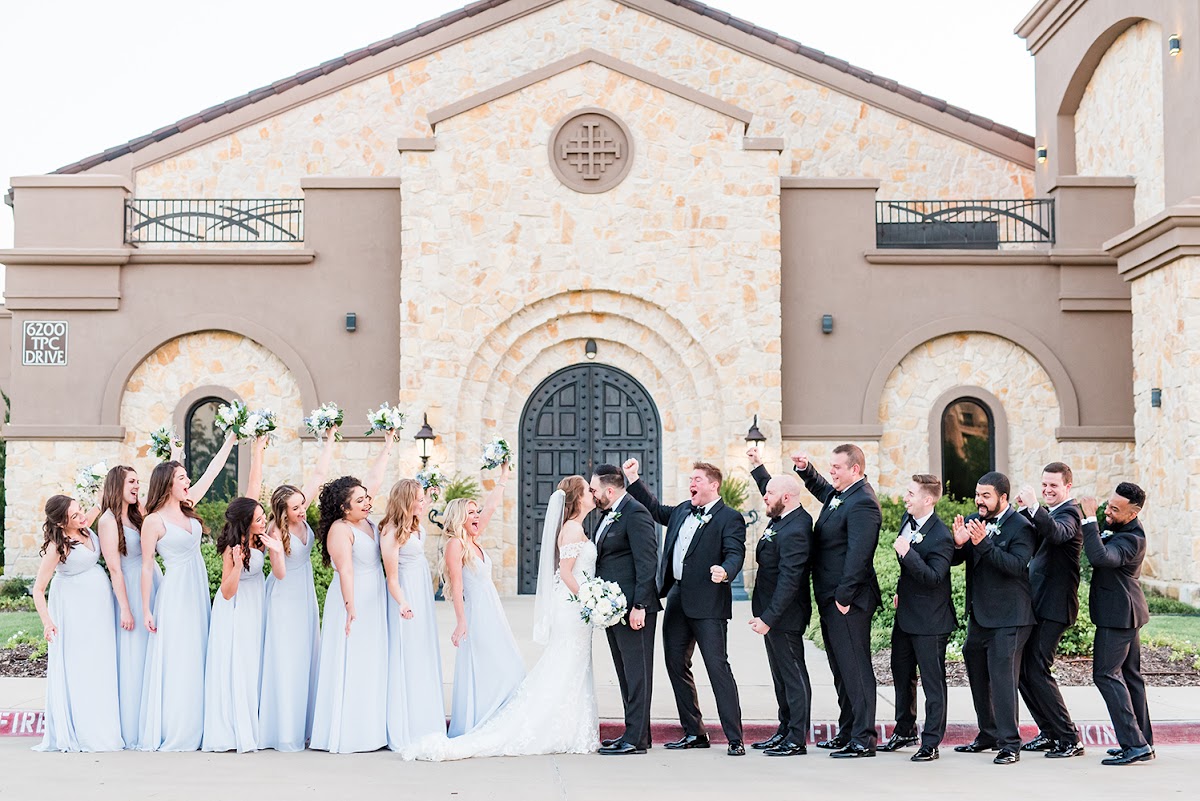
You leave the sprawl of North Dallas behind and drive north through McKinney — past the courthouse square with its brick storefronts and restored buildings, past the last neighborhood, and then you turn onto TPC Drive. The landscape opens up. Championship golf greens stretch in manicured waves. And then, rising from the Craig Ranch development like a vision transported from southern Europe, you see it: honey-colored stone walls, arched wooden doors the color of espresso, a bell tower silhouette against that big Texas sky. Aristide McKinney doesn’t apologize for being a little bit of Tuscany in Collin County. The stone is real. The vaulted chapel ceiling soars. The water features burble in the courtyard under cafe lights strung between pergolas. This is the kind of venue where your aunt from Houston will lean over during cocktail hour and whisper, “I thought we were in Italy for a second.” And she won’t be wrong to feel that way. Poppy has designed Aristide McKinney wedding flowers for one celebration here so far, and the thing that struck us most was how the architecture does the heavy lifting — our job is to echo it, not compete with it.
About Aristide | McKinney by Walters Wedding Estates
Aristide McKinney is part of the Walters Wedding Estates portfolio, a collection of full-service wedding venues across Texas that share a commitment to architectural distinction and comprehensive planning support. The McKinney location opened as the flagship estate, designed from the ground up to accommodate every phase of a wedding day on a single, cohesive property. The architectural DNA is unmistakably Mediterranean — think the hilltop villages of Provence or the stone farmhouses of Tuscany — with details that reward close attention. The chapel doors are hand-carved. The chandeliers are Austrian crystal. The outdoor pergolas are constructed from reclaimed timber. This is not a barn that got a few coats of white paint and called itself an estate. This is purpose-built event architecture that happens to look like it has been standing for centuries.
The property sits within the Craig Ranch master-planned community in McKinney, approximately 30 miles north of downtown Dallas and easily accessible via US-75. Craig Ranch itself is a blend of residential neighborhoods, retail, dining, and the TPC Craig Ranch golf course — a championship course that has hosted PGA events and provides the lush green backdrop visible from Aristide’s outdoor spaces. The surrounding area has grown rapidly in the past decade, transforming from rural farmland into one of the most desirable suburbs in the Dallas-Fort Worth metroplex. McKinney retains its small-town charm — the historic downtown square is worth a visit for engagement photos or a rehearsal dinner — while offering all the conveniences of proximity to DFW’s airport, hotels, and urban amenities.
For Poppy’s delivery and design teams, Aristide is a straightforward drive from our Dallas studio, typically 45 minutes depending on traffic. Load-in access is excellent, with dedicated vendor parking and a coordinated timeline managed by the venue’s in-house event team. The Walters team is professional, detail-oriented, and accustomed to working with outside vendors, though they do offer in-house floral and decor services for couples who prefer a one-stop approach. As a McKinney wedding florist with experience at this venue, we appreciate the clear communication, the climate-controlled prep spaces, and the fact that the architecture is so strong that our florals can be strategic rather than remedial — we’re not covering up anything; we’re enhancing what’s already beautiful.
The venue operates on an all-inclusive model, meaning catering, bar service, tables, chairs, linens, and basic lighting are bundled into the site fee. This simplifies planning considerably and ensures a consistent level of quality. Outside vendors are welcome for specialty services like florals, photography, and entertainment, though a certificate of insurance is required. The venue’s policy allows for outside cakes, and the catering team is experienced with a range of service styles from plated dinners to elaborate buffet stations. Couples typically book Aristide 12 to 18 months in advance, particularly for peak spring and fall dates, and the venue accommodates one wedding per day, ensuring your event never feels rushed or overlapped.
Event Spaces & Floral Opportunities
The Chapel
Capacity: 300+ guests for ceremony
Setting: This is the architectural centerpiece of Aristide McKinney, and the first space most guests experience. The chapel is modeled after a traditional Mediterranean stone chapel, with walls constructed from warm-toned limestone and arched doorways finished in dark, distressed wood. Inside, the ceiling soars to a peaked vault supported by exposed timber beams. Rows of wooden pews face a raised altar area backed by a stone wall punctuated with cracked glass windows — not stained glass, but textured panels that diffuse natural light into soft, golden tones. The effect is both sacred and romantic, old-world without being heavy or dark. The floor is polished concrete with radiant heat for comfort in cooler months. Acoustics are excellent; vows spoken here carry weight and clarity.
Floral approach: The chapel’s architecture is so strong that it requires a light hand. We recommend focusing floral investment on the altar area, where the raised platform and stone backdrop create a natural focal point. A large asymmetrical floral arch or installation — anchored on one side and spilling organically across the altar — works beautifully here. Think Italian ruscus, olive branches, and eucalyptus as the structural greenery, punctuated with focal flowers like Patience garden roses, white ranunculus, and soft peach stock. The stone wall can handle bold color, but we typically advise keeping the palette neutral to cream, blush, and sage so the architecture remains the star. Aisle treatments should be minimal: simple clusters of greenery and blooms tied to alternating pews with silk ribbon, or small potted olive trees flanking the aisle every third row. The cracked glass windows glow beautifully in afternoon light, so if your ceremony is scheduled for that golden hour, position arrangements to catch and reflect that illumination. Avoid tall arrangements that block sightlines or compete with the vaulted ceiling — everything should feel grounded and organic.
The Grand Ballroom
Capacity: 325 seated
Setting: The Grand Ballroom is Aristide’s largest reception space, designed with flexibility and grandeur in mind. The color palette is deliberately neutral: white walls, light wood floors, and a series of Austrian crystal chandeliers that cascade from the ceiling in glittering tiers. One wall features floor-to-ceiling windows that open onto a covered patio strung with bistro lights — this indoor-outdoor connection is especially appealing during spring and fall when the patio can serve as an extended lounge space. The ballroom is bright, modern, and intentionally understated, which means it can accommodate any aesthetic from minimalist to maximalist. The adjacent cocktail space is generous, with a built-in bar and room for high-tops, lounge furniture, and passed appetizers.
Floral approach: This is a room that rewards bold choices. With 325 guests, you need centerpieces that create visual impact without overwhelming the tables. We often recommend a mix of heights: half the tables with low, lush arrangements in compote vessels (think Quicksand roses, Sahara sensation roses, white hydrangea, and trailing jasmine vine), and the other half with tall, elevated designs on clear glass risers that lift arrangements above eye level — 30 inches or higher — so guests can converse beneath them. For the tall arrangements, incorporate dramatic elements like curly willow branches, amaranthus, or flowing orchid stems. The chandeliers can be enhanced with minimal greenery garlands — smilax or Italian ruscus wired in loose, organic loops — though this is an optional upgrade that adds a layer of romance without blocking the crystals’ sparkle. The bar area is prime real estate for a statement arrangement: a large, abundant design with seasonal blooms, textured greenery, and unexpected elements like artichokes, kale, or ornamental peppers for a garden-meets-estate vibe. If you’re using the outdoor patio for cocktails, carry the floral story outside with smaller arrangements on high-tops and a garland installation on the pergola visible through the windows — this creates visual continuity as guests move between spaces.
The Village Ballroom
Capacity: 180 seated
Setting: For couples planning a more intimate celebration, the Village Ballroom offers all the elegance of the Grand Ballroom in a cozier footprint. The design language is the same — white walls, crystal chandeliers, polished floors — but the scale feels more personal. This room also features an adjacent cocktail space and private patio access, with a bistro-style pergola that’s particularly charming for golden hour photos. The Village Ballroom is ideal for weddings in the 120 to 180 guest range, where every table feels connected to the energy of the room without feeling crowded.
Floral approach: With fewer guests, you have the opportunity to make each centerpiece feel truly special. We recommend a consistent design across all tables rather than mixing heights — this creates a sense of abundance and cohesion. Low, lush centerpieces in aged brass or ceramic vessels work beautifully here, featuring a rich mix of textures: garden roses (Juliet, Keira, and Patience are Poppy favorites), scabiosa, astilbe, tweedia, and plenty of soft greenery like dusty miller and silver brunia. The chandeliers in this room are slightly smaller, so chandelier garlands are less impactful — save your budget for the tables and the pergola outside. Speaking of which, the bistro pergola is a gift for florists. Drape it with smilax, add clusters of blooms at the posts, and weave in cafe lights (which the venue provides). This becomes a stunning backdrop for portraits and a natural gathering spot during cocktail hour. If budget allows, add a small floral installation to the private patio’s entrance — a pair of large urns overflowing with seasonal branches, hydrangea, and garden roses signals that this outdoor space is just as important as the interiors.
Outdoor Courtyard
Capacity: Varies (cocktail hour, photos, ceremony option)
Setting: The outdoor courtyard is where Aristide’s European inspiration is most apparent. Stone pavers, water features with gentle fountains, pergolas draped in cafe lights, and views across the manicured Craig Ranch golf course create an ambiance that feels transported from a villa in Provence. The courtyard is typically used for cocktail hour and portraits, though some couples choose to hold their ceremony here instead of the chapel, particularly during mild spring or fall weather. The architecture provides natural framing — arched doorways, stone walls, climbing greenery — so the space never feels barren even before florals are added.
Floral approach: The courtyard benefits from a garden-style approach that echoes the natural surroundings without overpowering them. Cocktail tables can feature small, tight arrangements in textured ceramic vessels — a clutch of spray roses, eucalyptus, and hypericum berries feels appropriate and unfussy. If you’re holding a ceremony in the courtyard, consider a freestanding floral arch or chuppah positioned to frame the golf course views. Use natural materials: a driftwood or bamboo frame covered in smilax, Italian ruscus, and clusters of seasonal blooms. Aisle markers can be lanterns wrapped with greenery and blooms, or simple stakes topped with small posies. The pergolas are perfect for garland installations, and the water features offer an opportunity for floating florals if you want to add an unexpected detail — imagine floating garden roses and votive candles creating a romantic glow as dusk falls. The key here is restraint: let the architecture and the landscape do the talking, and use florals as punctuation marks rather than full sentences.
Private Wedding Suite
Capacity: Bridal party prep space
Setting: The Private Wedding Suite is a dedicated getting-ready area for the bride and her attendants, complete with natural light, mirrors, seating, and easy access to the chapel and ceremony spaces. It’s a functional space first, but also one where details matter — this is where the day begins, where nerves settle, where your photographer will capture those anticipation-filled moments.
Floral approach: Keep it simple and personal. A small arrangement for the main prep table — perhaps a low, lush design with the bride’s favorite flowers or a scaled-down version of the bouquet palette — adds beauty without taking up precious counter space. A garland on the mirror or a single perfect bloom in a bud vase makes for lovely photos. If the bride is sentimental, a small breakaway bouquet or corsage for her mother can be placed here, waiting to be discovered. The goal is not to overload the space with flowers, but to create a few intentional moments of beauty that set the tone for the day ahead.
Wedding Flower Ideas for Aristide | McKinney
Villa Bianca
This design leans into the venue’s Mediterranean architecture with a palette inspired by Italian summers: crisp white, soft ivory, dusty sage, and touches of pale lemon. The flower selection is intentionally elegant and structured: white O’Hara roses, ivory lisianthus, white veronica, pale yellow Craspedia (billy balls), and textural greenery including olive branches, eucalyptus, and dusty miller. Arrangements sit in aged terracotta urns, whitewashed wooden boxes, and matte ceramic vessels that echo the stone and plaster of Tuscan villas. For the chapel, a large arch installation with olive branches, smilax, and white garden roses creates a focal point that feels both romantic and classic. In the Grand Ballroom, centerpieces alternate between low lush designs and tall elevated arrangements with curly willow branches and trailing amaranthus. The overall effect is airy, sophisticated, and timeless — the kind of design that photographs beautifully and ages well in albums. This palette works particularly well for spring and early summer weddings when the Texas heat hasn’t yet reached its peak.
Terracotta Sunset
For couples who want warmth and richness, this concept draws inspiration from the golden hour light that bathes the venue’s stone walls at dusk. The palette is terracotta, burnt orange, marigold, blush, and deep plum, with pops of burgundy for depth. Flowers include Free Spirit roses (a stunning terracotta-orange), Cafe au Lait dahlias, marigold ranunculus, peach stock, burgundy scabiosa, and plum-toned amaranthus. Greenery is equally warm: bronze-toned Italian ruscus, seeded eucalyptus, and variegated pittosporum. Vessels are earthy and organic: terracotta pots, rust-colored ceramic bowls, and hammered copper compotes. The chapel altar installation incorporates dried elements — pampas grass, lunaria, and bunny tails — alongside fresh blooms for a textured, sunset-inspired focal point. In the ballroom, this palette looks particularly stunning under the crystal chandeliers as the light shifts from afternoon to evening, and the warm tones glow against the white walls. This design works beautifully for fall weddings (September through November) when the Texas landscape itself is shifting to warmer tones, and for couples who want their florals to feel bold, romantic, and unmistakably autumnal.
Modern Romance
This concept is for the couple who loves Aristide’s architecture but leans toward a more contemporary aesthetic. The palette is restrained: blush, ivory, champagne, and soft gray-green, with no competing colors to distract from the form and texture of the blooms. Flowers are chosen for their shape and movement: Quicksand roses, blush ranunculus, ivory lisianthus, white sweet peas, blush astilbe, and silver brunia. Greenery is minimal and architectural: eucalyptus in soft gray-green tones, Italian ruscus, and perhaps a touch of air plants for unexpected texture. Vessels are modern and refined: clear glass cylinders, geometric brass stands, and sleek white ceramic cubes. In the chapel, a minimalist arch with clean lines — perhaps a simple metal frame wrapped sparingly with greenery and a few perfectly placed blooms — allows the architecture to remain the star. In the ballroom, centerpieces are either very low (almost hovering at table level) or dramatically elevated on slender clear risers, creating negative space and visual breathing room. The look is editorial, romantic without being fussy, and incredibly elegant in photos. This palette works year-round and suits couples who want a timeless design that won’t feel dated in ten years.
Seasonal Considerations
McKinney sits in North Texas, roughly 30 miles north of Dallas, and experiences a humid subtropical climate with four distinct seasons — though “distinct” is relative when it comes to Texas. Understanding how the seasons affect both logistics and flower availability is crucial for planning Aristide McKinney wedding flowers that thrive rather than wilt.
Spring (March through May) is McKinney’s most popular wedding season for good reason. Temperatures range from the mid-60s to the low 80s, with occasional warm spikes in late May. The landscape is lush and green from spring rains, and the Craig Ranch golf course backdrop is at its most vibrant. This is peak season for many beloved wedding flowers: peonies arrive in April and last through mid-May; ranunculus, anemones, and sweet peas are abundant and affordable; garden roses are spectacular in the Texas spring. Outdoor ceremonies and cocktail hours are comfortable without the punishing heat that arrives later. The main logistical consideration is the possibility of afternoon thunderstorms, particularly in late April and May — have a clear backup plan for outdoor elements, and consider using floral installations that can be easily moved indoors if weather shifts. For setup, the mild temperatures mean flowers are less stressed, but be mindful of direct sun exposure on outdoor cocktail arrangements; even spring sun can wilt delicate blooms like sweet peas within an hour.
Summer (June through August) is hot. This is not a subtle Texas summer — we’re talking weeks of 95 to 105-degree days with high humidity. Outdoor ceremonies are technically possible but genuinely uncomfortable for guests, so most couples wisely opt for the air-conditioned chapel. The outdoor courtyard remains beautiful for cocktail hour if you schedule it for early evening when temperatures drop slightly, and the venue’s covered patio with fans makes it bearable. For florals, summer means choosing heat-tolerant varieties: zinnias, sunflowers, celosia, dahlias, and succulents all perform well. Avoid delicate blooms like sweet peas, anemones, and garden roses unless they’ll live entirely indoors. Hydration is critical — we use floral tubes for boutonnieres and keep bouquets in water until the last possible moment. Setup typically happens in the cooler morning hours, and we use floral coolers and plenty of hydration throughout the day. The upside: summer can offer budget advantages, with some local Texas growers producing an abundance of zinnias, sunflowers, and wildflowers at lower price points than spring imports.
Fall (September through November) is the second peak season, and arguably the most pleasant weather window for an Aristide wedding. Temperatures gradually cool from the 80s in September to the 60s and 70s by November. The Craig Ranch landscape shifts from green to golden, and the outdoor spaces become genuinely delightful again. This is the season for dahlias — spectacular, dinner-plate-sized blooms in every color imaginable — as well as marigolds, chrysanthemums, roses (which experience a second flush in fall), and ornamental kale and peppers for textural interest. October is especially popular and books fast. By November, there’s a possibility of cooler weather requiring light wraps for outdoor cocktail hours, but it’s rarely prohibitive. Floral logistics are easier in fall than summer — blooms are less stressed, setup is more comfortable, and the natural landscape provides a beautiful backdrop that requires less floral enhancement. Late November can bring the first freeze, so if you’re planning a Thanksgiving weekend wedding, discuss cold-hardy flower choices with your florist and have contingencies for any outdoor installations.
Winter (December through February) is mild by northern standards but genuinely cool by Texas measures. Average temperatures range from the 40s to the 60s, with occasional dips below freezing overnight. The outdoor spaces remain usable with proper planning — heaters, blankets, and well-timed scheduling help — though most couples focus their energy on the indoor spaces. The chapel’s radiant-heated floors make it cozy even on cold days. Winter flower availability shifts toward imports and greenhouse-grown blooms: amaryllis, tulips, anemones, ranunculus, and hellebores are all beautiful options. Evergreen elements — pine, cedar, eucalyptus — add texture and seasonal appropriateness without feeling overly Christmas-y unless that’s your goal. December weddings can lean into holiday elegance with rich colors and candlelight, while January and February weddings often feel fresh and romantic with whites, ivories, and soft greens. Logistically, winter is our easiest season for flowers — cool temperatures mean blooms last longer, there’s no wilting risk, and setup is comfortable. The trade-off is less dramatic natural scenery outside, but the architecture of Aristide more than compensates.
Poppy’s Expert Take
Trust the architecture, especially in the chapel. The single biggest mistake we see couples make at Aristide is over-floraling the ceremony space. That stone chapel is a masterpiece. The vaulted ceiling, the textured windows, the dark wood — it creates a sense of place and occasion that doesn’t need camouflaging. Focus your ceremony budget on one spectacular altar installation and simple aisle markers. Resist the urge to add florals to every surface. The architecture is doing the work; let it.
Use the chandeliers wisely, or not at all. Chandelier florals are on-trend, but they’re not always the right choice. At Aristide, the crystal chandeliers are already stunning, and in some cases, adding greenery garlands can actually diminish their sparkle rather than enhance it. If you love the look of chandelier florals, keep them minimal — think wispy trails of smilax with a few blooms tucked in, not dense garlands that block the light. Alternatively, save that budget for your centerpieces or a statement bar installation where the impact will be more immediate.
Plan for Texas sun on outdoor arrangements. Even in spring and fall, the Texas sun is no joke. If you’re placing florals on the outdoor courtyard cocktail tables or the patio, choose hardy blooms and expect some wilting if they’re in direct sun for more than an hour. We often recommend placing outdoor arrangements in shadier spots or using potted plants and succulents for outdoor tables if the cocktail hour will be lengthy. Save the delicate garden roses and sweet peas for indoor spaces where climate control keeps them pristine.
Coordinate the pergola installation with your lighting designer. The bistro pergolas at Aristide are already strung with cafe lights, which look beautiful at night. If you’re adding floral garlands to the pergolas, coordinate with your lighting vendor (or the venue’s lighting team) to ensure the florals and lights work together rather than competing for space on the same beams. Sometimes a lighter garland on one pergola and fuller lighting on another creates better balance than trying to layer both heavily everywhere.
Leverage the Craig Ranch views for photos, not florals. The golf course backdrop is manicured, green, and expansive — a natural asset for photography. You don’t need to add elaborate floral installations to enhance these views. Instead, position your ceremony or portrait time to take advantage of the landscape, and use minimal florals that complement rather than compete. A simple floral arch or small aisle clusters are plenty when the backdrop is doing this much work.
Budget for the spaces guests will experience most. At a venue like Aristide where there are multiple event spaces, it’s tempting to try to fill every room with equal floral investment. Resist that urge. Focus your budget on the ceremony focal point (chapel altar or courtyard arch), the reception centerpieces, and one or two high-impact moments like the bar or a statement entrance arrangement. Hallways, bathrooms, and secondary spaces can remain beautifully bare — the architecture carries them.
Schedule your load-in for maximum freshness. The Walters team at Aristide is organized and will give you a load-in time, but if you have flexibility, request an afternoon setup on the day of the wedding rather than the night before. With Texas heat (even in spring and fall), flowers set up too early can look tired by showtime. We typically set up ceremony florals first, then move to reception installations, ensuring everything is as fresh as possible for guest arrival. If you’re working with an outside florist, confirm they understand Texas climate challenges and plan accordingly.
What Poppy Couples Spend on Flowers Here
While Poppy’s experience at Aristide McKinney is still growing, we can offer guidance based on comparable Dallas-area estate venues and the specific floral opportunities this property presents. Investment ranges here reflect the scale of the venue and the impact needed to complement its architectural grandeur.
$3,000 - $5,500 | The Essentials
This tier covers the foundational elements: personal flowers for the wedding party (bridal bouquet, bridesmaid bouquets, boutonnieres, corsages), a ceremony focal point (either a medium-scale altar installation in the chapel or a freestanding arch for the outdoor courtyard), and centerpieces for guest tables in one ballroom. With 180 guests in the Village Ballroom, you might have 18 to 20 centerpieces, which we’d design as low lush arrangements in a consistent style — perhaps garden roses, ranunculus, and eucalyptus in ceramic or brass vessels. For the chapel, a generous but not massive arrangement at the altar using seasonal blooms and greenery creates a focal point without overwhelming the architecture. This budget doesn’t stretch to cocktail florals, pergola installations, or chandelier garlands, but it ensures the key moments — walking down the aisle, sitting at dinner — have beautiful flowers. Expect a cohesive look with one or two flower varieties forming the backbone of the design, supplemented with textural greenery.
$5,500 - $9,000 | The Full Picture
This is the range where your flowers begin to shape the atmosphere rather than simply punctuating it. In addition to all the essentials above, this budget allows for cocktail table arrangements (even small ones make a difference), a more elaborate ceremony installation (a large asymmetrical altar arrangement or a substantial arch with premium blooms like peonies or garden roses), and the ability to introduce variety in your centerpieces — perhaps alternating between low and tall designs to create visual interest in the Grand Ballroom for 250+ guests. You can add statement pieces like an abundant bar arrangement or a floral installation on the pergola in the courtyard. There’s room for higher-end flowers — those Cafe au Lait dahlias, the Patience and Juliet garden roses, specialty blooms like fritillaria or hellebores — and more luxurious greenery like silver dollar eucalyptus or Italian ruscus. At this investment level, we’re also able to layer in textural elements like trailing amaranthus, seeded eucalyptus, or even branches for height and drama. The getting-ready suite can have a small personal arrangement, and the ceremony florals can be transitioned to the reception if timing allows (a practice that maximizes value).
$9,000+ | The Full Experience
For couples who want Aristide’s beauty elevated to its highest expression, this tier transforms the venue into a fully immersive floral environment. Every space guests encounter has an intentional floral moment. The chapel altar features a dramatic, museum-quality installation — perhaps 8 feet wide and 6 feet tall, with premium blooms, unexpected elements, and architectural branching. Guest table centerpieces are abundant and varied, with a mix of heights, textures, and focal flowers that create a sense of discovery at each table. The outdoor pergolas are draped in full garlands with clusters of blooms woven through. The cocktail hour includes not just small centerpieces but also statement installations — perhaps a large urn arrangement flanking the bar, or a floral wall backdrop for photos. Chandeliers can be adorned with minimal greenery if desired. The private wedding suite has personalized arrangements. And there’s room in the budget for those special touches that make a wedding memorable: a flower-covered swing or bench in the courtyard for portraits, a dramatic garland installation along the staircase, or floating florals in the water features. At this level, you’re working with a florist as a true design partner, and the result is a wedding where flowers aren’t just decoration — they’re part of the storytelling, the memory-making, and the magic.