
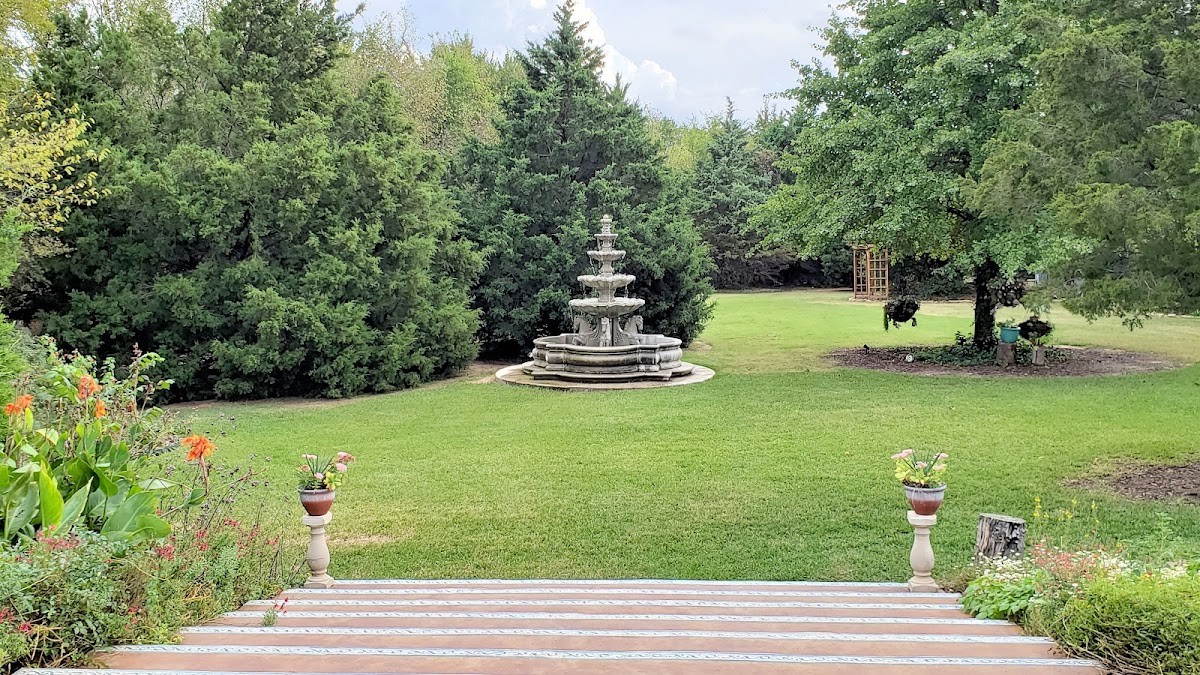
You leave Highway 199 behind and turn onto South Pearson Lane, where the Fort Worth sprawl begins to loosen its grip. The road narrows. Trees crowd closer. And then, just when you’ve traveled far enough to wonder if you missed the turn, Azle Deer Cove announces itself — not with fanfare, but with the kind of quiet confidence that comes from knowing exactly what it is. First, you notice the towering oaks that frame the entrance, their branches creating a natural archway that dapples the driveway in shifting light. Then the fountains, tucked into garden beds where wildflowers bloom in unruly profusion against manicured lawn edges. And finally, Cedar Hall itself: authentic log walls glowing honey-gold in the afternoon sun, vaulted roof lines reaching skyward, and those custom crystal chandeliers visible through the windows, catching light like captured stars. This is Parker County at its finest — rural Texas charm without the kitsch, rustic elegance without trying too hard. It’s the kind of place where your Fort Worth guests feel like they’ve escaped to the Hill Country, and your out-of-town guests feel like they’ve discovered the real Texas. Poppy hasn’t yet designed Azle Deer Cove wedding flowers here, but the venue’s combination of intimate scale, architectural character, and natural setting makes it exactly the kind of space where thoughtful florals can transform good bones into something unforgettable.
About Azle Deer Cove
Azle Deer Cove sits on one private, wooded acre in Parker County, approximately twenty-five minutes northwest of downtown Fort Worth and ten minutes from Eagle Mountain Lake. This is genuine ranch country — the kind where cattle still graze in adjacent pastures and the horizon stretches wide and uninterrupted. The venue itself is family-owned, which shows in the details: the hand-selected chandeliers, the careful landscaping that balances wild and manicured, the thoughtful layout that allows guests to flow naturally between indoor elegance and outdoor serenity.
The property’s signature structure, Cedar Hall, was built with authentic log construction — not the prefab variety, but substantial timbers that give the space genuine weight and warmth. The vaulted ceilings rise to dramatic heights, creating volume that feels both grand and surprisingly intimate. Those custom crystal chandeliers aren’t afterthoughts; they’re statement pieces that define the room’s character, refracting light across the log walls in ways that shift throughout the day. The adjacent outdoor patio extends the usable space significantly, overlooking gardens where winding paths disappear into wooded areas dotted with native Texas flora.
The Casita offers a completely different experience on the same property — a more intimate affair with a distinctly feminine energy. Where Cedar Hall leans into rustic grandeur, the Casita embraces softness: luxurious velvet curtains in deep jewel tones, another set of elegant chandeliers scaled for the smaller space, and its own private patio with fire pits that create perfect gathering spots for cooler evenings. The full kitchen makes it practical for smaller celebrations or as a staging area for larger events, and the furnished outdoor spaces mean guests naturally migrate between inside and out.
What makes Azle Deer Cove particularly appealing from a floral designer’s perspective is the venue’s open vendor policy. Couples can bring in their own licensed and insured vendors, which means we’re not competing with house florists or navigating exclusive arrangements. The venue provides setup and cleanup services, and their rental inventory includes arches, lighting, and drapery — foundational elements that allow us to focus floral budget where it matters most. The BYOB alcohol policy and flexible catering arrangements suggest a venue that trusts couples to curate their own experience, which extends to how florals are approached.
For Poppy’s logistics, the drive from our Dallas-area operations is straightforward via Highway 199, with good load-in access and parking. The wooded setting provides natural shade for summer setups, and the combination of indoor and covered outdoor spaces means weather backup options are built into the property’s design. The venue is pet-friendly, which increasingly matters to our couples and occasionally influences floral placement (we’ve learned to elevate arrangements beyond curious-nose height).
The surrounding Azle area maintains its small-town character while offering surprising amenities — boutique accommodations near Eagle Mountain Lake, farm-to-table dining options, and the kind of laid-back Texas hospitality that makes wedding weekends feel like genuine celebrations rather than production schedules. For Dallas-Fort Worth couples seeking a venue that feels like a destination without requiring their guests to travel hours, Azle Deer Cove occupies an ideal middle ground.
Event Spaces & Floral Opportunities
Cedar Hall
Capacity: 100 seated (expandable to 200 depending on configuration)
Setting: Cedar Hall is the property’s anchor space, and it earns that designation through sheer architectural presence. The vaulted ceilings soar overhead, exposing heavy timber beams that create natural grid lines for the eye to follow. The log walls — genuine, substantial logs — provide texture and warmth in a way that stained wood or faux finishes never could. Those custom crystal chandeliers hang at carefully calculated heights, low enough to create intimacy in a large space but high enough to leave sight lines clear. The floor plan is remarkably flexible: round tables for seated dinners, cocktail-style standing arrangements, or ceremony seating all work within the same footprint. The grand outdoor patio extends directly from the main hall, creating seamless indoor-outdoor flow. From the patio, guests look out over manicured lawn that gives way to natural wooded areas — a view that shifts dramatically from spring’s tender greens through fall’s burnt oranges and winter’s architectural branches.
Floral approach: The log walls and soaring ceilings create an interesting design challenge: the space needs florals that can hold their own against substantial architecture without feeling overwrought. We favor two distinct approaches depending on the couple’s aesthetic. For rustic-leaning celebrations, we embrace the venue’s country roots with organic, slightly wild arrangements that look like they were just gathered from the surrounding gardens: Café au Lait dahlias, chocolate cosmos, butterscotch-colored roses (Caramel Antike, Free Spirit), white veronica, and abundant textural greenery including dusty miller, scabiosa foliage, and Texas native Mexican feather grass. These go in distressed wooden boxes or galvanized metal vessels that echo farm vernacular. For couples seeking polish, we take the opposite approach: refined, structured arrangements in pristine white ceramic or aged brass compotes featuring garden roses (Patience, Juliet, Keira), white ranunculus, blush lisianthus, and silvered eucalyptus that plays beautifully against the warm wood tones.
The chandeliers deserve special attention. At 12-foot-plus heights, we can suspend greenery garlands from the beams that support them, creating the illusion that florals are floating mid-air. Imagine 15-foot swags of smilax and Italian ruscus with clusters of spray roses and trailing amaranthus woven through, appearing to cascade from ceiling to chandelier. It’s dramatic without blocking light, which matters given how those crystals refract and multiply illumination.
For tablescapes, the decision point is height. Low, lush centerpieces (8-10 inches) in textured vessels allow for easy conversation and let the architecture breathe — think garden roses mounded with ranunculus, hellebores, and scented geranium foliage in whitewashed wooden boxes. Alternatively, dramatically tall arrangements (30+ inches) on clear glass risers lift florals above sightlines entirely, creating visual interest without obstruction. These work particularly well for the head table, where height adds importance without competing with toasts and conversation.
The patio connection is crucial. We treat it as an extension of the interior rather than a separate space, carrying the same floral language outside. Flanking arrangements at the French doors — substantial urns overflowing with seasonal branches, hydrangea, and climbing jasmine — signal the transition. On the patio itself, the fire pit areas can be ringed with potted arrangements that feel permanent rather than event-specific: boxwood topiaries interplanted with seasonal blooms, or clustered terracotta pots of lavender, rosemary, and trailing verbena that provide both visual interest and subtle fragrance.
The Casita
Capacity: 50 seated
Setting: If Cedar Hall is the extrovert, the Casita is its introspective sibling. This is an intentionally intimate space where every design decision leans toward warmth and enclosure. The velvet curtains — deep, saturated colors in burgundy or forest green depending on configuration — create texture and sound dampening that makes the room feel cocooning. The chandeliers here are scaled appropriately for lower ceilings, providing ambient light that flatters skin tones and creates that golden-hour glow regardless of actual time of day. The full kitchen isn’t just practical; it’s a design element, with opportunities for styling that extends the celebration’s aesthetic into functional spaces. The furnished outdoor patio attached to the Casita offers its own fire pits and fountain views, creating natural gathering spaces that don’t require guests to return to the main building.
Floral approach: The Casita’s luxurious textiles and intimate scale call for florals that lean into romance and richness. This is the space for jewel-toned palettes that might overwhelm Cedar Hall’s rustic bones. Deep burgundy dahlias (Thomas Edison, Karma Choc), wine-colored garden roses (Tess, Darcey Bussell), plum-toned ranunculus, and near-black calla lilies create a foundation that plays beautifully against those velvet curtains. We lighten these with dusty mauve roses (Quicksand, Amnesia), blush astilbe, and the kind of textured foliage that catches light — silvered eucalyptus, burgundy-tinged oak leaves in fall, or smoke bush in summer.
Vessels matter enormously here. Polished brass compotes and candleholders echo the chandelier’s warm metallic tones. Colored glass — amber, amethyst, or smoke — adds another layer of richness. We avoid rustic wood or galvanized metal entirely; the Casita wants refinement.
The scale of arrangements should be proportional to the room’s intimacy. Low centerpieces (6-8 inches) in compote-style vessels allow for easy conversation across tables while creating lush, garden-picked abundance. The chandeliers can receive subtle floral accents — not full garlands, which would overwhelm the space, but perhaps small clusters of trailing amaranthus or jasmine vine that appear to cascade naturally.
The full kitchen presents an unexpected opportunity. For cocktail-style events or rehearsal dinners, we often style the kitchen island with a long, low arrangement in a wooden dough bowl or ceramic baking dish — something that feels domestic and abundant, like you raided a cutting garden and brought armfuls inside. Herbs feature prominently: rosemary, sage, mint, and lavender mixed with garden roses and seasonal blooms.
The outdoor patio deserves equal attention. The fire pits become natural focal points after sunset, and we enhance them with low arrangements that won’t create fire hazards: succulent gardens in aged terracotta, or clusters of pillar candles surrounded by loose petals and scattered greenery. The fountains can be accented with floating blooms — garden roses or camellia blossoms on water create magic-hour photo opportunities.
Both Venues Combined
Capacity: 200 guests
Setting: When couples rent both Cedar Hall and the Casita simultaneously, they’re not just getting more square footage; they’re creating opportunity for spatial storytelling. The two buildings are connected by garden paths that wind through the wooded acre, allowing for natural guest flow between ceremony, cocktails, and reception spaces. This configuration works particularly well for larger weddings where different moments deserve different atmospheres — perhaps ceremony in the gardens, cocktails in the Casita’s intimate warmth, and reception in Cedar Hall’s grand volume.
Floral approach: The key to successful florals across multiple spaces is establishing a clear visual language that adapts to each environment while maintaining recognizable consistency. We typically anchor this with a signature palette and focal flower that appears in every space, then vary the supporting cast and vessels to suit each location’s character.
For example: if the signature is garden roses in dusty pink (Quicksand, Juliet) with silvered eucalyptus, those elements appear everywhere. In the ceremony space — whether that’s the natural wooded garden or Cedar Hall set for vows — they’re the foundation of the arch or chuppah installation, combined with flowing jasmine vine and romantic whites (ranunculus, lisianthus, white veronica). During cocktail hour in the Casita, those same roses appear in smaller, tighter arrangements in brass vessels, now accented with deeper jewel tones that suit the velvet and chandelier-lit intimacy. For the Cedar Hall reception, we expand the scale dramatically: those dusty roses anchor large centerpieces but are now joined by the full garden party — dahlias, chocolate cosmos, scabiosa, and abundant textured greenery in wooden boxes that suit the log walls.
The garden paths connecting spaces become part of the floral narrative. We line them with shepherd’s hooks holding lanterns surrounded by small nosegays, or stake the path edges with potted arrangements that feel like they’ve always grown there. This isn’t about creating a floral runway; it’s about making the journey between spaces feel intentional and beautiful.
The outdoor ceremony site (assuming couples choose the natural garden setting) requires restraint. The wooded backdrop and existing wildflowers provide abundant visual interest. We typically recommend a substantial but not overwhelming arch installation — perhaps a wooden or metal frame dressed with asymmetrical clusters of florals that appear to grow from one corner, leaving most of the structure visible. Aisle markers are minimal: shepherd’s hooks with small arrangements or simple mason jars tied to chairs with ribbon and trailing greenery.
What couples spending at this scale often appreciate is floral repurposing. Ceremony arrangements can migrate to the reception: altar flowers become the head table installation, aisle markers move to the patio, bridal party bouquets are displayed in the Casita during cocktails. This requires advance planning and cooperative timelines, but the venue’s layout and flexible staff make it feasible.
Wedding Flower Ideas for Azle Deer Cove
Texas Hill Country Garden
This concept embraces Azle Deer Cove’s rural Parker County location while elevating natural beauty with cultivated blooms. The palette draws from Texas wildflower fields and Hill Country gardens: golden yellows, warm terracottas, dusty purples, and sun-bleached neutrals. Focal flowers include Café au Lait dahlias (those enormous, almost architectural blooms in cream with blush undertones), butterscotch spray roses (Caramel Antike), golden yellow Billy Buttons, and locally-sourced sunflowers in the softer, pale yellow varieties rather than the traditional bright orange (think Lemon Queen or Vanilla Ice). These are grounded with textural elements that reference Texas native plants: Mexican feather grass (nasella tenuissima) with its hair-like, movement-catching texture; purple fountain grass; dusty miller; and actual sprigs of Texas sage if the timing is right. We add touches of deeper purple with lisianthus or scabiosa to prevent the palette from reading too uniform.
Vessels are critical to this aesthetic. We favor galvanized metal buckets and watering cans that reference ranch utility, distressed wooden boxes that look inherited from someone’s grandmother, and occasional terracotta in weathered finishes. For Cedar Hall centerpieces, arrangements sit low and slightly wild in rectangular wooden boxes, looking gathered rather than fussy. The Casita’s smaller scale gets the same palette but in more refined groupings — smaller vessels clustered in threes rather than single large installations.
The ceremony arch deserves something substantial here: a wooden cross-beam structure (either provided by the venue or rented) dressed with abundant asymmetrical clusters on one side — we’re talking three-foot-wide groupings of all these elements appearing to cascade from the top corner, with the opposite side largely bare to show the wood’s texture. For the outdoor patio spaces, we incorporate potted arrangements that blur the line between landscape and event florals: large terracotta pots overflowing with the same flowers but mixed with trailing verbena and sweet potato vine that spills over the edges.
This concept works beautifully spring through fall and photographs gorgeously in Texas’s golden afternoon light. It suits couples who want elegance without formality, polish without pretension.
Velvet and Vine
If Texas Hill Country Garden is about sun and space, Velvet and Vine is about depth and luxury. This concept takes its cue from the Casita’s sumptuous velvet curtains and creates a floral palette to match: deep burgundy, plum, mauve, and charcoal, punctuated with blush and ivory to prevent it from reading too dark. The star is the garden rose in its richest varieties: Tess (full, cupped, wine-colored blooms that look imported from an English manor), Darcey Bussell (crimson approaching black at the edges), and Keira (soft peachy-pink that provides necessary lift). These are joined by dahlias in similar tones — Thomas Edison burgundy, Jowey Linda in deep pink with ruffled petals, and the near-black Karma Choc. Ranunculus in wine and mauve, hellebores when seasonally available, and the kind of unexpected textural elements that create luxury: hanging amaranthus in deep burgundy, scabiosa pods, privet berries, and foliage that leans purple-tinged rather than green (burgundy-toned oak leaves in fall, purple-leaved smoke bush in summer).
Vessels elevate the entire concept. We’re talking polished brass compotes and candleholders that catch and multiply the chandelier light, aged gold-leaf urns for larger installations, and colored glass (smoke, amber, amethyst) for smaller arrangements. The metallic element is crucial — it’s what prevents a dark palette from feeling heavy.
In Cedar Hall, this concept works best for evening celebrations when the space is candlelit and those crystal chandeliers are doing their refractive magic. We use tall arrangements on clear glass risers for select tables, creating vertical interest without blocking sightlines, with low lush centerpieces on others for variety. The chandelier garlands we described earlier become even more dramatic in this palette — imagine 15-foot swags of dark, trailing amaranthus with clusters of burgundy roses appearing to drip from the ceiling.
The Casita is where this concept truly shines. The velvet curtains provide the perfect backdrop for these rich tones, and the intimate scale allows for truly lush, abundant arrangements. We cluster vessels of varying heights on each table — a tall brass candleholder, a medium compote, and a small bud vase — all featuring the same palette but in different proportions, creating a collected, layered look.
For ceremonies, we recommend the natural outdoor garden setting with a substantial arch installation: a metal frame in black or deep bronze, dressed with asymmetrical cascades of these rich blooms appearing to grow organically from the structure. Aisle markers are simple: brass shepherd’s hooks with small arrangements echoing the palette.
This concept is most successful fall through spring when deeper colors feel seasonally appropriate, and it photographs dramatically — particularly if your photographer understands how to work with dark tones and rim lighting.
White and Wood
Some venues beg for restraint, and Azle Deer Cove’s log architecture and natural setting can certainly carry a purely neutral palette. White and Wood embraces monochromatic elegance, letting the venue’s bones and the quality of the blooms speak without color competition. This is not boring white flowers in standard vases; this is textural, architectural, deeply intentional design in a limited palette that reads as luxurious rather than spare.
The flower selection focuses on variety in form and texture, all within shades of white and cream: garden roses with different petal structures (Patience with its perfect old-English cup shape, White O’Hara with its cream-centered fullness, Keira in its palest peachy-white), white ranunculus, ivory lisianthus, white Japanese anemones with their distinctive black centers, white veronica for spiky vertical interest, and the occasional white tulip when seasonally available. The key is mixing tight, formal blooms with looser, more organic shapes. We add texture through foliage: silvered eucalyptus, dusty miller, lamb’s ear, and olive branches that introduce subtle color variation without breaking the monochromatic rule.
Vessels are exclusively natural wood in varying tones and levels of distress. For Cedar Hall, we use rectangular wooden boxes (whitewashed, naturally weathered, or clear-finished depending on the desired feel) for low centerpieces, and wooden pedestals for taller arrangements. The wood-on-wood effect — wooden vessels on wooden tables against log walls — creates remarkable visual cohesion. We vary the wood tones to prevent monotony: some bleached and pale, others medium oak, occasional pieces in darker walnut.
In the Casita, we soften the approach slightly with occasional white ceramic vessels that play off the refinement of the space while maintaining the neutral palette. The velvet curtains provide the only color in the room, which makes them a dramatic backdrop rather than a competing element.
The ceremony installation for this concept is particularly striking: a wooden arch structure left largely natural, dressed with loose, asymmetrical clusters of white blooms and silvered greenery on just one side. The effect is Japanese-influenced — considered negative space, intentional restraint, beauty in what’s not done as much as what is. Aisle markers are simple mason jars wrapped in ivory ribbon, each holding a few stems of white flowers and greenery.
This concept photographs beautifully in bright Texas sunlight, where the white blooms practically glow. It works year-round and suits couples who appreciate minimalism, who want their florals to feel elevated but not elaborate, and who trust that sometimes less genuinely is more. It’s also a smart budget approach — a more limited palette can actually cost less while looking intentional rather than sparse.
Seasonal Considerations
Spring (March through May)
Parker County springs are unreliable affairs — one week might bring 80-degree days that have the bluebonnets blooming early, the next might deliver a late freeze that damages everything tender. Average temperatures range from the 60s to the low 80s, with occasional cold snaps and the ever-present possibility of Texas storms that blow through with dramatic speed. This is prime wildflower season across Texas, and the Azle area participates in that annual show, though being slightly north of the Hill Country means peak bloom times run a week or two later than in Austin or Fredericksburg.
For florals, spring offers the year’s greatest variety. Tulips, ranunculus, and anemones are at peak availability and quality in April and May, with prices dropping significantly from their winter highs. Local Texas bluebonnets can sometimes be sourced (they’re protected in the wild but some growers cultivate them), and if you’re set on incorporating true Texas wildflowers, this is your window. Peonies arrive in May, though their season is brief and they require careful handling in Texas heat. Garden roses begin their first flush in late April. Flowering branches — cherry, dogwood, and quince — provide dramatic vertical elements in March and April.
The primary consideration is weather unpredictability. Outdoor ceremonies are beautiful but risky; have a clear backup plan. If you’re set on the garden ceremony site, mid-to-late April through early May offers the best odds of cooperative weather and blooming natural landscapes. For outdoor installations like ceremony arches, we reinforce everything — Texas spring storms can generate significant wind, and nothing ruins a ceremony faster than watching your floral arch blow across the lawn.
The wooden garden backdrop is at its most photogenic in spring when trees are leafing out in that fresh, almost neon green. White, blush, and soft yellow florals photograph beautifully against this backdrop without competing. The indoor spaces benefit from bringing spring inside: cherry blossom branches in tall vessels, arrangements that feel garden-gathered and slightly wild, palettes that reference the emerging landscape.
Summer (June through August)
Texas summers are not gentle. Azle regularly sees temperatures in the mid-90s to low 100s from late June through August, with high humidity that makes it feel even hotter. The sun is relentless and direct. Afternoon thunderstorms provide brief relief but also create logistical challenges. For outdoor elements, we’re talking about conditions that can wilt flowers in under an hour without proper care.
This reality shapes every floral decision. Heat-tolerant blooms become non-negotiable: calla lilies, tropical foliage, succulents, and certain roses that handle heat well (though even these need careful hydration). We avoid anything fragile like sweet peas, garden roses in their most delicate varieties, and certainly anything like hydrangeas that wilt if you look at them wrong in Texas summer heat. Dahlias can work but require careful timing — they’re delivered the morning of the event and placed in air-conditioned spaces immediately.
Vessels matter more than usual. Terra cotta and wood dry out quickly; we line them with plastic and ensure they hold water. For outdoor installations like ceremony arches or patio arrangements, we use water tubes for every stem and plan installation for the absolute last possible moment before the ceremony. We also work closely with the venue to ensure outdoor arrangements can be misted periodically during setup and that any afternoon ceremonies (we generally advise against them) have arrangements placed in shade until the last minute.
The smart move for summer Azle Deer Cove weddings is leaning heavily into the indoor spaces. Cedar Hall and the Casita are air-conditioned, which means florals maintain their integrity throughout the event. The patio spaces can be used for cocktail hour if it’s scheduled for early evening when temperatures drop, but mid-afternoon outdoor events are genuinely uncomfortable for guests and brutal for florals.
Color-wise, summer palettes can embrace either extreme: vibrant tropicals (birds of paradise, ginger, anthuriums) that lean into the heat, or cool whites and greens that provide psychological relief. We often incorporate more greenery and foliage in summer — it’s more heat-tolerant than blooms, costs less, and can create lush, abundant designs without relying on flower varieties that struggle in the heat.
Best summer months for Azle Deer Cove weddings are early June before peak heat arrives, or late August into early September when temperatures begin moderating.
Fall (September through November)
If spring is unpredictable, fall is Texas’s gift to outdoor celebrations. September can still carry summer heat, but by October, temperatures settle into the 60s to 70s — ideal conditions for both guests and florals. Humidity drops, skies turn that particular shade of blue you only get when the air is genuinely dry, and evening temperatures cool enough for comfortable outdoor dining. November can get chilly, particularly after sunset, but it’s rarely truly cold.
Fall flower availability is exceptional. Dahlias hit their peak in September and October, producing the year’s largest and most spectacular blooms. Garden roses have their second flush. Roses of all types are at their best — fall roses are tighter, longer-lasting, and richer-colored than their summer cousins. Seasonal additions include chocolate cosmos, fall foliage in burnt oranges and deep reds, ornamental grasses, and textural elements like scabiosa pods and privet berries.
The natural landscape around Azle Deer Cove transforms through October and November as native trees turn color. It’s not New England foliage, but the mix of oak, pecan, and sweet gum creates genuine fall color — golds, russets, and occasional deep reds. This makes the wooded garden ceremony site particularly photogenic without requiring elaborate floral installations. The natural backdrop does substantial work, and florals can complement rather than dominate.
This is the season for rich, saturated palettes that reflect the changing landscape: burgundy, burnt orange, deep plum, chocolate brown, with cream and blush to lighten. Textures become increasingly important — we incorporate grasses, seed heads, interesting foliage, and elements that reference harvest and abundance. Vessels can lean rustically — wooden boxes, copper vessels, terracotta in weathered finishes.
October is the single most popular wedding month in Texas for good reason, which means flower prices can be slightly elevated due to demand, and venue booking is competitive. November is slightly less crowded and often offers better vendor availability while maintaining excellent weather. Early September weddings still need some of summer’s heat precautions, particularly for mid-afternoon events.
Winter (December through February)
Texas winters are mild compared to northern climates, but Azle experiences genuine cold. Temperatures range from the 40s to 60s, with occasional dips below freezing overnight. It rarely snows, but ice storms are possible in January and February. The landscape goes dormant — trees are bare, grass turns brown, and the wooded gardens lose their lush quality and gain architectural interest through visible branch structure.
Winter flower availability is actually excellent, though prices can be elevated. Amaryllis, anemones, ranunculus, and early tulips are all available. Garden roses come from heated greenhouses and are often spectacular quality. Winter is also when some of the most interesting textural elements are available: magnolia leaves (the underside, in that rusty brown, is stunning), evergreen varieties, berries, and seasonal branches. We can incorporate non-floral elements that suit winter: dried elements, seed pods, and foliage that references the season.
The indoor focus makes sense in winter. Both Cedar Hall and the Casita are heated, and the natural inclination toward coziness plays to their strengths — the fire pits on the patios become central gathering points, and the log walls and crystal chandeliers create warmth that feels particularly right in winter. For outdoor ceremonies, we generally advise against them unless it’s an unusually warm December day. The bare trees provide less natural screening and softness than in other seasons, which means any outdoor ceremony site needs more elaborate floral installation to feel complete.
Winter palettes can go two directions: festive jewel tones (emerald, ruby, gold) for holiday-adjacent celebrations, or unexpected softness (whites, creams, pale pink, silvered greenery) that contrasts with winter’s starkness. We often incorporate more candles and ambient lighting in winter — it’s dark earlier, and the interplay between candlelight