


Trends & Inspiration
What's in Season for a Winter Wedding: A Booking Guide for December Through February
Trends & Inspiration
The first worry most couples with a December through February date share: the flowers they've been saving to their boards, peonies, daffodils, lilac, are spring and summer stems. The assumption is that a winter wedding means having to settle.
That's not the case. Winter has its own in-season options that are beautiful on their own terms, not consolation prizes. The stem palette is different and the design conversation is different, but "different" isn't the same as "limited."
This is a practical winter wedding flowers guide for December, January, and February, what's actually in season, and when to book to get what you want.
For the fall availability guide this piece follows: What's in Season for a Fall Wedding: Availability Guide for October and November →
If Your Wedding Is in December
December is the month where foliage and structural stems do significant design work.
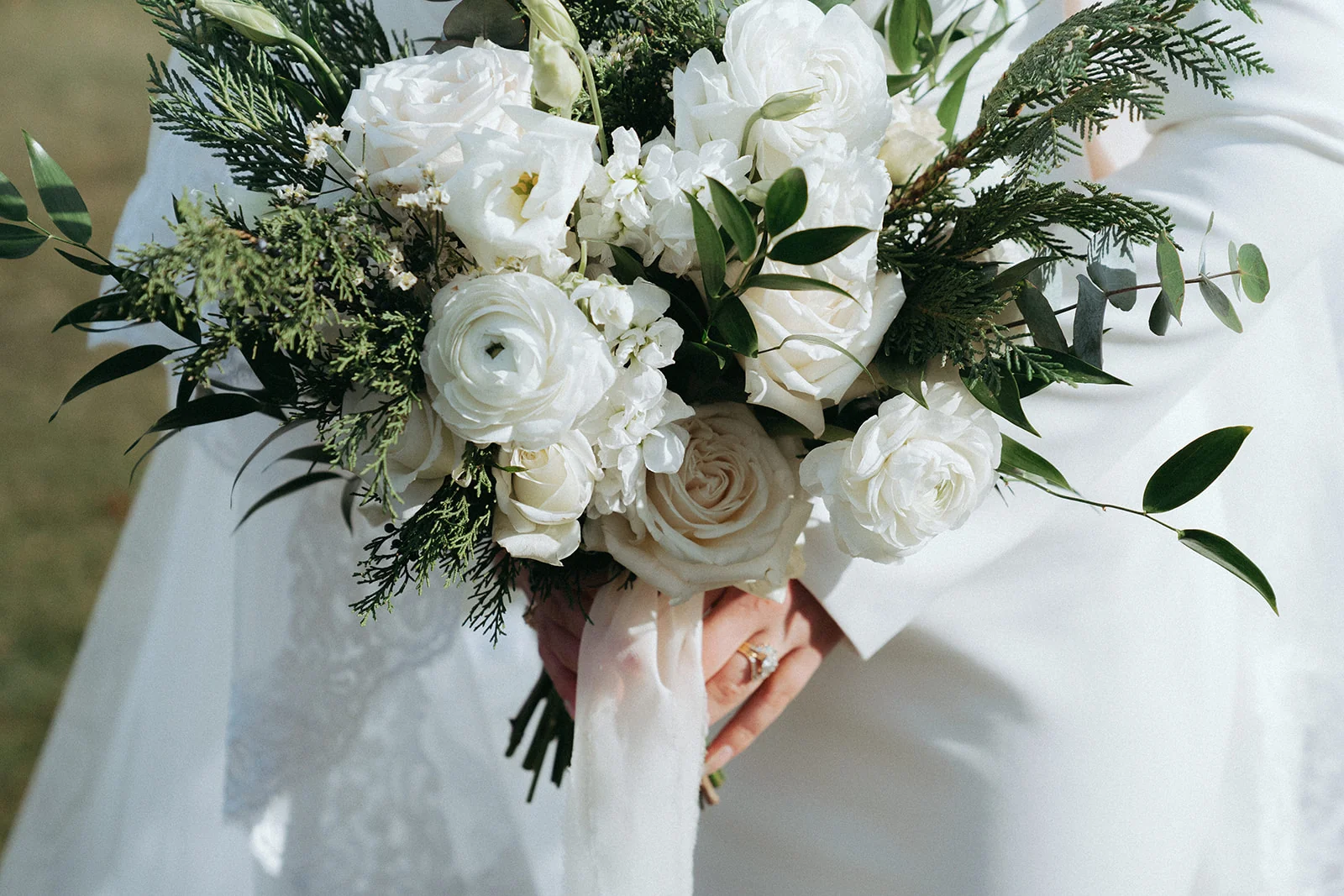
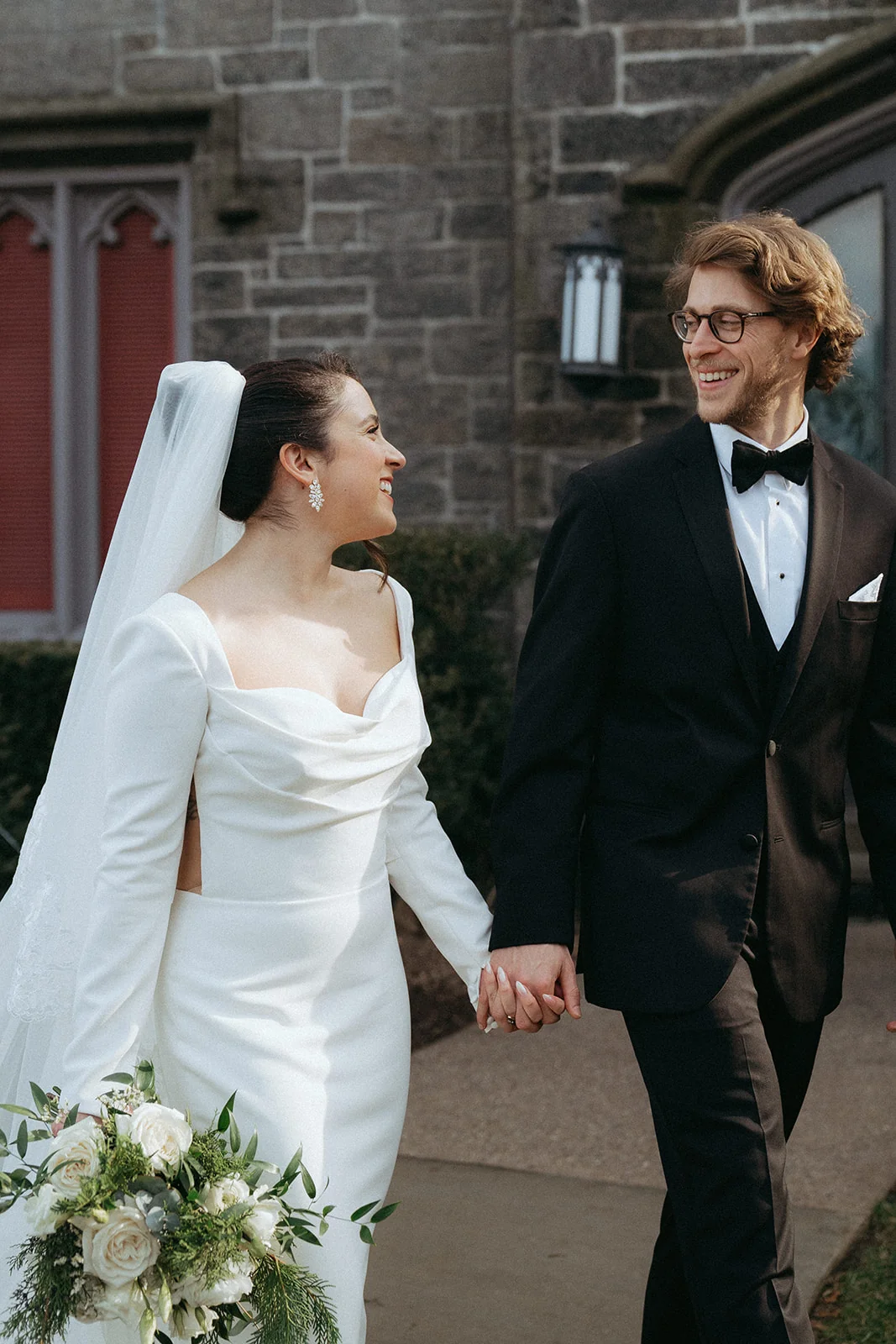
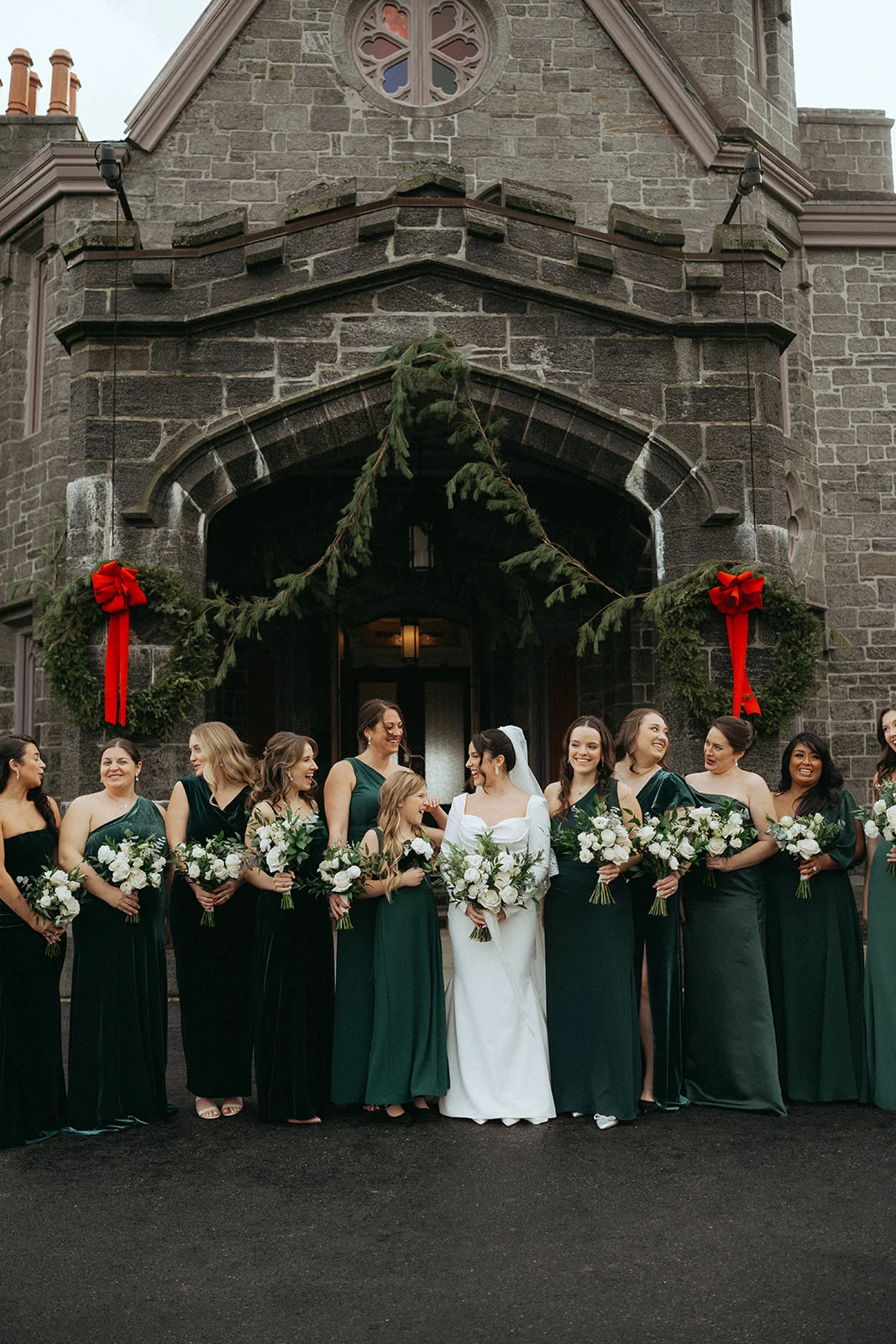
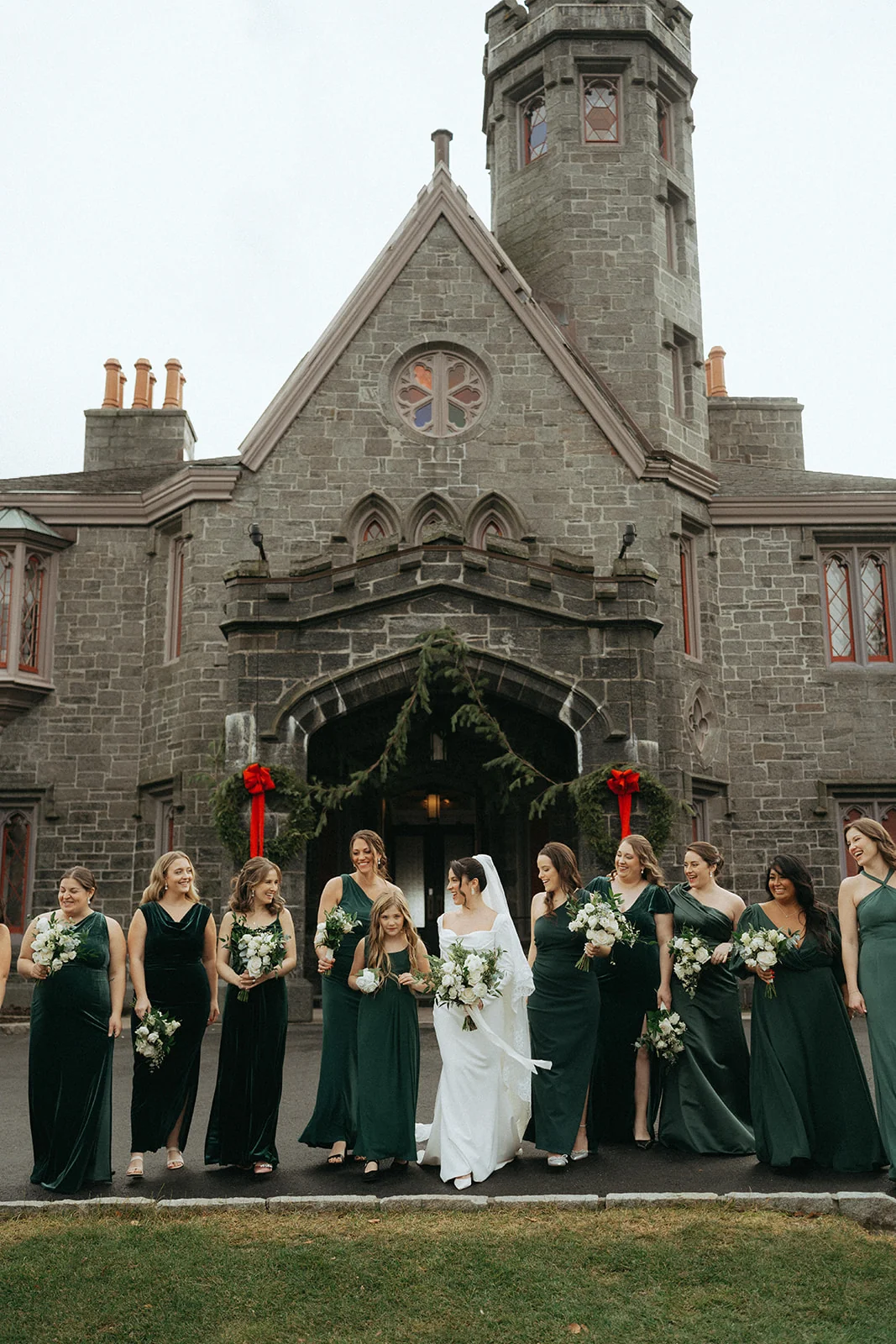
Evergreen foliage like cedar, juniper, pine, eucalyptus is at full availability and creates structural depth in arrangements in a way that works particularly well with the season's palette. Foliage-forward design isn't a minimalist compromise; it's a valid and intentional design direction for winter weddings.
Ranunculus is beginning to return, though availability is still building toward its peak. Earlier in the month, selection may be narrower; late December sees stronger options.
Roses and spray roses are available year-round and remain consistent in quality regardless of season.
Anemones are available by December, with a palette that suits the season well: white, deep burgundy, and bright red are the most popular colors for this time of year.
One practical note for December: holiday dates — Christmas week, New Year's Eve — see significantly higher demand across all event vendors, including flowers. If your date falls in that window, booking earlier than you otherwise might is strongly recommended, both for availability and to lock in pricing before the demand peak.

If Your Wedding Is in January
January is where the winter stem palette starts to broaden. Several flowers that were just arriving in December hit stronger availability now.
Ranunculus is increasingly available, with a wider range of colors and varieties than December typically offers. The ruffled, layered quality of ranunculus holds up well in cooler temperatures, making winter a particularly good time for this stem.
Anemones are in solid availability through January. Their graphic, high-contrast quality (dark center, open petals) is one of the defining characteristics of a winter arrangement that reads as modern rather than seasonal-by-default.
Hellebores are at good availability in January and have become one of the most requested winter stems. Their downward-nodding blooms — often with subtle veining or picotee edges — have a quality that's difficult to find in other seasons.
Eucalyptus and dried foliage have no seasonal limitation and anchor winter arrangements year-round.
January is one of the quieter months in the wedding industry, which has a practical upside: demand on flowers is lower than the surrounding holiday and Valentine's windows, which can work in your favor on both availability and pricing.
If Your Wedding Is in February
February has the broadest stem availability of the winter window. Several stems that were building toward peak through December and January arrive there in February.
Ranunculus is at or near its production peak in February, which means wider variety selection, better quality per stem, and stronger availability across color ranges.
Anemones remain in solid supply through February and pair naturally with ranunculus for a winter palette that reads full without relying on summer substitutes.
Sweet peas begin returning in February — delicate, fragrant, and available in soft pinks, lavenders, and white.
Hyacinth and muscari (grape hyacinth) bring fragrance and vertical texture to February arrangements in a way few other stems do at this time of year.
Roses are available year-round, but February requires one practical note: Valentine's Day demand significantly affects rose supply and pricing in the two weeks surrounding the holiday. For February weddings close to the 14th, discussing your rose usage and alternatives with your designer earlier than you might otherwise is worth doing.
When to Book for a Winter Wedding
General guidance for booking flowers runs six months to a year before the wedding. Winter dates add two specific considerations.
Holiday window dates — mid-December through early January — see demand spikes across all event categories. For these dates, booking closer to the twelve-month mark, and no later than eight months out, is the practical recommendation.
February dates near Valentine's Day should account for the rose supply note above. Earlier conversations with your designer about stem selection leave more room to plan around it.
A winter date doesn't require a compromise on flowers. It requires a different conversation — one that starts with what's actually in season rather than what's on a summer mood board.
Explore what's in season for your date →
For the broader fall-to-winter context: Fall 2026 Wedding Flowers: The Palettes, Stems, and Moods to Know Now →