
The turnoff from Highway 422 comes quickly if you’re not watching for it. Kennedy Road narrows into the kind of two-lane country route where mailboxes appear every half-mile and the speed limit drops to match the pace of the land itself. Butler County farmland rolls out on either side — fields that go gold in September, pastures dotted with hay bales, the occasional weathered silo standing watch. And then, set back from the road on 200 acres that feel like their own world, White Barn appears. Not a pristine, Pinterest-board barn with every board painted to match, but a genuine 100-year-old structure with hand-hewn Amish beams that still show the marks of the tools that shaped them. The kind of barn that has stories in its bones. Out back, a lily pond catches the afternoon light, a small boat tied at the edge, and beyond that, the hand-built oak cross rises fifteen feet into the air like something out of a hymn. This is not a venue trying to approximate rustic charm. This is the real thing, forty minutes north of Pittsburgh, where couples come to marry surrounded by what Pennsylvania farmland has always been: honest, beautiful, and built to last. Poppy has received inquiries from 9 couples planning White Barn weddings, and each time we visit the property for a consultation, we’re reminded why this place resonates — it doesn’t perform rusticity. It simply is.
About White Barn
White Barn sits on a working farmstead that has belonged to the same family for generations. The barn itself dates back over a century, constructed by Amish craftsmen whose approach to building was both functional and quietly artful. The hand-hewn beams that support the structure are massive — the kind of timbers that could only have been shaped by hand, one chisel strike at a time. The floors are Amish hardwood, warm honey-toned planks that have aged into a patina no new construction can replicate. Around 2015, the family made the decision to restore the barn for events, a multi-year project that involved reinforcing the structure, adding climate control (both heat and air conditioning, a non-negotiable for Pennsylvania’s sweltering summers and unpredictable springs), and updating the electrical and plumbing systems while preserving every original architectural detail possible. The result is a space that feels authentically rustic but functions with modern reliability. The twinkle lights strung through the rafters aren’t an afterthought — they’re integrated into the barn’s character, casting a soft glow that makes the whole space feel like it’s lit by candlelight.
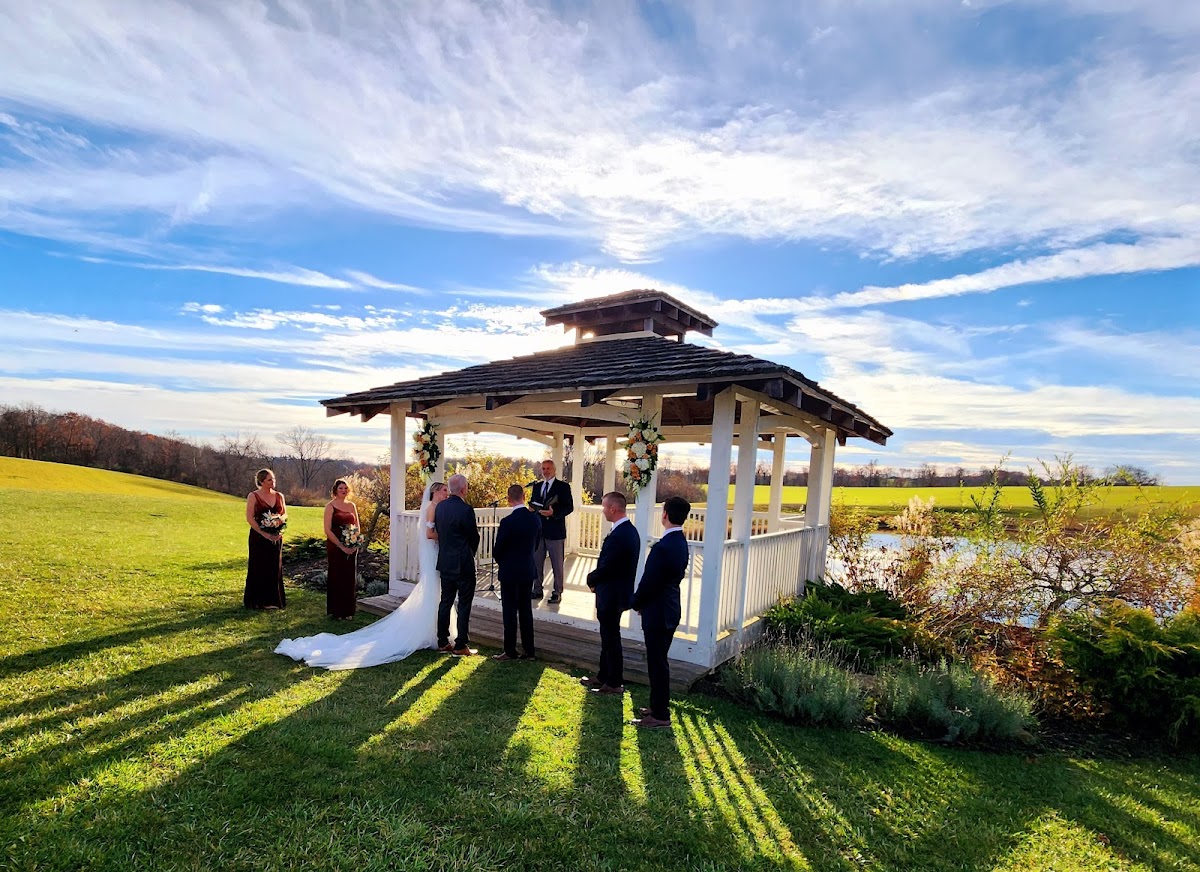
The property extends across 200 acres, most of it working farmland with the ceremony and reception areas thoughtfully placed to take advantage of natural features. The lily pond is spring-fed and genuinely home to water lilies (not the plastic kind you sometimes see at venues trying too hard). The gazebo that sits at the pond’s edge was custom-built for weddings, hexagonal with a peaked roof and open sides that frame the water and the countryside beyond. The 15-foot oak cross ceremony site is more dramatic — brick columns flanking a hand-built wooden cross with optional barn door panels that can be closed for a more intimate backdrop or opened to reveal the fields beyond. There’s flexibility here, which matters when you’re planning an outdoor ceremony in a state where weather can turn on a dime.
Inside the barn, the layout is surprisingly sophisticated for a structure this old. The main floor can accommodate up to 280 seated guests with room for a dance floor, head table, and DJ setup. A lower level functions as a separate cocktail space, which is critical for venues that need to flip from ceremony to reception — your guests are downstairs with drinks and appetizers while the main floor is being transformed above them. There’s also a covered exterior deck that extends off the main barn floor, a weather-protected outdoor space perfect for lounging furniture or additional cocktail seating. Loft areas along the upper perimeter provide unique vantage points and additional visual interest; we’ve seen couples string garlands along the loft railings to beautiful effect. The bridal suite is a dedicated getting-ready room with natural light, ample space for a photographer to work, and enough seating for the entire bridal party.
Logistically, White Barn is about 40 minutes from downtown Pittsburgh via I-79, making it accessible for city-based guests while feeling like a true countryside escape. The venue is just a few minutes from Moraine State Park, which means couples planning wedding weekends have hiking, boating, and scenic drives readily available for out-of-town guests. Parking is plentiful — the property can handle even large weddings without overflow issues. For florists, load-in is straightforward with vehicle access directly to the barn’s main entrance and a cooperative on-site owner (Jan) who is present the morning of every event to coordinate vendor arrivals. White Barn works with Medure’s Catering exclusively, which means there’s an established vendor relationship and a predictable timeline for setup and breakdown. Florists are not restricted to a preferred vendor list, which gives couples flexibility in choosing their floral designer.
One unusual feature worth noting: White Barn recently added a permanent flower wall installation inside the barn, a large-scale fabric and faux floral backdrop that’s available for photos. Some couples love it and incorporate it into their design. Others prefer to work around it or request it be covered. Either way, it’s worth discussing with your florist how your fresh floral designs will complement (or intentionally contrast with) this existing element.
Event Spaces & Floral Opportunities
Main Barn
Capacity: 280 seated
Setting: The Main Barn is where White Barn earns its reputation. You walk in and your eyes go up — way up — to those hand-hewn beams crisscrossing thirty feet overhead. The Amish hardwood floors glow warm underfoot, and the twinkle lights strung through the rafters create a soft, romantic ambiance that shifts with the time of day. In the afternoon, natural light pours through the windows on the east side, illuminating dust motes and making the whole space feel alive. By evening, the barn transforms into something more intimate, the lights overhead mimicking stars. The walls are original wood planking, weathered to silver-gray in places, and there’s a loft running along two sides of the barn that provides elevated vantage points. A dance floor area sits at the center, with space for a DJ or band at one end and a head table at the other. The barn is fully climate-controlled, which means your florals won’t wilt in July heat and your guests won’t freeze during an October reception.
Floral approach: The Main Barn’s architecture does a lot of the heavy lifting, so the floral design here should enhance rather than compete. We typically recommend a combination of high and low elements: tall arrangements on risers at key focal points (head table, entrance, bar area) that draw the eye upward and echo the soaring ceilings, paired with low, lush centerpieces on guest tables that allow for conversation and don’t block sightlines. The exposed beams are an extraordinary opportunity for suspended installations. Imagine 20-foot garlands of smilax, Italian ruscus, and seeded eucalyptus with clusters of Quicksand roses, white lisianthus, and blush spray roses woven through at intervals, running the full length of the barn above the guest tables. These can be hung using fishing line attached to eye hooks (which the venue can install with advance notice) and create a canopy effect that feels organic and unstructured. For guest table centerpieces, we favor textured, garden-style arrangements in vessels that nod to the farmhouse aesthetic — galvanized tin buckets, wooden boxes, or ceramic crocks filled with Cafe au Lait dahlias, white hydrangea, peach ranunculus, and trailing jasmine vine. The warm wood tones of the barn pair beautifully with both jewel tones (burgundy, plum, deep coral) and softer palettes (blush, ivory, champagne, sage). Avoid anything too formal or stiff — this space wants movement and texture, not symmetry. The loft railings are ideal for simple greenery garlands (flat ruscus or seeded eucalyptus) that add visual interest from below without overwhelming the space. At the entrance to the barn, a pair of oversized urns flanking the doors — overflowing with seasonal branches, hydrangea, and garden roses — signals the transition from outdoor landscape to reception and gives photographers a beautiful framing element.
Outdoor Ceremony Site - Gazebo
Capacity: 280 seated
Setting: The gazebo ceremony site is the romantic option, pure and simple. The hexagonal structure sits at the edge of the lily pond, which genuinely blooms with water lilies from late spring through early fall. Behind the gazebo, the pond stretches out, reflecting sky and clouds and the treeline on the far bank. Guests are seated on white folding chairs (included with the venue) arranged in semi-circular rows on gently sloping ground, which gives everyone a clear view. The gazebo itself is white-painted wood with a peaked roof and open sides, and it’s positioned so that the couple stands framed by water and countryside. Depending on the time of day, you might have swans or ducks gliding across the pond in the background. It’s the kind of setting that makes guests pull out their phones before the processional even starts.
Floral approach: The gazebo is one of those rare structures that can handle substantial floral treatment without looking overdone. The posts are ideal for climbing installations — we love wrapping three of the six posts with loose, organic garlands of smilax, jasmine vine, and Italian ruscus studded with Juliet garden roses, white lisianthus, and blush astilbe that appear to grow up the structure naturally. The key is to keep the garlands asymmetrical and unstructured, allowing some pieces to trail toward the ground and others to climb higher, mimicking the way vines actually grow. At the base of each wrapped post, a low arrangement in a natural container (weathered wood box or stone urn) provides visual weight and grounding. For the ceremony focal point, we typically place a medium-height arrangement on a small table or pedestal inside the gazebo — something substantial enough to photograph well but not so tall that it obscures the couple. Garden roses (Patience, Charity, Keira), white hydrangea, peach ranunculus, and trailing amaranthus in a textured vessel work beautifully here. Aisle markers can be simple — shepherd’s hooks with small posies, or mason jars filled with wildflowers and hung from shepherd’s hooks, placed every third row. Because the natural setting is so strong, resist the urge to over-floralize. The pond and the countryside are doing most of the work. Your florals should feel like they belong in this landscape, not like they’ve been imported from a ballroom.
Outdoor Ceremony Site - Oak Cross
Capacity: 280 seated
Setting: The oak cross ceremony site is the statement option. This is where couples who want a sense of grandeur and spiritual symbolism choose to marry. The 15-foot hand-built cross stands at the top of a gentle rise, flanked by brick columns and optional wood-panel barn doors that can be opened or closed depending on the aesthetic. When the doors are open, the cross is framed by farmland stretching to the horizon. When they’re closed, the weathered wood creates a more intimate backdrop. The cross itself is substantial — rough-hewn oak beams joined at the center, the kind of structure that photographs beautifully from every angle. Guests are seated on white folding chairs on the slope leading up to the cross, which creates natural stadium-style seating where everyone has a clear view.
Floral approach: The cross demands a bold floral approach. This is not the place for delicate, understated arrangements. We typically design large-scale installations at the base of the cross — two substantial arrangements in aged stone urns or wooden half-barrels, overflowing with seasonal blooms that echo the scale of the structure. In spring, this might be white lilac branches, white peonies, blush ranunculus, and trailing jasmine vine. In fall, we’d shift to burgundy dahlias, rust-colored amaranthus, peach roses, and bronze chrysanthemums with branches of fall foliage. The arrangements should be asymmetrical and wild-looking, as if they grew there. If the budget allows, we sometimes add a simple greenery swag to the horizontal beam of the cross — flat ruscus or seeded eucalyptus garland that drapes in a gentle arc, perhaps with a cluster of blooms at the center point where the beams intersect. Aisle treatments here can be more substantial than at the gazebo — every other row with shepherd’s hooks holding medium-sized arrangements in galvanized buckets, or hurricane lanterns alternating with floral posies for an evening ceremony. The brick columns flanking the cross are also opportunities — low arrangements at their bases, or if the couple wants maximum impact, tall pedestals with elevated arrangements that frame the cross from either side. This ceremony site can handle drama, so don’t hold back.
Lower Level
Capacity: Varies (typically 100+ for cocktail-style setup)
Setting: The Lower Level is the behind-the-scenes hero of White Barn logistics. While guests are gathered here for cocktail hour — drinks in hand, appetizers circulating, conversation flowing — the main barn above is being transformed from ceremony space to reception setup. The Lower Level is divided into distinct areas: a bar space, lounge-style seating, and standing cocktail areas. The ceilings are lower here (it’s a basement, after all), but the space has been finished with the same attention to detail as the main barn — clean drywall, good lighting, and enough square footage that it doesn’t feel cramped even with a full guest count. There’s direct access from this level to the covered exterior deck, which means guests can move between indoor and outdoor spaces seamlessly.
Floral approach: Cocktail hour florals should be present but not precious. This is not where you invest your entire floral budget. Focus on a few key areas: a statement arrangement on the bar (something elevated and lush that creates a focal point and photographs well — perhaps a long, low runner-style arrangement of hydrangea, roses, and eucalyptus in a wooden trough), and small bud vases or clusters of votives with single blooms on cocktail tables throughout the space. If there are lounge areas with coffee tables, low arrangements in rustic vessels (ceramic crocks, wooden boxes) add polish without blocking conversation. The covered deck accessible from this level is ideal for potted plants or small arrangements on high-top tables if you’re using that space for overflow. Keep the aesthetic loose and garden-style — this is the transition space between ceremony and reception, and the florals should feel relaxed and unfussy.
Covered Exterior Deck
Capacity: Varies (typically 50-75 for lounge-style setup)
Setting: The covered exterior deck extends off the main barn floor, accessible through large sliding doors that can be opened fully to create an indoor-outdoor flow. The deck is weather-protected with a solid roof overhead, which means it’s usable even in light rain or strong sun. It’s furnished with a combination of cocktail tables and lounge seating, and the views from the deck look out over the property’s open fields. For summer weddings, this space provides much-needed relief from the heat. For spring and fall weddings, it’s where guests gravitate with a drink to catch the sunset or steal a private conversation away from the dance floor.
Floral approach: Florals on the covered deck should be durable and low-maintenance, since this space is exposed to the elements (wind, temperature fluctuations, potential moisture). We typically recommend potted plants or arrangements in substantial, weighted vessels that won’t topple in a breeze. Hydrangea in ceramic pots, lavender plants in galvanized tins, or rosemary topiaries in weathered terra cotta all work well and provide visual interest without requiring constant attention. For cocktail tables, small arrangements in low vessels — perhaps clusters of votives surrounding a single bloom in a bud vase — add a touch of polish without risking wind damage. If the couple wants more impact, we sometimes place a pair of large topiaries or potted trees (boxwood, bay laurel) flanking the entrance to the deck, which frames the transition between indoor and outdoor spaces. The key is choosing materials that can withstand a few hours of outdoor conditions while still looking intentional and designed.
Bridal Suite
Capacity: Bridal party (typically 6-10 people)
Setting: The Bridal Suite is a dedicated getting-ready room with ample space for hair, makeup, photography, and the inevitable chaos of a wedding morning. It’s flooded with natural light from large windows, has comfortable seating, and enough square footage that a photographer can work without everyone being on top of each other. This is where the detail shots happen: the dress hanging in the window, the shoes arranged on a vintage chair, the bridesmaids popping champagne.
Floral approach: A single, beautiful arrangement in the Bridal Suite serves multiple purposes: it perfumes the room with a subtle, natural fragrance; it provides a gorgeous element for detail photography; and it signals to the bride that this is a special, intentional space, not just a back room. We typically design a medium-sized arrangement in a vessel that photographs well — perhaps a brass compote or a ceramic pitcher — filled with lush, romantic blooms that match the wedding palette. Garden roses (Patience, Juliet, Keira), peonies (when in season), ranunculus, and scented stock create a soft, feminine look. If the bride is carrying a particularly fragrant bouquet (garden roses, sweet peas, freesia), we sometimes create a smaller version for the Bridal Suite that echoes her bouquet. Place the arrangement on a surface near the window where natural light will catch it, and it will appear in a dozen getting-ready photos.
Wedding Flower Ideas for White Barn
Farmhouse Garden
This palette embraces White Barn’s countryside setting with the kind of flowers you’d find in an overgrown farmhouse garden — nothing precious or forced, just abundant and beautiful. Start with a base of ivory and cream: Patience garden roses, white hydrangea, white lisianthus, and ivory spray roses. Layer in soft peachy-pink tones with Juliet garden roses, peach ranunculus, and blush astilbe. Add texture with scabiosa pods, privet berries, and trailing jasmine vine. The greenery should be varied and wild-looking: seeded eucalyptus, Italian ruscus, flat ruscus, and actual branches from the property (with permission) — apple branches in spring, oak leaves in fall. Vessels are equally important: mix galvanized tin buckets, wooden crates, weathered ceramic crocks, and vintage brass compotes. The overall effect should feel like you raided a farmhouse garden at peak bloom and brought armfuls of flowers inside. This palette works beautifully in the Main Barn where the warm wood tones amplify the garden aesthetic, and it’s perfect for the gazebo ceremony where the soft colors complement rather than compete with the natural pond setting. For centerpieces, create low, lush mounds that spill over the edges of the containers. For the ceremony, use these same flowers in larger installations at the cross or wrapped around the gazebo posts.
Jewel Box Romance
This concept leans into rich, saturated colors that feel luxurious against the rustic barn setting — the kind of palette that photographs beautifully at golden hour and holds up under evening lighting. The foundation is deep, wine-toned blooms: burgundy dahlias (Black Satin, Arabian Night), plum-colored ranunculus, deep red garden roses (Tess, Munstead Wood), and burgundy carnations (underrated and incredibly textural). Add layers of mauve and dusty rose with Quicksand roses, Amnesia roses, and mauve lisianthus. Bring in unexpected jewel tones with touches of deep coral (Free Spirit roses) and plum (scabiosa, hellebores when available). The greenery should be equally rich: dark, almost black-green eucalyptus (silver dollar, seeded), burgundy-toned foliage, and deep green flat ruscus. Vessels should have weight and presence: aged copper urns, dark wood boxes, burgundy-glazed ceramic vessels, and vintage brass compotes. This palette is stunning in the Main Barn where the twinkle lights overhead make the deep colors glow, and it creates incredible visual impact at the oak cross ceremony where the rich tones contrast beautifully with the weathered wood. For guest tables, use low, tightly packed arrangements where the dark blooms create pools of color. For large installations, allow the arrangements to be loose and asymmetrical, with some stems reaching higher and others trailing downward.
Wildflower Meadow
This is the palette for couples who want color — real, vibrant, joyful color — and who aren’t afraid of looking like they picked their flowers from a Butler County meadow. The palette is sunny and warm: golden-yellow sunflowers (Teddy Bear varieties for smaller scale, large dinner-plate varieties for big impact), rust-colored zinnias, orange ranunculus, and coral dahlias. Add depth with purple: blue thistle, purple scabiosa, lavender statice, and deep purple lisianthus. Layer in peach and salmon tones with Free Spirit roses, peach stock, and coral spray roses. The greenery should be meadow-like: grasses (millet, bunny tails), wheat stalks, wildflower foliage, and whatever’s actually growing in the fields surrounding the barn. Vessels should be simple and unfussy: mason jars, clear glass bottles, galvanized buckets, and natural wood boxes. The overall effect should feel like you gathered armfuls of wildflowers on a late-summer afternoon and brought them inside with dirt still on the stems. This palette is phenomenal for summer and early fall weddings, particularly at the gazebo ceremony where the bright colors pop against the blue water and green landscape. In the Main Barn, use these flowers in generous, overflowing arrangements that feel abundant and unstructured. This is not the palette for symmetry or restraint — more is more. For aisle markers, use single sunflowers in mason jars hung from shepherd’s hooks. For centerpieces, create wild, loose arrangements with stems at different heights and textures that catch the light.
Seasonal Considerations
White Barn sits in Butler County, Pennsylvania, where the continental climate means four distinct seasons and weather that can shift dramatically even within a single wedding day. Understanding what blooms when — and what the weather will realistically allow — is critical for planning White Barn wedding flowers.
Spring (April-May): Pennsylvania spring is famously unpredictable. April can bring seventy-degree sunshine or a surprise snowstorm, sometimes within the same week. By May, things have usually settled into mild, pleasant weather with temperatures in the 60s and 70s, though rain is common. This is the season of flowering trees and bulbs. Locally, you’ll see dogwood, cherry blossoms, and apple blossoms blooming throughout Butler County, and it’s worth asking the venue if they’ll allow you to cut a few branches from the property for arrangements (Jan is usually accommodating about this). Spring flowers that are readily available and budget-friendly include tulips, daffodils, hyacinths, ranunculus, anemones, and early-season peonies (though peonies don’t peak until late May or early June). Lilac branches are spectacular in late April and early May and bring incredible fragrance. For outdoor ceremonies at the gazebo or oak cross, have a weather backup plan in place — the barn can accommodate a full ceremony if needed. Spring florals should embrace the season’s freshness: lots of white and green with pops of soft pink, lavender, and butter yellow. Avoid anything too heavy or autumnal. Best months for spring weddings: May, when the weather has stabilized and peonies are coming into season.
Summer (June-August): Summer in western Pennsylvania is warm and humid. Temperatures regularly hit the 80s and low 90s, and afternoon thunderstorms roll through without much warning. The barn’s air conditioning is essential during this season, and outdoor ceremonies should be scheduled for late afternoon or early evening to avoid the worst of the heat. The good news: summer is peak season for local blooms, and flower availability is at its highest. Peonies peak in early June (and are gone by mid-month), followed by garden roses, hydrangeas, dahlias, zinnias, sunflowers, and lisianthus, all of which thrive in Pennsylvania summers. For heat-sensitive outdoor arrangements, choose hardy blooms: hydrangeas hold up well, as do sunflowers, zinnias, and most foliage. Avoid delicate flowers like sweet peas or tulips (out of season anyway) that wilt in heat. Ceremony flowers should be delivered as close to the ceremony time as possible and kept in water until the last minute. For summer weddings, embrace the abundance of the season with lush, overflowing arrangements in saturated colors. This is the time for those wildflower meadow palettes and garden-style designs that feel like you raided a cutting garden. Best months for summer weddings: June (for peonies) and September (which is technically early fall but still offers summer blooms with cooler, more comfortable weather).
Fall (September-November): Fall is the most popular wedding season at White Barn, and for good reason. September and October offer reliably beautiful weather — crisp mornings, warm afternoons, cool evenings — with stunning natural foliage as the trees turn. The property’s 200 acres of farmland and surrounding countryside become a patchwork of gold, rust, and crimson, which means your outdoor ceremony backdrop is already doing half the work. Fall flowers include dahlias (which peak in September and October), chrysanthemums, asters, marigolds, and late-season garden roses. Branches are critical for fall arrangements: oak leaves, maple leaves, bittersweet berries, and crabapple branches all add texture and seasonal specificity. For fall weddings, lean into the season’s richness with burgundy, rust, plum, deep coral, and burnt orange palettes. Pair these with plenty of greenery to keep the arrangements from feeling too dark. The oak cross ceremony site is especially stunning in fall when the open fields behind the cross have turned golden. November weddings are riskier weather-wise (it can be quite cold, and snow is possible, though rare), but if you’re willing to gamble, you can sometimes catch that perfect crisp fall day. Best months for fall weddings: September and October, when the weather is most reliable and dahlias are at their peak.
Winter (December-February): Winter weddings at White Barn are rare but magical for couples who embrace the season. The barn’s heating system keeps the interior comfortable, and the twinkle lights overhead feel especially cozy when it’s cold outside. Snow is possible throughout the winter months, which can create a storybook setting but also means vendors and guests may face difficult travel conditions. Winter florals lean heavily on imported blooms and greenhouse-grown options: amaryllis, hellebores, anemones, ranunculus, tulips (imported from Holland), and evergreens. Branches are your friend: pine, cedar, fir, birch, and holly berries all add texture and seasonal character. For winter weddings, consider palettes of deep red and evergreen, or shift to something softer and more unexpected — all white and silver with lots of eucalyptus and dusty miller. Because outdoor ceremonies are not realistic in winter, plan to marry inside the barn (which is beautiful and allows for more substantial floral installations since everything is protected from the elements). Winter is also a good time to use non-floral elements: candles, lanterns, pinecones, and ornamental branches can stretch your floral budget while creating a rich, layered design. Best month for winter weddings: December (for holiday-adjacent celebrations) or February (for Valentine’s weekend weddings, though weather is still a gamble).
Poppy’s Expert Take
The barn’s twinkle lights are your design partner, not your competition. A lot of couples worry that adding florals will compete with the existing ambiance of the barn’s lights and rustic architecture. In reality, the twinkle lights enhance florals beautifully — they create soft, flattering uplighting that makes flowers glow and catches on greenery in magical ways. Design your florals to work with the lights, not against them. Suspended greenery garlands, for instance, will be illuminated from above by the rafters’ lights, creating shadows and depth. Don’t dim the lights or ask the venue to turn them off. Lean into them.
Respect the venue’s Amish craftsmanship with your vessel choices. The hand-hewn beams and Amish hardwood floors of White Barn tell a specific story about craft, quality, and tradition. Your floral vessels should honor that rather than clash with it. Sleek, ultra-modern containers (acrylic, chrome, geometric shapes) will look out of place. Instead, choose vessels with texture and history: weathered wood, aged metal, rough ceramic, brass with patina. Even if your overall aesthetic is more contemporary, gr