
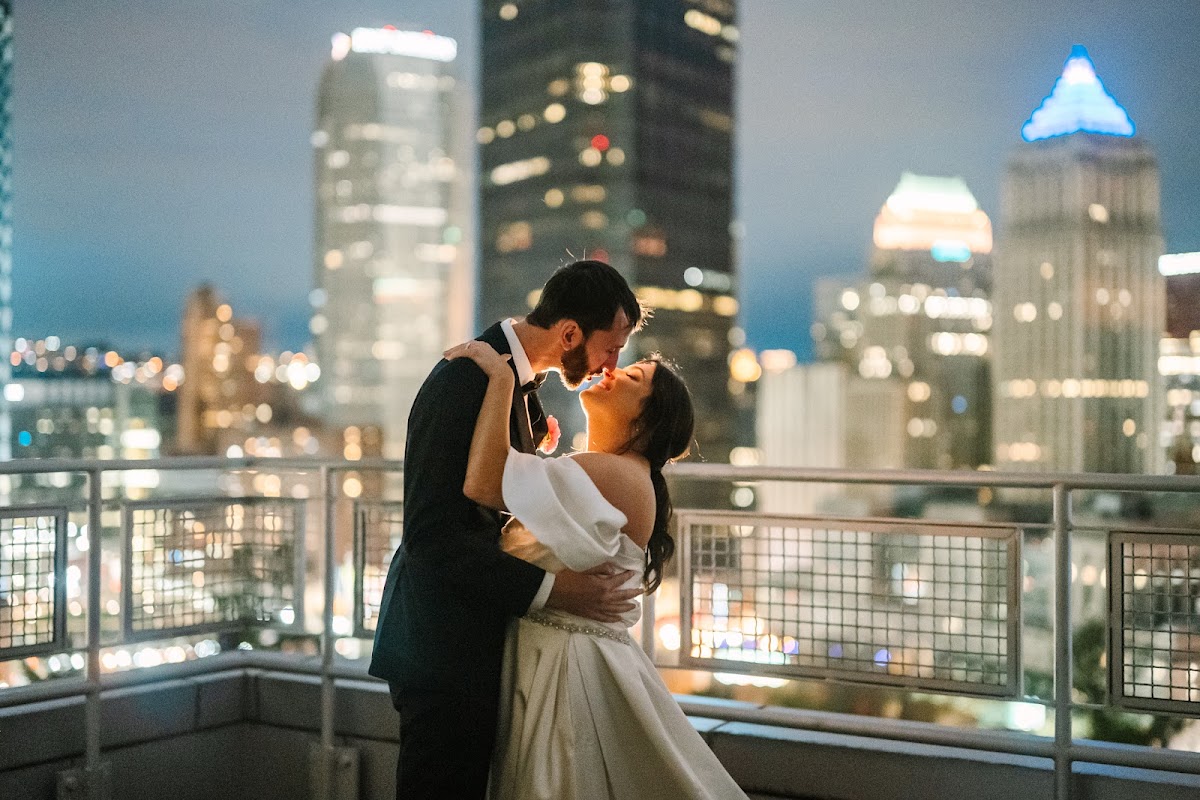
You take Bedford Avenue up from downtown, past the Cultural District and PPG Paints Arena, and the city starts to shift. The Lower Hill District rises before you — a neighborhood with deep roots in Pittsburgh’s jazz history, where August Wilson set his plays and where the Crossroads of the World once drew legends like Lena Horne and Duke Ellington. At 1435 Bedford Avenue, the Energy Innovation Center announces itself not with flash but with substance: a beautifully restored 1930s trade school building, all exposed brick and massive industrial windows, now holding LEED Platinum certification and some of the most dramatic skyline views in the city. This is not a venue that plays dress-up. The bones are extraordinary — soaring ceilings, polished concrete floors, historic wooden beams, and walls of glass that frame downtown Pittsburgh like a living mural. The colorful exposed pipes aren’t hidden; they’re celebrated. The original terrazzo floors aren’t covered; they’re polished to a shine. When you step into the Duquesne Light BrightSpace and see 2,000 square feet of urban history bathed in natural light with the city spread out before you, you understand immediately why eight couples have reached out to Poppy about designing Energy Innovation Center wedding flowers. This is a blank canvas that doesn’t feel blank at all — it feels purposeful, grounded, and ready for florals that honor both the industrial past and the celebration ahead.
About Energy Innovation Center
The Energy Innovation Center occupies a singular place in Pittsburgh’s architectural and cultural landscape. Built in 1931 as the Clifford B. Connelly Trade School, this five-story structure served generations of Pittsburgh students learning skilled trades — the very trades that built the Steel City. When the building was reimagined in 2013, the transformation honored that legacy while pursuing one of the most ambitious green building certifications in the nation. The result is a LEED Platinum facility that preserves exposed brick walls, original steel-framed windows, and historic wooden elements while incorporating modern energy systems, rooftop green space, and sustainable design principles throughout. This is not cosmetic preservation. The building’s bones — its high ceilings, wide corridors designed for industrial education, and massive window walls that once flooded classrooms with light — remain intact and become the foundation for contemporary celebrations.
The architectural language is industrial authenticity. Polished concrete floors reflect light from floor-to-ceiling windows. Exposed mechanical systems are painted in bright colors — blues, oranges, greens — creating an unexpected visual punctuation against neutral walls. Historic wooden floors in the BrightSpace show the patina of decades of use, refinished but not erased. Steel beams and brick columns stand as they always have, structural necessities that now serve as dramatic focal points for ceremony arches and floral installations. The venue describes itself as a “blank canvas,” which is accurate in the sense that very little is predetermined about layout or decor — but the canvas itself is richly textured, full of character, and deeply rooted in place.
Location-wise, the Energy Innovation Center sits in Pittsburgh’s Lower Hill District, adjacent to downtown and within easy reach of the Strip District, North Shore, and Cultural District. The neighborhood carries profound historical significance as the heart of Black cultural life in mid-century Pittsburgh, home to the jazz clubs, theaters, and social institutions that made the Hill District nationally renowned. Urban redevelopment in the 1950s and 60s devastated much of that fabric, but recent years have seen renewed investment and a growing recognition of the neighborhood’s legacy. For couples, this means a venue that’s genuinely urban — not suburban masquerading as city chic — with walkable access to Pittsburgh’s core, abundant hotel options for guests, and the kind of authentic neighborhood context that makes a wedding feel connected to something larger than itself. Parking is included on-site, a non-trivial advantage in an urban setting, and the venue’s proximity to major routes makes load-in straightforward for vendors.
From a florist’s perspective, the Energy Innovation Center presents a rare gift: generous load-in access, a single-level layout for most event spaces (with rooftop accessible via elevator), and a venue coordinator in Shannon Kelly who understands the value of allowing creative vendors to do their best work. The venue permits outside vendors across categories, including florals, which means Poppy can bring our full creative toolkit without restrictions. The neutral palette — brick, concrete, steel, wood — allows flowers to be the primary source of color and softness, and the dramatic architecture provides natural focal points (window walls, high ceilings, the Green Roof skyline) that guide floral placement rather than requiring us to create interest from scratch. Setup time is reasonable, though coordinating the timeline for a rooftop ceremony (weather-dependent) with indoor reception florals requires advance planning.
Event Spaces & Floral Opportunities
The Duquesne Light BrightSpace (Covestro BrightSpace)
Capacity: 150 seated for dinner, 200 for ceremonies
Setting: This is the signature space at the Energy Innovation Center, and for good reason. The BrightSpace occupies 2,000 square feet with loft-style ceilings that soar fifteen feet overhead, original wooden floors that glow honey-gold in afternoon light, and a wall of industrial windows — not decorative panes but massive, steel-framed glass spanning the entire western exposure — that frames downtown Pittsburgh in an uninterrupted panorama. You see the city as it is: the Allegheny and Monongahela rivers converging, the USX Tower catching sunset, the bridges stitching neighborhoods together. The space is flooded with natural light from morning through golden hour, which means every floral petal, every leaf, every tendril of jasmine vine is illuminated with clarity and warmth. The architecture is both minimal and rich — neutral walls, exposed brick accents, polished concrete along the perimeter, and those glorious wood floors underfoot. Modern in its cleanliness, historic in its bones.
Floral approach: The cardinal rule here is the same as in any window-heavy space: respect the view. Guest table centerpieces should stay low — eight to ten inches maximum — or go dramatically tall on clear risers that lift blooms above sightlines. We favor compote-style arrangements for low centerpieces: lush, dome-shaped compositions of garden roses (Patience, Keira, Romantic Antike), spray roses, ranunculus, and eucalyptus in aged brass or soft gray ceramic vessels that echo the industrial aesthetic without competing with it. For taller designs, consider clear glass cylinder vases elevated on lucite risers, with arrangements that begin at thirty inches above the table — airy compositions of delphinium, lisianthus, and trailing jasmine that seem to float. The ceremony setup offers rich possibilities: a structural arch positioned in front of the windows, constructed from copper piping or raw steel to mirror the building’s industrial language, then softened with asymmetric floral installations on one side — think blush and ivory blooms (Quicksand roses, white ranunculus, pale pink sweet pea) cascading down one corner with trailing smilax, creating movement and softness against hard lines. The aisle can be marked with simple arrangements in geometric concrete planters — low, lush groupings of seasonal blooms that guests notice as they walk in but that don’t obstruct the couple’s path. For the head table or sweetheart table, consider a low, luxurious runner of greenery (seeded eucalyptus, Italian ruscus, olive branches) punctuated with clusters of roses and candles in varying heights. The BrightSpace’s neutral palette means you can go bold with color or stay soft and romantic — both approaches work beautifully. What doesn’t work: anything that blocks those windows or competes with the skyline for attention. The city is your co-designer here; let it do some of the work.
The Glass Elevator
Capacity: 40 seated, 75 for cocktails
Setting: The Glass Elevator is an intimate, modern space defined by its floor-to-ceiling windows — again, those generous industrial panes — offering views toward downtown and the North Side. The room features colorful accent walls (a departure from the neutral palette elsewhere) in shades of teal and burnt orange, which give the space a playful, contemporary energy. It’s smaller than the BrightSpace, which makes it ideal for cocktail hours, welcome receptions, or intimate dinners for smaller weddings. The industrial window frames add graphic geometry, and the natural light (when the sun cooperates) is excellent for both florals and photography.
Floral approach: The colorful walls are your conversation partner here. Rather than fighting them, choose florals that harmonize — warm tones like peach, coral, and amber if the walls lean orange; cooler whites, soft blues, and greenery if you want to calm the space. For cocktail hour, we love a mix of heights: bud vases with single stems (coral charm peonies, peach ranunculus, or even bold zinnias in summer) scattered across cocktail tables, combined with one or two statement arrangements on the bar or welcome table. Consider a high-low installation — a tall arrangement of branches (curly willow or flowering quince in spring) anchoring one corner, balanced by low clusters of blooms elsewhere. If you’re using this space for a seated dinner, keep centerpieces compact and organic: small garden-style arrangements in terracotta pots or wooden boxes, filled with a loose mix of roses, astilbe, herbs (rosemary, lavender), and textured foliage. The Glass Elevator is also an excellent candidate for hanging installations: suspended terrariums with air plants and delicate blooms, or a simple garland of smilax and Italian ruscus draped along one window frame. The key is to add softness and life without overwhelming a space that already has personality. Think of florals here as accent notes, not the main melody.
The Roadways
Capacity: 250 seated, 400 for cocktails
Setting: The Roadways are unlike any other wedding space in Pittsburgh. These are the building’s original corridors — extra-wide hallways designed to accommodate industrial equipment and large classes — now repurposed as event space. The ceilings are lined with colorful exposed pipes (part of the building’s modern mechanical systems, painted in vibrant blues, greens, and oranges) and strung with Edison bulb string lights that add warmth. The width of the corridors allows for flexible layouts: long farm tables, traditional rounds, lounge furniture groupings, food stations, lawn games, you name it. The industrial details are front and center here — polished concrete floors, painted pipes overhead, exposed brick at intervals — creating a raw, urban backdrop that can swing romantic, modern, or playfully eclectic depending on how you dress it.
The Green Roof
Capacity: 200 for ceremonies, flexible for cocktails
Setting: The Green Roof is exactly what it sounds like: a rooftop space featuring a lush green lawn, native plantings, and 360-degree views of the Pittsburgh skyline. You’re five stories up, surrounded by the city — the downtown towers to the west, the North Side and stadiums to the north, the Strip District below — with nothing between you and the view but open air. The greenery underfoot is genuine, part of the building’s LEED Platinum stormwater management system, and it provides a soft, natural carpet that’s rare in urban venues. The space is used primarily for ceremonies, first looks, and cocktail receptions, though it’s weather-dependent (the venue will have a backup plan for rain). On a clear day, particularly at sunset, the Green Roof is simply stunning — the kind of setting that makes guests pull out their phones before the processional even starts.
Floral approach: The Green Roof’s built-in beauty means florals should enhance, not dominate. For ceremonies, the skyline is your backdrop, so anything you place behind the couple should complement rather than compete with the urban vista. We favor a low, wide ceremony installation — think a ground-level arrangement flanking the couple on either side, rather than a towering arch that blocks the view. Consider two large urns filled with lush, asymmetric arrangements of white and ivory blooms (Playa Blanca roses, white lisianthus, white delphinium) with plenty of greenery (eucalyptus, olive branches, ferns) spilling over the edges, positioned at the couple’s sides. For the aisle, simple is best: small arrangements in low vessels (terracotta pots, concrete planters, or even galvanized buckets) placed every few rows, filled with seasonal blooms that can withstand outdoor conditions. Alternatively, loose petals scattered along the aisle, or a simple runner of greenery (though check with the venue about what’s permitted on the living roof). If the Green Roof is hosting cocktail hour, consider portable arrangements on cocktail tables — compact designs in sturdy vessels that won’t tip in a breeze. The rooftop setting means you’re exposed to wind and sun, so choose hardy blooms: roses, hydrangeas, sunflowers in summer, chrysanthemums in fall. Delicate flowers like sweet pea or anemones will wilt quickly in direct sun and wind. The Green Roof is also an excellent location for a photo moment — a freestanding floral installation (an asymmetric arch, a vintage door flanked by urns, or a simple fabric backdrop with corner floral clusters) positioned to capture both the florals and the skyline behind the couple. Just remember: everything that goes up to the roof must come back down via elevator, so plan installations that are modular and manageable for your setup team.
Wedding Flower Ideas for Energy Innovation Center
Steel City Romance
This design concept honors Pittsburgh’s industrial heritage while bringing softness and elegance to the raw architectural elements of the Energy Innovation Center. The palette is warm and inviting: blush, ivory, champagne, and soft peach, grounded by greenery in gray-green tones (eucalyptus, dusty miller, olive branches). Key flowers include Quicksand roses (that perfect taupe-blush), Keira garden roses (blush with peachy undertones), white O’Hara garden roses, ivory ranunculus, blush astilbe, and peach stock for height and fragrance. Vessels should nod to the industrial setting: aged brass compotes, galvanized metal buckets, concrete planters, and raw ceramic pots. In the BrightSpace, use low compote arrangements on guest tables with tall, branch-based designs (flowering quince or curly willow) on the bar and welcome table. For the ceremony, a copper pipe arch with an asymmetric floral installation on one side — blooms cascading down in a soft, organic arrangement. In the Roadways, farm tables with continuous greenery runners punctuated by clusters of roses and candles. The effect is romantic but grounded, soft but not saccharine, with enough texture and earthy tones to hold its own against the industrial backdrop. This palette works beautifully year-round and photographs exceptionally well in the venue’s abundant natural light.
Urban Garden Party
This concept leans into the unexpected juxtaposition of rooftop greenery and industrial architecture, creating a celebration that feels like a garden party transplanted to the city. The palette is vibrant and organic: bright whites, cheerful yellows, soft lavenders, and plenty of green. Think white peonies, yellow ranunculus, lavender sweet pea, white lisianthus, yellow button mums (Solidago), purple scabiosa, and masses of textured greenery (ferns, herbs like rosemary and mint, jasmine vine, local foliage). Vessels should feel natural and unpolished: wooden boxes, terracotta pots, woven baskets, or even vintage watering cans. On the Green Roof, this concept truly shines — aisle arrangements in terracotta pots overflowing with garden-style blooms, cocktail tables with small potted herb gardens topped with fresh flowers. In the Glass Elevator, use the colorful walls as a backdrop for playful bud vases and hanging terrariums. In the BrightSpace, centerpieces can be loose and wild: asymmetric arrangements that look like they were just gathered from a cutting garden, with blooms at varying heights and foliage trailing over the edges of the vessels. This concept is ideal for spring through early fall, when fresh herbs and garden flowers are abundant. It’s cheerful, approachable, and brings a sense of life and spontaneity to the urban setting — perfect for couples who want their wedding to feel less formal and more like a gathering of friends.
Industrial Minimalist
For couples who love the Energy Innovation Center’s raw, modern aesthetic and want florals that enhance rather than soften it, this concept embraces restraint, bold lines, and unexpected materials. The palette is strict: white, black, deep green, with perhaps a single accent color (deep burgundy or charcoal blue). Flowers are architectural: white calla lilies, white phalaenopsis orchids, deep burgundy anthurium, monstera leaves (that iconic Swiss cheese split), white amaryllis in winter, white king protea for drama. Vessels are sculptural: matte black ceramic cylinders, white geometric planters, clear glass cubes, or even industrial metal stands. In the BrightSpace, imagine single-variety centerpieces — a tight cluster of white calla lilies in a black cylinder on each table, nothing else. For the ceremony, a stark structural arch of black metal with minimal floral accents: a single trailing monstera leaf, one perfect white orchid stem. In the Roadways, consider tall, branch-based installations using manzanita branches spray-painted white or black, with a few orchid blooms wired along the branches. This concept is bold, modern, and uncompromising — it works best for couples with a strong aesthetic vision who want florals to be sculptural elements rather than soft accents. It’s also relatively cost-effective despite its high-impact look, because you’re using fewer blooms and focusing on statement flowers and structure. Ideal for any season, though it has a particular edge in winter when the starkness feels intentional and chic.
Seasonal Considerations
Pittsburgh’s four-season climate offers distinct advantages and challenges for wedding flowers at the Energy Innovation Center, with each season bringing its own palette, textures, and logistical considerations.
Spring (April–May) arrives tentatively in Pittsburgh — late frosts are possible through mid-April, but by May, the city is lush and blooming. Tulips, daffodils, hyacinths, and flowering branches (cherry, dogwood, quince) are abundant and affordable from local growers. Ranunculus, anemones, and sweet pea are at their seasonal peak and hold beautifully in the cooler temperatures. The Green Roof is ideal for spring ceremonies, with daytime temperatures in the 60s and 70s and lower humidity than summer. Rain is common, so always have a backup plan (the BrightSpace works perfectly for ceremony flips). For spring Energy Innovation Center wedding flowers, lean into the season’s soft pastels and garden-gathered textures — it’s the time of year when you can use delicate blooms without worrying about heat wilt. The challenge: spring weather is unpredictable in Pittsburgh, and late-season cold snaps can affect bloom availability. Book your florist early and build flexibility into your flower list.
Summer (June–August) brings warmth, long daylight hours, and occasional humidity spikes. Peonies (the most requested wedding flower) are available from late May through June — if peonies are non-negotiable, plan a late May or early June wedding. By July and August, expect dahlias, zinnias, sunflowers, hydrangeas, and lisianthus from local farms, often at better prices than imported flowers. The Green Roof is stunning in summer but hot — ceremonies should be scheduled for late afternoon or evening to avoid midday heat, and florals need to be chosen carefully (roses, hydrangeas, and zinnias hold up well; delicate blooms like sweet pea or ranunculus will wilt quickly in direct sun). Inside, the BrightSpace’s natural light is most dramatic in summer, with golden hour around 8:00 PM creating that coveted warm glow. Hydration is critical — ensure all florals are properly conditioned and consider using floral water tubes for bouquets and boutonnieres. Summer is Pittsburgh’s most popular wedding season, so book your Pittsburgh wedding florist well in advance.
Fall (September–November) is arguably the most beautiful season at the Energy Innovation Center. The skyline views from the BrightSpace and Green Roof are framed by changing leaves — Pittsburgh’s hardwood forests turn vibrant shades of gold, orange, and crimson. Dahlias reach their peak in September and early October, offering an extraordinary range of colors and sizes. Mums, asters, marigolds, and seasonal foliage (oak leaves, maple, bittersweet berries) are abundant and affordable. The cooler temperatures mean most flowers hold beautifully both indoors and on the rooftop, and the soft, angled autumn light creates ideal photography conditions. This is the season to embrace warm, rich tones — burgundy, burnt orange, mustard yellow, deep plum — that echo the landscape outside the windows. The challenge: fall is also a busy wedding season in Pittsburgh, and prime Saturday dates book quickly. Additionally, frost can arrive by late October or early November, which limits rooftop ceremony options (though the Green Roof can be stunning under clear autumn skies, even in chilly weather). Plan for seasonal blooms and local foliage to maximize your budget.
Winter (December–February) weddings at the Energy Innovation Center have a particular magic — the city lights twinkle against dark skies, and the industrial interior feels warm and sheltered. Winter blooms include amaryllis, paperwhites, anemones (imported), hellebores, and evergreen foliage (pine, cedar, eucalyptus, magnolia). Hothouse roses, ranunculus, and orchids are available year-round but may be pricier due to import costs and holiday demand. The Green Roof is generally too cold for ceremonies (though a hardy couple could pull off a quick, dramatic rooftop moment), so plan for indoor ceremonies in the BrightSpace or Tank Room (another indoor ceremony option). Winter is the season to lean into lush greenery garlands, candlelight, and rich jewel tones (emerald, ruby, sapphire) that feel warm against the venue’s neutral palette. Logistically, winter weather can complicate vendor load-in — snow and ice are common in Pittsburgh from December through February — so build extra setup time into your timeline and confirm your florist’s winter weather policy. The upside: winter is the least busy wedding season, which may offer more flexibility in scheduling and pricing.
Poppy’s Expert Take
The windows are your co-designer, not your competition. The Energy Innovation Center’s floor-to-ceiling industrial windows are its defining feature, offering natural light and skyline views that most venues would kill for. Your florals should work with those windows, not against them. That means low centerpieces on guest tables (under ten inches, ideally), transparent vessels when going tall, and ceremony installations that frame rather than block the view. When designing your Energy Innovation Center wedding flowers, remember that guests will naturally gravitate toward the windows — don’t ask them to choose between looking at your florals and looking at the Pittsburgh skyline. Give them both.
Embrace the industrial bones, don’t fight them. This venue’s exposed brick, colorful pipes, polished concrete, and steel-framed windows are not neutral backdrops — they have personality and texture. The most successful floral designs at the EIC lean into that industrial aesthetic rather than trying to soften or hide it. Choose vessels that echo the materials: brass, copper, concrete, galvanized metal, raw ceramic, even reclaimed wood. Let arrangements feel a bit unstructured and organic, as if they grew in the cracks of the building. Overly formal, symmetrical designs can look out of place here; loose, garden-style arrangements with plenty of texture feel right at home.
The Green Roof is weather-dependent — plan accordingly. The rooftop is undeniably stunning, but it’s outdoors and five stories up, which means weather is a factor. Pittsburgh weather is notoriously unpredictable (locals joke that if you don’t like the weather, wait fifteen minutes). Always have a ceremony backup plan — the BrightSpace is a beautiful indoor alternative with equally dramatic views. If you’re committed to a rooftop ceremony, choose hardy flowers that can withstand sun, wind, and temperature fluctuations. Roses, hydrangeas, and mums are reliable; delicate blooms like sweet pea, anemones, or hellebores will struggle outdoors. Also consider logistics: every floral element must be transported up and down via elevator, and rooftop installations need to be secured against wind. Weighted vessels, low arrangements, and modular installations are your friends.
Farm tables in the Roadways are a floral goldmine. If you’re hosting your reception in the Roadways, seriously consider farm table seating. The long, linear layout of the space is perfectly suited to long tables, and from a floral perspective, farm tables allow for lush, continuous greenery runners that feel abundant without requiring dozens of individual centerpieces. A single greenery runner (seeded eucalyptus, Italian ruscus, olive branches) down the center of each table, punctuated every few feet with clusters of blooms and candles, creates a dramatic, garden-table effect that’s both cost-effective and visually stunning. Plus, the linear arrangements echo the linear architecture of the corridors, creating a cohesive design.
Coordinate ceremony and reception florals to maximize your budget. The single-level layout (aside from the Green Roof) makes it logistically feasible to repurpose ceremony florals for the reception. If you’re doing a BrightSpace ceremony followed by a BrightSpace reception, your ceremony arch can remain in place as a photo backdrop during cocktail hour (assuming cocktails happen in a different space like the Glass Elevator), and your aisle arrangements can be moved to the bar, gift table, or entrance during the flip. If you’re doing a Green Roof ceremony with a BrightSpace reception, the transition is trickier (elevator logistics), but smaller aisle arrangements in portable vessels can still be brought down and repurposed. Discuss this with your florist during planning — smart repurposing can stretch your budget significantly.
Natural light here is a photographer’s dream — time your floral delivery accordingly. The BrightSpace’s western exposure means it’s flooded with warm, golden light in the late afternoon and evening, which is when most couples schedule their receptions. This natural light is extraordinary for photography, making florals look vibrant and luminous. But it also means timing matters. Flowers should be delivered and set up as close to the event start time as possible to ensure they look fresh during golden hour (typically 6:00–8:00 PM in summer, earlier in fall and winter). Coordinate with your florist and your photographer — a skilled photographer will know how to use the natural light to make your florals (and everything else) look incredible, and a skilled florist will time setup so blooms are at their peak when the best light hits.
Don’t overlook the smaller spaces. With the BrightSpace and Green Roof commanding so much attention, it’s easy to forget about the Glass Elevator and the Roadways. But these spaces offer rich opportunities for creative floral moments that guests will remember. A hanging installation in the Glass Elevator, a dramatic welcome arrangement in the Roadways, or a lush bar display can create visual interest and guide guests through the venue’s multi-space layout. At the Energy Innovation Center, the experience is cumulative — each space contributes to the overall celebration. Make sure your florals reflect that by creating distinct moments in each area, not just focusing all your resources on the main reception space.
What Poppy Couples Spend on Flowers Here
While Poppy is still building our portfolio at the Energy Innovation Center (with eight couples currently in our planning pipeline), we can offer guidance based on comparable Pittsburgh venues with industrial aesthetics, multiple event spaces, and opportunities for both ceremony and reception florals. Most couples investing in a venue like the EIC are prepared to allocate a meaningful portion of their budget to florals, recognizing that