
The drive north from Pittsburgh takes you through progressively more pastoral territory. Route 422 unspools through Butler County, and somewhere past the last gas station in Saxonburg, the land opens up. Split-rail fences line the road. Barns appear on distant hillsides, their weathered boards silvered by two centuries of Pennsylvania winters. You turn onto Westminster Road, and Armstrong Farms Westminster Preserve announces itself not with signage, but with presence: rolling fields bordered by old-growth trees, a pond where ducks glide in formation, and rising behind it all, a bank barn so architecturally honest it could have walked out of an Andrew Wyeth painting. The structure dates to April 1862 — Civil War-era construction that has outlasted seven generations of the Armstrong family, who still farm this land. The original hand-hewn beams are still there. So is the foundation laid in 1862, the siding milled from trees that stood when Abraham Lincoln was president. This is not a venue that was built to host weddings. It is a working piece of Western Pennsylvania agricultural history that happens to create one of the most romantic settings in the Pittsburgh region. For couples planning Armstrong Farms Westminster Preserve wedding flowers, the venue’s authenticity is both gift and responsibility: you are decorating something that already has deep character, so every floral decision either honors that or diminishes it.
About Armstrong Farms Westminster Preserve
Armstrong Farms Westminster Preserve sits on land that has been continuously farmed by the same family since 1816, making it a Pennsylvania Bicentennial Farm and one of the region’s genuine agricultural landmarks. The centerpiece — the bank barn built in 1862 — represents a specific vernacular architecture unique to Western Pennsylvania hill country. Bank barns were designed to take advantage of sloped terrain: animals entered on the lower level, hay storage occupied the upper, and the design provided natural temperature regulation long before climate control existed. This barn has been meticulously restored, but not renovated into unrecognizability. The original beams — some measuring over a foot square — still span the ceiling. The siding is original. The foundation stones were laid by hands that knew masonry as a craft, not a trade. What has been added is subtle: climate control so your guests are comfortable regardless of season, a sound system integrated into the beams, and thousands of tiny fairy lights that transform the space into something out of a fairytale when the sun sets.
The property encompasses rolling pastures, mature woodlands, and the Love Pond, a natural water feature that serves as the primary outdoor ceremony site. The pond itself is home to a resident flock of ducks who have learned to time their afternoon swims to avoid ceremony hours (mostly). The surrounding countryside provides that particular quality of Pennsylvania pastoral beauty — not manicured or designed, but genuinely agricultural, with functioning split-rail fences and views that extend across neighboring farms and forested ridgelines. This is Butler County, about 35 miles north of Pittsburgh’s city center, far enough removed that light pollution doesn’t wash out the stars, but close enough that guests from the city can make the drive in under 40 minutes on Route 422.
Logistically, Armstrong Farms operates with a refreshing simplicity. Weekend rental packages run from Friday at noon through Sunday morning, giving couples and their vendors generous setup time. The venue maintains an open vendor policy, meaning you can bring your own florist (which works very well for Poppy), caterer, photographer, and other professionals rather than choosing from a restricted list. There is an on-site prop shop stocked with vintage containers, rustic décor elements, and vessels that can double as floral holders — an unexpectedly useful resource that often reduces rental costs. The Armstrong family lives on the property and manages events themselves, which means communication is direct and decisions are made quickly. For florists, load-in access is straightforward: vehicles can drive directly to the barn entrance, and the venue provides gators to shuttle materials between spaces if needed. The barn has wide doorways and no steps at the main entrance, making large installations feasible.
The venue accommodates up to 250 guests across its various spaces, with most couples using the Love Pond for ceremonies, the barn for cocktail hour and dancing, and the permanent white tent for dinner service. It is worth noting that while the tent is indeed permanent and structurally sound, it is a tent — open-sided, which means weather considerations are real. Pennsylvania springs can be wet and chilly; summers occasionally produce heat that even open sides don’t fully mitigate; and autumn, while stunning, brings cool evenings that may require heaters. This is not a criticism, merely a reality of choosing a venue that prioritizes connection to the landscape over climate-controlled isolation from it.
Event Spaces & Floral Opportunities
Westminster Preserve Barn
Capacity: 250 seated for cocktails and dancing; typically used as reception space post-dinner
Setting: Step inside and the first thing you notice is the scale. The barn’s ceiling rises to over 20 feet at its peak, supported by those massive original beams — hand-hewn oak and chestnut timbers that still bear the marks of the adze that shaped them. The second thing you notice, especially in evening hours, is the light: thousands of small white fairy lights strung along the beams create a canopy of stars overhead. The walls retain the original board siding, some of it whitewashed, some left natural, creating texture and depth. The floor is polished concrete — practical for dancing, easy to clean, and visually neutral. There are no windows in the traditional sense (bank barns were designed for storage, not views), but the space feels open rather than enclosed thanks to the ceiling height and multiple access points that connect to the outdoor areas. The barn is climate-controlled but maintains excellent air circulation through wrap-around access doors. This is where cocktail hour typically begins and where the dance floor comes alive after dinner service in the adjacent tent.
Floral approach: The barn’s architecture does the heavy lifting, so Armstrong Farms Westminster Preserve wedding flowers in this space should amplify rather than compete. The original beams are the obvious opportunity: consider a suspended installation — perhaps a 15-foot garland of smilax, Italian ruscus, and seeded eucalyptus woven with clusters of Quicksand roses, white lisianthus, and blush astilbe — running the length of the central beam above the bar area. The structure is robust enough to support substantial weight, and the venue is experienced with hanging installations. For the bar itself, we favor asymmetric arrangements in vintage brass or weathered wood containers (often available from the venue’s prop shop): garden roses, scabiosa, tweedia, and chocolate cosmos with trailing jasmine vine spilling over the bar edge. The barn’s rustic character pairs beautifully with organic, slightly wild arrangements that look gathered rather than constructed. If the barn is being used for dinner rather than the tent, keep centerpieces low (under 12 inches) to maintain conversation flow, or go dramatically tall (30+ inches on elevated stands) to draw the eye upward toward those stunning beams. Avoid anything too precious or formal — this space wants texture, movement, and a bit of untamed beauty.
Permanent White Tent
Capacity: 250 seated for dinner service
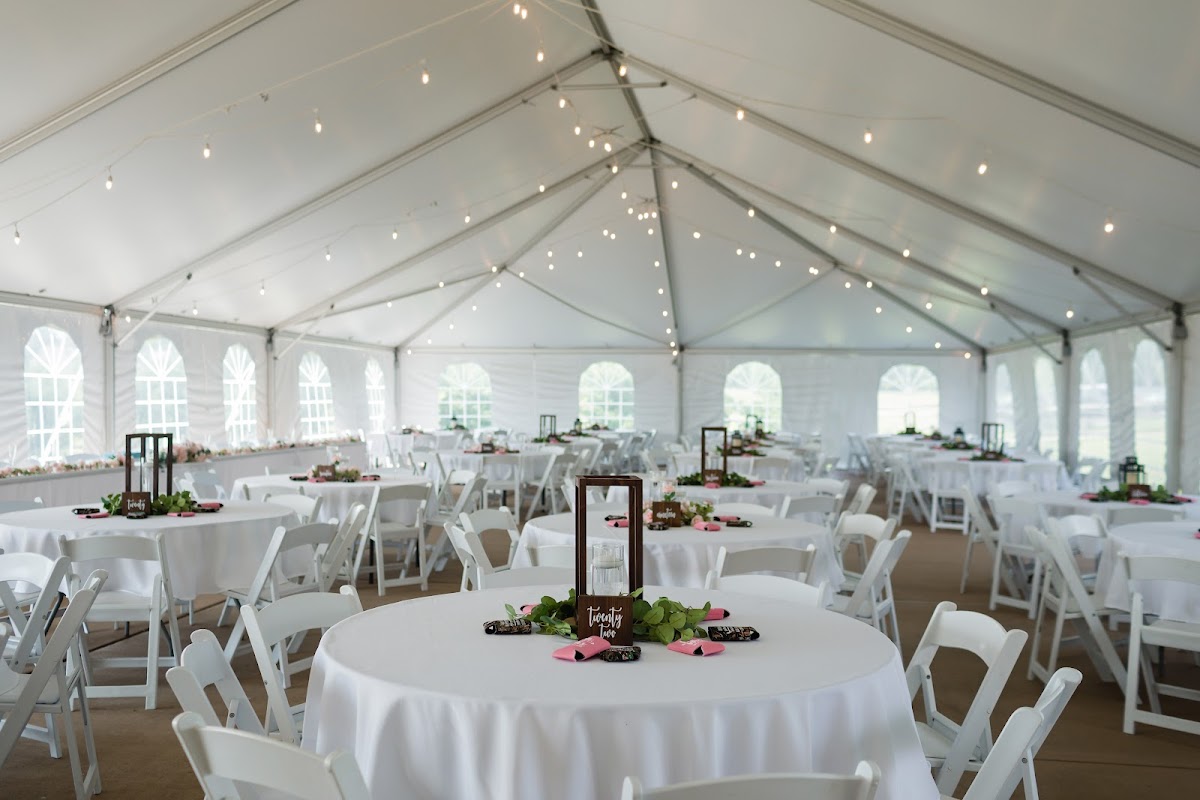
Setting: Connected to the barn via the cocktail arbor, the permanent white tent is exactly what it sounds like: a large, open-sided canvas structure anchored to the ground with views extending across the surrounding pastures and tree lines. The tent features a peaked roof supported by poles positioned to minimize obstruction of guest tables. The floor is typically covered with a neutral surface (the venue can provide details), and the white canvas ceiling creates a bright, airy feeling during daylight hours that transitions to warm intimacy once lighting is added after sunset. Because the sides are open, the tent maintains a strong connection to the landscape — you are sheltered but not enclosed. This is where dinner service happens for most weddings, with long farm tables or traditional rounds arranged beneath the canvas.
Floral approach: The white tent is a florist’s dream canvas precisely because it is so neutral. Any color palette works here. The tent poles themselves are functional elements that can be transformed into floral features: wrap them with garlands of seeded eucalyptus and silver dollar eucalyptus punctuated every few feet with clusters of garden roses, dahlias, or whatever blooms match your palette. For a September wedding, consider using locally grown zinnias, celosia, and marigolds in warm sunset tones. For a June celebration, peonies (Sarah Bernhardt, Coral Charm) with sweet peas and garden roses in blush and ivory. The open sides mean your floral installations are backlit by natural landscape rather than walls, which creates beautiful depth in photos. Centerpieces can range widely depending on budget and style: low, lush compotes filled with Juliet roses, ranunculus, and hellebores for a romantic garden feel, or tall arrangements on gold stands that lift blooms above eye level and create drama against the white canvas ceiling. Consider the sight lines carefully — if guests will be looking out at the countryside, you want florals that frame rather than block those views. One particularly effective technique: create a focal installation above the head table — perhaps a suspended floral cloud of blooms and greenery that appears to float — which draws the eye and defines the space without requiring floor-based structures that interrupt flow.
Love Pond Ceremony Site
Capacity: 250 seated for outdoor ceremonies
Setting: The Love Pond sits in a natural bowl of land, surrounded by mature trees and open pasture. The water itself is home to a flock of resident ducks who add both charm and occasional unpredictability to ceremonies (they are generally well-behaved but make no promises). The ceremony site is typically set pondside, with guests seated in rows facing the water and the arbor or arch positioned so the pond and surrounding landscape serve as backdrop. The ground is grassy and relatively flat near the water, though the venue can provide guidance on optimal chair placement. There is something deeply peaceful about this spot — the way light moves across the water, the rustling of leaves in the surrounding trees, the sense of being held by landscape rather than merely standing in it. This is not a groomed, formal garden pond. This is a working farm pond that happens to be extraordinarily beautiful.
Floral approach: The Love Pond’s natural beauty means your ceremony florals can be restrained and still make significant impact. The arbor or arch (couples typically rent this separately or use the venue’s simple structure) is your primary floral opportunity. We favor an asymmetric installation that echoes the organic, unmanicured quality of the pond and surrounding fields: perhaps a sweeping corner arrangement on one side of the arch featuring butterfly ranunculus in apricot and peach, Café au Lait dahlias, Juliet and Patience roses, with wild elements like smokebush, privet berry, and foraged branches creating movement and negative space. The goal is to look as though the arrangement grew there rather than being constructed. For aisle markers, consider simple arrangements in low vessels (galvanized buckets from the venue’s prop shop work beautifully) placed every third row: loose, gathered clusters of field flowers that don’t block guest views. If budget allows, petals scattered along the aisle create a romantic moment without requiring structures. The key consideration: wind. Pondside locations can be breezy, so ensure your arch installation is properly secured and weighted, and choose sturdy stems (roses, dahlias) over delicate blooms that shatter in wind (sweet peas, cosmos). The ducks are generally camera-shy during ceremonies, but if they do make an appearance, consider it a gift — there is something magical about exchanging vows while wildlife goes about its day in the background.
Cocktail Arbor
Capacity: Standing room for cocktail service; this is a transition space rather than a destination
Setting: The arbor is a covered structure positioned between the ceremony area and the barn/tent complex. It serves as both functional walkway and designated cocktail space, with enough room for bars, high-top tables, and circulation. The structure features a peaked roof and open sides, providing shelter without enclosure. This is where guests gather immediately after the ceremony, where drinks are served, and where the energy shifts from the quiet emotion of vows to the celebration of cocktails. The arbor’s framework is simple — wooden posts and beams — which makes it an ideal structure for floral enhancement.
Floral approach: The arbor begs for garlands. Consider running lush greenery (smilax, Italian ruscus, seeded eucalyptus) along the beams with clusters of blooms woven through at intervals. For a summer wedding, incorporate locally grown sunflowers, zinnias, and black-eyed Susans for a nod to the agricultural surroundings. For fall, use actual grapevine (surprisingly affordable from wholesale sources) with dahlias, marigolds, and burgundy amaranthus. The high-top cocktail tables are opportunities for smaller arrangements — think mason jars or vintage bottles (often available from the venue’s prop shop) filled with single-variety blooms: all dahlias, all roses, all zinnias, creating a collected-over-time aesthetic. If there is a bar within the arbor space, treat it as you would the barn bar: asymmetric arrangements with trailing elements that create movement. The arbor is a transition space, so florals here should feel lighter and more playful than ceremony or reception installations — think of it as the palette cleanser between courses.
Rustic Vintage Truck
Setting: Positioned on the property’s grounds, the vintage truck is primarily a photo opportunity and decorative vignette space. It is not a functional event space, but rather a piece of farm equipment turned charming backdrop.
Floral approach: The truck bed can be transformed into an overflowing floral display — we have filled these with farmers market-style arrangements of sunflowers, zinnias, and wildflowers in bushel baskets, or created more refined installations with roses, hydrangeas, and trailing amaranthus. Consider using the truck as a display for your ceremony florals post-ceremony (moving the arrangements from the arch to the truck bed creates a second life for those blooms). Another approach: fill the truck bed with potted plants (lavender, herbs, flowering annuals) that guests can take home as favors — this requires planning with the venue but creates a lovely full-circle moment. For fall weddings, pumpkins, gourds, and mums in the truck bed with floral accents create an iconic seasonal photo op. The key is making it look abundant rather than sparse — the truck bed is large, so commit to filling it generously or keep it simple with just a trailing garland along the sides.
Wedding Flower Ideas for Armstrong Farms Westminster Preserve
Pennsylvania Farmstead
This palette is a love letter to Western Pennsylvania agriculture in peak season. We start with locally grown flowers whenever possible: zinnias in every sunset color (coral, persimmon, burgundy, gold), celosia in deep wine and blush, sunflowers (the smaller, multi-headed Teddy Bear variety rather than giant single stems), and black-eyed Susans. Add Café au Lait and Labyrinth dahlias for structure, Juliet and Patience garden roses for romance, and finish with armloads of textured foliage: seeded eucalyptus, millet, amaranthus in burgundy and green, and if you can source it, actual wheat stalks. Vessels should be unpretentious: galvanized buckets, wooden crates, ceramic crocks, and mason jars. This concept works brilliantly in the barn (where rustic containers feel at home), the tent (where warm colors glow against white canvas), and especially on the vintage truck. The overall effect is abundant, warm, and deeply connected to place. Best months: July through September when local flower farms are in full production. This palette photographs beautifully in golden hour light and feels authentic to the working farm setting.
Heirloom Garden
For couples drawn to softer romance, this concept channels an English cottage garden that has been growing for generations. The palette centers on blush, ivory, soft lavender, and sage green. Flowers include garden roses (Keira, Quicksand, Patience), ranunculus in peach and cream, anemones (both white and lavender), hellebores, sweet peas, and butterfly ranunculus. Foliage is lush and varied: jasmine vine for trailing, Italian ruscus for structure, silver dollar eucalyptus for texture, and if available, variegated pittosporum. Vessels lean antique: mercury glass compotes, tarnished silver bowls, ceramic vessels in cream and sage, and vintage glass bottles. This concept is particularly stunning for the Love Pond ceremony (where soft colors complement water reflections) and the tent reception (where the neutral canvas lets the subtle palette shine). The barn cocktail hour benefits from slightly more saturated versions of these colors — deeper blush, more pronounced lavender — to hold their own against the rustic wood. Best months: late April through June for peak sweet pea and ranunculus season, though most of these flowers are available year-round through quality wholesalers. This palette photographs ethereally in soft, overcast light and has genuine staying power in images.
Vintage Harvest
This concept leans into the barn’s 1862 origin story with a palette that feels Victorian-era rather than contemporary: deep burgundy, burnt orange, mustard gold, and chocolate brown, lightened with touches of cream and dusty rose. Flowers include Burgundy/Black Baccara roses, chocolate cosmos (for their incredible scent), burnt orange dahlias (Wizard of Oz, Labyrinth), mustard yellow craspedia, burgundy scabiosa, and cream lisianthus. Textural elements are crucial: privet berries, hypericum berries in burgundy, dried elements like bunny tail grass, and if seasonally appropriate, actual crabapples or small pears wired into arrangements. Vessels should feel collected: brass candlesticks as bud vases, tarnished copper containers, wooden boxes, and aged ceramic. This palette is dramatic in the barn (where deep colors glow against weathered wood and fairy lights), moody and romantic in the tent at dusk, and creates stunning contrast at the Love Pond against green landscape. Best months: September through November when the palette echoes fall foliage, though these colors work beautifully for winter weddings as well. This is a concept for couples who want their florals to feel like heirlooms rather than trends, with a depth and richness that ages beautifully in photographs.
Seasonal Considerations
Pennsylvania’s four distinct seasons each bring opportunities and challenges for outdoor celebrations at Armstrong Farms Westminster Preserve, which sits at approximately 1,000 feet elevation in the rolling hills of Butler County.
Spring (April-May) arrives late here and can be unpredictable. Early April often still carries the risk of frost, and ground conditions at the Love Pond ceremony site can be soft from snowmelt and spring rains. By late April and into May, the landscape explodes: wild dogwood blooms in the woodlands, pasture grasses green up, and the risk of hard frost passes. Temperatures range from 45°F to 70°F, with significant variability. Rain is common, so the covered arbor and tent become essential rather than decorative. For florals, spring is tulip and daffodil season at local farms, though these have short vase life. Locally grown peonies begin appearing in late May. Ranunculus, anemones, and sweet peas are at their peak availability from West Coast growers. The advantage of spring weddings: the landscape needs no help looking beautiful. The challenge: weather contingency plans are non-negotiable, including consideration of how ceremony chairs will sit on potentially soft ground.
Summer (June-August) brings warmth and reliability, though July and August can produce heat that makes midday outdoor ceremonies uncomfortable. Average highs reach the low to mid 80s°F, but humid spells can push the heat index higher. The open-sided tent provides airflow but not cooling, so many couples opt for evening ceremonies when temperatures moderate. The landscape is lush and green, though pastures can brown if rainfall is scarce. For florals, summer is peak season for local flower farms: zinnias, sunflowers, dahlias, celosia, and amaranthus are abundant and affordable. Garden roses and lisianthus are widely available. The challenge: heat-sensitive flowers (hydrangeas, sweet peas) require careful timing and hydration. The advantage: long daylight hours (sunset after 8:30 PM in June) allow for ceremony, cocktails, dinner, and dancing with natural light lasting through most of the celebration. Summer weddings here feel abundant and easy, with the landscape fully cooperating.
Fall (September-October) is objectively the most popular season at Armstrong Farms, and for good reason. Temperatures are ideal: daytime highs in the 60s and 70s°F, cool evenings that make the barn’s climate control welcome. By mid-October, the surrounding hillsides turn spectacular — maples flaming red and orange, oaks deepening to burgundy. The pastures take on golden tones. The light itself seems to change, becoming more amber and directional as the sun drops lower in the sky. For florals, September still offers late-season local blooms (dahlias peak in September in Pennsylvania), while October shifts toward chrysanthemums, asters, and the rich, saturated colors of fall. Wholesale flowers are abundant: dahlias remain available, roses in burgundy and burnt orange, and foliage options expand to include colored oak leaves, bittersweet, and ornamental grasses. The challenge: fall weather can shift rapidly. A 75°F afternoon can drop to 45°F by evening, which guests appreciate in the barn but less so during pond-side ceremonies. The advantage: the venue photographs like an absolute dream, with every image looking like it belongs in a lifestyle magazine.
Winter (November-March) is the quiet season, both for the venue and the landscape. The pastures go dormant, trees are bare, and snow is a real possibility (Butler County averages 40+ inches annually, with most falling January through March). Temperatures range from the 20s to low 40s°F. The barn becomes the star: climate-controlled, glowing with fairy lights, and genuinely cozy in ways that summer celebrations cannot replicate. The tent, while structurally sound, requires heating for guest comfort, which is available but adds cost. For florals, winter means relying almost entirely on wholesale sources and imported blooms. Amaryllis, anemones (winter is actually their peak season), ranunculus, and roses are readily available. Consider incorporating evergreen elements: pine, fir, cedar, and holly bring seasonal texture without looking overtly Christmas unless you want them to. Winter weddings here are intimate and romantic, with the barn feeling like a refuge from the cold rather than an escape to a generic venue. The challenge: weather can impact guest travel and vendor load-in. The advantage: the venue is less booked, often more affordable, and the celebration feels genuinely cozy rather than performatively rustic.
Poppy’s Expert Take
The barn’s beam structure is engineered for hanging installations, but coordinate early. The venue is experienced with suspended florals and can provide guidance on weight limits and attachment points. We typically use aircraft cable and eye hooks (which the venue can install temporarily) rather than wire or fishing line, which are inadequate for installations heavier than five pounds. For a substantial garland (15+ feet), expect to need professional installation with a ladder tall enough to reach 18-foot ceilings. The venue has ladders on-site, but bring your own if timing is tight. The advantage of the beam structure: once rigging is in place, suspended installations appear to float, creating drama without consuming floor space or requiring rental structures.
The Love Pond ceremony site is stunning, but plan for wind and ground conditions. Pondside locations are inherently breezier than sheltered spots, which means your ceremony arch or arbor needs to be genuinely secured — not just weighted, but staked if possible. We have seen unsecured arches tip during ceremonies, which is both dangerous and mortifying. Use sturdy, woody stems for installations: roses, dahlias, and hydrangeas hold up; sweet peas and cosmos shred. Ground conditions vary seasonally: spring can be soft, requiring chair distribution platforms; summer and fall are typically firm. Walk the site during your venue visit to assess. The ducks are generally cooperative but cannot be controlled — embrace their presence as part of the venue’s authentic charm rather than something to manage.
The venue’s prop shop is an underutilized resource for reducing rental costs. Before ordering vintage containers, mason jars, or rustic vessels from rental companies, tour the prop shop with the venue coordinator. We have consistently found galvanized buckets, wooden crates, ceramic vessels, and glass bottles that work beautifully for casual, farm-style arrangements. The venue includes these at no additional charge as part of the rental package. This is particularly valuable for rehearsal dinner florals or ceremony aisle markers where you need quantity over refinement. That said, if you are planning formal, elegant designs, you will likely need to supplement with professional rentals — the prop shop leans rustic rather than refined.
Repurpose ceremony florals into cocktail and reception spaces. With generous setup time (Friday access for Saturday weddings), it is entirely feasible to design ceremony florals that transition to other spaces. For example: create the ceremony arch installation in modular sections that can be moved to flank the barn entrance during cocktails, or use potted floral arrangements along the aisle that later line the tent entrance. This requires planning with your florist and day-of coordinator, but can significantly stretch your floral budget. The venue’s gators make moving installations between spaces easier than at venues where everything must be hand-carried.
Lighting transforms the barn and tent from pretty to magical. While the barn’s fairy lights are lovely, adding uplighting along the walls and in the tent’s corners creates depth and warmth that makes florals pop in photos. Warm amber tones complement the rustic setting better than cool whites or colored gels. If budget is tight, prioritize lighting over additional floral installations — a moderately decorated space with excellent lighting photographs better than heavy florals under flat light. We have worked with couples who invested $800 in professional lighting and saw more impact than from an equivalent spend on additional centerpieces.
Communication with the Armstrong family is direct and responsive, which helps florists significantly. Because the family lives on the property and manages events personally rather than through a corporate events team, questions get answered quickly and logistically complex requests are handled with flexibility. If you need to access the barn at 7 AM for early setup, or want to leave installations in place for Sunday brunch, those conversations happen with the actual decision-makers rather than being filtered through layers of management. This matters when timeline adjustments are needed or when vendors need to coordinate load-in around other events. The flip side: this is a small operation, so do not expect instant responses during their busy season (September-October). Plan ahead and communicate clearly.
For couples prioritizing local and seasonal flowers, connect with Butler County flower farms early. Several small-scale cut flower farms operate within 20 miles of the venue, and some will sell directly to florists or provide buckets for DIY-inclined couples. Zinnias, sunflowers, dahlias, and celosia are widely grown and peak July through September. Using locally grown flowers reduces costs, supports regional agriculture, and ensures blooms are harvested at peak freshness. That said, selection is limited compared to wholesale sources, and availability cannot be guaranteed (weather impacts farm yields). We typically design arrangements that blend local seasonal flowers (for volume and texture) with wholesale specialty blooms (for specific colors and varieties), which balances sustainability, budget, and design control.
What Poppy Couples Spend on Flowers Here
While Armstrong Farms Westminster Preserve is relatively new to our venue portfolio, couples planning barn weddings in the Pittsburgh region with similar scope typically invest between $2,800 and $7,500 on wedding flowers, depending on guest count, design complexity, and the number of spaces being decorated. Here is how that breaks down practically at Armstrong Farms:
$2,800 - $4,200 | The Essentials
This tier covers a complete wedding but with thoughtful restraint: a ceremony installation at the Love Pond (perhaps an asymmetric arch design in garden roses, dahlias, and textured greenery, supplemented with potted arrangements lining the aisle), personal flowers (bridal bouquet, four bridesmaid bouquets, boutonnieres for the wedding party), and reception centerpieces for the tent (low arrangements in a mix of vessels from the venue’s prop shop, alternating between lush garden-style designs and simpler bud vase clusters). At this level, we typically recommend focusing floral impact on the ceremony (where all eyes are focused) and tables (where guests spend the most time), while keeping barn and arbor florals minimal — perhaps simple greenery garlands along one or two beams, or floral accents at the bar. For a 120-guest wedding, this budget comfortably covers the essentials without the celebration feeling under-decorated. The key is prioritizing spaces strategically: guests will remember a stunning ceremony arch and beautiful table arrangements more than elaborate barn garlands they pass through briefly.
$4,200 - $6,500 | The Full Picture
This tier allows for more comprehensive coverage across all event spaces and elevated design complexity. In addition to everything in the essentials tier, you can add: substantial hanging installations in the barn (perhaps a 15-foot garland along the central beam above the cocktail bar, with clusters of blooms creating focal points), upgraded ceremony florals (larger arch installation, additional aisle arrangements or petals), floral accents for the cocktail arbor (garlands along the beams, arrangements on high-top tables), taller or more elaborate reception centerpieces with elevated designs on alternating tables, and potentially a statement installation for the head table or tent entrance. At this level, the vintage truck can be dressed as a floral photo moment. Personal