
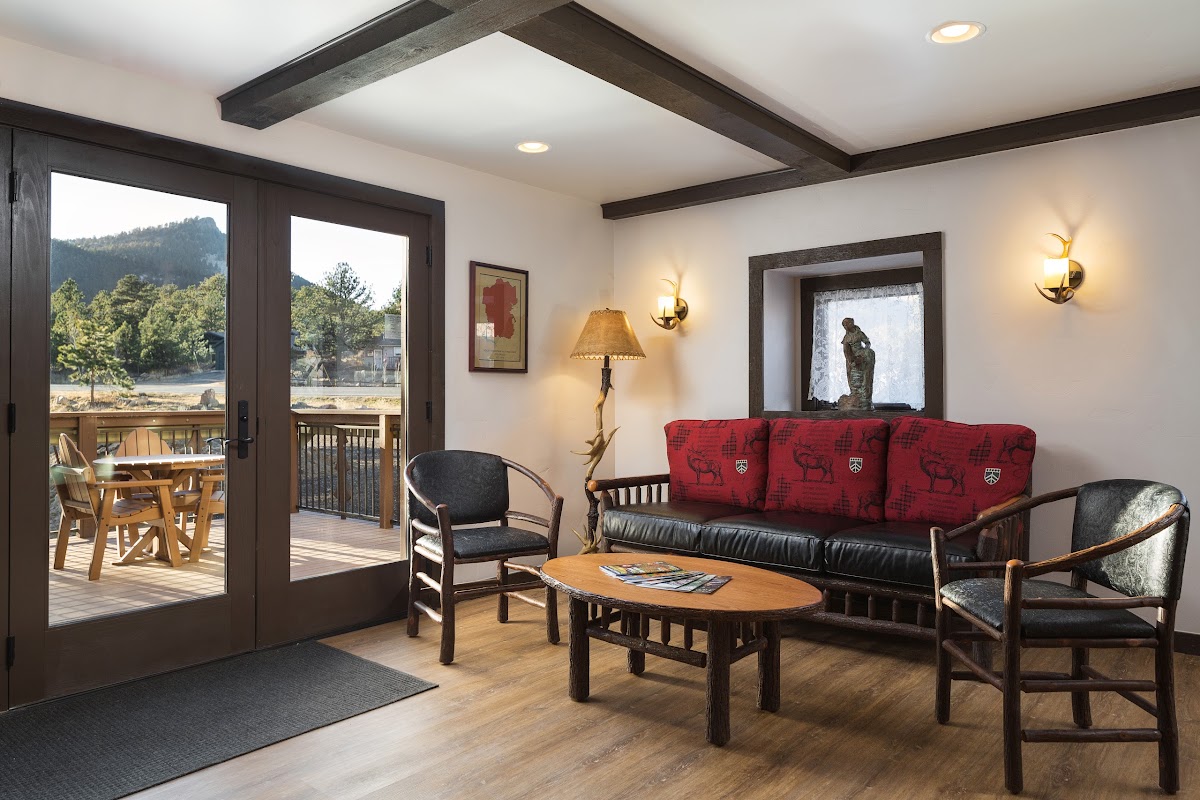
You take Highway 66 west from downtown Estes Park, past the last of the tourist shops selling taffy and elk-antler chandeliers, and the road begins to follow the Big Thompson River as it cuts through the valley. Two miles out, just before you reach the Rocky Mountain National Park entrance, you turn onto the property of The Landing. First, you hear it — the sound of the river, full-throated and constant, rushing over smooth stones. Then you see it: the Event Hall rising from the riverside like something transported from the Bavarian Alps, all authentic barn wood and golden stone, with custom iron detailing on massive timber beams. Behind it, Longs Peak stands watch, its 14,259-foot summit catching the late afternoon light. The Big Thompson bends around the property in a graceful curve, aspens cluster along the banks, and that particular Rocky Mountain air — thin, bright, smelling of pine and cold water — settles over everything. This is not a venue trying to be rustic. It simply is. Poppy has designed The Landing at Estes Park wedding flowers for 5 celebrations here, and each time we make the drive up Highway 66, we’re reminded why couples choose to marry at altitude, surrounded by the mountains that define Colorado.
About The Landing at Estes Park
The Landing sits at 7,522 feet of elevation in the Estes Park Valley, nestled along a bend in the Big Thompson River where the water runs clear and cold from the Continental Divide. The property is just two miles from the main entrance to Rocky Mountain National Park and five minutes from downtown Estes Park’s bustling Elkhorn Avenue, making it remarkably accessible for a venue that feels like a true mountain retreat. This is boutique hospitality in the best sense — intimate scale, meticulous attention to detail, and a commitment to providing couples with complete privacy during their celebration. When you book The Landing, the property is exclusively yours. No unaffiliated guests wandering through, no other events overlapping. Just your people, the river, and the mountains.
The architecture draws heavily from Old World Alpine tradition, the kind you’d find in the Dolomites or Swiss Canton Valais, but executed with Rocky Mountain materials and sensibility. The Event Hall is the centerpiece: a 3,000-square-foot space clad in authentic reclaimed barn wood, featuring vaulted ceilings supported by enormous hand-hewn beams with custom wrought-iron detailing that catches the light like jewelry. A cozy stone fireplace anchors one end of the hall, its river-rock face creating warmth even when unlit. The bar is built from more reclaimed barn wood, worn smooth and honey-toned, substantial enough to accommodate multiple bartenders and decorative displays. But the real showstopper is the wall of panoramic windows and lofty sliding glass doors that open onto the riverside deck — floor-to-ceiling views of Longs Peak, the aspen groves, and the sparkling river below. It’s architecture that frames the landscape rather than competing with it, and in wedding terms, that translates to a space where florals enhance rather than dominate.
Outside, the manicured riverside lawn serves as the primary ceremony site, positioned along the bend of the Big Thompson where the sound of rushing water provides a natural soundtrack. The venue provides upscale antiqued-wood ceremony chairs and will arrange a steel arch rental if you want a structure for floral installations, though many couples opt for a simple aisle treatment and let the mountains do the talking. Adjacent to the Event Hall, an enormous deck functions as the cocktail hour transition space, furnished with bistro tables and offering unobstructed views up toward the peaks. The property also includes dedicated getting-ready spaces: a Signature Suite for the couple with overnight accommodations included (you wake up here the morning after your wedding, which is a rare and lovely luxury), a separate Riverfront Cabin, and a designated Hair and Makeup Room. These aren’t afterthought spaces — they’re thoughtfully appointed, well-lit, and positioned to take advantage of the riverside setting.
From a florist’s logistical perspective, The Landing is a dream. Load-in happens during a generous 4-5 hour setup window, with parking for vendor vehicles close to the Event Hall entrance. The venue provides a parking attendant and management for guest parking (33 vehicles on-site, with overflow arrangements as needed), which means we’re not navigating around arriving guests during setup. The event window runs from 3:30 PM to 10:00 PM with 5.5 hours of event time, a tight but manageable schedule that works well for mountain venues where weather can shift quickly. The Landing requires couples to work with Party Liquor exclusively for beverage service and to select catering from their approved vendor list, though florists are not restricted. A day-of coordinator is mandatory, which we appreciate — it means there’s always a point person who knows the property’s rhythms and can troubleshoot in real time. The drive from our Fort Collins studio takes approximately 90 minutes via Highway 34 through the Big Thompson Canyon, one of Colorado’s most scenic routes, though we always build in extra time during summer tourist season and monitor canyon road conditions carefully in winter and early spring.
Event Spaces & Floral Opportunities
Event Hall
Capacity: 100 seated
Setting: The Event Hall is where Old World Alpine craftsmanship meets Rocky Mountain grandeur. The 3,000-square-foot space features those dramatic vaulted ceilings with exposed timber beams and custom iron detailing — structural elements that read as both rustic and refined. The stone fireplace occupies prime real estate along one wall, its river-rock face providing textural depth and a natural focal point. The authentic barn wood bar stretches generously across another section, with ample counter space and a backdrop of reclaimed wood paneling. But the defining feature is light: those panoramic windows and sliding glass doors flood the space with Colorado sunshine, illuminating the honey tones in the wood and making the iron hardware gleam. The palette is warm neutrals — aged barn wood in shades of caramel and wheat, gray-gold stone, black iron accents — which means florals have room to establish their own color story without fighting existing finishes.
Floral approach: This hall rewards restraint and strategic placement. The stone fireplace is your primary canvas for a major installation — we typically design a lush mantle arrangement that cascades slightly over the edge, using a base of mixed evergreens (cedar, pine, eucalyptus) anchored with clusters of Cafe au Lait dahlias, Quicksand roses, white ranunculus, and accents of dusty miller or silver brunia. The arrangement should feel gathered from the surrounding forest rather than rigidly structured. The barn wood bar is ideal for a garland installation running the full length of the counter, punctuated every three feet with small floral clusters — think toffee-colored roses (Toffee, Cappuccino), burgundy astilbe, and trails of jasmine vine or passion vine woven through Italian ruscus and seeded eucalyptus. For guest tables, keep centerpieces below 12 inches or go dramatically tall with elevated arrangements on clear stands that lift blooms above sightlines to preserve those window views. We favor vessels that echo the venue’s materials: aged brass compotes, wooden boxes, ceramic crocks in matte earth tones. The vaulted beams present an opportunity for overhead greenery installations — a long garland swag running parallel to the head table, for instance, suspended from the iron beam hardware with bronze wire — but resist the urge to overdo it. This room’s beauty lies in its bones; florals should accent, not upholster. The Landing at Estes Park wedding flowers in this space should feel organic, abundant, and deeply connected to the landscape outside those windows.
Riverfront Ceremony Space
Capacity: 100+ guests
Setting: The ceremony lawn sits directly on the banks of the Big Thompson River, positioned at the bend where water sweeps around smooth boulders and catches the light in a thousand moving sparkles. Behind the ceremony site, Longs Peak rises like a cathedral wall, its granite faces striped with remnant snowfields even in summer. The venue provides those handsome antiqued-wood ceremony chairs, and the natural amphitheater of the valley means acoustics are surprisingly good despite the river’s soundtrack. This is high-altitude ceremony space in its purest form: no structures, no walls, just grass, water, mountains, and sky. The aspens fringing the lawn provide dappled shade in summer and turn to beaten gold in September and early October, creating a color saturation no florist could replicate.
Floral approach: The guiding principle here is restraint bordering on minimalism. The river and the peaks are your backdrop; anything that competes for attention will lose. The venue offers a steel arch rental, which provides excellent structure for floral work — we typically design an asymmetrical installation on one side of the arch, leaving the other side clean and open to frame the mountain view. Use blooms that feel wild rather than formal: columbine (Colorado’s state flower, available from specialty growers), mountain wildflower mixes, white lisianthus, Sahara roses, and masses of textured greenery like sword fern, plumosa, and local aspen branches when in season. The arrangement should appear as though it grew there naturally, slightly windswept and organic. For aisle decor, simple shepherd’s hook stakes with hanging jars (mason jars, clear glass apothecary vessels) filled with wildflower bundles every third row are sufficient. Alternatively, birch log rounds placed at intervals along the aisle, each topped with a low posy of garden roses and mountain greenery, create a grounded, earthy look. Remember that guests will be focused on you and the officiant with Longs Peak as your backdrop. The florals are supporting actors here, not the headliners.
Signature Suite
Capacity: Private getting-ready suite with overnight stay
Setting: The Signature Suite serves as both preparation headquarters and your first-night-as-marrieds accommodation — a rare luxury that eliminates the need to leave the property after the celebration ends. The space is appointed with comfortable furnishings, good natural light for getting-ready photos, and that same attention to rustic-elegant detail that characterizes the rest of the property. It’s private, removed from the ceremony and reception areas, and designed to be a calm oasis before the day’s festivities begin.
Floral approach: This is a low-investment, high-impact opportunity. A single arrangement on the vanity or dresser — something lush and romantic in a ceramic or brass vessel — provides both beauty and fragrance during getting-ready hours and photographs gorgeously. We typically design a rounded, garden-style arrangement using Keira garden roses (that perfect blush-cream tone), white ranunculus, pale peach stock, and a collar of dusty miller or eucalyptus. The scale should be generous (12-inch diameter) but not so large it overwhelms a side table. This arrangement can then move to the head table or bar during the reception, maximizing your floral investment. Consider adding a few stems in a bud vase for the bathroom vanity — a small touch that elevates the space. If budget allows, a small going-away bouquet in a simple glass vase can be left in the suite for your return after the reception, a romantic surprise when you stumble back in at the end of the night.
Riverfront Cabin
Capacity: Getting-ready space
Setting: The Riverfront Cabin offers additional preparation space for wedding parties or family members, positioned with views of the Big Thompson. It’s more rustic in finish than the Signature Suite, leaning into cabin aesthetics with wood paneling and mountain-lodge furnishings. The proximity to the river means you hear the water constantly, which creates a calming atmosphere during the typically hectic getting-ready hours.
Floral approach: Keep it simple and cabin-appropriate. A collection of three to five bud vases clustered on a side table, each holding a few stems of coordinating blooms — perhaps a mix of Quicksand roses, white lisianthus, and sprigs of wax flower or seeded eucalyptus — adds personality without formal arrangement. Alternatively, a small wooden box or basket filled with loose stems creates a wildflower-gathering-just-brought-inside vibe that suits the cabin’s rustic character. These smaller arrangements are also easy to repurpose throughout the reception space or send home with family members afterward.
Riverside Deck
Capacity: Cocktail reception space for 100+ guests
Setting: This enormous second-story deck is the golden-hour showpiece, where cocktail hour unfolds with Longs Peak as the backdrop and the Big Thompson audible below. The venue furnishes it with bistro tables and chairs, and the orientation faces west-northwest, which means you’re watching the sun track toward the peaks during that magical hour between ceremony and reception. The deck connects directly to the Event Hall via those sliding glass doors, creating seamless flow between indoor and outdoor spaces. Weather permitting (and in Estes Park, you must always add that caveat), this is where your guests will linger longest, drinks in hand, exclaiming over the views.
Floral approach: Cocktail hour florals should be visible but not obstructive — guests are moving, mingling, balancing drinks and appetizers, and the tables are small. We recommend one of two approaches: either bud vases (clear glass or small ceramic) with three to five stems each, placed on alternating tables, or very low clustered arrangements in compotes that sit no higher than eight inches. The palette should complement rather than compete with the view — think soft creams, buttery yellows, peachy tones, and plenty of greenery. Sahara roses, white spray roses, chamomile (when available from specialty growers), and wax flower with a collar of seeded eucalyptus work beautifully. Avoid top-heavy arrangements that might tip in the mountain breezes that funnel through the valley in late afternoon. If your budget allows for a bar installation, a garland runner along the bar top with florals matching your ceremony or reception designs creates visual continuity and photographs gorgeously during golden hour when the light rakes across the deck.
Outdoor Banisters and Stairways
Capacity: Connective architectural elements
Setting: The exterior stairways that connect the deck to ground level and link various outdoor spaces feature wooden banisters with a rustic finish, substantial railings that can easily support floral installations. These transition spaces are often overlooked in floral design, but at a venue where guests move between multiple outdoor areas, they present opportunities for wayfinding through beauty.
Floral approach: Garland installations on the banisters create a cohesive floral narrative as guests move through the property. We typically design these as greenery-forward runners — mixed eucalyptus, Italian ruscus, and cedar — with floral clusters inserted every 18 to 24 inches. Use blooms that can handle some exposure to the elements: garden roses with tighter petal structures (Romantic Antike, Patience), spray roses, hypericum berries, and succulents for texture. The garland should be secured with waterproof floral wire or zip ties (in green or brown, never white) at multiple points to withstand wind. This is particularly effective for autumn weddings when the installation can incorporate actual aspen branches with leaves still attached, creating a seamless transition between cultivated florals and the wild aspen groves visible beyond the property line.
Wedding Flower Ideas for The Landing at Estes Park
Alpine Meadow
This design concept pulls directly from the wildflower meadows that carpet the high valleys surrounding Estes Park in July and August. The palette is soft and sunlit: creamy whites, pale yellows, lavender-blues, and soft pinks, anchored by masses of textured greenery. Specific blooms include Colorado columbine (special-ordered from mountain specialty growers), white lisianthus, Sahara and Patience garden roses, pale blue delphinium, lavender sweet peas, Queen Anne’s lace, and white scabiosa. Accents of mountain greenery — sword fern, plumosa, and aspen branches — provide structural interest. Vessels should feel organic: birch bark-wrapped containers, wooden boxes, galvanized buckets, or simple clear glass that disappears. This style works beautifully for couples marrying in summer who want their florals to feel like an extension of the surrounding meadows. It’s particularly effective for the riverfront ceremony space, where the wildflower aesthetic complements the natural setting, and for centerpieces in the Event Hall, where the soft palette allows the mountain views through those panoramic windows to remain the star. The loose, just-gathered quality of the arrangements pairs perfectly with The Landing’s rustic-elegant architecture.
Aspen Gold & Burgundy
This concept celebrates Colorado’s most famous autumn display: the aspen groves that turn the mountainsides into rivers of gold each September and early October. The palette is warm and saturated: deep burgundy, burnt orange, golden yellow, and touches of chocolate brown, with plenty of texture from seasonal foliage. Key flowers include Burgundy/Black Baccara roses, Cafe au Lait dahlias (that perfect taupe-apricot tone), toffee-colored Cappuccino roses, orange ranunculus, burgundy carnations (the modern ruffled varieties that look nothing like gas station bouquets), and rust-colored chrysanthemums. Foliage is critical here: actual aspen branches with leaves (harvested responsibly from fallen branches or sourced from local tree services), oak leaves in bronze and crimson, photinia, and seeded eucalyptus. Vessels should have weight and warmth — aged copper urns, bronze compotes, dark wood boxes, or matte brown ceramic. This design is powerful on the stone fireplace mantle, where a massive installation with trailing branches and clustered blooms creates an autumnal focal point for the Event Hall. It also translates beautifully to the outdoor banisters, where aspen branches woven with florals in these tones create a literal bridge between the cultivated wedding and the wild forest beyond. For couples marrying in peak aspen season (typically late September to mid-October), this style amplifies the natural color saturation rather than competing with it.
Rocky Mountain Winter Luxe
For couples brave enough to marry at altitude in the colder months, this concept embraces the stark beauty of the Colorado Rockies in winter. The palette is crisp and sophisticated: ivory, cream, deep evergreen, silver, and touches of ice blue, with textures borrowed from the winter forest. Foundation greenery includes mixed pine, cedar, blue spruce (locally sourced when possible), seeded eucalyptus, and dusty miller for that frosted appearance. Flowers are chosen for their ability to read as luxurious even in a cold palette: ivory Patience garden roses, white ranunculus, cream lisianthus, white anemones with their dramatic black centers, and white hellebores. Textural accents include hypericum berries (white or burgundy), privet berries, pinecones on the stem, birch branches, and even faux snow on the tips of evergreen sprigs for ceremony installations. Vessels should feel refined: mercury glass, silver-leafed compotes, white ceramic, or clear glass that allows evergreen stems to show. This style transforms the Event Hall into a winter lodge fantasy, particularly when paired with candlelight and the glow from the stone fireplace. The mantle installation can be dramatic and architectural with evergreen branches creating a cascading frame. For the ceremony site, if winter conditions allow for outdoor vows (rare but possible on warm January and February days), a steel arch dressed entirely in mixed evergreens with clusters of ivory florals creates a striking contrast against snow-dusted mountains. More commonly, couples use the indoor Tank Room alternative ceremony space, though The Landing’s primary ceremony option remains the riverfront location. The Landing at Estes Park wedding flowers in this style prove that mountain weddings aren’t just for summer.
Seasonal Considerations
The Landing at Estes Park sits at over 7,500 feet of elevation, which dramatically affects both weather patterns and floral logistics. Understanding the microclimates of the Rocky Mountain Front Range is essential for successful floral design here.
Spring (April - May): Spring arrives late and tentatively at altitude. April in Estes Park is still functionally winter, with regular snowfall, nighttime temperatures well below freezing, and daytime highs that struggle into the 50s. The Big Thompson runs high with snowmelt, and the aspens are bare sticks. By late May, the valley begins to warm, though afternoon thunderstorms are common and overnight frosts still occur. For florals, this means hardy blooms only: tulips (which actually thrive in cooler temps), daffodils, hyacinth, and sturdy greens like eucalyptus and Italian ruscus. Avoid delicate garden roses, which will shatter in the cold, and anything with exposed petals prone to frost damage. Setup must happen in protected areas whenever possible, and we always have backup plans for outdoor installations. The upside: spring rates at mountain venues are typically lower, availability is better, and you’ll have the property to yourselves without summer crowds. Best timing within this season: late May, after Mother’s Day, when the risk of significant snow events decreases and daytime temperatures become more reliable.
Summer (June - August): This is peak wedding season in Estes Park, and for good reason. Days are warm (70s to low 80s), nights are cool (40s to 50s), and the high-altitude sun is intense and clear. Afternoon thunderstorms develop over the peaks regularly, typically between 1 PM and 4 PM — which is why The Landing’s 3:30 PM event start works well, allowing storms to pass before guests arrive. The valley is at its greenest, wildflowers bloom in the meadows, and the river runs clear and strong. Nearly every flower variety is available and performs well at altitude: garden roses, dahlias, ranunculus, lisianthus, sweet peas, and local wildflowers. The challenging factors are heat during setup (we always bring extra water for our team) and the intense UV exposure, which can cause lighter-colored blooms to bleach slightly in direct sun. For outdoor ceremony installations, we design with this in mind, using flowers with more resilient petal structures and keeping highly delicate blooms like sweet peas in shaded positions. The reward for summer timing is maximum flexibility in floral design and near-guaranteed gorgeous weather for your guests’ mountain experience. Best months: late June through mid-August, avoiding July 4th weekend when Estes Park becomes a madhouse of tourists.
Autumn (September - October): Fall in the Rockies is legendary, and The Landing showcases it perfectly. The aspen groves turn gold, typically peaking between mid-September and early October depending on elevation and that year’s weather patterns. Days remain warm (60s to 70s), nights get crisp (30s to 40s), and the light takes on that particular autumn clarity that photographers worship. Early September still feels like summer; by mid-October, you’re flirting with winter. The challenge is that weather becomes increasingly unpredictable — a sunny 70-degree day can shift to snow within hours as storm systems drop down from the peaks. For florals, autumn is glorious: dahlias are at their peak, garden roses are still available, and the rich burgundy-gold-orange palette everyone wants for fall weddings actually matches the landscape. We incorporate as much seasonal foliage as possible — aspen branches, oak leaves, photinia — both for color and for that crucial sense of place. Load-in requires monitoring mountain weather forecasts obsessively, and we always build contingency plans for sudden temperature drops. The reward: your wedding photos will look like a Colorado tourism poster, and the natural backdrop requires less floral investment because the mountains are doing half your decorating. Best timing: last week of September to first week of October for peak aspen color, though this is also peak demand, so book early.
Winter (November - March): Winter weddings at The Landing are rare but magical. Snow blankets the property, the river runs clear and icy between white banks, and the mountains reveal their full architectural drama without summer’s softening greenery. Temperatures range from single digits to 40s, depending on the month and weather systems. Load-in can be challenging — icy roads through Big Thompson Canyon, snow-covered walkways, and extreme cold that threatens floral integrity. We transport all materials in heated vehicles and never leave flowers exposed to sub-freezing temperatures for more than a few minutes during setup. The floral palette shifts to winter-hardy materials: mixed evergreens, berries, branches, and only the sturdiest blooms like roses (never delicate garden varieties, but tight-petaled spray roses), carnations, and alstroemeria. The aesthetic becomes “winter lodge” rather than “garden party,” which suits The Landing’s architecture perfectly. Evergreen garlands on the fireplace mantle, hurricane lanterns with floating cranberries, and arrangements heavy on texture rather than delicate blooms create warmth. The venue’s indoor focus during winter months means the Event Hall becomes even more important, and those panoramic windows now frame snow-covered peaks and frosted aspens. Couples willing to embrace winter’s constraints often find that their weddings feel more intimate and memorable precisely because they’re bucking convention. Best timing: January through early March, avoiding the holiday season chaos of November-December, when mountain road traffic and weather are at their most unpredictable.
Poppy’s Expert Take
Know your altitude limits. The Landing sits above 7,500 feet, and that elevation affects everything — how quickly flowers dehydrate, how guests feel after cocktails, how weather systems develop, and how your vendors perform physically during load-in. We always arrive at least 90 minutes before setup time to acclimate and build in buffer time for mountain weather delays. For couples, this means communicating clearly with your entire guest list about altitude considerations: hydration, sun protection, and potential weather shifts. For florals specifically, we’ve learned that thick-petaled blooms (garden roses in the Patience, Romantic Antike, and Juliet families) and sturdy focal flowers (dahlias, hydrangeas, standard roses) perform better at altitude than delicate, thin-petaled varieties. Anything in the sweet pea or clematis family needs extra water sources and shaded positioning during summer ceremonies.
Embrace the arch, but design asymmetrically. The venue offers a steel arch rental for the riverfront ceremony space, and it’s an excellent structure that can support substantial floral weight. However, centering a symmetrical floral installation on that arch creates a visual competition between your florals and Longs Peak behind you — and the peak will win. We always design these installations asymmetrically, loading florals heavily on one side (typically the left side from guest perspective) and leaving the other side clean or with minimal greenery. This frames you and the officiant without blocking the mountain backdrop. The asymmetry feels modern and organic, like the florals grew naturally rather than being forced into a shape. Use the arch structure to create vertical drama with trailing vines (jasmine, passion vine, smilax) that move in the mountain breeze.
Don’t undersell the fireplace. That stone fireplace in the Event Hall is where you should allocate serious floral budget if you’re having an indoor reception. It’s the room’s natural focal point, it photographs from multiple angles, and a lush mantle installation creates visual impact that carries through the entire space. We typically design these arrangements to extend 18 to 24 inches beyond each side of the mantle and cascade down slightly over the edge. The scale should feel generous — this is not the place for a modest arrangement. Use the fireplace installation to establish your color palette and style, then echo those elements in smaller doses throughout centerpieces and other accents. During setup, we always test the sight lines from guest tables to ensure the mantle installation is visible from most angles and doesn’t get lost behind heads when guests are seated.
Plan for the sound of the river during your ceremony. The Big Thompson is audible throughout the ceremony site, which is part of the magic — until it’s time for your officiant to speak and guests in the back rows can’t hear vows over the rush of water. This is not a floral issue, but it affects ceremony design: your florist needs to coordinate with your sound engineer (yes, you need amplification, even for an intimate 50-person ceremony) to ensure that any aisle installations or ceremony arch doesn’t interfere with speaker placement. We’ve learned to keep aisle florals low and on alternating sides specifically so sound can project clearly down the center aisle. This kind of cross-vendor coordination is why we always request site visits with the couple’s other key vendors before designing the ceremony installation.
Repurpose ruthlessly between ceremony and reception. The 5.5-hour event window is generous but not limitless, and the layout at The Landing allows for excellent floral repurposing. Your ceremony arch installation can be repositioned indoors behind the head table or in the Event Hall entryway. Aisle arrangements in vessels (shepherd’s hooks with hanging jars, for instance) can be moved to the deck for cocktail tables. The venue’s event team is accommodating about these transitions if you communicate the plan in advance. When we design for The Landing, we always build repurposing into the proposal, specifying which ceremony pieces move where and confirming timing with the coordinator. This approach maximizes your floral investment and creates visual cohesion between ceremony and reception.
Budget for mountain weather contingencies. Even in summer, mountain weather can shift rapidly. We build contingency planning into every Landing proposal: backup options if outdoor ceremony installations need to move indoors, wind-resistant designs for