
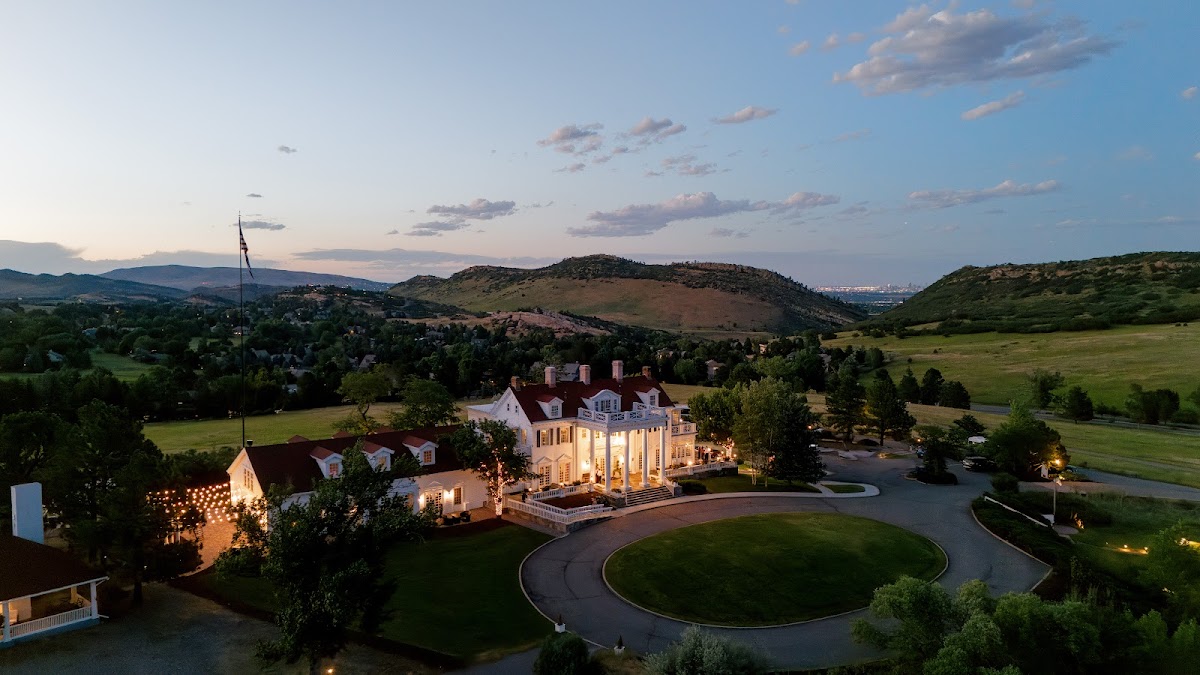
Designing flowers for 1065 S Josephine St requires a deep respect for the Beaux-Arts architecture and the storied history of the Grant-Humphreys Mansion. This is not a blank-canvas venue; the dark wood paneling, grand columns, and formal gardens act as a permanent design partner that dictates scale and color theory.
The Spaces
Main Hall
The Main Hall is defined by its opulent 1902 heritage, featuring high ceilings, grand chandeliers, and significant dark wood accents. The atmosphere is heavy and historic, which means light-colored blooms—whites, creams, and pale blushes—are essential to provide necessary contrast against the woodwork.
- What works: Lush mantle arrangements that spill over the edges of the historic fireplaces. Low, full centerpieces on farm tables that allow guests to appreciate the architectural details above them.
- Skip: Tall, thin glass trumpets or spindly metal stands. These often look fragile and out of place against the “weight” of the mansion’s interior.
- Watch out: Lighting in the Main Hall is warm and moderate. Avoid deep purples or dark blues, as they will recede into the shadows of the wood paneling and disappear in photography.
- Budget hero move: Focus your reception budget on one massive fireplace installation. It anchors the room and serves as a primary backdrop for toasts and photos.
Garden & Front Entrance
The exterior of the mansion is a masterclass in classical symmetry. The grand staircase and the brick facade provide a stately backdrop for ceremonies, but the scale is intimidating. Small arrangements will get lost here.
- What works: Ground-level “meadow” installations that appear to grow from the base of the columns or the steps. Symmetrical flanking pillars that frame the couple against the arched doorway.
- Skip: Delicate, airy arches that might blow over. The architecture is too strong for a thin “twiggy” look.
- Watch out: The ground is a mix of stone and gravel. All installations must have heavy, weighted bases to combat wind and ensure stability on uneven surfaces.
- Budget hero move: Use the front steps as your ceremony altar. A series of graduated floor arrangements climbing the steps provides a high-impact look with no need for a costly, freestanding structure.
Solarium
The Solarium is the mansion’s brightest interior space, featuring French doors and distinctive checkerboard flooring. It feels lighter and more airy than the Main Hall, making it a favorite for cocktail hours or intimate ceremonies.
- What works: Symmetrical arrangements that play off the room’s balance. Potted trees or tall, clean greenery branches work well to bridge the gap between the garden outside and the interior.
- Skip: Overly cluttered designs. The floor pattern is a visual statement on its own; keep the floral “footprint” clean.
- Watch out: This room is a sun trap. Ensure your florist uses high-hydration techniques for any installations here, as the direct light through the large windows can wilt sensitive blooms quickly.
Rooftop Terrace
The terrace features a white pergola and offers a more modern, elevated feel. It is the most flexible space for contemporary floral styles but is highly exposed to the elements.
- What works: Utilizing the pergola beams for climbing floral “vines” or hanging elements. Small, weighted cocktail arrangements that won’t tip in a breeze.
- Skip: Tall, top-heavy centerpieces. The wind on the terrace can be unpredictable.
- Budget hero move: Greenery-heavy garlands woven through the pergola. It creates a lush, “secret garden” vibe for a fraction of the cost of a full floral installation.
What Works at 1065 S Josephine St
- Symmetrical Balance: The Beaux-Arts style is rooted in symmetry. Floral designs that mirror this—such as identical flanking arrangements or centered mantle pieces—feel more “at home” in the space than asymmetrical, avant-garde designs.
- High-Contrast Palettes: To ensure flowers pop against the dark wood and red brick, lean into a palette with plenty of white, cream, or vibrant “jewel” tones. Avoid “muddy” or overly muted tones that blend into the historic finishes.
- Architectural Framing: Use flowers to highlight the mansion’s best features. Frame the columns, line the grand staircase, or crown the fireplaces. Let the building tell you where the flowers should go.
- Classic Bloom Choices: Garden roses, peonies, hydrangeas, and trailing jasmine complement the 1902 aesthetic. While tropicals can be fun, they often feel disconnected from the mansion’s European-inspired architecture.
- Ground-Level Growth: Because the venue features so many beautiful vertical elements (columns, tall windows), ground-level “meadow” designs provide a nice visual counterpoint and keep the sightlines open to the architecture.
Budget Guide
| Tier | Investment | Floral Strategy |
|---|---|---|
| Essentials | $1,750 - $3,500 | Focus on personal flowers and a high-impact ceremony focal point on the front steps. |
| Sweet Spot | $3,500 - $6,500 | Adds a lush mantle installation in the Main Hall and standard centerpieces for 10-12 tables. |
| Full Experience | $6,500 - $10,000 | Includes staircase meadows, column wraps, and premium floral-heavy centerpieces across all spaces. |
| Statement | $10,000+ | Full pergola installation on the terrace, multiple mantle designs, and “growing” installations on the grand staircase. |
The mansion’s inherent character does a lot of the heavy lifting, meaning you can focus your budget on “moments” rather than trying to cover the entire venue in decor.
Tips
- Repurpose with intention: The floor meadows used for a ceremony on the front steps can be moved to the fireplaces in the Main Hall for the reception.
- Check the rules: The venue prohibits hanging items from the ceilings or altering the mansion’s structure; focus on freestanding or “climbing” designs.
- Stability is key: The gravel in the garden and the stone steps require all floral structures to be professionally weighted for safety and wind resistance.
- Photography timing: The Solarium has the best natural light for floral detail shots; ask your photographer to capture your bouquets and centerpieces there if possible.
- Seasonality matters: The exterior gardens are beautifully maintained; choose a floral palette that complements the seasonal blooms already present on the grounds.