
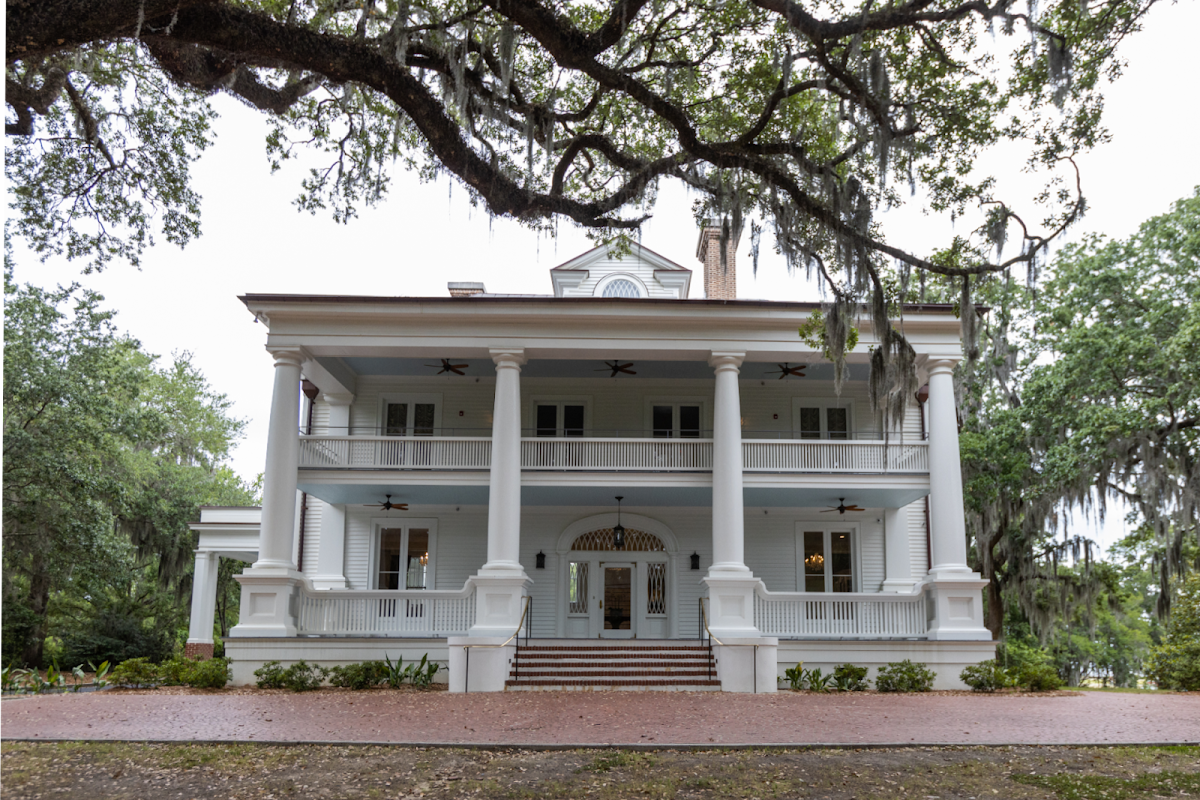
You take the Noisette Boulevard exit and within minutes the strip malls and chain restaurants fall away. You’re crossing into what used to be the Charleston Navy Yard — a place where admirals paced verandas and sailors navigated wartime waters. Now the cracked pavement gives way to manicured parkland, and then you see it: the white columns of the Admiral’s House rising behind a canopy of live oaks so old they seem to breathe history. Spanish moss hangs in silvery curtains, catching the Lowcountry light. The Cooper River glints in the distance. This is not a venue trying to recreate Southern charm — this is the real thing, quietly dignified, genuinely historic, with layers of stories embedded in every salvaged floorboard and every wrought-iron gate. Poppy has fielded inquiries from 5 couples planning Admiral’s House at Riverfront Park weddings, and we understand why: this former naval compound offers something rare in the Charleston wedding landscape — multiple distinct historic buildings, waterfront ceremony sites, a 1944 chapel, and those ancient oaks, all on one property. You’re not choosing between the mansion and the garden. You get both. You get all of it.
About The Admiral’s House at Riverfront Park
The Admiral’s House was built in 1905 as the official residence for the Admiral of the Charleston Navy Base, and the architecture wears its rank well. This is Neo-Classical design with serious bones: grand white columns flanking the entrance, wraparound verandas on multiple levels, 7,391 square feet of gracious interior rooms with twelve-foot ceilings, original hardwood floors, and period moldings. The house was never meant to be modest. It was meant to host visiting dignitaries, command receptions, and represent the stature of the U.S. Navy in the South. After decades of use by military families, the property fell into disrepair when the Navy Yard closed in 1996. But in the last fifteen years, Riverfront Park has painstakingly restored the Admiral’s House and the surrounding officer housing — the Gatekeepers Inn (1898), Quarters K (1937), and several other historic structures — transforming this 280-acre former military installation into one of Charleston’s most distinctive public parks and private event destinations.
What makes this property unusual is the sheer variety of settings within one cohesive location. You have the formality of the main mansion, the sacred intimacy of the Eternal Father of the Sea Chapel (a 1944 non-denominational chapel still outfitted with original wooden pews and pulpit), the natural romance of the Admiral’s Garden with its magnolia trees and English garden pathways, and the raw beauty of the waterfront ceremony sites along the Cooper River. Century-old live oaks draped in Spanish moss anchor nearly every outdoor space, and their presence is not decorative — it’s elemental. These trees were here before the Navy Yard, before the roads, before any of this was mapped.
The property sits in North Charleston’s Riverfront Park, about fifteen minutes from downtown Charleston and ten minutes from Charleston International Airport. This proximity makes it convenient for guests traveling from out of town, yet the moment you pass through the park gates, you feel removed from urban sprawl. The adjacent Park Circle neighborhood — a revitalized pocket of North Charleston with breweries, coffee shops, and farm-to-table restaurants — offers additional charm for wedding weekend activities, but the venue itself feels secluded, surrounded by live oaks and river breezes.
From a logistical standpoint, the Admiral’s House operates as a private event venue managed by the City of North Charleston. Couples typically rent the property for the full day (11 AM to 11 PM), with access for vendors throughout. A complimentary two-hour rehearsal is available the day before, subject to venue availability. The venue does not provide catering — couples must hire licensed, insured caterers with a North Charleston business license — but the main house includes a catering kitchen, and Quarters K has a full commercial kitchen that makes setup seamless. Alcohol is not provided; couples bring their own or work through their catering team. Parking is free and plentiful on-site, a rare luxury in Charleston.
For Poppy’s delivery and setup, the Admiral’s House is straightforward. The venue’s event coordinator is communicative about load-in schedules, and the multiple buildings allow us to stage installations in different areas without congestion. The property is ADA compliant, and dogs are permitted for outdoor photos and ceremonies (though not inside the house), a detail that matters to many Charleston couples.
Event Spaces & Floral Opportunities
The Admiral’s House - Main Venue
Capacity: 200 seated
Setting: The main house is the architectural centerpiece of the property — 7,391 square feet of Neo-Classical elegance built to command attention. You enter through the grand front steps, flanked by those iconic white columns, and step into a center hall with original heart pine floors, ornate crown molding, and a sweeping staircase. The dining room features a custom mural by a local Charleston artist, a hand-painted scene that wraps the walls and dictates the color story for any florals in that space. Five bedrooms on the upper levels, each with en-suite baths, can accommodate overnight stays for the couple or wedding party (the house sleeps ten). The wraparound verandas offer multiple vantage points for cocktails or quiet moments, with views of the oak canopy, the manicured lawn, and glimpses of the Cooper River beyond. This is a house that knows what it is — dignified, historic, and utterly Southern.
Floral approach: The Admiral’s House rewards restraint and intentionality. Those grand white columns at the entrance are ideal for flanking arrangements — think oversized urns (24-inch bronze or aged stone vessels) overflowing with white hydrangea, Quicksand and Sahara roses, trailing Italian ruscus, and white delphinium for vertical interest. Inside, the dining room mural is the star, so centerpieces should complement rather than compete: low, lush compote arrangements in muted tones — cafe au lait dahlias, taupe lisianthus, peach stock, and dusty miller — that echo the mural’s palette without shouting over it. The wraparound verandas are prime real estate for cocktail hour florals: bar arrangements in mint julep cups or silver julep buckets filled with garden roses (Keira, Juliet), scabiosa, jasmine vine, and magnolia leaves for that unmistakable Lowcountry feel. If the couple is using the house for getting-ready photos, small bud vases with single blooms — camellias, gardenias, or hellebores depending on season — on vanities and side tables add polish without overwhelming intimate spaces. The key in this house is to let the architecture lead; your florals are supporting actors, not the lead.
The Eternal Father of the Sea Chapel
Capacity: 300 seated
Setting: The chapel sits a five-minute walk from the Admiral’s House at 1045 Everglades Avenue, and it is a structure of quiet reverence. Built in 1944 as a non-denominational chapel for Navy personnel, it features vaulted white cathedral ceilings, original wooden pews with age-worn patina, historic light fixtures that cast a soft amber glow, and a simple wooden pulpit at the altar. The walls are white, the floors are wooden, and the overall effect is serene, unadorned, and deeply peaceful. This is not a space that requires embellishment. It asks only that you respect its history and its purpose.
Floral approach: In a chapel this understated, florals should honor the sacred space rather than overwhelm it. The altar is the natural focal point — consider a low, wide arrangement (36 inches across, no more than 18 inches tall) in a long wooden trough or aged bronze container: white peonies, white garden roses (Patience, Ivory Tower), white ranunculus, dusty miller, and seeded eucalyptus for texture. The white walls and vaulted ceilings showcase color beautifully, so if the couple wants a richer palette, this is the place: deep burgundy dahlias, plum ranunculus, blush roses (Quicksand, Sahara), and mauve hellebores create a sophisticated contrast against the white interior. Pew markers are a classic choice here — small clusters of blooms (three to five stems) tied with silk ribbon and attached to the aisle-end pews. Alternatively, simple greenery swags of smilax or Italian ruscus along the pew edges add softness without blocking the architectural lines. If the couple is using the chapel for a candlelit evening ceremony, consider tall taper candles in brass or iron holders flanking the altar — the flickering light against the white walls is pure magic, and florals can be minimal.
Under the Oak Trees - Front Lawn
Capacity: 200 seated
Setting: This is the outdoor space that defines the Admiral’s House experience. The front lawn spreads beneath a cathedral of century-old live oaks, their massive branches spreading horizontally like open arms, draped in Spanish moss that sways with every river breeze. The trees are so large, so gnarled, so full of character that they feel like witnesses to history — and they are. This lawn accommodates tented receptions, open-air ceremonies, or a combination of both, and the natural canopy provides shade, texture, and an unparalleled sense of place. The turf is year-round lush, maintained by the park, and the ground is level enough for standard tenting and flooring installations.
Floral approach: Under these oaks, less is more. The trees themselves are the floral installation — living sculpture that no arrangement can compete with. For ceremonies, we recommend a simple, elegant arch or chuppah that doesn’t fight the backdrop: a structure made of weathered wood or iron, dressed with trailing smilax, jasmine vine, and clusters of white and blush roses (Patience, Quicksand, Juliet) at each corner. The aisle can be marked with low arrangements in shepherd’s hooks or lanterns filled with votives and small floral clusters — nothing taller than eighteen inches, because you want guests looking at the couple and the oaks, not at towering arrangements. For tented receptions under the oaks, consider suspending floral chandeliers from the tent’s interior frame — airy installations of greenery (smilax, tree fern, eucalyptus) with pops of white or blush blooms that catch the light filtering through the canopy. Table centerpieces should be low and organic: mounded garden roses, spray roses, lisianthus, and trailing jasmine in aged stone or wood vessels that echo the natural, unpolished beauty of the setting. String café lights through the oak branches to extend the celebration into the evening, and your florals will glow beneath that canopy like something out of a dream.
Admiral’s Garden
Capacity: 50 seated / 75 cocktail
Setting: Tucked behind the main house, the Admiral’s Garden is an English-style reclaimed garden with wandering crushed-shell pathways, seasonal plantings, and a bronze sculpture of Persephone — goddess of spring and renewal — as the garden’s centerpiece. Mature magnolia trees provide vertical structure and shade, and depending on the season, camellias, azaleas, or hydrangeas bloom in the garden beds. This is an intimate, romantic space ideal for small ceremonies, cocktail receptions, or as a quiet retreat during a larger celebration on the lawn.
Floral approach: The garden already has established plantings, so your floral work should feel like a natural extension of what’s growing here. For ceremonies, the Persephone sculpture serves as an ideal backdrop — no need for an arch or heavy installations. Instead, consider placing two low urns on either side of the sculpture, filled with seasonal blooms that echo the garden’s palette: blush and white garden roses, white lisianthus, pink astilbe, hellebores, and magnolia foliage clipped from the trees overhead. For cocktail receptions, scatter small arrangements on highboy tables — bud vases and compotes in mismatched vintage vessels filled with garden-style blooms: ranunculus, anemones, sweet peas, and Queen Anne’s lace. If the cocktail hour is during camellia season (winter into early spring), incorporate the blooms into your designs — camellias are notoriously short-lived once cut, but they’re stunning as floating blooms in shallow bowls or tucked into lapels and hair. The key here is restraint: let the garden do the work, and your florals simply accent what’s already beautiful.
The Gatekeepers Inn
Capacity: 150 seated
Setting: The Gatekeepers Inn is an 1898 Victorian cottage that once housed officers and their families. With four bedrooms, a solarium filled with natural light, and charming period details — gingerbread trim, vintage light fixtures, cozy fireplaces — it serves as additional reception space, a getting-ready suite, or overflow guest accommodations. The Victorian architecture gives the space a more intimate, residential feel compared to the grandeur of the Admiral’s House, and that coziness lends itself to lounge-style setups, smaller seated dinners, or afternoon teas.
Floral approach: The Victorian aesthetic calls for romantic, vintage-inspired florals. In the solarium, where light pours through the windows, use small potted flowering plants — white hydrangeas, ferns, lavender in terracotta pots — arranged on shelves and side tables to enhance the garden-room feel. For seated dinners in the main rooms, centerpieces should feel collected rather than formal: antique brass or silver bud vases in varying heights, each holding a few stems of garden roses (Juliet, Keira), spray roses, stock, and seeded eucalyptus. If the couple is using the inn for getting-ready photos, florals should be soft and personal: a small nosegay of seasonal blooms on the vanity, a wreath of greenery and white blooms hung on the bedroom door, or loose petals scattered across a vintage tray. The fireplaces, if not in use, can be dressed with arrangements of flowering branches (dogwood in spring, magnolia in summer, nandina berries in winter) to add life to the hearth.
Quarters K
Capacity: 100-200
Setting: Quarters K is a 1937 naval housing structure with a T-shaped interior floor plan, a commercial kitchen that makes caterers very happy, a fully equipped bar area, and a waterfront brick patio that opens directly onto the Cooper River. The interior has been updated while retaining its mid-century bones — exposed beams, large windows, and an open layout that flows easily from indoor to outdoor spaces. The brick patio, shaded by oak trees and overlooking the water, is ideal for dancing, cocktails, or lounge seating under string lights.
Floral approach: Quarters K lends itself to a relaxed, coastal-chic floral style. The bar area is prime real estate for a statement arrangement — think a large, organic installation in a driftwood container: white hydrangea, white roses, blue delphinium (a nod to the water), seeded eucalyptus, and pampas grass for texture and height (36 to 40 inches tall). The brick patio calls for arrangements that feel effortless and natural: centerpieces in weathered wood boxes or galvanized metal containers filled with garden roses, craspedia, blue thistle, and trailing jasmine. If the couple is using the patio for dancing, skip table centerpieces entirely and line the patio perimeter with lanterns and low arrangements in aged stone urns — blooms can be white and green to keep the focus on the river view and the string lights overhead. Inside, use the large windows to your advantage: windowsill arrangements in low vessels (white peonies, white lisianthus, dusty miller) frame the views without obstructing them. This space rewards a less-is-more approach — let the waterfront setting and the historic architecture do the heavy lifting.
The Lawn of H & I
Capacity: 200+
Setting: The Lawn of H & I is an open, oak-surrounded lawn space that offers flexibility for larger outdoor receptions. With walking paths winding through the area and plenty of room for tenting, catering vignettes, and lounge areas, this space is a blank canvas. The oak trees provide natural shade and architectural structure, and the lawn is well-maintained, making it suitable for a variety of setups — from rustic farm tables to elegant rounds under a sailcloth tent.
Floral approach: On a lawn this open and versatile, your floral strategy should create zones and define spaces. For a tented reception, use tall centerpieces (24 to 30 inches) on half the tables to create visual variety — clear glass risers topped with lush arrangements of white hydrangea, blush roses, white delphinium, and trailing amaranthus. On the remaining tables, use low, mounded arrangements (8 to 10 inches tall) in aged wood or stone vessels. For the catering vignettes, dress the buffet or bar stations with large-scale arrangements in urns — overflowing with seasonal blooms, greenery, and textural elements like curly willow or pampas grass. The walking paths can be lined with lanterns and small floral clusters in shepherd’s hooks to guide guests through the space. If the couple is forgoing a tent for an open-air reception, consider suspending floral chandeliers from the oak branches using fishing line and sturdy floral mechanics — airy installations of smilax, eucalyptus, and white blooms that sway gently in the breeze.
The Amphitheater at the Point
Capacity: 75 seated
Setting: The Amphitheater at the Point is an intimate, riverside ceremony site at the edge of the property where the land meets the Cooper River. Grand oak trees frame the space, and the water stretches out beyond — sometimes glassy and calm, sometimes rippling with the tide. This is a quiet, contemplative spot, perfect for couples who want a small, meaningful ceremony with a natural backdrop that requires no embellishment.
Floral approach: At the Amphitheater, the river is the focal point, and your florals should enhance rather than distract. A simple wooden or iron arch positioned to frame the couple against the water, dressed minimally with trailing greenery (smilax, Italian ruscus) and small clusters of white and blush blooms, is all you need. Aisle markers can be shepherd’s hooks with small floral clusters or lanterns with votives and a few stems of garden roses tied to the handle. For seating, if the couple is using benches or chairs, consider simple greenery swags along the aisle edges. The key here is subtlety — let the oaks, the moss, and the river do the work. Your florals are the accent, not the statement.
Wedding Flower Ideas for The Admiral’s House at Riverfront Park
Lowcountry Heirloom
This design honors the historic, coastal South with a palette drawn from old Charleston gardens and overgrown cemeteries. Antique white roses (Patience, Ivory Tower), blush garden roses (Keira, Juliet), ivory ranunculus, and cream lisianthus form the foundation, softened by peach stock, blush astilbe, and magnolia foliage clipped fresh from the property’s trees. Textural accents include jasmine vine, Spanish moss (used sparingly and intentionally, never draped carelessly), olive branches, and hellebores for depth. Vessels are aged brass urns, weathered stone compotes, and vintage silver julep cups — nothing shiny, nothing new-looking. The overall effect is timeless, romantic, and rooted in place. This palette shines under the oak trees on the front lawn, in the Admiral’s Garden where the magnolias echo the design, and inside the main house dining room where the muted tones complement the artist’s mural. It’s a design that feels like it’s been growing here for a hundred years.
Naval Heritage
This concept leans into the property’s military history with a sophisticated palette inspired by naval dress uniforms and maritime Charleston. Deep navy-blue delphinium, white hydrangea, ivory garden roses (Patience, Playa Blanca), and white peonies (when in season, April-May) create the base, accented by dusty blue thistle, white veronica, and silver brunia for texture. Foliage includes seeded eucalyptus, dusty miller, and eucalyptus with blue-gray tones. Arrangements sit in brushed pewter vessels, galvanized metal containers, or white ceramic urns with naval rope accents. For an added touch, incorporate brass nautical elements — lanterns, compass motifs, or anchor details on cocktail tables. This palette is especially striking in Quarters K with its waterfront brick patio, in the Eternal Father of the Sea Chapel where the white walls showcase the blue tones beautifully, and in the main house verandas where the color story feels crisp and refined against the white columns. It’s a design that honors the Admiral’s House history without feeling costume-y or theme-heavy.
Garden Abundance
This is for the couple who wants color, texture, and that overgrown-English-garden romance. The palette is rich and varied: blush, peach, coral, soft yellow, and ivory blooms in maximum abundance. Garden roses (Juliet, David Austin’s Patience, Constance), peonies (when available), ranunculus in peach and coral tones, parrot tulips (spring), dahlias (late summer and fall), sweet peas, spray roses, astilbe, and lisianthus are layered together with wild, organic foliage: jasmine vine, passion vine, tree fern, Italian ruscus, and olive branches. Vessels are mismatched vintage — aged terracotta pots, wooden crates, antique brass bowls, and weathered stone urns. The arrangements feel loose, unstructured, and full — like they were gathered from a garden that morning and placed with a light hand. This design is ideal for the Admiral’s Garden (where it feels like a natural extension of the plantings), the Gatekeepers Inn (where the Victorian architecture supports the romantic abundance), and under the oak trees where the organic, unpolished style complements the raw beauty of the setting. It’s a design for couples who want their wedding to feel lush, alive, and generous.
Seasonal Considerations
Charleston operates on a humid subtropical climate, which means mild winters, hot and humid summers, and gloriously temperate spring and fall seasons. The Admiral’s House, with its multiple outdoor ceremony options and shaded oak canopy, is a year-round venue, but each season brings distinct considerations for floral design.
Spring (March - May) is peak wedding season in Charleston, and for good reason. Temperatures range from the mid-60s to low 80s, and the Lowcountry is in full bloom. Azaleas explode in fuchsia and coral along the property edges, dogwoods bloom white and pink throughout Riverfront Park, and the camellias in the Admiral’s Garden begin their final show (camellias bloom from late fall through early spring). This is peony season (April and May), and locally grown peonies from nearby farms arrive in shades of blush, white, and coral. Ranunculus, anemones, sweet peas, and garden roses are abundant and affordable. The weather is ideal for outdoor ceremonies under the oaks, and the humidity hasn’t yet reached summer levels, which means flowers hold up beautifully. Spring is also pollen season in Charleston — those magnificent oaks produce a fine yellow dust that settles on everything, so plan for quick wipe-downs of surfaces and consider that outdoor setups will need to account for pollen on chairs and tables.
Summer (June - August) in Charleston is hot, humid, and prone to afternoon thunderstorms. Temperatures regularly climb into the low 90s with high humidity, and while the oaks provide shade, outdoor ceremonies and receptions require careful planning. This is the season for heat-tolerant blooms: hydrangea (which thrives in Charleston’s humid climate), zinnias, sunflowers (yes, elegant sunflowers — varieties like Strawberry Blonde and Vanilla Ice are sophisticated and beautiful), dahlias (from local growers starting in July), celosia, and gladiolus. Avoid delicate blooms like sweet peas, anemones, and certain roses that wilt in heat. Hydration is critical — flowers need to be kept cool and hydrated right up until placement, and installations should happen as late as possible to minimize exposure to the heat. For summer weddings at the Admiral’s House, consider moving the ceremony to late afternoon (4 or 5 PM) when temperatures drop slightly, or use the Eternal Father of the Sea Chapel for an air-conditioned ceremony option. Tented receptions with fans or air conditioning units are essential for guest comfort, and your florals will last longer in a cooled space.
Fall (September - November) is Charleston’s second peak wedding season. Temperatures begin to moderate in late September, and by October and November, the weather is near-perfect — mid-60s to mid-70s, lower humidity, and crisp, clear skies. The live oaks don’t turn color the way deciduous trees do in northern regions, but the property’s understory plantings and surrounding landscapes shift into autumn tones. This is dahlia season at its peak, with Charleston-area flower farms producing an astonishing variety of shapes, sizes, and colors. Chrysanthemums, marigolds (elegant varieties, not the roadside orange), celosia, and late-season garden roses are abundant. Fall is also the beginning of camellia season — early varieties start blooming in October and continue through winter. For fall weddings, consider incorporating seasonal elements like nandina berries, magnolia seed pods, dried grasses, and branches with autumn foliage. The cooler temperatures mean flowers hold up beautifully, even in outdoor settings, and you have more flexibility with delicate blooms.
Winter (December - February) in Charleston is mild compared to much of the country — daytime temperatures range from the 50s to low 60s, and while cold snaps occasionally dip into the 30s overnight, the climate remains temperate. The oaks are evergreen, so the property retains its lush, green character year-round. Winter is peak camellia season, and the Camellia Garden near the Admiral’s House verandas comes alive with blooms in white, pink, and red. Other winter-blooming options include hellebores, anemones (which thrive in cool weather), ranunculus (from California or imported from South America), and forced branches like flowering quince or cherry. Amaryllis, paperwhites, and forced bulbs can add drama and fragrance to indoor arrangements. Winter weddings at the Admiral’s House have a romantic, intimate quality — imagine a ceremony in the Eternal Father of the Sea Chapel with candlelight and white florals, followed by a cozy reception in the main house with a fire crackling in the stone fireplace. The cooler temperatures mean you can use delicate blooms without worry, and the soft winter light in the Lowcountry is unmatched for photography.