
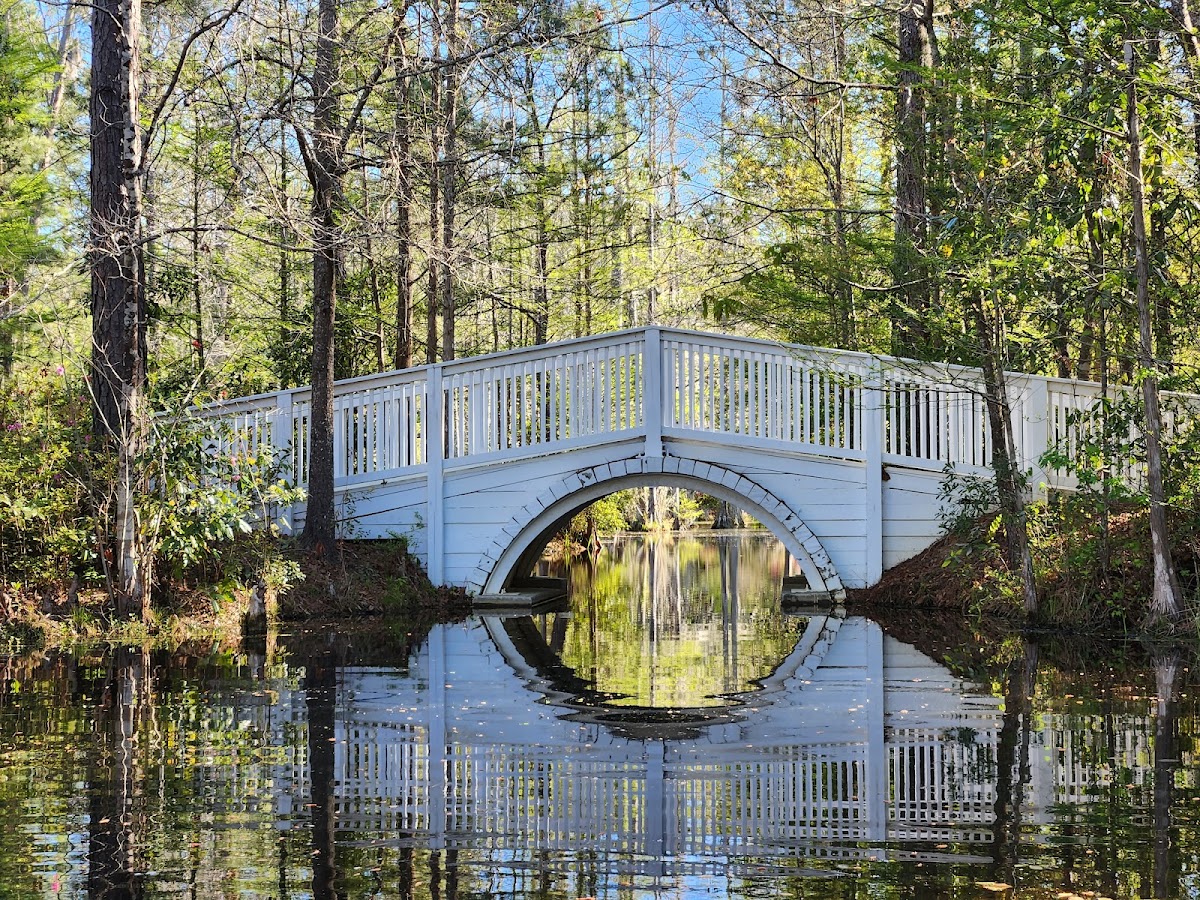
The drive from Charleston takes you north on US-52, past the city limits and into the Lowcountry proper, where the land flattens and the live oaks grow denser. About thirty-three miles out, you turn onto Cypress Gardens Road, and within minutes the pavement gives way to a quieter world. Spanish moss drapes from ancient branches like lace curtains. The air smells different here — earthy, humid, faintly floral. Then the entrance appears, modest and unassuming, and you realize you are entering something rare: a 170-acre nature preserve that happens to host weddings, not the other way around. The blackwater swamp reveals itself in stages — first through the trees, then in full view from the footbridges, where bald cypress knees break the water’s glassy surface and tupelo trees stand like sentinels draped in resurrection fern. This is the swamp that stood in for Noah and Allie’s lake in The Notebook, the cypress grove where Mel Gibson ran through in The Patriot, and if those films felt like they were shot in a place touched by timelessness, it is because they were. Cypress Gardens does not try to be a wedding venue. It simply is a place of profound natural beauty that opens its gates to couples who understand the difference. Poppy has received 16 inquiries for Cypress Gardens wedding flowers, and every single one has come from couples who want their florals to honor, not overpower, this landscape.
About Cypress Gardens
Cypress Gardens was born in the 1920s as a freshwater reserve for Dean Hall, a rice plantation estate whose owner, Benjamin R. Kittredge, transformed 163 acres of blackwater cypress and tupelo swamp into navigable waterways lined with azaleas, daffodils, and camellias. The gardens opened to the public in 1932 and quickly became one of the most photographed locations in the South. In 1963, the property was purchased by the City of Charleston and operated as a city park until Hurricane Hugo devastated the gardens in 1989. After years of restoration, Berkeley County acquired the property in 2008 and reopened Cypress Gardens as a nature preserve and event venue. Today, the 80-acre swamp remains the crown jewel, but the property has grown to include meticulously maintained cultivated gardens — the Heirloom Garden with its camellias and seasonal blooms, the Memory Garden with twin gazebos, the Butterfly House filled with native pollinators — and a collection of indoor and outdoor event spaces that range from the 250-guest Dean Hall to the intimate Conference Cottage.
The architecture is understated Southern pragmatism. Dean Hall is a modern events barn with vaulted ceilings, polished concrete floors, and walls of windows that let in natural light. The Heritage Room, located in the original visitor center, features museum-quality displays of the property’s history alongside soft sage and cream walls that provide a neutral backdrop for private dinners or cocktail hours. The Conference Cottage is exactly what it sounds like: a small, charming building ideal for getting ready or hosting a rehearsal dinner for twenty. But the real architecture here is the landscape. The swamp is accessed via wooden footbridges and a flat-bottom boat that glides silently through black water reflecting the canopy above. The Heirloom Garden is a living museum of camellia varieties, some over a century old, interspersed with seasonal plantings that change throughout the year. The Memory Garden’s double gazebos are white-painted wood, simple and elegant, surrounded by beds of perennials and flowering shrubs.
Logistically, Cypress Gardens sits in Moncks Corner, a small Lowcountry town in Berkeley County, approximately 40 minutes north of downtown Charleston. The drive is straightforward via US-52, and there is ample free parking on-site. For Poppy’s delivery and setup teams, load-in is uncomplicated — the venue opens to wedding parties at 10:00 AM, and the property remains available until 1:00 AM, giving us plenty of time for installation, ceremony-to-reception transitions, and breakdown. Venue coordinator Roxy Bishop is experienced and responsive, which makes coordination seamless. The property allows outside caterers and florists, which is increasingly rare in the Charleston market and a significant advantage for couples who want creative control over their vendors. The venue’s relationship with the land is its defining characteristic: this is a nature preserve first, and every event is planned with respect for the ecosystem. You will not find uplighting on the cypress trees or tiki torches lining the swamp. The beauty here is quieter, older, and more authentic than that.
Event Spaces & Floral Opportunities
Wedding Garden Gazebo
Capacity: 150 seated
Setting: The Wedding Garden Gazebo is tucked into a secluded corner of the property, surrounded by towering pines, flowering shrubs, and the kind of dappled light that makes everything look like a painting. The gazebo itself is white-painted wood with a simple peaked roof — no Victorian gingerbread, no unnecessary ornamentation. It sits at the edge of a small garden clearing with a footpath leading down to a dock on the water. This is the space where brides can arrive by flat-bottom boat, gliding silently across the blackwater in a moment straight out of a Southern Gothic novel. The gazebo is purposefully not equipped with electricity, which means no amplified sound systems, no LED uplighting, no microphone feedback cutting through the birdsong. Acoustic music only. Portable sound equipment is permitted, but the venue’s philosophy is clear: let the setting speak for itself.
Floral approach: The cardinal rule for the Wedding Garden Gazebo is restraint with intention. This space does not need florals to make it beautiful — it already is. What it needs is floral punctuation: thoughtful accents that guide the eye and frame the ceremony without competing with the natural surroundings. We favor a lush but organic garland draped asymmetrically around the gazebo posts, woven with smilax, sword fern, and local palmetto fronds, punctuated with clusters of white garden roses (Patience, Ivory Tower), café au lait dahlias, and pale green hydrangeas. For the aisle, simple markers work best — small arrangements in moss-covered containers placed every third row, or bundles of ferns and grasses tied with silk ribbon. If the bride is arriving by boat, consider a small hand-tied bouquet that can withstand the journey — tight, compact blooms like spray roses, lisianthus, and wax flower that will not wilt in the humidity or shed petals onto the water. At the dock, a single large arrangement in a weighted urn signals the transition from water to ceremony. The palette should echo the swamp: mossy greens, creamy whites, soft browns, with occasional pops of blush or peach to warm the composition. Cypress Gardens wedding flowers in this space should feel like they grew there naturally, discovered rather than designed.
Dean Hall
Capacity: 250 seated
Setting: Dean Hall is the largest indoor space at Cypress Gardens, and it is refreshingly honest about what it is: a modern events barn designed to be a blank canvas. Polished concrete floors, soaring ceilings with exposed beams, walls of French doors that open onto a lawn, and a full commercial kitchen tucked discreetly in the back. There is a large bridal suite upstairs with its own entrance, a state-of-the-art sound system, a projector, and four large-screen TVs that can be used for slideshows or ambient visuals. The room is flooded with natural light during the day and transforms into a warm, intimate space at night when the bistro lights strung across the ceiling are lit. The aesthetic is Southern industrial — clean, unfussy, and entirely dependent on the couple’s vision to bring it to life.
Floral approach: Dean Hall’s blank canvas nature is both a gift and a challenge. Without architectural details or a strong existing aesthetic, the florals need to do the heavy lifting. We recommend anchoring the room with a few large-scale installations rather than spreading the budget thin across too many small arrangements. Consider a dramatic installation above the head table — a suspended garland of smilax, Italian ruscus, and plumosa fern, studded with quicksand roses, white lisianthus, and trailing jasmine vine, running twelve to fifteen feet across the table and appearing to float in midair. For guest tables, choose either very low, lush centerpieces (compote-style arrangements mounded with garden roses, ranunculus, scabiosa, and hellebores in soft blush, cream, and sage tones) or elevated arrangements on tall glass risers that lift the florals above conversational sightlines. The French doors can be flanked with large statement urns overflowing with Southern magnolia branches, white hydrangeas, and sword fern to frame the entrance. If the couple is using the projector, consider incorporating floral-themed visuals — time-lapse videos of blooms opening, close-up botanical photography — to tie the digital elements into the living florals throughout the room. The bar is another opportunity for impact: a lush arrangement with trailing greenery cascading down the front of the bar creates a focal point during cocktail hour. Because Dean Hall connects directly to the outdoor lawn, we often extend the floral design outside with potted arrangements flanking the French doors or a garland wrapped around the porch railings to create visual continuity between indoor and outdoor spaces.
Memory Garden & Double Gazebos
Setting: The Memory Garden is one of Cypress Gardens’ most photogenic ceremony locations, featuring twin white gazebos positioned symmetrically at opposite ends of a long garden path lined with seasonal blooms. The garden itself is a riot of color from spring through fall — azaleas, daylilies, coneflowers, and Black-Eyed Susans, depending on the season. The double gazebo configuration is unusual and allows for creative ceremony staging: some couples position guests in a semicircle around one gazebo for a traditional ceremony, while others use one gazebo for the processional and the other as the altar, creating a dramatic walk between the two structures.
Floral approach: The double gazebo setup invites symmetry or intentional asymmetry, depending on the couple’s style. For a classic approach, we mirror the floral installations on both gazebos — identical garlands of greenery and blooms draped around the posts and railings, creating visual bookends to the ceremony. The garlands might feature smilax, seeded eucalyptus, and olive branches woven with clusters of white garden roses, blush ranunculus, and soft peach spray roses. For a more organic, garden-forward approach, we treat the two gazebos as complementary rather than identical — one adorned with a lush garland, the other left simpler with just greenery, allowing the structure itself to shine. The garden path between the gazebos can be lined with arrangements in galvanized buckets or moss-covered urns placed at intervals along the walkway. Because the Memory Garden is already abundant with seasonal blooms, we coordinate our floral palette to either complement or contrast with what is naturally in bloom: if the azaleas are peak pink in April, we might lean into soft corals and peaches to harmonize, or pull in whites and greens for a cooler contrast. A floral arch positioned under one gazebo creates a clear focal point for the ceremony, but we often recommend against overpowering the structure — a half-moon arch or a minimal frame adorned with just greenery and a few statement blooms (king protea, café au lait dahlias, or white peonies in season) respects the garden’s inherent beauty.
Front Lawn
Setting: The Front Lawn is the first thing guests see when they arrive at Cypress Gardens — a wide, open expanse of grass near the parking area and entrance gates. It is the most versatile outdoor space on the property, suitable for tented receptions, outdoor ceremonies for large guest counts, or cocktail hours that spill across the lawn. The venue offers special after-hours lighting that transforms the space in the evening, stringing the trees with soft white lights that create a canopy effect overhead.
Floral approach: The Front Lawn’s scale and openness require bold, anchoring florals that can hold their own in the landscape. For a tented reception, we recommend substantial entry arrangements — oversized urns filled with local magnolia branches, white hydrangeas, and sword fern positioned at the tent entrance to signal the transition from outdoor to covered space. Inside the tent, guest table centerpieces should be substantial enough to fill the volume of the space; we favor either tall arrangements on gold or wood stands (allowing for sightlines underneath) or very lush low arrangements in wide bowls that create a sense of abundance. The tent poles themselves are prime real estate for florals: consider wrapping them with garlands of smilax and Italian ruscus, or clustering small arrangements at the base of each pole to soften the industrial hardware. For cocktail hour on the open lawn, scattered arrangements on highboy tables work well, along with a statement bar installation — a lush garland draped across the front of the bar with trailing greenery, or a living wall backdrop behind the bar for a dramatic photo moment. If the after-hours lighting is in use, we coordinate with the lighting team to ensure our installations are positioned to be illuminated — there is nothing more magical than a garland-wrapped oak tree lit from below as the sun sets. The Front Lawn’s proximity to parking means load-in and setup are straightforward, and we have plenty of room to stage and assemble larger installations on-site.
Heirloom Garden
Setting: The Heirloom Garden is a living collection of camellia varieties, some dating back over a century, interspersed with seasonal perennials and carefully curated plantings that bloom throughout the year. The garden is designed as a series of meandering pathways through beds of color and texture, with mature live oaks providing dappled shade. In peak camellia season (late winter through early spring), the garden is a sea of white, pink, and red blooms, some as large as saucers. The rest of the year, hydrangeas, salvias, and ornamental grasses take over. This is a garden for wandering, for discovering blooms tucked into shady corners, for breathing in the scent of jasmine or gardenia on a humid afternoon.
Floral approach: The Heirloom Garden is a study in knowing when to step back. When the camellias are in full bloom, your floral budget is better spent elsewhere — the garden provides its own ceremony backdrop, and any attempt to add more flowers will feel redundant. Instead, focus on the bridal party flowers and a single, elegant ceremony installation. A simple wooden arbor adorned with a swag of greenery (smilax, Italian ruscus, bay laurel) and a few statement camellias clipped from the garden itself (with permission from the venue, of course) honors the space without competing with it. For the bride’s bouquet, incorporate camellias as the focal flower, surrounded by supporting blooms like white ranunculus, blush garden roses (Keira, Quicksand), and soft greenery. If the wedding falls outside camellia season, the garden still provides a lush green backdrop, and we have more freedom to introduce color and texture. Aisle markers can be simple bundles of seasonal blooms tied to shepherd’s hooks or placed in moss-covered pots along the pathway. Because the garden is shaded, we select flowers that hold up well in lower light — hydrangeas, lisianthus, ferns, and foliages with interesting textures. The key is always to let the garden lead: observe what is blooming, what colors are present, and design florals that feel like an extension of the landscape rather than an imposition on it.
Conference Cottage
Setting: The Conference Cottage is a small, charming building with a residential feel — think hardwood floors, soft lighting, comfortable seating, and enough space for a bridal party to get ready or a small gathering of twenty to thirty for a rehearsal dinner or intimate reception. The interior is simple and warm, with cream walls and large windows that let in natural light.
Floral approach: In small spaces like the Conference Cottage, less is always more. A single stunning arrangement on the central table or mantel creates a focal point without overwhelming the room. We favor something lush and textural — a low, wide arrangement in a brass or ceramic bowl filled with garden roses, Japanese anemones, scabiosa, chocolate cosmos, and trailing jasmine vine, designed to be viewed from all angles as guests move around the space. For getting-ready coverage, a few bud vases scattered on side tables and the vanity add a delicate, feminine touch without cluttering surfaces that will be covered with makeup bags and champagne flutes. If the Cottage is being used for a rehearsal dinner, we can extend the florals to individual table settings with small arrangements or single-stem vases at each place setting — garden roses, spray roses, or even a single perfect camellia in a vintage bottle.
Heritage Room/Museum
Setting: The Heritage Room is located in Cypress Gardens’ original visitor center and serves as both a museum and an event space. The walls are painted in soft, tranquil tones — sage green, pale blue, warm cream — and are lined with historic photographs, artifacts from the property’s past, and interpretive displays about the Lowcountry ecosystem. The room has a quiet, contemplative quality, ideal for intimate dinners, cocktail receptions, or as a retreat space during larger events.
Floral approach: The Heritage Room’s historic context calls for classic, timeless floral designs that nod to the past without feeling dated. We draw inspiration from Southern garden traditions — arrangements that might have been clipped from a 1930s cutting garden and arranged in silver or porcelain. Think white garden roses (Patience, Polo), blush peonies (in season), white hydrangeas, and soft greenery like dusty miller and eucalyptus, arranged in vintage-style compotes or silver julep cups. The wall colors should guide the palette: against sage walls, we might introduce more white and cream with touches of soft peach to warm the composition; against pale blue walls, a cooler palette of white, silver-green, and soft lavender feels harmonious. If the room is being used for a seated dinner, low centerpieces in silver or mercury glass keep the design elegant and allow for conversation across the table. For a cocktail reception, arrangements on the windowsills and a larger statement piece on the central display table create multiple points of visual interest without crowding the artifacts and photographs that are part of the room’s identity.
Wedding Flower Ideas for Cypress Gardens
Lowcountry Lace
This concept draws directly from the iconic Spanish moss that drapes from every live oak on the property, translating that soft, cascading texture into floral form. The palette is atmospheric and romantic: dusty silver-green foliage (Italian ruscus, seeded eucalyptus, olive branches), soft gray accents (dusty miller, lamb’s ear), and blooms in shades of cream, ivory, and the palest blush. Garden roses in Quicksand, Patience, and O’Hara form the foundation, layered with white lisianthus, ivory spray roses, pale peach ranunculus, and hellebores in soft green-white. Textural accents include tillandsia (air plants that echo the epiphytic nature of Spanish moss), jasmine vine trailing through arrangements, and actual Spanish moss woven into garlands (ethically sourced, never stripped from living trees). Vessels are aged and organic — weathered wood boxes, moss-covered urns, tarnished silver compotes. The effect is ethereal, like the morning mist rising off the blackwater swamp. This palette shines in the Wedding Garden Gazebo, where it mirrors the natural landscape, and in Dean Hall, where it softens the modern barn aesthetic with romance and texture. For brides arriving by boat, a hand-tied bouquet in this palette feels like something gathered from the swamp itself — wild, delicate, and impossibly romantic.
Camellia Heritage
This design celebrates the Heirloom Garden’s signature bloom with a palette rooted in Southern tradition and refined elegance. Camellias take center stage — white, blush pink, and deep coral varieties, their waxy petals and prominent golden stamens providing both structure and romance. Because camellias are available primarily in late winter and early spring, this concept is seasonally specific, but for couples marrying during camellia season, it is a profound way to honor the property’s history. Supporting blooms include blush garden roses (Keira, Romantic Antike), white peonies (in March and April), white ranunculus, hellebores in soft pink and green, and accents of Southern smilax and magnolia foliage. The palette is soft and feminine — blush, cream, soft coral, and various shades of green — but never saccharine. Arrangements are designed with a nod to historical Southern garden style: lush, slightly overgrown, as if clipped from a cutting garden and loosely arranged in the parlor. Vessels are classic and elegant: white ironstone pitchers, brass compotes, porcelain bowls. This concept works beautifully in the Heirloom Garden itself (naturally), in the Heritage Room where the historic context supports the traditional aesthetic, and in Dean Hall where the classic florals provide a sophisticated counterpoint to the modern architecture. For the bridal bouquet, a collar of perfect camellias surrounded by garden roses and hellebores is both timeless and unmistakably Southern.
Blackwater Reflection
Inspired by the still, dark waters of the cypress swamp and the way light plays across the surface, this concept leans into deeper, moodier tones while maintaining the organic, natural quality that defines Cypress Gardens. The palette is rich and complex: burgundy and wine-toned dahlias (Black Satin, Wizard of Oz), deep plum scabiosa, chocolate cosmos, burgundy ranunculus, and dark red garden roses (Tess, Black Baccara) are balanced by softer elements — café au lait dahlias, cappuccino roses, taupe lisianthus, and dusty mauve astilbe. Foliage is textural and varied: dark green magnolia leaves (some with the bronze underside showing), olive branches, burgundy-toned leucadendron, and privet berries. The effect is dramatic and romantic, with depth and movement that mirrors the way the swamp shifts from black to bronze to green depending on the light. Vessels are natural and organic — dark wood containers, aged bronze urns, smoke-colored glass. This palette is particularly stunning in late afternoon light when the warm glow plays against the dark blooms, and it photographs beautifully against the dark water of the swamp during portrait sessions. It works exceptionally well in Dean Hall, where the modern space can handle the drama, and in the Wedding Garden Gazebo at sunset, where the rich tones glow against the natural surroundings. For couples who want something outside the traditional blush-and-white Southern palette but still deeply connected to the landscape, Blackwater Reflection offers sophistication and romance in equal measure.
Seasonal Considerations
Charleston’s Lowcountry climate is humid subtropical, which means hot, sticky summers, mild winters, and gloriously temperate springs and autumns. Cypress Gardens is located slightly inland from Charleston proper, which moderates temperatures somewhat but does not eliminate the summer humidity or the occasional winter cold snap. Understanding the seasonal rhythm of this region is essential for both planning logistics and selecting flowers that will perform well.
Spring (March through May) is peak wedding season in the Lowcountry, and for good reason. Temperatures range from the mid-60s to low 80s, humidity is manageable, and the entire property is in full bloom. Azaleas explode in shades of pink, coral, and white throughout March and into early April. Camellias are finishing their season in early March, overlapping briefly with the azaleas for a stunning display. Wisteria drapes from trees in April, and the cypress trees leaf out in bright spring green. This is the season of abundance for locally available flowers: peonies arrive in late April, garden roses are plentiful, ranunculus and anemones are at their peak, and sweet peas perfume the air. Practically speaking, spring weather is reliable but not guaranteed — the occasional cold front can bring chilly evenings, and afternoon thunderstorms are possible in May. For Cypress Gardens weddings in spring, we recommend having a rain plan for outdoor ceremonies, but the odds are in your favor. The Heirloom Garden is at its most spectacular, and the Wedding Garden Gazebo is surrounded by blooming shrubs and trees that require minimal additional florals.
Autumn (September through November) rivals spring as the ideal season for Lowcountry weddings. September is still warm and humid, but by October temperatures drop into the 70s and the air begins to feel crisp. November can be perfect — sunny, cool, and dry. The cypress trees turn a soft russet-brown before dropping their needles, and the light takes on that golden, slanted quality that makes everything look cinematic. Fall is the season for dahlias (which perform beautifully in cooler temperatures), marigolds, chrysanthemums, zinnias, celosia, and late-season garden roses. The color palette shifts naturally toward warmer tones — burgundy, burnt orange, mustard yellow, deep coral — though plenty of couples still choose soft, romantic palettes in autumn and the flowers cooperate beautifully. The one challenge in autumn is hurricane season, which technically runs through November but peaks in September and October. Cypress Gardens is inland enough that direct hurricane strikes are rare, but tropical storms can bring heavy rain and wind. We always monitor forecasts closely in autumn and communicate proactively with couples about contingency plans. The gardens remain beautiful through autumn, and the Front Lawn is particularly stunning for tented receptions when the oaks are backlit by late afternoon sun.
Winter (December through February) is the quiet season at Cypress Gardens, but it holds particular charm for couples who want an intimate, off-season wedding. Temperatures range from the 40s to 60s, and while snow is virtually unheard of, cold snaps do occur. The landscape is more subdued — the deciduous trees are bare, the swamp is still and reflective, and the overall palette is muted greens, browns, and grays. But this is camellia season, and the Heirloom Garden comes alive with blooms from late December through February. Winter weddings require thoughtful planning: outdoor ceremonies need to account for chilly temperatures (consider providing blankets for guests or hosting in the afternoon when the sun is warmest), and heating is essential for tented receptions. For florals, winter is the season of camellias, hellebores, amaryllis, paperwhites, evergreen foliage (magnolia, holly, cedar, pine), and forced branches (quince, cherry, forsythia). The muted landscape allows florals to take center stage in a way that is less necessary in other seasons. Winter is also budget-friendly — both venue costs and floral costs tend to be lower, and the property is rarely crowded. For couples who love the romance of bare branches, soft winter light, and the intimacy of a smaller guest count, Cypress Gardens in winter is quietly spectacular.
Poppy’s Expert Take
Coordinate with what’s blooming, always. Cypress Gardens is a living, breathing landscape, and what is in bloom on the property during your wedding will profoundly impact how your florals should be designed. Before finalizing your floral plan, we strongly recommend visiting the property at the same time of year as your wedding to see what the gardens look like. If the azaleas are peak pink in April, leaning into that palette will make your wedding feel cohesive with the landscape. If the camellias are in full bloom in February, incorporate them into your designs as a way to honor the property’s heritage. We maintain a relationship with the grounds team at Cypress Gardens and often coordinate with them to understand what will be in peak bloom during a specific wedding weekend. This is not a venue where you can ignore the landscape and impose your vision — the landscape has its own strong identity, and the best Cypress Gardens weddings work with it, not against it.
The swamp is not a blank canvas — respect its power. One of the most common mistakes we see is couples trying to “decorate” the cypress swamp. The swamp does not need decoration. It is one of the most photographed natural features in South Carolina, and any attempt to add florals to the water, hang arrangements from the cypress trees, or place installations on the footbridges will feel forced and out of place. Instead, use the swamp as a backdrop for portraits and design your ceremony and reception florals for the cultivated garden spaces where human intervention is expected. If