
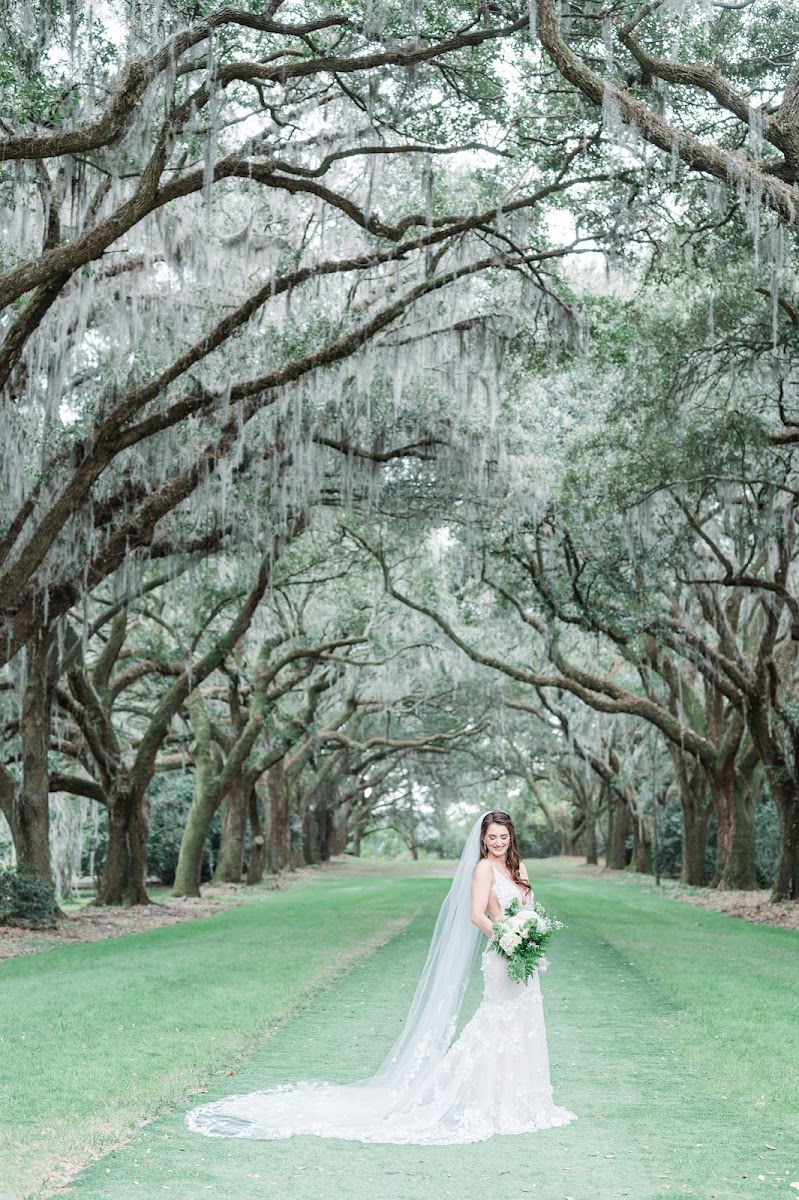
Some venues announce their beauty; Legare Waring House reveals it. You turn off the main road at Charles Towne Landing, drive through a canopy of ancient live oaks draped in Spanish moss, and the world outside Charleston — the traffic, the heat, the modern city — simply falls away. By the time you reach the house, an 1840s plantation home expanded and refined by the Waring family, surrounded by Loutrel Briggs-designed gardens and crystal lagoons, you are fully in another century. Couples planning Legare Waring House wedding flowers understand instinctively that this setting demands floral design as layered and unhurried as the landscape itself — arrangements that feel less like they were ordered and more like they have always been here, growing quietly alongside the moss and the magnolias. Poppy has designed flowers for 6 weddings at Legare Waring House and has learned that the most beautiful work here starts with the same principle that guided Loutrel Briggs when he designed these gardens: restraint in service of something timeless.
About Legare Waring House
The Legare Waring House sits within Charles Towne Landing State Historic Site — the very spot where English settlers established South Carolina’s first permanent European colony in 1670. The layers of history here are not abstract but physical: you walk the same ground, stand beneath oaks that predate the Revolution, and exchange vows in gardens shaped by one of Charleston’s most celebrated landscape architects. The house itself was built in the 1840s by Thomas Legare, a prominent rice planter, as part of Old Towne Plantation. It survived the Civil War — the great house did not, but this modest two-story cottage endured — and in the 1950s, Ferdinanda Izlar Legare Backer Waring and her husband Joseph Ioor Waring expanded it to three times its original size, creating the elegant antebellum residence that stands today.
The gardens are the work of Loutrel Briggs, whose formal yet romantic landscape designs define some of Charleston’s most treasured private gardens. At Legare Waring House, Briggs created a sequence of garden rooms — sculpted plantings, seasonal beds, hedged pathways, and carefully framed views — that unfold as you walk the grounds. The effect is cinematic: each turn reveals a new composition, a new play of light through the moss-draped branches. The property also features the iconic Wedding Oak, a sprawling live oak tree whose branches reach out in every direction like outstretched arms, creating a natural canopy that has sheltered thousands of ceremonies. Crystal lagoons reflect the sky and the trees, and the Avenue of Oaks — that moss-laden corridor of ancient live oaks — is one of the most photographed ceremony settings in the American South.
The property is managed by South Carolina State Parks and is available for weddings throughout the year. Its capacity of up to 150 guests keeps celebrations at a scale that feels intimate and intentional — large enough for a proper party, small enough that every guest feels the setting rather than just seeing it from a distance.
Event Spaces & Floral Opportunities
Avenue of Oaks
-
Capacity: Large ceremonies
-
Setting: Outdoor, natural cathedral of ancient live oaks draped in Spanish moss
-
Floral Notes: The Avenue of Oaks is one of the most naturally beautiful ceremony settings in the South — perhaps in the country. Ancient live oaks form a living cathedral, their massive branches reaching toward each other overhead, draped in curtains of Spanish moss that filter the light into something soft and almost otherworldly. This is not a space that needs floral embellishment. It needs floral punctuation.
A single arrangement at the end of the aisle, where the couple will stand, provides a focal point for photographs without competing with the trees. White and soft pastel blooms — garden roses, hydrangeas, lisianthus — photograph beautifully against the grey-green moss and dark bark. If you want aisle definition, low arrangements on alternate chairs or simple greenery wreaths at the aisle entrance are sufficient. Avoid heavy, structured installations — anything that looks architectural or rigid will clash with the organic, flowing beauty of the oaks. Think soft edges, trailing greenery, and blooms that look like they belong in a garden.
Wedding Oak
-
Capacity: Intimate to mid-size ceremonies
-
Setting: Outdoor, beneath a magnificent solitary live oak
-
Floral Notes: The Wedding Oak is Legare Waring House’s most iconic ceremony location — a single massive live oak with branches that spread outward and downward, creating a natural canopy so complete it feels designed. Many couples exchange vows beneath this tree with no additional structure at all, and honestly, it does not need one. The tree is the structure.
If you add florals, keep them grounded. A cluster of garden-style arrangements at the base of the trunk, low and lush, creates a romantic touch without competing with the tree’s scale. A loose garland of smilax vine and seasonal blooms draped along one of the lower branches can be stunning, but coordinate carefully with the venue — these trees are ancient and irreplaceable, and any hanging installations require approval and gentle handling. Ground-level floral design is always the safer and often the more beautiful choice here.
Wedding Garden (Loutrel Briggs Gardens)
-
Capacity: Ceremony and cocktail space
-
Setting: Outdoor, formal garden designed by Loutrel Briggs
-
Floral Notes: The Wedding Garden offers a more structured outdoor setting, with sculpted hedges, seasonal plantings, and elegant pathways creating garden rooms within the larger landscape. Ceremony florals here should complement the garden’s existing composition — Briggs designed these spaces with a painter’s eye, and your additions should feel like they belong to his palette. A simple arch or chuppah with seasonal blooms provides a ceremonial focal point, while the garden beds provide the backdrop.
For cocktail hours in the garden, accent arrangements on bars and cocktail tables add polish without disruption. The garden’s own beauty does most of the work — your flowers just need to be in conversation with it. Talk with your florist about what will be blooming in the Briggs gardens during your wedding month, and design your palette to harmonize.
Fountain Patio
-
Capacity: Up to 150 guests for dinner and dancing
-
Setting: Outdoor, paved patio with central fountain, surrounded by gardens
-
Floral Notes: The Fountain Patio is the primary reception space at Legare Waring House — an al fresco dining experience that feels like the most elegant garden party you have ever attended. The fountain anchors the space as a natural centerpiece, and the gardens wrap around the perimeter, creating a living wall of green and seasonal color.
Reception table arrangements should complement the fountain rather than compete with it. Low, lush centerpieces in the garden’s romantic style — garden roses, hydrangeas, and seasonal blooms with trailing greenery in antique-toned vessels — keep sightlines open to the surrounding beauty. For long tables, garland runners of smilax vine or eucalyptus, punctuated with clustered blooms and votive candles, create a dramatic garden-party effect that photographs beautifully from every angle.
The patio’s open-air setting introduces practical considerations. Arrangements must be wind-stable — use weighted vessels and avoid tall, top-heavy centerpieces. As evening falls, candles become essential to the atmosphere, and the interplay of candlelight, fountain sound, and garden fragrance creates something genuinely magical. Plan for this transition in your design.
Interior Rooms
- Setting: Indoor, historic plantation house with antebellum character
- Floral Notes: The house’s interior rooms provide rain backup and serve beautifully as cocktail, lounge, or getting-ready spaces. The antebellum-style interiors — polished wood floors, mantels, traditional furnishings — call for classic Southern arrangements: magnolia leaves (glossy green on one side, velvety brown on the other), garden roses, camellias (in season), and seasonal blooms in traditional vessels. Small arrangements on mantels, entry tables, and sideboards add elegance without cluttering these historic rooms. The scale should feel domestic, not decorative — as if the Warings themselves had placed fresh flowers that morning.
Wedding Flower Ideas for Legare Waring House
Southern Garden Romance
The definitive style for this venue, and for good reason. Lush, romantic arrangements featuring garden roses in David Austin varieties — Juliet, Keira, Patience — alongside peonies, hydrangeas, ranunculus, and trailing jasmine or smilax vine. The palette stays soft and Southern: blush, ivory, peach, and soft pink with abundant greenery. Magnolia leaves, tucked into arrangements and scattered along table garlands, add the distinctly Charleston touch that makes this approach feel specific to the venue rather than generically pretty. Vessels should feel collected rather than matching — a mix of mercury glass, antique silver, and weathered ceramic. The bridal bouquet is generous, garden-gathered, and slightly unstructured, with trailing ribbons in silk or velvet. The overall effect is a celebration that looks like it grew naturally from the Briggs gardens themselves.
Classic Charleston White
A more structured, refined approach that leans into the venue’s historic gravitas. All-white or near-white arrangements — Vendela roses, white peonies, white hydrangeas, white lisianthus, and white ranunculus — in silver or crystal vessels. The monochromatic palette creates an extraordinary visual effect against the Spanish moss, dark oak bark, and green gardens. The absence of color makes texture paramount: mix open, blown roses with tight buds, layer in different whites (warm cream, cool white, greenish-white), and use abundant foliage to prevent the palette from feeling flat. This approach is especially stunning for evening receptions on the Fountain Patio when white blooms glow in candlelight.
Lowcountry Wild
An organic, textured style that draws directly from the Lowcountry landscape. Moss accents (ethically sourced), ferns, trailing greenery, seasonal wildflowers, and locally sourced blooms arranged in a style that feels foraged rather than designed. Earth tones, muted greens, dusty rose, and lavender — the colors of the marshes, the live oaks, and the Charleston sky at dusk. This style works beautifully beneath the Wedding Oak and along the Avenue of Oaks, where the natural environment is the foundation and your flowers simply extend the conversation. Driftwood elements, woven vessels, and linen table runners reinforce the connection to the land.
Deep Southern Drama
For couples who want richness rather than softness. Saturated jewel tones — deep burgundy, plum, burnt orange, and emerald green — stand out dramatically against the grey-green Spanish moss and dark oak bark. Dahlias, ranunculus, roses in “Black Baccara” and “Wanted” varieties, and trailing amaranthus create moody, romantic arrangements with genuine Southern flair. Aged brass and dark ceramic vessels anchor the palette. This approach is particularly stunning for fall and winter celebrations when the Lowcountry light turns golden and the garden’s palette naturally deepens.
Seasonal Considerations
Charleston’s subtropical climate is one of the best in the country for wedding flowers — mild winters, a long growing season, and a landscape that maintains green structure year-round thanks to the evergreen live oaks.
Spring (March - May): One of Charleston’s most celebrated seasons. Azaleas explode in pink and white throughout the gardens, wisteria hangs heavy from arbors and trees, and jasmine scents the warm air. Peonies, ranunculus, garden roses, and sweet peas are in season and complement the garden’s own spring display. The light is soft, golden, and flattering. Late April through May is peak — the gardens at their most abundant, the weather warm but not yet punishing.
Summer (June - August): Charleston summers are formidable — high 80s to mid-90s with humidity that makes the air feel heavy and close. Evening celebrations are essential for guest comfort. For flowers, heat hardiness becomes a primary selection criterion. Gardenias (a signature Charleston bloom with intoxicating fragrance), magnolias, zinnias, and robust roses hold up best. Keep all arrangements in cold storage until the last possible moment. Mist bouquets frequently. The Fountain Patio’s evening breeze helps, but do not rely on it — plan for heat and be pleasantly surprised if the evening cooperates.
Fall (September - November): Many Charleston wedding professionals consider fall the ideal season at Legare Waring House, and we agree. The humidity eases, temperatures moderate into the comfortable 70s and low 80s, and the light turns golden and painterly. Dahlias, roses, chrysanthemums, and autumn foliage are abundant, and the gardens maintain their lush character well into November in Charleston’s mild climate. This is peak wedding season across all Charleston venues — book everything early.
Winter (December - February): Charleston winters are mild — 40s to 60s — and the gardens retain their evergreen structure even when deciduous elements are bare. Camellias, one of Charleston’s most iconic blooms, flower throughout winter in shades of pink, red, and white. Narcissus, anemones, hellebores, and seasonal greenery provide elegant options. The live oaks retain their leaves year-round, so the Avenue of Oaks and Wedding Oak are as photogenic in January as in June. Winter weddings at Legare Waring House feel intimate, romantic, and exclusive — the Charleston wedding secret that locals know.
Poppy’s Expert Take
We have designed flowers for 6 weddings at Legare Waring House, and this venue has shaped our approach to Southern garden florals in ways that influence everything we do in the Charleston market.
The trees do not need your help. This is the first and most important principle. The Avenue of Oaks and the Wedding Oak are among the most beautiful natural ceremony settings we have ever worked with, and the most common design mistake we see is over-embellishing them. We have watched ceremony installations compete with 200-year-old oaks, and the oaks always win — your flowers just end up looking small and out of place. Our approach is minimal and intentional: a ground-level arrangement at the ceremony focal point, perhaps a garland on a low branch if the venue approves, and personal flowers that photograph beautifully against the bark and moss. Let the trees be magnificent. They have been practicing for centuries.
The Fountain Patio is your biggest design opportunity — and challenge. Because the reception is outdoors, your centerpieces need to do real work. There are no walls, no ceiling treatments, no built-in chandeliers to lean on. It is just tables, a fountain, gardens, and sky. This means your table design carries the entire reception aesthetic. We recommend investing here: lush centerpieces with genuine volume, garland runners that create visual continuity along long tables, and abundant candlelight. Wind-stable designs are non-negotiable — low-profile arrangements in weighted vessels, nothing tall or top-heavy. The payoff is extraordinary: a candlelit garden dinner beneath the stars, surrounded by Loutrel Briggs’ landscape, with flowers that make the whole setting feel like it was arranged for you alone.
Work with Charleston’s bloom calendar, not against it. Camellias in winter, azaleas in spring, gardenias in summer — Charleston has signature blooms for every season, and incorporating them creates a specificity that generic floral palettes cannot match. When we design for a winter wedding here, we source camellias from local gardens. When spring azaleas are at peak, we echo their palette in the reception design. This is the kind of detail that transforms a beautiful wedding into a Charleston wedding — rooted in the particular place and time.
Magnolia leaves are your secret weapon. Glossy dark green on top, velvety brown beneath, architecturally shaped, and available year-round in Charleston. We use magnolia leaves in garlands, tucked into centerpieces, layered beneath arrangements as a charger, and woven into table runners. They cost a fraction of premium blooms, they last indefinitely, and they are as distinctly Charleston as a church steeple. No Legare Waring House arrangement should be without them.
Plan for weather contingencies in your floral design. The Fountain Patio is outdoor, and while Charleston weather is generally cooperative, rain does happen. Your florist should design ceremony and reception arrangements that can be moved indoors to the house’s interior rooms if weather requires it. This means avoiding installations that are attached to outdoor structures, designing in portable vessels, and keeping arrangements at a scale that fits through doorways. We always confirm rain-plan logistics with both the venue coordinator and the catering team well in advance.
What Poppy Couples Spend on Flowers Here
Legare Waring House attracts couples who value history, garden beauty, and Southern elegance — and who invest in floral design that honors the setting’s prestige.
- Average floral investment: $3,904
- Budget range: From $800 (personal flowers and ceremony accents) to $7,000+ (full ceremony installation, reception centerpieces with garland, cocktail accents, and personal flowers)
At $800 to $1,500, couples focus on personal flowers and a simple ceremony element — bridal bouquet, bridesmaids’ bouquets, boutonnieres, and a ground arrangement for the Wedding Oak or Avenue of Oaks ceremony. Even this minimal investment creates beautiful moments against the venue’s spectacular backdrop.
The $2,500 to $4,500 range is where most Legare Waring House couples land. This covers personal flowers, ceremony framing pieces, Fountain Patio reception centerpieces, and a few accent arrangements for cocktail hour in the gardens. At this level, the reception feels intentionally designed and the ceremony has a clear floral focal point.
At $5,000 to $7,000+, couples add garland runners on long reception tables, elaborate centerpieces at every table, enhanced cocktail hour design, and floral details throughout the interior rooms. The outdoor reception setting rewards this level of investment because the floral design carries the entire aesthetic — there are no built-in architectural embellishments to lean on.