
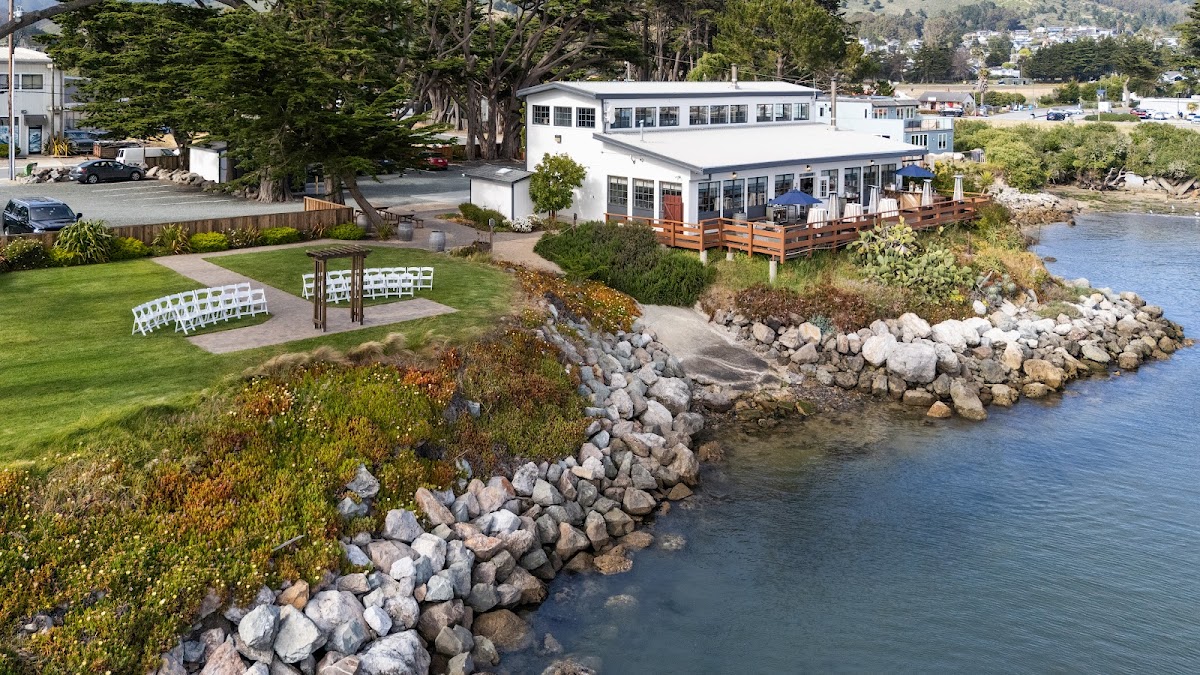
The first time you turn onto Broadway Avenue in Princeton-by-the-Sea, you might wonder if you’ve somehow crossed three thousand miles of continent without noticing. The bobbing fishing boats, the weathered dock pilings, the salty air thick with kelp and brine — it all feels more Cape Cod than California, more Maine than Pacific Coast Highway. Then you climb the slight rise to Mavericks House and the illusion shatters in the most spectacular way possible. Because this is unmistakably California: that particular quality of light that turns the ocean from slate to sapphire in seconds, the twisted silhouettes of cypress trees sculpted by relentless coastal wind, and the vast expanse of the Pacific stretching toward an impossibly distant horizon. Mavericks House sits on a bluff overlooking Pillar Point Harbor, where the New England fishing village charm of Half Moon Bay meets the wild, uncontained drama of Northern California’s coast. Poppy has designed Mavericks House wedding flowers for 7 celebrations here, and each time we navigate the coast-hugging Highway 1 with arrangements carefully secured in our van, we understand why couples choose this venue: it offers the warmth of a harbor village and the grandeur of the open ocean in a single, unforgettable setting.
About Mavericks House
Mavericks House takes its name from the legendary big-wave surf break just a few miles up the coast — the break that draws the world’s most fearless surfers when winter swells roll in from the Gulf of Alaska. But the venue itself is considerably more welcoming than those fifty-foot waves. The property occupies a prime piece of oceanfront real estate in Princeton-by-the-Sea, technically a neighborhood of Half Moon Bay but functionally its own entity: a working fishing harbor where commercial boats unload Dungeness crab and rockfish, where Sam’s Chowder House and Barbara’s Fishtrap serve lunch to locals and tourists alike, and where the pace of life is dictated more by tide tables than traffic lights.
The building has been recently renovated with a light touch that preserves the casual coastal aesthetic while introducing modern amenities. The 2,000-square-foot indoor reception hall features floor-to-ceiling windows on three sides, offering an astonishing 180-degree view of the Pacific Ocean and Pillar Point Harbor. Sustainable engineered wood floors in warm honey tones provide underfoot warmth without the maintenance headaches of traditional hardwood in a salt-air environment. Bistro string lights crisscross the ceiling, casting a soft, flattering glow that transitions beautifully from late-afternoon golden hour into evening. The aesthetic is decidedly casual-elegant rather than formal — think Nantucket yacht club rather than Ritz ballroom — and that relaxed sophistication is precisely what makes Mavericks House special.
The outdoor spaces are equally thoughtfully designed. The large deck adjacent to the reception hall extends the usable space considerably, with outdoor lounge furniture, a fire pit surrounded by Adirondack chairs, and standing propane heaters for those inevitable cool coastal evenings. The waterfront garden ceremony space — a wide, paved path through manicured lawn bordered by a grove of wind-sculpted cypress trees — offers unobstructed ocean views and surprisingly good wind protection thanks to the natural topography of the bluff. The cypresses themselves are magnificent: gnarled, dramatic, shaped by decades of onshore breezes into forms that suggest movement even when perfectly still.
Logistically, Mavericks House is roughly 30 miles south of San Francisco via Highway 1 — a drive that takes 45 minutes on a good day and considerably longer during weekend beach traffic or pumpkin season (Half Moon Bay is, after all, the self-proclaimed Pumpkin Capital of the World, and autumn weekends bring harvest festivities). For Poppy’s delivery teams, the route is straightforward if occasionally slow, and we build extra buffer time into our Half Moon Bay wedding schedule. Load-in at the venue is efficient, with truck access directly to the main building and a cooperative events team that understands vendor needs. The venue maintains a preferred vendor list but is refreshingly flexible about outside vendors (including florists) with appropriate insurance, which means we work here frequently without the political complications that sometimes accompany exclusive vendor arrangements.
Parking is on-site and plentiful — a significant advantage over some San Francisco venues where parking logistics can derail even the best-laid plans. The venue provides full bar service featuring Half Moon Bay Brewing Company’s fresh-on-tap beers, plus wine, spirits, and champagne, with in-house bartending included. Catering is exclusively handled by the Mavericks House culinary team, which specializes in fresh California coastal cuisine: sustainably sourced seafood from local boats, produce from nearby farms, and preparations that favor bright, clean flavors over heavy sauces. The in-house catering model simplifies coordination and ensures quality, though it does limit couples who have their hearts set on a specific outside caterer.
The venue’s natural beauty and spectacular views mean that minimal additional décor is necessary — a fact that appeals to couples seeking an effortless aesthetic and also influences how we approach Mavericks House wedding flowers. This is not a blank-slate venue that requires transformation. It is already fully itself, and our job is to complement rather than compete.
Event Spaces & Floral Opportunities
Indoor Reception Hall
Capacity: 102 seated
Setting: The 2,000-square-foot reception hall is the jewel of Mavericks House, and those floor-to-ceiling windows are the reason why. On three sides, glass frames the Pacific Ocean, Pillar Point Harbor, and the colorful parade of fishing boats that motor in and out with the tide. The sustainable wood floors glow honey-gold in late afternoon light. Bistro string lights overhead provide ambient illumination without the harshness of traditional chandeliers. The palette is neutral and warm — wood, white walls, touches of navy in the upholstery — which means the space adapts easily to any color story. The 180-degree views are the room’s signature feature, and everything else defers to them.
Floral approach: In a room with this much glass and this much view, the instinct might be to go minimal and let the ocean do the work. That instinct is half-right. You do need to respect those views — nothing at eye level should obstruct the windows — but the room still benefits from intentional floral moments that create warmth and intimacy within a large, light-filled space. We favor one of two approaches. First option: very low, lush centerpieces in muted coastal tones — garden roses in Quicksand and Sahara, white ranunculus, ivory lisianthus, and textured greenery like silver dollar eucalyptus and seeded eucalyptus arranged in weathered ceramic vessels or dove-gray concrete planters that echo the natural materials of the harbor. Keep them under ten inches tall so guests can see both each other and the ocean beyond. Second option: dramatically tall arrangements on slender, clear glass risers or gold stands that lift the florals above sightlines entirely — think 36-inch pedestals topped with airy, organic designs of delphinium, stock, Italian ruscus, and trailing jasmine vine. This approach creates a sense of volume and drama without blocking views. For the head table or sweetheart table, consider a substantial low runner of mixed greenery — smilax, plumosa fern, maidenhair fern — punctuated with clusters of white spray roses, astilbe, and scabiosa. The bistro lights overhead don’t require florals, but small sprigs of eucalyptus tucked at connection points can soften the grid. The entrance to the reception hall is the one place to make a bold statement: a pair of substantial arrangements in tall urns flanking the doorway — overflowing with white hydrangea, Playa Blanca roses, pampas grass plumes, and bleached ruscus — signals the transition from cocktails to dinner.
Indoor + Outdoor Deck
Capacity: 130 seated (when combining indoor hall and outdoor deck, weather permitting)
Setting: The expansive deck extends off the indoor reception hall and overlooks Pillar Point Harbor. It’s furnished with comfortable outdoor lounge furniture, a central fire pit ringed with Adirondack chairs, and standing propane heaters positioned strategically for cool evenings. The railing offers unobstructed harbor views. Most couples use this space for cocktail hour, though it can also accommodate dinner tables if weather cooperates. The aesthetic is relaxed and social — guests naturally gravitate to the fire pit and the lounge groupings, drinks in hand, soaking in the coastal atmosphere.
Floral approach: Coastal wind is the primary consideration here. Anything tall or top-heavy will topple; anything delicate will shred. We design for durability without sacrificing beauty. For cocktail tables, low arrangements in heavy vessels — ceramic, concrete, or even driftwood bases — work well. Think succulents, dusty miller, blue thistle, Juliet roses, and white veronica in tight, compact designs that present minimal wind resistance. Alternatively, potted plants can be extremely effective: clusters of lavender in galvanized buckets, rosemary topiaries in terra cotta, or white hydrangeas in whitewashed wooden planters. These can be positioned around the deck perimeter and lounge areas, creating a garden-party feel that’s inherently wind-stable. For the fire pit area, consider a substantial eucalyptus garland draped loosely around the seating circle, secured at intervals to prevent lifting in wind. The lounge furniture itself benefits from small floral accents — a single perfect Quicksand rose and sprig of eucalyptus laid across each cocktail napkin stack, or small bud vases with individual stems of white lisianthus on side tables. The entrance from the indoor reception hall to the deck is another opportunity for a floral moment: a pair of large potted arrangements flanking the doorway — Italian cypress standards underplanted with trailing ivy and white petunias — frames the transition to the outdoor space.
Waterfront Garden Ceremony Space
Capacity: 150 seated (weather permitting for dining); no stated ceremony capacity, but ample space for typical guest counts
Setting: This is where most couples exchange vows at Mavericks House, and it’s easy to understand why. The ceremony site occupies a manicured lawn bordered by cypress trees on one side and open ocean views on the other. A wide, paved garden path serves as the aisle, flanked by grass areas where chairs can be positioned. The ocean provides the backdrop — no decorative arch or fabric draping can compete with that horizon line — and the cypress grove offers both visual interest and wind protection. The setting is inherently romantic and naturally photogenic, requiring very little intervention to feel complete.
Floral approach: The cardinal rule for this ceremony space is restraint. The ocean is your backdrop; the cypress trees are your architecture. Anything you add should enhance that natural beauty without overwhelming it. For the ceremony structure, we favor a subtle approach: a low, organic arc of mixed greenery — eucalyptus, Italian ruscus, maidenhair fern — anchored to a simple wooden arbor or chuppah frame, with asymmetric clusters of white and cream florals (Playa Blanca roses, white ranunculus, ivory stock) concentrated at the base corners where the structure meets the ground. This grounds the arbor visually while allowing the ocean to remain the focal point. Alternatively, for couples seeking maximum simplicity, forego the arbor entirely and create ground-level floral installations: two large asymmetric arrangements in natural vessels (driftwood bases, weathered concrete urns) positioned to frame the couple without blocking the view. For the aisle, less is more. Simple markers every third or fourth row — small bunches of white stock and eucalyptus tied to chair backs with ivory ribbon, or individual stems of blue delphinium in glass bottles staked into the lawn — provide direction without clutter. If the couple is using the paved path as the aisle, consider a scattered petal arrangement rather than traditional markers: a loose scattering of white and ivory petals (rose, hydrangea, delphinium) creates a soft, romantic pathway that won’t blow away in moderate wind if lightly misted with water before the ceremony. The cypress trees themselves generally don’t need adornment — their sculptural forms are statement enough — but for couples who want extra flourish, a single substantial garland wrapped around the trunk nearest the ceremony structure (smilax base with clusters of Quicksand roses and seeded eucalyptus) can tie the natural elements into the designed elements.
Large Outdoor Deck
Capacity: Used primarily for cocktails; can accommodate standing guests as part of the 130-person indoor/outdoor capacity
Setting: This is the same deck referenced in the Indoor + Outdoor Deck section above, but it’s worth considering separately for its role as a dedicated cocktail space. When couples keep the reception entirely indoors, the deck becomes a pure cocktail hour environment, and that changes how we can use the space florally.
Floral approach: With the deck functioning solely as cocktail space, we can be more playful and less utilitarian. The fire pit becomes a natural gathering spot, and a substantial eucalyptus and smilax garland wrapping around the perimeter — interwoven with white spray roses, sea holly, and blue thistle — creates a festive focal point. For the lounge furniture groupings, consider small elevated arrangements on risers or pedestals that bring florals to eye level for standing guests: white delphinium, Playa Blanca roses, blue tweedia, and trailing jasmine vine in clear glass cylinders. These arrangements can be taller and more architectural than traditional cocktail table florals because guests aren’t seated. High-top cocktail tables scattered across the deck should have low, wind-resistant arrangements — the same approach described earlier with succulents, dusty miller, and compact roses in heavy vessels. If the venue permits (confirm with management), shepherd’s hooks staked near the deck railing can hold hanging arrangements in glass orbs or wire baskets — delicate asparagus fern, trailing ivy, and white wax flower create a floating garden effect that’s visible from the indoor reception hall and adds dimension to the outdoor space.
Upstairs Bridal Suite
Capacity: Getting-ready space, not an event space
Setting: The second-floor bridal suite offers natural light, comfortable seating, and enough space for the bridal party to dress, have hair and makeup done, and take getting-ready photos without feeling cramped. Windows overlook the harbor. The décor is simple and clean — white walls, neutral furnishings — which provides a fresh backdrop for photos.
Floral approach: The bridal suite deserves a small but beautiful floral moment. This is where the bouquets and personal flowers will be photographed before the ceremony, so we want an arrangement that complements but doesn’t compete. A low, lush design in soft coastal tones — Quicksand and Sahara roses, white ranunculus, ivory stock, eucalyptus, and maidenhair fern — arranged in a vintage ceramic pitcher or mercury glass compote works beautifully on a side table or vanity. Keep it under 12 inches tall so it doesn’t overwhelm flat-lay photos of jewelry, invitations, and perfume bottles. A separate small bud vase with a single perfect Juliet rose or piece of tweedia can sit near the mirror for detail shots. If the bride is having her bouquet delivered to the suite before the ceremony (which we recommend for getting-ready photos), we also include a few loose stems of whatever greenery is in the bouquet — usually eucalyptus or Italian ruscus — laid casually across the table to create an organic, just-gathered look in photos.
Wedding Flower Ideas for Mavericks House
Pacific Linen
This palette takes its cues from the natural fibers and muted tones of coastal New England: cream, ivory, soft white, dusty blue-gray, and the palest hint of seafoam green. Flowers include Playa Blanca roses (the purest white rose we source), Quicksand roses (that perfect barely-there beige), white ranunculus with their papery, delicate petals, ivory stock for vertical interest, and white lisianthus for texture. Foliage is equally restrained: seeded eucalyptus with its silvery-green tone, dusty miller for soft gray accents, and maidenhair fern for delicate movement. The textural star is blue thistle, which adds just enough color to ground the design in the coastal environment without introducing anything bright or saturated. Vessels are natural linen-wrapped cylinders, whitewashed wooden boxes, or raw concrete pedestals. The effect is quiet elegance — the floral equivalent of crisp white bedding, linen napkins, and driftwood bowls. This palette is stunning in the Indoor Reception Hall, where it complements the honey-toned wood floors and allows the ocean views to dominate, and equally effective in the Waterfront Garden Ceremony Space, where the muted tones harmonize with cypress bark and ocean spray.
Harbor Gold
If Pacific Linen is the venue’s daytime personality, Harbor Gold is its sunset alter ego. This palette captures the moment when late-afternoon light turns everything molten: warm gold, soft apricot, peachy-pink, champagne, and buttery cream. Start with garden roses in Juliet (that iconic peachy-buff tone), Patience (soft apricot with ruffled edges), and Cappuccino (café au lait with gold undertones). Add ranunculus in peach and champagne, café au lait dahlias with their geometric petal formations, peach stock for height, and champagne spray roses for filler. Foliage includes Italian ruscus (more refined than standard ruscus, with smaller leaves), jasmine vine for trailing romance, and olive branches for a soft silvery-green contrast. The secret ingredient is pampas grass — not the massive, overly fluffy variety, but the more refined bleached pampas in honey and champagne tones. These plumes catch the light and create movement without overwhelming. Vessels are aged brass urns, gold-rimmed glass cylinders, or natural woven baskets. This palette absolutely sings in late afternoon and early evening, especially on the Large Outdoor Deck during cocktail hour when the setting sun backlights the arrangements, and in the Indoor Reception Hall as golden hour floods through those windows. It’s also spectacular for couples planning a ceremony at sunset — the florals and the light work together to create something transcendent.
Coastal Wildflower
For couples who want their Mavericks House wedding to feel organic, gathered, and just slightly untamed — as if the wedding party wandered the coastal bluffs collecting wildflowers and then casually arranged them in whatever vessels were at hand — this palette delivers. The color range is wider and more saturated than the previous two concepts: true blues (delphinium, tweedia, sea holly), soft purples (lavender, lisianthus, scabiosa), whites and creams (feverfew, Queen Anne’s lace, chamomile), and touches of golden yellow (craspedia, yarrow). Texture is paramount: we want feathery, spiky, delicate, and architectural all in one arrangement. Key flowers include blue delphinium (Pacific Giant or Guardian variety), white scabiosa with their distinctive pincushion centers, purple lisianthus, blue tweedia (also called Oxypetalum, with its star-shaped flowers), Queen Anne’s lace for airiness, and white feverfew (basically fancy baby’s breath, but better). Foliage is loose and organic: smilax vine, asparagus fern, and lots of mixed eucalyptus varieties (silver dollar, seeded, baby blue). Vessels are mismatched vintage bottles, galvanized buckets, ceramic pitchers, and ball jars — nothing too precious or formal. The arrangements themselves should look slightly wild, as if they might topple over but somehow hold together through luck and gravity. This style is perfect for couples using the Oceanfront Lawn for dining rather than just ceremony — the wildflower aesthetic feels right at home on grass with cypress trees overhead — and it also works beautifully for a more casual, daytime celebration in any of the indoor spaces.
Seasonal Considerations
Mavericks House sits in a microclimate that defies easy categorization. Half Moon Bay experiences much cooler temperatures than inland Bay Area locations — often 15 to 20 degrees cooler — thanks to persistent coastal fog and onshore winds. The marine layer is a near-daily phenomenon from late spring through early fall, typically burning off by early afternoon but returning by evening. This has significant implications for both wedding planning and floral design.
Spring (March through May): Spring on the coast is spectacular but unpredictable. March can be surprisingly warm and clear, or it can be cold and damp with lingering winter storms. April and May are generally more stable, with wildflowers blooming across the coastal bluffs and temperatures in the comfortable 60-65°F range. The challenge is wind — spring brings gusty conditions that can wreak havoc on outdoor ceremonies and cocktail setups. For florals, spring is peak season for ranunculus, anemones, tulips (if you’re willing to splurge on a non-local product), and early garden roses. Local availability includes abundant eucalyptus, stock in every color, and California poppies if you can source them (they’re fragile but iconic). The light in spring is crystalline and perfect for photography, but be prepared with a backup plan for outdoor spaces. We always design wind-resistant arrangements for Mavericks House, but in spring we’re especially conservative with tall structures and delicate flowers outdoors.
Summer (June through August): Summer in Half Moon Bay is famously foggy. The marine layer settles in thick and often doesn’t fully burn off until 2 or 3 PM — if at all. This means summer weddings at Mavericks House trend later in the day (4 PM or later start times are common) to maximize sunshine and warmth. When the fog does lift, the weather is absolutely perfect: mid-60s to low 70s, gentle breeze, endless blue sky. For evening receptions, those propane heaters on the deck become essential as temperatures drop rapidly after sunset. Summer florals are lush and abundant: hydrangeas are at their peak (both local and imported), garden roses are spectacular (Juliet, Patience, Keira, Constance), dahlias begin appearing in late summer, and delphinium, lisianthus, and scabiosa are readily available. Summer is also peak wedding season at Mavericks House, which means the venue books far in advance. The longer daylight hours are a gift for photographers and for outdoor cocktail hours that stretch into evening.
Fall (September through November): Many floral designers and wedding planners consider fall the secret best season at Mavericks House. September and October offer the warmest, clearest weather of the year — the “second summer” when the fog finally retreats and temperatures climb into the 70s and occasionally 80s. The quality of light is extraordinary: warm, golden, and lower on the horizon, which makes sunset photos absolutely magical. November is cooler and wetter, with the first winter storms rolling in, but it’s also quieter and more affordable. For florals, fall is peak dahlia season, and we take full advantage: café au lait, Crème de Cognac, Peaches and Cream, and the massive dinner-plate varieties that make a single stem feel like a full bouquet. Late garden roses are still available through October, and we start incorporating autumnal textures like pampas grass, seeded eucalyptus with dried seed pods, and seasonal foliage in rust and amber tones. Fall is also local apple and pumpkin season in Half Moon Bay (the entire town revolves around the Half Moon Bay Pumpkin Festival in mid-October), so weekend traffic can be nightmarish — worth keeping in mind for vendor and guest logistics.
Winter (December through February): Winter weddings at Mavericks House are for adventurous couples who aren’t afraid of rain. December through February brings the bulk of the area’s annual rainfall, and coastal storms can be dramatic. That said, between storms, winter offers stunningly clear days with that particular quality of crystalline light that only happens in the off-season. Temperatures are cool (50s during the day, 40s at night), so the indoor reception hall becomes essential, though the deck can still be used for cocktails with adequate heating. Winter florals lean into whites, creams, and deep greens: amaryllis (expensive but show-stopping), white phalaenopsis orchids, paperwhites, hellebores if you can source them, white ranunculus, and abundant greenery (cedar, pine, eucalyptus, Italian ruscus, olive branches). Winter is also the time for textural elements like hypericum berries, ilex berries, and seasonal foliage. The upside of winter weddings: availability is excellent, pricing is often more favorable, and you’ll have the venue’s undivided attention.
Poppy’s Expert Take
Design for wind, always. Even on calm days, Pillar Point generates unpredictable gusts. We use weighted vessels for anything on the deck, stake ceremony arrangements into the ground rather than relying on stands, and avoid tall, top-heavy designs in outdoor spaces. For the Waterfront Garden Ceremony Space, we mist petal pathways lightly with water to prevent scattering, and we build arbor installations with extra zip ties and floral wire reinforcement. The venue’s natural wind protection from the cypress grove is helpful, but never sufficient on its own. Wind-proofing isn’t glamorous, but it’s the difference between arrangements that look beautiful at 3 PM and arrangements that are still standing at 8 PM.
Respect the views, don’t block them. Those floor-to-ceiling windows in the Indoor Reception Hall are the venue’s signature feature. We see occasional designs that place tall centerpieces directly in guests’ sightlines, and it’s a mistake every time. If you want height, use clear glass risers or slender pedestals that lift arrangements above eye level for seated guests, or commit to ultra-low designs (under 10 inches) that allow unobstructed conversation and viewing. The ocean is your best décor element — treat it accordingly.
Consider the fog timeline. If you’re planning a ceremony before 3 PM between June and August, there’s a strong possibility you’ll be exchanging vows in fog. This isn’t necessarily bad (fog creates a moody, romantic atmosphere and soft lighting for photos), but it does affect how your florals appear. Bright colors can look washed out in fog; deeper, richer tones and lots of textural greenery photograph better in low-contrast conditions. We often recommend bolder, more saturated palettes for summer weddings here than we would for inland venues, precisely because the fog mutes everything.
Use the harbor colors as inspiration. The fishing boats in Pillar Point Harbor are painted in brilliant blues, reds, yellows, and greens — classic maritime colors that pop against gray water and weathered docks. While not every couple wants a nautical theme, those colors can inform floral choices in subtle ways. Navy blue linens with soft white and gold florals, for example, echo the harbor without being literal. Touches of true blue (delphinium, tweedia, thistle) ground arrangements in the coastal environment more effectively than purely pastel palettes.
Maximize the cocktail hour on the deck. The outdoor deck is where guests first experience the venue’s full impact — stepping out from the parking area or bridal suite into that harbor-and-ocean panorama. We recommend concentrating floral budget here rather than on less-visible spaces. A stunning installation around the fire pit, beautiful arrangements on every cocktail table, and perhaps a dramatic welcome arrangement flanking the deck entrance create a “wow” moment that sets the tone for the entire evening. This is also where guests linger longest, giving them time to actually notice and appreciate the florals.
Plan for 11 PM noise curfew. Mavericks House has an 11 PM hard cutoff for events, which is standard for residential neighborhoods in Half Moon Bay. This means ceremonies should start no later than 4:30 or 5 PM to allow adequate time for cocktails, dinner, toasts, and dancing. From a floral perspective, the timeline affects when your arrangements will be in their peak photographic light — late afternoon ceremonies have golden hour working in their favor, but evening receptions will be largely indoors under bistro lights.
Communicate with your photographer about floral placement. The venue’s natural beauty creates countless photo opportunities, but certain floral installations benefit from photographer coordination. The ceremony site, in particular, photographs differently depending on whether the photographer is shooting toward the ocean (backlit, dramatic, but florals can get lost) or toward the cypresses (front-lit, clearer detail on florals). We always brief photographers on where we’ve placed key arrangements and which angles will showcase them best. The Indoor Reception Hall’s windows also create backlighting scenarios that can either enhance or wash out floral colors depending on time of day and camera position.
What Poppy Couples Spend on Flowers Here
Poppy has designed flowers for 7 Mavericks House weddings, with an average floral investment of $2,978. This figure reflects the venue’s inherent beauty — couples spend less on extensive décor and more on strategic floral moments that complement the setting. Based on our experience here and across the San Francisco Bay Area market, Mavericks House wedding flowers typically fall into three investment tiers.
$2,000 - $3,500 | Coastal Essentials This tier covers a thoughtfully designed wedding at Mavericks House with florals focused on the most visible, meaningful moments. Start with personal flowers: bridal bouquet (garden roses, ranunculus, eucalyptus, and textured greenery in a loose, organic style), four bridesmaid bouquets (smaller versions of the bridal with slightly different flower ratios), four boutonnieres, and two corsages. For the Waterfront Garden Ceremony Space, a low organic installation framing the couple (two asymmetric ground arrangements in natural vessels with garden roses, stock, delphinium, and abundant greenery) plus simple aisle markers (every third row, small bunches of flowers and eucalyptus tied to chairs). Ceremony arrangements transition to the Indoor Reception Hall, flanking the entrance. Guest tables receive low, lush centerpieces on alternating tables (half the tables have substantial florals in ceramic vessels; the other half have simple eucalyptus and candles), which creates visual interest while managing budget. Head table gets a lush greenery