
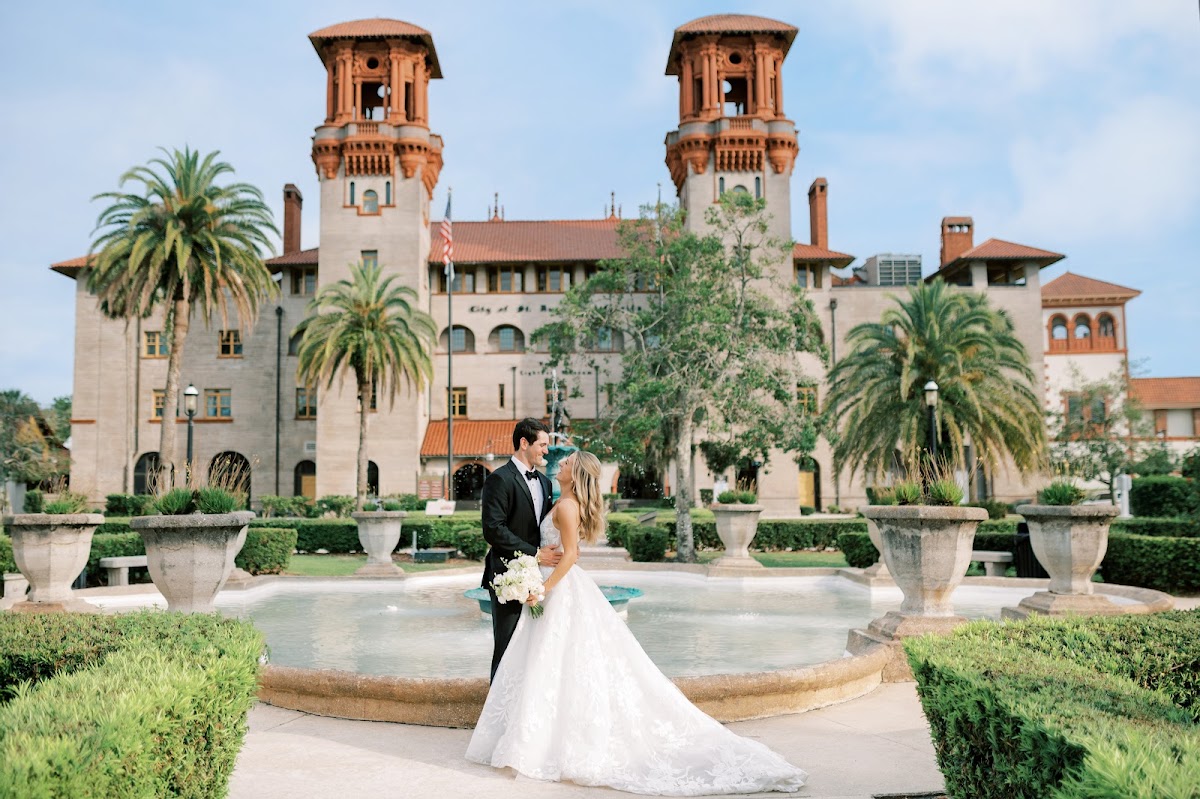
We know this venue well from our work here. The Lightner Museum is not a blank canvas; it is an architectural statement. Designing flowers for this St. Augustine icon requires a shift in perspective—you aren’t just decorating tables, you are competing with Gilded Age proportions and heavy Spanish Renaissance masonry.
Success at the Lightner depends on scale. The former indoor swimming pool, which now serves as the main ballroom, features a three-story ceiling and a sunken floor that can swallow standard-sized arrangements. To make an impact, floral designs must be structural, utilizing the venue’s balconies, stone ledges, and massive vertical clearance to create a sense of intimacy within the grandeur.
The Spaces
Main Ballroom (The Historic Pool)
The crown jewel of the museum, this space is defined by its history as a massive pool. Because the dining area is lower than the surrounding mezzanine, the visual “ceiling” of the room is exceptionally high.
- What works: Tall, airy centerpieces that utilize thin glass or gold harlow stands. These allow guests to see one another across the table while still filling the vertical void. Suspended floral clouds from the metal support structures are the ultimate high-impact move here.
- Skip: Short, compact round centerpieces. From the mezzanine level, these look like small dots on a table and fail to command the space.
- Watch out: The “pool” floor is a long, narrow footprint. Ensure aisle arrangements or floor installations don’t impede the flow of service staff in the tighter walkways.
- Budget hero move: Focus your spend on a lush, cascading installation on the bridge or the main staircase. This creates a focal point that anchors the entire room.
Grand Lobby
With its mosaic floors and crystal chandeliers, the lobby is the height of Gilded Age elegance. It is often used for cocktail hours or very intimate ceremonies.
- What works: Symmetrical floral pillars that frame the arched windows. The architecture here is very balanced, so your floral design should follow suit.
- Skip: Overly rustic or “boho” designs. The tile and crystal demand a more polished, classic aesthetic.
- Watch out: The lobby is a high-traffic transition zone. Keep floor-based arrangements tucked into the corners or against the walls to avoid being kicked by guests moving toward the courtyards.
Outdoor Terrace & Gardens
This space offers a breath of fresh air against the heavy stone of the interior. It is classic Florida, featuring palms and manicured greenery.
- What works: Ground-level “meadow” installations that line the ceremony aisle. These feel like they are growing out of the garden and don’t block the view of the museum’s stunning facade.
- Skip: Heavy, top-heavy arches. The terrace can catch a breeze coming off the Matanzas River, and lightweight structures are a liability.
- Watch out: The Florida sun is unforgiving on the terrace. Choose hardy blooms like orchids, protea, or thick-petaled roses if your ceremony is during the warmer months.
Side Courtyards & Loggia
These intimate pockets are perfect for portraits or small cocktail setups. The existing bougainvillea provides a natural floral base.
- What works: Small, “found” arrangements placed on stone ledges and built-in seating. This softens the hard masonry surfaces and makes the space feel lived-in.
- Budget hero move: A simple greenery garland wrapped around one of the stone pillars in the loggia creates a high-end photo backdrop for a fraction of the cost of a full arch.
What Works at Lightner Museum
Embrace the Asymmetry. The stone arches and staircases at the Lightner are grand but can feel rigid. Asymmetrical floral installations—where one side is taller or “wilder” than the other—break up the straight lines of the Spanish Renaissance architecture and add a modern, romantic touch.
Utilize the Mezzanine. Since guests often look down into the ballroom from above, the “top view” of your centerpieces matters. Incorporate lush greenery and textured blooms that look beautiful from a bird’s-eye perspective, not just from the seated position.
Go Bold with Color. The museum is dominated by neutral stone, grey plaster, and dark wood. Pastels can sometimes look washed out against such a heavy backdrop. Consider “punchy” palettes—deep burgundies, vibrant ochres, or even classic high-contrast white and deep green—to ensure the flowers pop.
Bridge the Vertical Gap. In the Main Ballroom, the space between the table tops and the three-story ceiling is immense. If budget allows, use hanging installations or extremely tall branches (like cherry blossoms or forsythia) to draw the eye upward and make the room feel more filled.
Highlight the Water Features. The museum has several historic fountains. Floating a few open blooms or adding a small “growing” installation at the base of a fountain is a low-cost way to draw attention to the venue’s unique historic details.
Budget Guide
| Tier | Investment | Floral Strategy |
|---|---|---|
| Essentials | $1,750 - $3,500 | High-quality personal flowers (bouquets/boutonnieres) and a focused ceremony statement, such as a pair of large altar pillars that can be moved to the reception. |
| Sweet Spot | $4,500 - $7,000 | Adds lush greenery for the twin grand staircases and a mix of low and tall centerpieces to create visual variety in the Historic Pool basin. |
| Full Experience | $8,000 - $12,000 | Includes a full staircase floral “growth” installation, premium blooms throughout, and decor for the Mezzanine level to ensure the venue feels cohesive from every angle. |
| Statement | $15,000+ | Large-scale hanging installations in the Main Ballroom, full floral arches for the Courtyard, and custom designs for the museum’s historic exhibit entrances. |
The Lightner Museum is a venue of significant character; it does not require flowers to “hide” anything, but it does require them to match its historical weight.
Tips
Weight your outdoor structures. The courtyards are beautiful but can act as wind tunnels; ensure any freestanding arches are weighted with sandbags or heavy iron bases hidden by florals.
Repurpose the ceremony pillars. The walk from the Grand Lobby or Courtyard to the Main Ballroom is short; have your team move ceremony florals to frame the sweetheart table or the band stage.
Lean into the Gilded Age. This venue suits “maximalist” floral styles—think dripping amaranthus, lush garden roses, and sprawling eucalyptus that feels like it’s been there for decades.
Mind the load-in. The Lightner is a historic building with specific access points and multi-level spaces; ensure your floral team has accounted for the extra labor required to move large installations up to the Mezzanine.
Lighting is your best friend. The museum’s existing string lights are excellent, but adding amber uplighting to your floral installations will make them glow against the dark stone walls at night.