
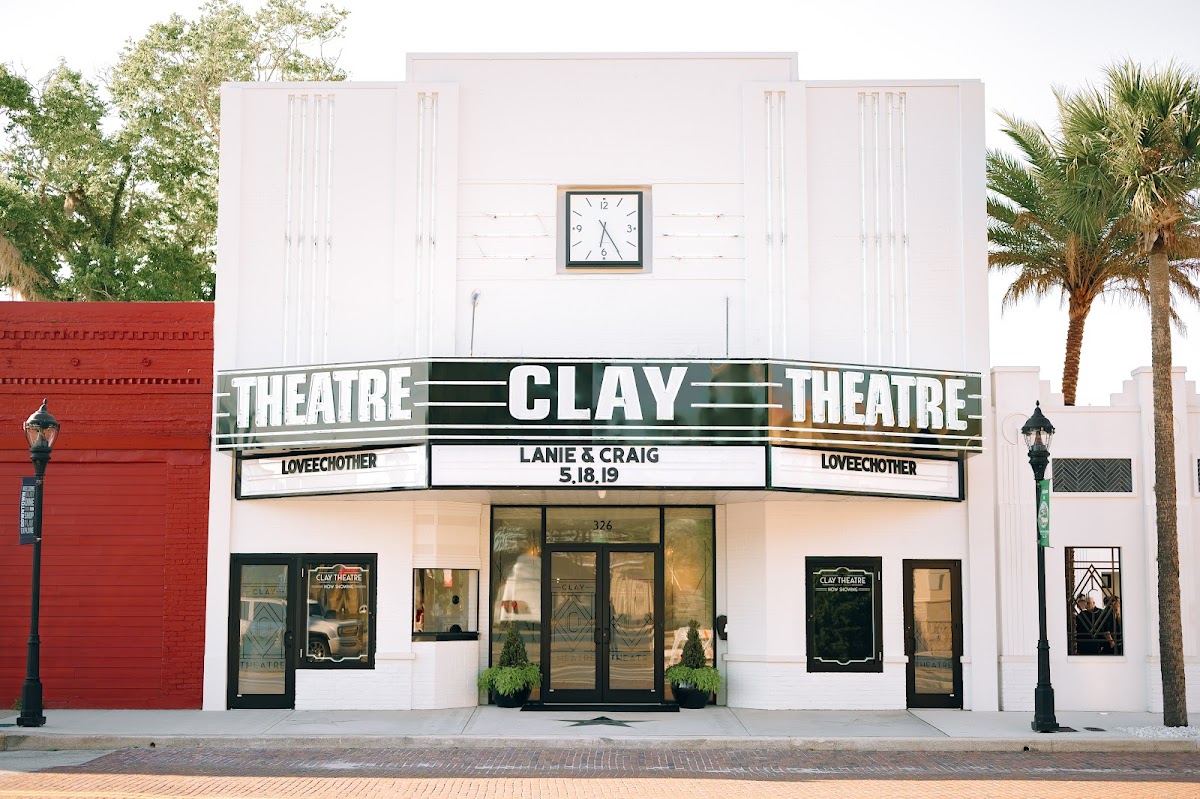
Clay Theatre is a masterclass in high-contrast design, functioning as a sophisticated “white box” that demands intentional floral architecture. Unlike traditional historic venues burdened by heavy wood or busy carpets, this space uses its 1937 bones as a minimalist framework, leaving the visual narrative entirely up to the floral palette.
The transition from the outdoor courtyard to the grand interior requires a cohesive design strategy. Because the venue is so bright and neutral, the flowers are not just accents; they are the primary source of texture and warmth. This is a space where the designer can play with scale and saturation without fear of clashing with the architecture.
The Spaces
Main Space
The heart of the theatre is defined by its soaring ceilings and expansive white walls. It is a flexible room that can easily feel cavernous if the floral design is too sparse. The integrated lighting system is a major asset here, as it can be used to spotlight specific floral installations during the reception.
- What works: Tall, airy centerpieces that draw the eye upward or lush, low arrangements that provide a “grounding” effect on the tables. Because the floor is dark and the walls are white, using flowers with deep greenery or saturated tones creates a necessary visual anchor.
- Skip: Small, delicate bud vases as the only table decor. They will disappear in the scale of the room.
- Watch out: The “white box” effect. Without enough color or greenery, the space can feel sterile in professional photography. Budget hero move: Focus your spend on two massive “altar” arrangements that can be repurposed to flank the sweetheart table or the stage.
Courtyard
The courtyard is a clean, modern outdoor area featuring white brick and geometric metal accents. It is the primary ceremony spot and benefits from the Florida sun, which makes every petal pop. The paved ground is a florist’s dream, providing a level, stable surface for complex installations.
- What works: Ground-level “growing” aisles or large-scale freestanding arches. The white brick acts as a studio backdrop, making vibrant colors like sunset oranges, deep burgundies, or even crisp whites look incredibly sharp.
- Skip: Traditional shepherd’s hooks or flimsy stands. The wind can pick up in this corridor, and the modern aesthetic calls for more integrated, structural designs.
- Watch out: The reflective nature of the white brick. In midday sun, white flowers can “blow out” in photos. Incorporate plenty of foliage to provide depth and shadow.
Lobby & Bar
This area sets the tone for the evening. It retains more of the theatre’s original Art Deco spirit and serves as the transition point for guests.
- What works: A “statement” piece on the bar. This is often the first thing guests see after the ceremony. A lush, asymmetrical arrangement here feels intentional and premium.
- Skip: Decorating every single cocktail table with expensive blooms. Save that budget for the high-traffic bar area.
- Watch out: Space constraints. The lobby can get crowded during cocktail hour, so keep floral footprints compact.
Theatre Marquee
The marquee is the venue’s most iconic feature. It is a missed opportunity to leave this space bare, as it serves as the backdrop for the most frequently shared photos of the event.
- What works: A climbing floral installation that winds up one of the pillars or across the base of the sign. It anchors the “theatre” theme without feeling like a movie prop.
- Skip: Symmetrical “bushes” on either side of the door. Go for something more organic and directional.
What Works at Clay Theatre
- Bold Saturation: Since the venue is almost entirely white, this is the place to use color. Deep jewel tones, vibrant citrus palettes, or even high-contrast monochromatic looks (all white flowers with dark tropical greenery) look exceptional here.
- Structural Silhouettes: Echo the geometric lines of the windows and the marquee. Use linear flowers like snapdragons, gladiolus, or even dried palms to create shapes that feel architectural rather than just round and fluffy.
- Floor-Based Installations: The flat, paved surfaces in the courtyard and the smooth floors of the Main Space are perfect for “nest” style arrangements that look like they are growing out of the ground.
- Repurposing with Purpose: The layout of Clay Theatre allows for easy movement of pieces from the Courtyard ceremony to the Main Space reception. Large ceremony pillars can easily be moved to the stage or the entrance of the ballroom.
- Modern Minimalism: You don’t need to cover every surface. At Clay Theatre, three large, high-impact installations will always look better than twenty small, mediocre ones.
Budget Guide
| Tier | Estimate | Description |
|---|---|---|
| Essentials | $1,750 - $3,000 | Focuses on personal flowers (bouquets/boutonnieres) and a high-impact ceremony focal point. Table decor is kept minimal with bud vases or greenery. |
| Sweet Spot | $3,500 - $5,500 | Includes full ceremony coverage, a statement bar piece, and a mix of low lush centerpieces and bud vases for 150 guests. |
| Full Experience | $6,000 - $9,000 | Allows for a large-scale ceremony installation, a marquee floral wrap, and elevated centerpieces in the Main Space that utilize the room’s height. |
| Statement | $10,000+ | Full-room transformation including overhead installations (if rigged), floor-to-ceiling floral pillars, and lush coverage for all auxiliary spaces. |
The Clay Theatre is a venue that rewards those who lean into its modern, cinematic identity. It is a space where floral design isn’t just an addition, but the defining element of the environment.
Tips
Utilize the white walls as a canvas. They reflect light beautifully, meaning your floral colors will look exactly as they do in nature—use this to your advantage with a nuanced palette.
Account for the Florida heat in the courtyard. While the space is paved and stable, it is an outdoor Florida environment. Choose hardier blooms for the ceremony to ensure they look fresh for the reception flip.
Think about the entrance. The marquee and lobby are the first touchpoints for guests; a small investment in these areas pays off in immediate “wow” factor.
Don’t fight the geometry. The venue has strong lines. Your floral designs should either lean into that structure or provide a soft, organic contrast to it.
Plan for the “flip.” If you are moving ceremony flowers inside, ensure your florist has a dedicated team for the transition, as the move from the courtyard to the main stage needs to be seamless.