
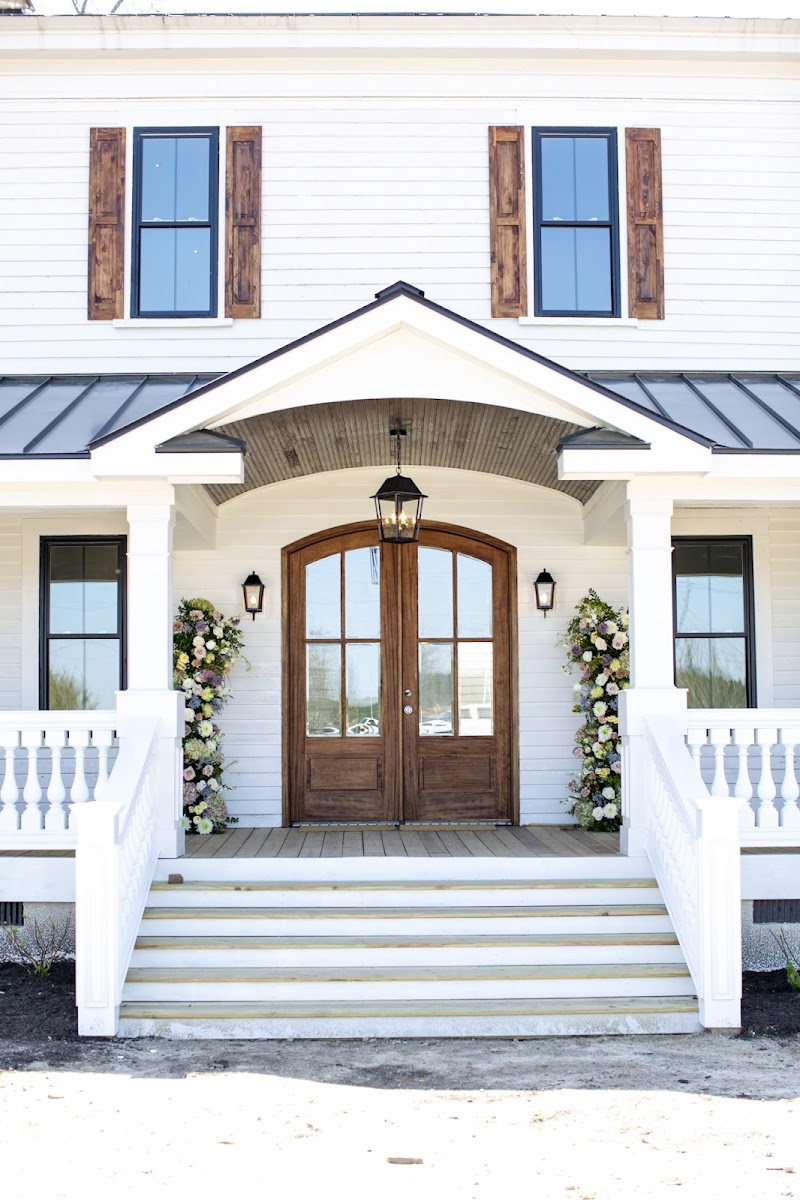
The drive down Indian Camp Road is what a slow exhale feels like. You leave Clayton’s newest shopping centers behind, pass the last stoplight, and the road narrows into something older. Pecan trees line the pavement like sentinels. The rhythm changes — the land here doesn’t hurry. And then Landon Estate appears, not announced by gates or grand signage, but revealed gradually: first the historic 1828 house with its wrap-around porch and original heart pine floors, then the crepe myrtle alley leading toward the gardens, and finally the main hall rising from the land with its French country elegance and that unmistakable sense of occasion. This is Johnston County countryside — tobacco barns still dot the horizon, the pace is gentler — but Landon Estate is proof that rural doesn’t mean rustic-only. The property balances Southern heritage with refined modern spaces, century-old pecan trees with climate-controlled comfort, and the result is a venue that feels both deeply rooted and utterly fresh. Poppy has received 4 wedding inquiries for Landon Estate, and while we haven’t yet had the pleasure of designing here, we know this type of venue intimately: the kind that requires florals to honor history, complement natural beauty, and still make a contemporary statement.
About Landon Estate
Landon Estate sits on peaceful acreage in the Indian Camp Road area of Clayton, North Carolina, approximately 25 minutes southeast of Raleigh and 35 minutes from Durham. The property centers around the original Sanders-Myatt house, built in 1828, a beautifully preserved example of North Carolina Federal architecture with original hardwood floors, period details, and two opulent dressing suites that have been updated with every modern amenity a wedding party could need. The house serves as the bride and groom’s private retreat on the wedding day — a place to get ready, to breathe, to step away from the celebration for a moment — and its wrap-around porch, with views over the gardens and pecan grove, is one of the most photographed spots on the property.
But the estate is more than a historic house. In recent years, the property has been thoughtfully expanded to include a 6,300-square-foot main reception hall, a structure that marries low-country elegance with French country sophistication. The hall features soaring ceilings crossed by exposed reclaimed wood beams, walls in soft neutral tones that shift from cream to pale gray depending on the light, and a series of statement chandeliers that cascade from the ceiling like illuminated jewelry. The Great Room within the hall extends the space, creating distinct zones for dining, dancing, and lounging without ever feeling segmented. The aesthetic throughout is refined but not precious — there’s warmth here, a sense that this is a place designed for celebration, not preservation.
Outside, the grounds unfold in layers. The 100-year-old pecan grove is the estate’s crown jewel for ceremonies — a natural cathedral of towering trees whose branches create dappled light and a canopy so dense it feels like an embrace. Adjacent to the grove is the Spring Bloom Garden, a Charleston-inspired space where the plantings change with the seasons but always maintain a sense of lush, slightly wild beauty. There’s also the crepe myrtle alley, a tree-lined pathway that makes for a breathtaking processional route when the myrtles are in bloom (typically July through September in North Carolina, exploding in shades of pink, white, and lavender). Between the historic house and the main hall lies a bluestone patio, a transitional space perfect for cocktail hour, and adjacent to the hall is a climate-controlled covered porch that extends the interior footprint while maintaining that indoor-outdoor flow so essential to Southern entertaining.
Logistically, Landon Estate is well-equipped for the demands of a full wedding day. The venue provides event rentals including tables, chairs, lounge furniture, ceremony arbors, and barware as part of the site fee, which simplifies planning considerably. Setup and cleanup services are included, and vendors have access to the grounds from 10 AM to 10 PM on the event day, which provides ample time for floral installations and photography without the pressure of abbreviated timelines. Under The Oak Catering is the exclusive food and beverage provider, offering farm-to-table menus using ingredients from local North Carolina farms, and their bar service (starting at $30 per person) includes bartenders, liquor license, open bar options, and signature cocktails. Couples are required to use Under The Oak but have flexibility with all other vendors, including florists — an important detail for a Poppy couple, as it means we can work without restrictions.
For our design and delivery teams, the Clayton location is approximately 30 minutes from our Raleigh-area operations, making it an easy service area. The venue has good vehicle access for load-in, ample staging space for arranging installations, and a responsive events team that communicates clearly about setup logistics. The estate requires standard certificates of insurance for vendors, which is routine for us. One detail worth noting: the estate is pet-friendly, which we mention because we’ve designed bouquets and boutonnieres that incorporate pet portraits or subtle nods to beloved dogs more than once, and it’s a lovely option when the venue allows the four-legged family members to attend.
Event Spaces & Floral Opportunities
Main Reception Hall
Capacity: 175 seated
Setting: The Main Reception Hall is where Landon Estate makes its most dramatic statement. The space is enormous — 6,300 square feet — yet never feels cavernous because the architecture creates intimacy through scale. Soaring ceilings rise to exposed reclaimed wood beams that run the length of the room, their weathered texture and natural grain providing warmth against the smooth plaster walls. The chandeliers are the room’s jewelry: large, sparkling fixtures with clean geometric lines that nod to French country style without veering into ornate. The color palette is neutral — soft creams, warm grays, natural wood tones — which means the space can absorb nearly any floral color story without clashing. Windows along one wall bring in natural light, and the Great Room section of the hall provides distinct zones for bar service, lounge seating, and dining without partitions.
Floral approach: This hall rewards vertical thinking. Those soaring ceilings and exposed beams invite the eye upward, so we design with height in mind — either dramatically tall centerpieces on elevated stands that rise above guest sightlines (think 30-inch trumpet vases with cascading amaranthus, garden roses, and trailing jasmine vine), or very low, lush arrangements that keep the view open and put the focus on the architecture above. The beams themselves are an untapped opportunity: we can install garlands that run beam-to-beam, creating a floating garden effect overhead. Imagine 40 feet of smilax and Italian ruscus woven with Quicksand and Cappuccino roses, white lisianthus, and soft peach ranunculus, punctuated every eight feet with a cluster drop of blooms and trailing ribbons. The chandeliers can be gently dressed with a halo of greenery — just enough to soften the metal without obscuring the sparkle — or left entirely alone to shine. For the tables, consider vessels that echo the architecture: aged brass urns, matte ceramic compotes in cream or pale gray, or sculptural wooden boxes that reference the beams. The neutral backdrop means you can go bold with color — jewel tones, saturated brights, even all-white with tons of texture — and the room will support it. For the entrance into the hall, a pair of substantial arrangements on pedestals (overflowing garden style with branches, hydrangea, and focal blooms) signals the transition from cocktails to dinner and creates that “moment” guests will remember.
Pecan Grove
Capacity: Flexible (ceremony and cocktails)
Setting: Step into the pecan grove and the temperature drops. The canopy of 100-year-old trees creates a natural ceiling so dense that even on the brightest summer day, the light is filtered into dappled gold. The ground is soft with fallen leaves and well-maintained grass, and the trees — some with trunks over three feet in diameter — stand in irregular rows that create natural sight lines toward a ceremony focal point. The atmosphere is serene, almost church-like in its quiet, and the low-country elegance the venue describes is palpable here. It’s a space that commands reverence but also invites joy — the kind of place where guests instinctively lower their voices as they take their seats, then burst into applause when the couple is pronounced married.
Floral approach: The cardinal rule in the pecan grove: let the trees do the work. This is not a space that needs an elaborate floral arch or towering installations. The canopy itself is the cathedral. Instead, we focus on enhancing the ceremony focal point and the aisle without competing with the natural grandeur. A simple wooden arbor or a minimalist iron frame dressed with loose garlands of seeded eucalyptus, olive branches, and café au lait dahlias creates a frame for the couple without dominating the view. If the couple prefers no arbor, a pair of large urns flanking the ceremony site — overflowing with garden roses, hydrangea, trailing amaranthus, and textured greenery — provides an anchor. For the aisle, we favor restraint: every third or fourth row, a small arrangement in a low vessel or a shepherd’s hook with a pomander of blooms and greenery. Alternatively, lanterns interspersed with bud vases create romance without excess. The trees themselves can be lightly dressed at the base with clusters of florals and candles in hurricane glass, particularly the trees closest to the ceremony site. The key is to keep everything organic and slightly wild — this is not the place for tight, symmetrical designs. Think garden gathered, just-picked, as if the flowers grew there naturally. Also consider the season: in fall, when the pecan leaves turn golden and carpet the ground, less is definitely more.
Spring Bloom Garden
Setting: The Spring Bloom Garden is Landon Estate’s love letter to Charleston horticulture — lush, layered, and designed to bloom in waves throughout the growing season. Depending on when you visit, you might find the garden filled with tulips and daffodils, roses and hydrangea, or late-summer zinnias and black-eyed Susans. The plantings are intentionally romantic, with curving beds, brick pathways, and enough variety that there’s always something in flower. This is an ideal ceremony site for couples who want their setting to feel like a living garden rather than a manicured lawn.
Floral approach: The challenge and the opportunity in the Spring Bloom Garden is the same: you’re designing in a space that is already full of flowers. The goal is to complement, not compete. We start by assessing what’s in bloom during your wedding month and designing a floral palette that harmonizes with the garden’s natural color story. If the garden is full of pastel spring blooms, we might echo that with arrangements of blush ranunculus, white peonies, and soft lavender sweet peas. If you’re marrying in summer when the garden is more vibrant, we can lean into that with bold dahlias, zinnias, and sunflowers. The ceremony focal point should be simple — perhaps an asymmetrical arrangement on a vintage table or pedestal rather than a full arch, or a fabric backdrop with minimal floral accents that doesn’t try to mimic the garden itself. For the aisle, consider potted plants or arrangements that look like they were lifted from the garden beds — loose, organic, slightly imperfect. The beauty of this space is that it already does so much of the work; your florals are there to enhance specific moments (the ceremony site, the entrance, perhaps a featured garden corner for photos) without trying to recreate what nature has already provided.
Cocktail Lounge
Setting: The Cocktail Lounge is where Landon Estate turns cozy. This interior space features a stone hearth fireplace as its centerpiece, a built-in bar with room for multiple bartenders, and furnishings that invite guests to settle in with their old fashioneds and local craft beers. The stone fireplace has a rustic elegance — the stonework is textured and natural, not overly refined — and the mantle provides a perfect ledge for floral installations. The lounge connects to other spaces but feels distinct, like a private club within the larger venue.
Floral approach: The stone fireplace mantle is your hero moment here. We design a lush garland installation that drapes across the mantle and cascades asymmetrically down one side — think six to eight feet of smilax, Italian ruscus, and seeded eucalyptus as the base, with clusters of garden roses (Juliet, Keira, Patience), ranunculus, hellebores, and textured accents like scabiosa pods and privet berries woven throughout. The installation should feel organic and gathered, not stiff or symmetrical. For the bar, compact arrangements in low vessels work best — you don’t want to obstruct the bartenders’ workflow or block guests’ views. Consider arrangements in aged brass julep cups or matte ceramic cylinders, keeping heights under 10 inches and focusing on texture and interest rather than scale. Cocktail tables can feature smaller versions of the same design or opt for single-stem bud vases clustered in groups of three. The warm, intimate atmosphere of this space lends itself to richer color palettes — deep burgundy, plum, terracotta, burnt orange — and metallic accents in gold or copper that catch the firelight.
Climate-Controlled Covered Porch
Setting: The covered porch is Landon Estate’s solution to North Carolina’s weather unpredictability — a large, heated (and cooled) space that feels outdoor in its openness but provides all the climate control of an interior room. The porch extends the footprint of the main hall and can function as overflow reception space, a cocktail area, a lounge zone, or even a ceremony backup location. The covered structure means you get the ambiance of outdoor entertaining without the mosquitoes, sudden rain showers, or summer humidity that can wilt both flowers and guests.
Floral approach: Because this space is protected from weather, we can use more delicate blooms and techniques than we might risk in a fully outdoor setting. This is an ideal location for a dramatic hanging installation — perhaps a floral chandelier constructed from a wooden hoop or metal frame, dressed with trailing greenery, blooms, and vines that create a focal point overhead. Think of it as sculpture: a 4-foot diameter installation suspended at varying heights, drawing the eye up and creating visual interest in what is essentially a large, open-ceiling space. For perimeter styling, consider large urns or arrangements on pedestals that define the edges of the porch and create zones within the larger space. If the porch is being used for cocktails, bar arrangements and cocktail table florals should follow the same design language as the interior spaces to create continuity. The beauty of the covered porch is flexibility — you can go bigger and more elaborate here than you might in a fully exposed outdoor space, knowing your installations are protected.
Bluestone Patio
Setting: The bluestone patio sits between the main reception hall and the historic 1828 house, creating a natural gathering spot for cocktail hour or a transition space between ceremony and reception. The bluestone itself is handsome — gray-blue pavers with natural variation in color and texture — and the open-air setting allows guests to move freely between the patio, the surrounding gardens, and the adjacent indoor spaces.
Floral approach: For cocktail hour on the patio, we design with mobility in mind. Cocktail table arrangements should be substantial enough to make a statement but compact enough that they don’t dominate the small tables — typically 8 to 10 inches tall in low vessels like aged zinc containers, terra cotta pots, or rustic wooden boxes. We might also place larger statement arrangements on the patio’s perimeter — on low stone walls, at entrance points, or flanking the doors into the main hall — that create visual anchors without impeding traffic flow. If the bar is located on the patio, this is an opportunity for an elevated bar installation: a long, low arrangement that runs the length of the bar, or a series of arrangements in varying heights that create interest without blocking the bartenders. The bluestone’s gray-blue tones are neutral enough to support nearly any color palette, but we often lean into complementary colors — warm terracottas, soft peaches, and corals look particularly beautiful against the cool stone.
Historic Estate House (1828)
Setting: The Sanders-Myatt house is where the day begins. The two dressing suites are private sanctuaries for the bride and groom, each with its own character, original hardwood floors that creak in the best possible way, period details like crown molding and transom windows, and modern amenities like full bathrooms and climate control. The wrap-around porch overlooks the gardens and pecan grove, and the interior spaces are flooded with natural light — a photographer’s dream.
Floral approach: The getting-ready spaces call for a lighter touch. This is not where we install large arrangements; instead, we focus on intimate, personal florals that enhance the experience of the morning and photograph beautifully. A small arrangement on the vanity or dressing table — perhaps a low compote of garden roses, sweet peas, and ranunculus in soft, romantic colors — adds a touch of beauty to the bride’s getting-ready photos. A bud vase with a single perfect bloom or a small cluster of loose stems in a vintage vessel creates organic, editorial-style photos without feeling staged. For the groom’s suite, something simpler: a small arrangement incorporating greenery and textural elements, or even just a boutonniere presented on a bed of eucalyptus and ribbon. The wrap-around porch is ideal for bridal portraits, and while we don’t typically install florals here, if there’s a specific porch area that will be heavily photographed, a small arrangement or a floral styling element on a side table or railing can enhance the scene. The key in the historic house is subtlety — you’re adding touches, not decorating a space.
Wedding Flower Ideas for Landon Estate
French Country Garden
This design concept leans into Landon Estate’s French country aesthetic with a palette of soft lavenders, dusty purples, warm peaches, and cream — colors that feel like they were lifted from a Provençal garden at dusk. We build arrangements with lisianthus (in both single and double varieties), garden roses (Keira, Patience, Juliet), white and lavender sweet peas, peach ranunculus, and dusty purple scabiosa, anchored by textured greenery like eucalyptus, olive branches, and Italian ruscus. Vessels are aged terra cotta, matte ceramic in cream and dove gray, or natural wood boxes with a weathered finish. The overall effect is romantic and pastoral, with an organic, just-gathered feel that complements both the historic house and the modern hall. This palette is particularly stunning in the Spring Bloom Garden for a spring ceremony, in the Main Reception Hall where the neutral backdrop allows the soft colors to glow, and on the Bluestone Patio where the cool stone contrasts beautifully with the warm peach tones.
Southern Heritage
Grounded in the historic character of the 1828 estate house and the century-old pecan grove, this concept uses a palette of warm whites, soft greens, and touches of burgundy and blush. Key flowers include white hydrangea, Quicksand and Sahara roses, blush ranunculus, burgundy dahlias (Rip City, Karma Choc), white lisianthus, and hellebores in muted green tones. Textural greenery includes magnolia leaves (a nod to Southern tradition), seeded eucalyptus, and grapevine. Vessels are brass (aged, not shiny), dark wood boxes, or white ceramic urns with classical lines. Accents might include dried cotton stems (if available seasonally) or bundles of wheat for a harvest feel. The aesthetic is refined Southern elegance — not cotillion formal, but gracious and rooted in tradition. This design works beautifully in the Cocktail Lounge where the stone fireplace provides a warm backdrop, in the Pecan Grove where the colors harmonize with the natural environment, and throughout the Main Reception Hall where the classic palette feels timeless.
Wild Jewel
For couples who want drama and saturation, Wild Jewel brings a bold, organic approach with a palette of deep jewel tones — burgundy, plum, fuchsia, coral, and burnt orange — balanced by lush greenery and unexpected textural elements. Featured blooms include burgundy dahlias (Black Satin, Jowey Mirella), fuchsia garden roses (Piano, Yves Piaget), coral charm peonies (if in season), plum-toned ranunculus, deep purple anemones, and coral spray roses. We incorporate unconventional elements like amaranthus (both hanging and upright varieties in burgundy), hypericum berries, blackberries on the stem, and dark foliage like burgundy leucadendron leaves. Vessels are matte black ceramic, copper, or natural wood with a dark stain. The arrangements are intentionally wild and asymmetrical, with trailing elements and unexpected texture. This palette is electric in the Main Reception Hall, where the neutral backdrop allows the colors to pop, stunning on the Climate-Controlled Covered Porch where a hanging installation in these tones becomes a focal point, and surprisingly beautiful in the Pecan Grove where the rich colors contrast with the dappled natural light.
Seasonal Considerations
North Carolina’s humid subtropical climate means distinct seasons with different opportunities and challenges for wedding flowers. Johnston County, where Clayton sits, experiences all four seasons clearly, though winters are mild and summers can be intensely humid.
Spring (March through May): Spring is glorious in North Carolina, with mild temperatures, lower humidity, and gardens in full bloom. The Spring Bloom Garden at Landon Estate is at its peak from mid-March through May, with tulips, daffodils, azaleas, and dogwoods creating a natural floral backdrop. For your wedding flowers, this is an ideal time for peonies (late April through May), ranunculus, anemones, sweet peas, and locally grown tulips. The crepe myrtle alley won’t be in bloom yet, but the pecan grove is leafing out and provides dappled shade. Temperatures range from 60-75°F, which is comfortable for outdoor ceremonies and gentle on flowers. One consideration: spring can bring afternoon thunderstorms, so have a rain plan. The climate-controlled covered porch is an excellent ceremony backup that doesn’t feel like a compromise.
Summer (June through August): North Carolina summers are hot and humid — expect temperatures in the 85-95°F range with high humidity that makes it feel even warmer. This is when the crepe myrtle alley is at its most spectacular (July through September), creating a tunnel of pink, white, or lavender blooms for a processional. For your floral designs, we favor heat-tolerant blooms: zinnias, sunflowers, celosia, dahlias (more resilient than you’d think), roses (especially garden roses which hold up better than hybrid teas), and hardy greenery like Italian ruscus and seeded eucalyptus. We avoid delicate blooms like sweet peas, anemones, and anything that wilts easily in heat. Hydration is critical — we design with flowers that have been properly conditioned and avoid installations that will sit in direct sun for extended periods. If your ceremony is outdoors, consider a late afternoon or early evening start (5 PM or later) when temperatures have dropped slightly. The pecan grove provides natural cooling through shade, making summer ceremonies there more comfortable than in a fully exposed garden.
Fall (September through November): Fall is the second peak wedding season in North Carolina, and for good reason. Temperatures moderate into the 65-80°F range, humidity drops, and the light takes on that golden quality that photographers dream about. The pecan grove’s leaves begin turning golden in late October and November, creating a natural color palette. Fall is dahlia season — they’re at their most abundant and spectacular from September through the first frost. We also love fall for garden roses, marigolds, chrysanthemums (the spray varieties, not the typical funeral mums), hypericum berries, and textured greenery like oak leaves and dried grasses. This is the season for richer color palettes — burgundy, rust, terracotta, burnt orange — that harmonize with the natural landscape. Cooler temperatures mean flowers last longer and you can use a wider variety of blooms without worrying about heat stress. One consideration: North Carolina can still be quite warm in September (80s), so early fall weddings should use heat-tolerant flowers until temperatures consistently drop in October.
Winter (December through February): Winter in Clayton is mild compared to northern states — temperatures typically range from 35-55°F, with occasional dips below freezing but rarely sustained cold. The historic house and main hall are climate-controlled, making indoor spaces cozy and comfortable. The landscape is dormant — the pecan grove is bare, the gardens are sleeping — which puts more emphasis on your floral design to bring color and life. Winter is ideal for amaryllis, roses (imported but widely available), hellebores, anemones (which actually prefer cooler temperatures), ranunculus, and evergreen elements like magnolia, cedar, pine, and eucalyptus. We design with richness and texture, often incorporating seasonal elements like pinecones, berries, and dried pods. The Cocktail Lounge with its stone fireplace is particularly atmospheric in winter, and we design installations that play up the cozy, intimate feeling. One advantage of winter: flowers last longer in the cooler temperatures, and you don’t have to worry about wilting in outdoor spaces. The covered porch, with its climate control, allows for elegant outdoor-feeling celebrations even on cold days.
Poppy’s Expert Take
The pecan grove needs less than you think. First-time couples often want to “fill” the ceremony space in the pecan grove with elaborate installations, but trust us: those trees are doing all the heavy lifting. Over-designing here actually detracts from the natural beauty. A simple arbor with loose greenery or a pair of substantial urns is more than enough. Let the canopy be your cathedral ceiling.
Timing matters for the Spring Bloom Garden. If you’re planning an outdoor ceremony in the Spring Bloom Garden, schedule a site visit about three weeks before your wedding date to see exactly what will be in bloom. The garden’s appearance changes dramatically week to week in spring, and knowing what colors and textures are naturally present will help us design florals that complement rather than clash. We can then adjust your palette to harmonize with whatever the garden is doing that particular weekend.
The chandeliers in the Main Reception Hall are a gift. Those statement light fixtures provide dramatic overhead interest, which means you can invest less in tall centerpieces and more in other areas like ceremony florals, bar installations, or statement entrance pieces. If you want to dress the chandeliers with greenery, we keep it minimal — just a wisp of smilax or a small cluster at the base — so the sparkle isn’t obscured. Think of it as jewelry: you want to enhance, not cover.
Plan for the patio-to-hall flow. Many couples use the Bluestone Patio for cocktail hour before moving guests into the Main Reception Hall for dinner. Consider how your florals create continuity between these spaces. If your cocktail table arrangements use terra cotta vessels and peach-toned blooms, your reception centerpieces should share some design elements — perhaps the same greenery, similar color tones, or complementary vessels. This creates a cohesive experience rather than feeling like two separate events.
The covered porch is your weather insurance with style. North Carolina weather can be unpredictable — spring thunderstorms, summer heat, surprise cold snaps. The climate-controlled covered porch is a genuine ceremony backup that doesn’t feel like plan B. If weather looks questionable, we can design your ceremony florals to work beautifully on the porch (where they’ll be protected) and simply move elements to the original outdoor location if conditions improve. It’s worth discussing this flexibility in your initial consultation rather than scrambling if the forecast turns sour three days before your wedding.
Under The Oak Catering is going to help you, so coordinate. Since catering is exclusive through Under The Oak, make sure your florist (us) and your caterer are talking. We need to know their table setup — linens, place settings, glassware — to design centerpieces with appropriate scale and color compatibility. A centerpiece that’s perfect on a bare wood table can look wildly different on a table with ivory linens and gold-rimmed chargers.