
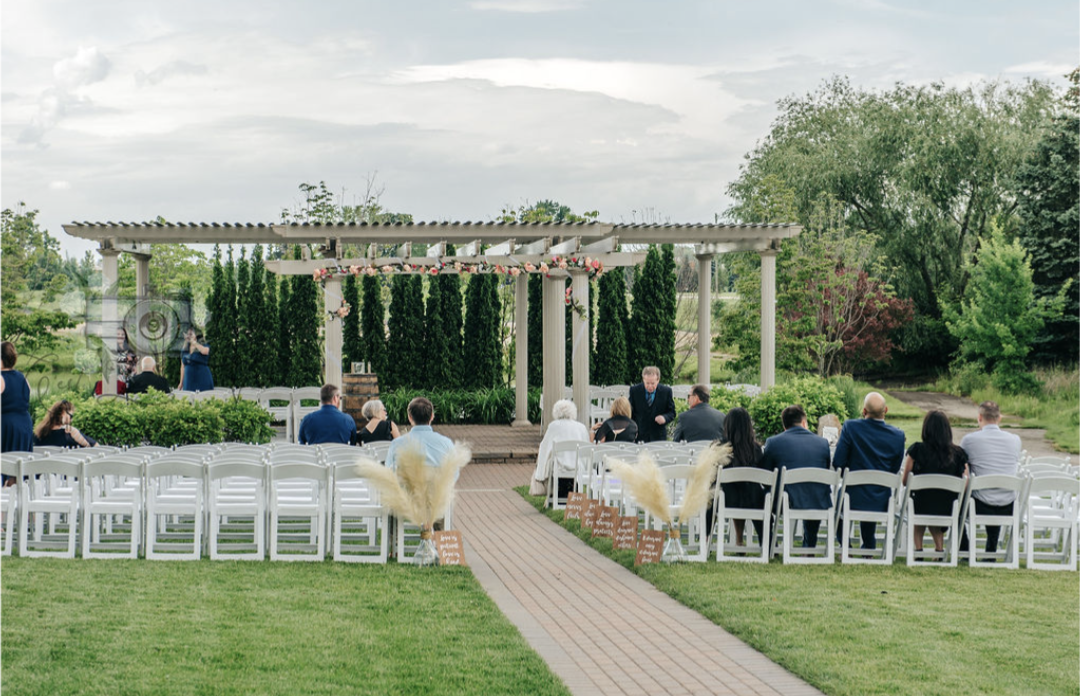
Romeo Plank Road cuts north through Clinton Township in a straight line, the kind of suburban Michigan thoroughfare where strip malls and car dealerships eventually give way to wider lawns and established properties. The Italian American Cultural Society and Banquet Center sits back from the road at number 43843, announcing itself not with fanfare but with quiet permanence — a sprawling property where formal gardens meet a serene pond and where, on a summer evening, you can watch the sun set over water while chandeliers flicker to life inside a fabric-draped tent. This is a venue that knows what it is: a full-service banquet facility with Old World hospitality and modern amenities, a place where multi-generational families have celebrated weddings for decades, where the marble dance floor has been worn smooth by thousands of dances, and where the mahogany bar has poured just as many toasts. The grounds unfold in layers — ballrooms and club rooms inside, covered patios and tented pavilions outside, and finally the gazebo by the pond, where brides walk down an aisle framed by water. Poppy has received 7 inquiries for Italian American Cultural Society and Banquet Center wedding flowers, and what draws couples here is the same thing that makes it ideal for florists: versatility, scale, and the rare combination of elegant indoor spaces with genuinely scenic outdoor ceremony sites all on one property.
About Italian American Cultural Society and Banquet Center
The Italian American Cultural Society and Banquet Center — known locally as IACS — has been a Clinton Township fixture since its founding, built to serve as both a cultural hub for the region’s Italian-American community and a premier event venue. The facility encompasses multiple ballrooms, event rooms, and outdoor spaces across a property that includes manicured lawns, mature trees, a scenic pond, and extensive covered patio areas. Unlike newer event barns or restored industrial spaces, IACS is purpose-built for celebrations, with every detail — from the commercial kitchen to the ample parking lot to the ADA-accessible entrances — designed for smooth, large-scale event execution.
The architectural style is classic American banquet hall, which is to say: neutral elegance, high ceilings, generous square footage, and an absence of overpowering design elements that might clash with a couple’s vision. The Elegant Ballroom features a polished marble dance floor that photographs like a dream, mahogany furnishings throughout, and a substantial mahogany granite bar that anchors one end of the space. The chandeliers are traditional crystal, casting warm light without overwhelming the sightlines. Large windows along one wall provide natural light during daytime events and eliminate the cave-like feeling some ballrooms have. The smaller Club Room and the mid-sized East and West Rooms follow a similar design language — classic, comfortable, and deliberately understated so that decor can shine.
What sets IACS apart from many Metro Detroit venues is the outdoor component. The property includes a marquee-style tent with sparkling chandeliers and fabric draping that feels more French garden party than typical rental tent. The outdoor gazebo and trellis structure overlooks the pond, creating a ceremony backdrop that needs minimal enhancement. And the covered patio adjacent to the ballroom serves as a weather-protected extension of the reception space, perfect for cocktail hour, a dessert station, or late-night cigars and conversation without guests having to fully commit to being “outside.” This indoor-outdoor connectivity is rare at traditional ballroom venues and makes IACS particularly appealing for couples who want outdoor ceremony photos without the logistical headaches of a fully outdoor venue.
From a florist’s perspective, IACS is exceedingly workable. The venue allows outside vendors for florals and decor, which is not a given at all-inclusive banquet facilities. Load-in access is straightforward, with wide doors and loading areas that can accommodate a van full of installations. The events team is experienced with vendor coordination and provides clear timelines for setup and breakdown. Certificate of insurance is required, which is standard. The property is located about 25 minutes north of downtown Detroit and 20 minutes from Poppy’s studio area, making it accessible for delivery without significant travel time. On-site parking is plentiful for vendor vehicles, and valet service is available for guest parking during events, which means the lot stays organized and accessible for load-out even during a bustling reception.
The venue operates with a 50-guest minimum, and the peak season runs March through December — essentially avoiding only the harshest Michigan winter months. The in-house culinary team provides Italian and American-inspired cuisine with service styles ranging from plated dinners to family-style to stations, and they’re experienced in accommodating dietary restrictions. Couples have the flexibility to bring in outside cake. The venue holds its own liquor license and offers full bar service including everything from house pours to premium liquor to specialty cocktails. This full-service model means couples are coordinating fewer vendors overall, and in our experience, that translates to less stress and more bandwidth for focusing on the details that matter most — like the flowers.
Event Spaces & Floral Opportunities
Elegant Ballroom
Capacity: Up to 400 seated guests
Setting: The Elegant Ballroom is IACS’s flagship space and the largest of the event rooms. The polished marble dance floor anchors the center of the room, reflecting light from the crystal chandeliers overhead and creating a sense of occasion the moment guests enter. High ceilings — at least 12 feet — allow for dramatic vertical installations without feeling cramped. The mahogany granite bar stretches along one wall, polished to a gleam and substantial enough to serve as a focal point even before you add florals. Mahogany furnishings and trim throughout warm the space, while large windows along one side provide natural light and views of the property’s greenery. The room flows directly to the covered patio through wide French doors, creating seamless indoor-outdoor movement. The neutral palette — cream walls, rich wood tones, classic crystal — provides a versatile canvas.
Floral approach: In a ballroom this large, scale matters. Undersized centerpieces will disappear; undersized bar arrangements will look like an afterthought. We typically design for guest tables in two ways here: either lush, low arrangements (8-10 inches tall) in substantial vessels — think overflowing garden roses (Patience, Keira, Juliet), spray roses (Bombastic, Mimi Eden), lisianthus (Rosanne Brown, Alissa Pink), ranunculus, and trailing jasmine vine or Italian ruscus in antique brass compotes or stone-look ceramic bowls — or elevated arrangements on 24-30 inch risers that lift florals above sightlines entirely. The elevated approach works especially well here because it preserves conversation and views while adding drama to the room’s upper third. For the mahogany bar, we recommend a substantial asymmetrical arrangement — a cascade of blooms and greenery that spills over the corner closest to the entrance, incorporating flowers that complement the wood tones: burgundy dahlias (Karma Prospero, Vassio), quicksand roses, toffee and mauve lisianthus, plum scabiosa, and dark foliage like burgundy leucadendron or chocolate cosmos. The chandeliers can be enhanced with minimal greenery swags — smilax or Italian ruscus looped loosely — but don’t overdo it; these fixtures are beautiful on their own. For the entrance from the cocktail space, a pair of large-scale floor arrangements in tall urns flanking the doorway signals the transition and frames the view into the ballroom. The marble floor is ideal for standing pedestals or column arrangements if you’re creating a dramatic head table backdrop. The key in this space is to think like a theater set designer: create layers, draw the eye upward, and ensure that no matter where a guest sits, they’re experiencing something beautiful.
Club Room
Capacity: Up to 100 seated guests
Setting: The Club Room offers a more intimate alternative to the ballroom while maintaining the venue’s classic elegance. This space features unique lighting fixtures — often brass or bronze sconces and smaller chandeliers that cast warmer, more focused light than the ballroom’s grand crystal pieces. The room is furnished with the same mahogany accents found throughout IACS, and the proportions feel residential rather than commercial, which creates a cozy, dinner-party atmosphere. Windows provide natural light during the day, and the overall feeling is less “grand ballroom” and more “private club gathering,” which is exactly the point.
Floral approach: In a room this intimate, every floral detail is noticed, which means you can invest in higher-end blooms and more intricate designs without needing massive volume. We favor sophisticated, garden-style centerpieces for guest tables — low and lush, designed to encourage conversation across the table. Think romantic combinations like café au lait dahlias, Quicksand and Sahara roses, blush ranunculus, white lisianthus, astilbe, and dusty miller foliage in mercury glass compotes or matte ceramic vessels. The lighting in the Club Room tends warm, so florals in peach, blush, ivory, champagne, and soft coral photograph beautifully here and glow under the sconces. Avoid stark white or icy pastels, which can read flat in warm light. For the bar or side tables, smaller bud vase arrangements in clusters of three or five create visual interest without overwhelming the space. If the Club Room is being used for a rehearsal dinner or smaller wedding, consider a single elevated arrangement on the head table or sweetheart table — something architectural and conversation-worthy, perhaps with interesting branches (curly willow, manzanita) or a color gradient that tells a story. The room’s intimacy allows for scented blooms like garden roses, jasmine, or hyacinth in spring, which would be lost in a larger space but here create a multi-sensory experience.
East Room
Capacity: Up to 200 seated guests
Setting: The East Room strikes a middle ground between the grandeur of the Elegant Ballroom and the intimacy of the Club Room. It features its own marble dance floor, a mahogany granite bar, and access to the covered patio, essentially functioning as a scaled-down version of the ballroom. The ceiling height is generous, the windows provide natural light, and the overall aesthetic is refined traditional. This space is ideal for couples who want 150-200 guests and appreciate having a more proportional room rather than a massive ballroom that feels half-empty.
Floral approach: The East Room’s proportions allow for statement florals without requiring the sheer volume needed for the Elegant Ballroom. Guest table centerpieces can be medium-height (12-18 inches tall) in elevated gold or brass stands, creating visual interest while maintaining an open feel. We often design with a mix of textures here: garden roses (Patience, Romantic Antike, Keira), standard roses (Quicksand, Amnesia, Sahara), spray roses, stock (Katz White, Katz Lavender), snapdragons, and lysimachia or hanging amaranthus for movement. Vessels can be more decorative in this room — gold compotes, vintage brass urns, or even colored glass in jewel tones if the palette supports it. The bar is a natural focal point and should receive a generous arrangement — we recommend an overflowing design that incorporates both height and width, perhaps with branches or delphinium spires to draw the eye upward. For the patio entrance, consider a floral installation on either side — pedestal arrangements or even a garland draped along the doorway frame to create continuity between indoor and outdoor spaces. If the East Room is hosting both ceremony and reception (a flip), the marble dance floor becomes the perfect location for a ceremony arch or chuppah, which can then be moved to the patio or deconstructed and repurposed as head table arrangements for the reception. The room’s flexibility is its greatest asset from a floral design standpoint.
West Room
Capacity: 120-150 seated guests
Setting: The West Room is the most adaptable space at IACS, with flexible layout options that allow it to function as a ceremony site, a cocktail space, a smaller reception room, or even a breakout area for a multi-room event. The room’s design follows the same classic banquet hall aesthetic as the other spaces, with neutral walls, elegant lighting, and ample square footage that can be arranged in various configurations.
Floral approach: Because the West Room’s function varies widely, the floral design should be determined by its specific role in your event. If it’s serving as a ceremony space, we recommend a statement arch or altar arrangement — perhaps a half-moon arbor covered in lush florals and greenery (smilax, Italian ruscus, silver dollar eucalyptus), with clusters of garden roses, lisianthus, and seasonal accents woven throughout. Aisle markers can be simple — single blooms in bud vases on every third or fourth row, or small posies tied to the end chairs with silk ribbon. If the West Room is functioning as cocktail hour, invest in the bar and food station areas: a generous bar arrangement, and smaller clusters or floating arrangements near passed appetizer stations. For a seated reception, medium centerpieces work well — substantial enough to feel special but not so large they dominate a smaller room. One specific opportunity in the West Room: if you’re using it for a lounge-style cocktail hour with high-top tables and seating vignettes, consider varied heights and vessels — tall arrangements on some high-tops, low bowls on coffee tables, and even a floral chandelier installation overhead if the ceiling structure allows. This variation in height creates visual dynamism and makes the space feel intentionally designed rather than just “decorated.”
Marquee (Outdoor Tented Area)
Capacity: Flexible based on layout
Setting: The IACS marquee is not your standard rental tent. This is a permanent or semi-permanent structure with fabric draping, integrated chandeliers, romantic café lighting, and open sides that can be enclosed with clear panels in inclement weather. The tent overlooks the property’s scenic grounds and provides a sheltered outdoor experience that feels more garden party in the Italian countryside than suburban Michigan. The chandeliers cast warm, flattering light, and the fabric ceiling creates an intimate canopy effect. The flooring is typically stable decking, not grass, which is crucial for both guest comfort and floral installation stability.
Floral approach: The marquee’s structure is a florist’s dream because it provides built-in opportunities for suspended installations. We often design lush greenery garlands — smilax, Italian ruscus, seeded eucalyptus — that drape along the tent’s interior perimeter or frame the entrance, with clusters of blooms (garden roses, spray roses, lisianthus) woven in at intervals. The tent poles can be wrapped or adorned with floral collars at the base. If the marquee is being used for ceremony, consider a freestanding arch or a florally adorned chuppah that frames the officiant without blocking the scenic background views. For receptions under the tent, centerpieces should account for the outdoor lighting — jewel tones and saturated colors (burgundy, plum, deep coral, navy) read beautifully in the warm glow of chandeliers and string lights, while pale pastels can wash out. The chandeliers themselves can be enhanced with minimal greenery — a few trailing pieces of smilax or a small floral accent at the top — but resist the urge to cover them entirely; their sparkle is part of the tent’s magic. One specific recommendation: if the marquee is open-sided during cocktail hour, place a statement arrangement at the entrance to draw guests in, and consider small arrangements or lanterns on cocktail tables that can be weighted to withstand light breezes.
Outdoor Gazebo/Trellis
Capacity: Flexible based on seating layout
Setting: The gazebo and trellis structure sits at the edge of the property’s pond, offering a waterfront ceremony location that’s genuinely scenic. The trellis itself is a permanent architectural feature — a white or natural wood structure that provides a frame without overwhelming the natural backdrop. The pond reflects the sky and surrounding greenery, and mature trees provide dappled shade. This is the ceremony site couples picture when they say they want an outdoor wedding with water views. The area accommodates standard ceremony seating in rows facing the trellis, with the pond visible beyond.
Floral approach: The trellis is the obvious focal point and should be adorned with intention. We typically design either a full floral arch that covers the trellis structure or a more strategic installation that highlights the structure without obscuring it — clusters of florals at the corners and top center, connected by garlands of greenery. The floral palette here should complement the natural surroundings: think garden-inspired rather than formal ballroom. Combinations like blush and ivory garden roses, white lisianthus, quicksand roses, white stock, trailing jasmine vine, and lush greenery (Italian ruscus, seeded eucalyptus, silver dollar eucalyptus) create a romantic, organic feel that doesn’t compete with the water and trees. Aisle arrangements can be minimal given the scenic backdrop — perhaps shepherd’s hooks with floral pomanders or simple posies every few rows, or low arrangements in stone or ceramic urns at the aisle ends. If the pond’s edge is visible in ceremony photos, consider whether you want a reflection shot — blooms with open faces (garden roses, peonies, dahlias) photograph beautifully reflected in still water. One logistical note: this is a true outdoor space, so floral choices should account for sun exposure and temperature. In summer heat, avoid delicate blooms like sweet peas or Icelandic poppies that will wilt; opt for hearty flowers like roses, lisianthus, and stock. And always have a rain plan — these ceremony florals can be moved to the covered marquee if weather turns.
Covered Patio
Capacity: Flexible based on layout and use
Setting: The covered patio adjacent to the Elegant Ballroom functions as an extension of the indoor space, providing weather protection with an outdoor feel. The patio features substantial square footage, permanent covering (not a tent), and enough space for cocktail tables, lounge furniture, a dessert station, a photo backdrop area, or additional seating. The transition from ballroom to patio is seamless through French doors, and the patio overlooks the property’s greenery. Lighting can be enhanced with string lights or uplighting, and the permanent roof means no weather concerns.
Floral approach: The covered patio is typically used for cocktail hour, which means the floral design should be welcoming, visually interesting, and conversation-worthy without obstructing movement or sightlines. We recommend a mix of arrangements at varying heights: low lush bowls on cocktail tables, a statement arrangement on the bar or welcome table, and perhaps a floral photo backdrop or installation in one corner that doubles as a selfie moment and draws guests to explore the full space. For cocktail tables, keep arrangements under 10 inches tall so guests can set down drinks and see across the table to chat. Vessels can be varied — brass, ceramic, even colored glass — to create visual interest. If the patio includes lounge furniture (sofas, armchairs), small bud vases or single statement blooms on side tables add polish without overwhelming the relaxed vibe. One opportunity specific to this space: if dessert or a candy table is being set up on the patio, invest in a generous floral arrangement adjacent to or behind the display — it will anchor the area and appear in virtually every dessert photo guests take. The covered nature of the patio means you have full floral flexibility without outdoor weather concerns, so delicate blooms and more elaborate installations are fair game.
Wedding Flower Ideas for Italian American Cultural Society and Banquet Center
Tuscan Villa
Inspired by the Italian heritage of the venue’s name and the warm tones throughout the property, this palette draws from the sun-drenched landscapes of Tuscany. Start with a base of terracotta, burnt orange, golden yellow, and warm coral, grounded by deep olive greenery. Blooms include: café au lait dahlias, Free Spirit roses (a stunning coral-orange), Juliet garden roses (peachy-apricot), golden yellow Billy Buttons, peach ranunculus, burgundy amaranthus, and coral spray roses. Foliage should be textural and abundant: olive branches (real or preserved), Italian ruscus, eucalyptus in both seeded and silver dollar varieties, and even snippets of herbs like rosemary or lavender for subtle fragrance. Vessels should feel Old World — terracotta pots, aged stone urns, rustic ceramic bowls in earth tones, or even repurposed olive oil tins for smaller arrangements. This palette is particularly stunning in the Elegant Ballroom where it complements the mahogany tones, and it photographs beautifully in the outdoor marquee at golden hour. For the gazebo ceremony, a full arch in this palette looks like something from an Italian countryside wedding.
Midnight Garden
For couples drawn to drama and romance, this palette leans into deep, moody tones with strategic pops of lighter hues for balance. The foundation is burgundy, plum, navy, and near-black, brightened with blush, mauve, and dusty rose. Flowers include: Black Baccara roses (the darkest red available), burgundy dahlias (Karma Prospero, Rip City), plum-toned scabiosa, deep burgundy hellebores, navy anemones, Keira garden roses (a mauve-taupe), Quicksand roses, mauve lisianthus, and chocolate cosmos for almost-black accents. Foliage should be equally dramatic: burgundy leucadendron, dark privet berries, smoke bush, and blackberry-toned eucalyptus. Vessels in aged brass, dark bronze, or matte black ceramic amplify the moody aesthetic. This palette is extraordinary in the Club Room where the warm lighting makes the dark tones glow, and it’s equally stunning in the marquee under chandelier light. For guest tables in the ballroom, these colors create sophisticated, memorable centerpieces that photograph with incredible depth. Add taper candles in burgundy or black for extra atmosphere.
Garden Romance
Classic, timeless, and universally flattering, this palette centers on soft blush, ivory, champagne, and touches of sage green. It’s the choice for couples who want elegant, romantic florals that will never look dated in photos. Blooms include: Patience garden roses, Quicksand roses, ivory lisianthus (Rosanne White, Arena), blush ranunculus, white stock, ivory spray roses, white Veronica, astilbe in white and blush, and jasmine vine for trailing accents. Greenery should be soft and abundant: Italian ruscus, seeded eucalyptus, dusty miller, and perhaps white-tinged eucalyptus for subtle variation. Vessels work best in soft metallics — champagne gold compotes, mercury glass bowls, brushed silver urns — or natural materials like aged stone or ceramic in cream tones. This palette is incredibly versatile, working in every space at IACS from the intimate Club Room to the grand Elegant Ballroom. It photographs beautifully in natural light (the ballroom windows, the covered patio) and looks ethereal at the gazebo ceremony. For the East Room, elevated arrangements in this palette create a refined, feminine aesthetic without feeling overly sweet. The key is texture — vary the bloom sizes and shapes, and add plenty of greenery to prevent the palette from reading flat.
Seasonal Considerations
Clinton Township sits in southeastern Michigan, part of the Great Lakes region with four distinct seasons that significantly impact floral availability and wedding logistics. Understanding the seasonal rhythm here helps couples make smart choices about flower selection, backup plans, and budget.
Spring (March - May): Michigan spring is a study in unpredictability. March can bring snow, sleet, or a surprise 60-degree afternoon; April vacillates between winter coats and shirtsleeves; and May finally delivers consistent warmth and the explosion of blooms everyone’s been waiting for. For early spring weddings (March-April), plan for indoor everything — ceremonies in the ballroom or under the marquee with clear sides, cocktail hour on the covered patio, and backup plans that don’t rely on the gazebo unless you’re willing to gamble. Floral availability improves dramatically as spring progresses. March and April are excellent for imported tulips (French and Dutch), hyacinth, early daffodils, and ranunculus, while May brings peonies (the ultimate Michigan spring bloom), garden roses, lilac, flowering branches (cherry, dogwood, magnolia), and the first local dahlias if it’s a warm season. Peonies are a splurge — they’re expensive and have a short season (typically mid-May through early June) — but if your wedding falls in that window and you love them, budget for them; they’re spectacular and deeply associated with Michigan spring. Spring colors can be saturated and jewel-toned (tulips in every hue imaginable) or soft and romantic (blush peonies, ivory ranunculus, lilac). One practical consideration: spring rain is common, so if you’re using the outdoor gazebo for ceremony, have a rain plan that doesn’t require moving hundreds of floral pieces. We often design gazebo florals that can be quickly relocated to the marquee if needed.
Summer (June - August): Michigan summer is glorious for weddings — warm (but not unbearably hot), long daylight hours, and peak floral availability. June through August weddings at IACS can take full advantage of the outdoor spaces without weather anxiety, and nearly every flower you could want is available, many from local Michigan growers. This is dahlia season (arguably Michigan’s finest flower crop), along with garden roses, lisianthus, stock, snapdragons, sunflowers, zinnias, celosia, hydrangea, and countless varieties of greenery. Local seasonal blooms not only look spectacular but also reduce costs since you’re not paying for long-distance shipping. Summer palettes can go bold and saturated — think coral, fuchsia, sunny yellow, and tangerine — or stay soft and romantic with pastels. The heat is the main logistical consideration: outdoor ceremony florals at the gazebo should avoid delicate blooms (sweet peas, Icelandic poppies) that wilt in heat, and anything sitting in direct sun for an extended cocktail hour needs to be hardy. Roses, lisianthus, dahlias, and most greenery handle heat well. Hydration is critical — we often mist installations before guests arrive and ensure everything is in water or foam soaked beyond capacity. The covered patio is ideal for summer cocktail hours because it provides shade while maintaining an outdoor feel. Inside, the ballroom’s air conditioning means you have full floral flexibility.
Fall (September - November): Michigan fall is spectacular — vivid foliage, crisp air, and the richest color palette of the year. September weddings still feel like late summer with warm days and reliable outdoor weather. October is peak fall — think sweater weather, apple orchards, and leaves turning gold and crimson. November can be chilly and unpredictable, but the venue’s indoor spaces and covered areas make it workable. Floral availability remains strong through October, with dahlias at their absolute peak (the best dahlias of the year are September-October), along with garden roses, spray roses, lisianthus, sunflowers, chrysanthemums, and seasonal accents like hypericum berries, bittersweet vine, and ornamental kale. Fall palettes lean warm: burgundy, burnt orange, golden yellow, plum, rust, and deep coral, often grounded with dark greenery or even dried elements like pampas grass or lunaria. This is the season to embrace texture — mix fresh blooms with preserved or dried accents, incorporate branches or seed pods, and play with vessels in aged metals or rustic ceramics. The outdoor gazebo can be used through early October, though have a cold-weather backup plan for late fall weddings. The marquee is particularly atmospheric in fall, especially with the warm chandelier light playing against jewel-toned florals. One Michigan-specific note: if your wedding is in peak fall color (mid-October), the property’s trees and natural landscape will be doing heavy decorative lifting — your florals can complement rather than compete.
Winter (December - February): IACS operates year-round, and winter weddings here have a particular charm, especially December weddings with holiday ambiance. The indoor spaces — ballroom, Club Room, East and West Rooms — are cozy and elegant with the winter cold outside, and the venue’s classic style lends itself well to winter decor. Floral availability shifts significantly in winter: you’re relying primarily on imported blooms and greenhouse-grown varieties. Roses (both garden and standard), carnations, chrysanthemums, alstroemeria, orchids, and winter greenery (pine, cedar, holly, eucalyptus) are reliable. Amaryllis and paperwhites are seasonal and spectacular if you’re planning a December wedding with holiday flair. Winter palettes can go full holiday (deep red, evergreen, gold, white), elegant winter whites and silvers, or rich jewel tones (emerald, burgundy, navy, plum). Because fresh local blooms are limited, many winter couples incorporate non-floral