
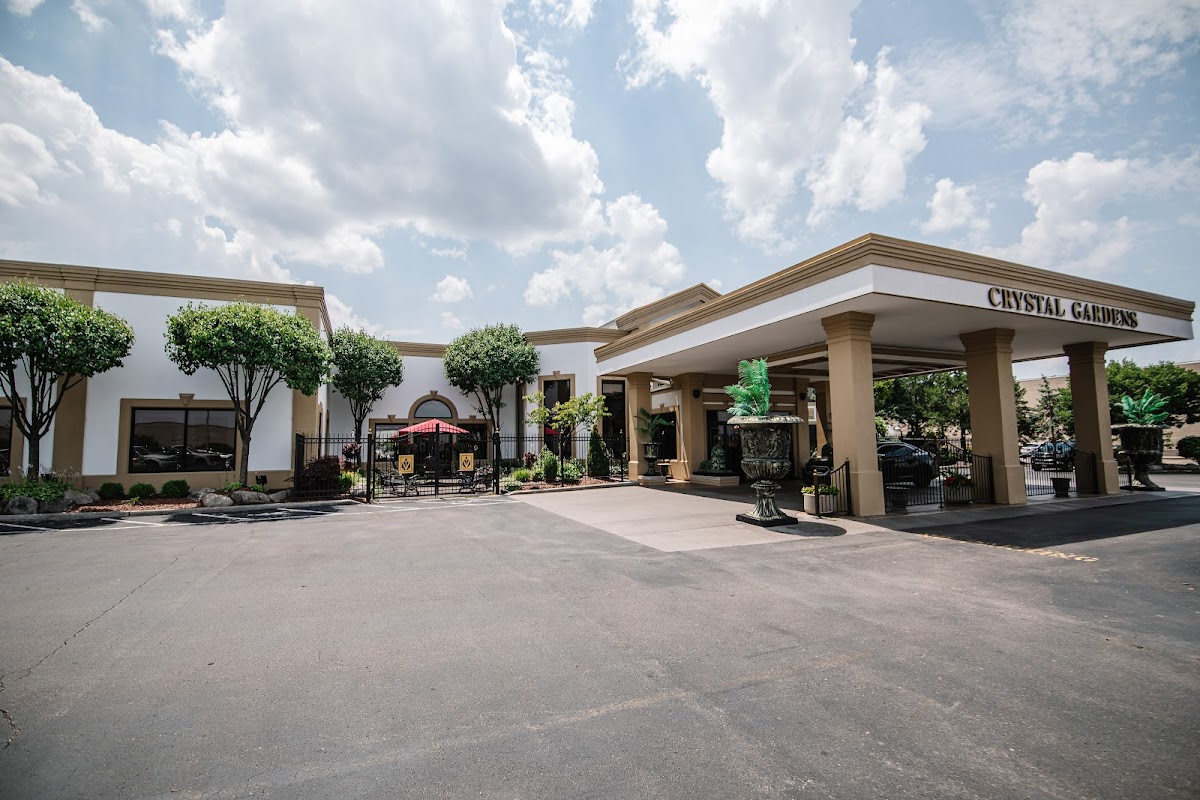
You drive down Fort Street through Southgate, past the strip malls and family restaurants that define Downriver Detroit, and then the sign appears: Crystal Gardens Banquet Center, established in classic gold lettering against dark green. The building itself announces its purpose before you step inside — stone facade, manicured lawns, a grand entrance with double doors that suggest celebrations have been happening here for decades. And they have. Crystal Gardens is the kind of venue your parents might have attended weddings at, the place where generations of Detroit-area families have gathered for milestone moments. But step through those doors and you realize this is not a venue resting on its laurels. The grand staircase sweeps upward in the lobby, begging for a bridal portrait. The chapel glows with soft lighting. The ballrooms stretch vast and elegant, crystal chandeliers catching light like frozen champagne bubbles. And then there’s the Taylor Conservatory — 2,600 square feet of outdoor terrace that transforms what could have been just another suburban banquet hall into something with real garden romance. Poppy has worked with 24 couples planning Crystal Gardens Banquet Center wedding flowers, and what strikes us every time is the venue’s versatility: intimate chapel ceremonies, grand ballroom receptions for hundreds, outdoor garden celebrations, or any combination thereof, all under one roof with a team that has orchestrated this dance thousands of times.
About Crystal Gardens Banquet Center
Crystal Gardens Banquet Center sits on Fort Street in Southgate, Michigan, roughly 13 miles south of downtown Detroit in the heart of the Downriver community. For those unfamiliar with Detroit geography, “Downriver” refers to the string of working-class suburbs that stretch along the Detroit River south of the city — places like Wyandotte, Lincoln Park, Trenton, and Southgate itself. It is an area with deep roots, strong family ties, and a preference for celebrations that honor tradition while still feeling fresh and personal. Crystal Gardens has been part of this community fabric for decades, serving as the backdrop for countless weddings, anniversaries, quinceañeras, and milestone celebrations that define Downriver life.
The venue encompasses multiple distinct spaces across its property, making it one of the more versatile facilities in the Detroit metro area. At its core are six ballrooms of varying sizes, each with its own character but all sharing certain hallmarks: crystal chandeliers, neutral wall colors (creamy whites and soft golds that play well with any wedding palette), and configurable floor plans that can accommodate anywhere from 30 guests in the smallest room to a staggering 1,500 guests when multiple ballrooms are combined. These are not precious, fussy spaces. They are designed to host celebrations — which means durable finishes, practical layouts, and enough built-in elegance (those chandeliers do serious work) that a couple doesn’t need to start from scratch decoratively.
What sets Crystal Gardens apart from other Downriver banquet halls is the on-site chapel. This is a genuine convenience that eliminates the logistics of transporting 250 guests across town between ceremony and reception. The chapel seats up to 250, features traditional ecclesiastical architecture with vaulted ceilings and stained glass accents, and connects directly to the reception spaces via interior hallways — a detail that matters enormously during Michigan winters when asking guests to trek through snow and slush is a questionable proposition. The climate-controlled chapel environment also means ceremony florals are never at the mercy of weather, a luxury that outdoor ceremony sites cannot offer.
The Taylor Conservatory adds another dimension entirely. This 2,600-square-foot outdoor terrace can accommodate up to 300 guests in a park-like setting that includes mature trees, landscaped gardens, and a pergola structure perfect for ceremony backdrops. Available seasonally (roughly May through October, weather permitting), the Conservatory brings garden-wedding aesthetics to a venue that otherwise reads as traditional banquet hall. For couples torn between wanting outdoor romance and indoor reliability, Crystal Gardens offers both, often within the same celebration.
Logistically, the venue is straightforward to reach from anywhere in the Detroit metro area. I-75 runs just a few miles east, making the drive from downtown Detroit, the northern suburbs, or even Ann Arbor manageable without navigating tricky side roads. On-site parking is ample, a detail that seems mundane until you have been to a wedding where guests circle blocks looking for spots. For Poppy’s delivery and setup teams, load-in at Crystal Gardens is efficient: vendor access begins at noon on the day of the event, which is tighter than we would prefer but workable for ceremonies starting at 5 PM or later. The venue requires certificates of insurance from all vendors (standard in the industry), and their in-house catering team handles all food and beverage service, which means one less moving part for couples to coordinate.
The venue’s position in the market is clear: this is a full-service facility designed to make large weddings feel manageable and elegant without requiring a country-club budget. It is the venue for families who want a proper wedding — chapel, ballroom, champagne toast, seated dinner, dance floor, the whole production — executed by a team with decades of experience. As a Southgate wedding florist working frequently in this market, Poppy appreciates venues like Crystal Gardens where the infrastructure is solid, the staff knows how weddings flow, and couples can focus on the details that make their celebration personal rather than reinventing the wheel.
Event Spaces & Floral Opportunities
Chapel
Capacity: 250 seated
Setting: The on-site chapel at Crystal Gardens is a traditional ecclesiastical space with vaulted ceilings, stained glass windows that filter colored light across the pews, and a central aisle that runs perhaps 40 feet from the entrance to the altar. The architecture leans classic Catholic wedding chapel — there is an elevated altar area, dark wood pews, and neutral cream-colored walls that let the stained glass do the decorative work. The lighting is soft and warm, designed to flatter rather than spotlight, and the acoustics are excellent for live music or spoken vows. Because the chapel sits entirely indoors and climate-controlled, it functions year-round without weather concerns, a significant advantage for Michigan weddings scheduled in February or November.
Floral approach: The altar is the obvious focal point and deserves a substantial arrangement. We favor symmetrical designs flanking the altar: a pair of tall pedestals (three to four feet high) supporting lush arrangements of white hydrangea, ivory Patience or Playa Blanca roses, white lisianthus, and trailing Italian ruscus or eucalyptus that spills downward softly. The stained glass provides color, so keeping altar florals in a refined white and green palette prevents visual competition. For the aisle, pew markers are traditional but can feel dated if executed poorly. Instead, consider every third or fourth pew marked with a small bouquet of spray roses, white waxflower, and seeded eucalyptus tied with silk ribbon in your wedding color — enough presence to guide the eye down the aisle without cluttering every row. If budget allows, tall glass cylinders with submerged white tulips or calla lilies (in season) lining the aisle create a modern, architectural look that photographs beautifully. The chapel entrance is another opportunity: a large urn arrangement (think 36 inches tall, abundant and lush with hydrangea, roses, and flowing greenery) placed just inside the doorway announces the ceremony space and makes a statement for guests as they arrive. Because the chapel connects directly to the reception halls, consider how your ceremony florals can be repurposed: altar arrangements can move to the ballroom entrance or sweetheart table, and aisle markers can transition to cocktail tables.
VIP Room
Capacity: Intimate, approximately 50 or fewer guests
Setting: Adjacent to the main chapel, the VIP Room functions as a smaller, more intimate ceremony space for elopements, vow renewals, or micro-weddings. The room features a fireplace mantel, lounge-style seating, and a softer, less ecclesiastical atmosphere than the larger chapel. Lighting is warmer, the scale is residential rather than grand, and the overall feeling is of a private library or parlor where something meaningful is about to happen.
Floral approach: With a smaller guest count and more intimate scale, florals here should feel abundant but not overwhelming. The fireplace mantel is a natural focal point — drape it with a lush garland of smilax, Italian ruscus, and eucalyptus (four to six feet long), punctuated with clusters of garden roses, ranunculus, and astilbe. If the ceremony itself takes place in front of the fireplace, consider a simple pedestal arrangement to one side rather than blocking the mantel entirely. A small signing table can be dressed with a low, lush arrangement (garden roses, hellebores, scabiosa, and textured foliage in a vintage brass bowl), and if there are any side tables or console surfaces in the room, small bud vases with single stems add intimate touches without cluttering the space. Because this room is often used for getting-ready photos or cocktail hour in addition to ceremonies, florals should be photogenic from multiple angles and designed to enhance rather than dominate the existing decor.
Taylor Conservatory
Capacity: 300 seated or standing
Setting: The Taylor Conservatory is where Crystal Gardens sheds its banquet-hall identity and becomes a garden venue. This 2,600-square-foot outdoor terrace is framed by mature trees, features a wooden pergola structure (ideal for ceremony backdrops), landscaped garden beds with seasonal plantings, and a paved surface that accommodates chairs, cocktail tables, or an open-air dance floor. The setting is park-like — think dappled sunlight through tree canopy, birds singing, the scent of grass and flowers — and available from late spring through early fall. The Conservatory can host ceremonies, cocktail hours, or full receptions, though most couples use it for ceremonies or cocktails and move indoors to the ballrooms for dinner and dancing.
Floral approach: The pergola is the star here and should be treated accordingly. Dress it generously: a garland running the full width (10 to 12 feet), using a base of smilax, eucalyptus, and Italian ruscus, woven through with clusters of café au lait dahlias, quicksand roses, white lisianthus, and trailing jasmine vine. If you are doing a full ceremony under the pergola, add two tall arrangements flanking the structure — think three-foot urns overflowing with hydrangea, delphinium, garden roses, and flowing greenery that softens the edges. The aisle can be marked with shepherd’s hooks hung with small arrangements, or simple wooden stakes with mason jars filled with wildflower-style clusters (cosmos, zinnias, Queen Anne’s lace, scabiosa). Because the Conservatory has existing landscaping, your florals should complement rather than compete: if the garden beds are full of pink petunias, leaning into blush and peach tones for your ceremony florals creates cohesion; if the beds are mostly green foliage, you have more freedom with color. Cocktail tables benefit from small, textured arrangements — perhaps low compotes filled with seasonal blooms, or clusters of bud vases with varied heights. Weather is always a consideration outdoors: choose hardy blooms (roses, hydrangea, and most greenery hold up well; tulips and sweet peas wilt quickly in heat), ensure arrangements are secured (wind can topple tall pedestals), and have a backup plan for extreme heat or sudden rain (the ballrooms are steps away).
Main Ballrooms
Capacity: 30 to 1,500 guests (depending on configuration and number of ballrooms used)
Setting: Crystal Gardens’ six ballrooms are the workhorses of the venue. Each room is slightly different in size and configuration, but all share key design elements: crystal chandeliers (the venue’s namesake feature), neutral wall colors in soft cream and gold tones, adjustable lighting that can shift from bright and functional during dinner to moody and romantic for dancing, and private patio access. The largest ballroom can seat several hundred guests with a spacious dance floor; the smallest is better suited for 30 to 50 guests in a more intimate configuration. Tables are typically dressed with floor-length linens (the venue offers custom table settings as part of their packages), chairs are gold or silver Chiavari-style, and the overall aesthetic reads classic formal wedding without tipping into stuffy or dated territory. The crystal chandeliers are substantial — multi-tiered, sparkling, and visually dominant, which means any floral or decor choices need to account for their presence.
Floral approach: Centerpieces are the primary floral investment in the ballrooms, and the chandelier height and style should inform your decisions. If you opt for tall centerpieces, they need to be very tall — at least 30 inches above the table surface — so they rise above guests’ sightlines and create visual interest at chandelier level without crowding the fixtures. Classic tall arrangements might include elevated gold stands supporting lush designs of white hydrangea, ivory roses (Patience, Playa Blanca, or Mondial), blush ranunculus, and trailing amaranthus or Italian ruscus. Alternate these with low, lush centerpieces (mounded garden roses, spray roses, lisianthus, stock, and textured greenery in gold compotes or clear glass cylinders) to create varied visual interest across the room. For a more modern approach, consider elevated glass risers (12 to 18 inches tall) that lift a tight cluster of blooms above the table without the traditional “tall centerpiece” look — this feels fresher and less formal while still working with the chandelier scale. The sweetheart table or head table deserves special treatment: a long, low garland (eight to 12 feet, depending on table size) of smilax, eucalyptus, and roses with cascading ends creates a romantic focal point, or consider a series of varied-height arrangements clustered together for an organic, abundant look. The ballroom entrance is another opportunity: if there is a foyer or doorway where guests transition from cocktails to dinner, a large arrangement on a pedestal or console table (three feet tall, lush and dramatic with seasonal blooms) signals the shift in the evening’s energy. Private patios adjoining the ballrooms often get overlooked but can be enhanced with potted florals or small arrangements on cocktail tables if the weather allows for outdoor mingling during cocktail hour. Finally, coordinate with the venue’s lighting team: crystal chandeliers look best when dimmed during dinner and dancing, and proper lighting will make your florals glow rather than wash out in overly bright conditions.
Grand Staircase
Setting: The grand staircase is a signature architectural feature in Crystal Gardens’ main lobby — a sweeping, carpeted staircase with dark wood banisters that rises from the entrance level and curves elegantly upward. It is prominently featured in venue marketing photos and has become a traditional spot for bridal portraits, family photos, and dramatic entrances.
Floral approach: The staircase banister is ideal for garland treatment. A lush, flowing garland (12 to 20 feet depending on the staircase length) of smilax, Italian ruscus, and eucalyptus, woven with clusters of roses, hydrangea, and trailing amaranthus, creates a romantic, editorial-worthy installation. The garland should be secured properly (we use zip ties, floral wire, and sometimes Command hooks depending on what the venue allows) and designed to look intentionally loose and organic, not rigid or symmetrical. At the base of the staircase, consider a large statement arrangement — a 36-inch urn overflowing with seasonal blooms and greenery — that anchors the installation and creates a focal point for photos. If the couple is making a grand entrance down the staircase during the reception, the garland will be visible in photos and should be lush enough to read as intentional, not sparse or unfinished. Because the staircase is in a high-traffic area, ensure all florals are secured well and will not be disturbed by guests brushing past.
Private Patios
Setting: Several of the ballrooms open onto private outdoor patios — landscaped spaces with mature plantings, paved or stone surfaces, and sometimes pergola or trellis structures. These patios serve as extensions of the ballroom, perfect for cocktail hour, outdoor mingling, or a breath of fresh air during dancing.
Floral approach: The existing landscaping should guide your floral choices here. If the patio features mature trees and green shrubbery, you have freedom to introduce color and texture without competing with existing blooms. Cocktail tables benefit from small, low arrangements — compotes or bud vases with garden roses, spray roses, and textured foliage — that add polish without obstructing conversation. If there is a pergola or trellis structure, consider dressing it with garland (similar approach to the Taylor Conservatory) or hanging arrangements that draw the eye upward. Potted plants (fiddle leaf figs, ferns, or flowering plants like hydrangeas) can be rented to flank doorways or create greenery clusters in corners. If the patio will be used at night, consider how lighting interacts with florals: uplighting on arrangements creates drama, and candlelight (pillar candles in hurricane vases) adds warmth. Coordinate with the venue’s outdoor restrictions — some patios have rules about open flames or stakes in the ground — and always have a contingency for weather (arrangements can move indoors if rain threatens).
Wedding Flower Ideas for Crystal Gardens Banquet Center
Champagne and Candlelight
This palette is drawn from the ballroom’s crystal chandeliers and leans into warm, luminous tones that glow under soft lighting. Champagne-colored roses (Quicksand, Sahara, Cappuccino), ivory lisianthus, white ranunculus, blush astilbe, and cream-colored stock form the foundation, accented with dusty miller, seeded eucalyptus, and touches of gold (either gilded branches or gold-painted accents on containers). Arrangements sit in gold compotes, mercury glass cylinders, or champagne-toned ceramic vessels that catch light like the chandeliers above. This palette works beautifully in the ballrooms during evening receptions when lighting is dimmed and candles are lit — the entire room takes on a warm, romantic glow. It also translates well to the chapel, where ivory and champagne tones complement the stained glass without competing. For the grand staircase garland, weave in champagne ribbon and consider adding battery-operated fairy lights for an extra ethereal touch.
Garden Romance
Inspired by the Taylor Conservatory’s park-like setting, this concept brings garden-style florals indoors. The palette is soft and romantic: blush and peach roses (Juliet, Keira, Romantic Antike), white hydrangea, peach ranunculus, apricot snapdragons, white sweet peas (in season), and abundant greenery including Italian ruscus, seeded eucalyptus, and jasmine vine. Arrangements feel organic and slightly wild, not formal or structured, with blooms at varied heights and trailing elements that soften edges. Vessels lean rustic-elegant: whitewashed ceramic urns, natural wood boxes, or soft gray compotes. This style works beautifully for ceremonies in the Conservatory — the florals feel like a natural extension of the surrounding gardens — and translates well to ballroom centerpieces where it softens the formal chandelier-and-Chiavari-chair aesthetic. For the chapel altar, this palette creates a romantic, approachable feeling rather than traditional ecclesiastical formality. The staircase garland becomes lush and abundant with trailing jasmine and roses tucked throughout.
Modern Elegance
For couples drawn to clean lines and sophisticated simplicity, this concept strips away fussiness and focuses on structural beauty. The palette is crisp: white (Playa Blanca or Mondial roses, white lisianthus, white tulips or calla lilies in season), deep green foliage (myrtle, Israeli ruscus, lemon leaf), and touches of black or deep burgundy (black calla lilies, chocolate cosmos, deep burgundy dahlias) for contrast. Arrangements are architectural rather than loose: tight clusters of blooms in geometric containers (square glass cubes, cylindrical clear vases, matte black ceramic cylinders), or elevated designs on clear acrylic risers that appear to float above tables. This style works particularly well in the ballrooms where the chandeliers already provide visual interest — the florals are elegant and refined without competing. In the chapel, a modern approach might mean tall, slender arrangements of white calla lilies or tulips in clear glass cylinders lining the aisle, or a single dramatic arrangement at the altar rather than traditional symmetrical pairs. The staircase garland becomes more structured — perhaps a tight eucalyptus runner punctuated with evenly spaced white rose clusters rather than an organic, flowing design. This aesthetic photographs beautifully and appeals to couples who want their florals to feel current and sophisticated rather than traditionally romantic.
Seasonal Considerations
Michigan’s distinct four seasons each bring unique opportunities and challenges for Crystal Gardens Banquet Center wedding flowers. Understanding what thrives locally and when can significantly impact both the beauty and budget of your floral design.
Spring (March-May): Spring in Southgate can be unpredictable. March might still see snow flurries and temperatures in the 30s, while May often delivers genuine warmth and the first true garden blooms. Early spring weddings (March-April) should plan for indoor-only celebrations — the Taylor Conservatory is not reliably pleasant until late April at the earliest. Floral availability improves dramatically as the season progresses. Tulips are abundant and affordable from late March through May in dozens of colors (French tulips, parrot tulips, fringed varieties). Daffodils and narcissus appear early, though their short vase life (three to five days) means they must be used close to the wedding date. Hyacinths bring fragrance and texture. Ranunculus, those multi-petaled beauties that look like roses’ more interesting cousins, hit their stride in April and May with excellent availability and reasonable pricing. Cherry blossom and flowering branches (forsythia, quince) are stunning in tall arrangements and bring that “spring has sprung” feeling indoors. By late May, peonies begin appearing (though they are still expensive this early), and garden roses become more available. For outdoor Conservatory ceremonies in May, beware of late-season frost — hardy blooms like tulips and ranunculus will survive, but delicate sweet peas may suffer. The best spring wedding dates at Crystal Gardens are late April through May when both indoor and outdoor spaces are viable and spring blooms are peaking.
Summer (June-August): Summer is peak wedding season in Michigan, and for good reason. Temperatures are warm (70s to 80s, occasionally hitting 90), days are long, and the Taylor Conservatory is in full glory. Local flower farms are producing at maximum capacity, which means Michigan-grown blooms are abundant and often more affordable than imports. Dahlias (café au lait, Café au lait Royal, ruffled varieties, dinner-plate size) are summer stars, available in nearly every color and size imaginable. Zinnias bring cheerful, saturated color. Lisianthus, that workhorse bloom that looks like roses from a distance, is plentiful. Delphinium and larkspur add height and texture in blues, purples, and whites. Garden roses (Patience, Juliet, Keira, Romantic Antike) are at their most affordable and available in summer. Hydrangeas (Annabelle, Limelight, Incrediball) are everywhere. For couples planning Conservatory ceremonies, summer offers maximum flexibility — even a brief afternoon rain shower typically dries quickly on paved surfaces. The main challenge is heat: outdoor cocktail hours during peak afternoon sun (2–5 PM) can be uncomfortable for guests and tough on florals. Consider ceremony start times of 5 PM or later when temperatures begin to cool, and choose heat-hardy blooms (roses, hydrangea, and dahlias hold up; tulips and sweet peas wilt immediately). For ballroom receptions, summer’s abundance means you can create lush, abundant arrangements without budget strain.
Fall (September-November): Fall in Southgate is magnificent. September and October deliver crisp, comfortable temperatures (60s and low 70s), brilliant blue skies, and the drama of changing leaves — maples, oaks, and sweet gums turning gold, orange, and burgundy. The Taylor Conservatory remains viable through October, though November is unpredictable (could be 55 and sunny, could be 35 and sleeting). Fall flower availability is rich and textured. Dahlias continue strong through October. Chrysanthemums (football mums, button mums, spider mums) appear in fall tones. Celosia adds texture in burgundy, rust, and gold. Marigolds, sunflowers, and zinnias are still available in September. Fall foliage — branches of turning leaves, bittersweet berries, hypericum berries in orange and burgundy — brings the outdoor palette indoors. For couples seeking a fall aesthetic without relying on pumpkins and gourds, consider deep burgundy dahlias, rust-colored celosia, dark chocolate cosmos, and lots of textured foliage in amber and gold tones. October is arguably the most beautiful wedding month at Crystal Gardens — the Conservatory gardens are at peak fall color, temperatures are comfortable for outdoor cocktails, and the ballrooms feel warm and festive with rich, saturated floral tones. November weddings should plan for indoor-only celebrations with the understanding that weather may not cooperate for outdoor photos.
Winter (December-February): Winter weddings at Crystal Gardens have a cozy, intimate quality. The venue’s strength in cold months is clear: everything happens indoors in climate-controlled comfort, which means guests are never freezing, florals are never threatened by weather, and you can create a warm, romantic atmosphere regardless of what is happening outside. Winter floral availability is more limited and often more expensive (most blooms are imported from warmer climates), but there are still excellent options. Amaryllis in white, red, or burgundy brings dramatic scale and a holiday feeling. Paperwhites (fragrant, delicate white blooms on tall stems) are festive and affordable. Anemones with their dark centers and delicate petals work beautifully in winter palettes. Ranunculus, though imported, remains available year-round. Evergreen foliage — pine, cedar, fir, eucalyptus, magnolia leaf — brings texture and seasonal appropriateness. For December weddings near the holidays, consider incorporating seasonal elements: branches of winterberry with bright red berries, eucalyptus with seed pods, or white blooms with touches of silver and gold. January and February weddings can lean into a “winter garden” aesthetic with whites, creams, greens, and touches of burgundy or navy — elegant and romantic without feeling overtly holiday-themed. The chapel is particularly lovely for winter ceremonies, and the ballrooms feel warm and celebratory. Winter is also an excellent time to invest in statement floral installations (the grand staircase garland, large altar arrangements) since your guests’ attention will be focused entirely indoors where these pieces shine.
Poppy’s Expert Take
The chapel-to-ballroom transition is your secret weapon. Because Crystal Gardens’ chapel connects directly to the reception spaces via interior hallways, you can design ceremony florals with repurposing in mind. Altar arrangements move seamlessly to flank the ballroom entrance or sit on either side of the sweetheart table. Aisle markers can become cocktail table arrangements. This is not just budget-smart (you are getting double use from the same florals), it is logistically elegant — there is no loading arrangements into vans and driving across town hoping blooms survive the journey. Communicate this plan clearly with your florist and the venue coordinator so everyone understands the timing and placement for moved arrangements.
Chandelier scale changes everything about centerpiece decisions. We have seen countless couples choose centerpieces at a floral consultation without considering the ballroom’s crystal chandeliers, only to realize on the wedding day that their arrangements disappear visually under those large, sparkling fixtures. If you love low centerpieces, embrace them fully (lush, abundant, and designed to be viewed from above as well as eye level), or commit to very tall arrangements that create a layered, dramatic look. The awkward middle ground — 18-inch arrangements that are neither low nor tall — tends to get lost in the room. Ask your florist for photos of previous installations in the specific ballroom you have booked so you can see how different centerpiece heights read in the space.
The Taylor Conservatory deserves a site visit before finalizing floral plans. Because the Conservatory’s landscaping changes seasonally and some elements (mature trees, garden bed plantings) are not visible in winter venue tours, couples planning spring or summer weddings should visit the outdoor space during the season closest to their wedding date. What is blooming in the garden beds? How full are the trees? Where does the sun hit during your planned ceremony time? These details inform floral choices — you do not want to spend hundreds of dollars on peach florals only to discover the garden beds are full of competing magenta petunias, and you definitely want to know if the sun will be shining directly into your guests’ eyes during vows (spoiler: late afternoon sun can be harsh; consider the pergola positioning carefully).
The staircase garland is worth the investment, but only if you use it fully. A lush, beautifully executed garland on the grand staircase is a showstopper in photos and creates an immediate “wow” moment when guests arrive. However, we have watched couples invest in this installation and then barely use the staircase — no bridal portraits, no grand entrance, minimal guest interaction with the space. If you are paying for staircase florals, build them into your day: plan formal portraits there during cocktail hour, make a grand entrance as a couple before dinner, or ask your photographer to capture candid moments of guests milling in the lobby. Otherwise, that budget might be better spent on centerpieces or ceremony arrangements that will be seen and enjoyed throughout the event.
Coordinate floral tones with the venue’s existing lighting. Crystal Gardens’ ballrooms have adjustable lighting that can shift from bright white during dinner service to amber or pink-toned during dancing. Ask the venue coordinator what the typical lighting settings are and, if possible, see the room lit at different levels. Certain floral colors (blush, peach, champagne) glow gorgeously under warm amber lighting, while others (cool whites, purples) can look muddy or washed out. If you have strong feelings about lighting, communicate with the venue’s lighting team in advance — they can often adjust settings to complement your floral palette.
Budget for ceremony flowers separately from reception flowers, even if they will be repurposed. Couples sometimes assume that repurposing ceremony flowers means they can skip dedicated reception florals entirely, which leads to disappointment when the relocated arrangements do not fill a 250-person ballroom adequately. A realistic approach: dedicate 30–40% of your floral budget to ceremony (chapel altar, aisle, entrance), knowing these will move to the reception, and allocate