
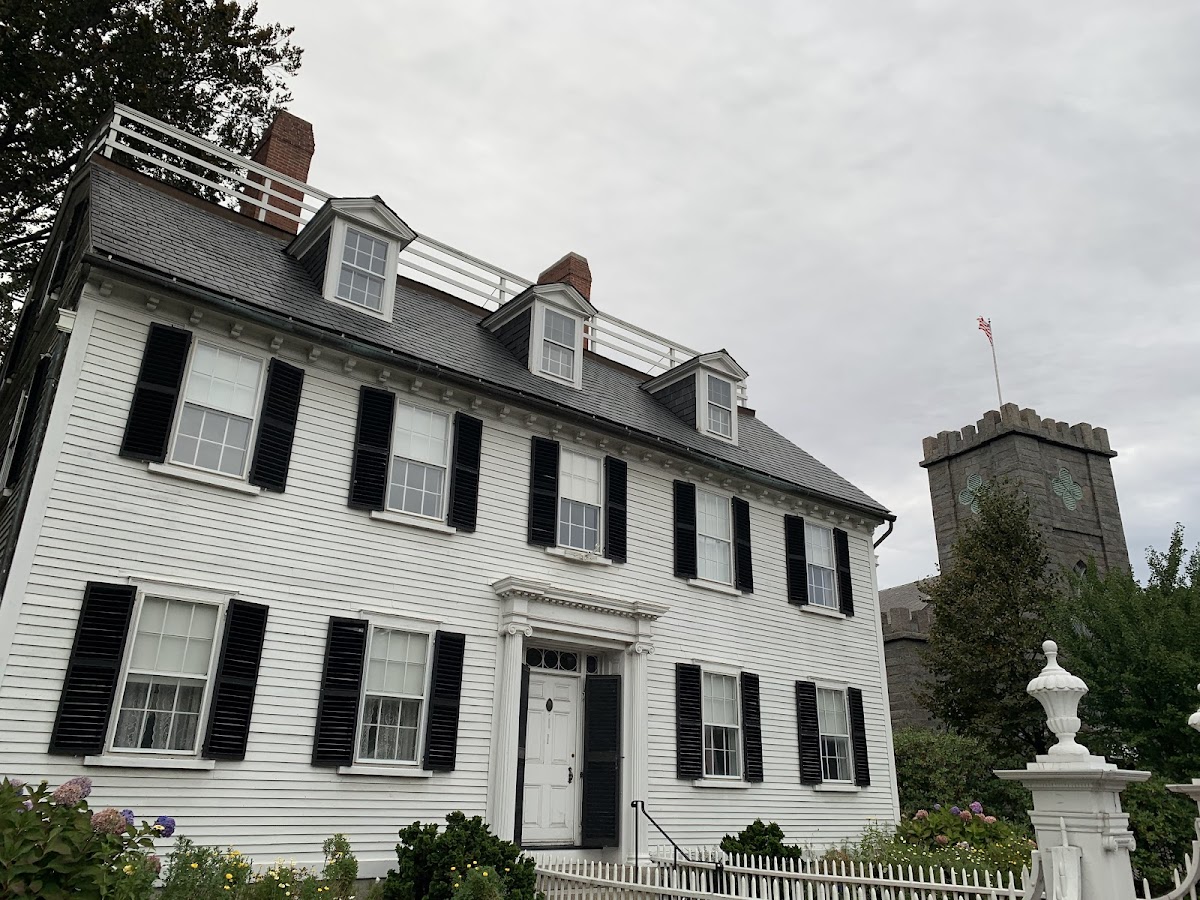
You arrive on Chestnut Street in the late afternoon when the New England light turns everything amber and gold. The Federal-style mansions line up on both sides, their brick facades painted in muted grays and buttery yellows, shutters black and precise. The street is 80 feet wide — an extraordinary breadth for Salem — and the canopy of trees overhead filters the sunlight into dappled patterns on the cobblestones. You’re looking for number nine. And then you see it: Hamilton Hall, standing at the corner with the kind of quiet confidence that comes from having witnessed 220 years of American history. The proportions are exquisite — Samuel McIntire, who designed this building in 1805, understood the mathematical harmony of Federal architecture the way a composer understands counterpoint. Three stories, symmetrical fenestration, Palladian windows that soar two floors high, and a limestone facade that has weathered into something warmer than white but not quite cream. You walk up the front steps, through the entrance, and the Grand Ballroom reveals itself: that Italian chandelier suspended from the center of the ceiling, those gilded Russian mirrors catching every angle of light, the Musicians’ Gallery wrapping around the upper level like a private box at the opera. This is not a venue trying to be something it’s not. This is an American landmark that happens to host weddings, and the distinction matters. Poppy has designed Hamilton Hall wedding flowers for one celebration here so far, and we’re eager for more couples to discover what we already know: this is one of New England’s most architecturally significant wedding venues.
About Hamilton Hall
Hamilton Hall occupies a singular position in American architectural history. Designed by Samuel McIntire — the Federal-period architect and woodcarver whose work defines Salem’s golden age — the building was constructed in 1805 as the assembly hall for the town’s social and civic life. It has hosted everyone from the Marquis de Lafayette (who dined here in 1824, hence the Lafayette Room) to President James Monroe. The building is listed on the National Register of Historic Places, and Chestnut Street itself has been called one of the most beautiful streets in America by sources as varied as the American Planning Association and countless design publications. This matters for a wedding because you are not simply renting a pretty room. You are stepping into a space that has absorbed centuries of celebration, gathering, and ceremony.
The architectural details are what set Hamilton Hall apart from newer or less historically rigorous venues. The spring frame floor in the Grand Ballroom is the original 1805 construction — a layer of flexible wooden supports beneath the polished hardwood surface that was designed to give dancers a slight bounce, reducing fatigue during the marathon quadrilles and contradances of the Federal era. It still works. Your guests will notice the difference when they waltz across this floor. The Palladian windows, arching gracefully toward the two-story ceiling, were designed to flood the space with natural light during daytime events and to glow like lanterns from the street at night. The Italian chandelier, the Russian gilded mirrors, the twin fireplaces with their carved mantels — these are not replicas or vintage-inspired decor. These are the real thing, preserved through meticulous stewardship.
Logistically, Hamilton Hall sits in downtown Salem, roughly 16 miles north of Boston and easily accessible via the MBTA Commuter Rail. Salem Station is a 15-minute walk or a quick car ride from the venue, and the downtown location means your guests have access to the city’s robust restaurant, hotel, and cultural offerings. For out-of-town guests, Salem itself is a destination — the maritime history, the architecture, the museums (yes, and the witch history if they’re interested, though this is far from the kitschy Halloween version of Salem). Street parking is available directly on Chestnut Street, and Hamilton Hall has arranged agreements with residential homeowners along the block to provide additional day-of event parking, a detail that speaks to the venue’s community integration.
For Poppy’s delivery and setup, Hamilton Hall’s Event Manager coordinates all vendor access, which makes our load-in straightforward and well-organized. The building does not have an elevator, so only the first floor spaces (Pickering Room, Brick Hearth Room, Remond Room) are fully wheelchair accessible — something to keep in mind when planning your event flow. The venue operates on a five-hour rental window with events ending by 10:00 PM, a noise restriction typical of residential historic districts. One crucial note: there is no air conditioning, so July and August events require special agreement with the venue. We typically recommend May, June, September, and October as the sweet spot months when the temperature is comfortable and the New England light is at its most flattering.
Catering is handled exclusively by Vinwood Caterers, though florists are not restricted, which is where Poppy comes in as a Salem wedding florist with intimate knowledge of this building’s quirks, opportunities, and historical character.
Event Spaces & Floral Opportunities
Grand Ballroom
Capacity: 160 seated, up to 200 for cocktail-style receptions
Setting: This is the room everyone remembers. Two stories tall, with those soaring Palladian windows anchoring the north wall, the Grand Ballroom feels both intimate and grand — a difficult balance to strike. The polished spring frame floor reflects the light from the Italian chandelier and the Russian mirrors, creating a sense of being surrounded by soft, golden illumination. The Musicians’ Gallery runs along three sides of the upper level, historically used for orchestras during grand balls, now a dramatic vantage point that adds vertical dimension to the room. The two fireplaces, positioned symmetrically on opposite walls, are framed by carved Federal-style mantels. The color palette is neutral but warm: cream walls, polished honey-toned wood floors, black accents in the ironwork and window frames, gold leaf on the mirrors and chandelier. On a spring evening when the light pours through those Palladian windows at a low angle, this room requires almost no help from a designer. On a winter night when the chandeliers are glowing and the fireplaces are lit, it becomes something out of an Edith Wharton novel.
Floral approach: The guiding principle in this ballroom is to complement, not compete. The architecture is the star; your Hamilton Hall wedding flowers are the supporting cast. We favor centerpieces that stay below twelve inches if they are positioned where they might block sightlines — low compotes overflowing with Keira garden roses, white ranunculus, hellebores, and jasmine vine, set in antique silver or pewter vessels that echo the room’s Federal-era aesthetic. For the fireplaces, symmetry is key: matching mantel arrangements in elongated horizontal designs, perhaps 4 feet wide and 18 inches tall, with a mix of Patience garden roses, white lisianthus, trailing smilax, and silver dollar eucalyptus. The Italian chandelier can be enhanced (lightly) with a greenery garland — we’re talking a delicate strand of Italian ruscus woven with a few clusters of white phalaenopsis orchids, not a heavy floral curtain that obscures the fixture itself. The Musicians’ Gallery railing is an extraordinary opportunity for a suspended garland installation, visible from every angle in the ballroom below and reflected in those Russian mirrors. Imagine a 60-foot garland of lush greenery (smilax, eucalyptus, Israeli ruscus) punctuated every three feet with clusters of ivory Ohara roses, white sweet peas, and blush astilbe, hanging in elegant swags from the balcony railing. Because the mirrors double every visual element, every centerpiece you place is effectively two centerpieces, every mantel arrangement becomes a pair. This means you can achieve a full, lush look with fewer actual installations — a budget-friendly feature if you design strategically. One warning about the spring frame floor: no installations that require staking, no heavy floor urns that could damage the historic wood. We use lightweight compotes and vessels exclusively, and any aisle arrangements must be free-standing and stable without anchors.
McIntire Garden
Capacity: Variable depending on ceremony setup, typically 100-160 guests
Setting: The McIntire Garden sits directly across Chestnut Street from Hamilton Hall — a private, enclosed garden space with mature trees forming a natural canopy overhead. In spring, the flowering trees (dogwood, cherry, magnolia) create an almost magical overhead layer of blooms. In summer, the garden is lush and green with dappled shade. In fall, the foliage turns the space into a golden bower. The garden is arranged with open lawn areas perfect for ceremony seating and smaller pockets of plantings along the perimeter. It feels like a secret urban oasis, completely private despite being in the heart of downtown Salem.
Floral approach: The garden does much of the work for you, especially in spring and early summer when the flowering trees are at their peak. The key is to create a focal point for the ceremony without overwhelming the natural landscape. We recommend a freestanding floral arch or chuppah positioned to frame the couple with the garden’s tree canopy as backdrop. For a spring wedding, consider an arch constructed from natural branches (dogwood, cherry, or birch) and adorned with cascading wisteria (if in season), white peonies, ranunculus, and honeysuckle vine — a design that feels like an extension of the garden itself. For a summer wedding, a more structured arch covered in lush garden roses (Patience, Keira, Juliet), white hydrangea, and trailing jasmine creates a romantic focal point. Aisle markers can be simple and elegant: low arrangements in bronze or stone urns placed every third row, filled with seasonal blooms that complement your palette. Because the garden is visible from the street and from Hamilton Hall’s windows, consider how the ceremony setup will look from multiple vantage points. One logistical note: the garden is across the street from the main building, so plan for a brief walking transition between ceremony and cocktail hour. We often place a few floral installations along the path or at the garden entrance to create a sense of procession.
Pickering Room
Capacity: Variable, typically used for cocktail hour or bridal prep
Setting: The Pickering Room is located on the first floor of Hamilton Hall, a generously proportioned space with period details and windows overlooking Chestnut Street. It can function as a cocktail lounge before the reception or as a bridal suite for getting-ready preparations. The room has classic Federal-style woodwork and neutral walls that provide a versatile backdrop.
Floral approach: If the Pickering Room is serving as cocktail hour space, we recommend a few strategically placed arrangements that add visual interest without crowding the room. A pair of elevated arrangements on pedestal stands flanking the entryway (using tall compotes filled with airy blooms like delphinium, stock, and garden roses) creates an elegant welcome moment. Smaller bud vases or low votives clustered on cocktail tables add intimacy. If the room is being used as a bridal suite, a single luxurious arrangement on a console table or vanity is sufficient — perhaps a loose, garden-style design in a ceramic or stone vessel with Juliet roses, white sweet peas, and cascading greenery. The goal is to enhance the room’s natural elegance without overwhelming the space or interfering with the functional use.
Brick Hearth Room
Capacity: Variable, typically used as auxiliary cocktail space or lounge
Setting: The Brick Hearth Room is exactly what it sounds like — a first-floor space dominated by an old cast iron stove built into a historic brick wall. The room has a warm, cozy feel with a touch of rustic charm, though it maintains the Federal-era proportions and detailing consistent with the rest of Hamilton Hall.
Floral approach: The brick hearth is the obvious focal point, and it deserves a lush garland treatment. Drape a 6-to-8-foot garland across the mantel or hearth edge, using smilax, seeded eucalyptus, and olive branches as the base, then weaving in clusters of café au lait dahlias, quicksand roses, and burgundy ranunculus for a warm, organic look. The brick provides a neutral but textured backdrop that pairs beautifully with earthy, garden-style florals. If the room is being used as a cocktail lounge, add a few smaller arrangements on side tables or window sills — low, lush designs in vintage brass or ceramic vessels that echo the room’s historic character. Think less formal, more collected-over-time.
Lafayette Room, Remond Room, and Supper Room
Capacity: Variable, typically used as auxiliary spaces
Setting: These smaller rooms on the second and third floors (Lafayette and Supper) and first floor (Remond) provide flexible space for various uses — dessert displays, lounge areas, family gathering spots, or simply overflow space as guests move through the venue.
Floral approach: These rooms benefit from understated floral accents rather than major installations. A single statement arrangement on a central table or console in each room is sufficient. In the Lafayette Room (second floor, adjacent to the Grand Ballroom), we might place a medium-height arrangement that echoes the ballroom’s palette and style, creating visual continuity as guests move between spaces. In the Supper Room (third floor), a low, lush design works well if the room is being used for dessert or late-night coffee service. The Remond Room (first floor) might feature a simple arrangement on a side table if it’s being used as a cocktail lounge. The key is coordination without repetition — each space should feel connected to the overall design while maintaining its own character.
Wedding Flower Ideas for Hamilton Hall
Federal Classicism
This design concept takes direct inspiration from Hamilton Hall’s Federal-period architecture, embracing symmetry, restraint, and classical proportions. The palette is predominantly ivory, cream, and white with accents of soft sage and silver-gray foliage. Think Patience garden roses, white ranunculus, ivory lisianthus, and white sweet peas arranged with silver dollar eucalyptus, dusty miller, and Italian ruscus. Vessels are antique silver compotes, pewter urns, and mercury glass votives — nothing overtly modern, nothing that would feel anachronistic in a room built in 1805. Arrangements are structured but not stiff, with a nod to the formal gardens of the Federal era. This concept works beautifully in the Grand Ballroom where the neutral palette complements the room’s cream walls and warm wood tones without competing with the architectural details. For the McIntire Garden ceremony, a simple arch constructed from natural branches and adorned with ivory florals and trailing smilax creates an elegant focal point. Mantel arrangements on the two fireplaces should be symmetrical and elongated, reinforcing the room’s balanced proportions. This is a timeless, sophisticated approach for couples who want their Hamilton Hall wedding flowers to feel like they’ve always belonged in this historic space.
New England Garden Romance
This concept celebrates the lush, romantic gardens of coastal New England with a softer, more organic approach. The palette includes blush, ivory, soft peach, and lavender with abundant greenery. Key flowers include Juliet and Keira garden roses, blush peonies (in season), lavender sweet peas, white ranunculus, quicksand roses, and café au lait dahlias. Foliage includes jasmine vine, smilax, seeded eucalyptus, and olive branches for a flowing, garden-gathered look. Arrangements are loose and organic rather than structured, as though someone walked through an English cutting garden and gathered whatever was blooming. In the McIntire Garden, this style feels especially at home — a lush floral arch dripping with roses, peonies, and trailing vines becomes a natural extension of the garden’s own plantings. In the Grand Ballroom, low compotes overflow with blooms in a seemingly effortless way, and the mantel arrangements have a loose, asymmetrical quality that feels less formal than Federal Classicism but still refined. This concept works particularly well for spring and early summer weddings when garden roses and peonies are at their peak.
Gilded Age Opulence
This concept leans into the drama of those Russian gilded mirrors and the Italian chandelier, embracing a richer, more opulent aesthetic. The palette includes deep burgundy, plum, mauve, ivory, and champagne with gold accents. Think Black Magic roses, burgundy dahlias, plum ranunculus, mauve lisianthus, champagne roses (Quicksand, Sahara), and ivory phalaenopsis orchids. Foliage includes dark, moody eucalyptus varieties and smilax. Vessels are gold compotes, brass urns, and vintage gold candlesticks. Arrangements are lush and abundant with a sense of luxury and layering. In the Grand Ballroom, tall taper candles in gold holders surround low, overflowing centerpieces, and the mirrors multiply the candlelight and the richness of the burgundy blooms. The mantel arrangements are dramatic and full, perhaps 5 feet wide and 2 feet tall, creating symmetrical focal points that anchor the room. For the Musicians’ Gallery, a suspended garland with dark greenery and clusters of burgundy and mauve blooms creates a dramatic overhead installation. This concept works beautifully for fall and winter weddings when the deeper tones feel seasonally appropriate and the earlier sunset means the candlelight and chandelier create maximum impact.
Seasonal Considerations
Salem’s coastal New England climate shapes every aspect of wedding planning, including florals. Understanding the seasonal rhythms — both weather and bloom availability — is essential for creating successful Hamilton Hall wedding flowers.
Spring (April-May): Spring in Salem is unpredictable. Late April can still see frost, while mid-May can be gloriously warm and sunny. The McIntire Garden comes alive in spring with flowering trees — dogwood, cherry, magnolia — creating a natural floral canopy that requires minimal additional ceremony flowers. This is peak season for tulips, daffodils, hyacinths, peonies (late May), and ranunculus. Garden roses start becoming available in late May. Spring palette leans toward soft pastels, whites, and fresh greens. One logistical consideration: the lack of air conditioning at Hamilton Hall is rarely an issue in spring, as temperatures are generally comfortable. Rain is common in spring, so have a contingency plan for outdoor ceremonies in the McIntire Garden (Hamilton Hall can accommodate indoor ceremonies in the Grand Ballroom). Spring blooms tend to be more delicate and require careful handling, especially tulips which continue to grow and move in arrangements.
Summer (June-early September): Summer brings warm, humid weather to coastal Massachusetts. June is often ideal — warm but not oppressively hot, with long daylight hours and garden roses at their peak. July and August are when Hamilton Hall’s lack of air conditioning becomes a factor; events during these months require special venue approval and careful flower selection. Heat-tolerant flowers include hydrangeas, roses (though they’ll drink water quickly), zinnias, dahlias, and lisianthus. Avoid delicate blooms like sweet peas and anemones in high heat. We recommend morning or early evening delivery and setup to keep flowers out of peak afternoon heat, and we often use floral coolers on-site during summer weddings. The McIntire Garden is at its most lush in summer with full tree canopy providing shade. Summer palette can be vibrant — think bold dahlias, bright garden roses, colorful zinnias — or cool and elegant with whites, blues, and greens. One unique consideration: Salem gets coastal breezes that can help moderate temperature, making it slightly cooler than inland Massachusetts venues.
Fall (September-October): Fall is peak wedding season in New England, and for good reason. The weather is crisp and comfortable, the light is extraordinary (that golden-hour glow lasts longer), and the foliage turns Chestnut Street into a canvas of red, orange, and gold. This is dahlia season, with café au lait, burgundy, and rust-colored varieties at their peak. Garden roses are still available, along with marigolds, chrysanthemums, and late-season hydrangeas. Fall palette can embrace the classic New England autumn colors — burgundy, rust, gold, deep orange — or go in a more neutral direction with ivory, champagne, and bronze. The McIntire Garden is particularly stunning in fall with the tree foliage providing a natural backdrop that requires minimal ceremony flowers. One consideration: October weather can be variable, ranging from 70-degree sunny days to 45-degree drizzle. Plan for layered comfort for outdoor ceremonies and have blankets or wraps available for guests. The earlier sunset (by late October, sunset is around 5:30 PM) means candlelight becomes important earlier in the evening.
Winter (November-February): Winter weddings at Hamilton Hall have a cozy, intimate quality, especially with the Grand Ballroom’s fireplaces lit. The challenge is the limited availability of locally grown flowers — most blooms are imported from California, South America, or Europe. Winter flowers include amaryllis, anemones, ranunculus, hellebores, tulips (imported), and evergreens. Winter palette often includes deep reds, burgundy, ivory, white, and evergreen with gold or silver accents. This is the season to embrace candlelight heavily — the earlier sunset and the glowing chandelier and mirrors create a romantic, Old World atmosphere. For the mantel arrangements, consider incorporating evergreen branches, berries, and pinecones for seasonal texture. Winter weather in Salem can be harsh — snow, ice, sleet — so build extra time into your setup schedule and communicate closely with your florist about delivery contingencies. The lack of air conditioning is obviously not an issue in winter, though the building is heated. One logistical note: winter storms can impact vendor and guest travel, so monitor weather forecasts closely in the days leading up to your event.
Poppy’s Expert Take
The spring frame floor changes everything. This is not a surface where you can place heavy floor urns, stake installations, or use water-filled glass cylinders that might tip and cause damage. Every arrangement needs to be lightweight and stable in a vessel that won’t damage the historic wood. We use compotes, low bowls, and vintage vessels exclusively, and for any aisle arrangements, we ensure they’re free-standing and weighted at the base. Do not let any vendor tell you they can “just be careful” with a heavy installation on this floor. The venue will not allow it, and for good reason — this is an irreplaceable 1805 architectural feature.
The Russian mirrors are your secret weapon for doubling floral impact. Every centerpiece, every mantel arrangement, every installation in the Grand Ballroom will be reflected in those gilded mirrors, effectively multiplying your design. This means you can achieve a lush, abundant look with fewer actual arrangements than you might need in a non-mirrored space. Position your most photogenic arrangements where the mirrors will catch them, and consider the reflected view when you’re designing asymmetrical installations. We often do a walkthrough specifically to map out mirror sightlines before finalizing placement.
The 10 PM end time is non-negotiable. Hamilton Hall is located in a residential historic district on one of Salem’s most prestigious streets, and the noise ordinance is strictly enforced. This earlier end time means your timeline needs to be tighter than at venues with midnight or 1 AM closures. For florals, this primarily impacts setup access — we typically deliver and set up in the late afternoon (3-5 PM for a 6 PM start), which gives us enough time to complete installations before guests arrive. The earlier end time also means your florist will likely break down the same evening rather than returning the next day, which can affect pricing. Make sure your proposal clearly outlines setup and breakdown timing.
July and August require special venue approval. If you’re planning a summer wedding, understand that Hamilton Hall restricts July and August events due to the lack of air conditioning, and any events during these months require special agreement. For florals, this means we need to select extremely heat-tolerant varieties and plan for aggressive hydration and cooling strategies. We’ve done summer events here, but they require extra planning and realistic expectations about bloom performance in heat.
Coordinate your garden ceremony timing with Chestnut Street light. The McIntire Garden, being on the east side of Chestnut Street with mature trees overhead, goes into shade in late afternoon. If you’re planning a 5 PM or later ceremony in the garden, be aware that you’ll likely be in dappled or full shade, which is beautiful but changes the photography light significantly. For golden-hour ceremony light, aim for a 4-4:30 PM start in summer (when the sun is still high enough to filter through the trees) or embrace the romantic, softer light of late afternoon shade.
The Musicians’ Gallery railing is an installation opportunity most couples miss. That wraparound balcony on the second level of the Grand Ballroom is visible from every angle in the room below, reflected in the mirrors, and provides a dramatic overhead visual element that’s completely unused in most weddings. We recommend a lush garland installation along the railing — it creates vertical interest, uses the room’s height, and photographs beautifully from the dance floor. This is not a venue-provided option; it’s something your florist needs to design, install, and secure properly, but the impact is worth the investment.
Budget for the mantels. Those two fireplaces in the Grand Ballroom are symmetrical architectural focal points that will look conspicuously bare without floral dressing. Mantel arrangements need to be substantial enough to hold their own in this grand space — we’re talking 4-5 feet wide and 18-24 inches tall — which means they’re a meaningful line item in your floral budget. Plan for them from the beginning rather than treating them as optional add-ons. These arrangements, reflected in the mirrors and positioned at eye level around the room’s perimeter, are some of the most photographed elements of your Hamilton Hall wedding flowers.
What Poppy Couples Spend on Flowers Here
With only one Poppy wedding completed at Hamilton Hall so far (at $3,480), we’re drawing on both that experience and our broader knowledge of Boston-area historic venue florals to provide these spending guidelines. Hamilton Hall’s architectural grandeur and multiple spaces create opportunities at every budget level.
$2,500 - $4,000 | The Ceremony & Reception Essentials
At this level, you’re covering the fundamental floral moments: a ceremony installation in the McIntire Garden (a freestanding arch or altar arrangement with aisle markers at every third row), bridal bouquet and four bridesmaid bouquets, boutonnieres for the wedding party, and Grand Ballroom reception florals including centerpieces for 15-18 guest tables and arrangements for the two fireplace mantels. We typically recommend low compote centerpieces in this budget range — lush and full, but not elevated or architecturally complex. Mantel arrangements will be substantial but streamlined, perhaps 3-4 feet wide rather than the full 5-foot treatment. You’ll create a beautiful, cohesive look throughout the primary spaces, though auxiliary rooms (Pickering, Brick Hearth, Lafayette) will likely remain unadorned. This tier works well for couples with 120-160 guests focusing their floral investment on the most visible and photographed moments.
$4,000 - $6,500 | The Full Picture
This middle tier allows you to add layers and detail that elevate the entire experience. Your ceremony flowers become more elaborate — perhaps a larger arch or chuppah with trailing installations, plus aisle arrangements at every row rather than every third. In the Grand Ballroom, you can mix centerpiece styles (low compotes on some tables, elevated designs on others) and add a suspended garland installation along the Musicians’ Gallery railing. The mantel arrangements become fuller and more dramatic, perhaps 5 feet wide with trailing elements. You’ll add floral moments in auxiliary spaces: an arrangement in the Pickering Room for cocktail hour, a garland for the Brick Hearth Room hearth, bud vases or small arrangements in the Lafayette Room. Personal flowers expand to include corsages for mothers and grandmothers, additional boutonnieres, and perhaps a toss bouquet or cake flowers. This tier creates the “full floral experience” where every space your guests move through has intentional, beautiful design moments.
$6,500+ | The Full Hamilton Hall Treatment
At this level, you’re creating a truly immersive floral experience that matches the venue’s grandeur. Your ceremony arch becomes a showpiece installation — perhaps 8-10 feet wide with lush, asymmetrical design and trailing elements. Aisle arrangements at every row are substantial, and you might add a floral focal point at the garden entrance. In the Grand Ballroom, every table features either elevated or abundantly lush low arrangements, the mantel installations are dramatic and full, and the Musicians’ Gallery garland is substantial — 60-80 feet of lush greenery and blooms running the entire perimeter. You’ll add statement installations like large-scale arrangements flanking the ballroom entrance, florals around the base of the Italian chandelier, and window sill installations along the Palladian windows. Every auxiliary space receives attention: the Pickering Room gets elevated arrangements on pedestals, the Brick Hearth Room gets a full garland treatment, the Lafayette Room and Supper Room each receive substantial arrangements. You might add specialty elements like a floral installation on the staircase, a living wall backdrop for photos, or an elaborate sweetheart table installation. This investment level transforms Hamilton Hall into a fully realized floral environment where every architectural detail is enhanced and every guest touchpoint is beautiful. For the couple who wants their flowers to be a defining element of the day and who recognizes Hamilton Hall’s historic significance as deserving of extraordinary design, this tier delivers a truly memorable experience.