
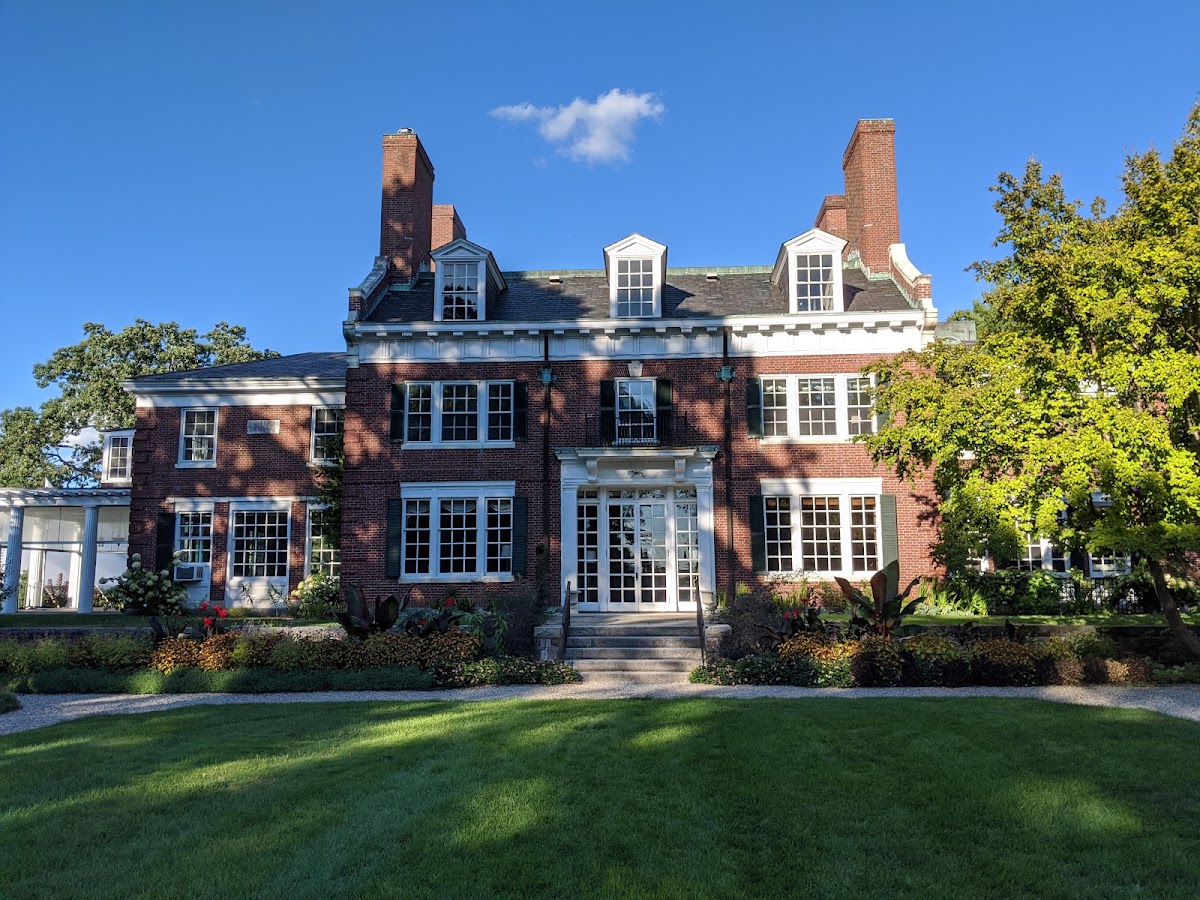
You turn off Route 138 onto the tree-lined drive, and Boston feels suddenly distant, though it’s only thirty minutes behind you. The Eleanor Cabot Bradley Estate reveals itself slowly — the way all great properties do — with stone walls first, then glimpses of red brick through ancient oaks and maples, and finally the full Georgian façade, solid and symmetrical against the rolling Massachusetts landscape. This is not a venue that announces itself loudly. Built in 1902 by architect Charles Platt for Eleanor Cabot Bradley, horticulturist and member of Boston’s prominent Cabot family, it sits on ninety acres of conservation land managed by The Trustees of Reservations, and it carries that particular grace of old New England money: understated, enduring, and exquisitely maintained. The formal parterre garden unfolds behind the mansion like a Renaissance painting — geometric flower beds framed by boxwood, gravel paths converging at a central reflecting pool that mirrors the sky. Beyond the manicured lawns, woodlands begin: two and a half miles of trails winding past a serene pond, through dogwood groves, and along a rhododendron walk that explodes in magenta and purple each late May. Poppy has designed Eleanor Cabot Bradley Estate wedding flowers for 9 celebrations here, and each time we pull up to the mansion’s service entrance for load-in, we’re reminded why couples fall for this place: it offers the grandeur of a historic estate without the stuffiness, and the natural beauty of the New England countryside without sacrificing elegance or convenience.
About Eleanor Cabot Bradley Estate
The Eleanor Cabot Bradley Estate occupies a unique position in the Boston-area wedding landscape. It is simultaneously a working conservation property, a historic house museum open to the public, and one of the most sought-after wedding venues on the South Shore. Eleanor Cabot Bradley herself dedicated her life to horticulture and land preservation, and that legacy is evident in every corner of the property. The formal gardens were designed in the Italian Renaissance style, with geometric precision and seasonal plantings that shift from tulips and daffodils in April to roses and delphiniums in June, dahlias and asters in September. The mansion itself is a textbook example of Georgian Revival architecture — red brick laid in Flemish bond, white-painted wood trim, hipped slate roof, and perfectly proportioned multi-pane windows that flood the interior with New England light. Inside, you’ll find crystal chandeliers hanging from coffered ceilings, marble fireplace mantles in nearly every room, and antique furnishings that feel lived-in rather than museum-precious. The second floor includes a bridal suite with period decor, excellent natural light, and enough space for a photographer, videographer, and bridal party to move comfortably while getting ready.
The North Lawn, where most receptions take place, is equipped with an elegant sailcloth tent and a permanent stone floor installed beneath it — a detail that matters more than you might think. Unlike temporary flooring laid over grass, this permanent installation provides a stable, level surface for tables, chairs, your grandmother’s heels, and substantial floral installations that require a solid base. The sailcloth tent itself has a sculptural quality that standard white tents lack, with swooping peaks and natural canvas that filters light beautifully during golden hour. The loggia, a covered outdoor structure with original stone flooring attached directly to the mansion, serves as a flexible space for cocktails, dancing, or simply a shaded retreat on warm summer afternoons. It’s architecturally significant enough to photograph beautifully but functional enough to host a full bar and lounge furniture without feeling cramped.
From a Canton wedding florist’s perspective, the logistics at Bradley Estate are straightforward but require precision. The Trustees maintain strict guidelines to protect the property — you have a five-hour rental window (typically 5:00 PM to 10:00 PM), which includes guest arrival and departure, and vendor load-in begins just two hours before the ceremony. This compressed timeline means our team arrives with a detailed installation plan, every arrangement pre-designed in our cooler, and we coordinate closely with Fireside Catering, the exclusive caterer, who knows the property intimately and helps facilitate smooth vendor collaboration. Parking is ample and included for guests, though many couples arrange shuttles for those staying at nearby hotels in Canton, Norwood, or Dedham. The venue is accessible via Route 138 and sits close to Route 95, making it an easy drive from Boston, Cambridge, the South Shore, and even Rhode Island. For our delivery trucks coming from the Poppy studio, the route is uncomplicated, and there’s dedicated vendor parking near the service entrance that allows for efficient unloading of large installations.
The Trustees limit the number of weddings held here each year, which means the gardens and grounds remain pristine, the grass stays lush, and your event feels exclusive rather than assembly-line. Insurance requirements are standard — general liability coverage that includes The Trustees as an additional insured — and all vendors must be approved in advance. Amplified music is permitted both indoors and outdoors, though sound must conclude by 10:00 PM outdoors and 11:00 PM inside the mansion. BC Tent is the required tent vendor, a partnership born from years of working together to protect the property while delivering exceptional events. What sets this venue apart from other historic estates is its commitment to conservation — your wedding takes place on land that will be protected in perpetuity, and that sense of stewardship permeates the entire experience.
Event Spaces & Floral Opportunities
Historic Mansion Interior
Capacity: 80 seated
Setting: The mansion’s first floor comprises several interconnected rooms, each with its own character but unified by classical Georgian proportions. The drawing room features a marble fireplace with carved garlands, silk damask wallpaper in a muted gold, and a crystal chandelier that refracts light across the coffered ceiling. The dining room, with its long mahogany table and antique sideboard, can accommodate a seated dinner for intimate gatherings or serve as a dramatic backdrop for cocktail service. Tall twelve-over-twelve windows look out onto the garden, and the color palette throughout is refined — cream walls, deep wood tones in cherry and mahogany, brass fixtures, and upholstery in muted golds and sage greens. The floors are original heart pine, slightly uneven and full of character. The second floor includes the bridal suite, a private parlor with period furniture, a full-length mirror, excellent north-facing light, and enough space for hair, makeup, and the orchestrated chaos of getting ready. This is not a space that feels museum-like or off-limits; it feels like you’ve been invited into a very elegant private home where people actually live.
Floral approach: The mansion’s interiors call for florals that honor the period architecture without mimicking it slavishly. We favor arrangements that feel like they could have been cut from an estate garden that morning and placed in heirloom vessels — compote bowls overflowing with Juliet and Patience garden roses, white lisianthus, blush ranunculus, and trailing jasmine vine. Fireplace mantles are prime real estate for large-scale installations: asymmetric designs that cascade down one side, incorporating seasonal branches (flowering cherry in spring, beech in fall, dogwood in summer) and textured foliage like Italian ruscus, myrtle, and eucalyptus. The crystal chandeliers can be enhanced with delicate garlands of smilax and Keira spray roses, though we generally recommend restraint here — the chandeliers are stunning on their own, and over-dressing them risks looking overwrought. For intimate dinners inside the mansion, low centerpieces in silver or mercury glass vessels work beautifully, allowing conversation to flow while adding a layer of romantic polish. The bridal suite should include a small arrangement — perhaps a cluster of sweet peas, garden roses, and hellebores in a vintage silver bowl — positioned near the window for detail shots of the bouquet alongside the bride’s jewelry, perfume, and invitation suite. Eleanor Cabot Bradley Estate wedding flowers in this space should feel timeless and refined, never trendy or Instagram-contrived.
Formal Parterre Garden
Capacity: 100+ ceremony guests
Setting: This is the estate’s crown jewel and the primary ceremony location. Enclosed by brick walls and precisely clipped boxwood hedges, the garden is laid out in geometric beds separated by crushed gravel paths that converge at a central reflecting pool. Depending on the season, the beds may be planted with tulips and pansies in coral and cream (spring), David Austin roses and salvia (summer), or dahlias and ornamental grasses (fall). Mature oaks and maples frame the garden on all sides, and the mansion’s brick façade provides a stately backdrop. The reflecting pool, rectangular and perfectly still on calm days, mirrors the sky and surrounding greenery. There’s a palpable sense of enclosure here — not claustrophobic, but intimate and protected, as though the garden exists in its own serene bubble separate from the outside world. Guests are typically seated on the lawn facing the pool, with the couple exchanging vows at the far end, framed by the garden’s carefully orchestrated natural beauty.
Floral approach: The cardinal rule in this garden is to enhance, not overwhelm. The Trustees’ horticultural team maintains these beds year-round, and the seasonal blooms are already spectacular. Your ceremony flowers should complement what’s already growing rather than competing with it. Before finalizing your floral plan, ask the estate coordinator what will be planted during your wedding month — if the beds are full of coral and blush roses, your ceremony arch should echo those tones (peach, cream, soft apricot) or contrast intentionally (burgundy, plum, white). We recommend a ceremony structure that feels organic and asymmetric — perhaps a wooden hexagonal frame adorned with climbing roses (Koko Loko, Quicksand), delphiniums in soft blue, lisianthus, and lush greenery like Italian ruscus, myrtle, and trailing jasmine vine. The structure should frame the couple without blocking sightlines to the reflecting pool or the mansion behind them. For the aisle, low arrangements in aged stone urns or weathered terracotta planters work beautifully, spaced every three or four rows and filled with blooms that echo the garden’s palette — if the beds feature coral roses, your aisle markers might include Juliet and Keira roses, peach ranunculus, and apricot stock. Avoid anything too tall or obtrusive; the garden itself is the main attraction. One detail we love: floating floral installations in the reflecting pool, delicate blooms like hellebores, ranunculus, and garden rose heads that drift on the water’s surface and create a dreamlike effect in photographs. The effect is ephemeral and romantic, and it’s a detail your guests will remember.
North Lawn with Sailcloth Tent
Capacity: 180 seated
Setting: The North Lawn stretches out from the mansion’s side elevation, a broad expanse of grass shaded by mature oaks and maples. The sailcloth tent, permanently installed over a stone floor, sits at the lawn’s center. Unlike traditional pole tents, sailcloth tents have a sculptural quality — peaks and valleys that create visual interest and allow natural light to filter through the canvas in soft, flattering tones. The permanent stone floor beneath eliminates the uneven, spongy feeling of grass or temporary flooring, and it allows for larger installations that require stable footing. The tent opens on all sides during cocktail hour and can be enclosed with clear sidewalls if the evening turns chilly. Inside, the neutral canvas provides a blank slate, and the surrounding trees visible through the tent’s openings ground the space in its natural setting. String lights or café lighting are often added overhead, creating a warm glow as daylight fades.
Floral approach: This tent is your canvas, and the sailcloth’s neutral cream tone allows florals to truly shine. We favor a mix of low and tall centerpieces to create visual rhythm across the space — half the tables with low, lush compote arrangements (Koko Loko roses, white majolica spray roses, blush astilbe, Queen Anne’s lace, and trailing jasmine vine in aged brass or stone vessels), and the other half with tall, elevated arrangements on clear glass risers or gold stands that lift the blooms above eye level, allowing sightlines across the tent while adding drama. For a 180-person reception, you’re looking at roughly 20 tables, which means ten low and ten tall creates a balanced, dynamic look. The tent’s entrance is critical — this is where guests transition from cocktails to dinner, and a pair of large-scale arrangements flanking the doorway signals that transition beautifully. Think oversized urns filled with seasonal branches (flowering cherry in May, beech in October), garden roses, hydrangea, and cascading greenery that spills over the vessel’s edge. Suspended installations are also possible here, and the permanent tent structure allows us to hang garlands or floral chandeliers without concern for weight limits. A single dramatic installation above the dance floor — perhaps a cloud of smilax, seeded eucalyptus, and clusters of Patience roses and white lisianthus — creates a focal point and photographs beautifully from below. The bar, typically positioned near the tent’s entrance, is another opportunity for an elevated floral moment: a long garland running the bar’s length or a series of bud vases clustered together with a mix of blooms in varying heights. Eleanor Cabot Bradley Estate wedding flowers in this space should feel abundant and romantic, with enough variety in height and texture to keep the eye moving.
Loggia
Capacity: Flexible, typically 50-75 for cocktails or lounge-style seating
Setting: Attached to the mansion’s east side, the loggia is a covered outdoor room with original stone flooring, Tuscan-style columns, and a vaulted ceiling. It’s architecturally significant — Platt designed it as a transition space between the formal interior and the natural landscape — and it functions beautifully as a cocktail area, a lounge with vintage furniture and Persian rugs, or even a dance floor for couples who want an outdoor party feel with weather protection. The stone floor is original to the property, slightly weathered and full of character, with a patina that only a century of New England weather can create. The columns and ceiling provide structure for hanging installations, and the open sides offer views of the lawn and gardens beyond.
Floral approach: The loggia’s semi-covered nature allows for arrangements that bridge indoor and outdoor aesthetics. If you’re using it for cocktail hour, consider a mix of small arrangements on high-top tables — clusters of bud vases with a single bloom type in each (one with white lisianthus, one with blush spray roses, one with Queen Anne’s lace) grouped together for impact. If the loggia is serving as a lounge, larger arrangements on side tables or consoles create a sophisticated, living-room feel — perhaps a low, lush arrangement in an aged brass bowl with garden roses, ranunculus, and trailing greenery. Hanging installations work particularly well here: a garland of smilax, seeded eucalyptus, and garden roses draped between columns or a series of hanging glass terrariums filled with tillandsia and trailing greenery suspended from the ceiling at varying heights. The stone floor and columns provide a neutral, classical backdrop that pairs well with organic, slightly wild arrangements — think garden roses with their outer petals left on, hellebores that tilt naturally, and foliage that looks freshly cut rather than overly groomed. For evening receptions, consider adding candlelight to the floral installations — pillar candles in hurricane lanterns surrounded by low florals, or taper candles in brass candlesticks rising from table arrangements to add warmth and romance.
Outdoor Lawn and Terrace
Capacity: Flexible, depending on layout
Setting: Beyond the formal garden and the tented lawn, the estate’s ninety acres unfold in a series of meadows, woodlands, and cultivated spaces. The terrace adjacent to the mansion is paved in bluestone and furnished with wrought-iron benches, ideal for cocktail hour overflow or intimate conversations away from the main gathering. The broader lawns can accommodate lawn games (croquet, cornhole, bocce) or simply serve as picturesque spaces for guests to wander with a glass of wine. The pond, located a short walk from the main event areas via a woodland path, is a favorite spot for couple portraits and bridal party photos, with weeping willows and wildflowers along its banks. The woodland trails, particularly the rhododendron walk, are stunning in late May when the blooms are at their peak — tunnels of magenta and purple that feel transported from an English country estate.
Floral approach: For cocktail hour on the terrace or surrounding lawn, we favor small, transportable arrangements that add polish without requiring extensive setup. Bud vases or small compotes on high-top tables, filled with a single bloom type or a simple mix (white lisianthus and eucalyptus, or blush spray roses and Queen Anne’s lace), create a refined but unfussy look. If you’re incorporating lawn games, consider small floral touches that tie them into the broader design — a garland of greenery wrapped around the croquet wicket posts, or a small arrangement placed on a rustic wooden crate near the cornhole boards. For the pond area, if you’re planning to take photos there, a small floral installation can enhance the setting without overwhelming the natural beauty: a low arrangement on the dock’s edge in a weathered wooden box, or a floating installation of blooms in the water near the shore. The woodland trails generally need no floral enhancement — the natural beauty is the draw — but if you’re hosting a welcome event or rehearsal dinner in one of the smaller spaces, portable arrangements in rustic containers (wooden crates, galvanized buckets, ceramic crocks) can bring a garden-party vibe to a more casual setting.
Wedding Flower Ideas for Eleanor Cabot Bradley Estate
Georgian Garden Romance
This concept honors the estate’s 1902 origins with a palette that Eleanor Cabot Bradley herself would have recognized: soft blush, cream, apricot, and dusty lavender, accented with silvery foliage and touches of deep plum for depth. We use Juliet and Patience garden roses as the foundation, their ruffled petals and old-rose fragrance evoking Edwardian cutting gardens. Add in blush ranunculus, white lisianthus, lavender sweet peas, apricot stock, and Queen Anne’s lace for airiness. Foliage includes Italian ruscus, myrtle, silver dollar eucalyptus, and trailing jasmine vine. Vessels are key to this concept: aged brass compotes with verdigris patina, mercury glass bud vases, and vintage silver bowls that look like they’ve been passed down through generations of Brahmin weddings. Arrangements are lush but structured, with a slightly domed shape and blooms densely packed in the manner of Dutch still-life paintings. This palette works beautifully in the mansion’s interior spaces, where the brass fixtures and antique furniture provide context, and in the sailcloth tent, where the neutral canvas allows the soft tones to glow in the late afternoon light. For the ceremony arch in the parterre garden, an asymmetric installation with trailing jasmine and climbing roses, anchored by larger blooms like peonies (in season) or hydrangea, creates a romantic focal point without overwhelming the garden’s existing plantings.
New England Meadow
This concept draws inspiration from the estate’s conservation land and the wildflower meadows that border the woodland trails. The palette is less controlled, more naturalistic: coral, peach, butter yellow, soft pink, and plenty of green in varying shades. We use blooms that feel freshly gathered from a country field: ranunculus in sunset shades, peach spray roses (Bombastic, Peach Avalanche), butter-yellow ranunculus, coral snapdragons, white scabiosa, chocolate cosmos for depth and contrast, and masses of textured foliage — ferns, variegated pittosporum, seeded eucalyptus, and wild grasses like miscanthus. Arrangements are organic and asymmetric, with blooms at varying heights and foliage that trails naturally over the vessel’s edge rather than being contained. Containers include unglazed terracotta pots, wooden crates with a weathered finish, and galvanized buckets for a farmhouse-garden feel. This concept shines in outdoor spaces: the tented reception, where the surrounding trees and lawn provide a natural backdrop, and the terrace or lawn areas during cocktail hour, where the casual, gathered-from-the-garden aesthetic feels perfectly at home. For the ceremony, a simple wooden arbor adorned with meadow-style florals and trailing greenery complements the parterre garden’s formal structure without mimicking it. This is a palette that feels effortless and joyful, as though the flowers arranged themselves.
Autumnal Elegance
New England autumns are legendary, and this concept leans into the season’s drama with a palette of burnt orange, deep burgundy, rust, plum, and gold, grounded by plenty of dark, textured foliage. The stars here are café au lait dahlias, their dinner-plate blooms in shades of blush and peach; burgundy dahlias like Rip City and Wizard of Oz; rust-colored roses (Free Spirit, Toffee); plum-toned ranunculus and hellebores; marigolds for a pop of gold; and dark, moody accents like chocolate cosmos, scabiosa pods, and privet berries. Foliage includes beech branches in their autumn bronze, seeded eucalyptus, and magnolia leaves with their rust-colored undersides exposed. Vessels are aged brass urns with deep patina, hammered copper compotes, and dark ceramic bowls that echo the season’s earthy tones. Arrangements are lush and slightly wild, with an abundance of texture and blooms spilling over the edges in an exuberant, harvest-inspired way. This concept is stunning in the sailcloth tent as the October light turns golden and filters through the canvas, and in the mansion’s interior, where the deep wood tones and fireplaces provide a warm backdrop. For the ceremony arch, incorporate seasonal branches — beech or oak with their autumn foliage — along with the dahlias and garden roses, creating a structure that feels both architectural and organic. This palette photographs exceptionally well against the estate’s fall foliage and feels quintessentially New England.
Seasonal Considerations
The Eleanor Cabot Bradley Estate sits in southeastern Massachusetts, where the climate is classic New England: four distinct seasons, each with its own beauty, challenges, and floral opportunities.
Spring (April-May): Spring in Canton arrives slowly, tentatively, and then all at once. Early April can still feel wintry, with temperatures in the 40s and 50s and the possibility of a late frost that sends the grounds crew scrambling to cover tender plantings. By mid-May, the estate is in full bloom — the parterre garden’s tulips and daffodils are at their peak, the dogwood trees along the woodland trails are covered in white and pink blossoms, and the rhododendron walk becomes a tunnel of purple and magenta blooms that rivals anything you’d find in England. For florals, spring offers tulips (French and parrot varieties), ranunculus, anemones, sweet peas, hellebores, daffodils, hyacinth, and early garden roses like Patience and Keira. The Trustees’ plantings in the parterre garden will likely include tulips in shades of coral, pink, and cream, so ceremony flowers should either complement these tones or provide intentional contrast with deeper hues like plum, burgundy, or lavender. Weather is unpredictable — have a contingency plan for rain, and consider that outdoor cocktail hours may need propane heat lamps if the temperature drops after sunset. The mansion’s fireplaces may still be in use, creating a cozy atmosphere for indoor portions of the event. Late May is the sweet spot: reliably warm, long daylight hours (sunset around 8:00 PM), and the estate at its most floriferous. This is peak wedding season here, and dates book out well in advance.
Summer (June-August): Summer brings warm, humid weather and the lushness that comes with it. Temperatures range from the 70s to mid-80s, with occasional heat waves pushing into the 90s and the kind of humidity that makes you grateful for the shade of the estate’s mature trees. The parterre garden’s plantings shift to roses, salvia, and perennials like lavender and catmint, and the surrounding woodlands are fully leafed out, providing that rich, green backdrop that makes New England summers feel idyllic. For florals, summer is peak season: garden roses (Juliet, Patience, Keira, Koko Loko), peonies (late May through mid-June only), hydrangea, delphiniums, lisianthus, snapdragons, stock, and dahlias (starting in late July). The challenge in summer is heat — blooms wilt faster, and outdoor installations need to be designed with heat tolerance in mind. We favor hardy flowers like roses, hydrangea, and lisianthus for exposed outdoor arrangements, and we time our installation to minimize sun exposure before the ceremony. Sunset is late (around 8:15 PM in June), which means long, golden-hour light for portraits on the lawn and by the pond. Evenings can be buggy, especially near the woodland areas, so consider citronella candles or a discreet bug-repellent station for guests. Summer weekends book early — this is the most popular season at the estate, and The Trustees’ limited annual wedding calendar fills quickly.
Fall (September-October): This is New England at its finest, and arguably the best season to marry at the Bradley Estate. September brings warm days and cool evenings, with temperatures in the 60s and 70s and reliably clear skies that photographers dream about. By October, the foliage is turning — the maples and oaks surrounding the property shift to crimson, orange, and gold, creating a natural backdrop that requires no additional decoration. The parterre garden’s plantings transition to dahlias, asters, and ornamental grasses that catch the light beautifully. For florals, fall offers the richest palette: dahlias in every color imaginable (café au lait, burgundy, coral, white), garden roses, ranunculus, cosmos, marigolds, zinnias, and seasonal foliage like beech branches, oak leaves, and berry-laden branches of hypericum or privet. The cooler temperatures mean blooms last longer and outdoor installations hold up beautifully even in direct sun. Sunset moves earlier (around 6:30 PM by late October), so plan your timeline accordingly if you want golden-hour portraits. Fall is also peak foliage tourism season in New England, which means traffic on Route 95 and hotel rates in the Canton area may be higher than other times of year. October weekends, particularly mid-October when the foliage is at peak, are the most competitive dates on the calendar. Book 12-18 months in advance if you have your heart set on autumn.
Winter (November-March): Winter weddings at the estate are rare but magical for couples who embrace the season. The property takes on a serene, almost ethereal quality when the gardens are dormant and the trees are bare. Temperatures range from the 20s to 40s, with occasional snowfall that transforms the grounds into a New England postcard. The mansion’s interiors, with their crackling fireplaces and warm lighting, become the focus, and the sailcloth tent can be fully enclosed and heated for guest comfort. For florals, winter means relying on greenhouse-grown blooms and imported flowers: amaryllis in white or deep red, anemones, ranunculus, hellebores, roses, and evergreen foliage like pine, fir, cedar, and magnolia. We also incorporate non-floral elements like birch branches, pinecones, berries, and candles to create warmth and texture. Winter weddings offer significant cost savings on venue rental and vendor availability, and the exclusive, intimate feeling of having the estate to yourselves in the off-season is unmatched. Logistics are more complex — vendors need to account for potential snow and ice, and load-in/load-out times may be longer in cold weather. Sunset is early (around 4:30 PM in December), which means ceremonies must be timed for afternoon light or planned as candlelit evening events. The trade-off is worth it for couples who want something different and don’t mind bundling up for portraits by the pond.
Poppy’s Expert Take
The parterre garden is already planted — design accordingly. The Trustees’ horticultural team plants the formal garden seasonally, and those beds will be in bloom during your wedding. Before finalizing your ceremony floral plan, ask the estate coordinator what will be planted during your wedding month. If the beds are full of coral and pink roses, your ceremony arch should complement (bl