
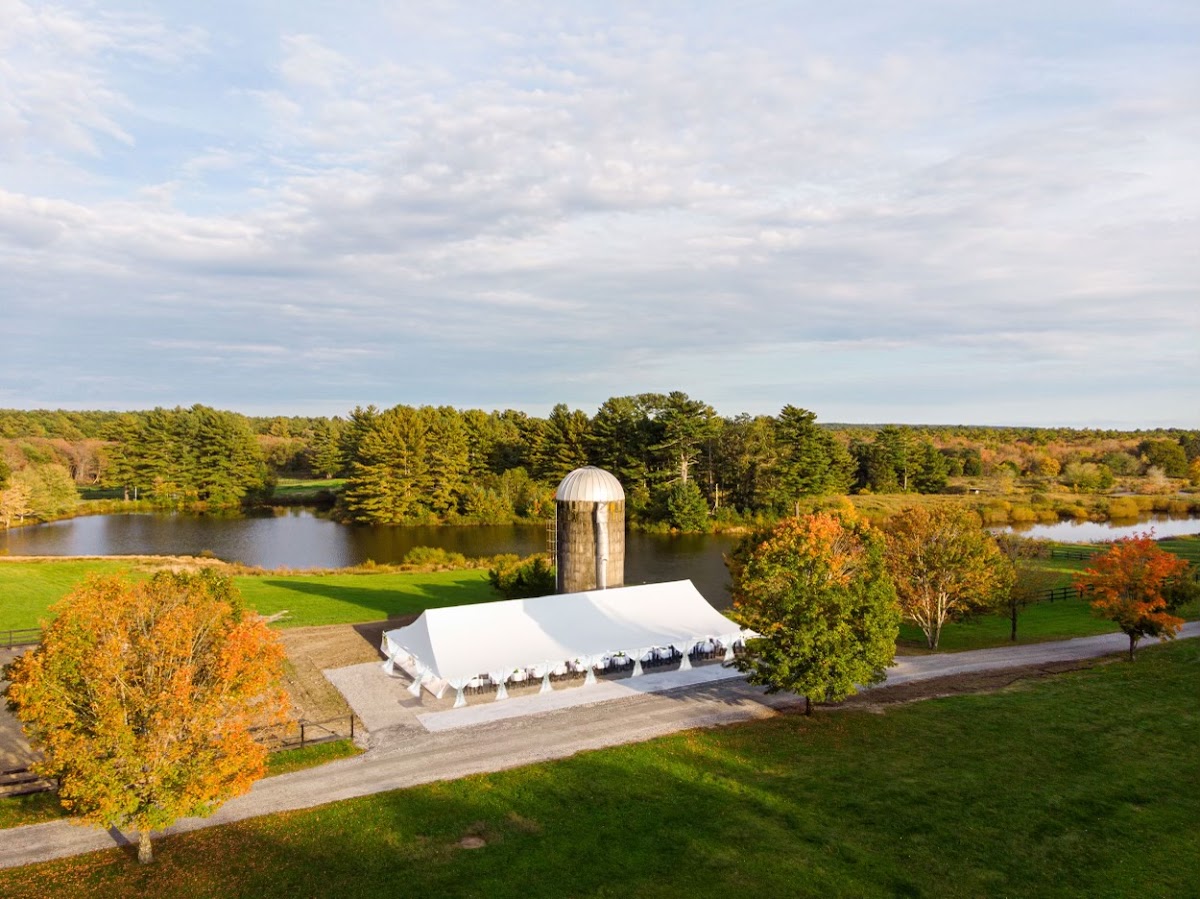
The turn off Route 138 is easy to miss. You’re driving through Connecticut’s Quiet Corner, where state forests and farmland outnumber strip malls by a comfortable margin, and then Bailey Road appears — narrow, winding, flanked by old stone walls that have been holding back the woods since before anyone can remember. The road climbs gently, curves past a pasture where horses lift their heads to watch you pass, and then the entrance to Falls Creek Farm opens up on your right. Not with fanfare, but with quiet confidence. A long drive lined with maples. Rolling hills stitched together with rail fencing. And beyond that, tucked into 300 acres of Connecticut countryside, the kind of estate that makes you recalibrate what a barn wedding can be. This is not a single venue. It is two distinct properties within one farm: The Reserve, with its Italian stone chapel and glass-walled lakefront barn, and Creekside, with its soaring tent, glasshouse Orangery, and hidden garden ceremony site. Each offers a completely different aesthetic. Each has its own entrance and parking. And each gives couples the rare freedom to bring in their own caterer, their own vision, their own florist — which is precisely where Poppy comes in.
About Falls Creek Farm
Falls Creek Farm sits in the rural heart of Eastern Connecticut, equidistant from Providence, Rhode Island (about 40 minutes southeast) and Hartford (roughly an hour northwest). This is farm country, land that still looks the way New England is supposed to look: white fences, red barns, pastures dotted with horses, and enough open sky to remind you how far you are from the interstate. The property spans 300 acres, though the wedding venues occupy a thoughtfully curated portion of that expanse. The farm was designed to host equestrian events, and that heritage is visible everywhere — in the quality of the fencing, the pristine condition of the barns, the manicured paddocks. But weddings are where Falls Creek truly distinguishes itself, offering not one but two entirely separate event complexes that can be booked independently or, for larger wedding weekends, in tandem.
The Reserve is the more polished of the two. Its centerpiece is the Italian stone chapel, a faithful recreation of a Tuscan country church complete with stone walls, arched windows, and a quiet formality that photographs like a postcard from Umbria. Adjacent to the chapel is the Lakefront Barn — though calling it a barn undersells what it actually is. This is a modern event space disguised in rustic clothing: soaring ceilings, reclaimed wood beams, and one entire wall of sliding glass-paneled doors that open onto a private lake. The effect is half rustic elegance, half contemporary design, and entirely striking. Capacity here tops out at 250 seated guests, with dedicated bridal and groom suites tucked into the wings. The Reserve also includes a sprawling lakeside lawn for outdoor ceremonies, where the water provides a shimmering backdrop and the surrounding woods buffer any sense of the outside world.
Creekside, the second venue on the property, offers a completely different experience. Here, the star is the Century Tent — a massive 40-by-110-foot sailcloth structure perched along the creek with open-air siding, interior and exterior lighting, and enough square footage to accommodate 200 guests for a seated dinner and dancing. The tent is seasonal, available from April through November, and it gives couples a blank canvas to style however they wish. Next to the tent is the Orangery, a light-flooded glasshouse with floor-to-ceiling windows and a greenhouse aesthetic that works beautifully for intimate ceremonies, cocktail hours, or small receptions. And tucked into a grove of mature trees is the Secret Garden, an outdoor ceremony site that feels like you’ve stumbled into a private estate garden that has been growing, quietly and beautifully, for decades.
What makes Falls Creek Farm particularly appealing from a florist’s perspective is the venue’s open vendor policy. There is no in-house catering, no required decor packages, no house florist. Couples must bring in their own licensed caterer and are free to select all other vendors independently. This means we can design Falls Creek Farm wedding flowers without restriction, tailoring every arrangement to the couple’s vision rather than working around house rules or preferred vendor kickbacks. The venue does require liability insurance, which is standard and easy to obtain. Load-in logistics are straightforward, with dedicated parking and entry points for each venue that keep vendor access separate from guest arrival. The property manager is communicative and organized, which makes setup smooth and timeline coordination manageable. The one universal rule: all events must conclude by 11:00 PM, so we plan floral installations to be complete well before guest arrival, ensuring maximum impact during the celebration itself.
Event Spaces & Floral Opportunities
The Reserve - Italian Stone Chapel
Capacity: Flexible, typically 100-150 guests for ceremony seating
Setting: The chapel is small, intimate, and unmistakably European in its architectural DNA. Stone walls rise to meet a timber-beamed ceiling. Arched windows let in soft, diffused light. The altar is framed by a stone archway, and the overall effect is one of permanence and quiet grace. This is not a space that requires decoration to feel complete. It already carries weight, history, reverence — even though it was built within the last two decades. The floors are polished stone, the pews are simple wood, and the palette is entirely neutral: gray stone, warm wood, cream plaster. It reads timeless in a way that allows flowers to be the only living element in the room.
Floral approach: The altar is the only place that truly demands florals in this space. We favor large, classically proportioned arrangements in a pair of stone or aged concrete urns, flanking the archway without obscuring its beautiful lines. Think lush, garden-gathered abundance: Patience garden roses in soft ivory, white O’Hara garden roses, blush Keira garden roses, with Quicksand roses adding depth in dusty mauve. Layer in white majolica spray roses for texture, cream lisianthus (Arena or Rosanne varieties), and plenty of Italian ruscus, seeded eucalyptus, and jasmine vine for movement. The look should feel European, romantic, and effortlessly elegant — as if these arrangements have been growing in the chapel garden and were simply gathered that morning. Pew florals are optional here; the architecture is strong enough to stand alone. But if couples want to mark the aisle, we recommend small posies of garden roses and eucalyptus tied to alternating pews with silk ribbon in ivory or taupe, subtle and refined. Avoid anything too tall or structured; this room rewards softness and natural form.
The Reserve - Lakefront Barn
Capacity: 250 seated
Setting: This is where The Reserve truly earns its name. The barn is grand in scale but not in the slightest bit rustic in execution. The bones are classic New England barn architecture — exposed beams, vaulted ceilings, wide plank floors — but the finishes are contemporary and polished. One long wall is made entirely of sliding glass-paneled doors, and when those doors are open, the barn becomes a pavilion, with the lake glittering just beyond the threshold and a breeze moving through the space. The opposite wall features a full-service bar with enough room for multiple bartenders and display space for signature cocktails or floral installations. The lighting is soft and adjustable, and the neutral wood tones throughout mean that any color palette will work beautifully here. There is a bridal suite and a groom suite tucked into the wings, both spacious and well-appointed. This is a space that can hold 250 people comfortably, accommodate a live band or DJ, and still feel intimate when the lights go down and the dancing begins.
Floral approach: The glass doors are both the barn’s greatest asset and its greatest design challenge. You do not want to block those views, but you also need to create visual warmth and intimacy in a very large room. We solve this with a combination of low, lush centerpieces and elevated installations that sit above sightlines. For guest tables, consider mounded arrangements in aged stone compotes or low wooden boxes: Café au Lait dahlias, Juliet and Patience garden roses, white hydrangea, astilbe in soft pink or cream, and trailing jasmine vine that spills over the edges. Keep everything under ten inches in height so guests can see each other and, crucially, so they can see the lake. For high-top cocktail tables, we elevate the arrangements on clear glass risers to twelve or fourteen inches, lifting the florals above conversation height while maintaining the low profile at eye level. The barn beams are ideal for hanging installations — think lush garlands of smilax, Italian ruscus, and seeded eucalyptus running the length of the head table, with clusters of Keira roses, white lisianthus, and blush ranunculus woven in at intervals. The bar is a natural focal point and deserves a statement arrangement: a large, loose composition in a brass urn or concrete planter, overflowing with seasonal branches (dogwood in spring, flowering quince in early summer, beech in fall), garden roses, and plenty of textured greenery. If the couple is using the bridal and groom suites, small bud vases with a few stems of their personal flowers add a lovely, personal touch.
The Reserve - Lakeside Lawn
Capacity: Flexible, typically 150-200 for ceremony seating
Setting: The lawn stretches along the water’s edge, framed by mature trees on one side and open views of the private lake on the other. It is quiet out here. The only sounds are the breeze through the trees, the occasional call of a heron, and the soft lapping of water against the shore. The lawn is manicured but not overly formal, and the surrounding landscape provides natural privacy. This is an outdoor ceremony site that feels genuinely secluded, even though the barn and chapel are just a short walk away.
Floral approach: The lake is your backdrop here, and it is a generous one. Our goal with florals is to frame the couple without competing with the water or the surrounding landscape. A ceremony arch or arbor is essential — this is the only structure on an otherwise open lawn, so it becomes the visual anchor for the entire ceremony. We favor a wooden or metal arbor adorned asymmetrically with lush garden-style florals: climbing roses (if in season), jasmine vine, smilax, and Italian ruscus creating the base, with clusters of Keira garden roses, blush ranunculus, white sweet peas, and pale blue delphinium (for June weddings) gathered at the corners. The effect should feel organic and slightly wild, as if the flowers have been growing up the arbor for years. For the aisle, we recommend either low arrangements in aged wooden boxes placed at alternating rows, or simple shepherd’s hooks with hanging arrangements of roses, eucalyptus, and trailing greenery. If the couple wants maximum drama, we can line the aisle with potted ferns or hydrangea trees in vintage urns, creating a lush corridor that leads to the arbor — though this approach requires a larger floral budget. Keep everything low enough that guests seated in the back rows can still see the couple and the lake beyond.
Creekside - Century Tent
Capacity: 200 seated
Setting: The Century Tent is enormous — 40 feet wide, 110 feet long, with peaked sailcloth ceilings that soar overhead and thick wooden poles running down the center line. The tent sits along the creek (hence the venue name), and when the siding is open, you can hear the water moving over stones. Interior and exterior lighting is included, which means the tent glows like a lantern after dark. The floor is typically finished wood or a neutral surface (confirm with venue), and the space is completely open, allowing for any layout: long farm tables, round tables, a mix of both, lounge areas, a spacious dance floor. This is the kind of tent that does not feel like a tent at all once it is styled. It feels like an event pavilion, and it offers the rare combination of indoor comfort with outdoor ambiance.
Floral approach: The tent poles are the most obvious opportunity for dramatic floral installations. We often run garlands of smilax, seeded eucalyptus, and Italian ruscus down the length of the tent, wrapping each pole and connecting them overhead with swags that appear to float above the tables. For a more formal look, consider hanging floral chandeliers from the peak of the tent — large, loose arrangements of garden roses, hydrangea, amaranthus, and jasmine vine suspended at varying heights to create visual rhythm and movement. For table centerpieces, we favor variety: some tables with low, lush arrangements in wooden boxes or stone compotes, others with tall arrangements on elevated stands that lift the florals above conversation height. This creates visual interest and keeps the space from feeling too uniform. If the couple is using long farm tables, garland runners down the center of each table (smilax, eucalyptus, seeded with blooms at intervals) work beautifully and photograph like a dream. The tent siding offers another opportunity: we can install floral walls, photo backdrops, or simple swags of greenery tied with clusters of blooms at intervals. The key with tent florals is to embrace the architecture of the tent itself — the poles, the peaks, the siding — and use those structural elements to support your floral design rather than fighting against them.
Creekside - The Orangery
Capacity: Flexible, typically 40-60 for seated dinner, 80-100 for cocktails
Setting: The Orangery is exactly what its name suggests: a glasshouse. Floor-to-ceiling windows on all sides, white-painted steel frame, and enough natural light to grow actual plants year-round (the venue keeps potted greenery inside, which adds to the greenhouse aesthetic). The space overlooks the creek and is flooded with light from sunrise to sunset. It is intimate without feeling cramped, elegant without feeling formal. This is the kind of space that works beautifully for a small ceremony, a cocktail hour, or an intimate reception for couples who want something lighter and less traditional than a barn or ballroom.
Floral approach: The Orangery’s glass walls and greenhouse aesthetic practically demand an organic, garden-style approach to florals. We lean into that entirely. Consider using potted plants as centerpieces — lavender, rosemary, or lemon trees in aged terracotta pots, with low arrangements of garden roses, ranunculus, and sweet peas nestled around the base. For a ceremony in the Orangery, a low floral installation at the altar — perhaps a ground-level semicircle of blooms and greenery — works beautifully and does not block the windows or the view. Hanging installations are particularly effective here: think trailing vines (jasmine, smilax, ivy) suspended from the steel beams, with clusters of roses, lisianthus, and hellebores woven in at intervals. The natural light enhances every color, so this is a space where soft pastels and whites truly shine — blush, cream, soft peach, pale lavender. Avoid anything too tall or structured; the Orangery rewards loose, organic, slightly wild arrangements that feel like they were gathered from a cutting garden just outside the door.
Creekside - Secret Garden
Capacity: Flexible, typically 100-150 for ceremony seating
Setting: The Secret Garden is tucked into a grove of mature trees and feels, true to its name, like a hidden discovery. The existing landscaping includes flowering shrubs, perennials, and stone pathways that wind through the garden. There is no formal structure here — no gazebo, no permanent arch — which means the space is entirely customizable. It is quiet, shaded, and deeply romantic, with dappled sunlight filtering through the tree canopy and the sense that you have stepped into a private estate garden that has been growing for generations.
Floral approach: The garden’s natural beauty is the foundation; our florals should enhance rather than compete. A ceremony arch or arbor is essential here, as it becomes the focal point in an otherwise organic landscape. We favor a natural, asymmetrical arch constructed from branches (birch, curly willow, or manzanita) and adorned with climbing florals: roses (Juliet, Patience, Keira), clematis vine, jasmine, and plenty of trailing greenery. The effect should feel overgrown and romantic, as if the flowers have been growing up the arch for years. For the aisle, we recommend either low arrangements in mismatched vintage vessels (brass compotes, ceramic planters, wooden boxes) placed at intervals, or potted plants (ferns, hydrangeas, lavender) lining the aisle to create a lush, garden-path effect. If the couple wants maximum impact, we can create a ground-level floral installation at the base of the arch — a semicircle of blooms, moss, and greenery that appears to be growing directly from the garden floor. The key here is restraint and naturalism. The Secret Garden already has magic; we are simply adding the flowers that make it feel enchanted.
Wedding Flower Ideas for Falls Creek Farm
New England Estate Garden
This concept embraces the farm’s pastoral New England setting with a palette inspired by traditional English cutting gardens and American colonial estates. Soft blush, ivory, pale peach, and dusty lavender form the foundation, with accents of deeper plum and soft sage green. The florals feel loose, garden-gathered, and effortlessly abundant, as if they were cut from a country estate garden that has been blooming for centuries. Specific flowers include: Patience, Juliet, and Keira garden roses; Café au Lait and Café au Lait Rosé dahlias; ranunculus in blush and peach; white sweet peas; lavender delphinium (June only); blush astilbe; pale peach stock; white majolica spray roses; white lisianthus (Arena, Rosanne); and textured greenery including Italian ruscus, seeded eucalyptus, jasmine vine, and silver dollar eucalyptus. Vessels should be vintage-inspired: aged terracotta pots, weathered wooden boxes, ceramic compotes in soft cream or pale green, and brass urns with patina. This palette works beautifully in the Stone Chapel, the Secret Garden, and the Orangery, where the soft colors and organic forms complement the natural surroundings. For the Lakefront Barn or Century Tent, add candlelight and trailing garlands to create warmth and intimacy in larger spaces.
Lakeside Romance
This concept takes inspiration from the waterfront setting, with a palette drawn from twilight over a New England lake: dusky blue, soft lavender, silvery gray, cream, and touches of plum. The effect is romantic, moody, and slightly ethereal, with a sophisticated color story that photographs beautifully in both natural light and at dusk. Specific flowers include: Quicksand roses in dusty mauve; Amnesia roses in soft lavender-gray; white O’Hara and Patience garden roses; blue thistle (eryngium); lavender delphinium (seasonal); plum scabiosa; dusty miller for silvery foliage; blue hydrangea (Nikko Blue or Endless Summer); soft lavender stock; white ranunculus; pale blue tweedia (if available); and greenery including seeded eucalyptus, Italian ruscus, and silver dollar eucalyptus. Vessels should be muted and elegant: concrete planters, aged stone urns, mercury glass vases, and weathered wood boxes in gray or white-washed finishes. This palette is stunning in the Lakefront Barn, where the water views echo the blue-gray tones, and in the Lakeside Lawn ceremony site, where the colors harmonize with the natural backdrop. For evening receptions, add candlelight in mercury glass votives to enhance the romantic, twilight ambiance.
Equestrian Elegance
This concept honors Falls Creek Farm’s equestrian heritage with a palette that feels classic, refined, and unmistakably country-estate. Deep burgundy, warm cognac, ivory, champagne, and rich chocolate brown form the foundation, with accents of burnished copper and soft sage green. The overall effect is warm, luxurious, and grounded, with a slightly masculine edge that appeals to couples who want something sophisticated without being overly feminine. Specific flowers include: Black Baccara and Tess roses in deep burgundy; Cappuccino and Quicksand roses in warm taupe and cognac; Café au Lait dahlias in cream and blush; chocolate cosmos (seasonal); burgundy ranunculus; champagne lisianthus; caramel antike carnations; brown and burgundy scabiosa; privet berries; and greenery including olive branches, Italian ruscus, seeded eucalyptus, and burgundy-tinged eucalyptus (if available). Vessels should be rich and substantial: aged brass urns, copper compotes, dark wood boxes, and leather-wrapped vases. This palette is particularly striking in the Stone Chapel, where the warm tones echo the stone walls, and in the Century Tent, where the deep colors create drama against the neutral canvas of the sailcloth. For the Lakefront Barn, this palette works beautifully with candlelight and creates a warm, intimate atmosphere as the sun sets over the water.
Seasonal Considerations
Eastern Connecticut experiences four distinct seasons, each offering unique opportunities and challenges for wedding florals at Falls Creek Farm. The property is situated in USDA Hardiness Zone 6a, which means cold winters, a relatively short but vibrant spring, warm summers, and spectacular autumns.
Spring (April-May): Spring arrives slowly in the Quiet Corner, with early April still feeling quite cool and late May offering the first truly warm weekends. This is tulip and daffodil season, and the farm’s grounds come alive with flowering trees (dogwood, redbud, ornamental cherry) that make stunning backdrops for outdoor ceremonies. Locally grown spring blooms include tulips, ranunculus, anemones, sweet peas, early peonies (late May only), lilac, flowering branches (cherry, quince, dogwood), and hellebores. Imported blooms like garden roses, lisianthus, and delphinium are readily available and affordable. The Century Tent becomes available in April, though early spring evenings can still be cool, so heating may be necessary. The Secret Garden and Lakeside Lawn are both stunning in spring, with dappled sunlight and flowering trees providing natural beauty. Weather is unpredictable — pack a rain plan and protect delicate blooms during transport. Early May is one of the sweetest windows at Falls Creek Farm: warm enough for outdoor ceremonies, cool enough that flowers stay fresh, and the landscape is verdant without the humidity of summer.
Summer (June-August): Summer in Voluntown is warm, humid, and lush. Daytime temperatures regularly reach the high 80s, and afternoon thunderstorms are common, especially in July and August. This is peak wedding season, and the farm is at its most pastoral: horses grazing in green pastures, the lake sparkling under blue skies, and the gardens in full bloom. Locally grown summer blooms include peonies (June only), hydrangea, dahlias (late summer), zinnias, sunflowers, Queen Anne’s lace, and wildflowers. Garden roses, lisianthus, stock, and delphinium are all readily available. Heat is the primary challenge: avoid delicate blooms that wilt quickly (sweet peas, anemones, ranunculus) and favor hardy flowers like hydrangea, roses, and lisianthus. All arrangements should be designed with water sources in mind, and we always bring backup florals for outdoor ceremonies in case of heat stress. The Lakefront Barn’s glass doors are a blessing in summer — open them wide for airflow and to bring the outdoors in. The Orangery can get quite warm in direct sun, so consider this space for morning or early evening events rather than peak afternoon. For outdoor ceremonies on the Lakeside Lawn or Secret Garden, plan for late afternoon or early evening to avoid the hottest part of the day.
Fall (September-October): Autumn is Falls Creek Farm’s glory season. The foliage in Eastern Connecticut peaks in mid-October, and the surrounding hills turn brilliant shades of scarlet, gold, and orange. Daytime temperatures are mild, evenings are crisp, and the light takes on that particular golden quality that photographers dream about. This is dahlia season, with locally grown varieties in every color imaginable, along with hydrangea, asters, mums, celosia, amaranthus, and late-season roses. Imported blooms like garden roses, ranunculus, and lisianthus are plentiful and often more affordable in fall than in summer. The Century Tent is available through November, and fall evenings under sailcloth with twinkling lights and candlelight are pure magic. The Secret Garden is particularly stunning in fall, with the surrounding trees ablaze with color. For color palettes, consider rich burgundies, burnt oranges, deep plums, and warm golds that echo the foliage, or opt for contrast with soft blush, cream, and ivory against the fiery backdrop. Incorporate seasonal branches (oak, maple, beech) into large arrangements for texture and drama. October weekends book early at Falls Creek Farm, so couples planning a fall wedding should secure their date well in advance.
Winter (December-March): Winter in Voluntown is cold, with average temperatures in the 20s and 30s and occasional snowfall. The Creekside venues (Century Tent, Orangery, Secret Garden) are not available during winter months, but The Reserve — with its heated Stone Chapel and Lakefront Barn — remains a stunning option for winter weddings. The landscape is stark and beautiful, with snow-dusted fields, bare trees, and a quiet stillness that feels deeply romantic. Winter florals should embrace the season: amaryllis, anemones (imported), hellebores, evergreens (pine, fir, cedar, juniper), berries (hypericum, ilex, privet), white roses, white lisianthus, dusty miller, and plenty of textured greenery. Consider incorporating non-floral elements like pine cones, birch branches, magnolia leaves, and frosted accents for a seasonal, elegant look. The Stone Chapel is particularly magical in winter, with minimal floral needs — a pair of evergreen urns flanking the altar with white blooms, candles, and perhaps a dusting of faux snow is all you need. The Lakefront Barn benefits from rich, warm florals in deep reds, burgundies, and evergreens to create coziness against the snowy landscape outside. Winter weddings at Falls Creek Farm tend to be smaller and more intimate, which allows for a higher floral-per-guest ratio and the opportunity to create truly luxurious arrangements.
Poppy’s Expert Take
Two venues, two vibes, one property. The Reserve and Creekside offer completely different aesthetics, and couples should choose based on the experience they want, not just guest count. The Reserve (Stone Chapel + Lakefront Barn) feels polished, sophisticated, and timeless — ideal for couples who want elegant, refined, and a bit European. Creekside (Century Tent + Orangery + Secret Garden) feels organic, romantic, and garden-inspired — ideal for couples who want something softer, more whimsical, and deeply connected to nature. From a floral design perspective, we approach each property differently. The Reserve’s architecture is strong and structured, so florals should be lush but controlled, classic but not stuffy. Creekside’s natural setting allows for looser, more organic designs that embrace asymmetry and movement. If you are planning a multi-day wedding weekend and booking both venues, consider using a consistent color palette but varying the style: more structured florals at The Reserve for the rehearsal dinner or welcome party, and more garden-style florals at Creekside for the ceremony and reception.
The open vendor policy is a gift — use it wisely. Falls Creek Farm allows couples to bring in their own caterer and vendors, which is increasingly rare and incredibly valuable. This means you are not locked into a house florist or required to purchase overpriced decor packages. However, with freedom comes responsibility. Make sure every vendor you hire is experienced, professional, and has liability insurance (the venue requires it). From Poppy’s perspective, the open vendor policy allows us to design without restriction, source the exact blooms we need, and collaborate directly with your planner and photographer to create a cohesive vision. But it also means there is no house staff managing vendor coordination — you (or your planner) need to ensure everyone knows the timeline, load-in procedures, and venue rules. Hire a professional day-of coordinator if you do not already have one; the venue staff manages the property, not your wedding logistics.
Plan for the 11:00 PM hard stop. All events at Falls Creek Farm must conclude by 11:00 PM, which is earlier than many venues in the Providence market. This means your timeline needs to be tight and realistic. For floral design, this matters because we need to complete all installations well before guest arrival, and we need to plan breakdown and load-out to happen swiftly after the event ends. If you are doing a first look and want time for bridal party and family photos before the ceremony, build that into your timeline and communicate it clearly to your photographer and planner. The hard stop also means your reception timeline should start earlier — consider a 5:00 or 5:30 PM ceremony so you have ample time for cocktails, dinner, toasts, and dancing before 11:00 PM. From a floral perspective, the early end time is actually a positive: your flowers will look fresh and beautiful throughout the event, with no risk of wilting in the late-night hours.
The Italian Stone Chapel needs less than you think. The chapel’s architecture is so strong that it