
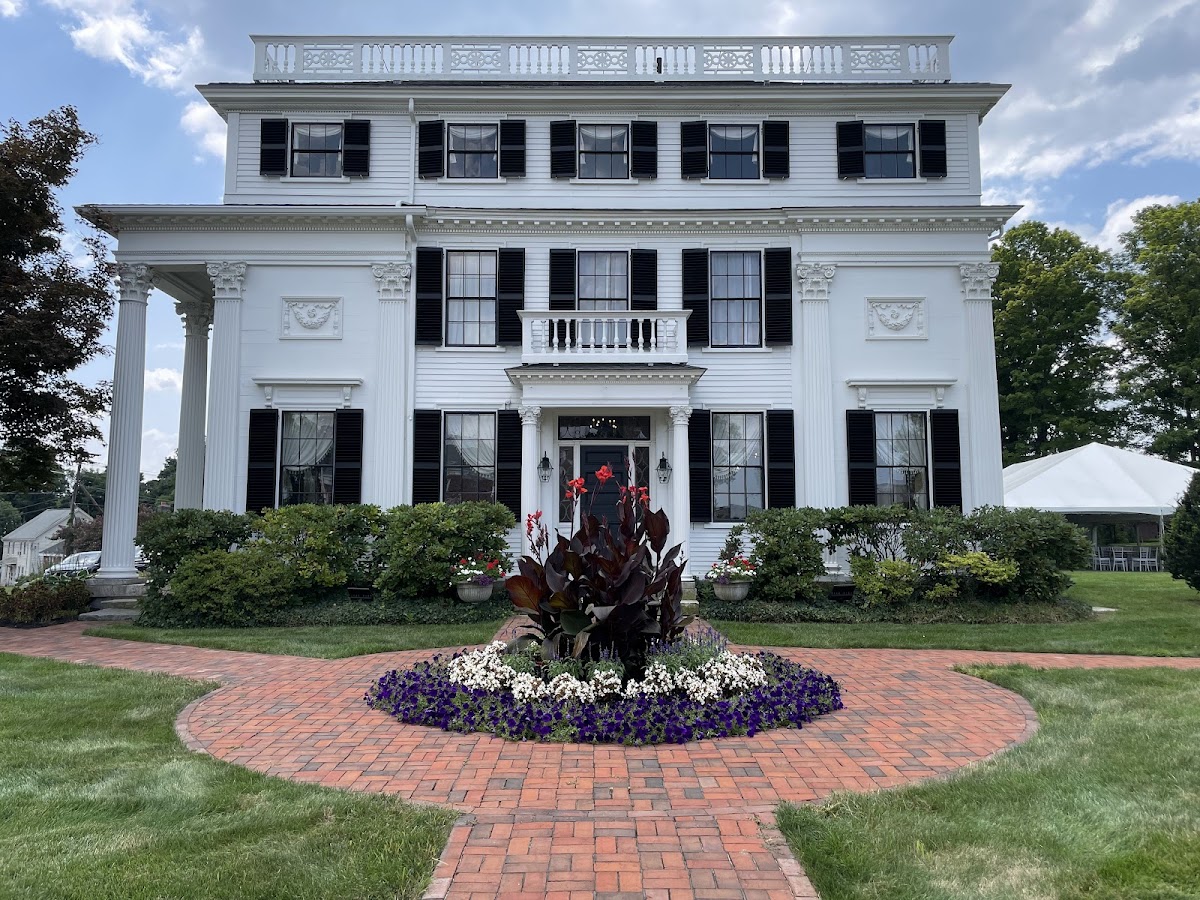
You turn off Route 20, wind through Millbury’s quiet center past the white-steepled churches and brick storefronts that look unchanged since 1950, and then School Street opens up to reveal something unexpected: a white-columned portico rising from a hillside, gracious and entirely out of scale with the modest New England homes around it. This is Asa Waters Mansion, a Greek Revival estate built in the 1830s when Millbury was flush with mill money and ambition. The mansion sits on the National Register of Historic Places, which tells you something about the architectural pedigree, but what it does not convey is the feeling you get stepping through those columns into the main hall — the sudden cool hush, the way afternoon light slants through tall windows and catches dust motes above the spiral staircase, the sense that time moves differently inside these walls. Behind the mansion, the grounds unfold: manicured lawns beneath towering maples and oaks, a 19th-century bandstand that looks lifted from a town square, and — the newest addition — a garden tent with a stone floor that manages to feel both festive and rooted in the landscape. Poppy has designed Asa Waters Mansion wedding flowers for one celebration here so far, with several more inquiries in our pipeline, and each conversation begins the same way: couples arrive expecting a historic house and discover an estate that offers genuine versatility, from intimate 50-guest dinners in sunlit rooms to 200-guest garden receptions beneath century-old trees.
About Asa Waters Mansion
Asa Waters Mansion was built in 1832 by Asa Waters, a prominent industrialist whose firearms manufacturing business brought considerable wealth to Millbury during the height of New England’s industrial revolution. The mansion is a textbook example of Greek Revival architecture — those imposing white columns, the symmetrical facade, the sense of proportion and classical restraint that defined American taste in the Jacksonian era. What makes the property remarkable is not just its architectural pedigree but its preservation. The interior retains original fixtures, period-appropriate furnishings, hand-carved woodwork, and a grand spiral staircase that has served as the backdrop for countless bridal portraits over the decades. Large windows flood the rooms with natural light, and the first floor is handicap accessible, a practical detail that matters when planning a wedding.
The estate sits on several acres of manicured grounds that have been thoughtfully maintained to balance formal gardens with the relaxed, park-like feel of mature New England landscaping. Stately trees — sugar maples, white oaks, and heritage elms — provide dappled shade across the lawns, and seasonal plantings add color without overwhelming the historic character of the property. The recently installed garden tent is a significant addition, transforming the mansion from a charming-but-limited venue into a space that can accommodate larger celebrations while maintaining the intimacy and elegance that define the property.
Logistically, Asa Waters Mansion is about 45 minutes from Boston, 20 minutes from Worcester, and well-positioned within the Providence, RI market that Poppy serves. For couples drawing guests from across New England, Millbury offers convenient highway access via I-90 and Route 20, plus proximity to Worcester Regional Airport and Boston Logan. The town itself retains genuine small-town character — local diners, an old-fashioned hardware store, quiet residential streets — which makes a wedding weekend here feel like an escape without requiring your guests to navigate rural backroads in the dark.
The venue operates with an approved vendor list designed to protect the historic property, though florists are generally welcome with advance coordination. Poppy’s experience here has been straightforward: good communication with the events team, clear load-in procedures, adequate workspace for setup, and a genuine respect for the fact that we’re working in a building that has stood for nearly two centuries. The mansion offers on-site parking for guests and vendors, which simplifies logistics considerably, and the one-event-per-day policy means you have the property’s full attention on your wedding day.
Event Spaces & Floral Opportunities
Interior Mansion - Main Ballroom/Salon
Capacity: 50 seated
Setting: The interior rooms of Asa Waters Mansion — the main ballroom and adjacent salon — are characterized by high ceilings, tall windows with original wavy glass, period moldings, and that showpiece spiral staircase ascending through the central hall. The color palette is soft and historical: cream walls, honey-toned wood floors, touches of Federal blue and sage green in the furnishings. Chandeliers with crystal drops hang from medallioned ceilings, and marble fireplace mantels provide natural focal points. The overall feeling is airy despite the formality — sunlight pours through those oversized windows, and the space breathes in a way that heavier Victorian interiors do not.
Floral approach: The mansion’s interior calls for restraint and elegance. This is not the place for massive contemporary installations or architectural statement pieces; it is the place for arrangements that feel as though they have always belonged in these rooms. Think classic garden roses in mercury glass compotes on dining tables — Patience or Keira roses in shades of blush and cream, paired with white ranunculus, pale green hellebores, and trailing jasmine vine. The spiral staircase is the single most important floral opportunity in the mansion: a garland beginning at the newel post and spiraling upward, composed of smilax, Italian ruscus, Quicksand roses, white lisianthus, and touches of white delphinium, punctuated every few feet with clusters of blooms. This installation appears in nearly every ceremony photo and sets the tone for the entire day. Windowsills and fireplace mantels can hold smaller, tighter arrangements — perhaps garden roses, astilbe, and seeded eucalyptus in antique silver julep cups. Avoid anything too tall or visually heavy; the architecture is the star, and flowers should enhance rather than compete. For intimate dinners of 50, centerpieces should be low enough to allow conversation across the table but lush enough to feel generous — mounded arrangements no taller than 10 inches, with a romantic, slightly overgrown garden feel.
Garden Tent
Capacity: 200 seated
Setting: The garden tent is the newest addition to Asa Waters Mansion and represents a significant investment in the property’s event capabilities. This is not a basic pole tent on grass; it features a permanent stone floor, which immediately elevates the space and solves the logistical headaches of tent flooring. The structure is described as spacious, gorgeous, and elegant, with enough height to accommodate chandeliers or hanging installations. Large windows or open sides (depending on configuration) allow views of the surrounding gardens, and the tent can be draped with fabric to soften the structural elements.
Floral approach: The garden tent is the blank canvas every florist dreams of — a space where we can build an entirely floral environment from the ground up. Because the tent sits among the mansion’s gardens, your floral design should feel like a natural extension of that landscape rather than a departure from it. For tent pole installations, consider wrapping each pole from floor to halfway up with a lush mix of smilax, silver dollar eucalyptus, and Italian ruscus, then adding clusters of blooms — Cafe au Lait dahlias, Juliet garden roses, white hydrangea — at intervals to create visual punctuation. Overhead, the tent structure can support garlands running the length of the reception tables: imagine 40-foot swags of greenery with clusters of blooms suspended above the center of each long farm table, creating the illusion of dining beneath a flowering arbor. Centerpieces should vary in height to avoid monotony — some low and lush (garden roses, ranunculus, sweet peas in aged terra cotta or stone vessels), others elevated on clear glass risers to lift blooms above sightlines. The entrance to the tent is a critical moment: flanking arrangements on substantial urns or vintage pedestals, overflowing with seasonal blooms and trailing greenery, signal the transition from garden to reception. Because the tent accommodates up to 200 guests, this is the space where you can justify a larger floral budget and see the most dramatic return on that investment.
East Lawn & West Lawn
Capacity: Varies (ceremony seating)
Setting: The East and West Lawns offer two distinct ceremony locations on opposite sides of the property, both characterized by open grass expanses beneath the canopy of mature deciduous trees. These are classic New England lawn settings — gently rolling terrain, dappled shade, the kind of scenery that needs very little enhancement. Ceremony chairs can be rented separately.
Floral approach: The natural beauty of these lawns means your ceremony florals should be thoughtful rather than excessive. A ceremony arch or arbor is the primary investment: we favor a wooden structure (either the venue’s or a rental) dressed with a loose, organic garland of smilax, seeded eucalyptus, and white wax flower as the base, then layered with clusters of blooms on one side for asymmetry — O’Hara garden roses, white delphiniums, blush ranunculus, and perhaps some movement from hanging amaranthus or jasmine vine. Aisle markers can be simple: arrangements in brass or copper lanterns every third row, or loose bundles of flowers and greenery tied with silk ribbon to the end chairs. If you choose to forgo an arch entirely and let the trees serve as your backdrop, consider ground arrangements flanking the ceremony space — large, loose urns filled with garden-style blooms that feel abundant without being stiff. One detail we always recommend: a small arrangement on the signing table, visible in photos and adding a layer of intentionality to what can otherwise become an afterthought.
Bandstand/Gazebo
Capacity: Varies (ceremony or cocktail space)
Setting: The 19th-century bandstand is one of Asa Waters Mansion’s most distinctive features — a hexagonal or octagonal structure with ornamental woodwork, a peaked roof, and open sides that recall the Victorian era’s fondness for public gathering spaces. It sits on the grounds as a focal point, both functional and decorative, and provides a shaded ceremony option or an elevated cocktail bar location.
Under the Portico
Capacity: Varies (ceremony space)
Setting: The columned portico at the mansion’s main entrance is pure architectural drama — four or six substantial white columns supporting a classical pediment, creating a grand stage with the mansion’s facade as backdrop. This is a shaded, protected ceremony location that photographs beautifully and requires minimal additional structure.
Floral approach: The columns themselves are the opportunity. Garlands spiraling up each column (or selected columns, to avoid overwhelming the space) create elegant vertical lines: use a base of smilax and Italian ruscus, then add blooms in clusters as the garland ascends — Quicksand roses, white ranunculus, blush sweet peas, and trailing jasmine for movement. Alternatively, consider wrapping just the base of each column (the bottom three to four feet) with a lush collar of greenery and blooms, leaving the classical lines of the column visible above. The steps leading up to the portico can be lined with arrangements in stone or terra cotta urns, creating a processional path. If the ceremony takes place facing outward from the portico (with the couple framed by the columns and guests seated on the lawn below), minimal additional florals are needed — the architecture does the work. If the ceremony is staged on the portico itself with guests viewing from below, consider ground arrangements flanking the couple to add dimension and softness.
Under Stately Trees
Capacity: Varies (ceremony seating)
Setting: Several locations on the property offer the option to hold a ceremony beneath the estate’s mature trees — sugar maples, oaks, and elms that have stood for generations. This is the most naturally romantic option, with filtered light, moving shadows, and the kind of organic beauty that requires confidence to leave mostly untouched.
Floral approach: When the trees are your cathedral, less is more. A simple ceremony arch or even a freestanding arrangement on each side of the aisle can be enough. Consider letting the tree trunk itself serve as a backdrop and designing ground arrangements at its base — large, abundant installations in aged wooden boxes or stone troughs, overflowing with seasonal blooms and foliage that look as though they are growing from the earth. For aisle markers, simplicity works: shepherd’s hooks with small posies of blooms and greenery, or even just loose petals scattered along the aisle if the lawn is well-maintained. The key is to add just enough intentional beauty to signal “this is the ceremony space” without obscuring the natural grandeur of the setting. Hanging installations — floral chandeliers or orbs suspended from sturdy branches — can work beautifully if the tree structure allows, creating an overhead focal point that catches light and draws the eye upward.
Wedding Flower Ideas for Asa Waters Mansion
New England Estate Garden
This palette honors the mansion’s historic character and the surrounding gardens with a classic, romantic selection of blooms that feel timeless rather than trendy. Ivory and blush garden roses form the foundation — Patience, O’Hara, Keira — paired with white ranunculus, blush sweet peas, and soft pink astilbe for texture. Foliage includes seeded eucalyptus, Italian ruscus, and smilax, with jasmine vine trailing for movement. Accents of white delphinium add height, and pale green hellebores or lady’s mantle provide subtle color variation. Arrangements sit in mercury glass compotes, antique silver julep cups, or aged stone urns that echo the mansion’s Federal-era aesthetic. This palette works beautifully in every space — the spiral staircase garland, the interior ballroom centerpieces, the garden tent installations, and ceremony florals beneath the trees. The overall effect is soft, romantic, and utterly appropriate for a historic New England estate.
Gilded Autumn
For fall weddings, this concept embraces the season’s richness without veering into overly rustic territory. The palette centers on deep, saturated tones: burgundy dahlias (Black Satin, Arabian Night), rust-colored roses (Free Spirit, Toffee), marigold-hued ranunculus, and touches of burnt orange celosia. These are balanced with softer elements — champagne roses (Quicksand, Sahara), ivory lisianthus, and pale peach stock. Foliage includes bronze-toned oakleaf, copper beech branches, and seeded eucalyptus that has been allowed to dry slightly for a more autumnal feel. Vessels should have warmth and age: brass urns, copper julep cups, or wooden boxes with a weathered finish. This palette is stunning in the garden tent, where the warmth of the blooms complements the natural light filtering through, and equally effective on the spiral staircase, where the deep tones create dramatic contrast against the cream walls. For ceremony florals beneath the changing leaves, this palette feels like a natural extension of the New England landscape.
Garden Party Pastels
This design leans into the garden tent’s potential for a lighter, more playful celebration while still maintaining elegance. The palette is fresh and varied: lavender (from both stock and delphinium), soft yellow (from garden roses like Julia Child and ranunculus), peach (from Juliet roses and spray roses), and touches of coral (from ranunculus and peonies, when in season). White serves as the unifying element — white lisianthus, white sweet peas, white hydrangea — keeping the variety of colors from feeling chaotic. Foliage is fresh and green: silver dollar eucalyptus, maidenhair fern, and lemon leaf. Arrangements sit in a mix of vessels — some clear glass to let the stems show, some painted ceramic in soft blues or greens, some woven baskets for texture. This palette shines in the garden tent, where you can play with different heights and styles across tables without worrying about cohesion with historic interiors. It also works beautifully for daytime ceremonies on the lawns, where the pastel tones photograph well in natural light and feel joyful without being overly casual.
Seasonal Considerations
Asa Waters Mansion sits squarely in New England’s climate zone, which means four distinct seasons, each with its own character and challenges for wedding florals. Understanding what blooms when — and what weather to expect — is essential for planning.
Spring (April-May) arrives late and sometimes hesitantly in central Massachusetts. Early April can still bring freezing nights, though days warm quickly. By late April and into May, the mansion’s gardens come alive: tulips, daffodils, lilacs, and the first peonies (usually late May). For wedding florals, this is the season for tulips (French and parrot varieties), ranunculus, anemones, and the first garden roses from domestic growers. Hellebores, sweet peas, and stock are abundant and affordable. The risk is weather: a May wedding can be gloriously temperate or surprisingly cold and rainy. For outdoor ceremonies, always have a backup plan, and consider hardier blooms that will not wilt in a sudden temperature drop. Flowering branches — dogwood, cherry, quince — are stunning in May and add dramatic height to arrangements at relatively low cost.
Summer (June-August) is peak wedding season in New England, and for good reason. Temperatures are warm (70s to 80s), evenings are long and luminous, and the gardens are in full bloom. This is peony season (early June), followed by garden roses, dahlias, zinnias, hydrangeas, and lisianthus. Local growers offer an abundance of material, which can help manage costs and ensure freshness. The challenge is heat: a humid August afternoon can stress delicate blooms, so choose varieties known for durability (spray roses over garden roses, lisianthus over sweet peas) and ensure proper hydration. For garden tent receptions, consider that even with open sides, the tent will be warmer than outside; avoid heavy, dark arrangements that will absorb heat. July and August also bring the possibility of sudden thunderstorms, so outdoor ceremonies should always have a weather contingency.
Fall (September-October) is arguably the most beautiful season at Asa Waters Mansion. The estate’s mature trees put on a show — maples turn scarlet and gold, oaks deepen to burgundy — and the air takes on that particular New England clarity that makes everything look sharper and more vivid. For florals, this is dahlia season: dinner-plate varieties, pompons, and everything in between. Roses remain available from California and South American growers, and fall brings unique options like chocolate cosmos, Japanese anemones, and the first amaryllis. Foliage is extraordinary — bronze oakleaf, copper beech, hypericum berries in red and burgundy. Temperatures are unpredictable: a September wedding can be 75 and sunny or 55 and drizzling. October is more reliably crisp. Plan for cooler evenings (especially in the garden tent, which will need heating) and be prepared for rain.
Winter (November-March) weddings at Asa Waters Mansion are rare but magical. The bare trees create stark, elegant lines, and the mansion’s interior spaces feel particularly warm and inviting. For florals, you are working with imported material: roses, ranunculus (from California), anemones, and amaryllis. Evergreens — pine, cedar, fir, eucalyptus — become essential for adding volume and texture without breaking the budget. Winter is the season to embrace dramatic, moody palettes: deep burgundy, forest green, touches of metallics. The spiral staircase looks stunning with a garland of mixed evergreens, white roses, and silver accents. Logistically, winter means potential snow and ice, which can complicate deliveries and guest travel. Keep arrangements out of extreme cold during transport and setup, as frozen stems will shatter.
Poppy’s Expert Take
The spiral staircase is your statement moment. Every couple who books Asa Waters Mansion mentions the staircase, and every guest photographs it. This is where you invest in a lush, cascading garland that begins at the newel post and spirals upward with a mix of greenery (smilax, Italian ruscus, seeded eucalyptus) and clusters of blooms. We secure the garland with floral wire and zip ties to the banister, using a ladder for the upper sections, and the installation typically takes 90 minutes. The garland serves as the floral focal point for indoor spaces, so if you need to make budget cuts, reduce centerpiece counts rather than skimping here.
Respect the venue’s historic status with your floral installations. Asa Waters Mansion is on the National Register of Historic Places, which means the staff is rightfully protective of the property. We never hammer nails, use adhesives that might damage paint or wood, or hang anything from light fixtures without explicit permission. Floral wire, fishing line, zip ties, and Command hooks (removed carefully) are our tools of choice. The venue appreciates florists who understand we are guests in a nearly 200-year-old building, and that respect translates into smoother logistics and better relationships for future events.
The garden tent allows for installations the mansion interior cannot accommodate. If you are dreaming of overhead florals, dramatically tall centerpieces, or large-scale installations, the garden tent is where those designs belong. The tent’s structure can support hanging arrangements, garlands, and even floral chandeliers without risk to historic architecture. This division allows you to have both the intimate, classic elegance of the mansion’s interior and the more dramatic, contemporary installations in the tent without stylistic conflict.
Consider timing your ceremony to the mansion’s natural light. The interior rooms have those magnificent tall windows, and the light changes dramatically throughout the day. Late afternoon — around 4 or 5 p.m. in spring and summer — floods the spiral staircase and main hall with warm, golden light that makes florals glow and creates extraordinary photo opportunities. If you are holding your ceremony under the portico or beneath the trees, avoid midday harsh sun; late afternoon or early evening provides softer, more flattering light for both guests and florals.
The bandstand and portico offer ceremony backdrops that require minimal additional structure. If you are budget-conscious, choosing one of these locations means you can skip the rental cost of a ceremony arch or arbor and instead invest in garlands, column wraps, or ground arrangements that enhance what is already architecturally significant. A simple garland on the bandstand railing or around the portico columns creates a finished, intentional look without requiring the expense of building a freestanding structure.
Plan for the New England weather reality, especially for outdoor spaces. We have designed for enough Massachusetts weddings to know that weather predictions are unreliable and contingencies are essential. For garden tent receptions, confirm heating or cooling is available. For outdoor ceremonies, have a clear backup plan and be emotionally prepared to use it. Florals can handle light rain (in fact, some blooms look more romantic slightly damp), but wind is the enemy — anything tall or top-heavy will topple, and lightweight petals will scatter. If the forecast shows wind, we switch to lower, heavier arrangements and secure everything with extra weight or stakes.
Coordinate with your photographer on staircase timing. The spiral staircase is a heavily photographed location — bridal portraits, family photos, detail shots of the garland. Ensure your photographer has dedicated time on the timeline to capture this installation in the best light and without crowds of guests blocking the view. We typically recommend photos immediately after the ceremony or during cocktail hour, when the staircase is empty and the garland is still perfectly fresh.
What Poppy Couples Spend on Flowers Here
Based on our limited booking data for Asa Waters Mansion — one wedding at approximately $2,705 — and our broader experience in the Providence/Boston market with historic estates, here is how floral budgets typically break down for this venue.
$2,000 - $3,500 | The Essentials
This budget covers the foundational floral moments without extensive installations. For a ceremony on one of the lawns or under the portico, expect a garland-dressed arch or column treatments (rather than a fully floral arch), plus simple aisle markers — perhaps shepherd’s hooks with small posies every third row or loose petals. The spiral staircase receives a garland of primarily greenery (smilax, eucalyptus) with clusters of blooms rather than flowers woven throughout. Reception centerpieces for 50 guests in the mansion interior or up to 100 in the garden tent are designed low and lush — garden roses, ranunculus, and seasonal foliage in modest-sized compotes or bud vases. You will have personal flowers (bridal bouquet, boutonnieres, small bridesmaid bouquets) and perhaps one or two accent arrangements (welcome table, cake table). This budget prioritizes the most visible, photographed moments and makes smart choices about where to simplify.
$3,500 - $6,000 | The Full Picture
This tier allows you to cover all the primary floral moments with more abundance and variety. The spiral staircase receives a lush, full garland with blooms integrated throughout — not just clusters at intervals, but a true floral installation. Ceremony florals expand to include a substantial arch or arbor installation (if using the lawn or bandstand), more elaborate aisle markers, and arrangements flanking the ceremony space. Reception centerpieces for up to 150 guests include variation in height and style — some low and garden-style, others elevated on risers or in tall vessels. The garden tent can have garlands on several tent poles or a long overhead installation running the length of one or two tables. You will have larger, more elaborate bridal party flowers, plus accent arrangements for multiple tables (escort card display, bar arrangements, bathroom touches). This budget allows you to create a cohesive floral story across multiple spaces without worrying about whether each stem is justified.
$6,000+ | The Full Experience
At this investment level, Asa Waters Mansion becomes a floral destination. The spiral staircase garland is dramatic and lush, possibly extending up both sides of the staircase or continuing along the upper banister. Ceremony florals include a fully floral arch or multiple large arrangements creating an altar installation, substantial aisle treatments (urns or arrangements every row or every other row), and perhaps additional installations like a floral chandelier overhead or arrangements flanking the bandstand. The garden tent receives full treatment: garlands on every tent pole, overhead installations running the full length of the tent, varied centerpieces in multiple styles and heights for up to 200 guests, and a dramatic entrance installation. Personal flowers are abundant — large, textural bridal bouquet, substantial bridesmaid bouquets, multiple boutonniere styles, corsages, and perhaps flower crowns or hair pieces. Every surface that could hold flowers does: the bar, the cake table, the escort card display, the porches, the cocktail tables, the restrooms, the bridal suite. This budget allows you to create an immersive floral environment where no detail is overlooked and every space feels intentionally designed.