
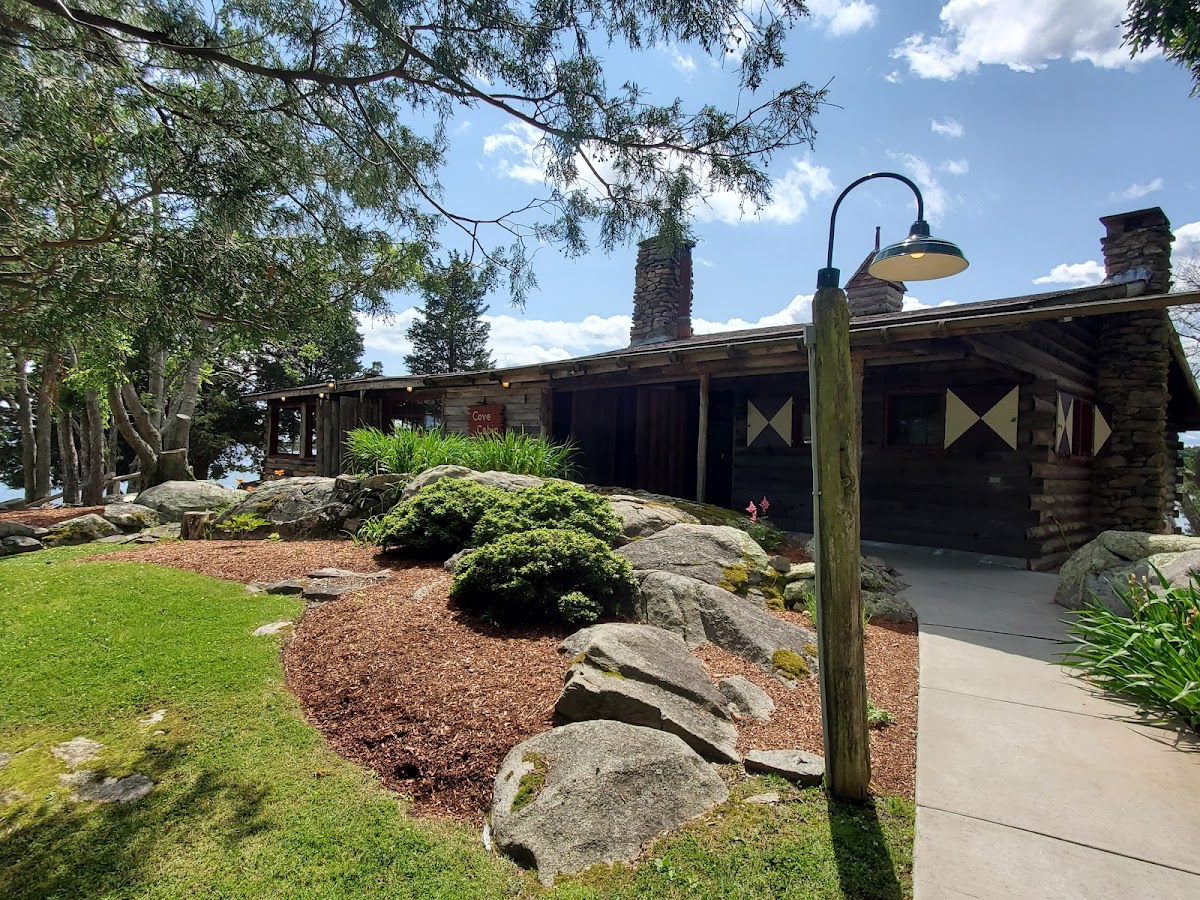
You turn off Route 136 onto the long drive that winds through Mount Hope Farm, and the first thing that changes is the quality of light. The road narrows, rolls past open pastures and stone walls draped with wild roses, and then the water appears — Mount Hope Bay stretching wide and silver-blue, the iconic bridge arcing across the horizon like something out of a maritime painting. The Cove Cabin reveals itself gradually: first the grove of red cedars, their fragrant branches forming a natural cathedral, then the 1940s Adirondack cabin itself, low-slung and weathered in that perfect New England way, perched right at the water’s edge. This is not the manicured perfection of a resort property. This is 127 acres of working farm and protected land, stone walls and cedar groves and marsh grass bending in the salt breeze. Stand on the cabin’s back deck at sunset and you’ll understand immediately why couples drive from Boston, Providence, and beyond to marry here. The Mount Hope Bridge glows copper in the fading light. Seabirds wheel and call. The bay catches fire with reflected sky. Poppy has received seven inquiries for Cove Cabin at Mount Hope Farm weddings, and every single one has mentioned that view.
About Cove Cabin at Mount Hope Farm
Mount Hope Farm occupies a significant place in Rhode Island’s history, listed on the National Register of Historic Places and spanning 127 acres of field, forest, and waterfront on the eastern shore of Mount Hope Bay in Bristol. The property has been farmed continuously since the 1700s, passing through generations of families who understood the value of this particular stretch of coastline — sheltered from Atlantic storms, enriched by tidal estuaries, blessed with views that stop you mid-sentence. The Cove Cabin was built in 1940 by the Haffenreffer family as a private summer retreat, an Adirondack-style cabin constructed with the kind of craftsmanship that has allowed it to weather eight decades of New England winters with grace. The polished wood floors, the stone fireplace, the oversized windows framing the bay — it is a cabin in the truest sense, which means it feels lived-in and loved rather than merely decorated.
The property offers a rare combination of event spaces: the intimate cabin interior that seats up to 60 for dinner, the historic Barn with soaring ceilings and climate control year-round, a fully-floored hybrid tent that accommodates 250 guests with panoramic water views, and multiple outdoor ceremony locations including the Cedar Grove and waterfront lawns. This flexibility means Cove Cabin works equally well for a 40-person celebration with ceremony under the cedars and dinner inside the cabin, or a 200-guest affair with cocktails on the lawn, dinner in the tent, and dancing under string lights as the bridge illuminates against the darkening sky.
Bristol itself deserves mention. This is the town that hosts America’s oldest continuous Fourth of July parade, a place where maritime history runs deep and the downtown — just ten minutes from Mount Hope Farm — offers a walkable collection of independent shops, oyster bars, and historic inns. For guests traveling from out of town, Bristol provides that quintessential coastal New England experience without the crowds of Newport (twenty minutes south) or the urban density of Providence (thirty minutes north). T.F. Green Airport is a straightforward thirty-minute drive.
For Poppy’s logistics, Mount Hope Farm operates on a one-hour vendor access window before ceremony time, which is tighter than some venues but workable with advance planning and an efficient load-in strategy. The venue requires liability insurance for all outside vendors — standard for properties of this caliber — and works with Russell Morin Catering & Events as their exclusive caterer, which means food and beverage logistics are handled by a single experienced team. Parking is ample with attendants provided, and the venue supplies ceremony arches, altars, and basic tent accessories. The preferred vendor list is extensive but not restrictive for florists, and the events team is responsive about coordinating details. Load-in typically happens via the main farm entrance, with clear access to all event spaces. The property’s natural beauty means we are often working in partnership with the landscape rather than trying to transform it, which for floral designers is both a creative constraint and a gift.
Event Spaces & Floral Opportunities
Cove Cabin Interior
Capacity: 60 seated
Setting: Step through the cabin’s front door and you are immediately transported — not to another era exactly, but to that particular mode of New England summer living where simplicity and natural beauty are the entire point. The walls are wood, honey-toned and polished with age. The floors are wide-plank pine, smooth underfoot and forgiving of high heels. Large windows frame the bay on three sides, and a stone fireplace anchors the main room with the kind of substantial presence that makes you want to gather close even in July. The space is intimate in the best sense: cozy without being cramped, rustic without being precious. Original built-ins and architectural details remain intact, and the overall effect is of a beloved family cabin that has been cared for across generations. There is a prep suite off to the side — a small room with good natural light where bridal parties can get ready and photographers can capture those detail shots of shoes, jewelry, and bouquets on vintage windowsills.
Floral approach: In a space this intimate and architecturally grounded, florals should feel collected rather than designed. We favor arrangements that look like they were gathered from the farm itself and casually arranged in vessels that belong to the cabin’s aesthetic: ironstone pitchers, aged wooden bowls, matte ceramic crocks in cream and soft gray. For a dinner reception, consider low clusters running the length of the table — garden roses (Keira, Mayra’s Rose, Romantic Antike) in shades of blush and apricot, café au lait dahlias, white sweet peas, scabiosa, astilbe in cream and pale pink, all loosened with Queen Anne’s lace, jasmine vine, and silvery dusty miller. The fireplace mantel is a natural focal point: a generous asymmetrical arrangement with movement and texture — lisianthus, tweedia, spirea, delphinium in soft blue-gray, foraged branches with lichen still clinging — will draw the eye without dominating the room. Because the cabin often serves as the getting-ready space before a tented reception, consider a few bud vases with single blooms scattered on surfaces for photographers to work with. The key is restraint. This room does not need florals to make it beautiful; it needs florals that understand they are guests here, not the main event.
Hybrid Reception Tent
Capacity: 300 standing for cocktails, 250 seated for dinner, 200 seated with dance floor
Setting: The tent sits on the lawn directly adjacent to the Cove Cabin, positioned to maximize the view of Mount Hope Bay and the bridge beyond. This is a fully floored structure — no grass underfoot, no uneven terrain — with a white interior that functions as a true blank canvas. The hybrid design means the sides can roll up completely in perfect weather, blurring the line between indoor and outdoor, or close entirely if coastal winds pick up or rain threatens. Ambient string lighting is included, casting a warm glow as daylight fades. The tent poles are substantial and well-placed for hanging installations, and the ceiling height is generous enough for drama without feeling cavernous. When the sides are open and the sun is setting over the bay, this space becomes something extraordinary: part pavilion, part yacht club, part waterfront ceremony, with that iconic bridge glowing in the distance and the water catching every shade of pink and gold.
Floral approach: The tent’s neutrality and scale allow for bold choices. This is where we can be ambitious with overhead installations — picture a 30-foot garland of smilax, Italian ruscus, and seeded eucalyptus running the length of the tent’s center beam, punctuated every six feet with clusters of hydrangea, lisianthus, and garden roses in shades that mirror the sunset: coral Free Spirit roses, peach Juliet, blush Quicksand, cream O’Hara. The garland appears to float above the tables, drawing the eye upward and filling the tent’s vertical space without obstructing views. For centerpieces, we typically recommend alternating heights to create visual rhythm: low, lush arrangements (8-10 inches tall) in hammered brass compotes or textured ceramic vessels for half the tables, and tall, elevated designs on clear acrylic or brass risers for the others, lifting the florals to 24+ inches so guests can see across the table easily. A palette inspired by the coastal setting works beautifully here — blues and whites with touches of coral and apricot, using delphinium, tweedia, white scabiosa, ranunculus, lisianthus, local hydrangea when in season, all loosened with airy elements like Queen Anne’s lace and coastal grasses. The tent poles themselves can be wrapped with greenery garlands at the base, perhaps with small clusters of blooms woven through. For couples who want maximum impact, consider flanking the tent entrance with large-scale urns overflowing with seasonal branches, hydrangea, and flowing greenery — a clear signal that something special awaits inside.
The Barn
Capacity: 140 seated
Setting: The Barn is the year-round option, a beautifully restored structure with tall ceilings, polished wood floors the color of aged whiskey, and the kind of rustic elegance that only happens when historical preservation is done with genuine care. The wood is original, the beams are exposed, and the space is fully climate-controlled with heat in winter and air conditioning in summer. Large windows along one wall let in natural light, and the overall feeling is warm, grounded, and quietly romantic. The barn can function as either a reception space or a ceremony backup, and because it is weatherproof and temperature-controlled, it opens up the possibility of Mount Hope Farm weddings year-round rather than just the May-through-October tent season.
Floral approach: Those tall ceilings are an invitation. We love hanging installations in this space — chandeliers wrapped with jasmine vine and trailing smilax, or a series of floral hoops suspended at varying heights above the dance floor, each one dressed with garden roses, lisianthus, and greenery. The wood tones are warm and honey-colored, which means florals in nearly any palette will look beautiful here, but we are particularly drawn to designs that echo the barn’s rustic elegance: ivory and cream with touches of greenery (garden roses like Patience, Playa Blanca, White O’Hara, paired with white lisianthus, ranunculus, and lots of textured foliage), or richer tones for fall and winter weddings (burgundy dahlias, chocolate cosmos, deep coral roses, rust-colored celosia, all grounded with dark greenery and seasonal branches). For centerpieces, consider substantial arrangements in aged wooden boxes or matte ceramic vessels — the kind of containers that feel at home in a barn but still photograph beautifully. The barn’s natural architecture is so strong that florals can afford to be bold without feeling overdone. A statement arrangement flanking the entrance, a lush installation on the bar, generous centerpieces that spill over their vessels — this space can hold it all.
The Cedar Grove
Capacity: Flexible, typically 100-150 ceremony guests
Setting: Approximately 1.25 miles from the main farm entrance, deeper into the property, the Cedar Grove is a ceremony location unlike any other at Mount Hope Farm. You walk through open pasture and then enter the grove itself, where mature red cedar trees create a natural canopy overhead, their branches interlacing to form a cathedral ceiling of green. The ground is soft with fallen needles, and the scent is immediate — that sharp, clean fragrance of cedar that is both grounding and transporting. Light filters through in dappled patterns. The grove feels protected, almost sacred, a quiet room carved out of the larger landscape. It is just far enough from the water that the sound changes: less wind, more birdsong, the occasional rustle of leaves. For couples who want their ceremony to feel like a ritual in nature, this is the space.
Floral approach: The cedar grove is so complete as a setting that the cardinal rule is restraint. This is not a space that needs florals to make it beautiful. What it needs is a single focal point that honors the setting’s existing beauty. We favor a simple ceremony arch or chuppah constructed from natural materials — perhaps a rectangular frame of weathered branches or driftwood, dressed lightly with smilax, jasmine vine, and clusters of white or cream blooms (garden roses, lisianthus, ranunculus) that nestle into the greenery rather than dominating it. The structure should feel organic, like it grew there. For the aisle, consider minimal markers: shepherd’s hooks with hanging arrangements every few rows, or small clusters of florals placed directly on the ground in low vessels, marking the path without defining it too rigidly. If the couple prefers something even simpler, a single large arrangement at the base of the arch — lush and garden-style, sitting in an aged urn or wooden crate — can be enough. Wildflower meadow palettes work beautifully here: cornflower blue, butter yellow, cream, soft pink, lavender, all the colors you find in untended fields. The goal is to create a sense that the florals belong to this place, that they are part of the grove’s natural beauty rather than imported decoration.
Adjacent Lawns
Capacity: Flexible, commonly used for cocktail hour or ceremony
Setting: The lawns surrounding the Cove Cabin are expansive and gently sloping, rolling down toward the waterfront with unobstructed views of Mount Hope Bay and the bridge. This is open, pastoral landscape — mowed grass, mature trees offering pockets of shade, stone walls marking old property boundaries. The lawns serve multiple functions depending on the couple’s vision: as a ceremony site with the water as backdrop, as cocktail hour space with high-top tables scattered across the grass, or simply as the transitional zone between one event space and another. The light here is extraordinary, especially in late afternoon when everything takes on that golden, slightly hazy quality that makes every photograph look like a painting.
Floral approach: For a lawn ceremony, the architecture of the space is horizontal — water, grass, sky — so the floral focal point needs to be substantial enough to anchor the ceremony without competing with the view. A large ceremony arch positioned to frame (not block) the water view works well: perhaps a wooden or metal structure dressed with generous amounts of greenery (smilax, Italian ruscus, olive branches) and clusters of florals in colors that complement the waterfront palette — soft blues, whites, creams, with touches of coral or blush. Aisle markers can be minimal: shepherd’s hooks with arrangements every third row, or low clusters in aged vessels placed on the grass itself. For cocktail hour, we love the idea of a floral “moment” — a large installation near the bar or at the lawn’s edge, where guests naturally gather for photos. Think: a vintage bar cart or wooden table styled with abundant florals, trailing greenery, candles in hurricane lanterns, and perhaps a signature cocktail sign. Scattered arrangements on cocktail tables should be low enough not to obstruct conversation or views, perhaps in small brass or ceramic vessels, with loose, garden-style designs that feel effortless.
Cabin Back Deck
Capacity: Approximately 40-50 for cocktails
Setting: The deck extends from the back of the Cove Cabin, a small wooden platform suspended just above the rocky shoreline, with nothing between you and the bay but a railing and open air. It is an intimate space, perfect for pre-ceremony cocktails for a smaller wedding or as a private retreat during a larger reception. The deck offers the closest proximity to the water, and the view is immediate and arresting: waves lapping at the rocks below, sailboats drifting past, the bridge in the distance, and on clear days, Seal Island visible to the south.
Floral approach: Deck railings are prime real estate for garland installations. Picture a loosely constructed garland of smilax and seeded eucalyptus running the length of the railing, woven with small clusters of white and cream blooms (spray roses, lisianthus, astilbe) and trailing jasmine vine that moves in the breeze. The effect should be organic and slightly windswept, reflecting the coastal setting. Because the deck is small, one or two cocktail tables are typically all that fit, and these need simple arrangements — low designs in weighted vessels (important in waterfront wind) with salt-tolerant flowers and foliage. Think: white hydrangea, dusty miller, succulents, and coastal grasses in matte ceramic or stone containers. The goal is beauty that holds up in the elements and doesn’t blow over the moment a bay breeze picks up.
Wedding Flower Ideas for Cove Cabin at Mount Hope Farm
Narragansett Blues
This concept pulls directly from the water outside the window — the shifting blue-grays of Narragansett Bay, the deeper navy of distant water under clouds, the silver-white of wave crests catching light. The palette is cool and sophisticated: delphinium in shades of blue and periwinkle, tweedia (that perfect dusty blue that photographs like a dream), blue thistle, white scabiosa, silvery dusty miller, cream lisianthus, and white garden roses (Patience, White O’Hara). Accents include privet berries, eucalyptus in silver-blue tones, and perhaps blue viburnum berries if the season allows. Vessels are matte ceramic in cream and soft gray, or clear glass that disappears and lets the florals float. This palette is especially stunning in the hybrid tent at sunset, when the warm light outside plays against the cool florals inside, and on the cabin deck where the arrangements literally mirror the water below. It photographs beautifully, feels utterly tied to place, and offers a fresh alternative to the pink-and-blush palettes that dominate waterfront weddings.
Salt Meadow Garden
Inspired by the coastal meadows and hedgerows that line Rhode Island’s shoreline, this concept is loose, textural, and deeply romantic. The palette is soft and varied: butter yellow, soft coral, blush pink, cream, lavender, all grounded with abundant greenery. Flowers include garden roses in peachy-coral tones (Juliet, Free Spirit, Vuvuzela), ranunculus in yellow and cream, white sweet peas, scabiosa, astilbe, yarrow, and wildflowers like cornflower, Queen Anne’s lace, and meadow grasses. Foliage is essential: jasmine vine, olive branches, local ferns, anything that adds movement and an unstructured quality. Vessels are rustic but elevated — aged wooden boxes, ironstone pitchers, matte terra cotta, brass compotes with patina. This design approach works beautifully in the Barn, where the rustic architecture supports the garden aesthetic, and in the Cedar Grove, where it feels like a natural extension of the landscape. Arrangements should look gathered rather than designed, as if someone walked through the property at dawn collecting armfuls of whatever was blooming and simply placed them in vessels without fuss.
Bridge at Twilight
This concept is inspired by that specific moment when the Mount Hope Bridge lights begin to glow against the darkening sky and everything takes on a warm, amber quality. The palette is sunset-toned: deep coral, burnt orange, mauve, dusty rose, cream, all warmed by touches of amber and rust. Flowers include coral charm peonies (if in season), dahlias in coral and peach tones, garden roses like Vuvuzela and Romantic Antike, ranunculus in apricot and coral, mauve lisianthus, and touches of burgundy (scabiosa, astilbe, darker roses) for depth. Foliage includes olive branches, seeded eucalyptus, and any bronzed or copper-toned leaves available seasonally. Vessels are brass, copper, or aged terra cotta — anything with warmth. This palette is designed to glow in the golden hour light that Rhode Island’s coast is famous for, and it works spectacularly in the tent with sides open, where the real sunset outside and the floral sunset inside create a seamless visual moment. It also photographs beautifully against the cabin’s wood tones and works year-round, though it is especially breathtaking in September and October when the natural landscape begins to echo these same warm tones.
Seasonal Considerations
Rhode Island’s coastal climate is characterized by four distinct seasons, each offering unique opportunities and challenges for wedding florals. The coast moderates temperatures, keeping summers slightly cooler and winters slightly milder than inland areas, but salt air, wind, and humidity are factors year-round.
Spring (April-May): Spring arrives slowly on the Rhode Island coast, with temperatures ranging from the 50s to 60s and frequent rain showers that keep everything lush and green. Coastal winds can be brisk, especially in April, so outdoor ceremonies in the Cedar Grove or on the lawns may need a backup plan. Floral availability in spring is spectacular: tulips, daffodils, hyacinth, sweet peas, ranunculus, anemones, early peonies by mid-May, lilac, viburnum, and flowering branches (dogwood, cherry, quince) that add height and drama to arrangements. The landscape is coming alive, and florals can echo that sense of renewal and freshness. May is reliably beautiful and marks the beginning of the tent season at Mount Hope Farm. For spring weddings, consider palettes that reflect the season — soft pastels, butter yellow, lavender, blush pink, lots of white and green.
Summer (June-August): Summer on Mount Hope Bay is idyllic — temperatures in the 70s and 80s, long golden evenings, sailboats on the water, and that particular quality of coastal light that makes everything look slightly hazy and romantic. This is peak wedding season, and the tent with sides open is at its absolute best. Floral availability is abundant: peonies in June, garden roses all summer long, dahlias beginning in July and going strong through August, hydrangea, lisianthus, delphinium, scabiosa, zinnias, local wildflowers. The challenge in summer is heat — not extreme heat, thanks to the coastal location, but enough that certain flowers (sweet peas, anemones, some tulips) are out of season. Hardier blooms like roses, dahlias, and lisianthus hold up beautifully. For summer weddings, consider timing the ceremony for late afternoon when temperatures are cooler and light is softer. Hydration is key: arrangements should be designed in vessels with water sources, and ceremony florals may need a pre-ceremony misting if they are installed hours in advance.
Fall (September-October): Fall is arguably the most stunning season at Mount Hope Farm. Temperatures are comfortable (60s and 70s), humidity drops, and the light takes on that clear, crystalline quality that makes colors more saturated and views more dramatic. The landscape begins to shift toward autumn tones — russet, amber, gold — and the tent remains available through October. Floral availability is extraordinary: dahlias at their peak, garden roses still going strong, local hydrangea, ornamental kale, celosia, marigolds, zinnias, asters, late-season sunflowers, and abundant foliage in copper, burgundy, and bronze tones. Seasonal branches with berries (privet, viburnum, ilex) add texture. Fall palettes can be rich and saturated — burnt orange, deep coral, burgundy, plum — or soft and muted with dusty rose, mauve, sage, and cream. The key advantage of fall is that flowers are hardy and hold up well in the cooler temperatures. Early October can bring spectacular foliage color, making the property’s 127 acres even more photogenic.
Winter (November-March): Winter weddings at Mount Hope Farm shift to the Barn exclusively, as the tent season ends in late October. Coastal winters are cold — temperatures in the 30s and 40s — with potential for snow, ice, and strong winds off the bay. But the Barn’s climate control makes winter celebrations entirely feasible, and the landscape takes on a stark, dramatic beauty: bare trees, steel-gray water, the bridge standing out sharply against winter sky. Floral availability shifts to include winter blooms: amaryllis, anemones (available again in cooler months), hellebores, ranunculus, tulips (imported), evergreens, holly, magnolia branches, and forced branches (quince, forsythia). Winter palettes can be rich and moody (deep burgundy, forest green, cream, touches of gold) or crisp and clean (white, silver, evergreen). The advantage of winter weddings is that certain flowers like anemones and ranunculus, which struggle in summer heat, thrive in cooler conditions. Evergreen garlands and seasonal branches add texture and a sense of place.
Poppy’s Expert Take
Respect the view. The Mount Hope Bridge and bay views are the venue’s signature feature, and they should drive your floral decisions. In the tent, keep centerpieces either very low (under 12 inches) or elevated (24+ inches on clear risers) so guests can see the water. On the lawns and deck, florals should complement the backdrop, not compete with it. We have seen couples invest heavily in elaborate ceremony arches that visually block the bridge, and it is always a mistake. A simpler structure that frames rather than obscures will photograph better and feel more connected to the setting.
Coordinate with Russell Morin. Because Russell Morin is the exclusive caterer, they control table layout, linen choices, and overall reception design. Connect your florist with the Russell Morin team early to ensure centerpiece heights work with their table settings and that color palettes coordinate with linens. Their team is professional and experienced, and they appreciate florists who communicate clearly about vessel sizes, installation timing, and any special requests (like florals on the bar or cake table).
Use the one-hour load-in wisely. Vendor access at Mount Hope Farm is limited to one hour before ceremony start, which is tight for a full floral installation. Poppy’s approach is to prep everything off-site — arrangements assembled and ready, garlands constructed, ceremony pieces built — so load-in is purely placement and styling. We also communicate closely with the couple about timeline: if the ceremony starts at 5:00 pm, we are on-site at 4:00 pm sharp, and we work efficiently to install everything before guests arrive. Couples should build their timeline with this constraint in mind, ensuring hair and makeup are completed before vendor load-in begins.
Consider the Cedar Grove for sound. The Cedar Grove is 1.25 miles from the main event spaces, which means it is quiet and secluded. But it also means guests cannot hear music or announcements from the cabin or tent. If you are using the Cedar Grove for your ceremony, plan for a clear transition — whether that is a golf cart shuttle, a guided walk, or simply clear signage. Florally, this separation allows you to create two distinct design moments: one in the grove for the ceremony, and a completely different palette or style for the reception spaces.
Embrace the seasonal shift. Because the tent is only available May through October, couples planning weddings outside that window will be in the Barn. This is not a limitation; it is an opportunity. The Barn’s year-round climate control and beautiful architecture make it a strong reception space, and winter weddings here can be incredibly romantic with the right floral approach — think rich, moody tones, evergreen garlands, and candlelight. Do not try to recreate a summer garden wedding in December. Lean into the season.
Budget for impact in the tent. The tent is a large, open space with high ceilings, and it can feel underdone if florals are too minimal. Couples working with smaller budgets should consider concentrating florals in a few high-impact areas (overhead garland, statement arrangements at entry and bar, generous centerpieces on half the tables) rather than spreading the budget too thin across every surface. The tent’s string lighting helps, but florals are what make the space feel designed and intentional.
What Poppy Couples Spend on Flowers Here
Because Poppy does not yet have confirmed bookings at Cove Cabin at Mount Hope Farm, the spending tiers below are informed by our experience with similar New England waterfront and barn venues in the Providence market, adjusted for Mount Hope Farm’s specific spaces and typical guest counts.
$3,500 - $5,500 | The Essentials This tier covers personal flowers and focused ceremony and reception florals for a wedding of 80-120 guests. You would have bridal bouquet, bridesmaid bouquets