
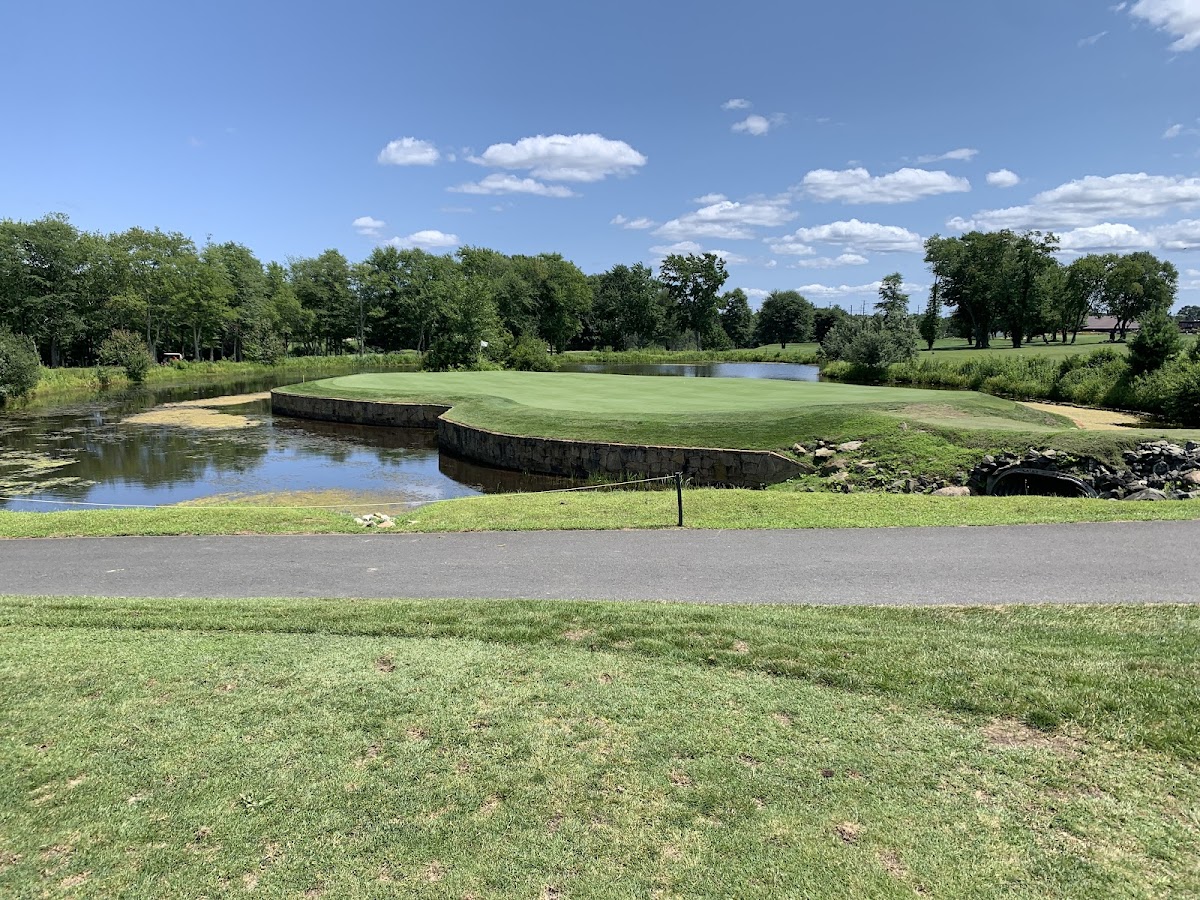
You leave Route 95 behind, merge onto Burlingame Road, and the landscape shifts almost immediately. The dense suburban grid loosens into something quieter, more expansive. Trees lean over the roadway, their canopies forming a green tunnel in summer, a cathedral of bare branches in winter. Then the golf course appears on your right — the fairways rolling out in precise waves of emerald, the sand traps glowing pale gold in afternoon light, and beyond that, the clubhouse itself. Cranston Country Club does not announce itself with grand gates or dramatic elevation. It simply sits there, confident and unpretentious, a study in New England restraint. The main ballroom’s floor-to-ceiling windows reflect the sky. The spiral staircase curves upward inside, visible even from the parking lot if you know where to look. This is a venue that has hosted generations of Rhode Island families — the club dates back to 1960 — and it shows in the details: the way the staff moves with practiced ease, the way the landscaping is impeccable without being fussy, the way the contemporary 2000 addition blends seamlessly with the original structure. Poppy has received 15 inquiries from couples planning Cranston Country Club wedding flowers, and each time we review the venue’s specifications, we are reminded that sometimes the best backdrop is one that knows how to step aside and let the celebration — and the florals — take center stage.
About Cranston Country Club
Cranston Country Club opened in 1960 as a private golf and social club, the kind of institution that anchored suburban family life in mid-century Rhode Island. The original clubhouse was traditional in design — wood paneling, intimate dining rooms, the sort of architecture that prioritized function and community over flash. In 2000, the club undertook a significant expansion, adding the current Main Ballroom with its soaring ceilings, expansive windows, and that now-iconic spiral staircase. The renovation was a gamble that paid off: the new space feels both contemporary and timeless, a rare combination that allows couples to dress it up or down depending on their vision. The ballroom’s design vocabulary is modern — clean lines, neutral palette, natural light — but the open-hearth fireplace and wood-toned finishes keep it from feeling cold or corporate. It is a room that photographs beautifully in any season, which matters more than most couples realize when they are knee-deep in planning.
The golf course itself is the venue’s defining feature. Eighteen holes stretch across 120 acres of carefully maintained turf, dotted with mature trees, water features, and meticulously groomed gardens. The western side of the property, where most ceremonies take place, offers long views across the fairways toward wooded hills. It is not dramatic in the way that ocean cliffs or mountain vistas are dramatic, but it possesses a quieter kind of beauty — the kind that unfolds slowly in photographs, that guests remember weeks later when they are scrolling through their camera rolls. The course is most photogenic in late spring when the azaleas bloom, and again in mid-October when the maples turn crimson and gold.
Logistically, Cranston Country Club sits about 20 minutes southwest of downtown Providence, easily accessible from Route 95 and Route 295. For couples hosting guests from out of state, this means straightforward directions and minimal traffic headaches. For Poppy’s delivery team, the load-in is refreshingly simple: ample parking near the service entrance, a dedicated freight elevator to the ballroom level, and a venue coordinator (currently Vincent Martucci) who communicates clearly about timing and setup logistics. The club operates with in-house catering — the food program is strong, with a tasting offered before booking and family-style service that consistently earns high marks in reviews — but they welcome outside vendors for florals, photography, DJ services, and decor. The venue does not publicize specific decor restrictions or COI requirements on their website, so we recommend confirming details directly with Vincent, though in our experience, Rhode Island country clubs tend to be more flexible than resort properties.
One detail worth noting: Cranston Country Club is a working golf club, which means weekend weddings are typically scheduled for late afternoon or evening to accommodate member play. This is actually a blessing for floral designers, as it gives us the entire morning for setup without feeling rushed or working around ceremony rehearsals.
Event Spaces & Floral Opportunities
Main Ballroom / Reception Room
Capacity: 230 seated
Setting: The Main Ballroom is where most Cranston Country Club weddings culminate, and for good reason. Added to the property in 2000, the space feels light and open, with floor-to-ceiling windows along the eastern wall that overlook the golf course. The spiral staircase anchors the south end of the room, sweeping upward in a generous curve that begs to be dressed with garland. An open-hearth fireplace punctuates the opposite wall, its stone surround warm and neutral. The ceiling height is generous — 14 feet at the peak — and the room’s footprint is flexible enough to accommodate everything from long banquet tables to clusters of round tops. The color palette is contemporary neutral: cream walls, honey-toned wood floors, and wrought iron railings on the staircase that read as modern rather than ornate. In the evening, with the golf course darkening outside and candles lit on every table, this room transforms into something genuinely romantic.
Floral approach: The spiral staircase is the obvious focal point, and it rewards bold treatment. A cascading garland of Italian ruscus, seeded eucalyptus, and smilax can be woven through the railing from landing to base, with clusters of Quicksand roses, white ranunculus, and blush astilbe tucked in at intervals. For couples who want maximum drama, we sometimes add a large-scale arrangement on the landing itself — a tall compote overflowing with café au lait dahlias, white hydrangea, and trailing amaranthus that becomes a backdrop for the couple’s entrance. The fireplace mantel is the other natural anchor: a low, lush arrangement in an aged stone or ceramic trough, filled with textured blooms like garden roses (Patience, Juliet, and Keira work beautifully here), scabiosa, and hellebores, edged with trailing jasmine vine or plumosa fern. The windows are tricky — they provide such a clean, green backdrop during daylight hours that you do not want to obstruct them, but they also create large expanses of dark glass once the sun sets. We address this by keeping centerpieces either very low (under 12 inches, so they do not block conversation or views) or elevated on tall risers that lift florals above sightlines. For a 230-person reception, a mix of heights creates visual rhythm without feeling repetitive. Low centerpieces might be lush and garden-style — mounded arrangements of roses, spray roses, lisianthus, and stock in low bronze or ceramic vessels — while tall arrangements on clear glass columns showcase blooms at eye level when guests are standing during cocktails. The ballroom’s neutral palette is a gift: nearly any color story works here, from soft blush and ivory to deep burgundy and plum.
Fireplace Room
Capacity: Flexible; typically used for intimate ceremonies or smaller events
Setting: The Fireplace Room is a more contained space adjacent to the main ballroom, intimate where the ballroom is expansive. The room’s centerpiece is its namesake open-hearth fireplace, substantial and inviting, with a stone surround that echoes the ballroom’s finishes. Windows overlook the golf course, though the views here are more intimate than panoramic. The room can be set with chairs for a ceremony, furnished with lounge seating for cocktails, or used as a quiet retreat space during a larger reception. The scale is residential, the lighting warm. It is the kind of room where you notice details: the grain of the wood paneling, the play of firelight on stone, the way voices do not echo the way they do in larger spaces.
Floral approach: If you are holding your ceremony in this space, the fireplace becomes your altar, and the florals should honor that. Rather than a traditional arch, consider flanking the hearth with two large urns — aged concrete or textured ceramic — filled with seasonal branches (curly willow, flowering cherry, or dogwood depending on the month) and blooms that feel abundant but not overly formal. Garden roses, lisianthus, stock, and hellebores in soft whites and blushes create a romantic, slightly undone aesthetic. The mantel itself can hold a low arrangement or a series of smaller vessels — vintage brass candlesticks interspersed with bud vases holding single stems of garden roses, ranunculus, and sweet peas. For couples using this room as a cocktail space, the fireplace still anchors the design, but you have more freedom to layer in unexpected elements: pillar candles of varying heights, trailing greenery that drapes over the mantel edge, or even a small collection of potted plants (ferns, hellebores, or flowering bulbs) that guests can take home as favors. The room’s intimate scale means every detail is visible, so craft matters here more than abundance.
Outdoor Ceremony Space
Capacity: Flexible depending on setup
Setting: The golf course grounds at Cranston Country Club offer several potential ceremony sites, though most couples gravitate toward a spot on the western edge of the property where the fairway slopes gently toward a stand of mature maples. The landscaping here is pristine but unfussy — mowed grass, well-tended garden beds, and the long view toward the tree line. In spring and early summer, the azaleas that border the cart path bloom in shades of coral, fuchsia, and white. In fall, the maples provide their own floral display in crimson and gold. The setting is exposed, meaning you are at the mercy of weather and light, but on a clear day in June or September, it is difficult to imagine a more quintessentially New England backdrop.
Floral approach: The challenge with outdoor ceremonies on golf courses is that the landscape is already so intentionally designed that heavy-handed florals can feel redundant or, worse, at odds with the setting. We approach these ceremonies with restraint. A ceremony arch or chuppah should feel like an extension of the landscape, not an imposition on it. A simple wooden or acrylic arch wrapped lightly in greenery — Italian ruscus, bay laurel, and seeded eucalyptus — with strategic clusters of blooms at the corners (garden roses, ranunculus, and lisianthus in soft, natural tones) creates a focal point without blocking the view beyond. For the aisle, we often recommend shepherd’s hooks with floral arrangements in hanging vessels rather than ground-level pedestals, which can sink into the turf or tip over in wind. Alternatively, lanterns filled with greenery and a few statement blooms mark the aisle with minimal fuss. If the couple wants more presence, aisle-end arrangements in sturdy urns work, but they should be planted firmly and kept low enough that they do not obscure guests’ views. The wildcard with outdoor ceremonies here is wind — western Rhode Island can be breezy even on calm days — so every installation needs to be staked, weighted, or otherwise secured. We have learned this the hard way.
Bridal Suite
Setting: The bridal suite at Cranston Country Club is private and functional, with a dedicated bathroom and enough space for a bridal party of six to eight to get ready without stepping on each other. It is not a showpiece space — the finishes are simple, the lighting practical — but it serves its purpose well.
Floral approach: The getting-ready photos happen here, which means the florals are less about decorating the room and more about creating small, beautiful moments. A small hand-tied arrangement in a vintage pitcher or glass vase — a dozen stems of garden roses, ranunculus, and sweet peas in the bride’s palette — sits on the vanity and appears in nearly every detail shot. If the bride wants bouquets for her bridesmaids waiting in the room, we deliver them here in water tubes to keep them fresh. A few loose stems scattered on a side table or windowsill add an organic, unstudied feel to the photos. Nothing in this space should be precious or complicated; the goal is ease and beauty in equal measure.
Wedding Flower Ideas for Cranston Country Club
New England Garden
This palette draws directly from the cottage gardens and cutting gardens that have defined Rhode Island landscaping for generations. Soft, romantic, and abundant, it features garden roses in shades of blush, peach, and cream (Patience, Juliet, Keira), ranunculus in white and soft pink, lisianthus in ivory and champagne, stock in pale lavender, and sweet peas when they are in season. Greenery includes Italian ruscus, seeded eucalyptus, and bay laurel, with trailing elements like jasmine vine or plumosa fern to soften the edges. Vessels should feel collected rather than matched: aged ceramic compotes, vintage brass urns, and weathered stone troughs. This palette works beautifully in the Main Ballroom, where the neutral backdrop allows the soft colors to glow, and on the outdoor ceremony site, where it feels like a natural extension of the landscape. It is particularly stunning in late spring and early summer, when the azaleas outside echo the palette and the natural light is at its most flattering.
Autumn in Rhode Island
For fall weddings, this concept leans into the season’s drama without veering into Halloween territory. The palette is anchored by rich, warm tones: burgundy dahlias (Rip City, Black Satin), rust-colored chrysanthemums, burnt orange roses (Free Spirit, Milva), and deep plum calla lilies, balanced with softer elements like café au lait dahlias, champagne roses, and caramel-toned carnations. Textural accents include hypericum berries, scabiosa pods, and actual maple leaves collected from the property (with permission). Vessels should feel substantial: bronze or copper urns, dark ceramic compotes, or wooden boxes that reference the club’s rustic elements. The Fireplace Room is ideal for this palette, where the stone surround and warm lighting amplify the autumnal mood, and the spiral staircase garland in the Main Ballroom becomes even more striking when woven with burgundy and rust blooms. This concept thrives in October and early November when the golf course maples turn and the venue’s exterior becomes a study in fall color.
Modern Elegance
For couples drawn to a more contemporary aesthetic, this concept strips away the romance in favor of clean lines and bold choices. The palette is either strictly monochromatic — all white and green, or all blush and burgundy — or focused on a single high-impact bloom repeated throughout. Think white phalaenopsis orchids in tall glass cylinders, or dramatic king protea paired with burgundy anthurium and dark calla lilies. Greenery is architectural: monstera leaves, sword fern, or even magnolia branches for their sculptural quality. Vessels are modern and minimal: clear glass, brushed metal, or matte black ceramic. This approach works best in the Main Ballroom, where the contemporary architecture supports the design language, and where tall, sculptural centerpieces can take advantage of the ceiling height. It is a bold choice that photographs exceptionally well and creates a cohesive, gallery-like atmosphere. This palette is season-agnostic, making it ideal for winter weddings when garden flowers are scarce and you want something sleek and unfussy.
Seasonal Considerations
Rhode Island’s four-season climate offers distinct opportunities and challenges for wedding florals, and Cranston Country Club’s location in the western part of the state means you get the full expression of each season without the moderating influence of the coast.
Spring (April–June): Spring arrives cautiously in Rhode Island, with April still prone to cold snaps and the occasional late frost. By May, the azaleas on the property bloom in earnest, and the golf course greens up in waves. Tulips, daffodils, and hyacinth are abundant and affordable in April, though they are short-lived once arranged. By late May and into June, the market opens up: peonies (Sarah Bernhardt, Coral Charm, Shirley Temple) arrive from domestic growers, garden roses become more reliable, and sweet peas reach their peak. Ranunculus, anemones, and hellebores are still available through early June. The weather is unpredictable — we have set up outdoor ceremonies in 85-degree sun and in 55-degree drizzle within the same month — so always have a backup plan for ceremony flowers if you are working outdoors. The natural light in spring is extraordinary, clear and golden, which makes every color more saturated in photos. Best months for flower variety and weather stability: late May through mid-June.
Summer (July–August): Summer in Rhode Island is warm and humid, with temperatures regularly reaching the upper 80s and occasional heat waves pushing into the 90s. This is peak wedding season at Cranston Country Club, but it is not peak flower season. Hydrangeas are abundant and affordable, as are sunflowers, lisianthus, and zinnias. Garden roses are available but require careful hydration in the heat. Peonies are finished by early July. Dahlias begin arriving from local farms in late July and August, which is a gift. The heat means outdoor ceremonies must be scheduled for late afternoon or evening, and any florals placed outside need to be installed as close to the ceremony start time as possible to prevent wilting. Inside the air-conditioned ballroom, flowers hold up beautifully. The golf course is lush and green, the views from the windows are at their most verdant, and the long summer daylight means receptions can stretch well into the evening with natural light. Best months: late June and September (technically early fall, but often feels like summer).
Fall (September–November): Fall is the most popular season at Cranston Country Club, and for good reason. The golf course transforms into a patchwork of gold, rust, and crimson as the maples and oaks turn. Temperatures cool into the comfortable 60s and 70s, the air loses its humidity, and the light takes on that slanted, golden quality that photographers dream about. Dahlias are at their peak in September and October, available in every color and size. Garden roses are reliable again. Mums, asters, and celosia add texture and seasonal color. By late October, amaranthus and hypericum berries are abundant. The challenge is that everyone wants a fall wedding, so venue and vendor availability tightens. The other wildcard is foliage timing — peak color in western Rhode Island typically hits the second and third weeks of October, but it can shift a week or two in either direction depending on weather. An early hard frost can strip the trees overnight, leaving you with bare branches instead of the fiery backdrop you planned for. Best months: September for weather and flower variety, mid-October for foliage drama.
Winter (December–February): Winter weddings at Cranston Country Club are rare but magical. The golf course under snow is serene and beautiful, and the open-hearth fireplace in both the Fireplace Room and Main Ballroom earns its keep. The challenge is flower availability: most blooms are imported, prices are higher, and options are more limited. Amaryllis, anemones, ranunculus, and hellebores are your best friends. Evergreen branches — cedar, pine, and fir — are abundant and affordable, and they fill space beautifully. Holly, eucalyptus, and magnolia branches add texture. For couples willing to embrace a more minimalist approach, winter weddings can be stunning: white and green palette, lots of candles, greenery installations with just a few high-impact blooms like white amaryllis or deep burgundy ranunculus. The shorter daylight hours mean receptions feel inherently cozy and intimate, with candlelight and firelight doing much of the atmospheric work. Best month: December for holiday ambiance, February for slightly better flower availability as spring stock begins arriving from California.
Poppy’s Expert Take
The spiral staircase is non-negotiable. If you are getting married at Cranston Country Club and you do not put florals on that staircase, you are missing the venue’s most dramatic design opportunity. A full garland from landing to base, installed the morning of the wedding and secured with zip ties and floral wire at every third baluster, transforms the entire ballroom. Budget $800–$1,200 depending on density and bloom inclusion, and consider it the best money you will spend.
Let the fireplace anchor your ceremony or cocktail hour. If you are holding your ceremony in the Fireplace Room, resist the urge to add a standalone arch. The hearth itself is your backdrop. Flank it with large urns, dress the mantel, and let the stone do the rest. For cocktail hours in the Main Ballroom, a lush mantel arrangement becomes a conversation piece and a natural photo backdrop. Keep it low and long rather than tall and compact — you want presence without blocking the architecture.
Centerpiece height matters more here than at most venues. The Main Ballroom’s windows create a bright, airy atmosphere during the day, but once the sun sets, those same windows become dark mirrors that reflect everything in the room. Low centerpieces (under 10 inches) or elevated arrangements (18+ inches on risers) photograph better than mid-height arrangements, which can feel visually cluttered in photos. If your budget only allows for one style, choose low and lush over tall and sparse.
Outdoor ceremonies need wind-proofing. The golf course is exposed, and even a mild breeze can topple lightweight arrangements or send loose petals airborne. Every ceremony installation should be staked, weighted with sandbags, or otherwise secured. Shepherd’s hooks driven into the ground are more stable than freestanding pedestals. If your ceremony is scheduled for late afternoon in summer, be prepared for rapidly changing light and the possibility of afternoon thunderstorms — western Rhode Island gets them regularly in July and August.
Work with the club’s timeline. Because Cranston Country Club is an active golf course, weekend weddings typically start in late afternoon to avoid interfering with member play. This gives floral designers the entire morning for setup, which is a luxury. Take advantage of it. We typically arrive by 9:00 a.m. for a 5:00 p.m. ceremony, which allows time for staircase garland installation, ceremony setup on the golf course, and detailed ballroom styling without feeling rushed. The club’s coordinator is used to working with outside vendors and will communicate the load-in schedule clearly, so stay in close contact.
The bridal suite is utilitarian, not aspirational. This is not the Instagram-ready getting-ready room you find at resorts or boutique hotels. It is a functional space with good lighting and a private bathroom, which is exactly what you need. Keep the florals here simple: a small arrangement for the vanity and the bridal bouquets on display. Do not invest in elaborate installations for this space — save that budget for the ballroom and ceremony site where your guests will actually see it.
Embrace the venue’s New England identity. Cranston Country Club is not trying to be a Napa winery or a Southern plantation. It is a classic New England country club with a golf course, a fireplace, and a view of deciduous trees. Florals that lean into that identity — garden roses, hydrangeas, New England-grown dahlias in the fall, local branches and greens — will always feel more cohesive than designs that fight against the venue’s inherent character. When in doubt, ask yourself: would this look at home in a Rhode Island garden? If yes, proceed. If no, reconsider.
What Poppy Couples Spend on Flowers Here
While Poppy has not yet completed a wedding at Cranston Country Club, we have received 15 inquiries from couples planning celebrations here, and based on the venue’s scale, aesthetic, and the typical floral investment in the Providence market, we can offer the following guidance.
$3,500–$5,000 | The Essentials This budget covers the foundational floral elements for a 120–150 guest wedding: bridal bouquet, three bridesmaid bouquets, four boutonnieres, centerpieces for 15–18 guest tables (low, garden-style arrangements in a single style), and a modest ceremony installation. At this level, you are making choices. For outdoor ceremonies, that might mean a simple garland-wrapped arch and six aisle markers rather than full aisle arrangements on both sides. Inside the Main Ballroom, it means centerpieces on every table but no large-scale installations on the spiral staircase or fireplace mantel. You can achieve a beautiful, cohesive look at this level, but the florals will feel like an accent to the venue rather than a transformation of it. We recommend prioritizing the spaces your guests will spend the most time in: focus budget on reception centerpieces and personal flowers, and keep ceremony florals minimal.
$5,000–$7,500 | The Full Picture This budget allows for a more complete floral story across the venue. In addition to all personal flowers and reception centerpieces (now with a mix of low and tall arrangements for visual interest), you can add significant ceremony florals — a lush arch or chuppah installation with substantial greenery and blooms, plus aisle markers or petals. Inside the Main Ballroom, you can afford a partial staircase garland (landing to midpoint) or a full garland with minimal blooms, plus a fireplace mantel arrangement. For 180–200 guests, this budget covers 20–24 centerpieces in a varied style that creates rhythm and visual interest. You might also add florals for the cocktail space, bar arrangement, or guest book table. At this level, the florals feel integrated into the venue’s architecture rather than afterthought accents. We recommend investing in the staircase garland at this budget tier — it is the venue’s signature feature and the installation that will appear in nearly every reception photo.
$7,500+ | The Full Experience This budget creates a fully realized floral environment. For 200+ guests, you are covering substantial centerpieces across 25–30 tables with a curated mix of styles and heights, a dramatic staircase garland with blooms woven throughout, lush fireplace installations in both the Fireplace Room and Main Ballroom, a statement ceremony installation with full aisle treatments, and additional accent pieces throughout the venue — entry arrangements, bar florals, lounge area styling, even the bridal suite. At this level, we can incorporate premium blooms like peonies (when in season), luxury garden roses, and textural elements like hanging amaranthus or imported branches. The result is a cohesive floral narrative that carries through every space your guests will experience. If you are working with this budget, we recommend a site visit to walk through the venue together and identify every opportunity for impact, from the moment guests arrive at the clubhouse entrance to the last dance in the ballroom.