
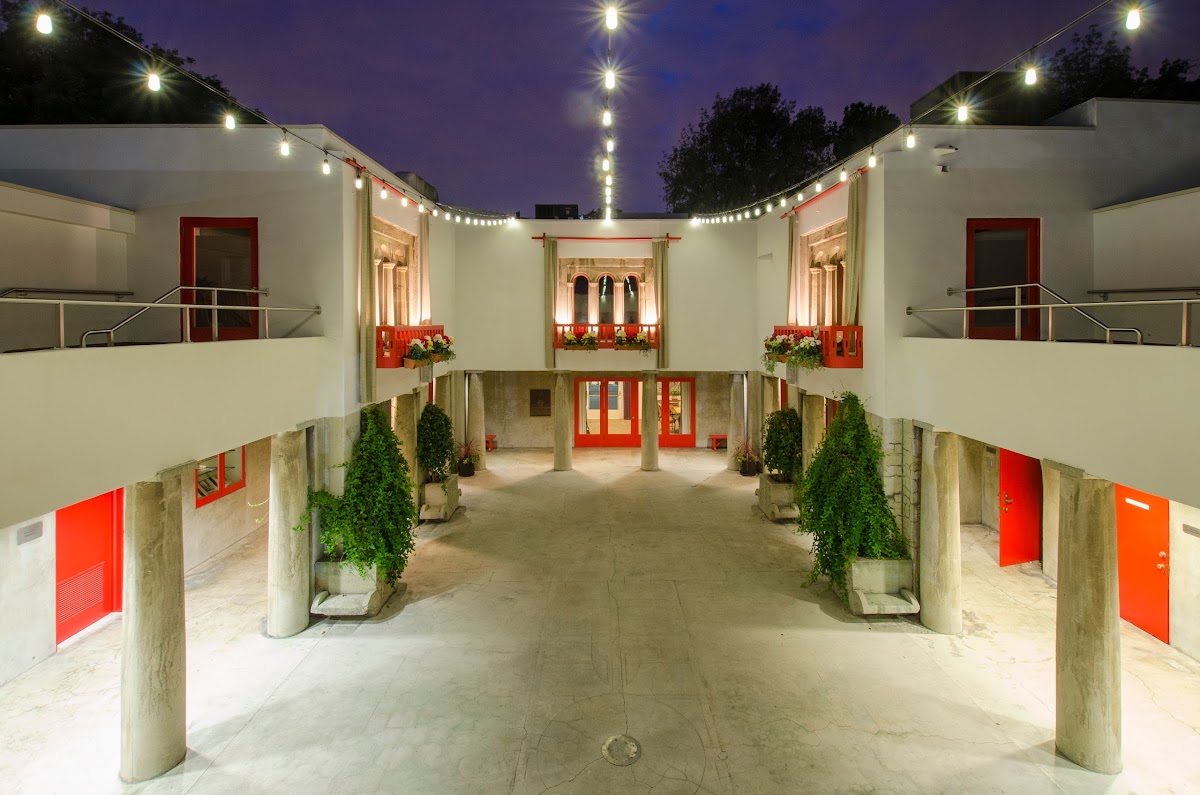
You do not expect to find this place off Pioneer Boulevard. The street is wide and functional — strip malls, industrial buildings, the visual vocabulary of southeastern Los Angeles County. Then you turn onto the property, and the world changes. A long driveway lined with mature trees. The industrial hum of Santa Fe Springs fades behind you. And then the mansion appears: 8,000 square feet of white concrete and clean architectural lines, Irving Gill’s 1919 masterpiece rising out of what was once a 60-acre citrus grove. The buildings form a U-shape around a central courtyard where ivy climbs Tuscan columns and graceful arches frame pockets of California sky. Walk past the mansion and you find yourself in something impossible — a 30-foot bamboo forest, the stalks eight inches in diameter, imported from Asia over a century ago and towering overhead like something from another continent entirely. The light filters through in shafts. The air smells green. You are twenty miles from downtown Los Angeles, and you are nowhere near Los Angeles at all. Poppy has received 5 inquiries for Clarke Estate wedding flowers, and while we haven’t yet designed here, we know exactly what this property needs: restraint, drama in the right places, and florals that understand the difference between competing with architecture and completing it.
About Clarke Estate
Clarke Estate is a study in contrasts — a Mediterranean Revival treasure hidden in an industrial suburb, a manicured six-acre oasis surrounded by oil production facilities and commercial corridors. But those contrasts are precisely what make it extraordinary. Built between 1919 and 1921 for Henry and Alice Clarke, the estate was designed by Irving Gill, the California architect whose clean modernist lines and Mediterranean influences helped define early 20th-century West Coast architecture. Gill’s work here is textbook: white concrete walls that glow in the afternoon sun, rounded arches that echo the Spanish missions, minimal ornamentation that allows form and landscape to speak for themselves. The mansion sits on what remains of a much larger citrus operation — the original 60 acres have been reduced to six, but those six acres are meticulously maintained, with garden rooms, manicured lawns, and that astonishing bamboo forest that feels like a deliberate piece of theater.
The estate is operated by the City of Santa Fe Springs and functions as an outdoor-only venue from May through October, capitalizing on Southern California’s reliably dry and warm weather during those months. This is not a venue with ballrooms or climate-controlled backup plans. You are betting on sunshine, and in this part of California during summer, that bet pays off more often than not. The rental includes seven hours of event time (ceremony, cocktails, and reception), plus two hours before for vendor setup and one hour after for breakdown. The venue provides tables, chairs, votive candles, and outdoor lighting, which simplifies logistics considerably. There is a full kitchen on-site, and couples must work with a licensed caterer (the city maintains a preferred list, though outside caterers are permitted with approval). Amplified music is allowed both indoors and outdoors but must end by 10:00 PM, a hard stop that couples planning late-night dancing should factor into their timelines.
The courtyard is the ceremonial heart of the property, but the entire estate functions as a single flowing space. Couples typically hold ceremonies in the courtyard, cocktail hour on the manicured lawn or near the bamboo forest, and dinner either in the courtyard or on the lawn, depending on guest count and desired atmosphere. The mansion itself provides dressing rooms for the wedding party, restrooms for guests, and a working kitchen for catering prep. There is ample parking on-site, with valet service available as an add-on. For Poppy’s delivery team, load-in is straightforward via the main driveway, though the outdoor nature of the venue means we always build extra setup time into our timeline to account for wind, sun exposure, and the delicate business of installing florals in open-air environments. The venue requires general liability insurance and a $500 refundable security deposit, standard for city-operated historic properties.
Logistically, Clarke Estate sits in Santa Fe Springs, about 20 miles southeast of downtown Los Angeles, accessible via I-5 and I-605. For guests coming from West LA, Pasadena, or Orange County, it is a manageable drive. For florists coming from most LA-area studios, it is a straightforward freeway run. The surrounding area does not offer much in terms of hotels or restaurants — this is not a walkable neighborhood — but the estate itself is so visually complete that couples rarely feel the need to incorporate the surrounding area into their wedding weekend. It is a destination unto itself, a piece of old California preserved behind walls.
Event Spaces & Floral Opportunities
Central Courtyard
Capacity: 150 seated for ceremony or dinner
Setting: The soul of Clarke Estate is this U-shaped courtyard enclosed by the mansion’s white concrete walls. Ivy climbs the Tuscan columns in thick, dark green curtains. Arches frame sightlines to the gardens beyond. The ground is paved, the architecture is symmetrical, and the effect is both formal and romantic — a Mediterranean plaza transported to suburban Los Angeles. One of the balconies overlooking the courtyard features a roll-down movie screen, a relic of the estate’s former life as an outdoor cinema. The opposite balcony once housed the projector. These details add a layer of narrative charm, a whisper of 1920s garden parties and silent films under the stars. The courtyard is shaded by the mansion itself for much of the day, making it an ideal ceremony location even during warm summer afternoons.
Floral approach: The columns are your anchors. We favor garlands — lush, slightly wild, European-style garlands — that drape along the balustrades and wrap around the bases of the columns, softening the hard edges of the architecture without obscuring Gill’s clean lines. Think smilax, Italian ruscus, and jasmine vine as the green base, punctuated with garden roses (Patience, Keira, and Juliet for soft peachy-blush tones, or Quicksand and Sahara for taupe sophistication), white lisianthus, and clusters of spray roses. The arches themselves are natural frames for a ceremony backdrop. We recommend an asymmetrical installation on one of the archways — flowers cascading from the upper left down to the lower right, using long-stemmed delphiniums, hanging amaranthus, and trailing jasmine to create movement. For aisle decor, low arrangements flanking every other row keep sightlines open while marking the path: compote vessels filled with garden roses, ranunculus, and eucalyptus, understated but luxurious. If the couple wants drama, the balconies offer an opportunity for cascading installations — imagine long swags of greenery and blooms draping over the railings, visible from the courtyard floor below and creating a vertical garden effect. Clarke Estate wedding flowers in this space should feel like they have been growing here for decades, as permanent and inevitable as the ivy on the walls.
Manicured Lawn
Capacity: 150+ guests for cocktail hour or reception seating
Setting: The main lawn is a broad expanse of emerald green bordered by garden beds, mature trees, and views toward the bamboo forest. It is open to the sky, flat, and meticulously maintained — the kind of lawn that photographs like velvet. The venue provides tables and chairs, and most couples set up long banquet tables or rounds here for dinner, often under a clear-top tent (which the couple must rent separately). The lawn connects visually to the rest of the property, so whatever happens here is in conversation with the courtyard, the mansion, and the gardens.
Floral approach: On the lawn, centerpieces carry the design. Because the space is wide and open, arrangements need enough height or volume to register from a distance. We love a mix of heights across the tables — some low and lush (mounded garden roses, hydrangeas, and scabiosa in aged brass bowls or ceramic compotes), others tall and architectural (delphinium, foxglove, and branches of flowering quince in clear glass cylinders that lift blooms above the sightline). If the couple opts for long banquet tables, a garland runner down the center — loose and organic, with flowers woven in at intervals — creates continuous visual impact without blocking conversation. For cocktail hour, we scatter arrangements on high-top tables using interesting vessels (colored glass, textured ceramic, vintage brass) that catch the light and add pops of color. The perimeter of the lawn can be punctuated with larger installations — urns overflowing with seasonal branches and blooms positioned at entryways or near the bar setup. Because this space is exposed to full sun during much of the day, we specify heat-tolerant flowers for any daytime events: zinnias, celosia, sunflowers, and succulents all hold up better than delicate garden roses in direct afternoon heat.
Bamboo Forest
Capacity: Not a dedicated event space, but accommodates cocktail clusters and photo moments
Setting: This is the estate’s secret weapon. Thirty-foot bamboo stalks, some as thick as a human forearm, create a canopy overhead and a sense of enclosure despite being open air. The light is dappled and green. The sound is rustling leaves and the occasional creak of bamboo swaying. It feels like Southeast Asia, or a botanical garden, or a movie set — anything but suburban LA. Couples often use this area for cocktail hour, setting up lounge furniture and small tables among the bamboo, or they simply let it function as a photo backdrop and a moment of discovery as guests wander the property.
Floral approach: Less is more in the bamboo forest. The setting is so visually distinct that heavy floral installations risk feeling redundant or out of place. Instead, we suggest subtle touches that enhance the tropical, lush atmosphere without competing with the bamboo itself. Small arrangements on cocktail tables using exotic blooms — phalaenopsis orchids, anthuriums, ginger flowers, and elephant ear foliage — nod to the Southeast Asian vibe. If the couple wants a ceremony in this location (it’s unconventional but possible for smaller guest counts), we would create a simple ground installation: a low platform or arrangement at the base of a cluster of bamboo stalks using ferns, monstera leaves, and white orchids. The goal is to let the bamboo be the star and use florals as accent notes, not the main melody.
Balconies and Mansion Exterior
Capacity: Not guest-facing spaces, but visible from courtyard and lawn
Setting: The mansion’s balconies overlook the courtyard and provide architectural interest from below. They are accessible for decor installation, and the historic movie-screen balcony adds a quirky narrative detail that some couples lean into.
Floral approach: Cascading installations are the move here. Long garlands or swags that drape over the balcony railings, heavy with greenery and blooms, create a sense of vertical garden and draw the eye upward. Use trailing jasmine, smilax, and passionflower vine as the base, interspersed with garden roses, lisianthus, and flowering branches. The goal is romance and abundance — think overgrown Italian villa. If the couple wants to reference the estate’s cinema history, a simple but elegant installation framing the movie-screen balcony (perhaps a garland outlining the screen area) can be a playful nod to the past. The mansion’s white concrete exterior is the perfect backdrop for color, so don’t be afraid of saturated tones here — coral charm peonies, fuchsia bougainvillea (if in season), or deep burgundy dahlias all pop against the neutral walls.
Wedding Flower Ideas for Clarke Estate
Golden Hour Citrus
This palette honors the estate’s origins as a citrus grove with a sun-drenched, California-inspired design. Start with a base of warm yellows, soft oranges, and peachy tones: sunflowers (the smaller, multi-headed varieties like Teddy Bear or Sunrich Orange), Juliet garden roses, peach ranunculus, and apricot spray roses. Add texture with kumquat branches (if available seasonally), olive foliage, and dusty miller for a silvery contrast. Accents include yellow craspedia, orange marigolds, and pops of coral charm peonies (in season May-June). Vessels should feel organic — terracotta pots, wooden boxes, and ceramic bowls in warm earth tones. This palette is ideal for the manicured lawn where the open sky and sunlight will make the warm tones glow. For the courtyard, use citrus branches in large urns flanking the ceremony archway, and drape garlands of olive and kumquat along the ivy-covered columns. Personal flowers include a bridal bouquet of Juliet roses, ranunculus, and trailing jasmine, hand-tied with silk ribbon in ochre or rust.
Mediterranean Villa
Lean into Irving Gill’s architectural inspiration with a design that feels like it belongs in coastal Italy or southern Spain. The palette is soft and romantic: blush, ivory, sage green, and hints of lavender. Use Patience and Keira garden roses, white ranunculus, blush lisianthus, quicksand roses (that perfect taupe-blush hybrid), and lavender stocks. Foliage includes Italian ruscus, eucalyptus (silver dollar and seeded), and olive branches. Add texture with white scabiosa, astilbe, and Queen Anne’s lace. Vessels are elegant and understated: white ceramic compotes, aged brass urns, and marble pedestals. This palette works beautifully in the courtyard, where the white concrete and Tuscan arches provide the perfect backdrop. For the lawn, use low, lush centerpieces in compote bowls that echo the romantic, European garden style. The archway installation is soft and asymmetrical, with blooms appearing to tumble naturally from one side. Personal flowers include a bouquet of Patience roses, lavender, and eucalyptus, tied with silk ribbon in dove gray.
Bamboo Tropics
Embrace the unexpected drama of the bamboo forest with an exotic, lush palette. Use bold, sculptural blooms: white and green phalaenopsis orchids, anthuriums (in deep red or coral), birds of paradise, ginger flowers, and protea. Foliage is oversized and architectural: monstera leaves, elephant ear, philodendron, and ti leaves. Add texture with hanging amaranthus in burgundy or green, and use ferns (maidenhair, Boston, or staghorn) for softness. The color palette leans into jewel tones — emerald, coral, burgundy, and ivory — with lots of green as the grounding element. Vessels are modern and graphic: black ceramic cylinders, geometric brass planters, and clear glass cubes. This design is made for the bamboo forest area, where cocktail tables feature small, striking arrangements of orchids and monstera. On the lawn, use tall arrangements with birds of paradise and protea to create height and drama. The courtyard can handle a bold installation here — a ceremony arch draped with monstera and ti leaves, punctuated with anthuriums and orchids. Personal flowers include a structural bouquet of orchids, protea, and monstera, hand-tied with leather cord.
Seasonal Considerations
Clarke Estate operates exclusively May through October, but within that window, Southern California’s microclimates create distinct seasonal conditions worth understanding.
Late Spring (May-June): This is peak wedding season for good reason. Temperatures range from 70-80°F, with low humidity and almost guaranteed sunshine. May and June offer the widest availability of both local California-grown flowers and imported specialty blooms. Peonies are in season (a major advantage for couples who want them), along with ranunculus, anemones, sweet peas, and garden roses. The estate’s gardens are in full bloom, and the bamboo is its most vibrant green. The challenge is heat management for setup — even in May, direct sun on the lawn by midday can wilt delicate blooms quickly, so we schedule setup for early morning and use water tubes religiously. Best months: May for peony lovers, June for reliable weather and lush greenery.
Summer (July-August): Los Angeles summer is hot and dry. Daytime temperatures regularly hit the high 80s to mid-90s, and while evenings cool down pleasantly, the afternoon heat is real. This is not the season for delicate blooms. We steer couples toward heat-tolerant options: zinnias, celosia, sunflowers, succulents, and dahlias (which actually love the heat). Garden roses can work if we set them up late in the day and keep them hydrated, but ranunculus and anemones are off the table. The outdoor-only nature of Clarke Estate means shade is critical — cocktail hour should be timed for late afternoon when the courtyard is shaded, and dinner on the lawn is best under a tent or scheduled for sunset and beyond. On the plus side, July and August have virtually zero rain risk, and the long daylight hours mean golden hour lasts forever. Best advice: embrace the season with warm, saturated colors and architectural flowers that can handle the heat.
Early Fall (September-October): Fall in Southern California is glorious — warm days, cooler nights, and that particular slant of autumn light that photographers live for. September can still be quite warm (mid-80s), but by October, temperatures settle into the 70s with crisp evenings. This is dahlia season, and Southern California dahlias are among the best in the country. We also see excellent availability of roses, hydrangeas, and late-season blooms like chocolate cosmos and marigolds. The estate’s citrus trees may have fruit on them by October, adding to the visual narrative. The challenge is wind — fall brings occasional Santa Ana winds, which can wreak havoc on tall arrangements and delicate installations. We always have backup plans for securing arrangements and sometimes opt for slightly lower profiles during this season. October is also popular for Jewish weddings timing around the High Holidays. Best month: October for weather, dahlias, and that perfect California fall light.
Wildcard Considerations: Southern California is in a near-permanent drought state, which affects local flower availability and increases costs for water-intensive blooms. Fire season (late summer through fall) occasionally creates air quality issues, though this is unpredictable. And while rain is rare May-October, it is not impossible — we saw a freak June rainstorm a few years back that soaked an outdoor wedding. The venue has no indoor backup, so couples should consider event insurance. Also worth noting: the 10:00 PM noise curfew means music and dancing end earlier than at many venues, so plan your timeline accordingly. If you want a long cocktail hour and a three-course dinner, you need to start the ceremony by 5:00 PM at the latest.
Poppy’s Expert Take
The bamboo forest is a photo opportunity, not a ceremony space. We have seen couples try to hold full ceremonies in the bamboo, and it rarely works logistically. The space is narrow, sightlines are obstructed by the bamboo stalks, and there is no clear focal point. Use the bamboo for portraits, for intimate vow readings, or as a cocktail area, but save the full ceremony for the courtyard where the architecture and layout are designed to hold a gathered crowd.
Work with the ivy, not against it. The courtyard columns are already covered in mature ivy, which is beautiful and architectural on its own. Heavy floral garlands can smother that ivy and make the space feel overdone. Instead, weave florals into the existing ivy — tucking clusters of blooms into the greenery at intervals, or creating garlands that drape alongside the ivy rather than covering it entirely. The goal is enhancement, not replacement.
Rent a tent for the lawn, even in summer. We know the weather is reliable May-October, but a clear-top tent does more than provide rain insurance (which you still need). It defines the dining space, provides structure for hanging installations (cafe lights, chandeliers, greenery), and offers shade during setup, which protects both flowers and vendors. The estate allows tent rentals, and the investment is worth it for the flexibility and polish it provides.
Time your ceremony for shade. The courtyard is shaded by the mansion itself, but only at certain times of day. A 4:00 PM ceremony in July means guests are sitting in partial sun and significant heat. A 5:30 PM ceremony means the courtyard is fully shaded and much more comfortable. Work with your planner to understand the sun’s path across the property on your specific date, and time your ceremony accordingly. This also affects floral setup — we can install delicate blooms in shade, but not in direct afternoon sun.
The white concrete walls are unforgiving for color mismatches. Gill’s architecture is clean and neutral, which means every color you introduce will stand out sharply. This is an advantage if your palette is cohesive and intentional. It is a disaster if your linens, florals, and bridesmaid dresses are all slightly different shades of “blush” that clash against the white backdrop. Test your colors in natural light, ideally on-site, and make sure everything plays well together. The white walls are like a gallery — they showcase everything, beautifully or brutally.
No open flames means real candles are out. The venue prohibits open flames, which rules out traditional taper candles and open-flame votives. The venue provides battery-operated votives, which work fine for soft ambient light but lack the romance of real candlelight. If candlelight is important to your vision, consider working with your rental company on enclosed lanterns or approved flame alternatives. For floral design, this means we rely more on natural texture and color to create warmth, rather than counting on candlelight to soften arrangements at twilight.
Budget for setup time in outdoor heat. Setting up florals in an outdoor, uncovered environment during summer takes longer than an indoor ballroom install. Flowers need to be kept cool until the last possible moment, installations require constant hydration checks, and sun exposure limits our working windows. We typically add 30-60 minutes to our setup timeline for Clarke Estate compared to a similar-sized indoor venue, and we schedule around the heat of the day. This is not a corner worth cutting — rushed setup in high heat leads to wilted flowers and stressed florists, neither of which serves your wedding well.
What Poppy Couples Spend on Flowers Here
While we don’t yet have booking data for Clarke Estate, we can provide guidance based on comparable outdoor estate venues in the Los Angeles area and the specific floral needs of this property. Most couples planning weddings here fall into one of three investment levels:
$5,000 - $8,000 | The Essentials This budget covers the core floral needs for a 100-120 person wedding: a ceremony installation on one of the courtyard arches (asymmetrical design with garland base and clustered blooms), simple aisle markers (every other row, low arrangements), bridal bouquet and three bridesmaid bouquets, boutonnieres for the wedding party, and centerpieces for 12-15 tables (mix of low compote arrangements and bud vases). At this level, we focus spending on the ceremony arch and bridal party flowers, where guests’ attention is concentrated, and keep reception centerpieces simple but lovely — single variety arrangements or tight clusters of garden roses and greenery. This budget works best for couples who want beautiful flowers in the key moments but are comfortable letting the estate’s existing gardens and architecture carry much of the visual weight.
$8,000 - $14,000 | The Full Picture This is the most common investment range for Clarke Estate weddings with 120-150 guests. It includes everything from the Essentials tier, plus: courtyard column garlands (at least four columns adorned with lush greenery and blooms), elevated centerpieces with a mix of heights (half low and lush, half tall and architectural), cocktail table arrangements (8-10 small arrangements for high-top tables on the lawn or in the bamboo area), a bar arrangement, restroom florals, and floral accents for the cake or dessert table. At this level, we can also incorporate balcony installations — cascading garlands over the railings visible from the courtyard below. The result is a cohesive floral narrative that flows through the entire property, from ceremony to cocktails to dinner, with each space receiving intentional floral design that complements the architecture and landscape.
$14,000+ | The Full Experience For couples who want Clarke Estate transformed into a floral garden, this budget allows for immersive, statement-level design. We add: extensive garlands throughout the courtyard (wrapping columns, draping from balconies, framing doorways), a large-scale ceremony installation (full arch or altar arrangement with substantial depth and drama), lush garland runners down the center of banquet tables on the lawn, multiple large-scale arrangements flanking key areas (entrance, bar, stage or dance floor edge), and personalized touches like flower girl crowns, toss bouquet, and floral accents on guest book tables or welcome signage. This tier also allows for more exotic or out-of-season blooms (imported peonies in September, for example, or specialty orchids). The effect is a wedding where flowers are not just accents but central to the entire aesthetic, turning the estate into a curated floral experience from the moment guests arrive until the last dance.