
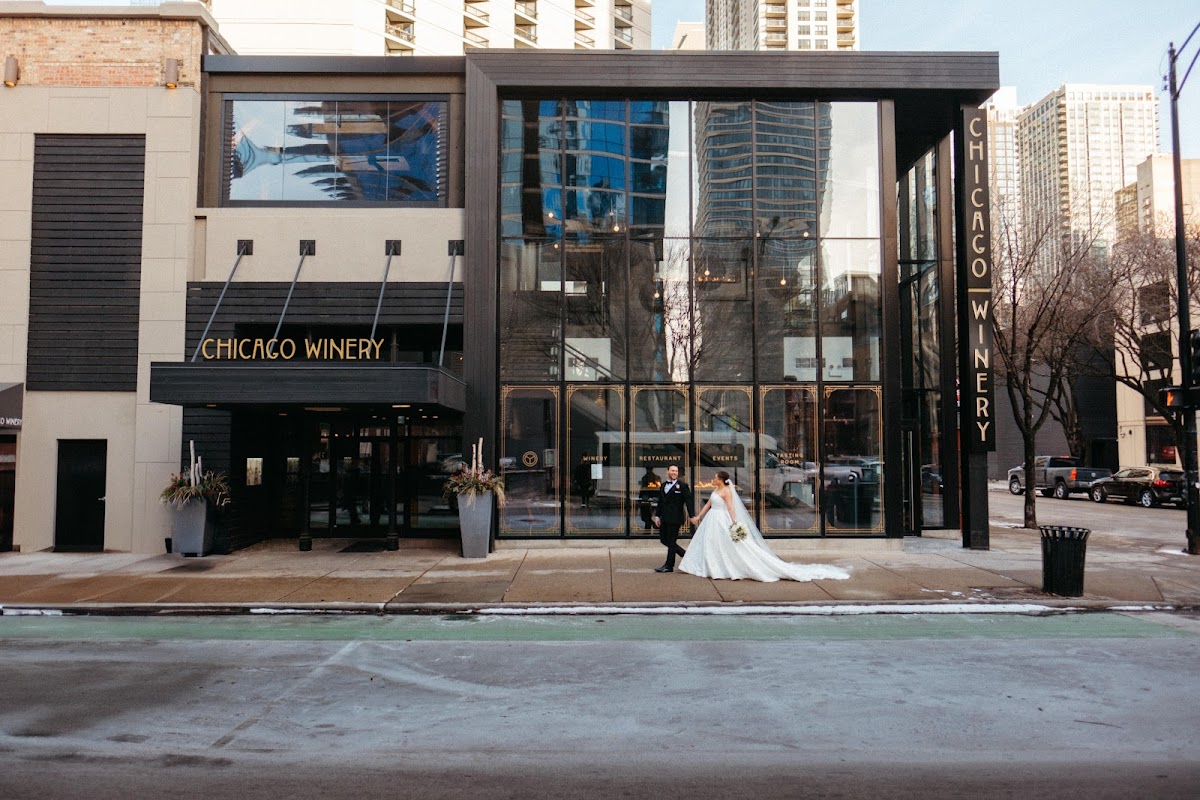
You are not driving through vineyards to get here. There is no winding country lane, no pastoral landscape unfolding mile by mile. You are in Chicago — definitively, unapologetically urban Chicago — navigating Clark Street through River North, past galleries with moody abstract canvases in the windows, past cocktail bars with velvet ropes and polished brass fixtures, past the kind of restaurants where reservations are made weeks in advance. And then, at 739 North Clark, you step through an unassuming door and descend into something entirely unexpected: a working winery, four stories of it, carved into the heart of the city. The scent hits you first — fermenting grapes, oak barrels, that particular sweetness of wine in the making. Then the visual: rows of French oak barrels stacked three high, stainless steel tanks gleaming under Edison bulbs, wooden arches framing rooms that manage to feel both industrial and intimate. Chicago Winery is a study in contrasts, and that is precisely its magic. It is gritty and elegant, urban and artisanal, deeply rooted in the city while somehow feeling like an escape from it. Poppy has designed Chicago Winery wedding flowers for 13 celebrations here, and each time we navigate the load-in through the River North streets, we are reminded why couples fall for this place: because there is nowhere else quite like it.
About Chicago Winery
Chicago Winery is not a branding exercise or a themed space. It is an actual, functioning urban winery producing approximately 25,000 cases annually across three levels of production facilities. Founder and winemaker Justin Lever opened the space in 2011 with a vision to bring winemaking back to the city, and the operation has grown steadily into one of Chicago’s most distinctive event venues precisely because the winemaking comes first. The grapes arrive from California, Washington, and Oregon during harvest season — you will see them if you visit in September or October, ton bins of Pinot Noir and Chardonnay waiting to be crushed — and the wine is made, aged, and bottled entirely on-site in the same rooms where weddings take place. This is not decorative. The barrels in the Barrel Room are actively aging wine. The tanks in the production area are part of the fermentation process. When your guests sip the estate wines during cocktail hour, they are drinking something made in the building where they are standing, and that authenticity is what sets Chicago Winery apart from every other brick-and-beam loft space in the city.
The architecture reflects the building’s industrial history — it was originally a manufacturing warehouse in the late 1800s — with exposed brick, soaring ceilings, heavy timber beams, and original hardwood floors. The design aesthetic leans into this history while layering in modern elegance: custom linenless walnut tables (a signature detail that eliminates the need for table linens and showcases the wood’s natural beauty), mid-century modern leather seating, sculptural lighting fixtures, and those painted floral murals in the Wine Salon that feel like something transplanted from a Parisian wine bar. The result is a space that photographs beautifully — moody, romantic, textured — without feeling overly designed. It simply is what it is, and what it is happens to be stunning.
Logistically, Chicago Winery sits in River North at the corner of Clark and Chicago Avenue, accessible via the CTA Red Line (Chicago stop is two blocks away) and surrounded by dozens of hotels, making it ideal for destination weddings where guests are flying in from out of town. For local guests, parking is available in several nearby lots, and valet service can be arranged. For Poppy’s delivery team, load-in happens through a service entrance on Chicago Avenue, and the venue’s event staff is exceptionally organized about coordinating vendor arrivals — critical in an urban setting where double-parking and loading zones require precision timing. The event coordination team is led by experienced hospitality professionals who understand the nuances of floral design timelines, and we have never encountered a logistical hiccup in our 13 weddings here.
The venue operates as a full-service space with exclusive catering by Executive Chef Andrew Graves, whose chef-driven menus showcase seasonal, locally sourced ingredients. The culinary program is one of Chicago Winery’s strongest assets — this is serious food, not banquet hall fare — and couples consistently rave about the tasting experience. The bar program features Chicago Winery’s own wines, local craft beers, and a full selection of top-shelf spirits. All alcohol must be provided by the venue (no outside bottles permitted), but given the quality of what they pour, this is not a limitation. Couples are welcome to bring in outside vendors for flowers, photography, and music, though the venue maintains a preferred vendor list for lighting and sound enhancements. For Chicago wedding florists with experience in urban venues, Chicago Winery is a dream: no outdoor weather concerns during indoor events, excellent climate control year-round, and a design aesthetic that works beautifully with virtually any floral style.
Event Spaces & Floral Opportunities
The Overlook
Capacity: 215 seated
Setting: The Overlook is Chicago Winery’s flagship reception space, occupying the second floor with soaring 14-foot ceilings and an expansive open floor plan designed for both seated dinners and flowing cocktail receptions. The room’s defining feature is the massive center skylight — a 12-foot-square glass panel that floods the space with natural light during daytime events and frames the night sky after sunset. Hand-hewn wooden arches punctuate the space, original to the building’s 19th-century construction, their heavy timber beams creating natural visual divisions within the open layout without compartmentalizing the room. Two substantial fireplaces anchor opposite ends of the space, their brick surrounds original to the building, mantels deep enough to hold substantial floral installations. The color palette is warm and neutral: honey-toned hardwood floors, exposed brick in shades of rust and terracotta, cream-painted beams, and those custom walnut tables that catch the light beautifully. The versatile layout accommodates 215 guests for a seated dinner with room for a substantial dance floor, or can be reconfigured for 250 standing at a cocktail reception. String lights and modern Edison bulb fixtures provide warm, flattering lighting that makes everyone and everything look better.
Floral approach: The skylight is both blessing and design challenge. During daytime events, that square of natural light creates a focal point that draws the eye upward, which means your tallest, most dramatic centerpieces should be positioned directly beneath it where the light will illuminate them from above. We favor elevated arrangements on 24 to 30-inch gold or matte black metal stands topped with overflowing garden-style designs: Patience and Juliet garden roses, white Playa Blanca spray roses, blushing bride protea, quicksand roses, and cascading jasmine vine in antique brass compote bowls or dark ceramic vessels. For evening events, when the skylight reveals the night sky, consider suspending a floral installation from the ceiling beams — a cloud of hanging amaranthus in burgundy and green, trailing smilax, and clusters of café au lait dahlias creates the illusion of floating florals without obstructing sightlines. The wooden arches are perfect for garland treatments: 12 to 15 feet of Italian ruscus, seeded eucalyptus, and olive branch punctuated with café au lait dahlias and burgundy scabiosa adds organic romance without overwhelming the architecture. The fireplace mantels demand attention in fall and winter — picture asymmetrical installations with willow or curly willow branches, antique hydrangea in dusty mauve, plum ranunculus, chocolate cosmos, and trailing amaranthus spilling over the edges and down the brick. For centerpieces on those walnut tables, we recommend letting the wood show: low, lush arrangements in 8 to 10-inch diameter bowls, mounded with texture and movement but never rising above 10 inches, so the table itself remains a design element. Think Koko Loko roses, burgundy dahlias, scabiosa, astilbe, and plenty of trailing greenery that spills onto the wood. The Overlook can handle bold color, so don’t be timid — this room loves jewel tones, rich burgundies, deep plums, and burnt oranges that echo the brick and wood.
The Wine Salon
Capacity: 50 seated
Setting: The Wine Salon is Chicago Winery’s intimate jewel box, a private dining room tucked behind windowed walls on the second floor. The room is fully enclosed with floor-to-ceiling windows that overlook The Overlook, creating visual connection to the larger venue while maintaining acoustic and spatial privacy. Retractable shades allow couples to close off the space entirely for rehearsal dinners or open it up to maintain sightlines during cocktail hour. The defining decorative element is a hand-painted floral mural covering two walls — a sprawling, romantic composition of oversized peonies, garden roses, and trailing vines in soft blush, sage green, and cream tones with gold leaf accents. The mural is gorgeous, statement-making, and absolutely must be considered in your floral design. Golden brass light fixtures — modern globe pendants and wall sconces — cast warm, flattering light that makes everything glow. The room is carpeted (unlike the hardwood in The Overlook), which softens sound and creates a more intimate acoustic environment. This space is most commonly used for rehearsal dinners, small ceremonies, or as a VIP lounge during larger receptions.
Floral approach: The floral mural is the elephant in the room, florally speaking. You cannot ignore it, and you should not try to compete with it. Instead, your Chicago Winery wedding flowers in this space should complement the mural’s palette and style. We recommend echoing the soft, romantic tones: blush Koko Loko and Quicksand roses, ivory O’Hara garden roses, white ranunculus, white sweet peas, pale pink astilbe, and plenty of soft greenery like dusty miller and silver dollar eucalyptus. Arrangements should be smaller in scale than in The Overlook — this is a 50-person room, and oversized florals will overwhelm. We favor 5 to 6-inch arrangements in vintage brass bud vases, mercury glass votives, or small ceramic vessels clustered in groups of three down the center of each table, creating an organic tablescape rather than a single centerpiece. For the bar or credenza (if you are using this room for cocktails), a low, lush runner of blooms and greenery echoes the mural’s trailing vine motif — smilax, jasmine vine, and clusters of garden roses in cream and blush. If you are hosting a rehearsal dinner here, consider a single statement arrangement on a sideboard — something sculptural and editorial that nods to the mural without mimicking it. Perhaps a loose, organic design in an aged brass urn with trailing elements that echo the painted vines. Because of the enclosed nature and the golden lighting, this room photographs with a warm, romantic glow, so lean into that: nothing too bright or stark, everything soft and suffused with warmth.
The Rooftop Terrace
Capacity: 150 standing (cocktail reception)
Setting: Chicago Winery’s rooftop terrace is an all-weather outdoor space on the third floor, accessed via stairs or elevator from the main event levels. The terrace spans approximately 2,000 square feet with clear views of the Chicago skyline — you will see the Willis Tower, John Hancock Center, and the glittering high-rises of the Gold Coast stretching north. The space is outfitted with a substantial stone fireplace, plush lounge seating in weather-resistant upholstery, cocktail tables, and a full outdoor bar. Retractable awnings provide shade in summer and protection from light rain, and the venue has portable heaters for spring and fall events (though true winter use is rare given Chicago’s climate). The flooring is composite decking, and the perimeter features metal railings with glass panels that preserve the views while providing safety barriers. String lights are permanently installed overhead, casting that soft, festive glow that photographs beautifully at dusk. This space is primarily used for cocktail hour before moving guests downstairs for dinner, or for ceremony space during warmer months.
The Barrel Room
Capacity: Varies (typically used for cocktail hour or intimate ceremonies up to 50 guests)
Setting: The Barrel Room is the emotional heart of Chicago Winery, a two-story space on the lower level where hundreds of French oak wine barrels are stacked in rows, aging the winery’s red wine program. The room is atmospheric in the extreme: exposed brick walls, dim Edison bulb lighting, the sweet, oaky scent of aging wine, and those barrels — so many barrels — creating both visual texture and a tangible connection to the winemaking process. Stainless steel fermentation tanks gleam in the background, and during harvest season (late September through October), the room hums with the literal sound of active fermentation. The space is smaller and more intimate than The Overlook, with lower ceilings (approximately 10 feet) and a cave-like quality that feels romantic and slightly mysterious. It is most commonly used for cocktail hour, smaller ceremonies (30 to 50 guests), or as a dramatic pass-through space that guests traverse en route to the main reception. The lighting is deliberately dim to protect the aging wine, creating moody, candlelit ambiance.
Floral approach: The barrels are the design element, and your florals should enhance their rustic, artisanal beauty. The single most effective floral treatment in the Barrel Room is topping select barrels with lush, overflowing arrangements. Choose barrels positioned at key sightlines — flanking the entrance, marking the end of barrel rows, near the stainless steel tanks — and place arrangements directly on top: no risers needed, the barrel itself is the vessel. We favor organic, slightly wild garden-style designs: burgundy and mauve dahlias (Jowey Winnie, Labyrinth), chocolate cosmos, blackberry-toned hellebores, scabiosa in wine shades, burgundy ranunculus, privet berries, and plenty of movement from jasmine vine, hanging amaranthus, or hops. The effect should feel abundant but not formal, as if the flowers grew there. Garlands work beautifully draped along the stainless steel tanks or wound around the support columns — the juxtaposition of organic blooms against industrial metal creates visual interest. If you are hosting a ceremony in the Barrel Room, the barrel rows themselves create a natural aisle; line the aisle with small arrangements in vintage brass vessels or scattered votives for a romantic glow. For cocktail hour, consider a few statement arrangements on high-top cocktail tables — nothing too precious or structured, this room demands designs with texture and a bit of edge. The lighting is dim and moody (intentionally so for the wine storage), which means deep, saturated colors photograph better than pastels. Burgundy, plum, chocolate brown, and deep green read beautifully, while pale pink or light peach may get lost. Plenty of greenery adds dimension that reads well in low light — Italian ruscus, olive branch, and eucalyptus all work.
Wedding Flower Ideas for Chicago Winery
Urban Vineyard
This design concept bridges Chicago Winery’s dual identity as both urban venue and working winery. The palette draws from wine itself: deep burgundy, plum, bordeaux, and merlot tones, accented with blush, champagne, and plenty of greenery that nods to the grapevines that produce the fruit. Core flowers include Black Baccara roses (near-black burgundy), Tess roses, Hot Chocolate cosmos, burgundy dahlias (Jowey Winnie, Labyrinth, Rip City), plum-toned scabiosa, deep purple clematis, and fig fruit on branches for textural interest. Lighten the palette with Quicksand and Sahara roses in champagne tones, blush Koko Loko roses, white majolica spray roses, and touches of soft peach with Free Spirit or Romantic Antike roses. Foliage is critical to this concept: Italian ruscus, olive branch, seeded eucalyptus, silver dollar eucalyptus, and actual grapevine tendrils (available from specialty growers or sourced from local vineyards) woven through arrangements. Vessels should be aged brass compotes, dark ceramic bowls, weathered zinc containers, or natural wood boxes that echo the wine barrels. This look is moody, romantic, and deeply connected to the winemaking narrative. It works everywhere in the venue but is especially stunning in The Barrel Room where the wine-colored blooms glow against the oak barrels, and around the fireplaces in The Overlook where the deep tones catch the warm light. For centerpieces, imagine low, lush arrangements in brass compotes overflowing with burgundy dahlias, chocolate cosmos, quicksand roses, and trailing jasmine vine. For the fireplace mantels, create asymmetrical installations with grapevine branches, hanging amaranthus, and clusters of burgundy blooms. This palette photographs beautifully in the dim lighting of The Barrel Room and looks equally stunning in natural light under The Overlook’s skylight.
Chicago Modern
Inspired by the city itself — the architecture, the energy, the sophisticated urban aesthetic — this design concept is clean-lined, bold, and unapologetically contemporary. The palette is graphic: black, white, deep green, with strategic pops of color. Think white phalaenopsis orchids, white calla lilies, architectural white anthuriums, and pure white roses (Playa Blanca, Purity, Vendela), grounded with glossy monstera leaves, dark anthurium leaves, and variegated pittosporum. Add one accent color based on your wedding palette: electric blue delphinium for modern contrast, or coral charm peonies for warmth, or saffron-yellow oncidium orchids for a pop of energy — just one shade, used sparingly, for maximum impact. Vessels are sleek and modern: matte black cylinders, clear glass geometric terrariums, white ceramic cubes, polished brass cylinders, or lucite pedestals that appear to float. Arrangements are structural rather than organic: clean, defined shapes, architectural composition, not loose garden style. Consider monochromatic arrangements in varying heights — all white phalaenopsis orchids at three different levels creates dramatic visual interest without color. For the Rooftop Terrace, this aesthetic is perfect: white orchids in clear glass cubes on cocktail tables allow the skyline to remain the focus. In The Overlook, elevated arrangements on lucite stands create floating gardens beneath the skylight. For the Wine Salon, a single bold arrangement on the credenza — perhaps a modern geometric vessel filled with white calla lilies and monstera leaves — provides contemporary contrast to the romantic murals. This style works beautifully for couples drawn to Chicago Winery’s urban sophistication rather than its rustic winery elements.
Artisan Garden
This concept leans fully into organic, just-gathered garden romance with a European sensibility. Imagine an artist’s studio in Paris filled with flowers from the local marché, or a Provençal garden in full summer bloom. The palette is soft, romantic, and textured: dusty mauve, blush pink, peach, cream, soft lavender, with pops of deeper tones for depth. Core flowers include garden roses in abundance — Keira, Juliet, Patience, Charity, and Constance from David Austin’s collection — along with ranunculus in peach and mauve, sweet peas (when in season), hellebores, anemones, scabiosa, tweedia for that perfect dusty blue, astilbe in blush and white, and spring-flowering branches like cherry blossom, apple blossom, or lilac. Foliage is soft and flowing: jasmine vine, smilax, Italian ruscus, silver dollar eucalyptus, dusty miller, lady’s mantle, and maidenhair fern for delicate texture. Vessels are vintage and collected: ceramic pitchers in cream and blush, aged terra cotta pots, weathered metal buckets, glass milk bottles clustered in groups, or small vintage vases in varying heights. The look is loose, organic, romantic, with flowers appearing as if they have been freshly gathered and loosely arranged rather than formally structured. This style complements the floral murals in the Wine Salon beautifully — your fresh arrangements echo the painted blooms on the walls. It also softens the industrial elements throughout the venue: brick becomes a warm backdrop, wood beams become natural framing. For The Overlook, use this style for centerpieces that feel abundant and lush, with blooms tumbling over vessel edges — perhaps three or five small vintage vessels clustered at each table’s center, each filled with garden roses, ranunculus, and trailing jasmine. For the fireplace mantels, create asymmetrical installations with flowering branches, trailing jasmine and smilax, and clusters of garden roses in cream and blush that feel naturally placed rather than formally designed. This concept works beautifully for spring and summer weddings and photographs like something out of a European wedding editorial.
Seasonal Considerations
Spring (March through May)
Chicago springs are famously unpredictable — snow is possible through early April, and temperatures can swing from 40 to 70 degrees in a single week. But by mid-April, the city shakes off winter, and by May, Chicago is glorious. Spring weddings at Chicago Winery benefit from the natural light streaming through The Overlook’s skylight, which is at its most dramatic during the longer days of April and May. The Rooftop Terrace becomes usable by late April (with heaters on standby for those 55-degree evenings), and the skyline views are particularly clear in spring’s crisp air. Florally, spring is the season of abundance and relatively reasonable pricing. Take full advantage of tulips (French, parrot, double), ranunculus in every color, anemones with those dramatic black centers, hellebores in burgundy and cream, sweet peas in soft pastels, hyacinth, cherry or apple blossom branches, lilac (available late April through mid-May), and the first garden roses of the season. The color palette can be soft and pastel — this is the one season where buttery yellows, soft pinks, and lilacs don’t feel cliché. Spring foliage is tender and fresh: new eucalyptus growth, Italian ruscus, maidenhair fern, and the delicate tendrils of jasmine vine. Peonies arrive in late May, so if your wedding falls in the last two weeks of May, you can incorporate them, though Chicago’s peony season is brief and prices reflect their coveted status. Practical considerations: April can still be muddy and unpredictable, so if you are using the Rooftop Terrace, have a rain plan (the venue can accommodate cocktail hour in The Barrel Room or on the second floor) and budget for heaters. May is the sweet spot for Chicago spring weddings — warm enough for outdoor spaces, peak bloom availability, and that particular quality of light that makes everything look fresh and hopeful.
Summer (June through August)
Chicago summers are hot and humid, with July and August bringing temperatures regularly in the 85 to 95-degree range and humidity that makes everything feel ten degrees warmer. But here is the thing about Chicago Winery: it is climate-controlled, which means summer heat is irrelevant for your florals once they are installed indoors. The Rooftop Terrace is in full use during summer, offering stunning sunset views over the skyline (sunset happens around 8:30 p.m. in late June, providing extended golden hour for photography). Summer is peak wedding season in Chicago, and floral availability is excellent. Embrace locally grown summer blooms: dahlias (available from Illinois farms by mid-July and running through October), zinnias, lisianthus in every color, sunflowers, celosia, and ornamental grasses. Garden roses continue through summer but require extra care in the heat — order varieties known for heat tolerance like Juliet, Patience, and Keira. Hydrangea is abundant and affordable; white and green hydrangea work beautifully in Chicago Winery’s neutral spaces. For the Rooftop Terrace, consider heat-hardy blooms: sunflowers, zinnias, celosia, and succulents hold up better than delicate garden roses or sweet peas in 90-degree heat. Color palettes can be bold and saturated — summer light can handle bright coral, sunny yellow, hot pink, and electric blue. Greenery should be sturdy: eucalyptus, Italian ruscus, and salal hold up better in heat than delicate jasmine vine or maidenhair fern. Practical considerations: if you are installing florals on the Rooftop Terrace more than two hours before the event starts, budget for misters or plan to refresh arrangements closer to guest arrival. For indoor spaces, the climate control means your florals will be perfectly preserved, but remind your florist to hydrate everything thoroughly and transport in air-conditioned vehicles if they are loading in during the afternoon heat. Summer thunderstorms can be intense in Chicago, so always have a backup plan for outdoor events.
Fall (September through November)
Fall is Chicago Winery’s most popular wedding season, and for excellent reason. The city’s weather is ideal — crisp, clear, reliably dry — and the urban landscape takes on that golden, nostalgic quality that makes every photograph look like a magazine spread. September is still warm enough (70s during the day) for Rooftop Terrace ceremonies, while October and November push events indoors but reward couples with the cozy romance of the fireplaces in The Overlook. The Barrel Room feels particularly atmospheric in fall when the winery is actively producing wine — if your date falls during crush season (late September through October), your guests may see grapes being processed and smell the fermentation happening in real time, adding an experiential element to the celebration. Florally, fall is the season of dahlias, and you should take full advantage. Chicago-area dahlias are at their absolute peak from August through October: café au lait, Labyrinth, Jowey Winnie, Penhill Dark Monarch, Rip City. Chicago Winery’s aesthetic was made for dahlias. Also abundant: chrysanthemums (the good ones — large, sculptural Japanese mums, not grocery store mums), fall foliage in burgundy and gold, hanging amaranthus, celosia, marigolds, and late-season roses. The color palette should embrace the season: burgundy, rust, burnt orange, chocolate brown, deep plum, with accents of marigold, blush, and cream. Foliage can be dramatic: oak leaves, maple branches, crabapple branches with fruit still attached, bittersweet vine, and smokebush in burgundy. For the fireplace mantels in The Overlook, create installations with branches, trailing amaranthus, and clusters of dahlias that feel like they are spilling out of the mantel and onto the brick. The Barrel Room’s moody lighting makes fall’s deep, saturated colors glow — burgundy dahlias and chocolate cosmos look stunning against the oak barrels. Practical considerations: November can be chilly in Chicago, so the Rooftop Terrace is typically closed by late November. If you are planning a November wedding, focus florals in The Overlook and Barrel Room where the warmth and ambiance are at their peak. October is arguably the single best month for Chicago weddings — perfect weather, peak dahlia season, and that magical fall light.
Winter (December through February)
Chicago winters are serious business — snow, ice, subzero wind chills. But inside Chicago Winery, winter is romantic, cozy, and surprisingly popular for weddings, particularly around the holidays and New Year’s Eve. The fireplaces in The Overlook become focal points, crackling with warmth. The Edison bulbs and string lights throughout the venue create a warm glow against the dark winter evenings. The Barrel Room feels like a wine cave in the French countryside — atmospheric, candlelit, romantic. The Rooftop Terrace is closed for the season, but honestly, you won’t miss it when the indoor spaces are this atmospheric. Winter weddings allow for florals that would wilt in summer heat: amaryllis in white and burgundy, anemones with those dark dramatic centers, hellebores in plum and cream, ranunculus in jewel tones, and those deeply romantic garden roses (Juliet, Patience, Keira) that thrive in cool temperatures. Embrace evergreens: pine, cedar, fir branches, magnolia leaves, and eucalyptus add texture and that wonderful winter scent. Winter color palettes can go two directions: rich and jewel-toned (burgundy, emerald green, deep plum, and gold) or soft and icy