
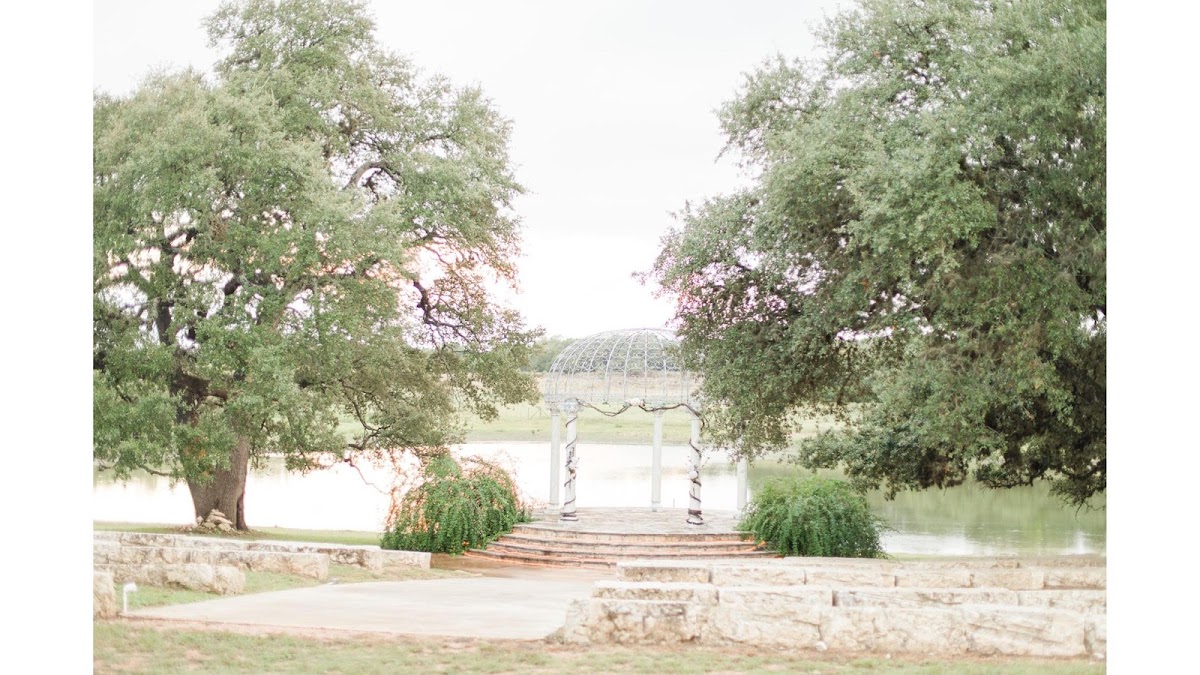
You know you’re close when the highway gives way to farm roads, when the gas stations thin out and the live oaks start to assert themselves — those massive, gnarled Hill Country sentinels that have been holding their ground for a hundred years or more. Moore Lane curves gently through Blanco, past working ranches where cattle graze behind wire fences and the land rises and falls in those characteristic limestone-studded hills. Then you arrive at Carriage Hills Ranch, and it reveals itself not as a venue trying to play at being a ranch, but as the real thing — 11 acres of authentic Texas Hill Country, complete with a 100-year-old barn that still smells faintly of hay and history, a gazebo overlooking a shimmering lake, and perhaps most charmingly, a restored 1920s San Antonio streetcar that now dispenses cocktails instead of carrying commuters. This is a family-owned property where the owner, Christine, designed the stone bridge herself, where the oak trees are old enough to have stories, and where every corner — from the limestone fireplace with its Rapunzel-window cutout to the amphitheater seating carved into the hillside — feels intentional, earned, and utterly Texan. Poppy has received 7 inquiries from couples planning Carriage Hills Ranch weddings, and while we haven’t yet delivered flowers here, the property has made its way onto our radar for all the right reasons.
About Carriage Hills Ranch
Carriage Hills Ranch sits almost exactly halfway between Austin and San Antonio — 45 minutes from each, which makes it accessible to both metro areas while feeling genuinely removed from suburban sprawl. Blanco is small-town Texas at its most charming: the courthouse square, the Blanco River winding through town, roadside peach stands in summer, and a pace of life that reminds you why people fall in love with Hill Country in the first place. The ranch itself has been in Christine’s family for generations, and that history is not decorative — it is structural. The reception hall was built around the original family barn, a structure that dates back over a century. The tin walls and weathered wood beams are not reproductions trucked in from a salvage yard. They are the bones of the building, and when you run your hand along them, you can feel the grain of a hundred summers.
The property sprawls across 11 acres of rolling terrain, with multiple ceremony sites scattered throughout — each with its own character. There is the lakeside gazebo with amphitheater-style stone seating, the most popular ceremony spot for good reason. There is the outdoor fireplace and three-tiered terrace, which catches the afternoon light beautifully and offers that whimsical window cutout for photos. There are several locations beneath the sprawling live oaks, which provide natural shade and a canopy of dappled light. And then there is the streetcar — San Antonio Streetcar #205, which ran the city’s routes from the 1880s through the 1930s and has been meticulously restored as a bar and appetizer station, complete with electricity, a small freezer, and a work area for bartenders. It is exactly the kind of quirky, historically grounded detail that makes this venue feel like nowhere else.
The ranch accommodates up to 200 guests comfortably, with seating, tables, and a remarkable inventory of included decor — over 2,000 pieces, according to the venue literature, which means couples are not starting from scratch. There are 200 upgraded Fruitwood Chiavari chairs with cushions, 26 round tables, multiple rectangular tables, cocktail tables, and even a kids’ table. House linens and table runners are included, which is not a given at many ranch venues. The reception hall is climate-controlled with four Heat/AC units, a critical feature when you are talking about Texas weather, and it offers 5,400 square feet of space — enough for a full dinner setup, a dance floor, a band or DJ, and still room to breathe.
For florists, the logistics at Carriage Hills Ranch are straightforward. Vendors have private side entrance access for loading and unloading, and all deliveries must occur during the contracted rental period. If you purchase the two-day package, you get an additional four hours the day before (3pm-7pm) for setup and rehearsal, which is invaluable for more complex floral installations. The venue does require approved caterers with liability insurance, and their bartending service is in-house, but floral designers are not restricted to a preferred vendor list, which gives couples the freedom to work with Blanco wedding florists who understand the property and the Hill Country aesthetic.
From Poppy’s Austin studio, Carriage Hills Ranch is about an hour’s drive, depending on traffic through the hill country. The venue’s proximity to both Austin and San Antonio makes it a popular choice for couples with guests coming from both cities, and the small-town Blanco location offers charming B&Bs and lodging options nearby for a true destination weekend feel.
Event Spaces & Floral Opportunities
Reception Hall
Capacity: 200 seated
Setting: The Reception Hall is where past meets present in the most tangible way. The original barn — over 100 years old — forms the heart of the structure, with 5,400 square feet of added space wrapped around it. The tin walls and weathered wood beams are the real deal, not aesthetic choices made by a design committee. They carry the patina of decades, the kind of texture that only time can create. The space is climate-controlled with four separate Heat/AC units, which is a godsend during Texas summers or unexpectedly cool spring evenings. There is an indoor stage that can serve as either a ceremony focal point or a sweetheart table platform, and the layout accommodates full dinner service, a dance floor, and band setup without feeling cramped. The ceiling is high enough to allow for drama, and the neutral tones of aged wood and metal provide a warm, forgiving backdrop for nearly any color palette.
Floral approach: This is a space that wants organic, abundant, slightly untamed florals — the kind of arrangements that look like they could have been gathered from the fields surrounding the property. We favor compote-style centerpieces in vintage brass or weathered terracotta, overflowing with garden roses (Patience, Keira, or the blowsy Juliet), zinnias, Queen Anne’s lace, and butterfly ranunculus, all loosened with Italian ruscus, jasmine vine, and seeded eucalyptus. For the stage, a large asymmetrical installation works beautifully — imagine a ground-based arrangement that runs six to eight feet wide, built low and wild, incorporating native Texas grasses, Cafe au Lait dahlias, peach stock, and plenty of movement from trailing amaranthus or bunny tail grass. The rustic wood backdrop does not need softening, but it does benefit from the contrast of lush, romantic florals that bring life and softness to the harder architectural elements. For guest tables, consider a mix of heights — some low and lush, others elevated on wooden risers or vintage cake stands to create visual interest across the room. The key is to avoid anything too polished or symmetrical; this room rewards a more relaxed, gathered-from-the-garden aesthetic that honors the barn’s history.
Gazebo Ceremony Site
Capacity: 200 seated (ceremony)
Setting: This is Carriage Hills Ranch’s signature ceremony location, and once you see it, you understand why. The gazebo sits on a gentle rise overlooking a wet-weather lake, with amphitheater-style stone bench seating carved into the hillside. The structure itself is elegant but not fussy — white painted wood with a peaked roof and open sides that frame the water view behind. The stone seating creates natural tiers, so every guest has a clear sightline to the couple, and the acoustics are surprisingly good thanks to the hillside bowl shape. On a still morning, the lake reflects the sky and surrounding oaks, doubling the beauty. The site comes with 200 large white folding chairs, which can be set up on the flat area in front of the gazebo if you prefer traditional rows to the stone benches.
Floral approach: The gazebo’s open structure is practically begging for a floral installation that drapes and cascades. We recommend a half-arch or asymmetrical installation on one side of the gazebo opening, allowing the lake view to remain visible while still creating a lush focal point. Use a base of smilax or Italian ruscus to establish the draping greenery, then layer in focal blooms like garden roses in soft peach and cream (Juliet, Patience, Romantic Antike), butterfly ranunculus in coral and blush, and accents of sweet pea or tweedia for movement and texture. The goal is to create something that looks like it is growing organically from the gazebo structure, not a rigid, symmetrical arch. For the aisle, consider placing arrangements in vintage milk jugs or galvanized buckets every third row — loosely designed clusters of wildflowers, grasses, and blooms that echo the main installation. If you are using the white folding chairs instead of the stone benches, simple greenery garlands along the aisle chairs add a soft touch without blocking views. The natural beauty here is already doing most of the heavy lifting; your florals should enhance, not compete.
Fireplace & Patio Ceremony Site
Capacity: 200 seated (ceremony)
Setting: The Texas limestone fireplace stands at the top of three terraced levels, creating a naturally dramatic backdrop for a ceremony. The fireplace itself is substantial — rough-cut limestone blocks stacked into a structure that is both rustic and elegant. The most distinctive feature is the window cutout built into the stone, a rectangular opening that frames the landscape beyond and has earned comparisons to Rapunzel’s tower for its fairy-tale quality. The three tiers allow for creative seating arrangements — you can place chairs on each level, creating stadium-style views, or use the upper terrace for the ceremony itself with guests on the lower levels. The patio area is paved stone, which means stable footing for any weather, and the surrounding oaks provide dappled shade without fully covering the space.
Floral approach: The fireplace mantel is your hero moment here. This is the place for a large, abundant installation that draws the eye and anchors the ceremony. Build a low, wide arrangement directly on the mantel — think three to four feet wide but no more than 18 inches tall, allowing the window cutout above to remain the focal architectural detail. Use a base of trailing jasmine vine and smilax to create movement over the edge of the mantel, then layer in lush focal blooms: Juliet garden roses, apricot ranunculus, peach stock, and Quicksand roses for a sun-warmed palette that complements the limestone. Add textural elements like bunny tail grass, scabiosa pods, or even small branches of Texas mountain laurel if in season. The window cutout itself can be lightly framed with a garland of greenery and blooms, but avoid covering the opening entirely — the whole point is the frame-within-a-frame effect. For the terraces, consider placing smaller arrangements at the aisle ends of each tier, tying the levels together visually. Galvanized buckets or terracotta pots work beautifully here, grounding the florals in the ranch aesthetic. This site can handle bold, abundant florals because the architecture is strong enough to support them.
Oak Tree Ceremony Site
Capacity: 200 seated (ceremony)
Setting: Carriage Hills Ranch offers multiple ceremony locations beneath the property’s mature live oaks, each with slightly different character depending on which tree you choose. These are the quintessential Hill Country oaks — broad, ancient, with sprawling branches that create a natural canopy overhead. The dappled shade is one of the site’s greatest assets, especially during warmer months, and the tree’s structure often becomes a natural focal point on its own. The ground beneath is typically grass or cleared earth, and the 200 white folding chairs can be arranged in traditional rows, a semicircle, or any configuration that works with the tree’s footprint.
Floral approach: The oak itself is your architecture, so your floral installations should work with the tree, not against it. One of the most effective approaches is to hang a floral chandelier or multiple hanging installations from the tree’s lower branches, creating focal points at varying heights that draw the eye upward into the canopy. Use chicken wire frames or floral cages filled with soaked foam, and build loose, organic clusters of blooms and greenery — garden roses, ranunculus, hanging amaranthus, jasmine vine, and plenty of Italian ruscus or seeded eucalyptus for drape. The installations should appear to float, almost like the tree itself is blooming. For the aisle, keep it simple — consider a garland of greenery down the center aisle, anchored at intervals with clusters of blooms, or place low arrangements in vintage crocks or wooden boxes every few rows. The oak’s natural drama is already substantial; your florals should enhance the magic of marrying beneath a century-old tree, not distract from it. This is also a wonderful site for incorporating native Texas wildflowers if your timing aligns with spring — bluebonnets, Indian paintbrush, and wine cups in low, gathered arrangements that feel like they belong to the landscape.
Streetcar Ceremony Site
Capacity: 200 seated (ceremony)
Setting: San Antonio Streetcar #205 is one of those details that makes Carriage Hills Ranch utterly unique. This is a functioning piece of San Antonio history — a streetcar that ran routes through the city from the 1880s through the 1930s, now meticulously restored and serving as a bar and appetizer station. The exterior retains its vintage charm: the curved roof, the original windows, the patina of age. It sits on extended patios with ample space for guests to mingle during cocktail hour, and it is equipped with electricity, refrigeration, and all the necessary bar amenities. As a ceremony site, the streetcar provides a one-of-a-kind backdrop — quirky, nostalgic, and thoroughly Texan.
Floral approach: This site calls for a lighter touch and a sense of playfulness that honors the streetcar’s vintage character. Rather than a large ceremony arch, consider flanking the streetcar entrance with a pair of arrangements in vintage milk cans or galvanized buckets — loose, gathered designs with garden roses, zinnias, phlox, and plenty of greenery. You want the arrangements to feel like they were picked fresh and casually placed, not formally designed. For the bar area itself, small bud vases or mason jars with single stems or small clusters work beautifully — placed along the bar top or on cocktail tables scattered across the patio. Consider a garland installation along the streetcar’s roofline if the couple wants something more dramatic, using smilax, jasmine vine, and clustered blooms at intervals. The key is not to overwhelm the streetcar’s historic character with overly elaborate florals; instead, use blooms to add warmth and romance while letting the venue’s quirky charm remain the star. This site pairs beautifully with a more casual, garden-party aesthetic.
Outdoor Reception Terrace
Capacity: 200 seated
Setting: For couples who want to dine and dance under the Texas sky, the Outdoor Reception Terrace offers the option to move the full reception outside across the property’s three-tiered terraces. This requires an additional $500 setup fee for the venue to move all tables and chairs outdoors, but the payoff is significant — the Hill Country landscape as your backdrop, the natural airflow, and the romance of an outdoor evening celebration. The terraces create distinct zones for dining, dancing, and lounging, and the setup allows for creative configurations that take advantage of the multi-level layout.
Floral approach: An outdoor reception on the terraces allows for more dramatic, large-scale floral installations because you are working with open sky and expansive space. Consider statement pieces at each terrace level — large urns overflowing with garden roses, hydrangea, and trailing greenery positioned at the top and bottom of stairs to guide guests through the levels. For guest tables, you can mix centerpiece heights more freely outdoors; alternate between low, lush compote arrangements and tall elevated designs on wooden risers or clear glass cylinders to create visual rhythm across the space. Lighting becomes crucial for an evening outdoor reception, so coordinate with your florist and lighting vendor to integrate string lights, lanterns, or uplighting into the floral design. Garlands along terrace railings add softness and cohesion between levels. Because this is an outdoor setting, choose blooms with good heat tolerance if your wedding is during warmer months — roses, zinnias, celosia, and sunflowers hold up better than delicate ranunculus or anemones in direct sun. The natural beauty of the Hill Country at dusk will do much of the atmospheric work; your florals should feel abundant but not fussy, romantic but grounded in the landscape.
Wedding Flower Ideas for Carriage Hills Ranch
Hill Country Harvest
This palette is pulled directly from the Texas landscape in late summer and autumn: warm golds, burnt orange, deep rust, and pops of burgundy. Think Cafe au Lait dahlias in that perfect caramel tone, Free Spirit roses in apricot and peach, Texas-grown sunflowers (the smaller, multi-headed varieties, not grocery-store giants), zinnias in coral and rust, and butterfly ranunculus in warm tones. Add textural elements like bunny tail grass, wheat stalks, seeded eucalyptus, and trailing amaranthus in rust tones. Arrange everything in terracotta pots, wooden boxes, or galvanized buckets for an authentic ranch feel. This palette is especially stunning in the Reception Hall, where the aged wood and tin walls provide the perfect neutral backdrop, and at the Fireplace & Patio Ceremony Site, where the warm tones echo the limestone. It is a celebration of Texas abundance, unpolished and generous.
Bluebonnet Romance
If your wedding falls during Texas wildflower season (typically March through early May), lean into the state flower and build a palette around bluebonnets and their companion wildflowers. Bluebonnets provide that signature dusty blue-purple, which pairs beautifully with soft peach garden roses (Juliet, Patience), white ranunculus, blush sweet pea, and accents of Indian paintbrush or pink evening primrose if you can source them. Add plenty of greenery — Italian ruscus, seeded eucalyptus, and olive branches for a loose, organic feel. Use vintage milk jugs, enamelware pitchers, or simple glass cylinders as vessels. This palette works beautifully at the Gazebo Ceremony Site, where the wildflower aesthetic feels at home near the lake, and in the Reception Hall, where the soft colors provide a romantic contrast to the rustic architecture. Bluebonnets are protected in Texas, so work with a florist who knows how to source them legally from cultivated farms, or use similar blooms like delphinium or tweedia to capture the blue tones.
Limestone & Lace
This concept is more refined while still honoring the ranch setting — a palette of soft ivory, champagne, blush, and touches of sage green. Garden roses in creamy tones (Patience, Ivory Patience, White O’Hara), quicksand roses for that perfect taupe-blush, white ranunculus and anemones, champagne-colored stock, and blush astilbe for texture. Soften everything with jasmine vine, trailing smilax, and seeded eucalyptus in silvery green tones. The “lace” element comes from Queen Anne’s lace and scabiosa, which add airiness and delicacy. Use vessels in cream ceramic, pale wood, or soft gold to keep the palette cohesive. This design concept is especially elegant at the Gazebo Ceremony Site, where the soft colors photograph beautifully against the water, and in the Reception Hall for couples who want a more refined aesthetic without losing the ranch’s rustic warmth. It is romantic, timeless, and just formal enough while still feeling grounded in the Hill Country landscape.
Seasonal Considerations
The Texas Hill Country operates on its own seasonal logic, distinct from much of the rest of the country. Understanding Blanco’s specific climate patterns is essential when planning Carriage Hills Ranch wedding flowers.
Spring (March-May): This is wildflower season, the time when Texas roadsides erupt in bluebonnets, Indian paintbrush, and wine cups. It is also one of the most popular wedding seasons, and for good reason — the weather is generally mild (highs in the 70s to low 80s), the landscape is green and lush from spring rains, and locally grown blooms are at their peak. However, spring in the Hill Country can be unpredictable. Rain showers and occasional thunderstorms are common, and temperatures can swing dramatically. For florals, this is the season to incorporate Texas wildflowers if you want them — but work with a florist who can source them from cultivated farms, as wild harvesting is illegal. Peonies are available through May, and garden roses, ranunculus, and anemones are all in season and relatively affordable. The biggest challenge is heat tolerance if you hit an unseasonably warm day; have a backup plan for delicate blooms at outdoor ceremony sites. April is the sweet spot — peak wildflower season, comfortable temperatures, and the landscape at its most photogenic.
Summer (June-August): Texas summers are hot. Blanco regularly sees temperatures in the 95-105°F range, with high humidity and intense sun. For outdoor ceremonies and receptions, this presents real challenges for both guests and florals. Delicate blooms like sweet pea, ranunculus, and anemones will wilt quickly in direct sun. Instead, choose heat-tolerant varieties: roses (especially garden roses, which are surprisingly resilient), zinnias, celosia, sunflowers, hydrangea (if kept well-hydrated), and succulents for texture. Use plenty of greenery like eucalyptus, which holds up better in heat. If your ceremony is outdoors, schedule it for late afternoon or early evening to avoid peak heat, and keep floral installations out of direct sun as much as possible. The Oak Tree Ceremony Sites have a natural advantage thanks to shade. For the reception, the climate-controlled Reception Hall is your friend. Summer does offer one advantage: long daylight hours and spectacular sunsets that bathe the Hill Country in golden light. Consider later ceremony times (6pm or 7pm) to take advantage of cooler temperatures and that famous Texas golden hour.
Fall (September-November): Fall is peak wedding season in the Hill Country, and it is easy to see why. By late September, the worst heat has broken, and by October and November, you are looking at comfortable highs in the 70s and 80s with cool evenings perfect for outdoor celebrations. The landscape takes on warmer tones as the grasses turn golden and the foliage shifts toward autumn colors. Dahlias are in their prime through October, and you will have access to rich autumn blooms like marigolds, celosia, and chrysanthemums, along with year-round staples like roses and hydrangea. This is the season for the Hill Country Harvest palette — warm, abundant, and celebratory. The primary consideration is booking early, as this is the most competitive season for Hill Country venues. Weather is generally stable, though the occasional cold front can bring surprising temperature drops. November edges toward winter, so have pashminas or blankets available for evening outdoor receptions.
Winter (December-February): Hill Country winters are mild compared to much of the country, but they are not without their quirks. Daytime temperatures typically range from the 50s to 60s, occasionally pushing into the 70s, but nights can dip into the 30s or 40s. The landscape is dormant — brown grasses, bare trees — which means your florals and decor carry more weight in creating the aesthetic. Hard freezes are rare but possible, and the occasional ice storm can make travel treacherous. For florals, winter brings access to amaryllis, anemones, hellebores, and ranunculus, plus evergreen elements like magnolia and pine for a seasonal feel. The climate-controlled Reception Hall is essential for guest comfort. If you are holding a winter ceremony outdoors (which is entirely feasible on a mild day), keep it short and provide heaters or fire pits for the cocktail hour. Winter weddings at Carriage Hills Ranch can be deeply romantic — imagine a ceremony at the Fireplace & Patio Site with a fire crackling, or the Reception Hall glowing warmly as dusk falls outside. Just build in contingency plans for weather and embrace the cozy, intimate quality that winter naturally provides.
Poppy’s Expert Take
Respect the ranch, don’t theme it. Carriage Hills Ranch is a working ranch with genuine history — that 100-year-old barn is not a replica, and the streetcar is not a prop. Your florals should honor that authenticity rather than trying to create a styled “rustic” look. Skip the burlap-wrapped mason jars with twine bows (unless that is genuinely your aesthetic, not something you think a ranch “should” have) and instead lean into organic, garden-gathered designs that feel like they belong to the landscape. Use real vintage vessels — terracotta pots, galvanized buckets, milk jugs — not manufactured “rustic” containers. The venue has its own character; your job is to complement it, not costume it.
Use the property’s zones for floral impact without overspending. With 11 acres and multiple distinct ceremony sites, you could bankrupt your floral budget trying to decorate every corner. Instead, choose your ceremony site strategically and focus your floral investment there, then carry elements through to the reception. If you are doing the Gazebo Ceremony, invest in a beautiful ceremony installation and aisle markers, then repurpose those aisle arrangements as cocktail table centerpieces during the reception. The reception hall is large enough that you will need substantial centerpieces to fill the space — plan for at least 26 arrangements for the round tables plus additional pieces for the bar, cake table, and stage area. The venue’s included inventory of tables, chairs, and decor helps offset costs, but florals still need to be budgeted appropriately for the scale.
Coordinate with Christine and the venue team on setup logistics. Carriage Hills Ranch is family-owned, and Christine is actively involved in events. She knows the property intimately — where the best light is, which ceremony sites work best for different guest counts, and how to navigate setup efficiently. Have your florist connect with her or the venue coordinator during the planning process to confirm load-in times, access points (there is a private vendor entrance), and any restrictions or preferences. If you are using the Gazebo Ceremony Site, ask about the best time for setup to avoid direct sun on arrangements. If you are decorating the terraces, clarify where arrangements can be placed and whether anything needs to be secured for wind. The more your vendors communicate with the venue team, the smoother your wedding day will run.
Lean into the streetcar for cocktail hour. The San Antonio Streetcar is such a distinctive feature — use it. Rather than just treating it as the bar location, make it a focal point of your cocktail hour with thoughtful floral touches. Small arrangements in vintage bottles along the bar, a garland installation, or clusters of blooms on the surrounding cocktail tables turn it into an experience, not just a functional space. It is also a prime photo opportunity, so ask your photographer to capture guests interacting with it. The quirky, historical element is part of what makes this venue special; embrace it fully.
Timing matters for wildflower availability. If you have your heart set on bluebonnets or other Texas wildflowers, your