
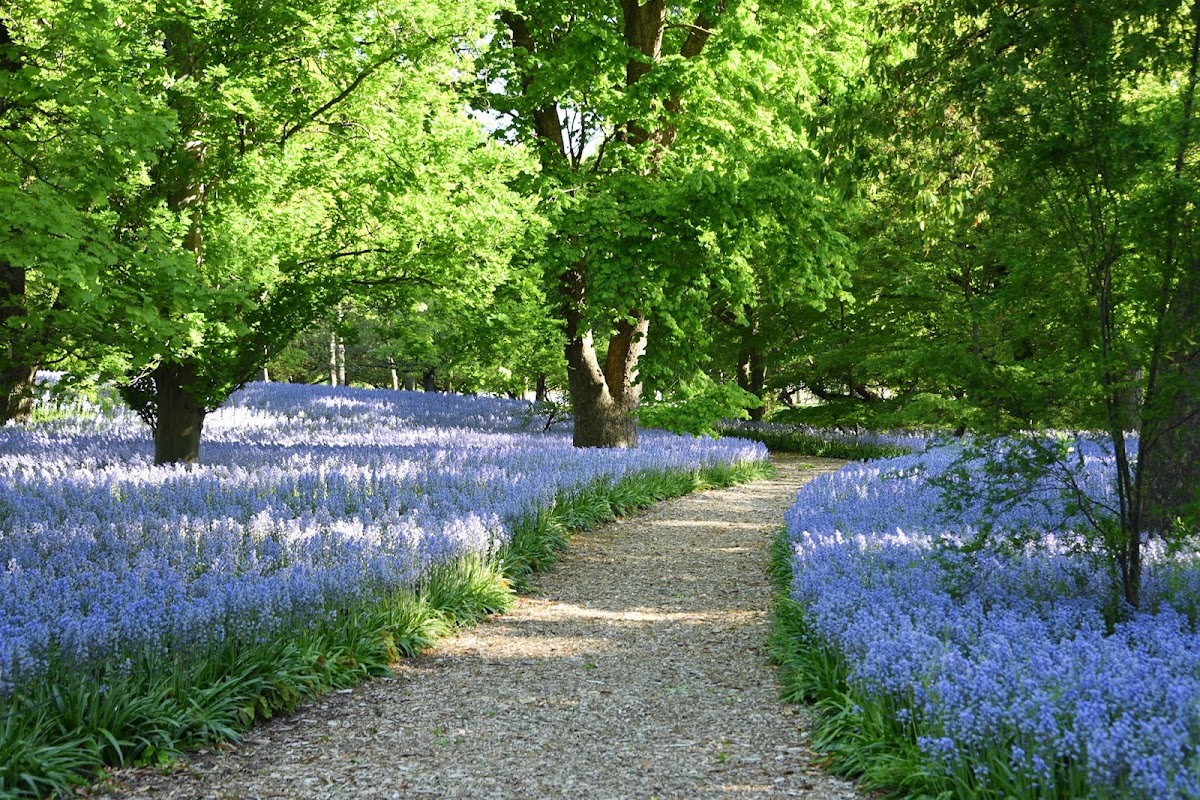
You take the 2 train to Eastern Parkway-Brooklyn Museum, climb the stairs into the Brooklyn afternoon, and walk six minutes through Prospect Heights — brownstones, bodega awnings, a neighborhood that still feels residential — until you reach the entrance at 990 Washington Avenue. Then you step through the gates, and something fundamental shifts. The city noise recedes. The air smells different, green and alive. You follow a path beneath a canopy of trees, and suddenly there are fifty-two acres of gardens unfolding around you — not wild, but curated with the kind of precision that makes beauty look effortless. There are cherry trees in precise allées. There are reflecting pools bordered by perennials that change with the season. There is a Japanese Hill-and-Pond Garden that feels like it was lifted whole from Kyoto and tucked into the borough between Crown Heights and Flatbush Avenue. This is Brooklyn Botanic Garden, and it presents a singular challenge for anyone planning wedding flowers here: how do you design arrangements that hold their own in a venue that is, itself, a living floral masterpiece? The answer is not to compete. The answer is to extend. Poppy has designed Brooklyn Botanic Garden wedding flowers for 2 celebrations here, and each time, the work has been the same — create arrangements that feel like they grew from the Garden itself, that belong so naturally to the landscape that guests might not immediately know where the Garden ends and your wedding begins.
About Brooklyn Botanic Garden
Brooklyn Botanic Garden was established in 1910 on fifty-two acres adjacent to Prospect Park, land that had once been an ash dump and was transformed over the course of decades into one of the world’s premier urban botanical gardens. Today the Garden is home to over 14,000 taxa of plants organized into specialty collections: the Cherry Esplanade with its famous double-flowering Kanzan cherries, the Cranford Rose Garden with more than 1,400 varieties of roses, the Japanese Hill-and-Pond Garden designed by Takeo Shiota in 1915, the Native Flora Garden showcasing plants indigenous to the New York metropolitan region, and the Steinhardt Conservatory housing tropical and desert collections under glass. This is not a decorative garden. This is a research institution, a living museum, a place where horticulture is practiced at the highest level.
For weddings, the Garden offers two primary event venues: the Palm House and the Lillian and Amy Goldman Atrium. The Palm House is the larger of the two — a glass-walled reception hall with custom chandeliers, antique architecture renovated by Rockwell Group, and direct access to the Lily Pool Terrace, which serves as both a cocktail space and a ceremony site. The space accommodates up to 250 guests seated, with white chiavari chairs and linens included, and the floor-to-ceiling windows ensure that the surrounding gardens are always visible, always present. The Atrium is the more intimate option, seating up to 125 guests in a leaf-shaped building constructed from trees that once grew on the grounds — an architectural gesture toward sustainability and connection to place. The Atrium’s glass walls look directly onto the Cherry Esplanade, making it the prime choice for spring weddings when the cherries are in bloom.
Both venues are climate-controlled with heating and air conditioning, which is not a small consideration when you are talking about glass-walled spaces in a New York climate that swings from humid July afternoons to February cold snaps. Union Square Events is the exclusive caterer for non-kosher weddings, with kosher catering permitted only through approved partners Foremost or Simply Divine. A professional planner is required for all weddings. Florists, however, are not restricted to a preferred vendor list, which is a rare and welcome freedom at a venue of this caliber.
Logistically, the Garden is located in Prospect Heights at 990 Washington Avenue, highly accessible via the 2 or 3 train to Eastern Parkway-Brooklyn Museum (six-minute walk) or the B or Q train to Prospect Park station. There is paid parking and valet service available at 900 Washington Avenue through GGMC. For Poppy’s delivery teams, access is straightforward with vendor load-in permitted five hours prior to guest invite time (typically 1:00 PM for a 6:00 PM event), and load-out must be completed by midnight for events ending at 11:00 PM. The Garden’s events team is organized and communicative, and they understand that florals need time and care to install properly in spaces with this much glass and natural light.
The Garden recommends booking 12 to 16 months in advance, which reflects both its popularity and the seasonal nature of its appeal. Cherry blossom season (late March through mid-April) books out fastest, often more than a year ahead. If you are considering Brooklyn Botanic Garden for your wedding, the time to act is now, not later, and once your date is confirmed, book your florist six to eight months out to allow for seasonal planning and design development.
Event Spaces & Floral Opportunities
The Palm House
Capacity: 250 seated
Setting: The Palm House is a glass-walled conservatory that wraps the indoors around the outdoors in a way that makes the boundary between the two feel porous and negotiable. The architecture is antique, renovated by Rockwell Group to preserve its historic bones while adding modern infrastructure — climate control, a custom chandelier that hangs from the center of the room like a geometric sculpture, and seamless access to the Lily Pool Terrace just outside. The walls are floor-to-ceiling glass, which means that no matter where you stand in the room, you are looking at gardens. In spring, you see the flowering borders around the Lily Pool. In summer, lush greens and roses. In fall, the turning maples and oaks. In winter, the stark elegance of bare branches against snow. The room seats 250 guests comfortably with white chiavari chairs and linens included, and there is a small lounge for up to six adults tucked off to the side. The Lily Pool Terrace — two large rectangular reflecting pools bordered by perennial and annual plantings — serves as the primary ceremony site and cocktail hour location, meaning guests move from ceremony outdoors to cocktails by the pools to reception indoors in a natural, flowing progression.
Floral approach: The Palm House demands restraint and intention in equal measure. The glass walls mean that your floral arrangements are never seen in isolation — they are always seen in context with the living landscape beyond the windows. This is not the venue for arrangements that try to dominate the room. This is the venue for arrangements that extend the garden indoors, blurring the line between cultivated and wild. We favor low, lush centerpieces in organic shapes — garden roses (Patience, Keira, or Juliet), spray roses, ranunculus, hellebores, and textured foliage like lady’s mantle, scented geranium, or trailing jasmine vine — arranged in aged terra cotta, stone, or ceramic vessels that echo the Garden’s naturalism. Heights should stay under ten inches to preserve sightlines to the garden views. For the head table or bar, one or two larger statement pieces in urns or compotes — overflowing with seasonal branches, hydrangea, and blooms — can anchor the space without overwhelming it. The custom chandelier offers an opportunity for a suspended installation if the couple wants drama: a loose garland of smilax and Italian ruscus with clusters of garden roses and clematis woven through, running ten to fifteen feet and appearing to float above the reception. For the entrance from the Lily Pool Terrace, a pair of arrangements flanking the doorway — something substantial but not formal, perhaps in moss-covered urns — signals the transition from cocktails to dinner. The Lily Pool Terrace ceremony site itself needs very little enhancement; the reflecting pools and surrounding flower borders provide the backdrop. A simple ceremony arch or chuppah at one end of the pool, or low arrangements marking the aisle, is often sufficient. Brooklyn Botanic Garden wedding flowers in the Palm House should feel like the garden decided to come to the party.
Lillian and Amy Goldman Atrium
Capacity: 125 seated
Setting: The Atrium is the more intimate of the two venues, seating 125 guests in a leaf-shaped building designed by Weiss/Manfredi Architects with an explicit philosophy of ecological sustainability. The building was constructed from trees that once grew on the Garden grounds — a literal transformation of site into structure — and the roof is planted with native grasses and wildflowers that bloom seasonally, creating a living green roof visible from certain vantage points in the Garden. The walls are floor-to-ceiling glass looking directly onto the Cherry Esplanade, the broad green lawn bordered by allées of double-flowering Kanzan cherry trees that explode into bloom each spring. The room also features an outdoor terrace that extends the indoor space outward. The aesthetic is modern, clean-lined, and light-filled, with white chiavari chairs and linens included. There is a small lounge for up to six adults, and the space is climate-controlled with heating and air conditioning.
Floral approach: The Atrium’s smaller scale and modern architecture call for a more curated, intentional floral approach. Every arrangement carries more visual weight here than it would in the larger Palm House, so fewer, more impactful pieces are preferable to scattered small ones. We recommend a statement installation at the bar or entrance — perhaps a large asymmetrical arrangement in a sculptural vessel, featuring seasonal blooms in an organic, garden-inspired style — paired with refined centerpieces that echo the palette but vary in height and composition to create visual rhythm across the tables. Low arrangements work well on most tables, with one or two taller pieces (on clear glass risers to maintain the view through to the glass walls) adding dimension. The Atrium’s connection to sustainability and ecology should inform your choices: locally sourced blooms, seasonal varieties, organic shapes, and a palette that feels like it came from the land rather than a catalog. During cherry blossom season (late March through mid-April), the Cherry Esplanade beyond the glass becomes the most spectacular backdrop imaginable — clouds of pale pink blossoms framing the entire event. If your wedding falls during this narrow window, design your flowers to complement the cherry blossoms rather than compete: soft pinks, whites, blush tones, delicate blooms like sweet peas, ranunculus, hellebores, and Japanese anemones. Outside of cherry blossom season, the Esplanade is still beautiful — green lawn, mature trees — but your florals need to work harder to create visual interest. Richer tones, more textural variety, and larger arrangements become appropriate. The outdoor terrace adjacent to the Atrium is ideal for cocktail hour, and small, elegant arrangements here — perhaps in bud vases or low bowls — add warmth without cluttering the space.
Conservatory
Capacity: 150 standing
Setting: The Conservatory is not a reception venue but a photo and cocktail location that Poppy couples should be aware of because it influences how you think about your overall floral design. The Conservatory is a Beaux-Arts style glasshouse with three temperature-controlled pavilions: the Tropical Pavilion with palms, bromeliads, and orchids; the Desert Pavilion with cacti and succulents; and the Bonsai Museum with miniature trees that are decades or even centuries old. The space is dramatic, lush, and visually dense with plant life. Couples often use the Conservatory for standing cocktail receptions or for photographs, and the existing botanical collections are so striking that they function as the décor.
Floral approach: In the Conservatory, less is more. The space does not need additional florals — it is already overflowing with plants. If you are serving cocktails here, consider small, minimal arrangements on the bar or at entry points, nothing that competes with the tropical foliage or desert blooms around you. If the Conservatory is part of your photo plan, think about how your personal flowers (bridal bouquet, boutonnieres, attendant bouquets) will photograph against this backdrop. Organic, loose bouquets with textural elements (ferns, tillandsia, unusual foliage) photograph beautifully in the Tropical Pavilion. Succulents, protea, and architectural blooms complement the Desert Pavilion. The Conservatory can also serve as inspiration for your overall floral palette — if you love the tropical aesthetic, carry that through to your reception florals with orchids, anthuriums, and monstera leaves. If the desert pavilion resonates, consider incorporating succulents, air plants, and sculptural elements into your centerpieces.
Lily Pool Terrace
Capacity: Ceremony site
Setting: The Lily Pool Terrace is the primary outdoor ceremony location for Palm House weddings. It features two large rectangular reflecting pools bordered by perennial and annual flower borders that are maintained by the Garden’s horticulture team and change with the seasons. In spring, you might see tulips and daffodils. In summer, coneflowers and black-eyed Susans. In fall, asters and ornamental grasses. The pools themselves are calm, mirror-like, reflecting the sky and the surrounding plantings. White folding chairs are included for ceremonies, and the terrace connects directly to the Palm House, making the transition from ceremony to cocktails to reception seamless.
Floral approach: The Lily Pool Terrace is one of those rare ceremony sites that is so inherently beautiful it needs almost nothing from a florist. The reflecting pools and the surrounding garden borders provide the backdrop, and anything you add should enhance rather than obscure that beauty. A simple ceremony arch or chuppah at one end of the pool — perhaps a natural wood structure draped with smilax, garden roses, and jasmine, or a more architectural piece in clear acrylic that allows the garden view to remain visible — can serve as a focal point without dominating the space. Low arrangements flanking the arch, or small arrangements marking the ends of each row of chairs, add definition to the aisle. We generally recommend against a full aisle runner or densely lined aisle florals here — the terrace is beautiful as it is, and the reflecting pools are the star. For couples who want more floral presence, consider petals scattered lightly along the aisle, or small clusters of blooms tied to the aisle chairs with ribbon. The terrace also serves as the cocktail hour location after the ceremony, so think about how your ceremony florals can remain in place and serve double duty. The arch or chuppah becomes a photo backdrop during cocktails. Aisle arrangements can be repositioned to the bar or entrance. This kind of efficiency — designing pieces that work in multiple ways — is critical at a venue where you cannot store items overnight and everything must be loaded out by midnight.
Cherry Esplanade and Garden Ceremony Sites
Capacity: Varies by location
Setting: Beyond the formal event spaces, Brooklyn Botanic Garden offers several locations throughout the 52-acre grounds for outdoor ceremonies, though these are typically available only for early morning ceremonies (9:00 AM start, completed by 10:00 AM) before the Garden opens to the public. The Cherry Esplanade is the most famous — a broad green lawn bordered by allées of double-flowering Kanzan cherry trees that bloom in late March through mid-April. The Magnolia Grove offers a natural canopy of magnolia trees, spectacular in early spring when the blossoms are out. The Shelby White and Leon Levy Water Garden features streams, waterways, and aquatic plantings for a more naturalistic setting. The Japanese Hill-and-Pond Garden, while not typically available for ceremonies, is a popular photo location with its iconic red torii gate and carefully composed landscape.
Floral approach: Garden ceremony sites are best approached with a philosophy of minimal intervention. These are landscapes designed by master horticulturalists and landscape architects — your role as a florist is not to decorate them but to integrate your celebration into them gracefully. During cherry blossom season on the Esplanade, the trees provide the floral display; your arrangements should be minimal, perhaps just the bridal bouquet and personal flowers. Outside of bloom seasons, a simple ceremony structure or a few well-placed arrangements can help define the ceremony space without competing with the garden. In the Water Garden, consider arrangements that echo the aquatic plantings — loose, naturalistic, with water-loving plants like irises, hostas, or ornamental grasses. In the Magnolia Grove, creamy whites and soft greens complement the magnolia blooms (when in season) or reference them (when not). The key across all garden ceremony sites is to design as though you are a guest in someone else’s home — respectful, complementary, and careful not to overstay your welcome.
Wedding Flower Ideas for Brooklyn Botanic Garden
Garden Reverie
This concept treats your wedding florals as an extension of the Garden’s own collections, using blooms that could plausibly be growing somewhere on the 52 acres around you. Garden roses in soft, complex tones (Juliet, Patience, Keira, Quicksand), spray roses, ranunculus, hellebores, sweet peas, and jasmine form the base, supplemented with textured foliage like lady’s mantle, scented geranium, dusty miller, and trailing smilax. Arrangements are loose and organic, as though they were gathered from the garden beds that morning, and they sit in vessels that feel natural and unforced — aged terra cotta, stone, or ceramic in soft grays and taupes. The palette is muted and sophisticated: blush, cream, soft lavender, dusty rose, with plenty of green to ground everything. This approach works beautifully in both the Palm House and the Atrium, and it photographs like a dream against the glass walls with the garden beyond. It is the most popular style for couples who want their flowers to feel like they belong to the place rather than being imported into it.
Cherry Blossom Moment
For couples fortunate enough to secure a date during cherry blossom season (late March through mid-April), this concept leans fully into the moment. The Cherry Esplanade provides the backdrop — clouds of pale pink double-flowering Kanzan cherry blossoms framing the Atrium’s glass walls or visible from the Palm House terrace — and your floral arrangements echo and amplify that palette. Soft pink blooms (ranunculus, sweet peas, Japanese anemones, sakura-toned garden roses like Koko Loko or Quicksand), white blooms (hellebores, snowdrops, early tulips, pieris), and delicate greenery (maidenhair fern, jasmine, spring foliage) in loose, airy compositions. If you can source cherry blossom branches from a local grower (not from the Garden itself, which prohibits cutting), include them sparingly in larger arrangements or as a ceremony arch element. Vessels should be simple and elegant — white ceramic, pale pink pottery, clear glass to allow the stems to show. The effect is ephemeral, romantic, and utterly specific to this place in this season. This is the Brooklyn Botanic Garden wedding flower concept that people remember years later, because it could not have happened anywhere else at any other time.
Botanical Luxe
This is the elevated, editorial approach for couples who want their flowers to feel rare and considered, as though a curator selected each bloom from the Garden’s collections. The palette is richer and more varied: deep burgundy dahlias (Café au Lait Royale, Black Satin), chocolate cosmos, plum-toned hellebores, aubergine ranunculus, blush garden roses (Juliet, Keira), taupe and mauve roses (Quicksand, Amnesia), and unexpected textures like scabiosa pods, privet berries, smoke bush, or even a few air plants or succulents as sculptural accents. Arrangements are more structured and architectural, with clear focal points and intentional composition, and they sit in vessels that feel substantial — aged brass compotes, dark ceramic urns, stone bowls, or even vintage botanical specimen jars. This approach works especially well in the Atrium, where the modern architecture and smaller scale allow for more curated, gallery-like floral installations. It also photographs beautifully in the Conservatory’s Desert Pavilion if that is part of your photo plan. This is the concept for couples who appreciate horticulture as an art form and want their wedding flowers to reflect that sensibility.
Seasonal Considerations
Spring (March - May): Spring at Brooklyn Botanic Garden is the season of pilgrimages. Cherry blossom season (late March through mid-April, though exact timing varies with weather) draws thousands of visitors to the Garden and makes it the most sought-after time for weddings. If you are planning a cherry blossom wedding, book as early as possible — dates fill more than a year in advance — and understand that bloom timing is unpredictable and cannot be guaranteed. The Garden tracks bloom forecasts and updates them regularly, but even a warm week in February can shift peak bloom by several days. Beyond the cherries, spring brings magnolias (early March), daffodils and tulips (March-April), crabapples (late April), and the first peonies (May). Spring flower availability is excellent from local New York and regional growers: tulips, ranunculus, anemones, hellebores, early garden roses, sweet peas, and flowering branches. Weather in New York spring is variable — it can be 50 degrees and rainy or 70 and sunny — so plan for the Palm House or Atrium as your primary spaces with outdoor elements (Lily Pool Terrace ceremony, terrace cocktails) as weather-dependent bonuses. Spring light in the glass-walled venues is soft and flattering, and the lengthening days mean better natural light for late-afternoon events.
Summer (June - August): Summer at the Garden is lush and green. The Rose Garden reaches peak bloom in June and continues through summer with over 1,400 varieties on display, and the perennial borders are at their fullest. Summer is dahlia season (mid-July through September), and the Garden’s own dahlia collection is worth visiting for palette inspiration. Other summer blooms include hydrangeas, zinnias, sunflowers, lisianthus, and garden roses, all readily available from local and regional growers. New York summer heat and humidity are real considerations. The glass-walled venues are climate-controlled, but if you are planning any outdoor elements (Lily Pool Terrace ceremony, terrace cocktails), choose hearty blooms that can handle heat: roses, zinnias, dahlias, sunflowers, and heat-tolerant foliage like eucalyptus and Italian ruscus. Avoid heat-sensitive blooms like sweet peas, ranunculus, and peonies (which are out of season by July anyway). Summer light is strong and bright, which is beautiful through the glass walls but can create harsh shadows outdoors in the middle of the day. Late afternoon or early evening ceremonies and golden hour photos in the Garden are ideal.
Fall (September - November): Fall is the Garden’s second-most spectacular season, though it does not draw the same crowds as cherry blossom season, which makes it a smart choice for couples who want the beauty without the competition. The Garden’s fall foliage is extraordinary — maples, oaks, and ornamental grasses turning gold, orange, and crimson — and the dahlia collection is at its absolute peak. Fall flower availability is abundant: dahlias in every size and color imaginable, chrysanthemums, roses, hydrangeas, autumn berries, crabapples, and branches with changing leaves. The palette opportunities are rich and warm: burgundy, copper, rust, gold, plum, with plenty of texture from grasses, seed pods, and fall foliage. October is the peak month for fall beauty and a popular wedding month, so book early. September is often still warm and green, while November can be chilly and bare. Fall weather in New York is generally comfortable and reliable, with crisp temperatures and lower humidity than summer, making outdoor ceremonies on the Lily Pool Terrace or garden photo sessions pleasant. Fall light is warm and golden, ideal for photography.
Winter (December - February): Winter is the quietest season at Brooklyn Botanic Garden, and it has a stark, contemplative beauty that appeals to couples seeking something more intimate and less predictable. The Garden’s bare branches and evergreen collections create an architectural, almost Japanese aesthetic, and the glass-walled venues feel cozy and warm inside while looking out onto the winter landscape. The Steinhardt Conservatory’s tropical and desert collections provide year-round lushness if you want that contrast. Winter flower availability is more limited but still includes some of the most interesting blooms of the year: anemones, hellebores, ranunculus, amaryllis, paperwhites, forced bulbs (hyacinths, tulips), winter berries, evergreen branches (pine, fir, cedar, holly), and magnolia branches that can be forced into bloom. The palette can go rich and dramatic (deep reds, burgundy, evergreen, gold) or soft and wintry (white, cream, silver, soft green). Winter weddings at Brooklyn Botanic Garden have a feeling of refuge and warmth, of being inside looking out, and they photograph beautifully with the contrast between the candlelit reception and the winter garden beyond the glass.
Poppy’s Expert Take
Let the Garden lead. The single biggest mistake we see at Brooklyn Botanic Garden weddings is couples designing their florals in isolation, as though the venue were a blank canvas. It is not. The Garden is a living, changing landscape, and your flowers should respond to what the Garden is doing during your wedding. Visit the Garden in the same season as your wedding date if possible, note what is blooming and what the light looks like, and design your florals accordingly. If the Rose Garden is in full bloom, you do not need to compete with dozens of rose varieties by bringing in more roses — or if you do bring in roses, choose varieties and colors that harmonize with what is already there. If the Cherry Esplanade is in bloom, let the cherries be the hero and keep your florals soft and complementary. If the fall foliage is turning the landscape copper and gold, echo those tones in your dahlias and chrysanthemums. The Garden will tell you what to do if you listen.
Understand the glass wall effect. Both the Palm House and the Atrium have floor-to-ceiling glass walls, which means your floral arrangements are never seen in isolation — they are always seen in context with the garden beyond. This has two implications. First, your arrangements need to harmonize with the outdoor landscape in palette and style, not clash with it. Second, your centerpieces should be low enough (under 10-12 inches) to preserve sightlines to the garden views, or tall enough (elevated on risers above 24 inches) to clear sightlines entirely. The middle ground — arrangements in the 12-20 inch range — will block the views and frustrate your guests. This is not a venue where you can just pick centerpieces out of a catalog. The glass walls require intentional design.
The Lily Pool Terrace is ceremony-and-cocktails gold. Many couples underestimate how much the Lily Pool Terrace contributes to the flow and experience of a Palm House wedding. It serves as both the ceremony site and the cocktail hour location, which means guests move from vows by the reflecting pools to cocktails on the terrace to reception inside the Palm House — all within steps of each other, all visually connected. Design your ceremony florals with this double-duty function in mind. The ceremony arch or chuppah becomes a cocktail hour photo backdrop. Aisle arrangements can be moved to the bar or entrance. This is not just about budget efficiency (though that is a benefit); it is about creating a cohesive visual experience where the florals carry through from one part of the celebration to the next.
Cherry blossom timing is a gamble, and that’s okay. If you are booking a spring wedding hoping to align with cherry blossom peak bloom, understand that the timing is unpredictable and can shift by a week or more depending on winter and early spring temperatures. The Garden publishes bloom forecasts starting in March, but even those are estimates. Peak bloom might last five days. It might last two weeks. Your wedding might fall at peak, or it might fall just before or just after. This is the nature of designing a wedding around a natural event, and the uncertainty is part of what makes it special. If cherry blossoms are critical to your vision, build flexibility into your floral design so that it works beautifully whether the cherries are at peak, just starting, or already finished. A good Brooklyn wedding florist will plan for this variability and have a design strategy that does not hinge entirely on the cherries cooperating.
Use the Conservatory strategically for photos and palette inspiration. The Conservatory is not a reception space, but it is an extraordinary photo location and a source of inspiration for your overall floral design. If you love the tropical aesthetic of the Tropical Pavilion, carry that through to your reception florals with orchids, anthuriums, and monstera leaves. If the Desert Pavilion speaks to you, incorporate succulents, air plants, and architectural blooms. The Conservatory can also serve as a backup location for cocktails if weather forces outdoor plans inside. Poppy couples sometimes design a small, complementary arrangement for the Conservatory bar if cocktails are served there, but the space truly does not need it — the existing plant collections are the décor.
Budget smarter, not bigger. Brooklyn Botanic Garden is one of the few venues where you can achieve a stunning floral result without a massive investment, because the Garden does so much of the aesthetic work for you.