
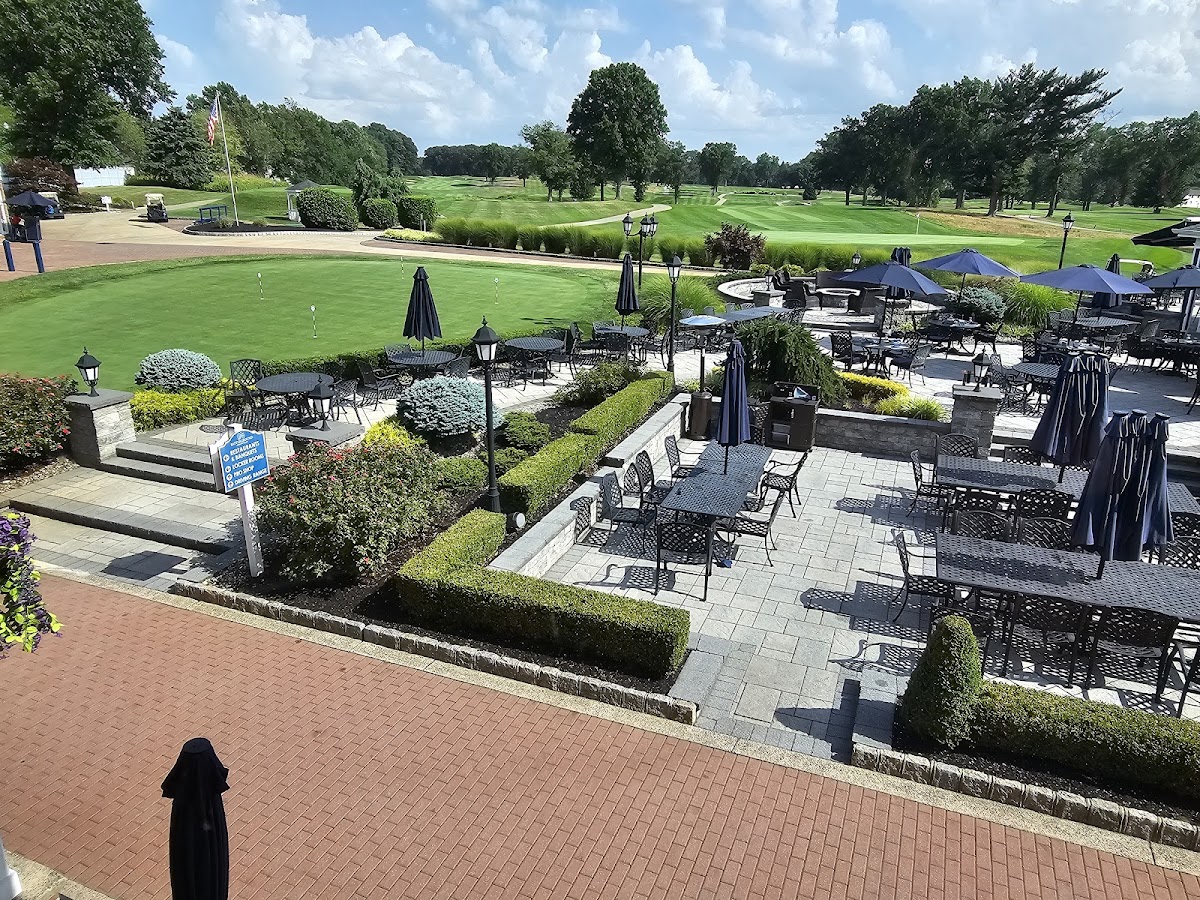
The drive into Battleground Country Club tells you something about New Jersey that the turnpike does not. You leave behind the suburban sprawl of Route 9, wind through Manalapan Township’s tree-lined residential streets, and then the landscape opens: 220 acres of rolling fairways, manicured greens, and that particular quality of stillness that settles over a championship golf course at dusk. The entrance is marked simply — a discreet sign, a tree-canopied drive — and then the clubhouse reveals itself in stages. First, the historic stone markers that remind you this land witnessed the Battle of Monmouth in 1778. Then the modern clubhouse architecture, all glass and clean lines, built to capture every angle of the course. And finally, if you time it right, that moment when you step into the newly renovated ballroom and understand what 360-degree views actually means: uninterrupted panorama of emerald fairways, specimen trees, and the kind of horizon that makes a guest set down their cocktail mid-sentence. This is not a venue trying to be anything other than what it is — a serious country club with impeccable grounds, flexible event spaces, and the kind of polished service that comes from hosting celebrations for generations of New Jersey families. Poppy has received inquiries for Battleground Country Club wedding flowers from 6 couples, and while we haven’t designed a wedding here yet, we know the blueprint: let the golf course do the heavy lifting, and use florals to frame, not fight, those sweeping views.
About Battleground Country Club
Battleground Country Club sits on hallowed ground — literally. The property encompasses a portion of the 1778 Battle of Monmouth battlefield, one of the largest and most strategically significant engagements of the American Revolution. Historical markers dot the perimeter of the grounds, a subtle reminder that this manicured landscape once witnessed cannon fire and cavalry charges. The club was established in the mid-20th century, and over the decades has evolved from a regional golf destination into one of Monmouth County’s premier event venues. The recent ballroom renovation — completed within the last few years — represents a significant investment in modernizing the event spaces while preserving the classic country club aesthetic. Floor-to-ceiling windows now wrap the entire ballroom perimeter, a design choice that floods the space with natural light and transforms the golf course into living artwork.
The 18-hole championship course is the centerpiece of the property, meticulously maintained to PGA-level standards and designed with elevation changes, water features, and mature specimen trees that create visual interest from every angle. This is not ornamental landscaping planted for weddings — this is functional athletic terrain that happens to photograph beautifully. For couples planning Battleground Country Club wedding flowers, this distinction matters. The grounds are already doing the aesthetic work. Your florals need to enhance the interiors and create moments of intentional beauty in the ceremony and cocktail spaces, not compete with a backdrop that cost millions to cultivate.
Logistically, Battleground sits in Manalapan Township, roughly equidistant from Freehold (6 miles) and Old Bridge (9 miles), and approximately 50 miles south of Manhattan — about an hour’s drive without traffic, slightly more during peak commute times. This positions the venue perfectly for couples drawing guests from both New York City and the Jersey Shore corridor. The surrounding area offers ample hotel accommodations in nearby Freehold and along the Route 9 corridor, and the venue itself provides on-site parking with handicap accessibility. For Poppy’s delivery logistics, the drive from our studio is straightforward via the Garden State Parkway, and the club’s event staff is communicative about load-in procedures and vendor access. The club works with external vendors — including outside caterers, though their in-house culinary team is excellent — and does not restrict floral designers to an approved list, which gives couples full creative freedom when selecting their Manalapan wedding florist.
The property includes multiple event spaces that can be configured for ceremonies, cocktail hours, and receptions of varying sizes, from intimate 35-person dinners in the banquet rooms to grand 500-guest galas in the ballroom. The club’s event coordination team handles the logistics, and the venue provides comprehensive services including full bar setups (note the dual bars in the cocktail room), customizable catering packages, and accommodations for dietary restrictions including halal and non-alcoholic options. The combination of historic significance, championship golf course views, and newly renovated modern spaces makes Battleground a particularly appealing choice for couples seeking classic elegance without stuffiness.
Event Spaces & Floral Opportunities
Ballroom
Capacity: 500 seated
Setting: The ballroom is the crown jewel of Battleground’s recent renovation, and it shows. Floor-to-ceiling windows wrap the entire perimeter — not just one wall, but 360 degrees of glass — creating an unobstructed panorama of the golf course from every angle. The effect is dramatic: wherever guests sit, they’re looking at emerald fairways, century-old oaks, and the gentle undulation of the course topography. The interior palette is deliberately neutral — creamy whites, warm grays, polished wood flooring — allowing the exterior views to provide the color and visual interest. Elegant crystal chandeliers hang at carefully calibrated heights, providing ambient lighting without overwhelming the space. The ballroom can accommodate up to 500 guests for a seated dinner, with ample room for a dance floor, band or DJ setup, and circulation space. The renovated infrastructure includes updated lighting controls, excellent acoustics, and modern climate control that keeps the space comfortable regardless of season.
Floral approach: The cardinal rule in this ballroom is strategic placement. With 360-degree views, you don’t want tall centerpieces blocking sightlines in any direction — guests should be able to see both each other and the golf course. We recommend one of two approaches: either very low, lush centerpieces that sit below eye level (think 8-10 inches maximum height, using compote vessels filled with garden roses like Patience or Keira, ranunculus, hellebores, and trailing jasmine vine in soft whites, creams, and greens that echo the landscape outside), or dramatically tall arrangements on slender, clear acrylic risers that lift the florals 30+ inches above the table, allowing unobstructed views at eye level. The chandeliers present an opportunity for suspended installations — delicate garlands of smilax, Italian ruscus, and small spray roses can be woven between fixtures to create visual continuity across the ceiling plane without blocking the light or the views. For the entrance into the ballroom, consider a pair of substantial pedestals flanking the doorway — arrangements 4-5 feet tall in architectural vessels, featuring seasonal branches (flowering quince in spring, magnolia in early summer, oak leaves in fall), structural blooms like delphiniums or foxglove, and lush foliage bases. This creates a sense of arrival and frames the transition from cocktail hour to reception. The color palette should complement, not compete with, the greens outside — whites, ivories, soft blush, champagne, and abundant greenery work beautifully. Avoid anything too vibrant or tropical that feels disconnected from the New Jersey landscape.
Pavilion/Gazebo Area
Capacity: Flexible, typically 150-200 for ceremony seating
Setting: The outdoor pavilion and gazebo area sits on a gently sloping section of the property with views across the golf course. The landscaping here is impeccable — emerald lawns mowed in precise stripes, specimen trees providing filtered shade, and garden beds planted with seasonal perennials and shrubs. The gazebo itself is a classic white painted structure, octagonal in shape, elevated slightly on a platform. For wedding ceremonies, chairs are typically arranged in a semicircle or traditional rows facing the gazebo, with the golf course providing the backdrop. The setting is quintessentially country club — manicured, polished, and picture-perfect in that aspirational American way. Depending on the season and time of day, the light here can be extraordinary: golden hour creates long shadows across the fairways, and the mature trees frame the ceremony space like natural architecture.
Floral approach: The gazebo is your focal point, and it can handle substantial floral installations without looking overdone. Consider either a full floral arch installed within or around the gazebo structure, or a more architectural framework covered in climbing greenery (smilax, ivy, jasmine vine) with clusters of blooms concentrated at the corners and peak — garden roses (Juliet, Patience, Mayra’s Rose), spray roses, lisianthus, stock, and seasonal accents like peonies in late spring or dahlias (Cafe au Lait, Bliss) in late summer. The key is density: outdoor installations need to read from a distance, so err on the side of lushness. For the aisle, simple shepherds’ hooks or white posts every third row adorned with arrangements in glass or metal vessels create elegant markers without cluttering the sightlines. If budget allows, an aisle runner bordered with loose petals (rose, delphinium, or hydrangea depending on season) adds a romantic, garden-party feel. Keep the palette soft and natural — this is not the setting for jewel tones or high-contrast color blocking. Whites, creams, blush, soft peach, and abundant greens feel appropriate to the country club aesthetic. One practical consideration: New Jersey weather is unpredictable. Have a contingency plan for extreme heat (hydration stations for guests, ceremony moved earlier or later in the day, heat-tolerant blooms like zinnias or celosia) or rain (indoor ceremony backup, protective coverings for arrangements).
Cocktail Room
Capacity: Standing reception for 200+
Setting: The cocktail room is a generous space designed specifically for pre-reception mingling. Two full bars anchor opposite ends of the room, each capable of serving multiple guests simultaneously. The layout includes a mix of high-top cocktail tables and lounge seating areas, creating zones for different types of socializing. Large windows provide views of the golf course, and the décor is classic country club: neutral walls, polished floors, understated elegance. The dual bar setup is particularly smart from a flow perspective — it prevents bottlenecking and keeps guests circulating throughout the space.
Floral approach: The two bars are your primary floral opportunities in this space. Each bar top can support a substantial arrangement — think 3-4 feet wide and 2-3 feet tall, designed to be viewed from all sides. Use interesting vessels here: aged brass urns, white ceramic cachepots, or even wooden boxes for a more organic feel. The arrangements should be lush and textural, incorporating blooms that guests will encounter up close: fragrant garden roses (Romantic Antike, Mayra’s Rose), scented stock, tuberose if budget allows, and unexpected elements like flowering herbs (lavender, rosemary) or berry branches. The high-top cocktail tables scattered throughout the room each get smaller arrangements — low compotes or bud vases with 3-5 stems, just enough to add life and color without taking up valuable surface area for drinks and appetizers. If the room includes lounge seating areas, a larger coffee table arrangement can anchor each grouping. The overall effect should be abundant but not fussy — this is cocktail hour, people are moving, and the florals should feel fresh and approachable rather than overly formal.
Banquet Rooms
Capacity: Varies by room configuration, typically 50-100 per room
Setting: Battleground features three separate banquet rooms, each with its own character and views overlooking the golf course. These spaces are typically used for smaller receptions, rehearsal dinners, or daytime celebrations. The interiors are classic country club: wood paneling, traditional molding, comfortable upholstered chairs, and large windows that provide natural light and course views. The scale is more intimate than the grand ballroom, which allows for a different type of celebration — more conversation-focused, less focused on spectacle.
Floral approach: In these smaller rooms, the floral design should feel refined and intimate rather than grand. We recommend low, lush centerpieces that encourage conversation across the table — arrangements no more than 10-12 inches tall in elegant vessels like silver julep cups, low ceramic bowls, or mercury glass compotes. The blooms should be luxurious but not overwhelming: garden roses (Quicksand, Toffee, or Cappuccino for a neutral palette), ranunculus, anemones, hellebores, sweet peas when in season, and textural foliage like dusty miller or eucalyptus. The color palette can be slightly more adventurous here — these rooms can handle deeper tones like burgundy, plum, or navy that might feel too heavy in the light-filled ballroom. One arrangement per table is sufficient, possibly with a bud vase or two scattered between place settings for visual rhythm. If the room includes a sideboard or credenza, a larger arrangement in that location can serve as a focal point without interfering with dining sightlines.
Patio
Capacity: Standing reception for 100-150
Setting: The patio is an extension of the indoor reception spaces, with direct access from the ballroom and cocktail room. The outdoor space features fire pits for ambiance, comfortable seating areas, and unobstructed views of the golf course. This becomes particularly magical during evening receptions when the fire pits are lit and the course is illuminated by landscape lighting. The patio provides breathing room during the reception — a place for guests to step outside, warm themselves by the fire, and continue conversations under the stars.
Floral approach: The fire pits are natural focal points that can be enhanced with seasonal arrangements positioned nearby — but not so close that delicate blooms are damaged by heat. Use heat-tolerant foliage like succulents, eucalyptus, and hardy herbs in low arrangements on the patio tables surrounding the fire features. For evening receptions, consider lanterns or hurricane vessels with floating candles surrounded by flower petals — the combination of fire and candlelight creates atmospheric warmth. If there are permanent planters on the patio, seasonal urns overflowing with blooms and trailing greenery can enhance the garden feel without requiring floral installations on every surface. The patio is also an excellent location for a statement installation that doesn’t fit anywhere else — perhaps a floral chandelier suspended from the patio covering, or a large-scale arrangement near the entrance that serves as a photo opportunity backdrop.
Wedding Flower Ideas for Battleground Country Club
Classic Country Club
This design honors the traditional country club aesthetic with a palette drawn from the most timeless weddings of the last century. Crisp white blooms — Playa Blanca roses, white ranunculus, white lisianthus, and Vendela spray roses — are paired with abundant greenery: seeded eucalyptus, Italian ruscus, and leather leaf. The arrangements sit in silver julep cups for cocktail tables and low silver bowls for dinner centerpieces, with occasional mercury glass accents. The ceremony arch features an asymmetrical design with one side heavily laden with white hydrangeas and cascading smilax, the other side left more open and structural. This is the floral equivalent of a perfectly cut navy blazer and pearl earrings — elegant, appropriate, utterly unimpeachable. It works beautifully in the ballroom where the white blooms practically glow against the green landscape outside, and in the banquet rooms where the silver vessels catch and reflect the chandelier light. If you want your flowers to feel like they’ve always belonged at this venue, this is the direction.
Garden Romance
This concept brings the feeling of an English cutting garden to the golf course landscape. The palette is soft and romantic: blush Keira roses, ivory Patience roses, quicksand roses in that perfect taupe-pink, coral-peach Juliet roses, white ranunculus, blush ranunculus, pink astilbe, and unexpected touches like cosmos, scabiosa, and Queen Anne’s lace. Foliage includes jasmine vine, passion vine, and variegated pittosporum for texture. Vessels are varied — some arrangements in ceramic cache pots in soft gray or cream, others in brass compotes, a few in clear glass cylinders to show the stems. The ceremony installation wraps the gazebo in an organic, just-picked-from-the-garden style with blooms clustered densely in some areas and trailing loosely in others. This design feels effortless and romantic, perfect for spring and summer weddings in the pavilion area. It also translates beautifully to the cocktail room where the organic, loose style softens the more formal country club architecture.
Autumn Elegance
This palette is designed specifically for September, October, and November weddings when the golf course begins its transformation into fall colors. Deep burgundy dahlias (Rip City, Black Satin), rust-colored dahlias (Cafe au Lait, Peaches and Cream when they darken late season), marigold-colored marigolds, burnt orange roses (Free Spirit, Milva), burgundy carnations (yes, carnations — Prado or Burgundy varieties are spectacular and cost-effective), chocolate cosmos, and hypericum berries in rust and burgundy tones. Foliage includes oak leaves, maple branches, and preserved beech leaves in amber and copper tones. Arrangements sit in aged brass urns, copper vessels, or dark gray ceramic containers. The ceremony installation incorporates actual branches from the property (with permission) — oak, maple, and dogwood — creating a seasonal, site-specific design that feels utterly connected to the New Jersey landscape. This direction is stunning in the ballroom as the autumn light pours through those windows, and it photographs beautifully against the fall foliage visible on the golf course.
Seasonal Considerations
Battleground Country Club sits squarely in the USDA hardiness zone 6b/7a climate, which means four distinct seasons with reliable precipitation year-round and temperature extremes that range from single digits in January to the 90s in July and August. Each season presents different opportunities and challenges for wedding flowers.
Spring (March-May): Spring in central New Jersey arrives tentatively in March — some years it’s still snowing, other years the tulips are up by mid-month. April and May are more reliable, with temperatures climbing into the 60s and 70s and the landscape exploding in bloom. This is peak season for spring bulbs: tulips (French tulips, parrot tulips, fringed tulips in every color), hyacinths, daffodils, and early ranunculus. By late April, local peonies begin appearing at the wholesale markets — Sarah Bernhardt, Festiva Maxima, Coral Charm if you’re lucky. Flowering branches are spectacular in spring: dogwood, cherry, quince, and magnolia can all be sourced from regional growers. The weather is unpredictable — pack a cardigan for outdoor ceremonies and have a rain plan. For Battleground, spring is ideal for garden-style designs in the pavilion area, where the emerging greenery on the golf course provides a fresh backdrop. Best months: late April through May for the most reliable weather and best bloom availability.
Summer (June-August): Summer is peak wedding season, which means peak flower availability but also peak heat and humidity. New Jersey summers are not subtle — temperatures regularly hit the upper 80s and 90s, and the humidity can be oppressive. Choose heat-tolerant blooms: roses (always), lisianthus, zinnias, dahlias (which thrive in heat), celosia, and sunflowers if the aesthetic suits. Hydrangeas are abundant and affordable in summer, though they can wilt quickly in extreme heat — keep them hydrated right up until ceremony time. Garden roses are at their absolute peak in June and early July from California growers, with a slight dip in availability mid-July as the summer heat affects West Coast production. For outdoor ceremonies at Battleground, consider timing: a 5:00 pm ceremony in July means guests sitting in full sun during the hottest part of the day. Later ceremonies (6:00 or 6:30 pm) allow the temperature to drop slightly and provide better light for photography. The golf course is at its most verdant in summer, which means your florals should complement rather than compete — no need for massive installations when the landscape is already performing. Best months: June for the best rose selection and slightly cooler temperatures, or September for early fall conditions with summer blooms still available.
Autumn (September-November): Fall is the secret best season for weddings at Battleground. The heat and humidity break in September, temperatures settle into the comfortable 60s and 70s, and the golf course begins its transformation into autumn colors — the oaks turning amber and rust, the maples going scarlet and gold. September and early October still offer access to summer blooms (dahlias, garden roses, zinnias) while fall-specific flowers begin appearing: marigolds, chrysanthemums (cafe au lait dahlias), asters, and ornamental kale. By late October and November, the palette shifts entirely to fall: burgundy and rust dahlias, deep-toned roses, hypericum berries, and preserved or fresh autumn foliage. This is also excellent weather for outdoor ceremonies — crisp but not cold, with that particular October light that photographers dream about. One consideration: November weather can be unpredictable, with the occasional cold snap or even early snow. Have a contingency plan for outdoor elements. Best months: October for the most spectacular fall foliage and comfortable temperatures.
Winter (December-February): Winter weddings at Battleground are inherently cozy — indoor ceremonies in the ballroom or banquet rooms, with the golf course providing a stark, minimalist backdrop through the windows. The floral palette shifts to winter whites, deep evergreens, burgundy, and touches of metallics. Amaryllis, paperwhites, anemones, ranunculus (imported), hellebores, and winter jasmine are all available through wholesale markets. Evergreen foliage — cedar, pine, fir, eucalyptus — provides structure and fragrance. Consider incorporating seasonal elements like pinecones, winter berries (ilex, hypericum), and branches with interesting bark texture. The fire pits on the patio become particularly appealing during winter receptions, and arrangements near those areas can include heat-tolerant evergreens. One practical note: winter weather in New Jersey can include ice, snow, and freezing rain. Delivery logistics may require flexibility, and outdoor installations are generally not advisable. Best month: December for holiday-adjacent celebrations with access to seasonal greens, or late February/early March when spring bulbs begin appearing and the worst of winter weather has passed.
Poppy’s Expert Take
Respect the views, but don’t be boring. The 360-degree windows in the ballroom are the venue’s signature feature, and yes, you should design around them — but that doesn’t mean defaulting to all-white minimalism. The golf course provides a green backdrop, which means colors will actually read beautifully against it. Soft blush, peach, and ivory create warmth. Deep burgundy and plum add drama without competing. Even pops of coral or marigold can work in the right season. The key is thoughtful placement: keep tall arrangements away from the window sightlines, and let the views breathe. But within those parameters, you have creative freedom.
The ceremony deserves the investment. Many country club weddings focus budget on the reception and treat the ceremony as an afterthought. This is a mistake at Battleground, where the pavilion/gazebo setting provides one of the most photogenic ceremony backdrops in Monmouth County. A substantial floral installation on the gazebo — whether a full arch, a half-arch with asymmetrical design, or a lush garland treatment — will appear in every ceremony photo, every guest’s iPhone shot, and every memory of the day. This is where you want to allocate meaningful budget. Skimp on cocktail table bud vases if necessary, but invest in the ceremony flowers.
The chandeliers are not floral infrastructure. We see this request constantly: “Can we hang florals from the chandeliers?” Technically, yes. Practically, it’s expensive, time-consuming, and often not worth the ROI. The chandeliers at Battleground are elegant statement fixtures that look beautiful on their own. If you want suspended installations, work with your florist to identify the magnetic ceiling beams or request ceiling hooks that don’t require chandelier access. Save the chandelier garlands for venues with rustic wooden beams or industrial fixtures that actually need softening.
Bar florals are high-visibility, high-impact. The dual bars in the cocktail room are where every single guest will spend time during cocktail hour — waiting for drinks, picking up drinks, returning for another drink. This is premium real estate for floral installations. A lush, fragrant arrangement on each bar will be seen, smelled, and appreciated by everyone. These arrangements also provide natural photo backdrops for guests taking cocktail hour selfies. Budget accordingly — if you have to choose between elaborate guest table centerpieces and substantial bar arrangements, choose the bars.
Timing outdoor ceremonies for light. The pavilion area faces generally southwest, which means late afternoon and early evening light can be spectacular — but also intense. A 4:00 pm ceremony in June means direct sun and squinting guests. A 6:00 pm ceremony in September provides that perfect golden hour glow. Work with your photographer and planner to identify optimal ceremony timing based on your date and season, then design your floral installations to either capitalize on or mitigate the light conditions. Backlit arrangements with translucent blooms (roses, ranunculus) look ethereal in golden hour. Dense, structural arrangements work better in midday sun.
Load-in logistics matter. Battleground has specific vendor load-in times and procedures. Your florist needs to coordinate with the events team, respect other weddings potentially happening simultaneously in different spaces, and work within the club’s operational requirements. This is not a venue where you can show up whenever and start setting up. Experienced wedding florists in the Manalapan area will already know the protocols, but if you’re bringing in an out-of-area designer, make sure they connect with the venue early in the process to understand expectations.
Weather contingencies are not optional. New Jersey weather is reliably unpredictable. If you’re planning an outdoor ceremony in the pavilion area, you need an indoor backup plan that your florist knows about in advance. Some arrangements can easily be moved indoors (aisle arrangements in shepherds’ hooks, altar arrangements in urns). Others cannot (full floral arches built onto the gazebo structure, ground-staked installations). Talk through realistic contingency plans with your florist — not just “we’ll move everything inside,” which may not be physically possible, but “we’ll design in a way that allows the key pieces to transition indoors while leaving weather-dependent elements outside.”
What Poppy Couples Spend on Flowers Here
While Poppy hasn’t yet completed a wedding at Battleground Country Club, we can provide guidance based on our experience with similar country club venues in the New York metro area and the specific requirements of Battleground’s spaces. Wedding flower budgets at venues of this scale and caliber typically fall into these ranges:
$5,000 - $8,000 | The Refined Essentials
This budget covers a beautiful wedding with thoughtful floral design in the most important spaces. You’re looking at a ceremony installation in the pavilion area — either a lush gazebo garland treatment with clusters of blooms or a medium-scale floral arch — plus aisle markers every third or fourth row. For the cocktail room, arrangements on both bars and perhaps a few scattered high-top arrangements. In the ballroom, low lush centerpieces for each guest table (assume 20-30 tables depending on guest count) using garden roses, ranunculus, and seasonal foliage in simple but elegant vessels. Personal flowers include bridal bouquet, 4-6 bridesmaid bouquets, 8-10 boutonnieres, and 4-6 corsages. At this level, you’re making smart choices: focusing budget on high-visibility areas (ceremony, bars, guest tables) and keeping treatments relatively simple and repeatable to control costs.
$8,000 - $14,000 | The Complete Celebration
This is the sweet spot budget where you can cover all the spaces beautifully without compromise. The ceremony installation becomes more substantial — a full floral arch with lush, organic styling using premium blooms like peonies (if in season), large garden roses, and abundant foliage, plus aisle markers on every row. The cocktail room gets arrangements on both bars plus florals on most or all of the high-top tables. The ballroom centerpieces have more variety and visual interest — perhaps alternating between low lush arrangements and taller elevated designs on acrylic risers, incorporating more expensive blooms and unique vessels. You’re also adding installations in secondary spaces: arrangements flanking the ballroom entrance, florals on the cake table, possible installations in the banquet rooms if you’re using them for pre-ceremony staging or family photos, and enhanced personal flowers (larger bridal bouquet, flower crown option, elevated boutonniere designs with spray roses or ranunculus). This budget allows for true design cohesion across the entire wedding journey from ceremony through reception.
$14,000+ | The Full Experience
At this level, Battleground’s flowers become a defining element of the wedding. The ceremony installation is a showstopper — a full arch or gazebo treatment that’s densely packed with premium seasonal blooms, possibly with additional floral treatments on the ceremony structure itself (garlands along railings, floral clusters on posts). The aisle treatment goes beyond simple markers to include a fuller design — perhaps an aisle runner bordered with petals, or low arrangements flanking every single row. The cocktail room features substantial bar installations plus arrangements on every surface — high-tops, lounge seating areas, possibly even a floral chandelier or suspended installation. The ballroom gets the full treatment: varied centerpiece designs with multiple heights and styles, a dramatic installation at the head table or sweetheart table, florals flanking the entrance, cake table installation, possibly even suspended installations or ceiling treatments on the magnetic beams. Every bathroom gets a bud vase arrangement. The patio fire pit areas get seasonal treatments. And personal flowers include luxe options like a cascade bridal bouquet, flower crowns for bridesmaids, elevated boutonniere designs, and possibly even floral jewelry or hair pieces. This is the budget level where your florist has creative freedom to make every space spectacular.