
You arrive at 12 N. San Pedro Street and the building doesn’t announce itself with grand gates or sweeping driveways. It sits quietly in the middle of San Pedro Square, its 150-year-old brick facade weathered and warm, surrounded by the hum of downtown San Jose — tech workers ducking into coffee shops, tourists photographing the historic arch, the distant rumble of the VTA light rail. You walk through the entrance and the noise drops away. Inside, the first thing you notice is the brick. Not the decorative kind, laid yesterday to look old, but the real thing: authentic walls that have stood for a century and a half, refurbished but unapologetic about their age. Then you look up. The ceilings soar — 25, maybe 30 feet — and modern starburst chandeliers hang like frozen fireworks against all that history. You take the stairs to the second level, past an antique French clock mounted on more exposed brick, and then to the third floor rooftop terrace, and suddenly you’re standing under string lights with olive trees flanking you and the entire San Jose skyline laid out like a promise. Blanco Urban Venue is not trying to be something it’s not. It is an urban space that honors its bones while offering a completely blank canvas, and that duality — historic grit meets modern freedom — is exactly why couples who want a wedding that feels both rooted and limitless choose this place. Poppy has received 24 inquiries for Blanco Urban Venue weddings, and while we haven’t yet designed flowers here, we’ve walked every inch of these three floors and know exactly what they need.
About Blanco Urban Venue
Blanco Urban Venue occupies a refurbished historic building at 12 N. San Pedro Street in the heart of downtown San Jose’s San Pedro Square district. The neighborhood has undergone a dramatic transformation over the past two decades — what was once a sleepy, forgotten corner of downtown is now a vibrant dining and entertainment hub where old San Jose meets Silicon Valley’s contemporary energy. You can walk from Blanco to a dozen restaurants, craft cocktail bars, and the San Pedro Square Market in under five minutes. The five-story San Pedro/Market public parking garage sits 30 yards away, which matters tremendously for wedding guests (and for Poppy’s delivery vans — easy load-in is worth its weight in centerpieces).
The building itself dates back over 150 years, and Blanco has preserved the original exposed brick walls throughout all three levels. These are not faux-aged bricks or decorative veneers. These are the load-bearing walls that kept this structure standing through California’s Gold Rush aftermath, the 1906 earthquake, and everything since. The brick is a warm terracotta with patches of grey and cream where the mortar shows through, creating a richly textured backdrop that photographs beautifully and provides the kind of depth you cannot replicate with modern materials. The renovation added modern infrastructure — climate control, commercial kitchens, ADA accessibility, and sophisticated lighting — while keeping the architectural integrity intact.
The venue spans three distinct levels, each with its own character. The ground floor houses The Great Room, a massive 3,800-4,200 square foot space with unobstructed floor plans that can accommodate 200 seated guests or up to 350 for a standing reception. The second floor features The Mezzanine, an 850-1,400 square foot open-air space with that imported French antique clock and views overlooking the historic San Pedro Square arch. And the third floor is where the magic happens: the Rooftop Terrace, a 2,200-2,500 square foot outdoor space with living olive trees, a rustic stone fireplace, bistro lighting strung overhead, and unobstructed views of the San Jose skyline. The three-story layout allows couples to create a true journey — ceremony on the rooftop, cocktails on the Mezzanine, dinner and dancing in The Great Room.
Blanco markets itself as a “blank canvas,” and they mean it. The walls are white or exposed brick. The floors are polished concrete or neutral wood. There are no permanent decor elements competing for attention (except that French clock, which only adds to the charm). This minimalist approach is both a gift and a challenge for florists. The gift: you have total creative freedom. The challenge: the space actually needs your work to feel complete. A single centerpiece on each table will not be enough here. Blanco rewards couples who invest in substantial floral installations — hanging pieces, statement arrangements, aisle markers, fireplace treatments, bar florals — because the venue is designed to be transformed.
From a logistics standpoint, Blanco is straightforward for vendors. Rentals include 10 consecutive hours (setup and breakdown included), with events ending by 11pm and vendors vacated by midnight. All items must leave at the end of the night — nothing stays behind. The venue provides a full commercial finishing kitchen for caterers (they have a preferred list, though non-preferred caterers can be used for a $15 per person fee). Beverage service is handled by San Pedro Events, and all alcohol must be purchased through them. Insurance is required for all vendors. Blanco also enforces strict no-glitter, no-confetti, no-rice policies, and they require a professional event planner (non-family member) for weddings of 50+ guests. For Poppy, these details matter because they tell us this is a well-managed venue with clear expectations, which means smoother setup and fewer surprises on the wedding day.
Event Spaces & Floral Opportunities
The Great Room
Capacity: 200 seated / 280-350 standing
Setting: The Great Room is Blanco’s grand statement — over 4,000 square feet of unobstructed floor space with 25-30 foot ceilings and those show-stopping starburst chandeliers that look like midcentury modern art installations. The exposed brick walls run the perimeter, warm and textured, providing both visual interest and remarkable acoustics. The room is bright, thanks to modern lighting, and the polished concrete floors reflect light beautifully. There are no columns, no built-in stages, no permanent bars — just open space and those magnificent ceilings. The room can be configured in countless ways: long banquet tables for a family-style dinner, rounds for a classic reception, or a mix of lounge furniture and cocktail tables for a more contemporary vibe. The adjoining commercial finishing kitchen means caterers can work efficiently without leaving the floor.
Floral approach: The Great Room demands verticality. With 30-foot ceilings, low centerpieces alone will leave the space feeling empty and the sightlines disconnected. This is the place for tall, dramatic arrangements — think 4-5 foot centerpieces on gold or acrylic risers that lift blooms above guests’ heads while keeping conversation sightlines clear. We favor trumpet vases filled with cascading amaranthus, delphinium spires, and garden roses (Patience, Juliet, and Keira varieties work beautifully for their size and petal count), accented with Italian ruscus and seeded eucalyptus that trails downward. The starburst chandeliers present a compelling opportunity for suspended installations — imagine a 15-foot garland of smilax, olive branches, and white orchids woven through the chandelier arms and hanging in elegant swoops toward the tables below. The exposed brick walls are ideal for a living floral wall or vertical garden installation — we’d position this behind the head table or cake display, creating a lush 8x10 foot backdrop of ferns, hydrangeas, and roses that photographs like a dream. For the entrance into The Great Room, consider a pair of oversized floor arrangements in aged stone or concrete vessels (at least 4 feet tall), overflowing with seasonal branches, protea, and textured foliage to signal the transition from cocktail space to reception. The brick tones allow for any color palette — jewel tones like emerald, sapphire, and ruby will pop dramatically, while softer palettes of blush, champagne, and ivory create romantic contrast. Whatever you do, embrace the scale of this room. Blanco Urban Venue wedding flowers here should feel abundant and architectural, not precious or delicate.
Rooftop Terrace
Capacity: 80 seated / 160-180 ceremony / 200-220 standing
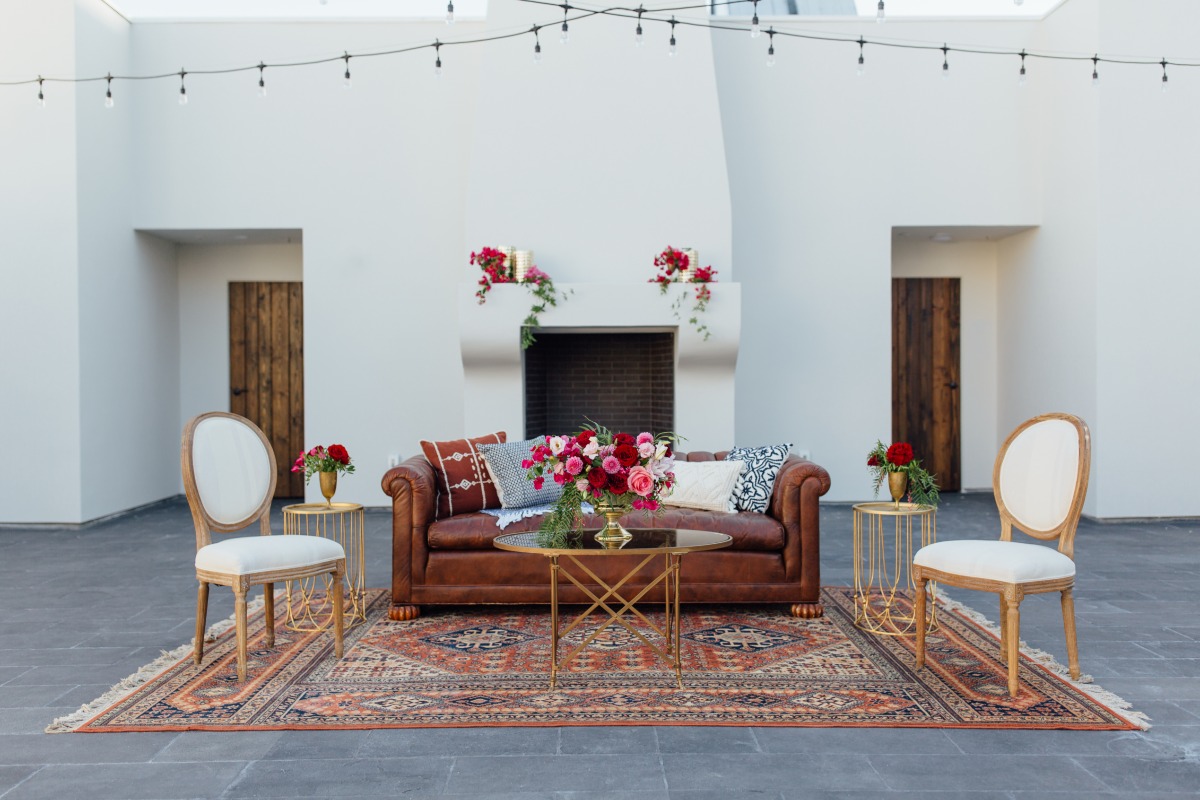
Setting: The Rooftop Terrace is Blanco’s crown jewel — a 2,500 square foot outdoor sanctuary perched three stories above San Pedro Square. The space features living olive trees in large planters, a rustic stone fireplace with a wide mantel, and bistro lights strung overhead that glow warm amber once the sun sets. The perimeter offers unobstructed views of downtown San Jose’s skyline, with the historic architecture of San Pedro Square visible below. The landscaping includes Mediterranean-inspired plantings and optional roll-out sunscreens for daytime events, which is crucial for both guest comfort and protecting delicate florals from direct sun exposure. The terrace floor is finished in neutral pavers, and the overall aesthetic leans European courtyard — romantic, intimate, and effortlessly chic. Most couples use this space for ceremonies (the skyline makes an unforgettable backdrop) or cocktail hours (the fireplace and bistro lights create perfect ambiance).
The Mezzanine
Capacity: 80 seated
Setting: The Mezzanine occupies the second floor and offers an intriguing hybrid experience — it’s technically open-air (no full enclosure) but feels sheltered and intimate. The space features the same exposed brick walls as the rest of the venue, and its defining feature is that gorgeous antique French clock mounted prominently on the brick, its ornate hands and Roman numerals providing instant Old World elegance. The Mezzanine overlooks the historic arch of San Pedro Square, with views of downtown San Jose’s mix of Victorian-era buildings and modern high-rises. The flooring is polished wood, and the space gets excellent natural light during the day (which also means full sun exposure — plan accordingly). Most couples use the Mezzanine for cocktail hours, intimate dinners, or as an overflow lounge area during larger receptions. There’s enough room for high-top cocktail tables, lounge furniture groupings, or a small bar setup.
Floral approach: The French antique clock is the Mezzanine’s statement piece, and your florals should complement rather than compete with it. We’d design a medium-scale arrangement positioned directly beneath the clock — a lush, European-inspired composition in a vintage brass or aged ceramic vessel featuring garden roses (Keira, Patience, and Romantic Antike for their soft, blowsy petals), white sweet peas, jasmine vine, and hellebores. The arrangement should feel gathered-from-the-garden rather than structured, with an organic, asymmetrical shape that echoes the clock’s curves. For cocktail hour service, position 3-4 high-top tables throughout the space, each topped with a compact but lush centerpiece — low compote bowls filled with white hydrangeas, champagne roses, and seeded eucalyptus. If the space is being used as a lounge area, coffee table arrangements in varying heights (8-12 inches) add visual interest without blocking conversation. The brick walls offer opportunities for hanging installations or wall-mounted floral pieces — a series of three wall-mounted brass rings (24-30 inches in diameter) adorned with asymmetrical floral clusters would create a modern, gallery-like display that photographs beautifully. If the Mezzanine is serving as a bar location, the bar top itself deserves attention: a 4-foot garland runner of smilax, olive branches, and white spray roses laid along the bar’s front edge, with a larger statement piece at one end, creates visual continuity. The space gets substantial sun exposure during afternoon events, so avoid delicate blooms like anemones or poppies that will wilt quickly. Roses, hydrangeas, carnations, and woody herbs like eucalyptus and rosemary hold up far better in direct light. And because the Mezzanine is open to the elements, secure all arrangements properly — weights in the bottom of vessels, floral putty to anchor containers, and foam secured with waterproof tape for any installations.
Wedding Flower Ideas for Blanco Urban Venue
San Jose Modernist
This design concept embraces Blanco’s urban sophistication and blank canvas aesthetic with a palette that feels clean, architectural, and distinctly contemporary. The foundation is white and cream — white phalaenopsis orchids, white calla lilies, white hydrangeas, and ivory garden roses (Playa Blanca, White Ohara) — punctuated with structural greenery like monstera leaves, white king protea, and bleached palm fronds. Arrangements are designed in geometric vessels: rectangular white ceramic troughs for long banquet tables, cylindrical glass vases for high-tops, and matte white cube containers for lounge tables. The overall effect is gallery-like and sculptural. In The Great Room, install suspended arrangements using clear acrylic boxes (12x12 inches) filled with white orchids and trailing white amaranthus, hung at varying heights from the starburst chandeliers to create a floating garden above the dance floor. On the Rooftop Terrace, design a ceremony installation using a minimalist geometric arch in matte black with a single asymmetric corner cluster of white blooms and monstera leaves — all the drama is in the negative space and the skyline beyond. The Mezzanine gets a single show-stopping arrangement beneath the French clock: a 3-foot-tall composition in a white plinth vase featuring white king protea, white anthurium, and bleached pampas grass. This palette works year-round, photographs brilliantly against the brick, and allows the venue’s architecture to remain the star.
Brick & Bloom Romance
This concept leans into Blanco’s historic bones with a palette that complements the warm terracotta tones of those 150-year-old brick walls. Think dusty rose, peach, terracotta, and deep burgundy — colors that feel like they’ve been pulled directly from the mortar and aged brick. Key flowers include Juliet garden roses, Cappuccino roses, peach ranunculus, burgundy dahlias (Café au Lait and Labyrinth varieties), apricot spray roses, and peach stock. Foliage includes olive branches (to echo the rooftop trees), Italian ruscus, and eucalyptus in silver-dollar and seeded varieties. Vessels should feel rustic-elegant: aged terracotta pots, copper compotes with patina, amber glass cylinders, and rough ceramic bowls. In The Great Room, design tall arrangements (4+ feet) using trumpet vases in aged copper, overflowing with the full palette and trailing amaranthus for movement. Behind the head table, create a living wall installation incorporating ferns, olive branches, and clusters of the bloom palette arranged to look organically placed rather than perfectly symmetrical. On the Rooftop Terrace, the fireplace mantel gets a lush, cascading asymmetric arrangement that drapes down one side, using the full color story with trailing jasmine vine. For ceremony aisle markers, use small terracotta pots filled with the same blooms. The Mezzanine’s French clock gets a gathered garden arrangement in an aged brass urn. This palette feels warm, romantic, and absolutely made for Blanco’s historic character — it’s our top recommendation for couples who want their flowers to honor the building’s past while feeling utterly current.
California Bohemian
Blanco sits in San Jose, and this concept honors Northern California’s free-spirited, organic aesthetic with an untamed garden palette. The color story is soft and varied: blush, mauve, lavender, soft yellow, and lots of green. Key blooms include garden roses in softer tones (Quicksand, Amnesia, Keira), lavender, scabiosa in dusty purple, white sweet peas, soft yellow ranunculus, butterfly ranunculus in pastels, white stock, and lots of textured foliage — jasmine vine, smilax, passion vine, bay laurel, rosemary, and wild olive branches. Everything should feel gathered, organic, and slightly overgrown, like a Northern California garden in late spring. Arrangements sit in natural vessels: wooden boxes, ceramic bowls in matte cream and sage, amber glass, and woven baskets. In The Great Room, instead of traditional centerpieces, design low, sprawling arrangements that cover more of the table surface — imagine a 3-foot-long organic cluster of blooms and foliage running down the center of each banquet table, with pillar candles in varying heights interspersed throughout. For the Rooftop Terrace ceremony, create a wildflower meadow-inspired arch: a wooden hexagonal structure absolutely smothered in the full palette, with blooms and vines trailing down the sides and pooling slightly at the base. The olive trees get low bowl arrangements at their bases filled with lavender and rosemary for fragrance. In The Mezzanine, the French clock gets a loose, gathered arrangement in a ceramic bowl that looks like it was just picked from a California garden. This concept works beautifully in spring and summer, feels effortlessly romantic, and captures that California ease that’s so appealing.
Seasonal Considerations
San Jose enjoys a Mediterranean climate — one of California’s most temperate — with dry, warm summers and mild, wet winters. The South Bay benefits from its proximity to the San Francisco Bay’s moderating influence without the city’s persistent fog, which means more sunshine year-round and relatively stable temperatures. For wedding flowers at Blanco Urban Venue, understanding San Jose’s microclimates and seasonal bloom availability is essential.
Spring (March-May): Spring is San Jose’s most glorious wedding season. Temperatures range from the mid-60s to mid-70s, with occasional warm spikes into the 80s by late May. March still sees some rainfall, but by April and May, the weather is reliably dry and sunny. The California hillsides are green from winter rains, and local growers have exceptional availability of spring blooms: ranunculus, anemones, tulips (early spring only), sweet peas, stock, and the first flush of garden roses. The Rooftop Terrace is perfect during these months — comfortable temperatures, low humidity, and those long spring evenings with golden light. Floral mechancs hold up beautifully in spring’s mild conditions. Consider taking advantage of California-grown ranunculus, which peaks in March and April — the Cloni and Elegance varieties from local growers are spectacular and more affordable than imported blooms. Sweet peas are also at their fragrant best in April and May. Best months: April and May offer the sweet spot of perfect weather and peak bloom availability.
Fall (September-November): Fall is San Jose’s second prime wedding season. September still feels like summer (high 80s), but by October, temperatures moderate into the perfect 70s, and November brings cooler, crisper days in the 60s. The dry season typically extends through October, with the first rains usually arriving in November. Fall brings spectacular bloom availability: dahlias hit their peak (Café au Lait, Labyrinth, and Rip City varieties are abundant and affordable from California growers), garden roses continue strong, and fall foliage like oak leaves, persimmon branches, and ornamental grasses add texture. The Bay Area’s unique fall light — that slanted golden glow that photographers live for — is particularly beautiful on Blanco’s Rooftop Terrace during sunset ceremonies. By November, you can incorporate more heat-sensitive blooms like anemones and hellebores as temperatures cool. Fall is also harvest season for California olive branches and grape vines, which can be sourced from local growers and add authentic regional character to arrangements. Best months: October offers the ideal combination of mild temperatures, low rain risk, and peak dahlia season.
Winter (December-February): Winter in San Jose is mild compared to most of the country — temperatures range from the 50s to low 60s — but it is the rainy season. December through February brings the bulk of the Bay Area’s annual rainfall, with wet storms rolling in from the Pacific. For Blanco weddings, this means the Rooftop Terrace is riskier (though covered heaters and the fireplace make it usable), and most couples opt for Great Room-focused events. Winter is actually a wonderful time for floral design: the California flower market has excellent availability of anemones, ranunculus (winter crop), hellebores, amaryllis, tulips (imported), and winter foliage like evergreen branches, magnolia, and eucalyptus. The cooler temperatures mean blooms last longer, and you can design more delicate, garden-style arrangements without heat-related wilting. Winter weddings at Blanco benefit from a richer, moodier palette — deep burgundies, plums, evergreen, and cream — that complements the cozy interior spaces and brick walls. The fireplace on the Rooftop Terrace becomes a particularly appealing focal point, and a mantel installation with evergreen boughs, white amaryllis, and burgundy hellebores feels seasonally appropriate. Best months: February sees less rainfall and hints of early spring, making it the most reliable winter month.
Poppy’s Expert Take
The three-story design challenge. Blanco’s vertical layout means your florals need to create visual continuity across three distinct spaces while allowing each floor to have its own moment. We recommend choosing a consistent color palette and foliage throughout (smilax, eucalyptus, and olive branches are your friends here), but varying the scale and style at each level. Rooftop ceremony: organic and architectural. Mezzanine cocktails: intimate and European. Great Room reception: abundant and dramatic. If you treat each space as completely separate, the wedding will feel disjointed as guests move between levels. The key is repeating signature elements — the same rose variety, the same vessel finish, the same foliage — in different arrangements at each level.
The brick does not photograph red. Those 150-year-old brick walls look warm terracotta in person, but depending on lighting and camera settings, they can photograph anywhere from pink-toned to grey. This matters for your color palette. If you’re designing florals to “match the brick,” know that the color will shift throughout the day and in photos. We recommend working with the brick rather than trying to match it exactly — use the warmth as inspiration but don’t lock yourself into terracotta tones. Jewel tones, soft pastels, and even all-white palettes all work beautifully against the brick’s neutral texture.
The rooftop is a working outdoor space. Unlike venues with manicured gardens where the natural elements are purely decorative, Blanco’s Rooftop Terrace is a functional outdoor space exposed to urban elements: wind from the surrounding buildings, full afternoon sun with no natural shade, and the occasional downtown San Jose sound (sirens, construction, street traffic). Design your floral installations with these realities in mind. Tall, top-heavy arrangements will tip in wind — weight them properly or skip them entirely. Delicate blooms will fry in summer afternoon sun — use hardy varieties or ensure the sunscreens are deployed. And consider the timing of installations: for a 5pm summer ceremony, we install rooftop florals no earlier than 3pm to minimize sun exposure.
High ceilings demand investment or restraint. The Great Room’s 30-foot ceilings are breathtaking, but they create a design challenge: the space feels empty if you don’t fill the vertical volume, but filling that volume properly requires significant budget. You have two approaches. Option one: commit to the verticality with tall centerpieces (4+ feet), suspended installations from the chandeliers, and a substantial backdrop installation behind the head table. This is the right choice if you have $8,000+ to invest in Great Room florals alone. Option two: embrace restraint with exclusively low arrangements on tables and focus your investment on one major installation (fireplace mantel on the rooftop, a ceremony arch, or a dramatic entrance piece). What doesn’t work: medium-height centerpieces that hover at 2-3 feet. In this space, they disappear visually and leave all that ceiling volume unfilled.
Budget the olive tree enhancement carefully. The Rooftop Terrace’s existing olive trees are gorgeous and reduce the need for extensive greenery installations, but many couples want to enhance them with florals. Be realistic about what this requires: wrapping blooms around tree trunks, nestling arrangements into the planters, or hanging elements from branches all require custom mechanics, significant design time, and often specialized hardware (zip ties, floral wire, foam cages). The trees are living specimens that the venue protects carefully — you cannot damage the bark or branches. If enhancing the olive trees is important to your vision, budget $300-600 per tree depending on complexity. Alternatively, design beautiful low arrangements at the tree bases in coordinating vessels, which achieves visual integration without the mechanical complexity.
The fireplace mantel is your rooftop centerpiece. When couples ask where to invest their rooftop budget beyond ceremony florals, the answer is always the fireplace. That stone mantel is visible from nearly every angle on the terrace, it provides a natural focal point for photos, and it remains in place throughout cocktail hour (unlike ceremony florals, which are often bustled away). A proper mantel installation — cascading, asymmetric, abundant — costs $400-800 depending on bloom choices and scale, but it transforms the entire rooftop aesthetic. This is not the place to economize with a small arrangement. The mantel can handle (and deserves) a dramatic installation that drapes down at least