
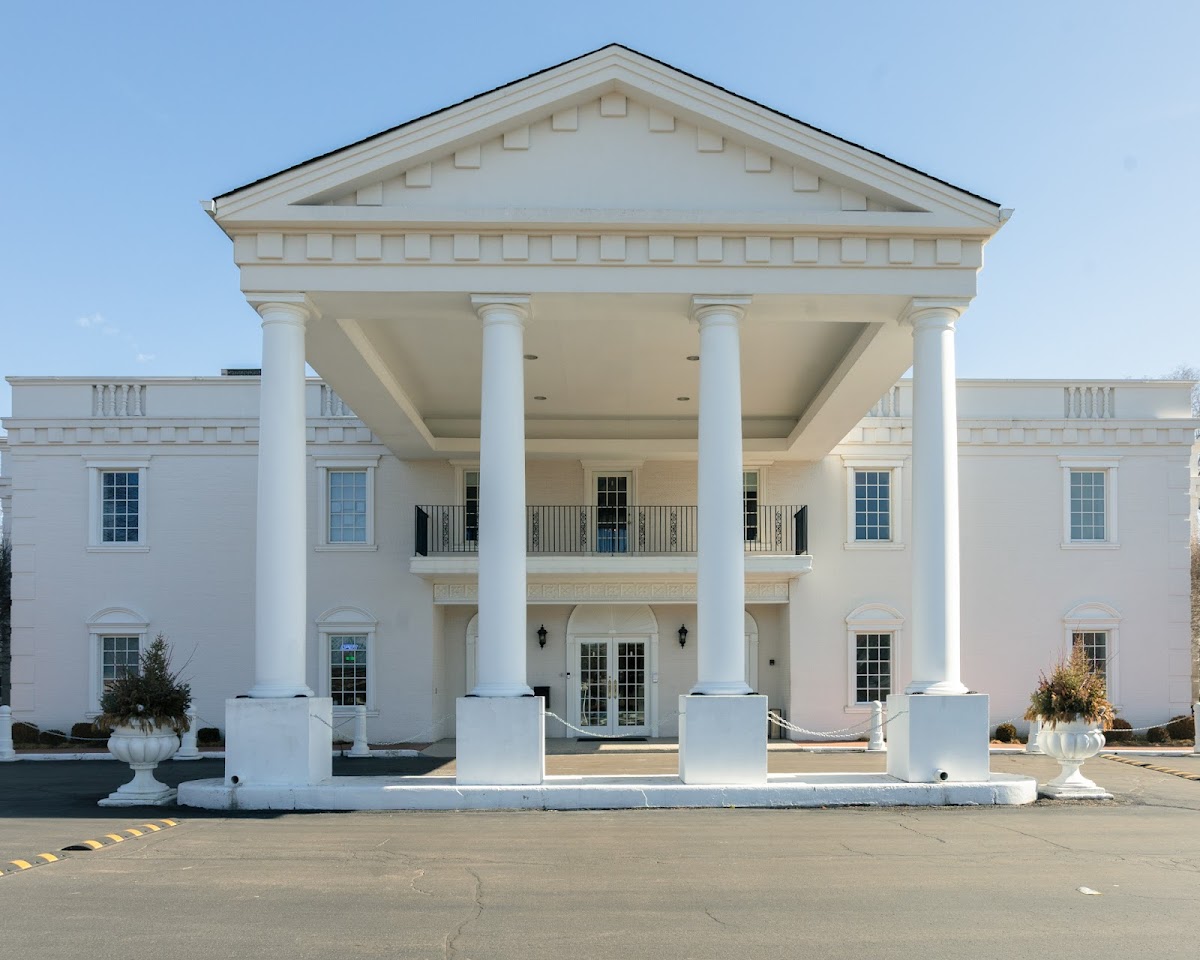
You exit I-294 somewhere south of Midway, winding through neighborhoods that feel like every other Chicago suburb — gas stations, strip malls, the occasional church parking lot — and then you turn onto Cicero Avenue and the landscape shifts. Trees close in. The road narrows slightly. And then the gates of Beau Chateau appear, wrought iron and dignified, opening onto a property that seems impossibly removed from the highway you just left. The drive curves through 25 acres of manicured lawns and mature woodlands, past gardens that look like they belong in the Loire Valley, until the chateau itself comes into view: honey-colored stone walls, a domed Grecian gazebo rising from the garden like something out of a European estate sale catalog, and windows — so many windows — glittering with crystal chandeliers visible even from outside. This is not a renovated barn or an industrial loft pretending to be elegant. This is the real thing, or at least the Midwestern interpretation of it: French-inspired opulence, built with conviction and maintained with care. Poppy has consulted with 3 couples planning their Beau Chateau wedding flowers, and each time we walk these grounds, we’re reminded that Chicago brides who want genuine grandeur — the kind with marble floors and fabric-draped ceilings and a gazebo that could double as a museum installation — end up here.
About Beau Chateau
Beau Chateau sits on a secluded 25-acre estate in Alsip, Illinois, a community in Chicago’s Southland that most couples drive through on their way to somewhere else. But this property is the destination. The venue operates as a purpose-built wedding and events estate, designed from the ground up to evoke the elegance of French chateaux and Grecian estates. The architecture leans heavily into Old World romance: stone facades, arched entryways, classical columns at the outdoor ceremony site, and interiors layered with crystal, marble, and silk. It’s a maximalist approach that some venues attempt halfheartedly, but Beau Chateau commits fully — three separate ballrooms, two climate-controlled atriums, multiple ceremony locations both indoor and outdoor, and that showstopper gazebo nestled in gardens that are meticulously maintained from April through October.
The property’s layout is thoughtfully designed for large-scale celebrations. The first floor houses the Rose Room and Gardenia Room, each capable of seating 175 guests with elegant chandeliers and floor-to-ceiling windows overlooking the grounds. Both rooms feature white grand pianos, making them ideal for intimate indoor ceremonies before transitioning to receptions. Upstairs, the Orquidea Room reigns as the estate’s largest space, accommodating up to 400 guests beneath fabric-draped ceilings and glittering crystal chandeliers that could make a Versailles ballroom jealous. For couples seeking something in between, the Crystalane and Tamerlane Atriums offer climate-controlled flexibility with capacity for 200, complete with white drapery cascading from the ceilings and large windows framing the estate grounds. And then there’s the outdoor ceremony site: an 85-foot garden aisle leading to that domed Grecian gazebo, flanked by mature trees and manicured lawns that bloom with seasonal color.
Logistically, Beau Chateau is approximately 30 minutes south of downtown Chicago, 15 minutes from Midway Airport, and easily accessible from I-294, making it convenient for guests traveling from across the metro area. For Poppy’s delivery teams, the drive from our studio is straightforward, and the venue provides ample parking and loading access near each event space — a detail that matters significantly when you’re carrying in large installations. The venue operates with an in-house Events Department that coordinates vendor access and maintains strict timelines, which we appreciate. They require certificates of insurance from all vendors and mandate the use of their exclusive catering services, though florists are not restricted. Amplified music is permitted both indoors and outdoors, and the six-hour room rental allows ample time for setup, ceremony, cocktails, and reception without feeling rushed.
Beau Chateau’s identity as a full-service venue means most couples book packages that include catering, bar service, and event coordination, with floral design being one of the few areas where they can bring in outside expertise. This makes Beau Chateau wedding flowers a significant design opportunity — the chance to personalize a space that is otherwise quite consistent from one wedding to the next. The venue’s aesthetic is decidedly traditional and romantic, which influences the floral work that feels most at home here. This is not a venue for minimalist installations or industrial-chic arrangements. This is a venue that rewards lushness, opulence, and a certain willingness to go big.
Event Spaces & Floral Opportunities
Orquidea Room
Capacity: 400 seated
Setting: The Orquidea Room is Beau Chateau’s crown jewel — a second-floor ballroom that occupies the entire upper level and makes no apologies for its grandeur. Crystal chandeliers cascade from fabric-draped ceilings like frozen waterfalls, each one catching light from floor-to-ceiling windows that overlook the estate’s wooded grounds. The marble floors are polished to a high gloss, reflecting the chandeliers and creating an almost disorienting sense of sparkle. Mirrored accent walls amplify the room’s scale, making it feel even larger than its 400-person capacity suggests. The color palette is neutral and warm — cream drapery, gold and crystal accents, pale stone — which means the room can accommodate virtually any color scheme but also demands florals that can hold their own against all that shimmer.
Floral approach: In a room this large and this ornate, subtlety gets swallowed whole. We recommend tall, dramatic centerpieces — think 36-inch arrangements on gold or crystal risers, featuring a lush mix of Juliet garden roses, white phaeleonopsis orchids, blush quicksand roses, and cascading amaranthus that spills down toward the tabletop. Hydrangea (white or blush) provides volume without weight, while Italian ruscus and eucalyptus add movement. For the head table or sweetheart table, consider a 20-foot garland installation that runs the length of the table, incorporating smilax, eucalyptus, white roses, and trailing jasmine vine, punctuated by pillar candles in crystal holders. The fabric-draped ceilings present an opportunity for suspended installations — we’ve designed floating floral chandeliers for similar spaces, using a framework of greenery (seeded eucalyptus, Italian ruscus) with clusters of roses and spray roses wired in at intervals. The key is to embrace the room’s opulence rather than fight it. If your instinct is to do more, do more. The Orquidea Room can take it.
Rose Room
Capacity: 175 seated
Setting: The Rose Room occupies the first floor’s right side and offers a more intimate counterpoint to the Orquidea Room’s grandeur, though “intimate” is relative when you’re still seating 175 guests beneath elegant chandeliers. The room features a split layout that creates natural zones for different parts of the celebration — one area can serve as a ceremony space with the white grand piano as a focal point, while the other accommodates dinner seating. The chandeliers here are smaller but no less elegant, and the floor-to-ceiling windows flood the space with natural light that changes character throughout the day. The white piano is both a visual anchor and a floral opportunity, sitting center stage when the room is configured for ceremonies.
Floral approach: The white piano demands attention, so give it something worthy: a lush asymmetrical arrangement that cascades off one side, incorporating Patience garden roses, white phaeleonopsis orchids, blush ranunculus, and trailing smilax, with accents of seeded eucalyptus and Italian ruscus for texture. For aisle markers, consider simple but elegant arrangements in brushed brass stands — alternating sides, spaced every third row — featuring white hydrangea, quicksand roses, and eucalyptus. Reception centerpieces should be lower here than in the Orquidea Room, allowing conversation to flow across tables. We favor compote-style vessels in gold or crystal, filled with a romantic mix of garden roses (Juliet, Patience, Keira), ranunculus, lisianthus, and spray roses in tones of blush, cream, and champagne. The natural light in this room is your friend — it makes every petal glow. Avoid anything too dark or moody; lean into the soft, romantic quality the room naturally possesses.
Gardenia Room
Capacity: 175 seated
Setting: The Gardenia Room mirrors the Rose Room in size and elegance but occupies the first floor’s left side. It features the same classic elements — crystal chandeliers, floor-to-ceiling windows, white grand piano, climate control that keeps the temperature perfect regardless of what Chicago’s weather is doing outside. The room’s layout is slightly more open than the Rose Room’s split configuration, making it feel a touch more spacious for the same guest count. Like its sister space, the Gardenia Room transitions beautifully from ceremony to reception, with the piano serving as a natural ceremony focal point.
Floral approach: The approach here can mirror the Rose Room or diverge into something distinct, depending on whether you’re using both spaces for the same event or hosting separate celebrations. If you’re leaning into the room’s name, embrace gardenias as a focal flower — though be warned that true gardenias are notoriously fickle and bruise easily, so we often supplement with gardenia-adjacent blooms like white ranunculus, white lisianthus, and ivory spray roses that offer the same creamy, romantic quality without the logistical headaches. For the piano, consider a more structured arrangement than the Rose Room’s cascading design — perhaps a symmetrical dome of white hydrangea, ivory roses, white veronica, and eucalyptus in a low crystal bowl that allows the piano’s lines to remain visible. Aisle markers can be minimal here: small posies of white garden roses and eucalyptus tied to alternating chairs with silk ribbon. Reception centerpieces in mixed heights — some low compotes, some elevated on clear glass risers — keep the eye moving and prevent the room from feeling too uniform.
Outdoor Ceremony - Gazebo
Capacity: 250 seated
Setting: This is what the brochure photos are selling, and for good reason. The outdoor ceremony site is anchored by a domed Grecian-inspired gazebo that rises from manicured gardens like a piece of classical architecture that wandered away from the Acropolis and decided to settle in suburban Chicago. The structure features white columns supporting a domed roof, creating a circular ceremony space that’s both intimate and grand. An 85-foot garden aisle stretches from the seating area to the gazebo, flanked by lush lawns, mature trees, and seasonal plantings that provide natural color from spring through fall. Rustic wooden benches provide guest seating, and a covered terrace pavilion nearby offers protection if weather turns unpredictable. The entire area is framed by the estate’s French-inspired landscaping — the kind that requires a full-time grounds crew and looks effortless as a result.
Floral approach: The gazebo itself is a statement, so your floral work should enhance rather than obscure it. We recommend a lush garland installation that wraps the base of the dome and trails down one or two of the columns, using a foundation of smilax and Italian ruscus with wired-in clusters of white and blush roses, white hydrangea, and trailing jasmine. The effect should feel garden-gathered, not formal or stiff. For the aisle, we favor elevated arrangements in tall white or stone urns placed at intervals — every 10-15 feet — filled with a dramatic mix of white delphiniums, blush roses, white stock, and cascading greenery that moves in the breeze. If budget allows, add pillar arrangements flanking the gazebo entrance: large stone or white ceramic vessels overflowing with white hydrangea, Patience garden roses, white phaeleonopsis orchids, eucalyptus, and olive branches. The key with outdoor florals is understanding that you’re competing with — or more accurately, complementing — 25 acres of professional landscaping. Keep your palette aligned with the garden’s natural tones (whites, blushes, greens) and let the architecture and landscape do the heavy lifting.
Indoor Ceremony Spaces
Capacity: 100 seated
Setting: For couples seeking an indoor ceremony option, Beau Chateau offers elegantly draped spaces on the first floor of each hall, configured with white chairs and abundant natural light streaming through large windows. Crystal chandeliers add sparkle without overwhelming the more intimate scale, and each space features a white grand piano that can serve as both musical accompaniment and visual focal point. The fabric draping creates soft, romantic ambiance, and climate control ensures comfort regardless of season. These rooms work particularly well for smaller guest counts or for couples who prefer a more controlled environment for their vows.
Floral approach: The white piano is your natural focal point, so treat it accordingly. A lush arrangement that sits atop the piano — or better yet, a cascading design that flows off one corner — immediately draws the eye. Use white and cream tones to harmonize with the room’s palette: white phaeleonopsis orchids, Patience garden roses, white ranunculus, white veronica, and trailing smilax, accented with seeded eucalyptus and perhaps a touch of blush for warmth. For the aisle, keep it simple: small bouquets attached to alternating chairs with silk ribbon, or low arrangements at the end of each row in brushed gold stands. If you’re setting up an archway or ceremony structure, opt for something light and airy rather than heavy and opaque — a circular arch draped with sheer fabric and adorned with asymmetrical floral clusters works beautifully in these smaller spaces. Avoid anything that feels too large or overpowering; the room’s elegance is in its restraint, and your florals should follow suit.
Crystalane & Tamerlane Atriums
Capacity: 200 seated each
Setting: The two atriums at Beau Chateau offer climate-controlled flexibility with a lighter, airier aesthetic than the more opulent ballrooms. White fabric drapes cascade from the ceilings like frozen waterfalls, creating soft architectural lines that define the space without closing it in. Crystal chandeliers glitter overhead, and large windows offer views of the estate grounds while flooding the rooms with natural light. Each atrium features a white grand piano and can be configured for either ceremonies or receptions, making them particularly useful for couples hosting larger weddings who need multiple spaces or who want a cocktail hour location separate from their reception ballroom.
Floral approach: The white drapery provides a perfect framework for suspended installations. Consider hanging arrangements at varying heights — some clusters of greenery and roses descending from the fabric drapes, creating a floating garden effect. For receptions in these spaces, tall centerpieces work beautifully: gold or lucite risers elevating arrangements of white hydrangea, Juliet garden roses, white phaeleonopsis orchids, blush ranunculus, and cascading amaranthus or jasmine vine. The height draws the eye upward, emphasizing the room’s vertical space without making it feel crowded. For ceremonies here, flank the white piano with matching arrangements in tall white ceramic vessels — lush, organic designs featuring white delphiniums, white stock, Patience garden roses, and eucalyptus that echo the garden aesthetic without literally replicating it. The windows provide natural light that changes throughout the day, so choose flowers that look equally stunning in bright midday sun and warm late-afternoon glow.
Wedding Flower Ideas for Beau Chateau
Versailles Garden
This concept leans fully into the venue’s French-inspired architecture with a palette drawn from the formal gardens of Versailles: whites, soft pinks, lavenders, and silvery greens. Think Patience and Juliet garden roses in cream and blush, white phaeleonopsis orchids, pink astilbe, lavender stock, purple lisianthus, and white hydrangea, accented with eucalyptus, olive branches, and dusty miller for that silvery-sage quality. Vessels should feel formal and classical: white marble urns for ceremony installations, gold compotes and crystal vessels for reception centerpieces, and tall gold candelabras interspersed among floral arrangements to add height and drama. For the gazebo, create a full garland installation with wired-in roses and trailing jasmine, while the ballroom gets tall, symmetrical centerpieces that look like they belong in a palace. This palette photographs beautifully in natural light and feels timeless rather than trendy.
Grecian Romance
Pay homage to the domed gazebo’s classical architecture with a palette inspired by the sun-washed islands of Greece: pure whites, warm creams, soft yellows, and abundant greenery. Use white roses (Polo, Vendela), cream garden roses (Patience), white ranunculus, white anemones, yellow Billy Balls for textural interest, white stock, and white veronica, layered with olive branches, eucalyptus, and Italian ruscus. Incorporate Mediterranean herbs like rosemary and lavender for unexpected fragrance. Vessels should feel organic and natural: white ceramic urns, weathered stone containers, and terracotta pots that echo ancient Greek pottery. For the outdoor ceremony, keep arrangements loose and garden-gathered rather than structured. Indoors, the same palette translates to elegant simplicity — low centerpieces in organic vessels, with olive branches creating movement and the white blooms providing clean, luminous focal points. This concept feels fresh, light, and perfectly suited to spring and summer celebrations.
Opulent Jewel
For couples who want to embrace the venue’s maximalist interiors, this concept pulls from a rich, saturated palette: deep burgundies, royal purples, fuchsias, and golds, grounded with blush and cream to prevent it from feeling too dark. Use burgundy dahlias (Karma Choc), deep purple lisianthus, fuchsia peonies (Sarah Bernhardt when in season), plum-toned calla lilies, Yves Piaget garden roses in deep pink, quicksand roses for balance, and white phaeleonopsis orchids to lift the palette. Add texture with burgundy scabiosa pods, purple veronica, and gold-sprayed olive branches or ruscus for a touch of metallic shine. Vessels should be luxe: gold compotes, crystal bowls, mercury glass, and tall gold stands. This palette absolutely sings in the Orquidea Room, where the crystal chandeliers and mirrored walls amplify the richness. For the ceremony, tone it down slightly with more blush and cream to keep it from feeling too heavy, then unleash the full saturated palette at the reception. This is not a subtle look, but in a space this grand, subtle gets lost anyway.
Seasonal Considerations
Chicago’s continental climate brings four distinct seasons to Beau Chateau, each with its own floral opportunities and logistical considerations.
Spring (April-May): Spring arrives tentatively in Chicago, with temperatures ranging from 40s to 60s and frequent rain showers that can turn the estate’s lawns into mud if you’re not careful. But when spring cooperates, it’s glorious — the gardens bloom with tulips, daffodils, and cherry blossoms, and the mature trees leaf out in that electric green that only lasts a few weeks. Spring flower availability is excellent: tulips, peonies (late May), ranunculus, anemones, hellebores, hyacinth, and lilac are all in season and reasonably priced. For outdoor ceremonies, have a backup plan — the covered terrace pavilion can accommodate guests if weather turns, or move the ceremony into one of the indoor ceremony rooms. April is unpredictable; May is safer. Spring florals should feel fresh and garden-gathered, taking advantage of seasonal blooms that won’t be available (or will be prohibitively expensive) later in the year.
Summer (June-August): Summer in Chicago means warm to hot temperatures (70s to 90s), high humidity, and dramatic thunderstorms that roll in from the west with little warning. The gardens are lush and fully mature, and the estate grounds are at their most photogenic. Summer flower availability is broad: garden roses, peonies (June only), hydrangea, dahlias, lisianthus, delphinium, sunflowers, and zinnias are all abundant. For outdoor ceremonies, timing matters — a 4 or 5 PM ceremony avoids the worst afternoon heat, and sunset photos in the gardens around 7:30 or 8 PM are spectacular. Be mindful that certain flowers (hydrangea, garden roses) can wilt quickly in high heat, so we use floral coolers and hydration protocols to keep everything fresh. Summer is Beau Chateau’s busiest season, so book early and expect availability to be tight for both the venue and florists.
Fall (September-October): Fall is arguably the best time to marry at Beau Chateau. Temperatures cool to comfortable 60s and 70s, humidity drops, and the estate’s mature trees turn brilliant shades of red, orange, and gold. The light is extraordinary — that golden-hour quality lasts longer and feels warmer. Fall flower availability includes dahlias (at their peak), roses, chrysanthemums, marigolds, celosia, hypericum berries, and sunflowers. For outdoor ceremonies, September is ideal — still warm enough for comfort, but without summer’s humidity or unpredictability. October brings more risk of chilly temperatures and wind, so have wraps or shawls available for guests. Fall palettes should embrace the season: rust, burgundy, burnt orange, deep plum, and gold, grounded with cream and greenery. Incorporate seasonal elements like oak leaves, berries, and branches for texture.
Winter (November-March): Winter at Beau Chateau means moving entirely indoors, which actually plays to the venue’s strengths — those opulent ballrooms were made for winter weddings. Temperatures range from 20s to 40s, with snow likely from December through February. The estate’s outdoor spaces are dormant, but the interiors are climate-controlled and cozy. Winter flower availability includes amaryllis, anemones, ranunculus, tulips (imported), roses, and evergreen branches (pine, cedar, fir). Embrace the season rather than fight it: use evergreen garlands, white flowers, burgundy and deep red tones, and plenty of candlelight to create warmth. The crystal chandeliers and marble floors feel even more elegant against a winter palette. December weddings can incorporate holiday elements without feeling too Christmas-y if you stick to sophisticated colors (burgundy, emerald, gold) and avoid explicitly festive motifs. January and February are quieter months with better vendor availability and often better pricing.
Poppy’s Expert Take
The Orquidea Room needs height. We see couples underestimate the scale of this ballroom all the time, opting for standard-height centerpieces that simply disappear in a room with 12-foot ceilings and 400 guests. You need tall arrangements — minimum 30 inches, ideally 36 inches or higher on risers — to create visual impact. Low centerpieces work as accents, but the room demands height to feel balanced and designed rather than underdone.
Don’t over-floralize the gazebo. The outdoor ceremony structure is already a statement. Couples who cover every column and the entire dome in florals end up with a design that feels heavy and obscures the architecture. Instead, choose one or two key areas to emphasize — a garland at the dome’s base and trailing down one column, or pillar arrangements flanking the entrance. Let the structure itself do the visual work, and use florals as elegant accents rather than full coverage.
Budget for both ceremony and reception if you’re using multiple spaces. Beau Chateau’s layout often means couples are hosting ceremonies in one location (the gazebo or an indoor ceremony room) and receptions in another (one of the ballrooms). This requires two distinct floral setups, which doubles your installation complexity. If budget is tight, focus on ceremony site florals that photograph well and simpler reception centerpieces, rather than trying to do everything at a mid-tier level and having nothing feel finished.
The white pianos are a gift — use them. Each ceremony room has a white grand piano that serves as a natural focal point. Rather than placing an arch or ceremony structure in front of it, position the piano as your backdrop and create a lush arrangement on or cascading from it. This reduces the need for a separate ceremony structure (saving money) while creating an elegant, unique ceremony focal point that feels integrated into the room rather than imposed upon it.
Marble floors require stable bases. The glossy marble flooring throughout Beau Chateau is stunning but slippery. Any floor arrangements, pedestals, or pillar installations need wide, stable bases — not narrow stems that can tip. We use weighted urns and wide-bottomed vessels specifically for this venue. Also consider that anything dropped on marble (water, petals, greenery) becomes a slip hazard, so plan cleanup protocols with your team.
Load-in timing matters more here than you think. With multiple ballrooms and frequent Saturday double-headers, Beau Chateau runs a tight ship on setup timelines. Confirm your load-in window with the events team and stick to it. Late arrival means you’re working around other vendors, other weddings, and potentially guests who are already arriving. We typically request early morning access (8-9 AM) for afternoon or evening weddings to ensure ample setup time without stress.
Natural light changes dramatically throughout the day. The floor-to-ceiling windows in every space mean your florals will look different at 2 PM than at 7 PM. Whites and pastels glow in natural light but can look washed out in evening artificial light, while deeper tones (burgundy, plum, navy) can look muddy in bright sun but stunning under chandeliers. If you’re having a daytime ceremony and evening reception, consider how your palette will transition as the light changes, or lean into neutrals (blush, cream, champagne, greenery) that work in any lighting.
What Poppy Couples Spend on Flowers Here
Because Beau Chateau is a prospect venue for Poppy without confirmed bookings yet, these budget recommendations are based on typical Chicago-area estate wedding florals and the specific requirements of this venue’s spaces and scale.
$2,800 - $4,500 | The Essentials
This tier covers the fundamentals needed to make Beau Chateau feel designed without overwhelming your budget. For outdoor ceremonies at the gazebo, expect a floral garland adorning the dome and one column (approximately 12-15 feet of garland with wired-in roses and greenery), plus six to eight elevated aisle arrangements in urns. For indoor ceremonies, a lush piano arrangement plus simple aisle markers (bouquets tied to chairs). Reception florals include guest table centerpieces in a single style — either all low compotes or all elevated on risers — plus a head table or sweetheart table arrangement. Personal flowers (bridal bouquet, three to five bridesmaids, boutonnieres, corsages) and a few accent pieces (cocktail hour arrangements, cake flowers) round out this tier. This budget works well for guest counts of 100-150 in one of the smaller ballrooms or atriums.
$4,500 - $7,500 | The Full Picture
This mid-tier budget allows for more design cohesion across multiple spaces. Outdoor ceremony florals expand to include fuller gazebo coverage (garland plus pillar arrangements flanking the entrance), eight to twelve elevated aisle arrangements, and additional garden arrangements visible in ceremony photos. Indoor ceremonies get more elaborate piano installations plus upgraded aisle markers. Reception florals include varied centerpiece heights (mixing low compotes with tall elevated arrangements to create visual rhythm), a substantial head table installation (6-10 foot garland or multiple elevated arrangements), and coordinated cocktail hour florals in a separate space. This tier also accommodates specialty installations: a suspended arrangement in one of the atriums, greenery enhancement on chandeliers, or floral accents on the staircase if you’re using it for photos. This budget is appropriate for guest counts of 150-250 and multiple event spaces.
$7,500+ | The Full Experience
At this level, you’re creating a fully immersive floral experience across every space guests encounter. Outdoor ceremonies feature comprehensive gazebo florals, 12-15 elevated aisle arrangements, and additional garden installations throughout the ceremony site. The reception in the Orquidea Room includes all tall centerpieces (30-36 inches on risers), a dramatic head table installation (15-20 foot garland with substantial volume and texture), multiple suspended installations from the fabric