
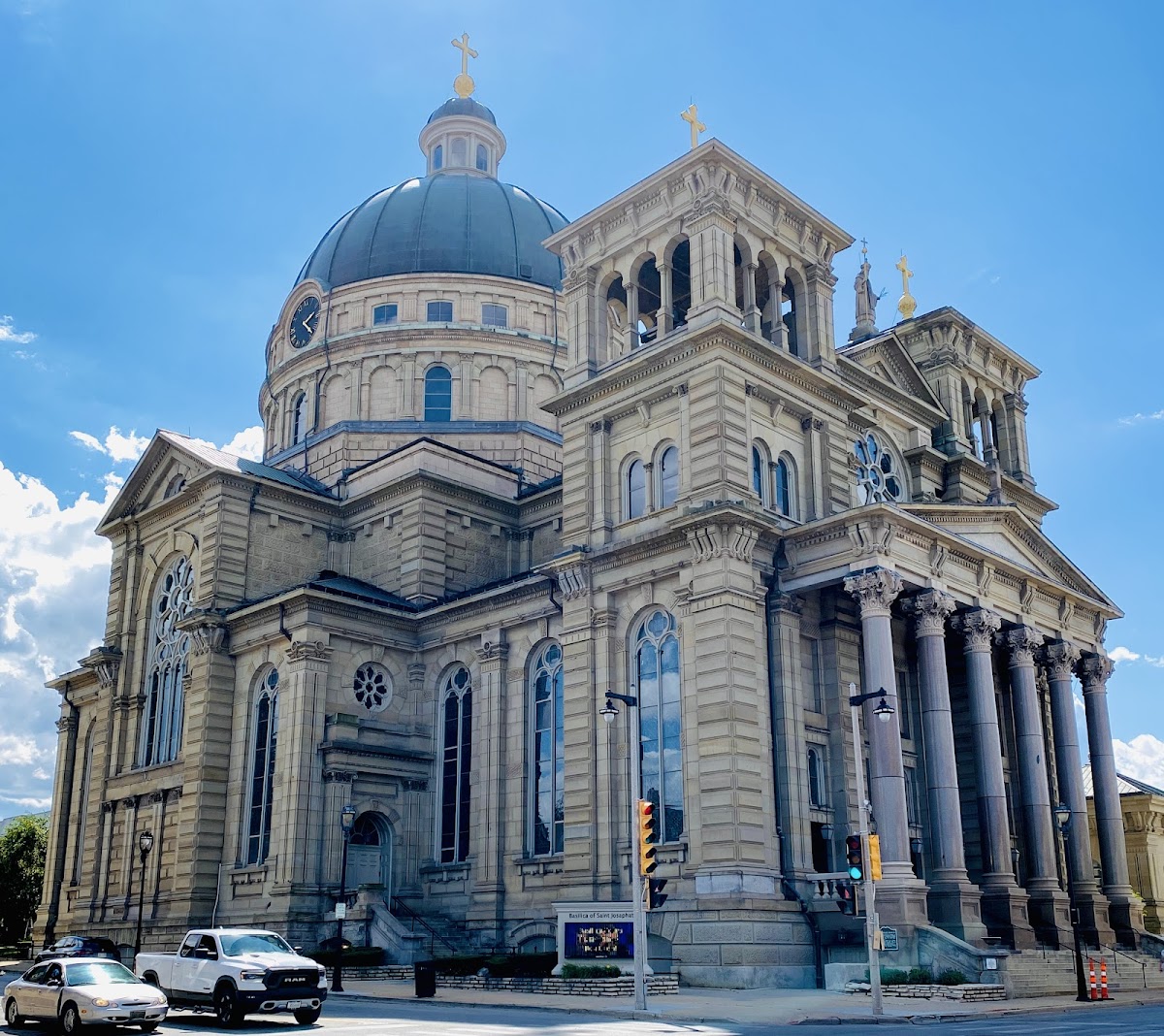
We know this venue well from our work here. Designing for the Basilica of Saint Josaphat is a lesson in architectural humility. This is not a “blank canvas” venue; it is a monumental, historic environment where floral designs must either match the building’s scale or be strategically placed to create intimate moments within the vastness.
The primary challenge—and opportunity—at the Basilica is the sheer volume of the space. With a dome reaching 250 feet and a nave that stretches the length of a city block, standard wedding arrangements can quickly vanish. Successful floral design here requires an understanding of distance, lighting, and the venue’s existing palette of gold, marble, and deep reds.
The Spaces
Main Sanctuary
The sanctuary is the heart of the Basilica, defined by its massive dome and intricate frescoes. The scale is nothing short of operatic. Because the space is so large, the eye needs “landing spots” to help focus the attention on the ceremony.
- What works: Massive, floor-based flanking arrangements at the start of the aisle and the foot of the altar. These should be designed with a heavy vertical emphasis to mirror the Corinthian columns. High-contrast colors, like crisp whites and creams, are essential to ensure the flowers pop against the darker stone and wood.
- Skip: Pew ends with small ribbons or single stems. They are too small to be seen from more than three rows away and often look like clutter in professional photography.
- Watch out: The lighting is intentionally atmospheric and dim. Darker floral colors like navy or deep purple will disappear into the shadows.
- Budget hero move: Focus 80% of the ceremony budget on two “monumental” arrangements at the altar. If they are large enough, they will carry the entire room.
The Altar Area
The altar is a masterclass in marble and gold leaf. It is the natural focal point of the building, and any floral additions must respect the existing religious iconography.
- What works: Low, lush “ground meadows” that wrap around the base of the altar steps. This creates a soft, organic frame for the couple without obstructing the view of the historic architecture.
- Skip: Tall, spindly stands that might block the view of the ornate back-altar (reredos).
- Watch out: There are strict rules regarding what can be placed directly on the consecrated altar. Always plan for freestanding arrangements.
- Budget hero move: Use heavy greenery like Smilax or Salal to create a “living” base for a few high-impact blooms. The greenery provides the necessary bulk for the scale of the room at a lower price point than all-flower installations.
The Narthex (Entrance)
The entrance provides the first impression and the transition from the street to the sacred space.
- What works: A singular, large-scale arrangement on a central table or a pair of arrangements flanking the inner doors. This sets the tone for the design aesthetic before guests enter the main nave.
- Skip: Small “bud vase” moments. The architecture here is still too grand for miniature designs.
- Watch out: This area can get congested during guest arrival; ensure arrangements have a heavy, stable base.
What Works at Basilica of Saint Josaphat
Embrace the “White and Gold” standard. The Basilica is rich with gold leaf and warm marble. A palette of whites, creams, and champagnes with touches of metallic gold accents (in vessels or sprayed foliage) feels intentional and high-end in this environment.
Think in “Human Scale” versus “Building Scale.” You need both. Use large-scale pieces for the “Building Scale” (altar, entrance) and save the delicate, intricate floral details for the “Human Scale” (bouquets, boutonnieres) where they will actually be seen up close.
Utilize high-contrast textures. Because the interior is visually “busy” with frescoes and carvings, your flowers should have clear, defined shapes. Large-headed blooms like Hydrangeas, Garden Roses, and Peonies work better than “airy” or “wildflower” styles which can look messy against the detailed backdrop.
Focus on the aisle’s “Grand Entrance.” The walk down the aisle at the Basilica is long and dramatic. Placing significant floral markers at the back of the church—where the processional begins—creates a powerful photographic frame for the entrance.
Prioritize floor-level installations. The Basilica’s architecture draws the eye upward to the dome. By placing lush, heavy floral arrangements on the floor, you create a visual anchor that keeps the focus on the couple at the ground level.
Budget Guide
| Tier | Investment | Floral Strategy |
|---|---|---|
| Essentials | $1,750 - $3,500 | Focus exclusively on personal flowers and two large-scale altar arrangements. No aisle decor. |
| Sweet Spot | $3,500 - $7,000 | Adds a lush entrance arrangement and substantial greenery/floral accents for the first 10 pews to define the “inner circle.” |
| Full Experience | $7,000 - $12,000 | Includes “ground meadows” at the altar, full aisle treatments, and repurposed focal pieces for a secondary reception site. |
| Statement | $12,000+ | Floor-to-ceiling floral pillars flanking the altar and custom-designed installations that mimic the Basilica’s architectural curves. |
The Basilica of Saint Josaphat is a venue that rewards bravery in design; if you are going to do flowers here, you must do them with enough scale to be noticed.
Tips
Coordinate your load-in carefully. The Basilica is an active parish with a busy schedule; floral teams often have a narrow window between morning services and afternoon ceremonies.
Repurpose your altar arrangements. These pieces will be some of the largest in your budget; ensure your florist has a plan to move them to your reception venue immediately following the ceremony.
Avoid “muddiness” in your color palette. In the warm, dim light of the sanctuary, “dusty” colors like mauve or taupe can look grey; stick to “clear” tones like true peach, crisp white, or vibrant burgundy.
Check the liturgical calendar. The Basilica may have its own seasonal decor (especially during Easter or Christmas) that cannot be moved; your floral design should complement these existing elements.
Use heavy-duty vessels. The stone floors and high foot traffic mean arrangements need weighted bases to prevent tipping in the cavernous, sometimes breezy nave.