
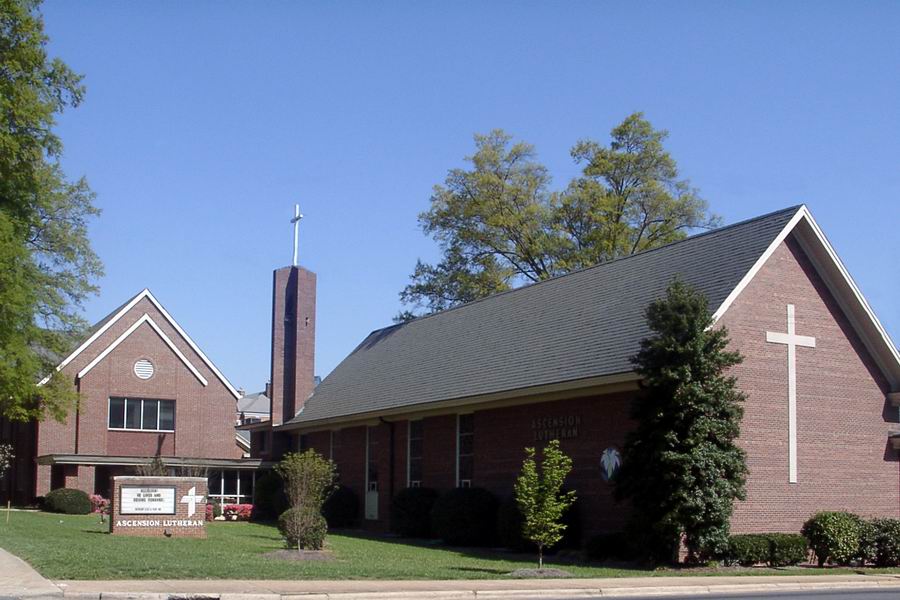
We know this venue well from our work here, and it remains one of the most architecturally honest spaces in the Charlotte area. The 1906 Gothic Revival structure, often referred to as the Chapel at Morningstar, offers a rare “blank canvas” within a historic framework. For a floral designer, the white-on-white interior is a gift, allowing the focus to remain entirely on the silhouette and color of the botanical elements.
The design opportunity here lies in the contrast. Because the sanctuary is intimate and bright, every stem is visible. This is not a space for “filler” or bulk greenery; it is a space for intentional, sculptural design that respects the historic heart-of-pine floors and the clean lines of the arched alcove.
The Spaces
The Sanctuary
The heart of the experience is this intimate room defined by its white wood-paneled walls and original pews. It feels like a gallery, which means your flowers are the featured exhibit. The aisle is narrow, so scale must be managed carefully to allow for movement without sacrificing impact.
- What works: Symmetrical floor nests at the start of the aisle and lush, low-profile arrangements on the altar table.
- Skip: Tall, wobbly pedestals that feel precarious in an intimate setting.
- Watch out: The pews are historic; any floral attachments must be non-damaging and securely fastened.
- Budget hero move: Concentrating the majority of the floral budget on the altar area. This is where guests will look for the duration of the ceremony, and the white alcove frames large-scale floor arrangements perfectly.
The Altar Area
The altar is a raised platform that serves as the focal point of the building. It is flanked by arched windows that pull in soft light, creating a natural spotlight for the couple.
- What works: Ground-level “meadows” that wrap around the base of the altar platform. This adds depth and softens the transition between the floor and the stage.
- Skip: Hanging installations. There are no rigging points or chandeliers capable of supporting weight in this ceiling.
- Watch out: Ensure arrangements do not obscure the central cross or the movement of the officiant.
The Entrance Walkway
The transition from the wooded parking area to the chapel is via a brick path. This is an overlooked opportunity to set the tone before guests even step inside.
- What works: A pair of large, garden-style urns at the chapel doors or a floral “nest” at the base of the entrance steps.
- Skip: Delicate blooms that can’t handle the North Carolina humidity or wind.
- Watch out: The path is brick and can be uneven; ensure all external vessels are weighted and stable.
What Works at Ascension Lutheran Church
High-contrast color palettes. Against the stark white walls, deep burgundies, architectural blues, or even vibrant citrus tones look incredibly sophisticated. If you prefer a white-on-white look, prioritize high-texture greens like smilax or ruscus to prevent the flowers from disappearing into the background.
Ground-level floral nests. Because you cannot hang anything from the ceiling, the floor is your playground. Creating “growing” installations at the base of the pews or the altar platform makes the flowers feel like they belong to the space rather than being placed on top of it.
Architectural aisle markers. Instead of standard bows, use small, clustered arrangements tied with silk ribbon that echo the textures used at the altar. This draws the eye down the aisle toward the ceremony focal point.
Monochromatic white textures. If going for a classic look, mix various “shades” of white—creams, stark whites, and blushes—with heavy textures like ranunculus, sweet pea, and bleached dried elements. The white paneling will highlight the subtle differences in these tones.
Entryway statements. The transition from the wooded exterior to the bright interior is dramatic. Using florals to bridge that gap—perhaps with more “wild” or “woodland” textures outside that transition into “refined” versions inside—creates a cohesive narrative for the day.
Budget Guide
| Tier | Estimate | Floral Strategy |
|---|---|---|
| Essentials | $1,750 - $2,500 | Focus on personals (bouquets/boutonnieres) and a single, high-impact altar table arrangement. |
| Sweet Spot | $3,500 - $5,000 | Adds two large floor-based altar “nests” and simple, elegant pew markers for the ceremony. |
| Full Experience | $5,500 - $7,500 | Includes a full “meadow” at the altar, entrance door installations, and lush centerpieces for a reception in the Meeting Room. |
| Statement | $8,000+ | Immersive floral design including a full aisle of floor-growing flowers, a heavy-density altar installation, and premium reception decor. |
The intimate scale of this venue means that even a “Sweet Spot” budget can make the space feel completely transformed and lush.
Tips
Forget the ceiling. There are no rigging points or heavy chandeliers here. Focus your investment on what guests see at eye level and below.
Repurpose with intention. Since the ceremony and reception are often in the same building (or very close), your altar floor nests can easily be moved to frame a sweetheart table or a cake display in the Meeting Room.
Lighting is your friend. The natural light through the leaded glass is beautiful but can be dim on overcast days. White flowers will help brighten the space and will photograph better in lower light than dark, moody tones.
Respect the history. This is a 1900s building with original wood. Avoid any floral foam or water-heavy installations that don’t have a waterproof liner. We prioritize sustainable, water-conscious mechanics here to protect the heart-of-pine floors.
The “Cemetery” Path. Don’t be deterred by the cemetery location. The wooded path is incredibly serene and provides a beautiful, muted backdrop for wedding portraits that contrast the bright chapel interior.