


Trends & Inspiration
Wedding Trends We're Loving for 2027
Wedding inspiration isn't new. What's changed is how fast it moves and how much of it there is.
A few years ago, a bride saw one photo of the bouquet a celebrity carried and a short write-up about the wedding. Now you can find the whole story behind it, why the couple chose it, what it cost, and how the day actually came together. Trends used to arrive once a year. Now they move faster, sometimes by the week, across Pinterest, Instagram and TikTok at once, each platform doing something different.
Couples still find ways to make trends their own. They pick a detail, a petite bouquet, an asymmetrical arrangement, a color story, a ceremony layout, and build it into something personal. This works even when the look goes back years, sometimes decades, to something we've already seen.
We checked our 2026 predictions against what people actually booked, and most of them held up. We looked at where 2027 is heading, in the flowers couples are choosing and the way they're laying out the day itself. And because nothing shows up out of nowhere, we traced a few of the biggest shifts back to where they started, boho into garden, classic elegance into something more sculptural, jewel tones into moody romance, to show how a look gets from one place to another. Every shift traced here comes from real couples and what they actually booked at Poppy.
Looking Back
We put predictions out every year, so it's only fair to look back and see how they held up. Here's what we got right about 2026:
Amaranthus went from afterthought to staple
Amaranthus was named Poppy's 2026 Flower of the Year, and the numbers backed it up. Back in 2024, almost nobody was booking it, just 10 weddings all year. Now it's in about 1 in 10 Poppy weddings, and it came up in close to a quarter of all design meetings. Green and emerald are still the shades most couples ask for, though red and coral are closing the gap. We don't think amaranthus is going anywhere in 2027. If anything, we're excited to watch it move past the bridal bouquet into something more sculptural, more cultural, a monobloom moment where amaranthus is the only flower in the room, not just an accent.
Lime grew faster than any other color call
Chartreuse and lime were our best color call. Lime alone went from 0.5% of weddings in 2025 to 23% in 2026.
White's still winning, it just looks different now
Ivory and white have always been the default, and what's changing is the texture underneath it, along with small pops of color instead of a plain, uniform look. White palettes nearly doubled, from 25% of weddings to 41%, and white now shows up on 77% of everything we book. Some of that may trace back to white being named Pantone's Color of the Year, Cloud Dancer, giving couples one more reason to stick with a palette they already loved.
Canary yellow held steady
Canary yellow stayed close to a third of weddings both years, exactly what we predicted.
Cobalt and chocolate showed up everywhere except the flowers
Cobalt and chocolate showed up plenty this year, just not in florals. Blue florals went from 15% in 2025 to 11% in 2026 in our weddings. These two colors turned up in tablescapes, linens and small design details, even as couples moved away from them in their flowers. We also saw dramatic draping and cloth details. It's structure, not a statement of its own, which might be why it holds up no matter what floral style you choose.
Here's how we're seeing weddings shift in 2027, in everything from the flowers couples are choosing to the way they're laying out the ceremony itself.
Whimsical Garden Party
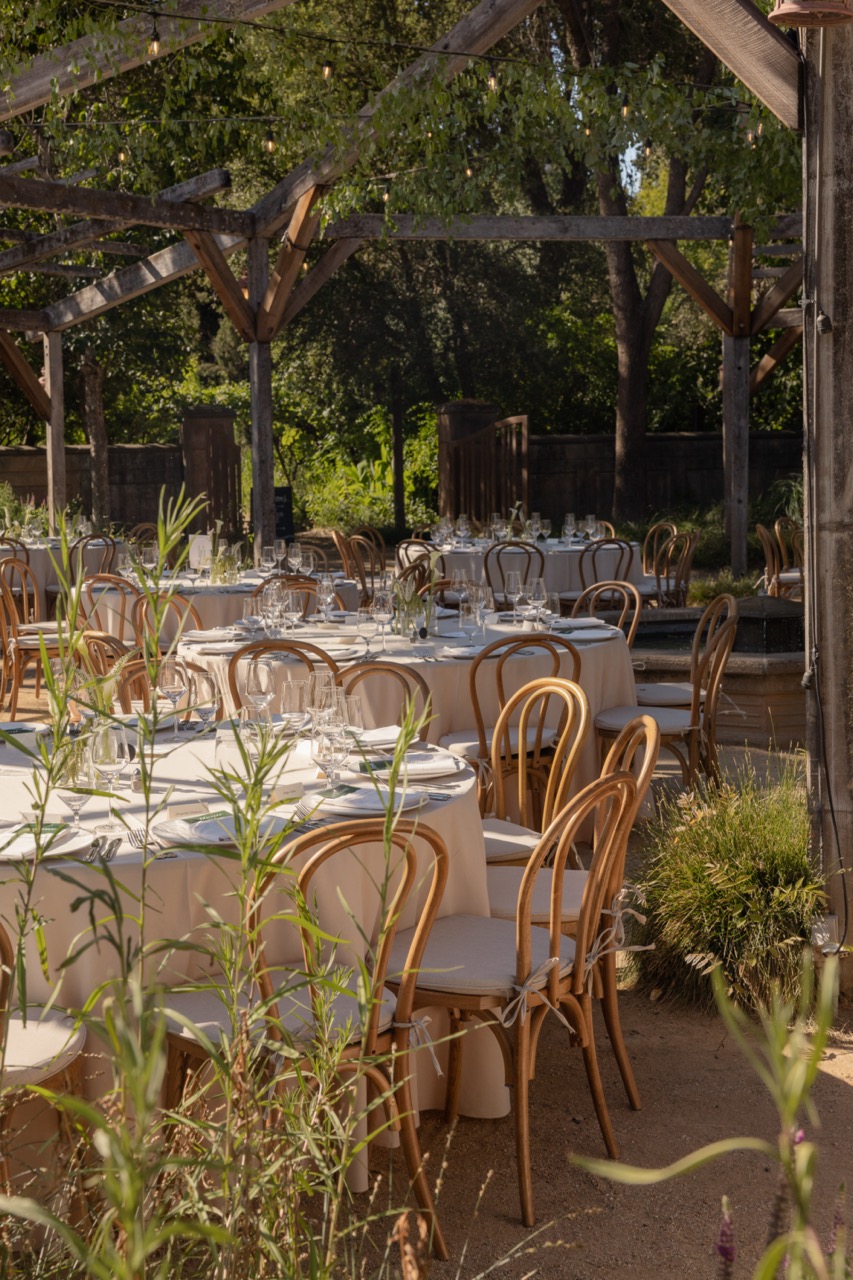
Whimsy is having a moment, and weddings are no exception. The overly polished, manicured wedding is fading. Florals now look like they grew from the ground instead of being placed.
It looks effortless, but getting it right takes real detail and intention. These arrangements have to move with the space and look like they've lived there.
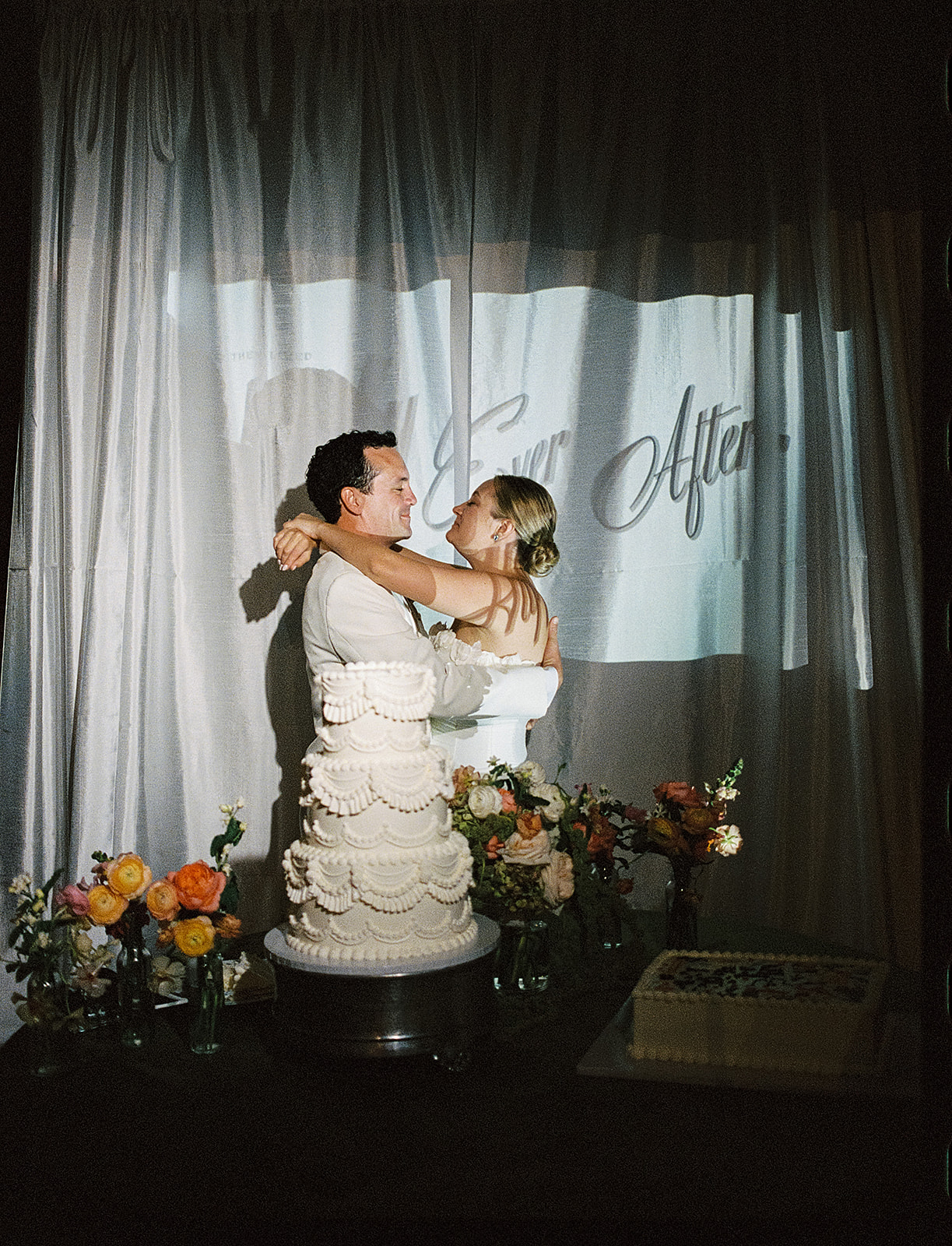
There's a nostalgia running through this too: analog references, weddings that feel pulled from another era, and older traditions being brought back because the couple genuinely loves them.
That inspo shows up everywhere we look. About 1 in 3 couples share meadow or wildflower inspiration with us, and that number is climbing, 31% of 2026 couples, 36% so far in 2027. Nearly 3 in 10 describe a garden or wildflower style in their design consultation, holding steady year after year
We're also seeing momentum around:
- Loose, gathered bouquets
- Asymmetrical floral moments
- Dressed-up garden-party looks
- Feathered floral pairings
- The meadow look is also showing up in hotels, estates and ballrooms. It's no longer confined to just barns and outdoor weddings.
The Courthouse Glow Up: Intentional Micro Weddings
Courthouse ceremonies and smaller guest lists are shifting where couples put their floral budget: less spent on scale, more spent on specific, high-impact moments.
Weddings with 50 or fewer guests made up 11% of Poppy's booked 2026 weddings. Booked 2027 weddings so far are at 16%.
Intimate doesn't mean minimal. Among Poppy's intimate bookings, about 84% still choose centerpieces, about 87% choose a statement piece, and about 65% choose an arch.
A courthouse ceremony might call for a petite bouquet, but couples are still going all in on:
- Dramatic flower clouds
- Statement reception installations
- Sculptural centerpieces
- Floral bar moments
- Premium stems like orchids and garden roses
- Custom hand-tied pieces and floral purses
Halley Kate's wedding followed this model: an intimate courthouse ceremony, then a fuller celebration later, with floral installations and arrangements that featured hydrangeas, pink garden roses, pink tulips, Italian ruscus and blush butterfly ranunculus.
.jpg)
Unexpected Floral Designs and Non-Traditional Ceremony and Reception Layouts
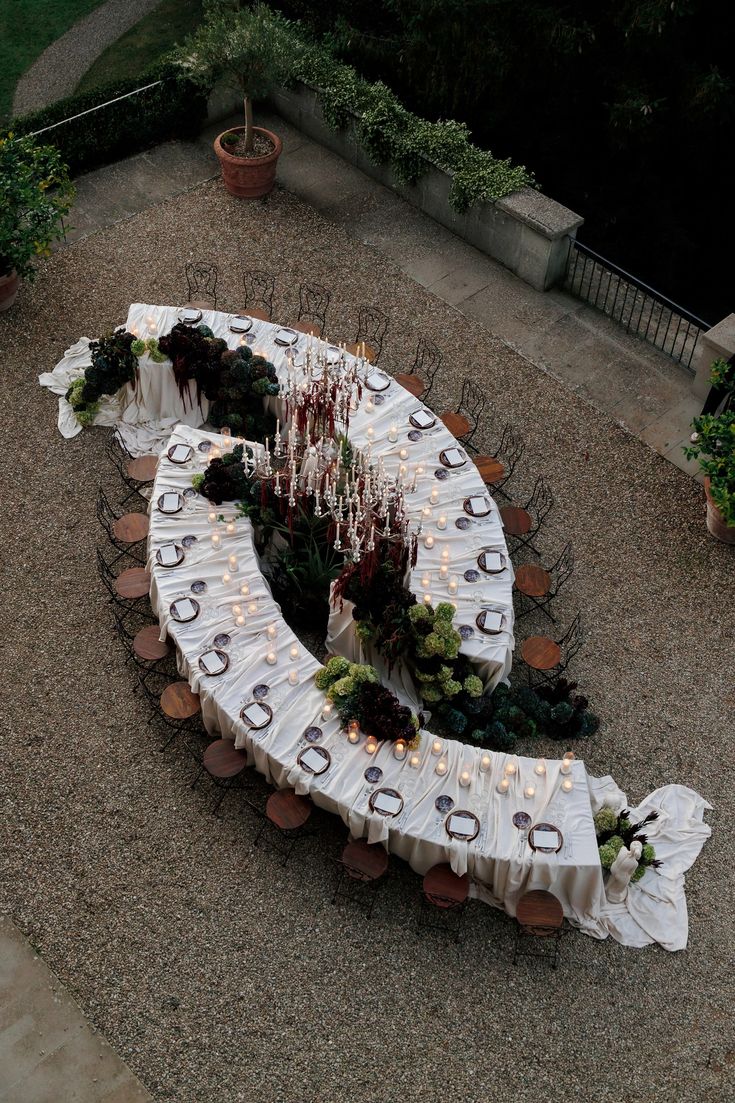
Weddings are rethinking where the flowers belong. Ceremonies are moving out of a straight aisle and into circular or standing setups. Centerpieces are showing up on pillars and floral bars as often as on tables. The biggest floral moment doesn't have to be the arch.
Non-traditional table shapes are changing where the florals go too. Instead of a runner down the center of a long table, many of these layouts center on one statement moment: an oversized arrangement set at the middle of a round table, or a cluster at one end of a communal table, so the florals follow the shape of the layout instead of a straight line down the middle. The flowers become part of how the space is experienced, complementing the tables, guest flow, and gathering itself.
Flowers with movement and texture such as hydrangeas, carnations, sunflowers, delphinium and airy grasses work especially well for shaping these layouts.
Poppy's three biggest areas of growth this year are floral meadows, pillars with larger ceremony arrangements, and statement bar arrangements.
The floor plan itself is becoming part of the design.
Moody Romance
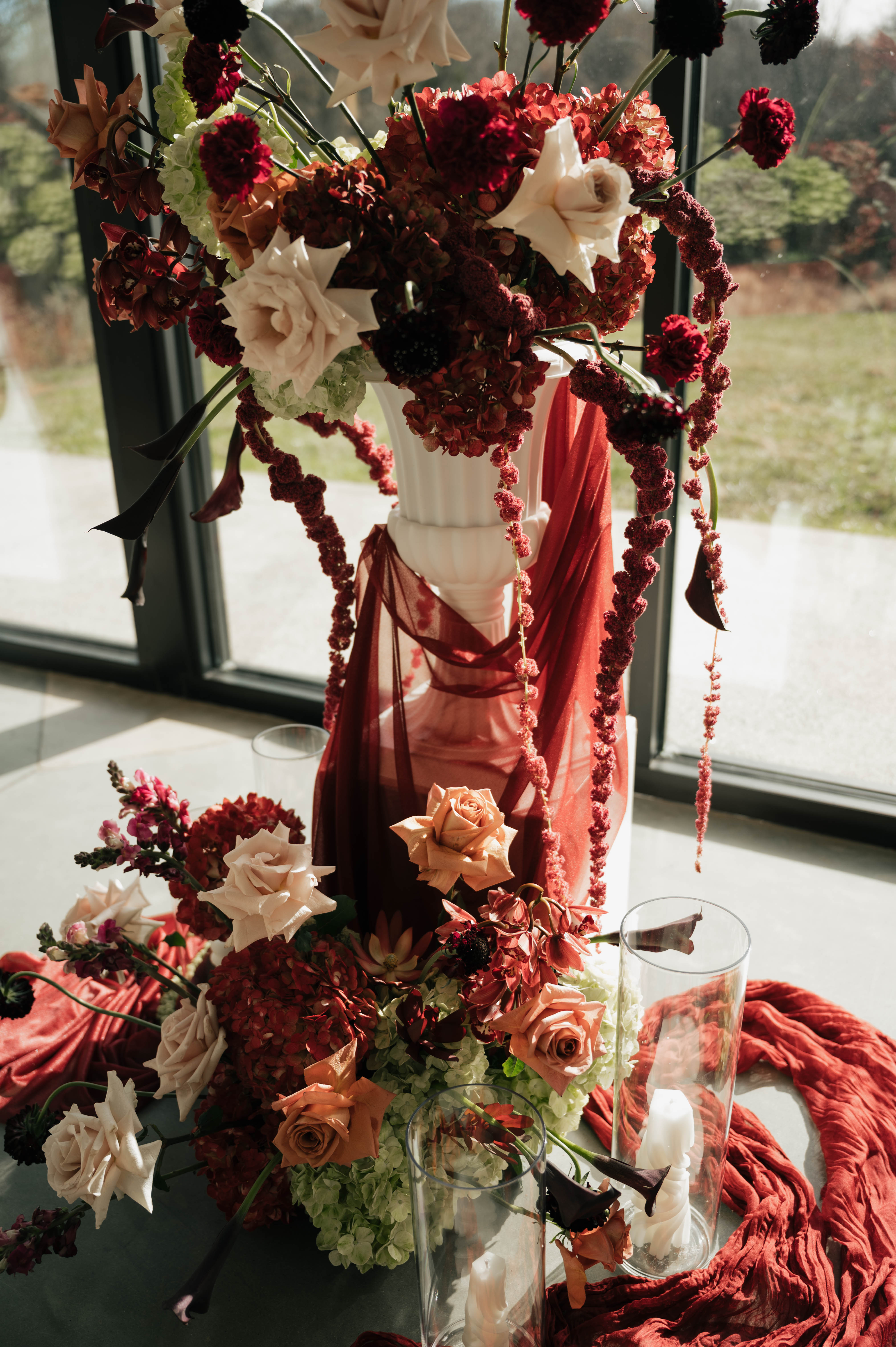
Romance is getting moodier. Couples are moving past soft blushes and pastels into richer, more saturated palettes, especially Bordeaux, burgundy and all-red monochromatic designs.
Orchids and garden roses fit this palette well. Both are already trending toward fewer, more sculptural, focal-bloom placements rather than volume filler, which suits a moodier design better than a fuller, blended one.
Palettes that include red and burgundy made up 11% of Poppy's booked 2026 weddings so far, still about double the 5% we saw at the same point in 2025 (6% for all of 2025). Booked 2027 weddings so far are at 10%. The shift is stronger in the second half of the year: the same palette reached 14% of booked 2026 weddings from July 1 through September 18, up from 10% in the first half of 2026.
Moody romance is about drama as much as color. Dusty, old-rose pink is resurfacing within that same moodier palette, adding warmth without softening the overall look. Berry red has the same deep, wine-toned energy in a fresher hue, closer to raspberry than straight burgundy, and comes across as elevated garden party when paired with white, or moodier on its own. Drapery plays into that same mood, heavy fabric pooling behind an altar or a sweetheart table, closer to a Wuthering Heights aesthetic. Candles do the rest: candelabras, taper-lined tables, a room lit almost entirely by flame.
Trending colors are also coming back in less expected combinations: butter yellow next to cherry red, rich palettes of mauve, black and white can be paired with lace details, veils and dramatic silhouettes, and chartreuse with orange and brown for a bold look.
Couples are proving that romance can be experimental and dramatic.

Explore the data
This report is only a slice of what Poppy knows about wedding flowers. Since 2022, couples have shared more than a million inspiration images with our team, through Pinterest links and photos uploaded straight into their proposal. We can tie each one back to a couple's actual wedding date, budget, location and what they ended up buying, so we can see how inspiration actually plays out in real weddings.
Curious what the data shows for your own market or season? Explore the full Poppy Flowers Atlas.
How trends are evolving
Trends have backstories. They evolve, they transition, and they rarely stay the same for long. Here's what that's looked like over the past few years.
Boho into Garden
Boho had its moment, with pampas grass, macramé, a hexagon arch, dried palm everywhere you looked. Back in 2024, pampas was still in about 1 in 20 Poppy weddings. By 2026, it had all but disappeared, down to roughly 1 in 100. What stuck around was the feeling, earthy, textural, a little undone, and it grew into something new. Wildflower stems went from about a quarter of weddings in 2024 to half of them by 2026, and Queen Anne's lace alone jumped from under 2% to more than 10%. Florals now look like they came straight from the ground. Pampas gave way to something that was still relaxed, just more intentional, more garden-like.
%20de%20taman%CC%83o%20grande.jpeg)
Classic Elegance into Sculptural
The classic elegant look is evolving too, shifting toward something more sculptural. It used to mean tight, round, single-flower bouquets: white roses, callas kept in a clean monobloom, ivory and green, nothing out of place. It's still restrained, but there's more movement to it. Callas are now being left with exposed stems and natural, bent silhouettes. Hydrangeas add volume and texture instead of just filling space. It still looks elegant, just less symmetrical and more alive.
.jpeg)
Jewel Tones into Moody Romance
Bright jewel tones started fading away, and moodier colors filled the space. Berry, red, blue and purple had their moment around 2024 and 2025, sitting on about 5% of weddings, then dropped fast: under 1% by 2026, and barely present in what's booked for 2027. Burgundy and Bordeaux grew right alongside that drop, from under 4% of weddings in 2024 to about 9% in 2026. That growth is continuing into 2027. This is the story behind our Moody Romance prediction for 2027. Still bold, just tonal instead of electric.
%20de%20taman%CC%83o%20grande.jpeg)
Nostalgia, Old World to Modern Update
Nostalgia is showing up across floral design. Heirloom rose varieties are bringing sepia and mauve tones into arrangements. Lily of the valley is trending too, bringing back that same old-world, romantic feel. Couples are turning to Polaroids and Super 8 film to shoot their weddings, and searches for 1980s wedding dresses are up over 1,000%. And it's not just weddings. Early-2000s culture is having its own revival right now. The Devil Wears Prada 2 and Practical Magic 2 are proof that couples aren't the only ones reaching backward for comfort. It's an old-world feeling getting a modern update.
Trending Flowers to Watch
Here are some flowers making moves into 2027.
Lily: The classic multi-petaled flowers are already showing up in tall, sculptural installations. Calla lilies have the spotlight right now, Lilies (Asiatic and Oriental varieties) are next. Disclaimer: Lilies can be toxic to pets, especially cats.
Butterfly ranunculus: a delicate, papery-petaled bloom that's more heat-sensitive than a standard ranunculus and holds up best in shaded or indoor moments. It's already in about two-thirds of Poppy's booked 2026 weddings.
Orchids: trending in phalaenopsis and cymbidium varieties for editorial, sculptural looks. They went from barely showing up to about 5% of booked 2026 weddings. They can be pricey, so they work best as a focal accent rather than for volume.
Gerberas: a great option for color blocking, and sturdy enough to hold up well in structural arrangements and installs. They come in nearly every saturated hue and hold their shape well as a single-variety block of color, which is why they keep showing up in monobloom centerpiece styling.
Tulips: featured in cascading bouquets and centerpieces this year, up 261% YoY. They're a true spring flower, and we'll see them paired with whimsical accents such as feathers in 2027.
Hydrangeas: already a Poppy staple, showing up in about half of booked 2026 weddings, up 145% YoY. In 2027, we'll see them in more sculptural installations that show off their volume and texture in unexpected ways, with lilac and mauve shades leading the color story.
Sunflowers: petal-stripped sunflower heads are being used in large-scale structural installation elements and centerpieces.
Natural Grasses and Meadow Textures: grassy textures are showing up more often as a complementary accent across meadows, installations, centerpieces, and bridal bouquets, about 30% more of Poppy's 2026 weddings than in 2025.
Looking Ahead
These calls are grounded in real numbers, patterns across thousands of Poppy weddings, and they'll keep taking shape as more couples book into 2027.
Design is only half of it. The best weddings also think about the people in the room, the friends and family who made the time to be there. A striking floral moment matters, but so does the feeling guests carry home with them. The wedding that stands out balances both: something that looks and feels like the couple, and something that's genuinely exciting for the people who showed up to celebrate them.
Last year was about making a wedding feel personal. 2027 pushes that further. Try a color that hasn't been part of your palette before or a layout that breaks the expected pattern. Bring back a tradition because you genuinely want it there. Keep experimenting until the mix feels true to you.