


Trends & Inspiration
Introducing Poppy’s 2027 Wedding Flower of the Year: Hydrangea
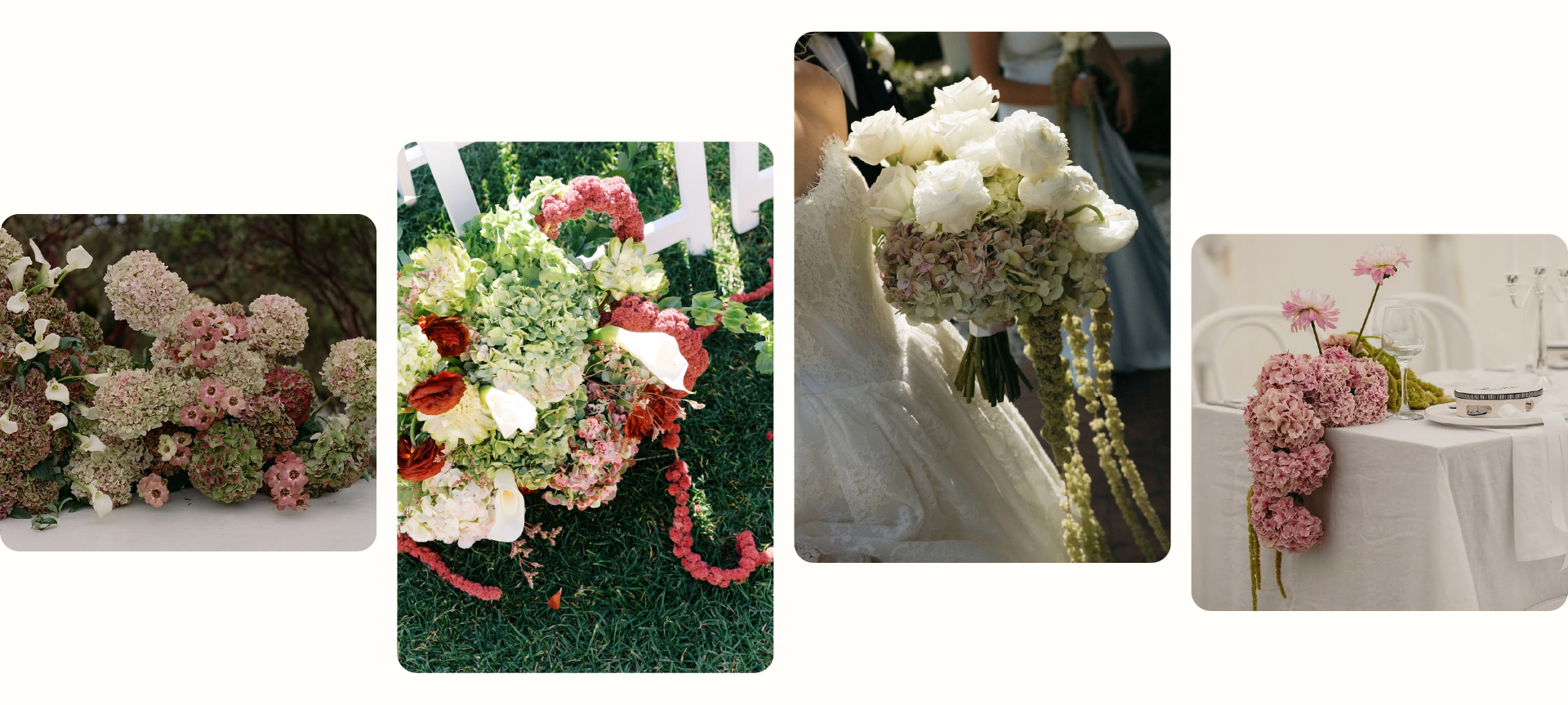
Hydrangea is Poppy's 2027 Wedding Flower of the Year.
If that surprises you, we get it. Hydrangea has been part of weddings for as long as most of us can remember, usually as a big, round bouquet or packed into a centerpiece to fill it out.
The version we picked is one where hydrangeas are showing up in bouquets, ceremony installations, flower clouds and sculptural centerpieces where their texture is the whole point. It's the same flower used in a very different way, and that change is why it's our pick for 2027.
The flower couples don't always ask for by name
Most couples don't walk into their design meeting asking for hydrangeas. They ask for ceremony design that feels intentional, tables with some softness, and a bouquet with shape. Hydrangea is often how our designers get there. It ended up on nearly half of the weddings we designed in 2026, far more than the number of couples who mentioned it when we first met.
That tells us a lot about the flower. Hydrangea adds elegance and drama without needing to be the headline, so it earns a place in the design even when some couples didn't explicitly request it.
How hydrangea is showing up now
Sculptural installations and flower clouds
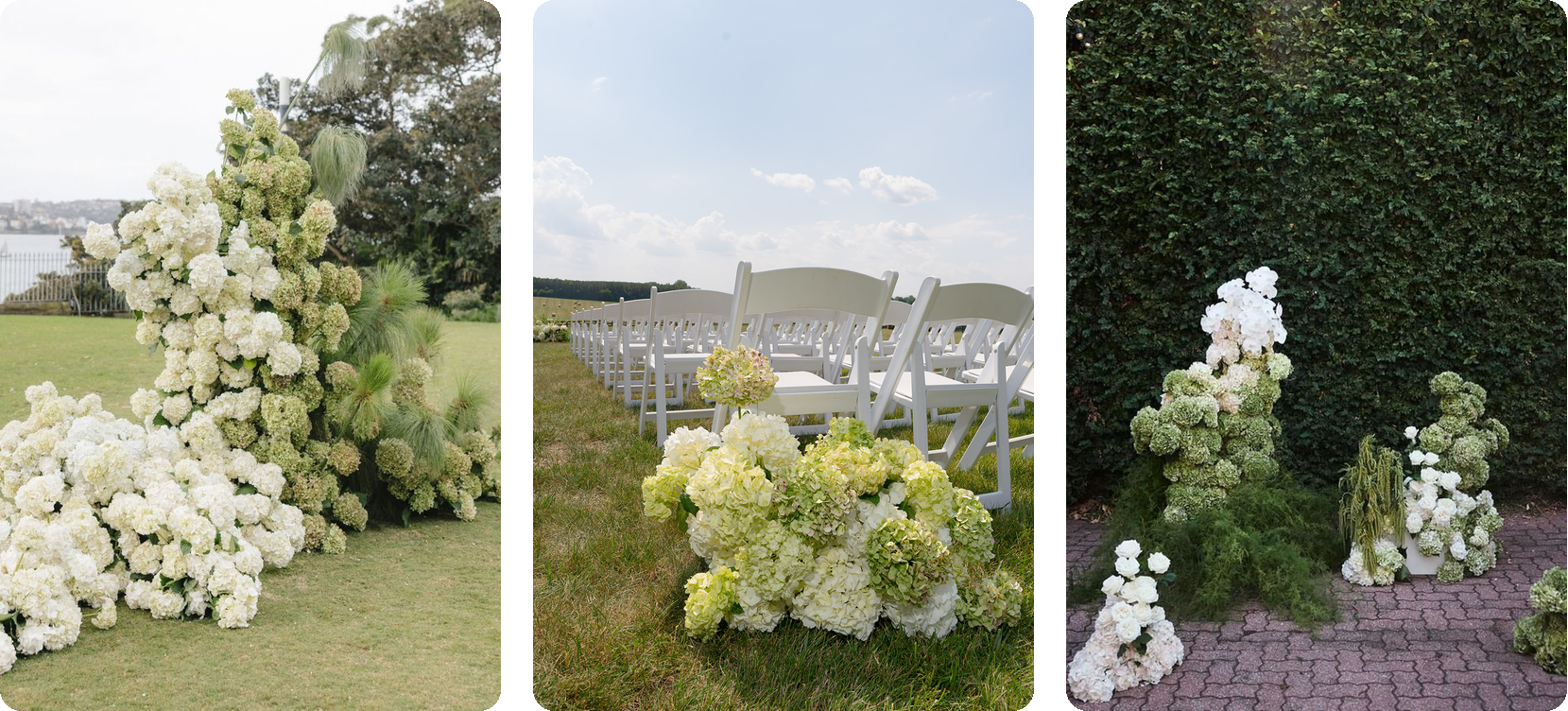
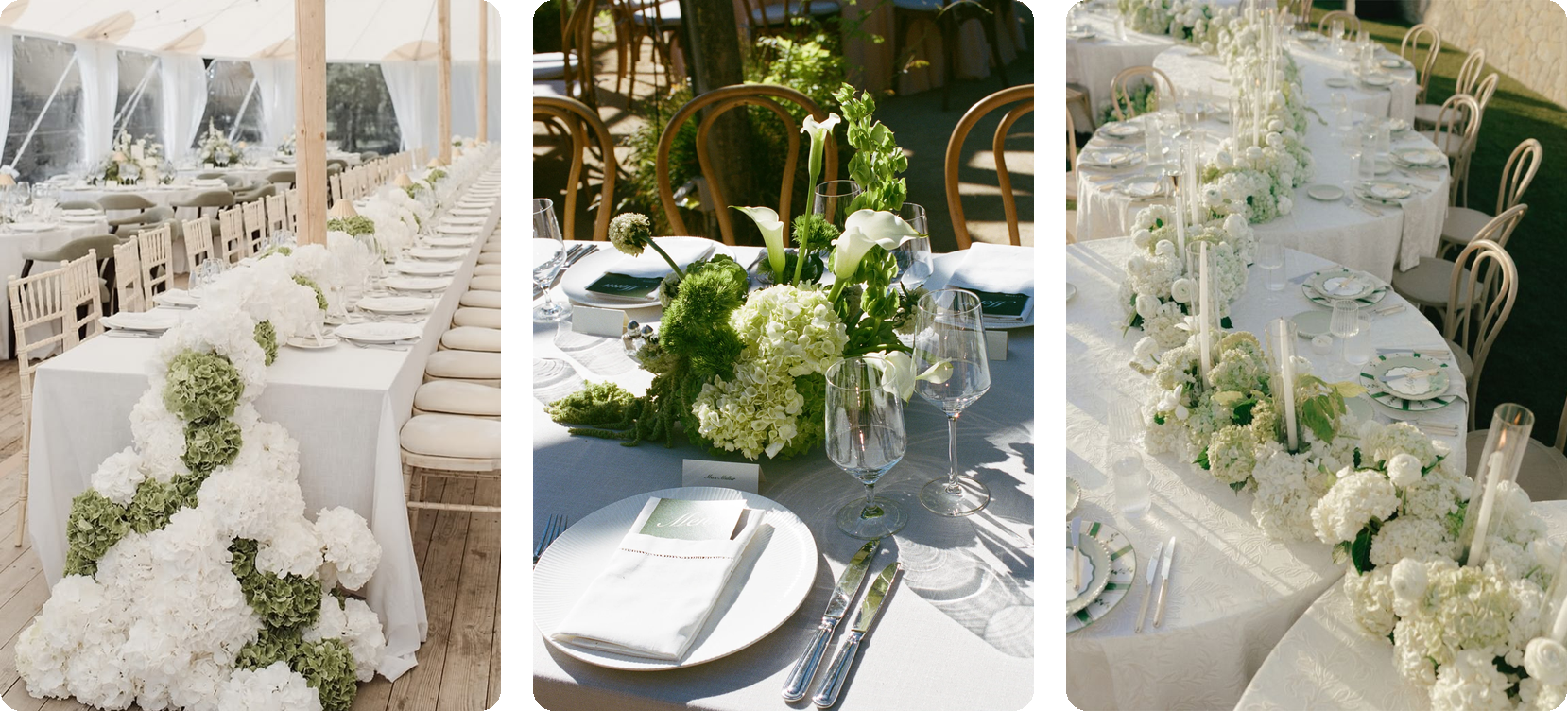
The biggest change is scale and shape. Hydrangea now forms the whole piece: ground installations that climb a gate or a wall, cascades that spill onto the floor, meadows and clouds for the ceremony or the dance floor. Volume still matters here, but texture is what you notice. Each head is made of hundreds of small florets, so a large installation has depth up close and a soft outline from across the room.
Two of our favorite ways to design with it right now are monobloom and monochrome. A monobloom piece uses only hydrangea, so the shape and texture of the flower are what you see. A monochrome piece sticks to one color family. Hydrangea lets you do both at the same time by playing with tone. It's still one flower, with much more depth than a single shade.
Asymmetrical, sculptural centerpieces
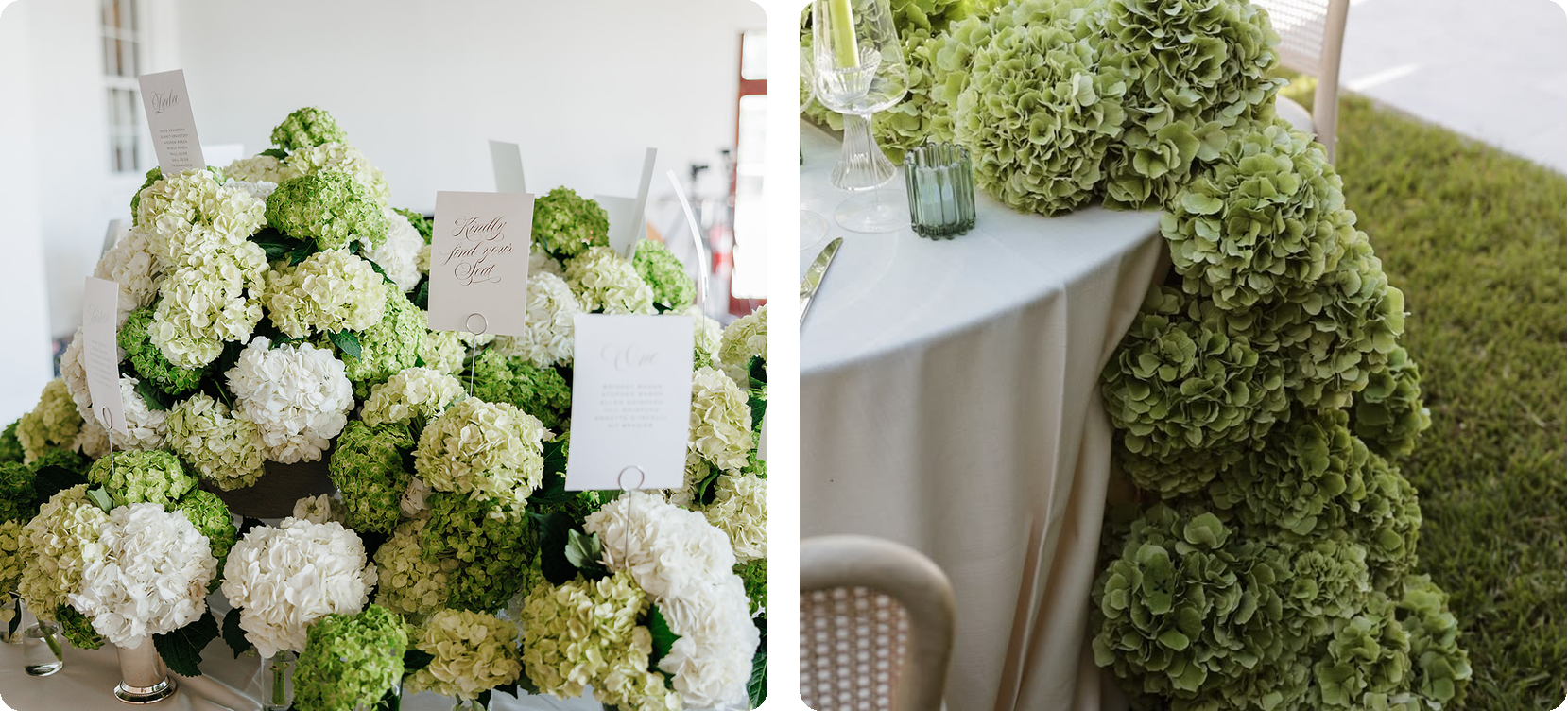
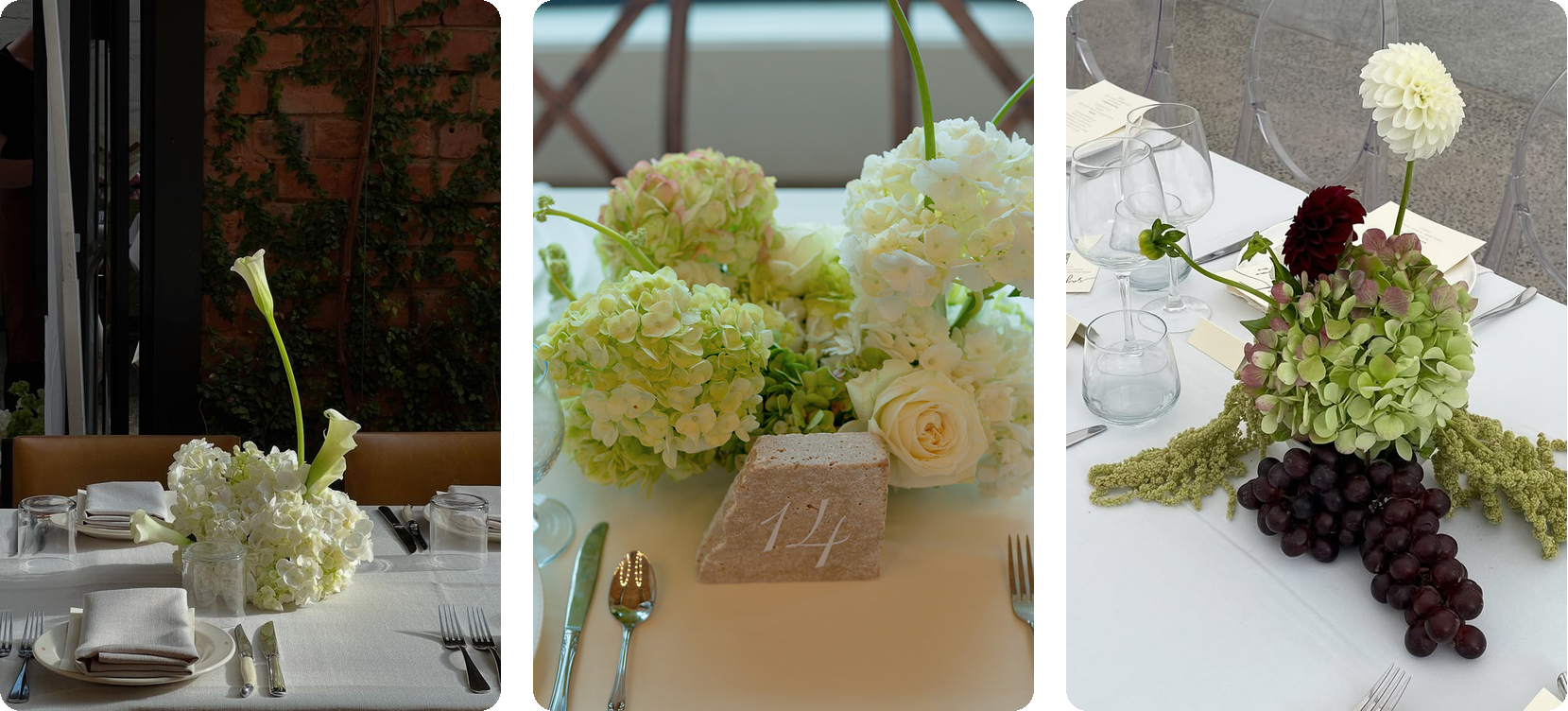
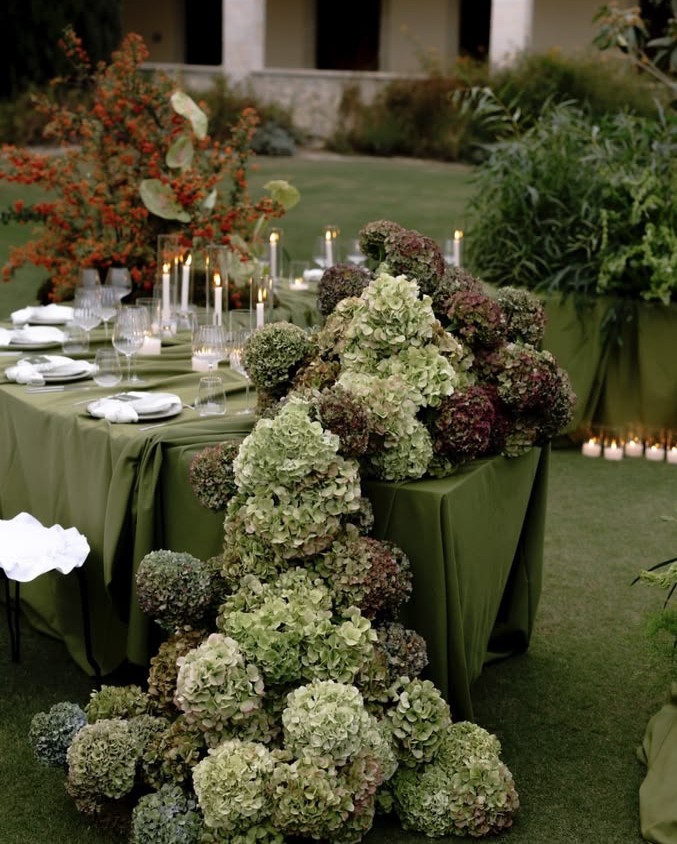
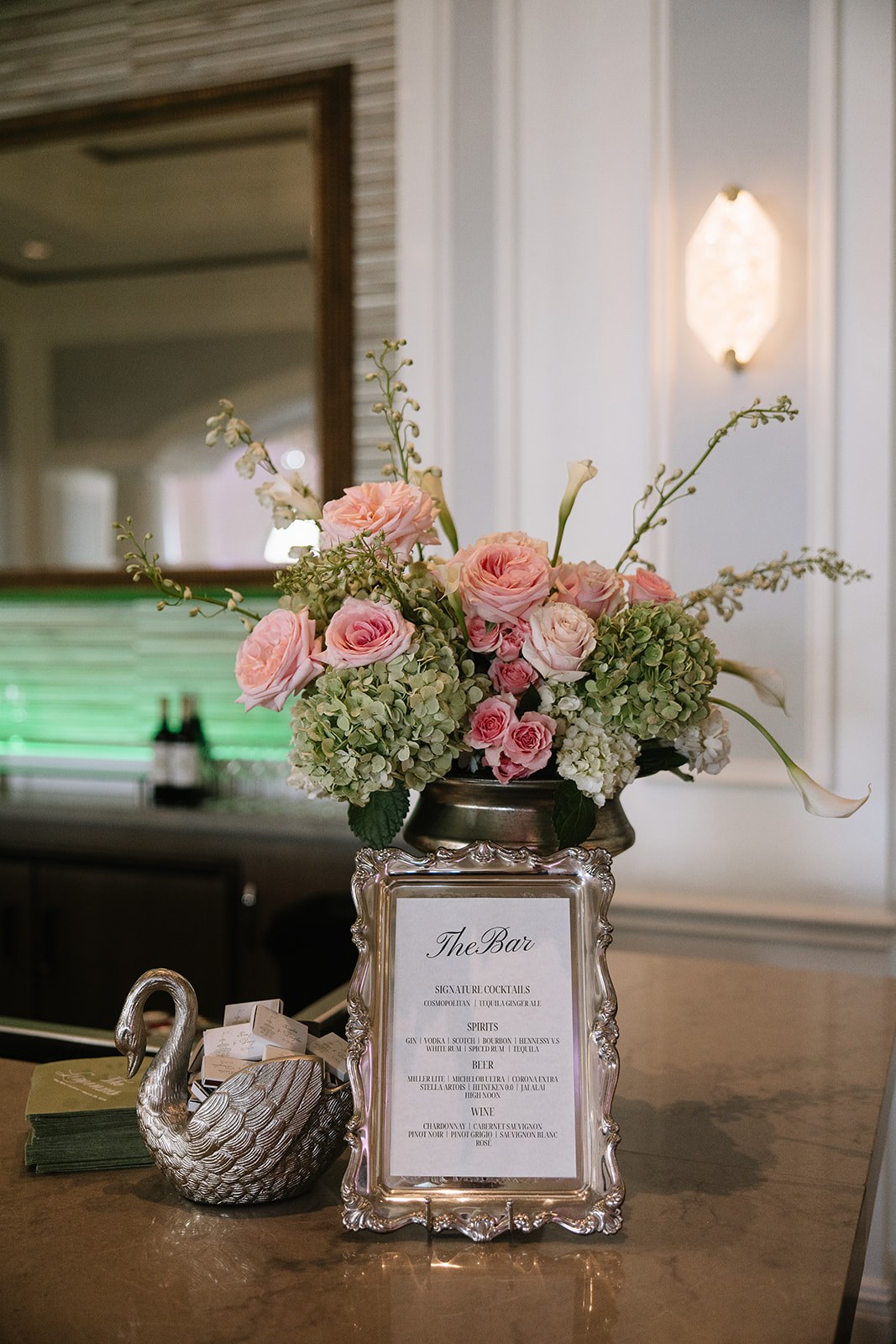
Centerpieces are moving off-center too. We're designing more low pieces that sweep to one side of the table, and single oversized arrangements set in the middle of a round table. Hydrangea works well here because the heads come in many sizes and shapes, from full, rounded mopheads to cone-shaped panicle varieties, so we can shape a piece that leans, trails or climbs.
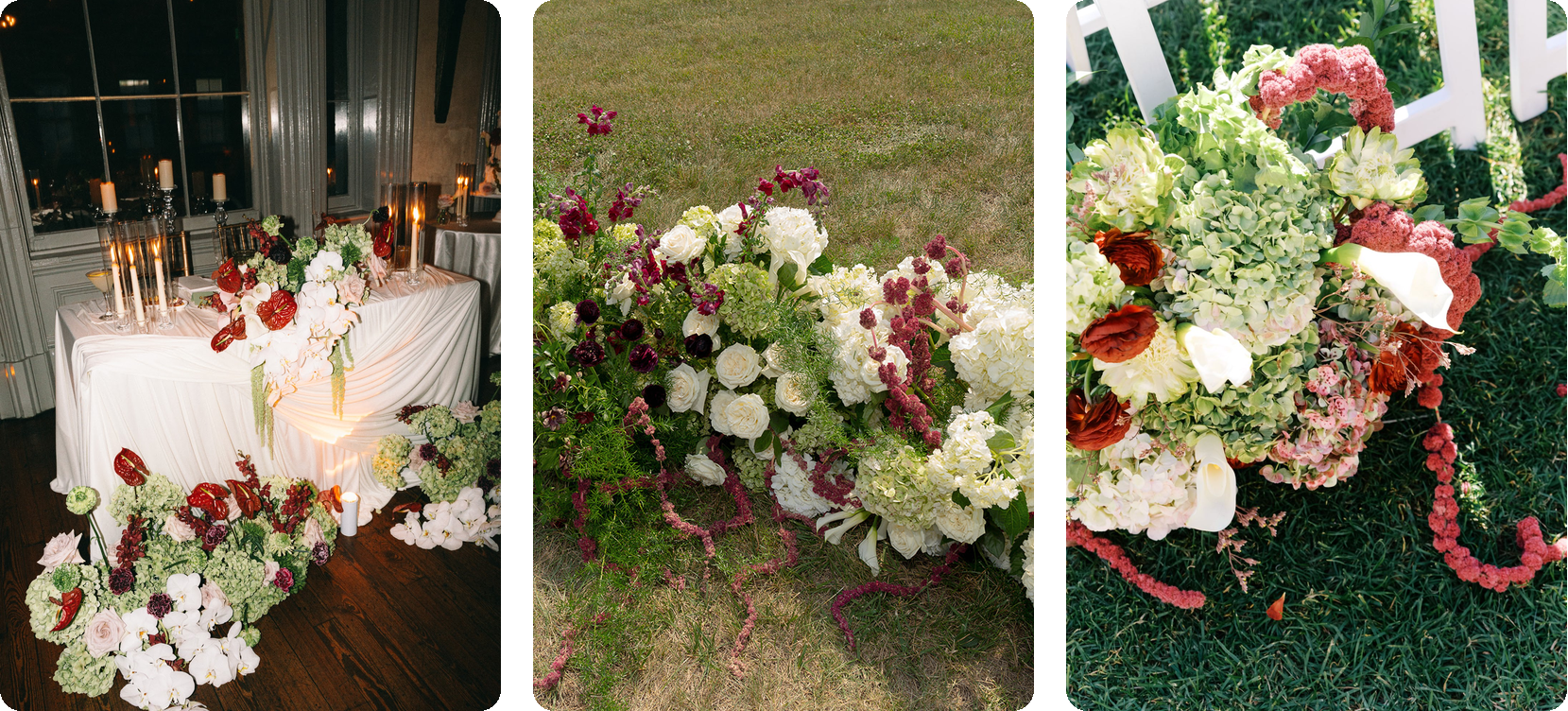
Hydrangea gives a table its fullness, so we like pairing it with stems that add line and movement. These three are our go-tos:
- Hanging amaranthus, our 2026 Flower of the Year ↗, for a trailing edge that spills over the table or the bar
- Calla lilies for clean, curving lines that rise out of the hydrangea
- Anthurium in green or white for a sculptural, almost graphic accent
Green grapes next to lime and white hydrangea, or dark grapes spilling out of an antique or blue arrangement, add color and texture without adding more flowers.
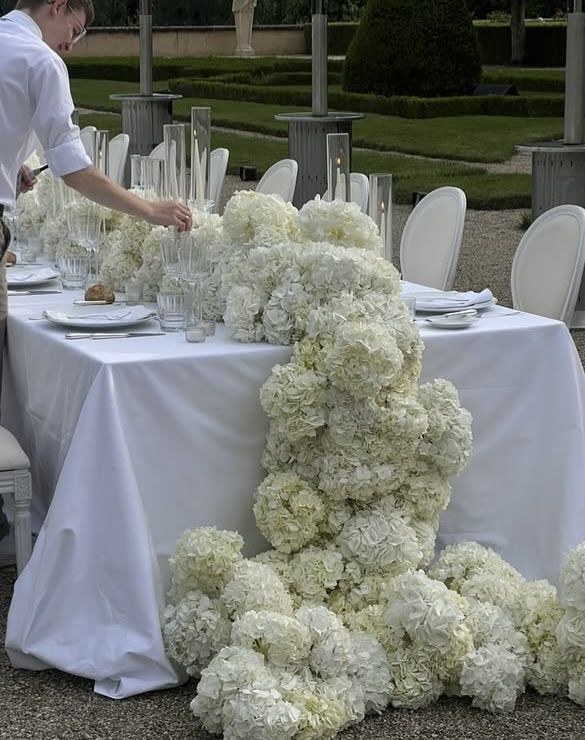
The same mix also works beyond a single centerpiece. Run it low down the length of the table as a floral runner, or go all the way with a full-table garland that covers the table from end to end.
Modern bouquets with a touch of hydrangea
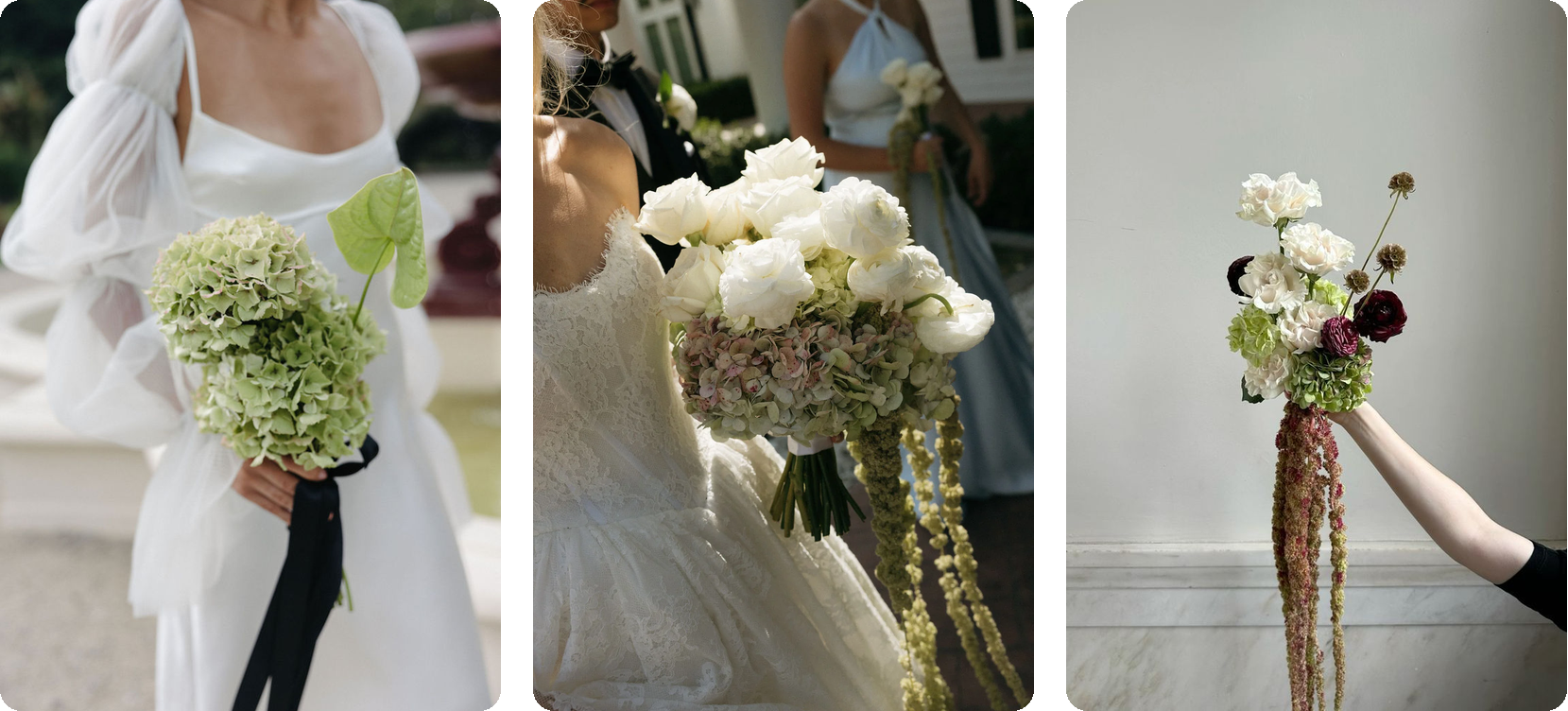
Almost every hydrangea bouquet we made this year mixed it with other flowers. Designers are using it as the base with garden roses, as a green or white layer next to sculptural stems like orchids, callas or anthurium, or on its own as one or two heads with a single anthurium and a ribbon. These bouquets have movement and a little asymmetry, and hydrangea gives them shape without taking over. It's also a smart way to get fullness without needing to add a lot of premium stems.
A few combinations we love for a modern hydrangea bouquet:
- Minimal: two green hydrangea heads, a single green anthurium and a long black ribbon
- Sculptural: lime green and white hydrangea with white orchids and tall white calla lilies
- Movement: white garden roses over lime green hydrangea, with burgundy ranunculus, scabiosa pods and trailing red amaranthus
- Garden: antique rose hydrangea with white calla lilies and coral ranunculus
A flower for every season
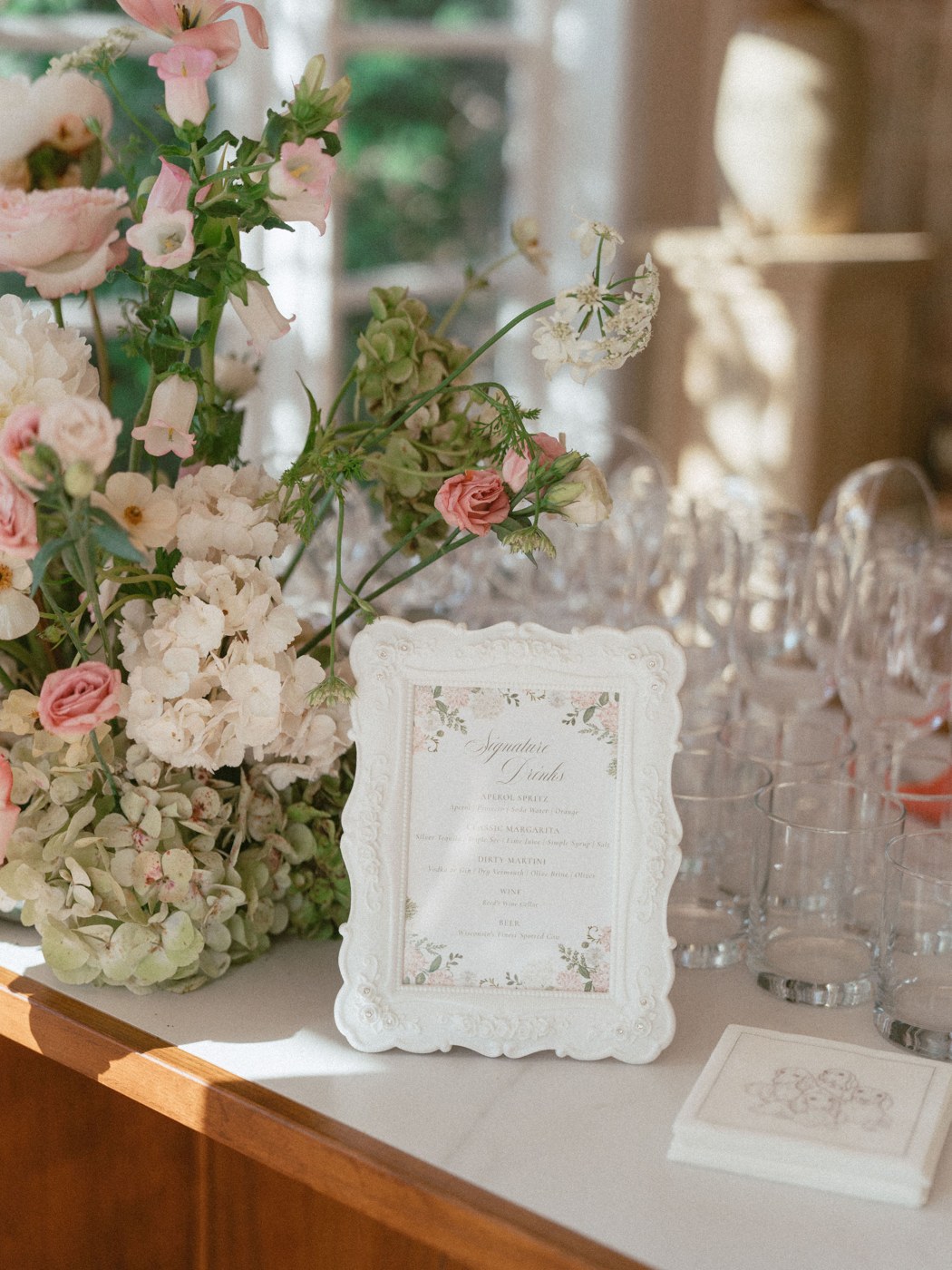
Hydrangea works year-round. In our 2026 weddings it showed up at a steady rate in every season, on about 43% of winter weddings and about 51% of fall weddings. Antique hydrangeas are a big part of that. These are blooms left to age, which turns them muted green, dusty rose, burgundy and deep red, and we use them well beyond fall. Here's how we like to use them through the year:
- Spring: antique kiwi hydrangea, a soft green with a blush edge, with white callas and lilac delphinium. The lilac gives a soft palette, just enough contrast.
- Summer: antique green hydrangea in a tonal mix with lime and white, finished with airy grasses for movement. Or go for color with lime green or ivory hydrangea, purple ranunculus and lavender delphinium.
- Fall: antique green and lime hydrangea with hanging red amaranthus and pops of orange butterfly ranunculus, set against olive linens. It fits the moodier palettes we're predicting for 2027.
- Winter: white and antique green hydrangea with burgundy ranunculus, lit by taper candles, or an all-white hydrangea cascade off the table for something clean and dramatic. For a cooler, more modern table, set blue hydrangea in chrome and silver vessels and let the metal do the shine.

The colors we want to see more of in 2027
White and green are still the hydrangea colors couples choose most, and we don't see that changing. Green especially is having a moment. Green was all over the Spring 2027 runways at New York Fashion Week, from Tibi's chartreuse layered over olive to lime green at Diane von Furstenberg. Lime green hydrangea was also one of our most-used stems this year.
What excites us is color beyond those two. Lilac and mauve are coming back into wedding palettes. Pinterest's 2026 Wedding Trends Report found searches for "muted mauve" up 365%, and mentions of mauve in our own design meetings more than doubled from 2025 to 2026. Hydrangea is one of the easiest ways to try those tones, since a few lilac or lavender heads cover a lot of space. We'd love to see:
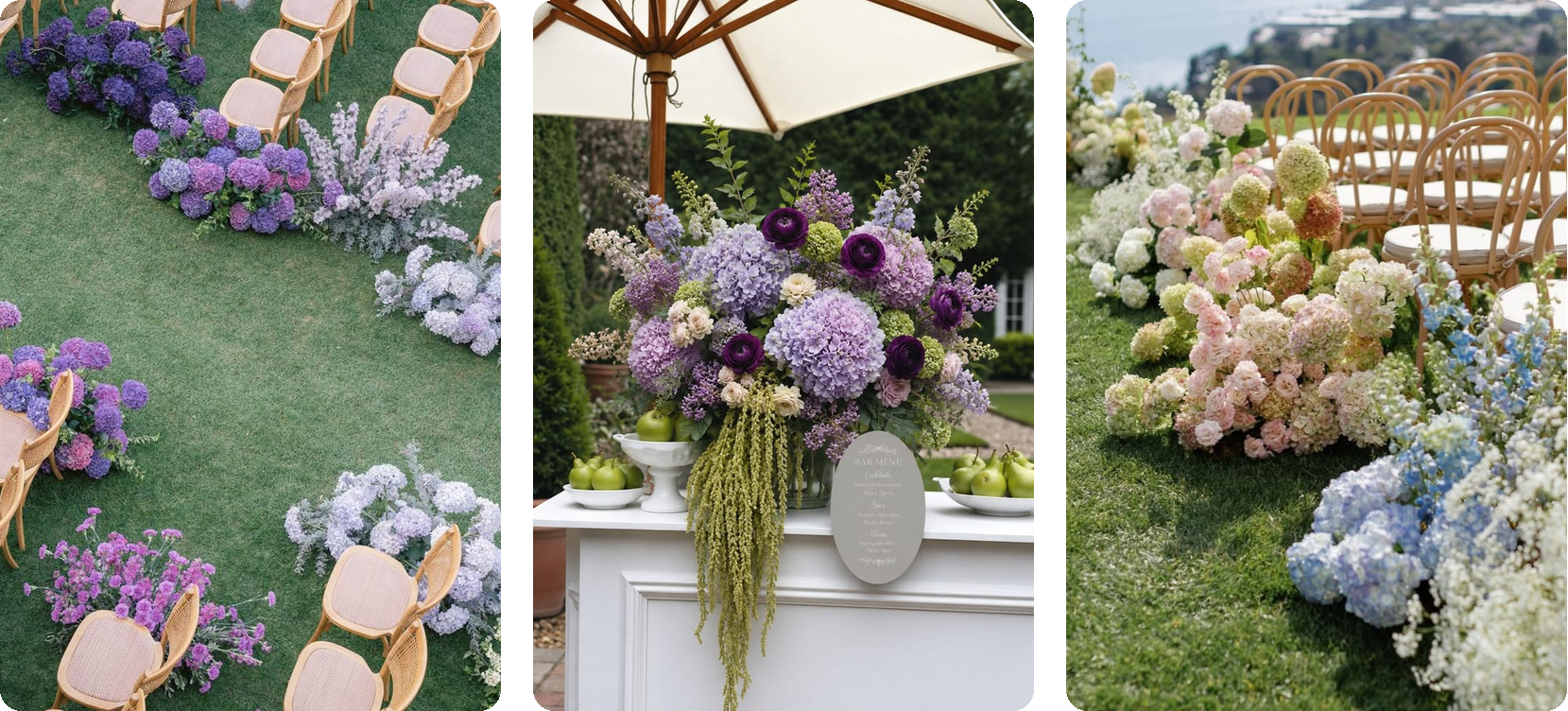
- Ceremony meadows that mix lilac, blush and white hydrangea with lavender delphinium
- Mauve and antique rose centerpieces with burgundy accents
- Two-tone installations, like soft blue over green or white over lime
- Mixed palettes that blend lilac, mauve and dusty pink
How to bring hydrangea into your wedding
- Give it one big moment. A ceremony installation or a flower cloud gives hydrangea room to show off its texture, and one large piece often makes more of an impact than several small ones.
- Let it support your bouquet. Ask your designer for one or two heads for shape, with your favorite focal flowers on top.
- Go asymmetrical on the tables. A low piece that sweeps to one side feels more current than a round dome.
- Try a color you didn't expect. Lilac, mauve or an antique variety changes the whole mood of a flower most people think they already know.
Hydrangea has been at weddings for decades. What's new is how designers are using it, and we think 2027 is the year couples start asking for it by name.
Ready to plan your flowers? Book a design meeting with our team and we'll show you what hydrangea can do for your wedding. Looking for more ideas for next year? Read our 2027 Wedding Trends Report.
__________________________________
Main Image Credits
Image 1: Pinterest
Image 2: Ayla Rae Weddings, @aylaraeweddings
Image 3: Tara Grace, @taragracephoto
Image 4: Pinterest
Gallery Image Credits
Image 1: Bushwhacked, @bushwhacked
Image 2: Pinterest
Image 3: Olivia DeRocher
Image 4: Pinterest