


Wedding Flowers in Chicago: Where Great Design Comes From
Venues We Love
Chicago's wedding venue landscape is one of the most architecturally varied in the country. Within a few miles of each other, there’s a 1906 glass conservatory filled with tropical palms, a bourbon barrel-aging warehouse where the walls are lined floor-to-ceiling in aging casks, or a Mediterranean Revival lakefront landmark where marble floors and arched windows have existed for more than a century. They're completely different rooms with completely different stories — and they require very different flowers.
That range is what makes Chicago so interesting to design for. The venues tell you what the flowers need to do. As we've seen in DC and New York, a city's buildings and environment are typically the most useful information a designer can have before choosing any flowers.
Here's what that looks like across three Chicago venues that couldn't be more different.
South Shore Cultural Center — When the Venue Carries the Weight
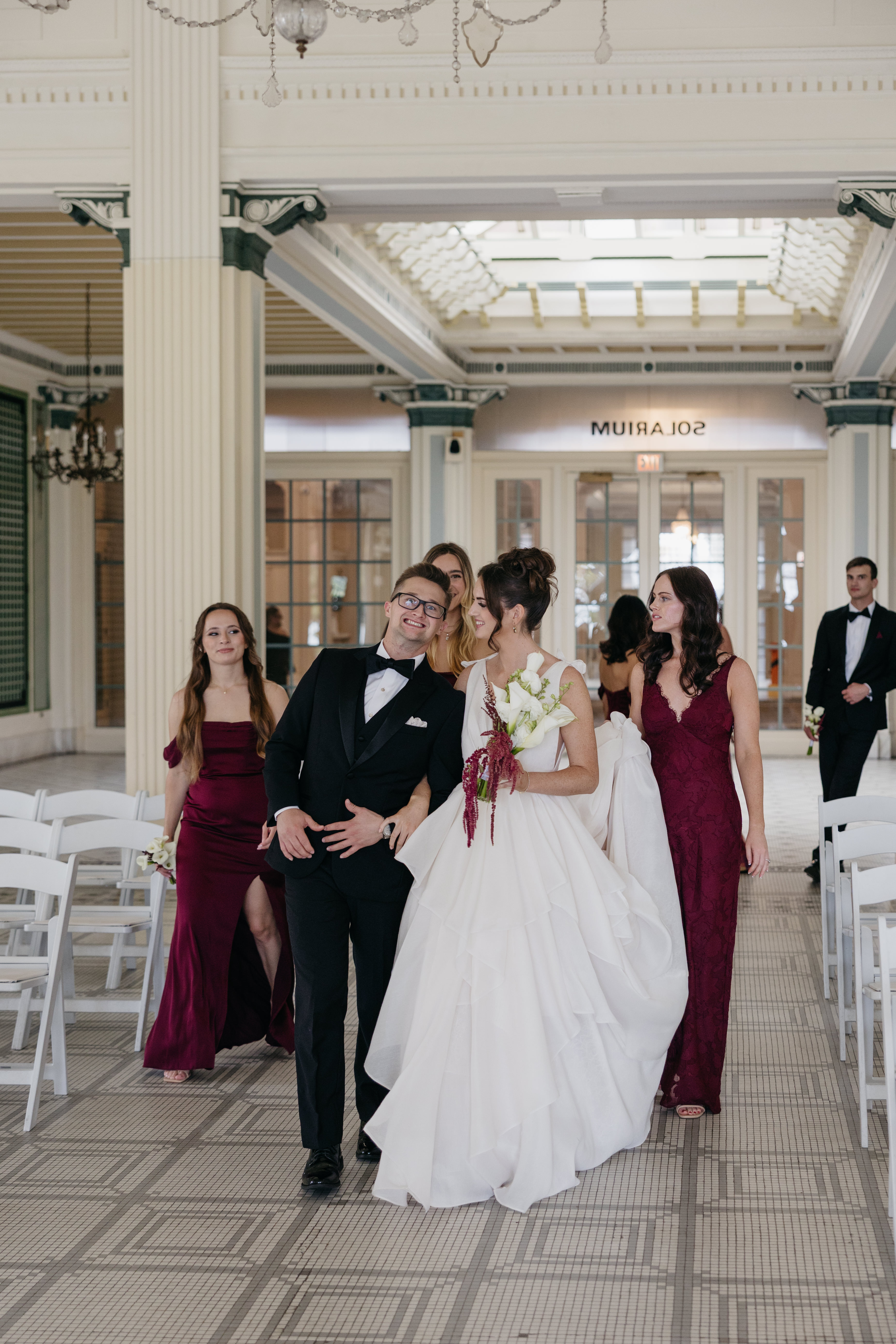
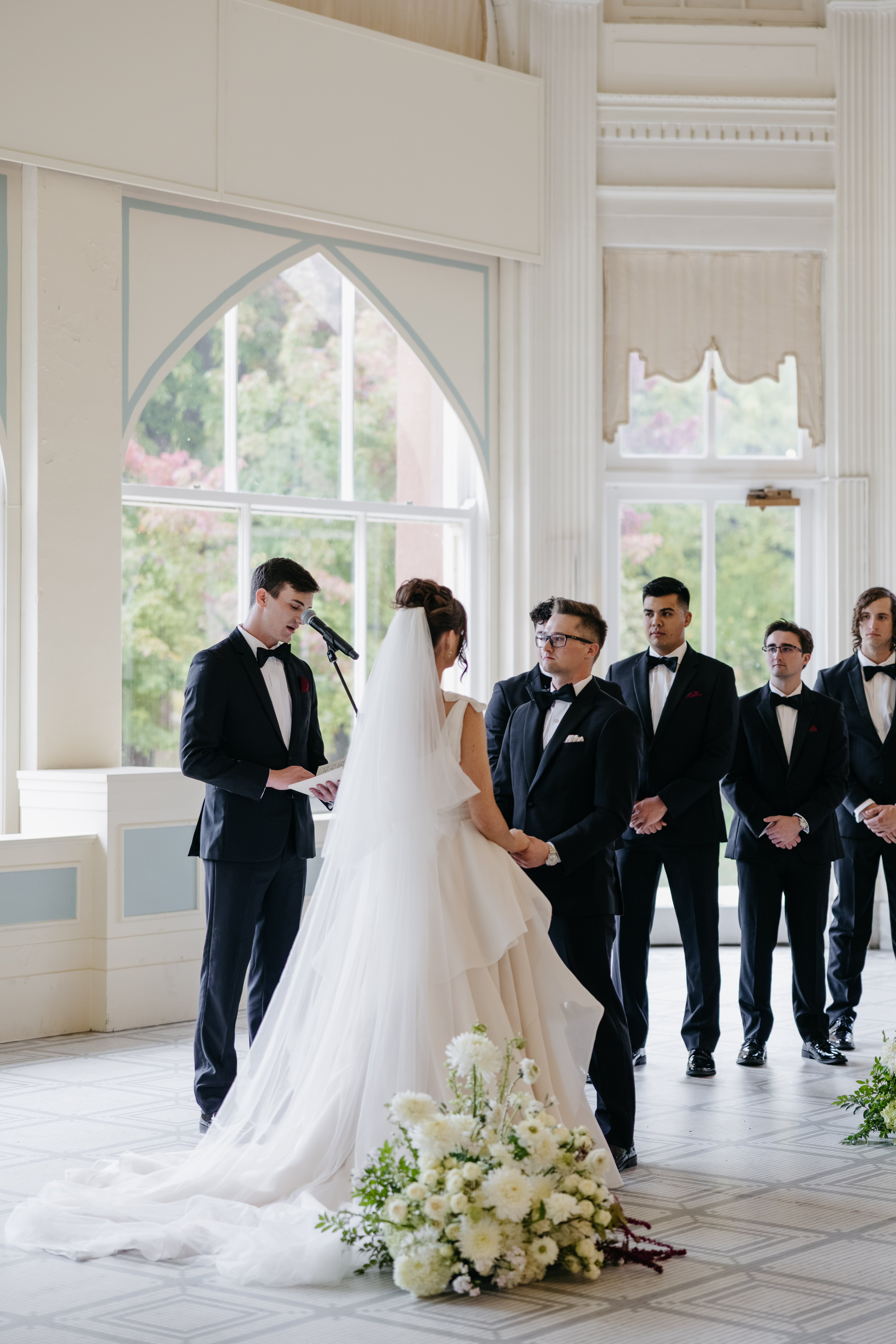
Built as a private country club in 1905 and redesigned in a Mediterranean Revival style a decade later, South Shore Cultural Center is a Chicago Landmark and National Register property. Walk inside and your eye goes straight to the marble floors, dark wood paneling, tall arched windows, and chandeliers. Sixty-five acres of grounds stretch to Lake Michigan, where the terrace trades chandeliers and wood paneling for open sky and lakefront light. And it's where Barack and Michelle Obama married in 1992, which tells you something specific about the cultural significance of the space.
Designing florals here is a specific kind of challenge. The room already has a strong presence. Everywhere you look, there's another detail competing for your attention. The flowers don't need to make the room beautiful. They need to feel like they belong there.
In the ballroom, that starts with scale. The ceiling height calls for arrangements with real height. Anything too low or too sparse will fall flat in a room this large. But scale alone doesn't solve it. The palettes and forms need to echo the room rather than compete with it: warm tones, organic shapes, structured without being rigid. The flowers should feel like they've always belonged in the room — not like they were brought in for the weekend.
The outdoor grounds and terrace are a different experience. Lakefront light softens everything over the course of the afternoon. There's room for more looseness out there. The terrace allows arrangements that breathe a little more than in the ballroom.
Poppy has designed florals at South Shore Cultural Center many times. That history shows up in the details: knowing which corners of the ballroom need scale, which outdoor spaces catch the best afternoon light, and where the architecture requires restraint.
See what Poppy has done at South Shore →
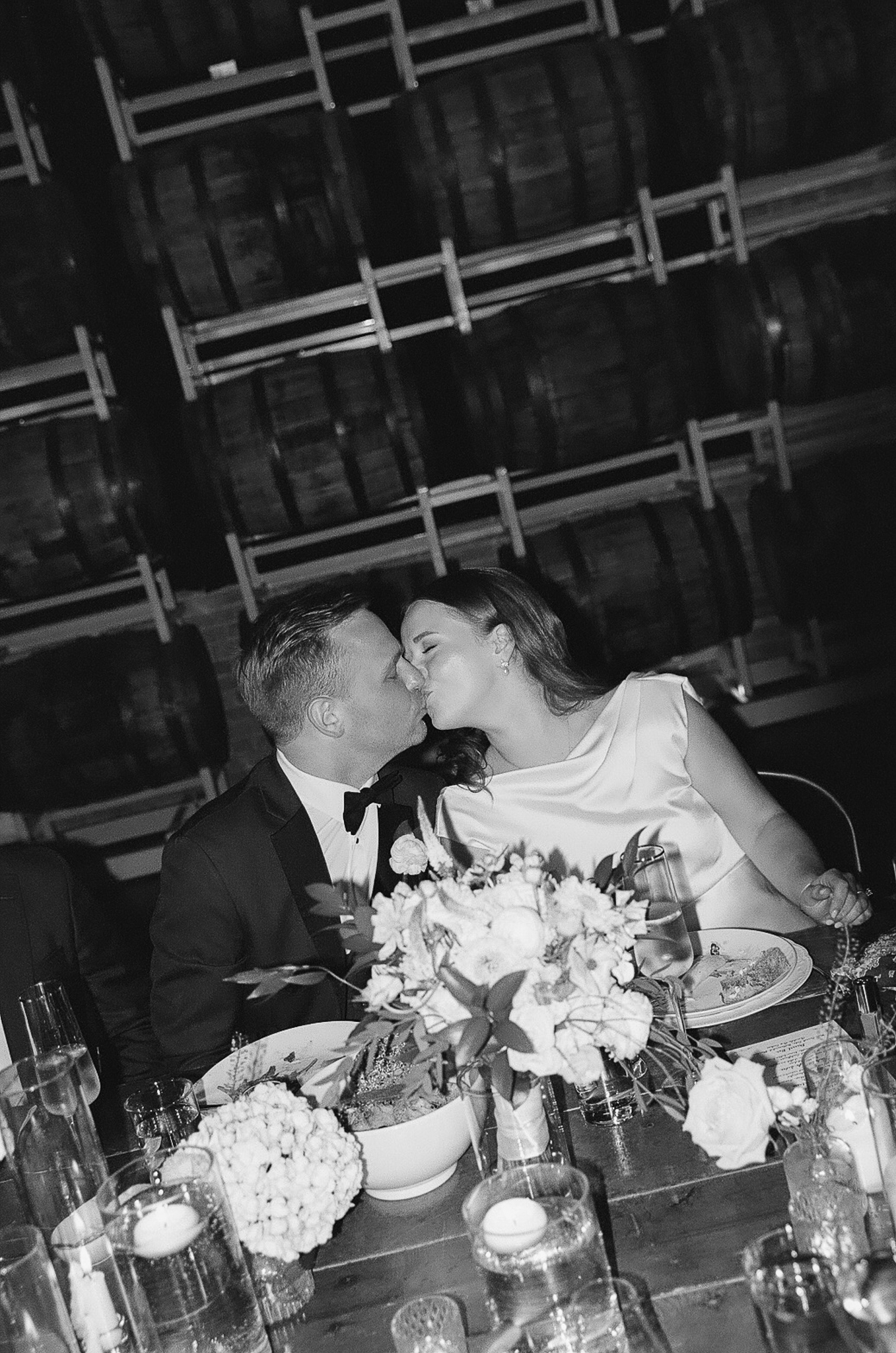
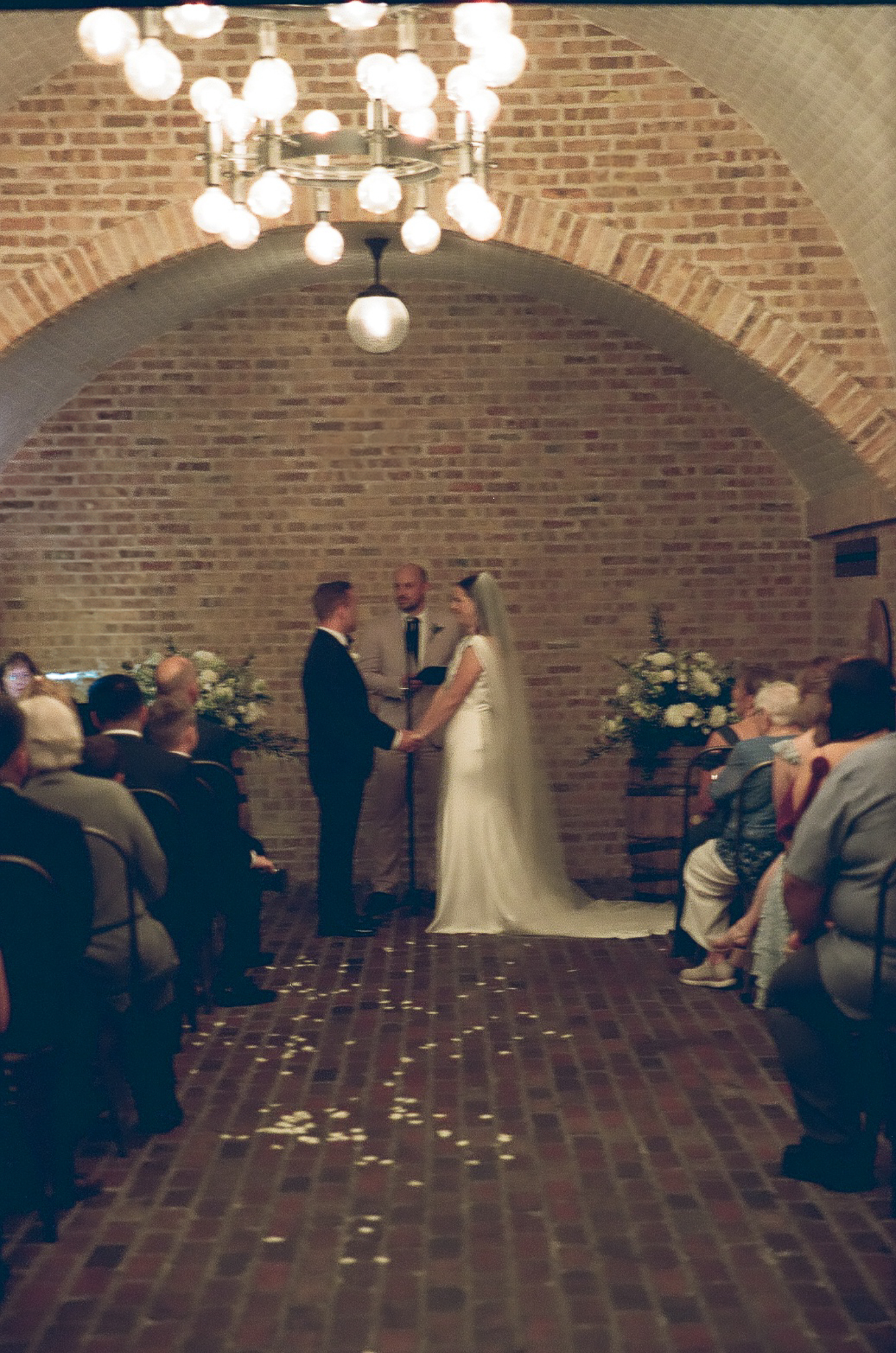
Goose Island Barrel House — Designing for a Room That Already Has a Point of View
Goose Island Barrel House is not a generic industrial space with exposed brick. It's a working bourbon barrel-aging warehouse in Humboldt Park. Floor-to-ceiling rows of aging barrels line the walls. Wagon wheel chandeliers hang from exposed rafters. A fifty-foot bar anchors one end of the room. Ten-foot walnut banquet tables, burnished steel chairs. The whole room reads warm and amber before a single stem arrives.
That's exactly what makes it such an interesting space to design for. The room already has a strong point of view. Your flowers can echo the warmth or push against it with cooler palettes and cleaner shapes.
Both are valid. Leaning in means warm, textural, bold — arrangements with oversize blooms, natural branches, elements that echo the texture of the barrels themselves. The wagon wheel chandeliers are natural anchor points for hanging or overhead installations that highlight the room's vertical scale without interrupting the barrel walls beneath them. Working in contrast means cooler palettes, cleaner forms — a deliberate push against the warmth that signals a decision rather than a drift.
That's also worth calling out directly for couples who come in wanting the flowers to feel personal to them. In most venues, personalization is expressed through palette, flower choice, and arrangement style. At the Barrel House, the room is already making so many of those decisions that the real design conversation becomes: how do you work with the way the room feels already? That shift in framing — from self-expression to creative response — is one of the more interesting briefs a floral designer can get.
What doesn't work: small, delicate arrangements that disappear into the room's scale. A garden-y centerpiece that works beautifully in a neutral loft gets lost here. Goose Island requires florals with enough size and shape to hold their own alongside everything that is already happening on the walls.
Poppy has designed florals at the Barrel House. Emylee and Steven’s wedding is one example of what bold, texture-forward wedding flowers looks like in the space.

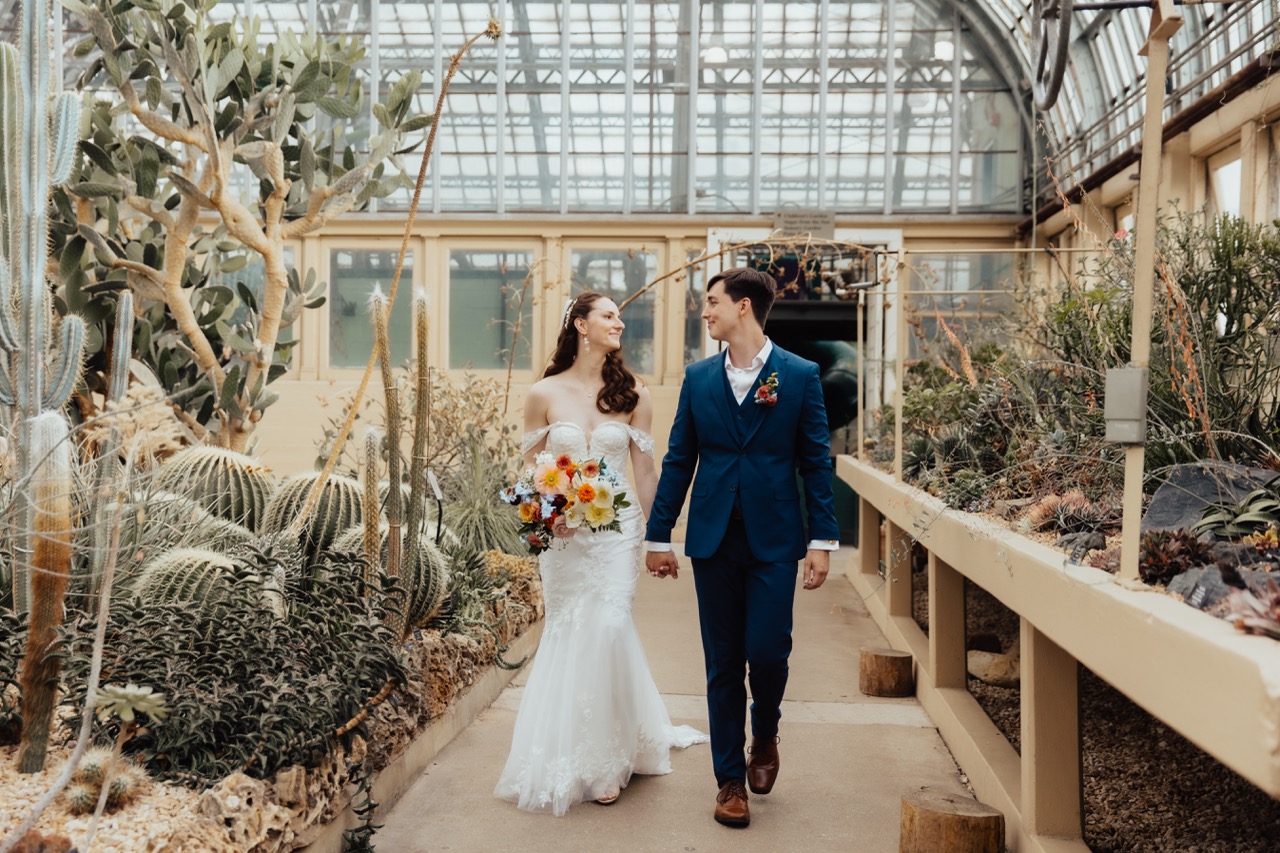
Garfield Park Conservatory — Florals in a Room That's Already Alive
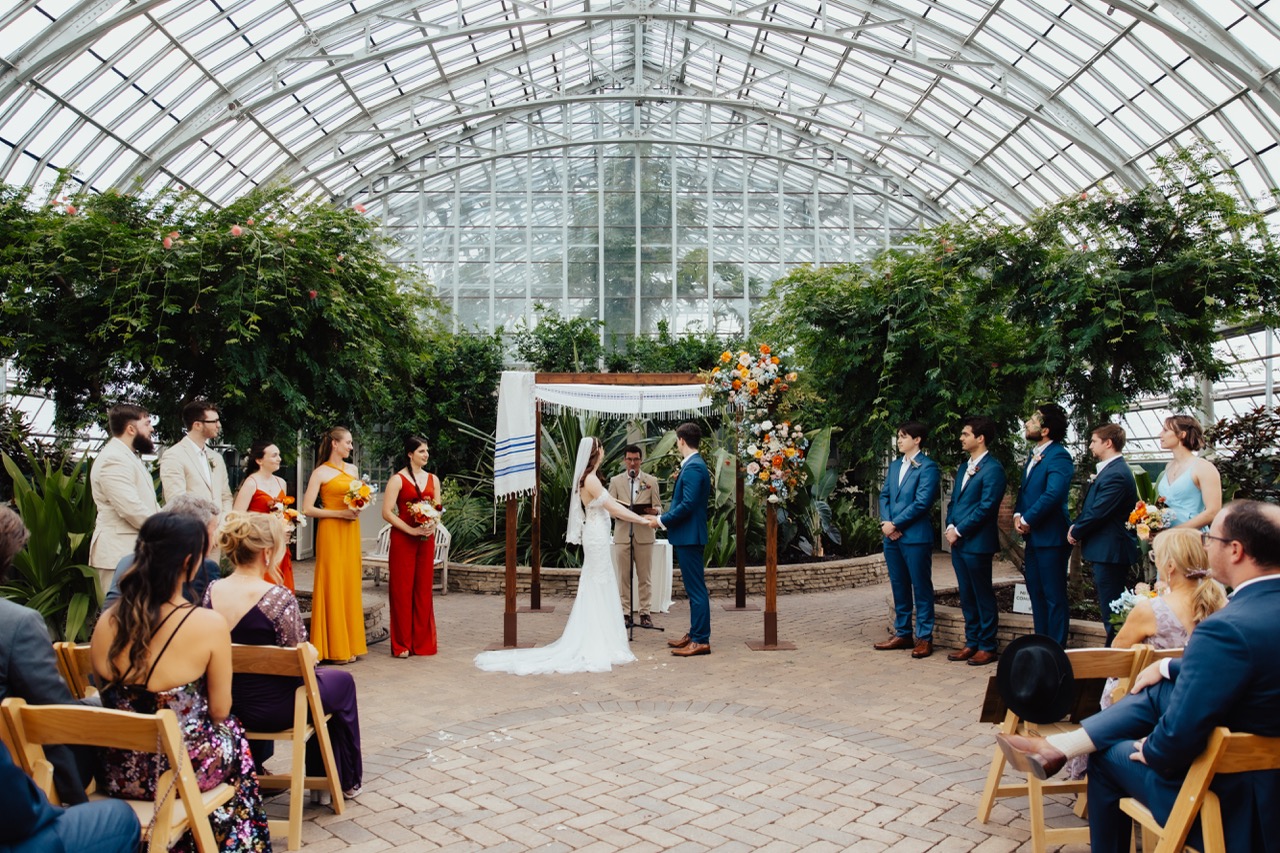
Built between 1906 and 1907 by landscape architect Jens Jensen, Garfield Park Conservatory is one of the largest conservatories in the world — a multi-room glass greenhouse filled with tropical palms, exotic ferns, and hanging plants that reach toward a skylit ceiling. The outdoor Bluestone Patio and white pavilion offer even more possibilities. But inside, the design challenge is unlike any other Chicago venue: the backdrop is literally alive. The question isn't how to make the room feel lush. It already is. The question is how to add flowers to a space that's already entirely made of plants.
More greenery will just disappear. Blooms are what make impact here. The Conservatory has more foliage than most florists use in a full year of weddings. What holds its own against that backdrop is blooms with enough color saturation, visual weight, or sculptural form to feel distinct against walls of tropical foliage. Jewel tones stand out especially well here: deep plums, rich crimsons, saturated corals that don't compete with the greenery so much as punctuate it. Organic shapes and arrangements with plenty of movement feel right in the botanical environment without disappearing into it.
Scale shifts here too. An arrangement that would feel oversized in a neutral ballroom can feel proportional against ferns that stretch six feet in every direction. The room can carry much larger arrangements than most venues. What could feel like too much anywhere else is often exactly right here, and for couples who want the flowers to be the focal point of their day, that's a significant creative advantage.
It's a different creative problem than most venues present. Most spaces ask flowers to create an atmosphere. The Conservatory already has more than enough, which means the designer's job shifts from setting the scene to working within one that's already very apparent.
Outside on the Bluestone Patio, the feeling shifts entirely. The scale pulls back, the light opens up, and the dense botanicals of the interior give way to open sky. Flowers there can do something different: bridge the two environments rather than compete with one of them.
Three venues, three completely different design languages. That's what makes designing weddings in Chicago so interesting. A conservatory needs flowers that can stand up to towering palms. A historic ballroom needs arrangements that can hold their own beneath twenty-foot ceilings. A bourbon warehouse needs enough presence to stand against walls of aging barrels. That's why the first question isn't "What's your favorite flower?" It's "What is your venue asking for?"
Full-service wedding florals in Chicago start at $1,750 with Poppy. From there, your proposal reflects the size of your guest list, the scale of your arrangements, and the demands of your venue. Here's what different budgets look like in practice →
If you're planning in another city, we've put together similar guides for New York, Washington, DC, and San Francisco.