


Venues We Love
Wedding Flowers in Washington, DC: A Venue-by-Venue Guide
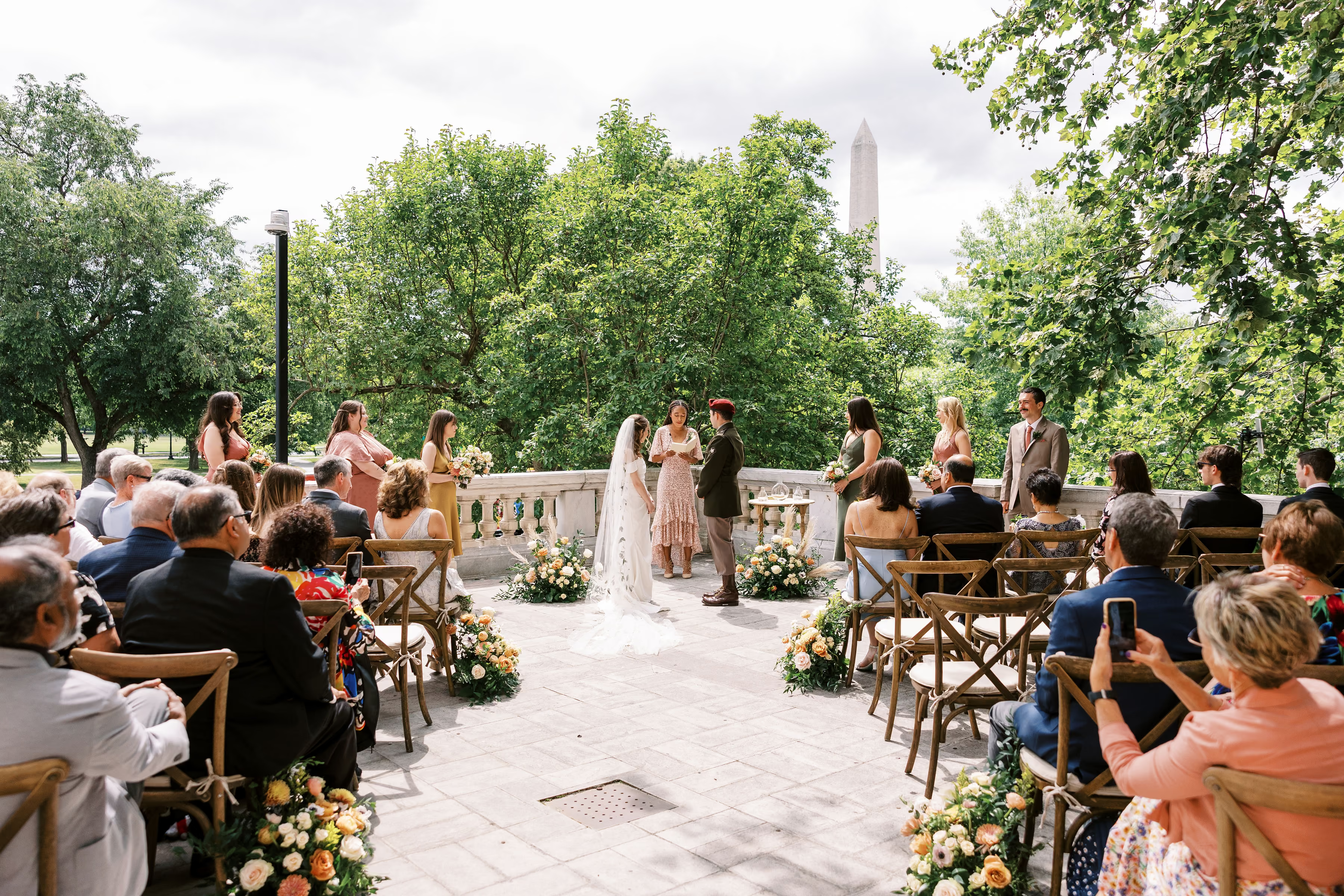
Venues We Love
You’ve signed the contract, paid the deposit, and now—whether you realize it or not—your floral designs have already started to take shape.
Not from your florist. Not from Pinterest. From your venue.
The architecture of your space, its natural light, its materials, even the way guests move through it…all of it shapes what flowers will actually look and feel like.
A loose garden arrangement that shines in a Georgetown carriage house might completely disappear inside a two-story marble hall.
Understanding this early will help you spend more intentionally, avoid design missteps, and create something that actually feels right in the space, not just beautiful on its own.
How do DC wedding venues affect your flower choices?
Your wedding venue directly shapes your floral design in four key ways:
- Scale: Large, open spaces require fuller, more substantial arrangements
- Light: Natural vs. low light impacts which colors show up clearly
- Materials: Marble, brick, wood, and greenery influence which palettes feel natural
- Layout: Guest flow determines where florals have the most impact
Keeping these in mind helps your flowers feel cohesive to the space (and ensures your budget is going where it will have the most impact).
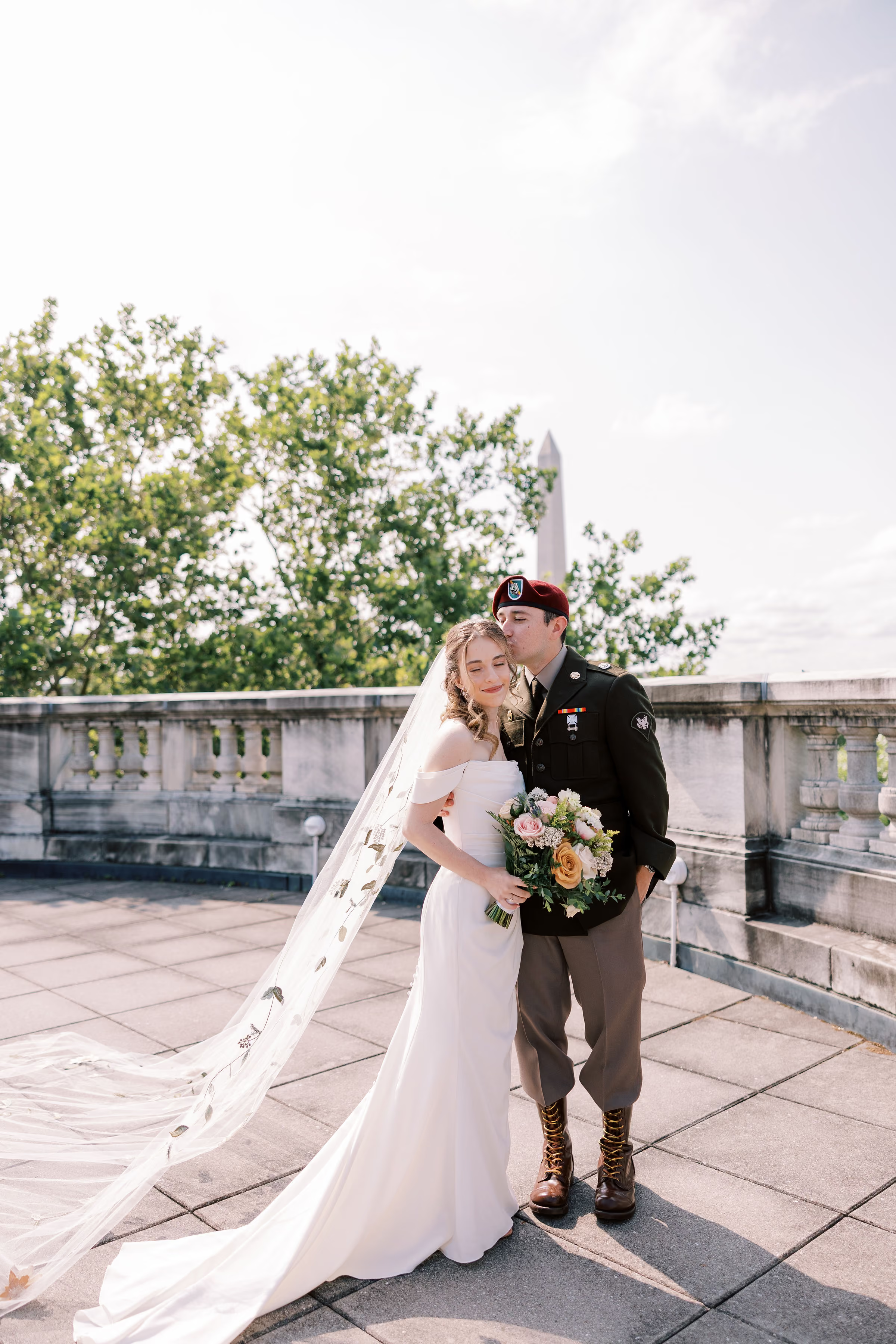
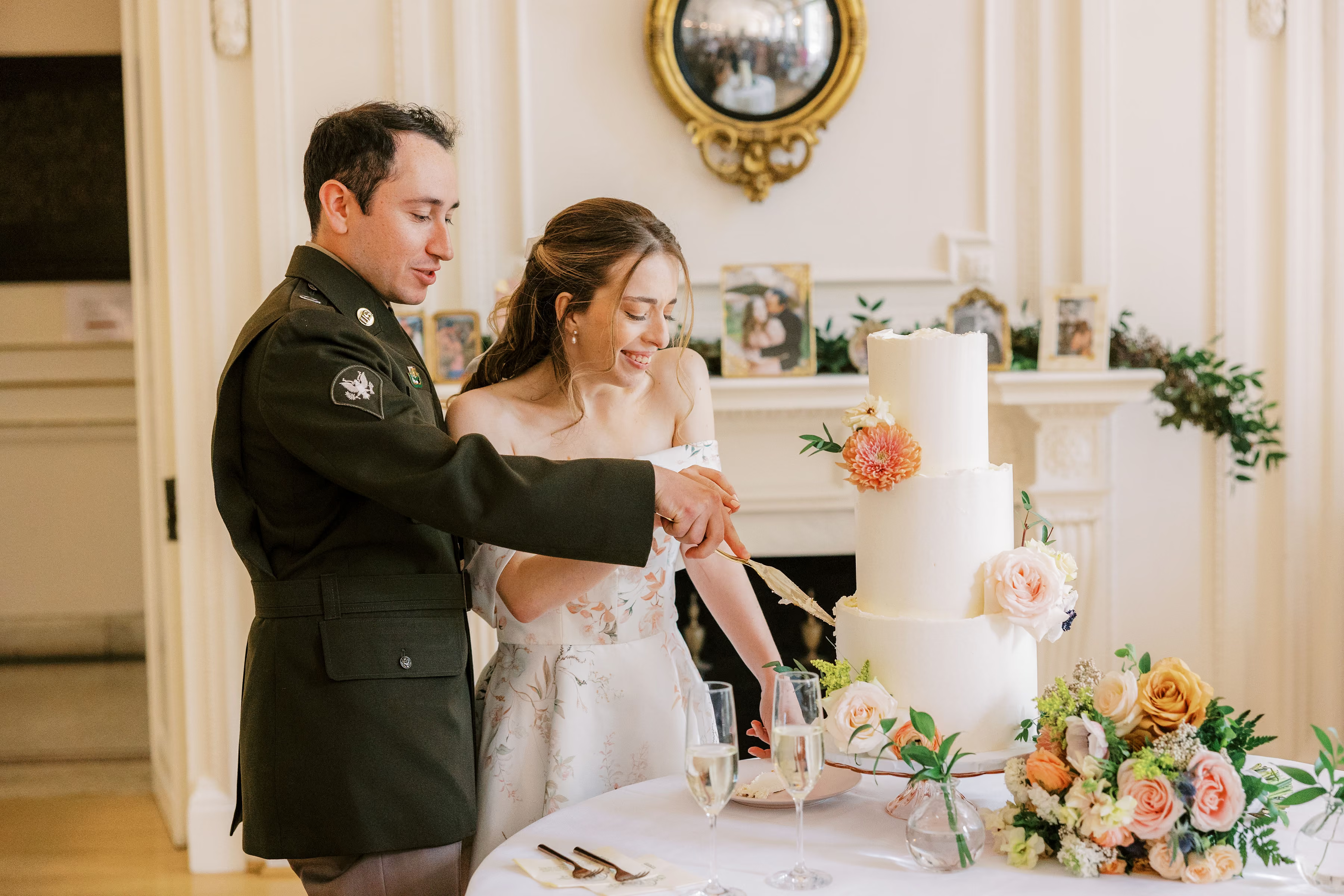
Grandeur & Marble — Where Florals Need to Hold Their Own
Wedding Flowers at National Museum of Women in the Arts
Walk into the Great Hall and the first thing you notice is scale.
Two stories of marble. Crystal chandeliers overhead. A mezzanine wrapping the room. It’s expansive, luminous, and already doing a lot visually.
Florals here need presence.
Loose, airy arrangements tend to disappear against the architecture, so fuller designs make more impact. Think lush centerpieces, elevated arrangements, and blooms with visual weight like garden roses, peonies, and dahlias.
The warm tones of the space—cream, gold, soft light—pair naturally with blush, champagne, and terracotta palettes. When the color story aligns with the room, everything feels cohesive without needing to overdo it.
What works here: florals that match the scale of the room—not compete with it.
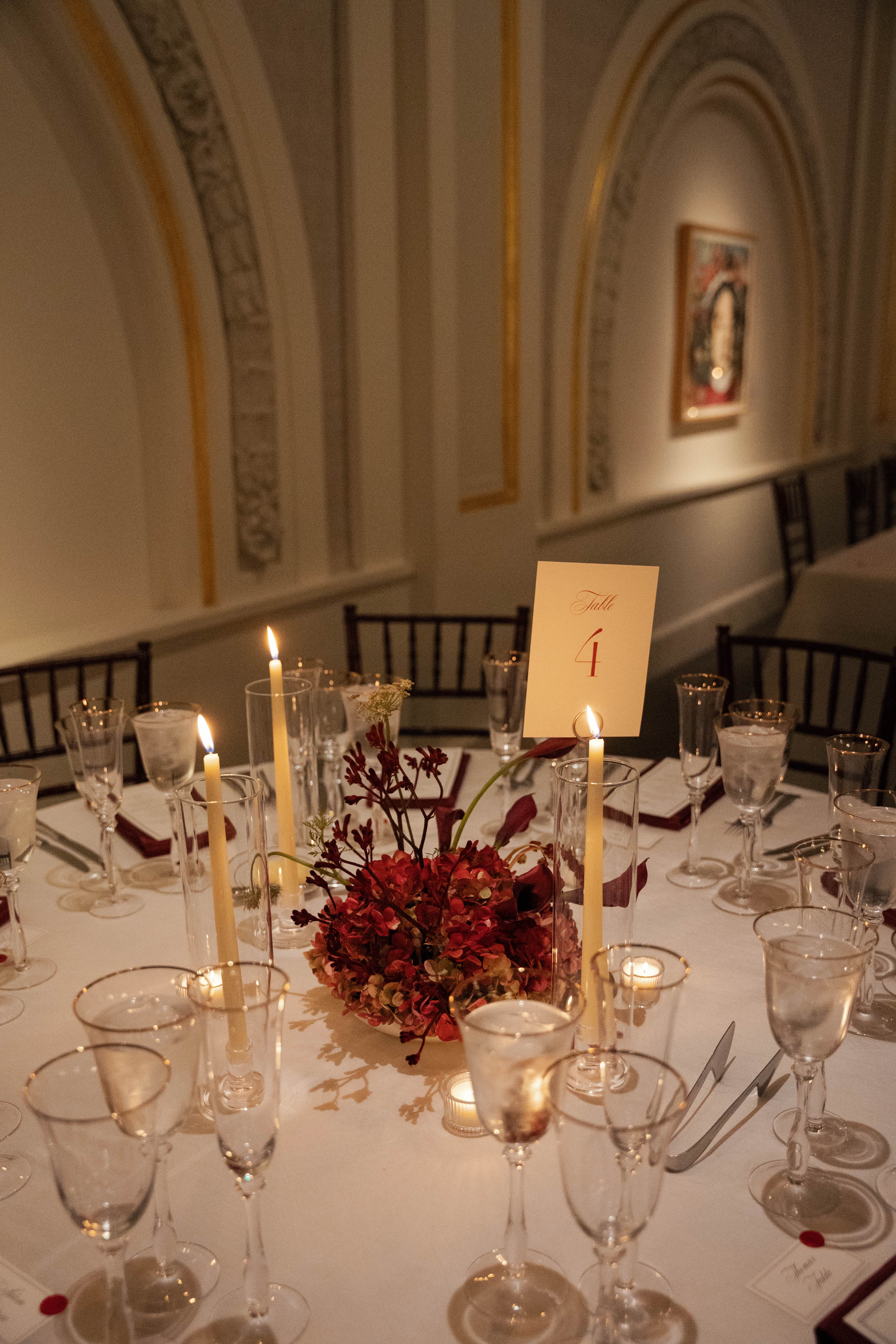
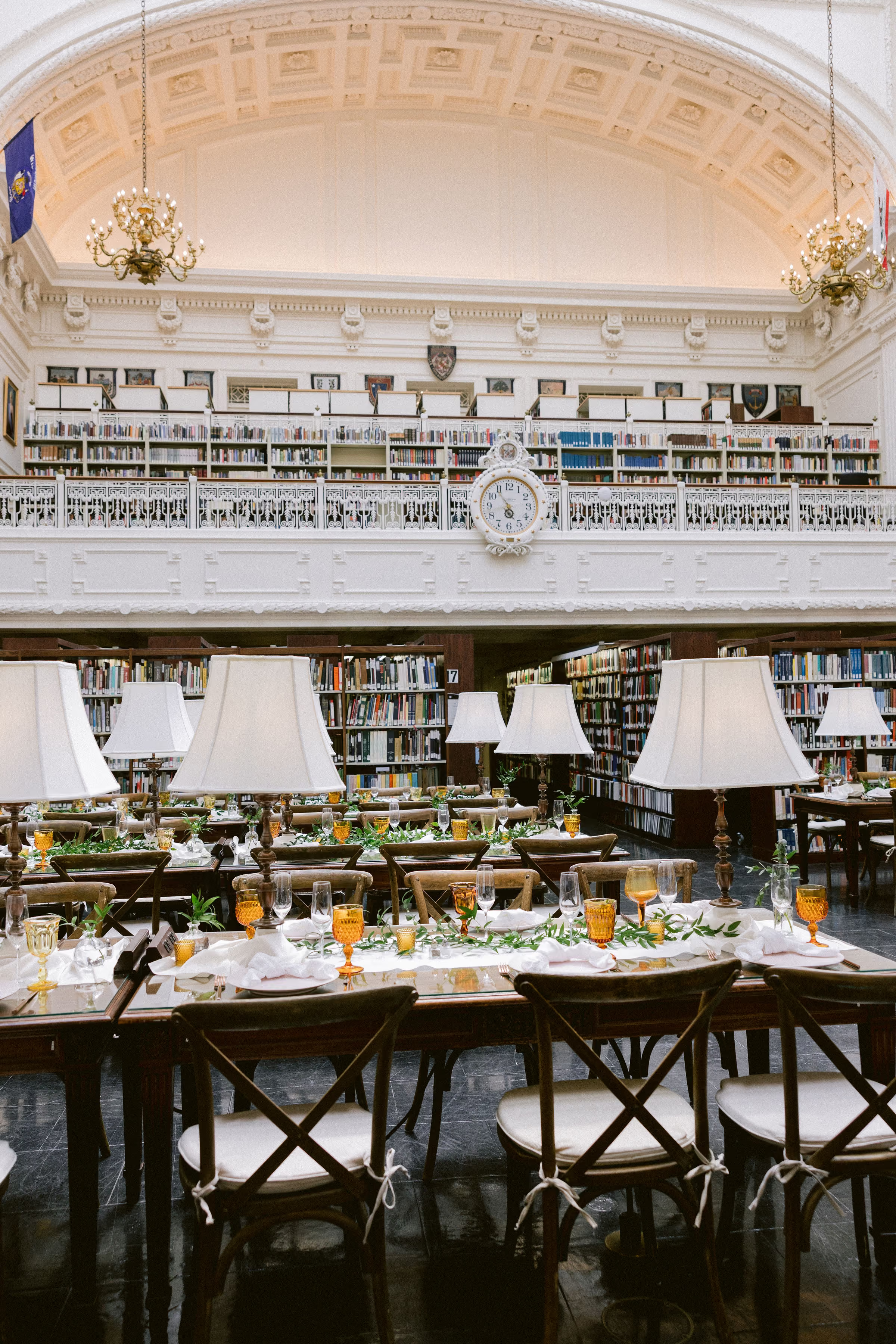
Wedding Flowers at DAR (Daughters of the American Revolution)
DAR has a more traditional, grounded presence.
Stone, dark wood, historic detailing. A strong sense of structure.
Florals here don’t need to compete with the space—they need to anchor it.
Greenery-forward arrangements, cascading shapes, and classic white or ivory palettes tend to feel especially natural. The contrast between soft florals and the heavier architecture creates balance.
This is also a venue where restraint works. A few well-placed arrangements often do more than trying to fill every surface.
What works here: classic, grounded florals that balance the weight of the space.

Hotel Venues — Where Florals Set the Mood
Wedding Flowers at Kimpton Hotel Monaco DC
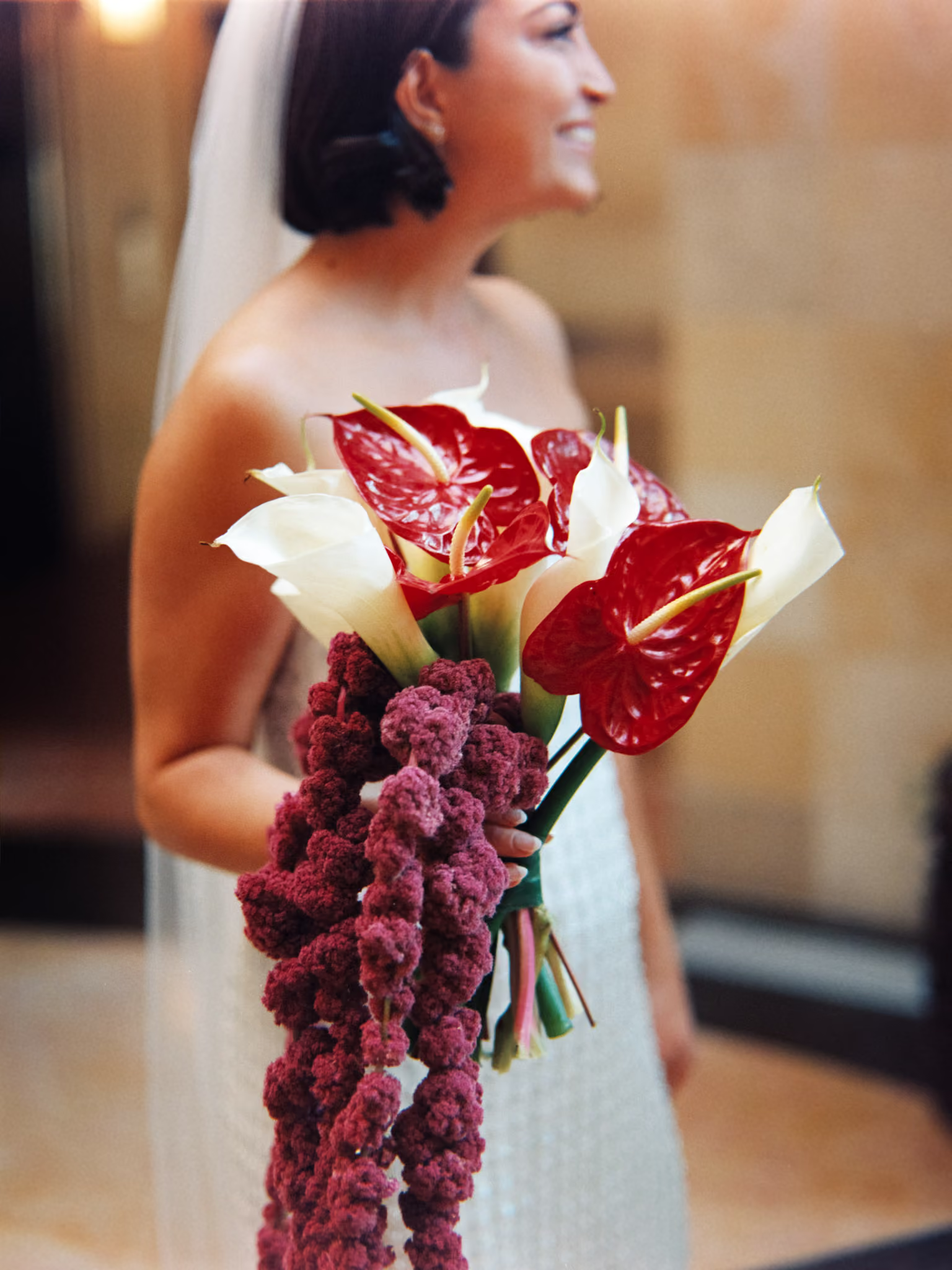
This is one of the most immersive ceremony backdrops in the city—it’s romantic, but with weight.
High ceilings, dramatic architecture, and a grand marble staircase naturally become focal points and set the tone.
Florals here can go deeper and more saturated—garden roses, dark ranunculus, velvet amaranthus, burgundy dahlias all feel at home. Pale palettes tend to get lost, and minimalist arrangements can underwhelm at this scale.
The staircase is where florals become a focal point. An installation here doesn’t feel like an add-on—it feels fully integrated into the space.
What works here: rich, saturated florals that rise to the scale of the architecture.
Wedding Flowers at The Ritz-Carlton Georgetown
This venue stands out for its scale—it feels intimate without feeling small.
The Fahrenheit Ballroom combines exposed brick, high ceilings, hardwood floors, and floor-to-ceiling windows. It’s design-forward, but still warm and inviting.
Outside, the Urban Garden brings in terraced greenery and a tree canopy that softens the space and naturally frames the ceremony.
That warmth carries into the floral palette.
Dusty rose, rust, warm ivory, and textured greenery feel especially at home here, while cooler tones can feel less connected to the setting.
Because guest counts typically stay under 100, floral budgets stretch differently. Instead of relying on a few large statement pieces, arrangements can have presence at every table—which shifts the overall feel of the room.
What works here: warm, textural florals that feel integrated with the space.
Industrial & Modern — Where Texture and Contrast Shine
Wedding Flowers at District Winery DC
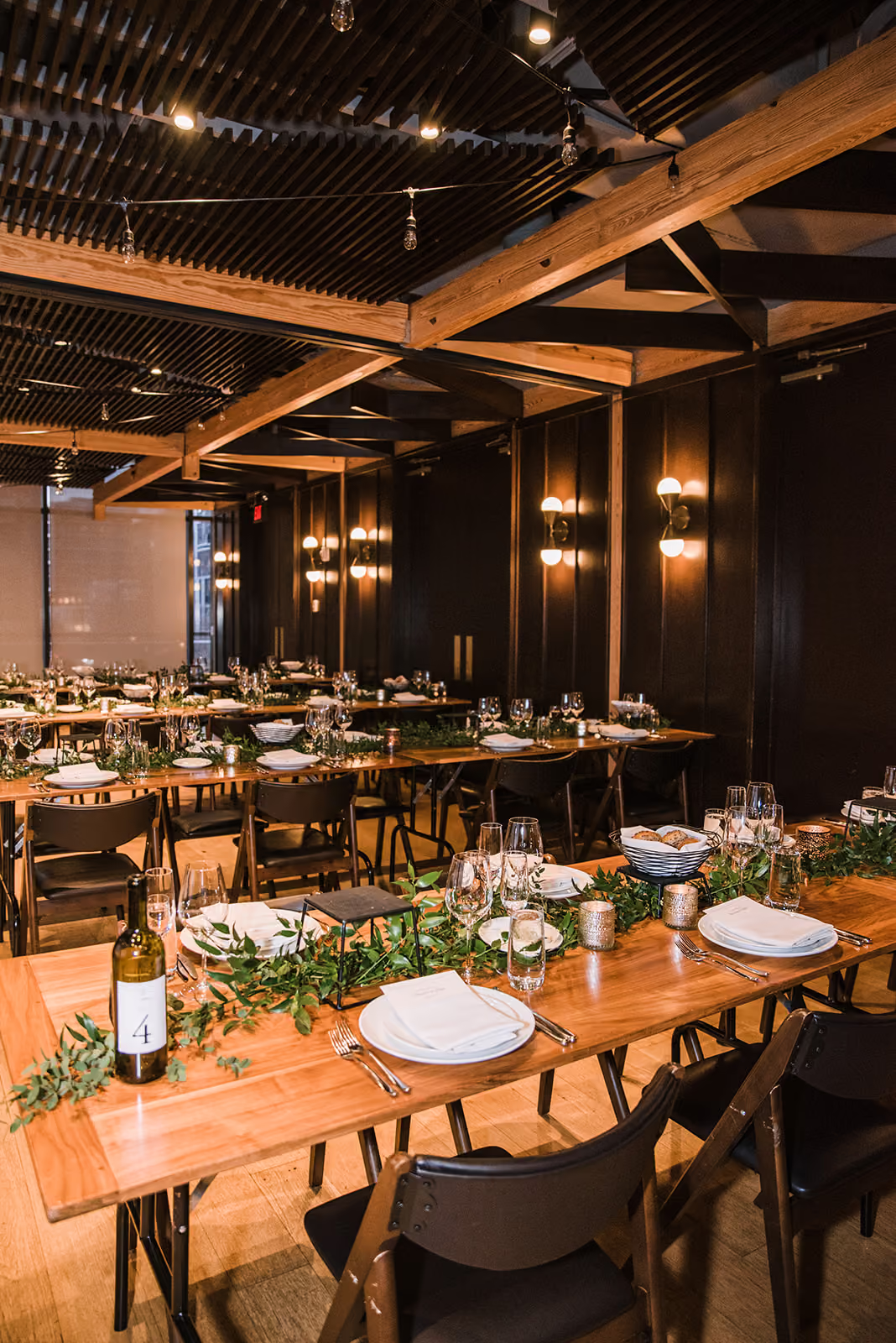
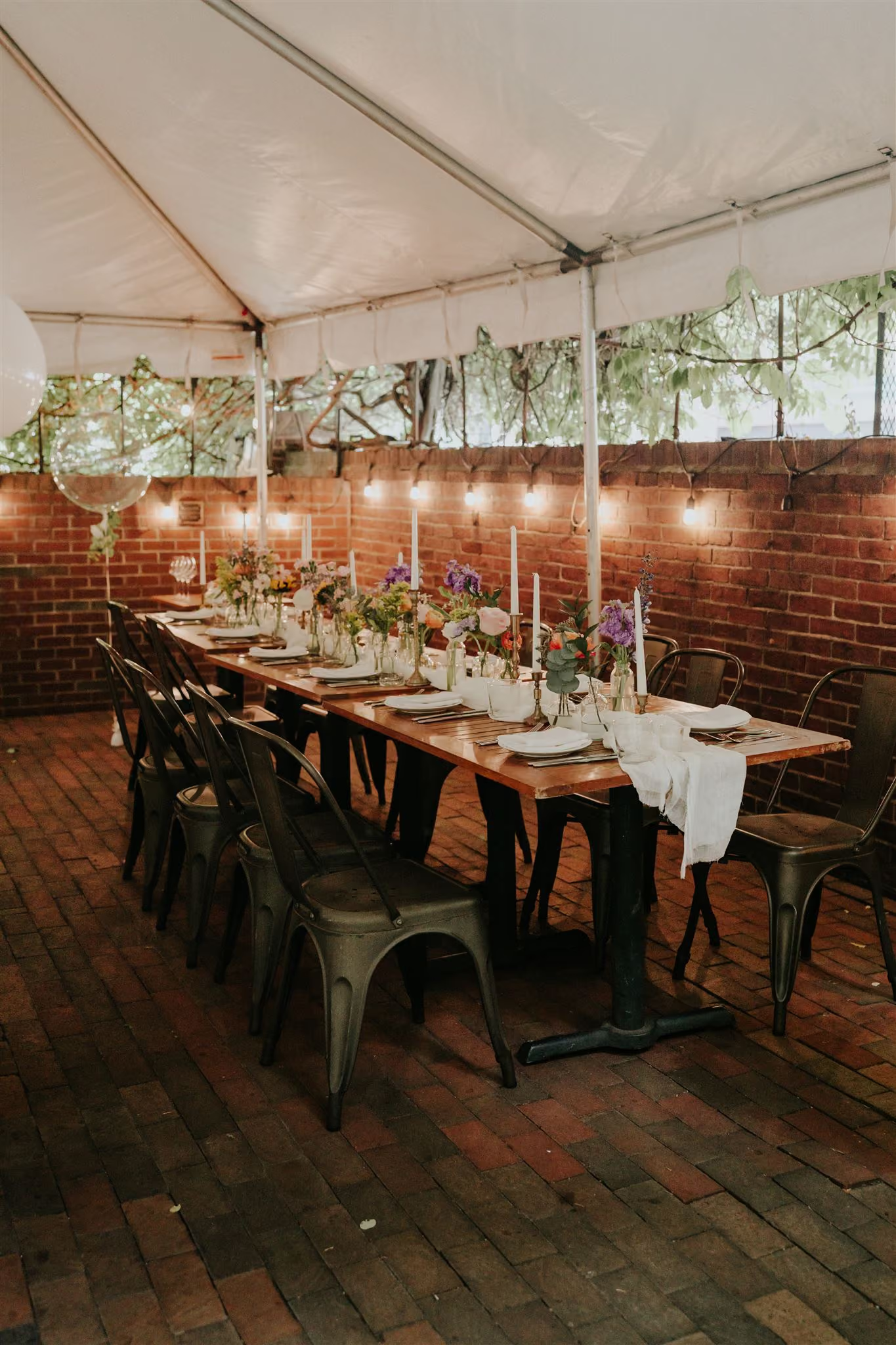
This is where texture matters most.
Exposed brick, steel, wood, and water views make the space feel layered and tactile.
Traditional, tightly structured florals can seem out of place—they fight the room instead of working with it.
Instead, arrangements with movement and variation feel more natural—mixed foliage, darker greens, unexpected stems, even subtle dried elements.
The light—especially at sunset—does a lot of the heavy lifting. Florals don’t need to compete, they just need to belong in the environment.
What works here: textural, movement-driven florals that feel part of the space.
Wedding Flowers at The LINE DC
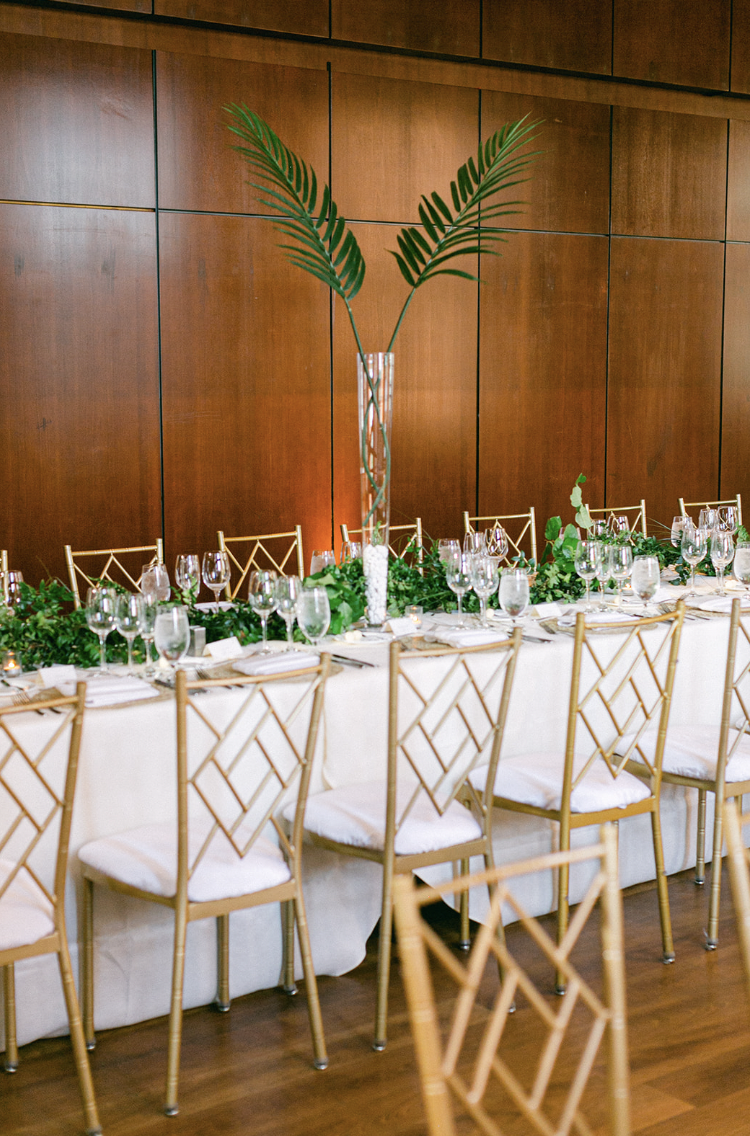
This space feels editorial: clean, modern, and design-forward without being stark.
Florals here should feel curated.
Not overly full, not overly minimal—just intentional. Sculptural blooms, interesting textures, and thoughtful spacing tend to land best.
White and green palettes are an easy fit, but this space can also handle contrast—moody tones or unexpected combinations, as long as the design feels deliberate.
What works here: intentional, sculptural florals that feel curated—not abundant.
Historic & Garden — Where Florals Meet Architecture and Nature
Wedding Flowers at Meridian House
On three manicured acres in upper Northwest, Meridian House feels like you’ve left the city.
A canopy of 100-year-old Spanish linden trees shades outdoor ceremonies in a way that reads more like a European estate than a DC garden.
Gravel paths, mature trees, and layered greenery give the space structure without heaviness.
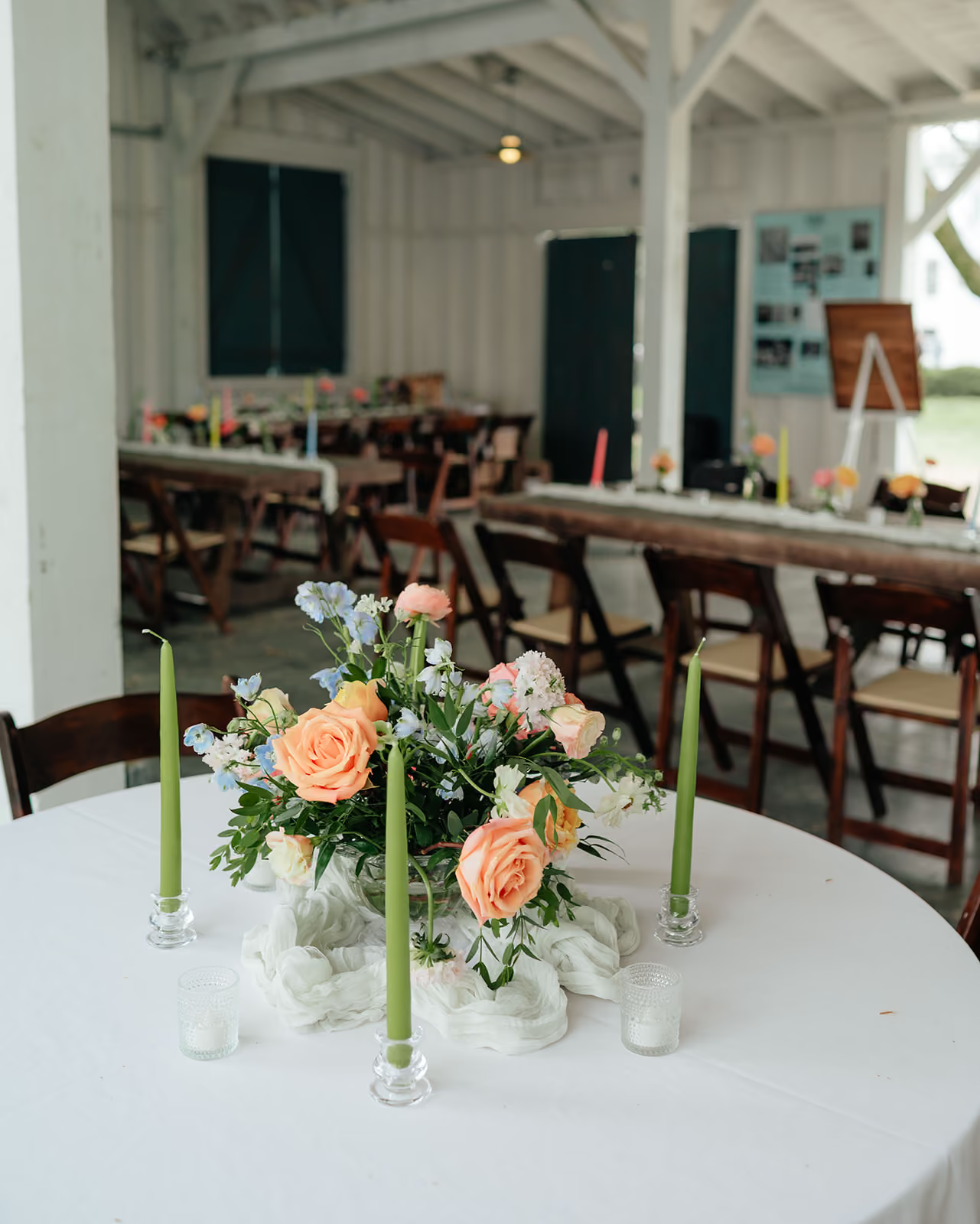
Florals don’t need to overstate anything here.
Loose garden roses, trailing greenery, and arrangements with natural movement feel like an extension of the landscape rather than decoration layered on top of it.
The architecture is present, but not overpowering—which means lighter, more organic designs still hold their own.
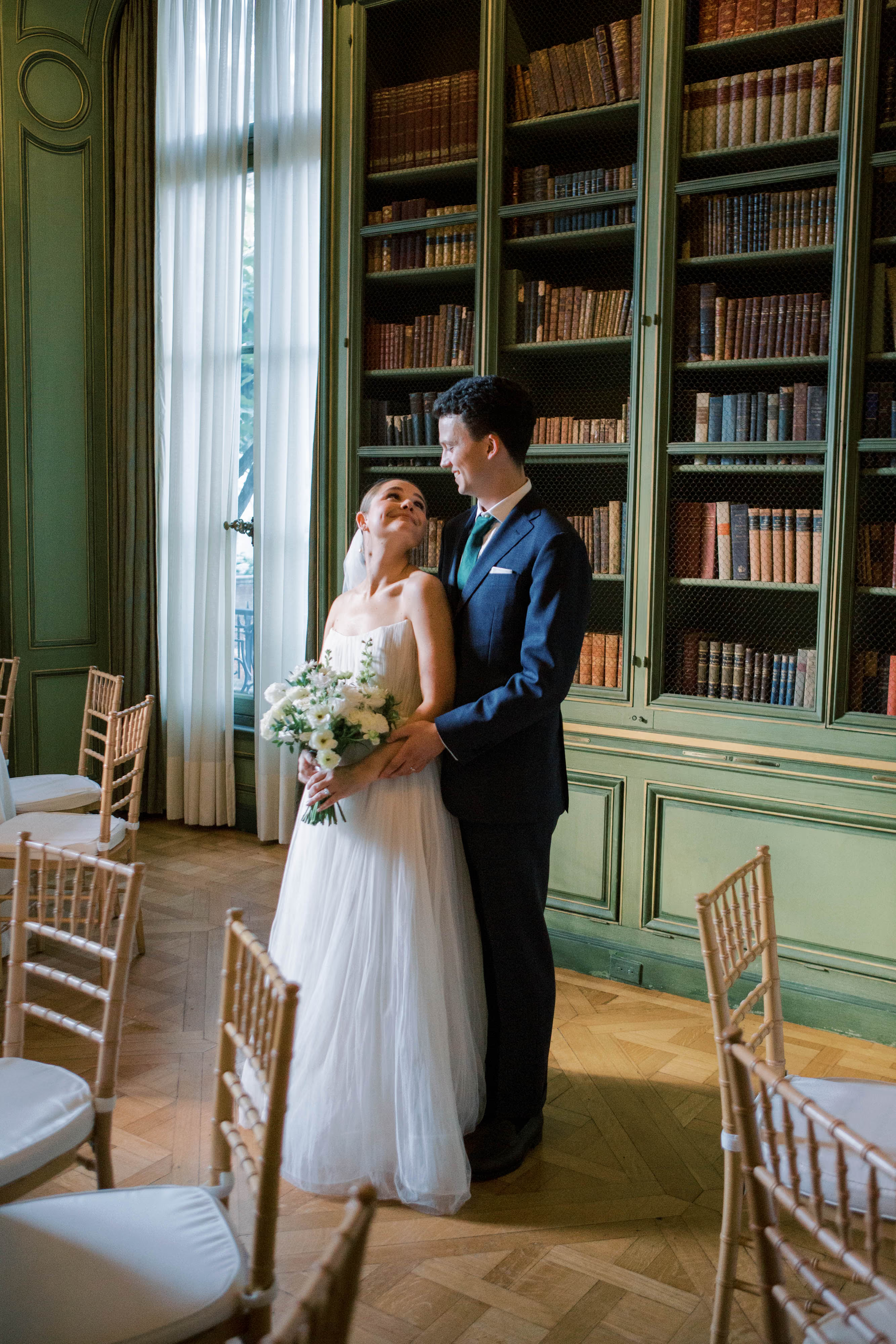
What works here: soft, garden-style florals that feel native to the setting.
Wedding Flowers at Dumbarton House
Dumbarton House feels more like a private estate than a venue.
The Federal-style home opens into formal gardens, gravel paths, and magnolia trees that give the space a quiet, structured—but not overly formal—character.
Florals here don’t need to overreach.
Garden-inspired arrangements—soft, seasonal, and slightly unstructured—feel most at home. Hellebore, ranunculus, garden roses, herbs—anything with a botanical quality that feels connected to the landscape.
Smaller, detailed arrangements often have more impact than large statement pieces. Tablescapes matter. Texture matters. The overall effect comes from layering, not scale.
What works here: soft, layered florals that feel personal and grounded in the landscape.
Note: Dumbarton House has been temporarily closed for renovations. Check current availability if it’s on your list.
How much do wedding flowers cost in DC?
Once you start thinking about scale, palette, and placement, the next question is usually budget.
Different venues naturally require different levels of floral investment—and understanding that early helps you plan more intentionally.
See what wedding flowers cost in Washington, DC
Common Questions About Wedding Flowers in Washington, DC
Do I need more flowers for larger DC venues?
Yes—larger venues typically require fuller or higher-impact arrangements so florals don’t get lost in the space.
Which DC venues require the biggest floral budgets?
Large-scale venues like museums and ballrooms often require more substantial arrangements, while garden venues allow for lighter designs.
Can I reuse ceremony flowers at my reception?
Often, yes. Many couples repurpose ceremony arrangements to maximize their budget.
What flowers work best for outdoor DC weddings?
Seasonal, durable blooms with natural movement—like garden roses, ranunculus, and greenery—tend to perform best outdoors.
What This Means for Your Flowers
Once your venue is set, a lot of decisions are already in motion.
The palette that will feel natural.
The scale that will actually show up in the room.
The balance between doing more and doing just enough.
That’s what makes the design feel cohesive—and what helps you avoid spending on things that won’t have the impact you expect.
Where This Leads: What Does That Actually Cost?
Now that you know what your venue calls for, the next step is understanding what that vision looks like in real numbers.